Get in Touch with Saiweiglass



Quick Specs
| Material | Ultra-thin glass (UTG), chemically strengthened |
| Thickness Range | 25 – 100 µm (foldable applications) |
| Minimum Bend Radius | <1 mm (SCHOTT UTG after processing) |
| Fold Endurance | 200,000 – 300,000+ cycles |
| Key Suppliers | Samsung Display, SCHOTT AG, Corning Inc., Nippon Electric Glass |
| Optical Transmittance | 91 – 92% (visible spectrum) |
Every foldable phone sold today faces the same engineering tension: make the display glass thin enough to bend without snapping, yet strong enough to survive drops and daily pocket friction. Three companies — Samsung Display, Corning Incorporated, and SCHOTT AG — have taken fundamentally different paths to solving that problem. Below, we break down their ultra-thin glass technologies side by side, using published specifications and real device data rather than marketing claims.
What Is Foldable Glass and How Does Bendable Glass Work?
Foldable glass is ultra-thin glass — typically between 25 and 100 micrometers thick — that bends repeatedly without cracking. At that thickness range, a sheet of ultra-thin bendable glass behaves more like a flexible polymer film than the rigid panels in conventional smartphones. A 2026 study published in the Journal of the American Ceramic Society concluded that ultra-thin flexible glass with reduced Young’s modulus can achieve the mechanical compliance needed for foldable display applications while retaining the optical and surface properties that separate glass from plastic.
Behind bendable glass technology sits one principle: surface stress. When a sheet of glass bends, the outer surface stretches under tension while the inner surface compresses. Cracks start on the tension side.
The thinner the glass, the less strain the outer surface experiences at any given bend radius — which is why a 30 µm piece of glass can fold flat while a 500 µm piece shatters.
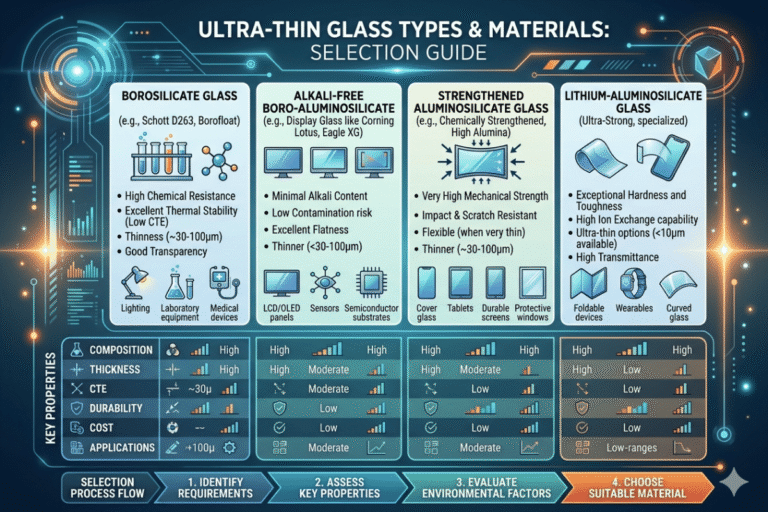
But thickness alone does not explain foldable glass durability. Manufacturers reinforce ultra-thin glass through chemical strengthening, an ion-exchange process that can transform the material’s surface properties — the glass is immersed in a molten potassium nitrate (KNO₃) bath at approximately 410°C. During this process, smaller sodium ions (Na⁺) in the glass surface are replaced by larger potassium ions (K⁺), creating a compressive stress layer.
Research published by the Korean Ceramic Society shows this process generates peak compressive stresses between 300 and 2,000 MPa — enough to withstand crack propagation during repeated folding cycles.
📐 Engineering Note
Critical relationship: bend radius (R) = thickness (t) / (2 × surface strain). For a 30 µm glass with a maximum allowable surface strain of 0.5%, the theoretical minimum bend radius is 3 mm. Chemical strengthening shifts the neutral axis, allowing radii below 1 mm after processing — per SCHOTT published specifications.
Samsung UTG vs Corning vs SCHOTT — Specs at a Glance
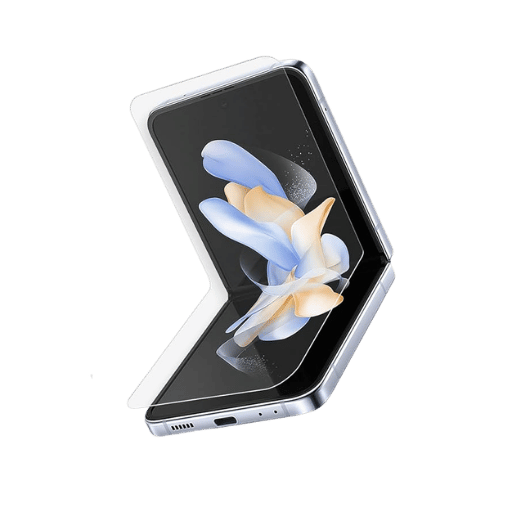
Three distinct approaches dominate the foldable glass market. Samsung Display was the first to commercialize UTG glass for consumer foldable devices. SCHOTT holds the Guinness World Record for producing the thinnest glass on Earth. And Corning Incorporated — the company behind Gorilla Glass — is developing a variable thickness glass with its own ion-exchange strengthening process. Here is how their published specifications compare.
| Specification | Samsung Display UTG | SCHOTT UTG | Corning Bendable Glass |
|---|---|---|---|
| Thickness | 30 µm (Gen 1) → 50 µm (Gen 2) | 25 – 210 µm range | Variable thickness (proprietary) |
| Bend Radius | ≤1.5 mm (Galaxy Z Fold series) | <1 mm after processing | <3 mm (developmental target) |
| Fold Endurance | >200,000 cycles | >300,000 cycles | >200,000 cycles |
| Strengthening | Proprietary ion injection | Chemical ion exchange (4-10× edge strength) | Patented ion-exchange process |
| Manufacturing | In-house Samsung Display | Down-draw process | Fusion draw ($200M+ per machine) |
| Key Product Line | Samsung UTG (proprietary) | Xensation Flex / AS 87 neo | Gorilla Glass Ceramic 3 |
💡 Pro Tip
Specs alone do not determine which glass performs best in your hand. Samsung’s UTG benefits from vertical integration — the same company designs the display, the glass, and the hinge mechanism. SCHOTT sells standalone glass substrates to multiple OEMs, giving device manufacturers more flexibility in display stack design.
Bend Radius, Thickness, and Fold Endurance

Three numbers define ultra thin glass performance in foldable devices: bend radius, thickness, and fold endurance. These parameters are interdependent — changing one forces trade-offs in the others.
Samsung’s decision to increase UTG thickness from 30 µm to 50 µm between the Galaxy Z Flip 5 and Z Flip 6 illustrates this trade-off. Thicker glass means a slightly larger bend radius and more visible crease — but it also means better drop resistance and reduced screen deformation over time. Android Headlines reported that the thicker UTG panel in the Z Flip 6 makes the screen harder and more scratch-resistant while reducing the display crease at the center.
SCHOTT claims the tightest achievable bend radius in the industry: less than 1 mm after chemical strengthening. That figure comes from their Xensation Flex product line, where the glass thickness can be tuned from 25 to 210 µm depending on the device manufacturer’s requirements. Their published fold endurance of 300,000+ cycles exceeds Samsung’s 200,000+ figure — though the two companies may use different testing protocols, making direct comparison difficult.
| Parameter | 30 µm UTG (Gen 1) | 50 µm UTG (Gen 2) | Impact on User Experience |
|---|---|---|---|
| Bend Radius | ≤1.0 mm | ≤1.5 mm | Slightly larger fold gap |
| Crease Visibility | More pronounced | 20% less visible | Noticeable improvement |
| Scratch Resistance | Lower | Higher | Fewer micro-scratches in daily use |
| Drop Survivability | Lower | Higher | Better accidental drop protection |
Looking ahead, TrendForce reports that Samsung is developing a dual-UTG structure for the Galaxy Z Fold 8. By layering two sheets of ultra-thin glass with different properties, Samsung aims to reduce crease visibility by another 20% compared to the Z Fold 7 while maintaining fold endurance above 200,000 cycles.
⚠️ Common Misconception
Many buyers assume thinner glass always means a better foldable display. In reality, the opposite holds true — Samsung deliberately moved to thicker UTG because 50 µm glass delivers meaningfully better scratch resistance, crease reduction, and drop durability compared to the original 30 µm panels. Optimal thickness depends on the hinge mechanism, not the glass alone.
Scratch Resistance and Surface Hardness

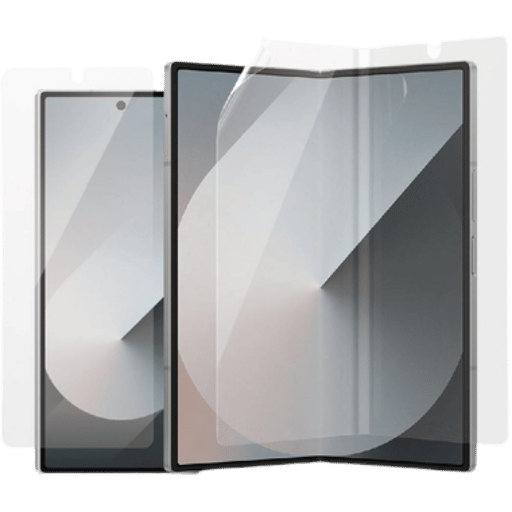
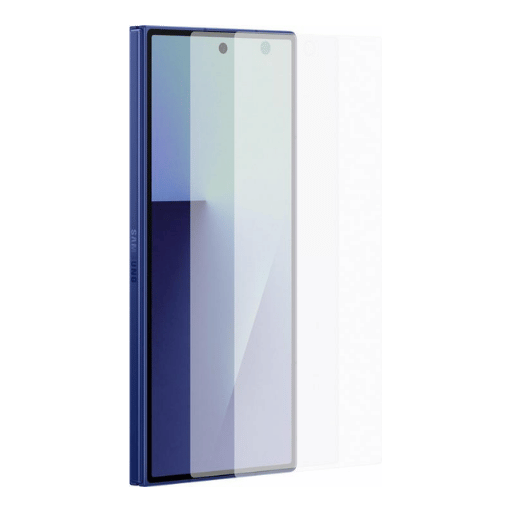
Scratch resistance is the single most common complaint from foldable phone owners — and the cause is often misunderstood. Scratches users see on their foldable screen typically come from the soft protective film layered on top of the cover glass, not from the glass itself.
Chemically strengthened ultra-thin glass reaches a Mohs hardness of 6 to 7, comparable to standard smartphone glass. However, foldable phone manufacturers apply a thin polymer protective layer — usually thermoplastic polyurethane (TPU) or colorless polyimide (CPI) — over the UTG to absorb impact and prevent glass fracture.
That protective film has a pencil hardness of roughly 2H, corresponding to a Mohs rating of just 2 to 3. As The Verge explained in their Z Flip teardown, the glass underneath is genuinely scratch resistant — but the film on top scratches as easily as any plastic surface.
| Surface Layer | Pencil Hardness | Mohs Scale | Scratch Source |
|---|---|---|---|
| UTG (chemically strengthened) | 6H – 7H | 6 – 7 | Sand, quartz, hardened steel |
| TPU protective film | 2H | 2 – 3 | Fingernails, coins, keys |
| CPI (colorless polyimide) | 2H – 3H | 2 – 3 | Fingernails, coins, keys |
SCHOTT’s chemical strengthening increases edge strength by 4 to 10 times depending on glass composition and processing parameters. Samsung uses a proprietary intensifying process that injects a hardening material into the UTG to achieve consistent hardness throughout the sheet. Both approaches target the same goal: make the glass durable enough that the protective polymer layer becomes the weakest link — and eventually, unnecessary.
How Foldable Glass Is Manufactured

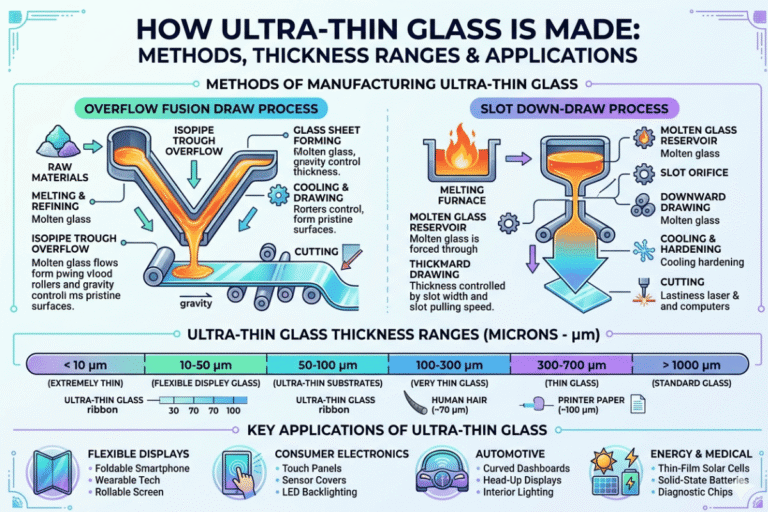
Producing glass thinner than a human hair requires a manufacturing process so precise that only a handful of facilities worldwide can achieve it. Two primary production methods — down-draw and fusion draw — each have distinct advantages for foldable screen technology.
Down-Draw Process (SCHOTT)
SCHOTT uses a down-draw process where molten glass flows vertically downward through a forming zone, creating a continuous ribbon. Precise temperature control and draw speed determine the final thickness. SCHOTT’s method produces glass ribbons from 25 to 210 µm and can be adapted for rollable reel-to-reel processing — where the glass is wound onto spools like film, enabling high-volume manufacturing.
Fusion Draw Process (Corning)
Corning’s fusion draw process feeds molten glass over a V-shaped trough, where two streams flow down opposite sides and fuse at the bottom. Because the surfaces never contact equipment, the resulting glass needs no polishing — a critical advantage for optical clarity. According to industry reporting, each fusion draw machine costs upward of $200 million, which helps explain why this innovation has been slower to reach consumer electronics at scale.
Chemical Strengthening: The Final Step
Regardless of the forming method, all foldable glass undergoes chemical strengthening. A standard process involves immersing the glass in a molten potassium nitrate (KNO₃) bath at approximately 410°C for 4 to 16 hours. During this ion-exchange process, smaller sodium ions in the glass surface swap with larger potassium ions from the salt bath, creating a compressive stress layer on the glass surface — with published values between 300 and 2,000 MPa depending on glass composition and processing time.
Research from the Korean Ceramic Society notes that spray-based KNO₃ application is emerging as an alternative for ultra-thin sheets, since the traditional dipping method can damage glass below 50 µm due to solution resistance.
📐 Engineering Note
Production yield for sub-100 µm glass remains below 60% industry-wide due to breakage during forming and handling. Yield challenges are a primary cost driver — and why ultra-thin glass manufacturing demands far more specialized equipment and intensive QC than conventional flat glass production.
Which Phones Use Each Type of Foldable Glass?

Samsung’s monopoly no longer exists among foldables in the phone market — the UTG supply chain reflects that shift. Multiple glass suppliers now compete for OEM contracts, with each device manufacturer exploring different device designs, glass sources, and thickness targets.
| Device | Glass Supplier | UTG Thickness | Year |
|---|---|---|---|
| Samsung Galaxy Z Flip | Samsung Display | 30 µm | 2020 |
| Samsung Galaxy Z Fold 3 | SCHOTT (all UTG) | 30 µm | 2021 |
| Xiaomi MIX Fold 2 | SCHOTT (Xensation Flex) | 30 µm | 2022 |
| Samsung Galaxy Z Flip 6 | Samsung Display | 50 µm | 2024 |
| Oppo Find N5 | BOE (customized UTG) | Not disclosed | 2025 |
| Xiaomi MIX Flip 2 | Nippon Electric Glass (Dinorex UTG) | Not disclosed | 2025 |
| Samsung Galaxy Z Fold 7 | Samsung Display | 50 µm | 2025 |
| Apple Foldable iPhone (expected) | Samsung Display (reported) | TBD | 2026 |
One surprise in this supply chain: Samsung does not always use its own glass. Korean industry publication THE ELEC reported that SCHOTT supplied all the UTG for the Galaxy Z Fold 3 in 2021. Meanwhile, Nippon Electric Glass entered the market in 2025 with Dinorex UTG — adding a fourth major supplier and giving OEMs like Xiaomi more sourcing options for their foldable device designs.
Apple’s anticipated foldable iPhone, widely reported for a September 2026 launch, is expected to use Samsung Display’s screen technology with ultra-thin glass. According to MacRumors, Apple is testing ultra-thin flexible glass panels with uneven thickness — thinner in the fold zone for flexibility, thicker elsewhere for rigidity — aiming to make the display crease invisible.
Foldable Glass vs Plastic Displays — Why Glass Wins
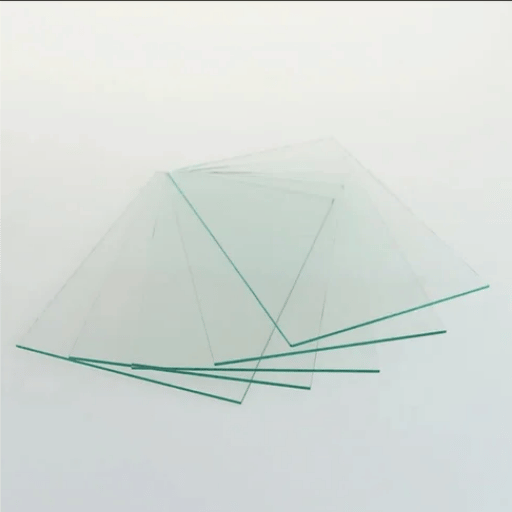
Before UTG became commercially viable, every foldable phone used colorless polyimide (CPI) as its display cover. Earlier models — the original Galaxy Fold (2019) and Motorola Razr (2019) — both relied on plastic. Switching to real glass solved several problems but introduced new constraints that continue to transform the foldable display industry.
✔ UTG Advantages Over Plastic
- Optical transmittance: 91-92% vs 87-90% for CPI
- Mohs hardness: 6-7 vs 2-3 for CPI
- No yellowing or optical degradation over time
- Superior touch response and tactile feedback
- Better resistance to chemical cleaning agents
⚠️ UTG Limitations
- Higher manufacturing cost (yield <60%)
- Still requires soft protective film on top
- More fragile during manufacturing and assembly
- Limited supplier base (3-4 companies globally)
- Cannot achieve bend radii below ~0.5 mm
Consider the transmittance gap — 91-92% for UTG versus 87-90% for CPI, per data from a PMC-published study on flexible display cover materials — which may sound small on paper, but becomes noticeable under direct sunlight. Higher transmittance means brighter, more vivid colors and better outdoor readability, important for a mobile device that users interact with hundreds of times daily.
Since 2021, every major foldable phone has launched with UTG rather than bare CPI as the structural cover layer. CPI still appears as a thin protective coating on top of the glass, but the era of plastic-only folding screens is effectively over.
Frequently Asked Questions
Q: What is bendable glass called?
View Answer
Industry terms include ultra-thin glass (UTG), bendable glass, foldable glass, and flexible glass. Branded names: SCHOTT UTG, Samsung UTG, Corning Gorilla Glass Ceramic, and Dinorex UTG.
Q: How does foldable glass work without breaking?
View Answer
Glass becomes flexible when thinned below 100 micrometers. At 30-50 µm thickness, the surface strain during bending stays well below the fracture threshold. Chemical strengthening through ion exchange creates a compressive stress layer on the surface that actively resists crack formation. Combined, these two factors allow ultra-thin glass to fold more than 200,000 times at bend radii under 3 mm.
Q: Do all foldable phones have glass screens?
View Answer
Nearly all foldable phones launched since 2021 use ultra thin glass as their primary display cover. Earlier models like the original Galaxy Fold (2019) and Motorola Razr (2019) used colorless polyimide plastic instead. Today, Samsung, Xiaomi, Oppo, and other major OEMs all ship foldable devices with UTG inner displays, though a soft polymer film is still applied on top of the glass for impact protection.
Q: Can foldable glass still scratch easily?
View Answer
Glass itself has a Mohs hardness of 6-7 and resists most everyday scratching. However, all current foldable phones have a soft protective polymer layer (TPU or CPI) applied on top of the UTG, and that film scratches at Mohs 2-3 — roughly fingernail hardness. So while you are technically using a glass screen, the surface your finger touches is still a scratchable plastic film.
Q: Is Corning’s bendable glass the same as Gorilla Glass?
View Answer
No. Corning’s bendable glass for foldable displays is a separate product from the standard Gorilla Glass used on flat-screen phones. Its foldable variant is much thinner and uses a different ion-exchange formulation tuned for flexibility rather than drop resistance. Corning’s newest related product, Gorilla Glass Ceramic 3, combines glass and ceramic crystalline structures for foldable devices and was first adopted by Motorola for its next generation Razr.
Q: Will the Apple foldable iPhone use ultra-thin glass?
View Answer
Multiple industry sources indicate Apple is testing ultra-thin flexible glass with variable thickness for its first foldable iPhone, expected in late 2026. Reports from MacRumors and TrendForce suggest Apple wants to eliminate the visible crease entirely by using thinner glass in the fold zone and thicker glass elsewhere. Samsung Display is the reported screen supplier. If Apple succeeds in removing the crease — a long-standing consumer complaint about all foldable devices — it could accelerate UTG adoption across the wider smartphone market and put additional pressure on SCHOTT, Corning, and Nippon Electric Glass to scale production capacity.
Need ultra-thin glass for your display application?
About This Analysis
Saiwei Glass manufactures ultra-thin glass substrates for display and electronic applications. Ion-exchange processing data and yield figures cited in this article draw from our production experience with glass in the 25-100 µm thickness range. Supplier comparisons are based on publicly available specifications and third-party reporting — we have no commercial relationship with Samsung Display, Corning, or SCHOTT.
References & Sources
- Flexible ultra-thin glass with low Young’s modulus for foldable display (2026) — Journal of the American Ceramic Society
- Chemical Strengthening of Ultra-Thin Glass for Flexible Displays (2022) — Korean Ceramic Society
- Transparent and Flexible SiOC Films on Colorless Polyimide Substrate (2021) — PMC / MDPI Coatings
- Folding glass: how, why, and the truth of Samsung’s Z Flip — The Verge
- Galaxy Z Flip 6 to Feature Thicker, More Durable UTG Panel — Android Headlines
- Samsung Reportedly Cuts Fold Crease 20% With UTG — TrendForce
- Schott supplying all of UTG used in Samsung Galaxy Z Fold 3 — THE ELEC
- Apple Still Testing Ultra-Thin Glass to Eliminate Foldable iPhone Crease — MacRumors