Get in Touch with Saiweiglass


THERMAL TEMPERING
Thermal Tempering Glass Solutions | Precision Engineered by Saiwei Glass
From raw float glass to safety-rated tempered panels, precisely engineered for electronics, medical devices, industrial controls and automotive smart cockpits. One facility. Full-process capability. No middlemen.
16+
Years Experience
5,000
sqm Facility
90
Engineers & Staff
4
Industry Verticals

What Is Thermal Tempering? The Glass Tempering Process Explained
How Thermal Tempering Works — From Annealed Glass to Safety Glass
Thermal tempering is a carefully controlled heat-treatment technique used to turn standard annealed float glass into safety glass with far greater mechanical strength. The principle of the process is extremely simple, yet very effective creating a lasting stress imbalance between the glass surface and the interior.
Here is how it works at a molecular level. Annealed glass or the standard product leaving a float glass line has very little residual stress. It breaks easily, with large, sharp fragments that could inflict life-threatening lacerations. To fire it, the glass is uniformly heated by a tempering furnace to a temperature of 620 C-700 C(1,148-1,292 F), above the glass transition temperature but well below the point where it would soften and sag under its own weight.
Once the glass reaches a uniform temperature throughout its cross section, it moves into the quench section. High-pressure nozzles fire jets of air on both sides of the panel, which kicks off the cooling process. The surface of the glass crystallizes and begins to contract first, trapping it in a rigid state. The inside of the panel remains hot and fluid after the surfaces have already set, and continues to cool and contract, creating a compression stress between those surfaces and the remaining interior in tension.
This profile is responsible for all of the strength in tempered glass. Any external force applied to the glass-impact, bending or twisting, thermal shock-must first overcome the surface layer of compression before the glass can break. In testing, equally shaped thermally tempered panels usually exhibit 4-5X the bending strength of annealed glass, and can withstand sudden temperature changes of 150-200 C without damage. Around the world, certification bodies such as ASTM C1048, EN 12150-1 set at least a 69 MPa (10,000) psi minimum surface stress on fully tempered product.
⚙ Step-by-Step Glass Tempering Process at Saiwei’s Facility
Saiwei Glass produces every piece of tempered glass in a six-stage process. Each stage has a quality gate, and the entire process from raw glass to finished temper runs 4 to 8 minutes depending on thickness and furnace load.
-
01. Cut to Size
CNC cutting and breaking to final dimensions. All cutouts, notches, and holes are performed here-fully tempered glass can not be reprocessed.
-
02. Edge Grinding & Wash
Edge grinding to eliminate micro-cracks which can lead to stress points. Panel is washed free of glass particles, oils, and contaminants.
-
03. Heat to 620–700 °C
Horizontal roller furnace-heating occurs from all sides with precise temperature control.
-
04. Rapid Air Quench
High pressure jets of air cool the glass from both sides. Quench pressures and time are adjusted, according to composition and thickness.
-
05. Quality Inspection
Surface stress is checked with a polarimeter (target is 69 MPa). Panel for flatness, optical distortion, edge condition, and the overall dimension.
-
06. Post-Processing
Additional optional processing such as AR/AG/AF coating, silk-screen printing, or lamination can be done. Final panels are packaged to protect during shipment.
Standard commercial horizontal roller tempering furnace will temper glass from 3 mm to 19 mm thick. thinner than 3 mm, thermal tempering becomes practically impossible due to the glass warping and breaking whilst being quenched-this is where chemical strengthening takes over and Saiwei has both the processes in-house.
Tempered Glass Strength & Performance Properties
Mechanical Strength — 4–5× Stronger Than Annealed Glass
What makes tempered glass stand out is how much more resistant it is to applied loads than untreated annealed glass. this property entirely the result of the layer of compressive stress within its surface from quenching-no material is added or lost, and the chemical make-up is unchanged.
| Property | Annealed Glass | Heat-Strengthened | Fully Tempered |
|---|---|---|---|
| Surface Compressive Stress | < 3 MPa | 24–69 MPa | ≥ 69 MPa (typically 80–150) |
| Bending Strength (MoR) | ~40 MPa | ~80 MPa | 120–200 MPa |
| Impact Resistance (vs. annealed) | 1× | ~2× | 4–5× |
| Thermal Shock Resistance | ~40 °C ΔT | ~100 °C ΔT | 150–200 °C ΔT |
| Breakage Pattern | Large sharp shards | Large fragments (radial cracks) | Small granular fragments |
| Applicable Standard | ASTM C1036 | ASTM C1048 (Kind HS) | ASTM C1048 (Kind FT) |
Which practically means a 6 mm fully tempered soda lime glass panel is able to support an around 4 times the uniform load of the same panel in annealed form before breaking. It is obvious then the thicker and the heavier. The added strength gives designers the ability to specify thinner glass for the same load which saves weight and reduces the material cost-a real benefit in portable electronics and automotive lighting applications.
Thermal Shock Resistance for Industrial Applications
Resistance of a glass panel to rapid change in temperature is known as thermal shock resistance. It generally ranges from around 150-200 C for normal soda lime tempered glass, compared to around 40 C for annealed glass. Higher performance versions of tempered glass can reach T 250 C.
This property is one of several which makes tempered glass ideal for multiple B2B use-cases. Industrial control panels near operational sources of heat could experience rapid changes in the ambient temperature, for instance. Medical sterilization equipment autoclave cycles eat upmoisture our through heat at 121-134 C and then through thermal shock. Oven doors, sight glasses, and lighting panels are subject to plenty of thermal cycling. In all those situations tempered glass is the safety margin that annealed glass cannot provide.
High-Temperature Recommendations
For applications you expect to experience thermally induced shock in excess of 250 C, we recommend borosilicate glass (ie Schott Borofloat, Corning Pyrex is equivalent) or a transition to ceramic glass. Our engineering team will determine the application thermal profile and recommend a tempering specification and suitable material.
Optical Clarity & Surface Quality for Precision Electronics
Tempering will not noticeably diminish the optical specifications of a glass, although it does induce effects that must be accounted for in accuracy critical applications. Typically, a clear, soda lime tempered glass (annealed) will retain around 89-91% of visible-light transmittance (including 4-6 mm thickness), indistinguishable from the source material (annealed).
However, roller wave and roller pickup distortions (which you may hear referred to by any number of terms, for example distortion, roller wave, roller pickup, roller wave distortion) can occur when the glass is processed if it is not supported correctly within the horizontal furnace. Saiwei’s roller wave symmetry adjustment are calibrated to maintain roller wave amplitude within 0.10 mm over any 300 mm span, which is more than sufficient to meet the requirements of EN 12150-2 for general glazing and the majority of electronic display applications. Second, quench marks (cosmetic iridescence visible under polarised conditions or when viewed at specific angles) are inherent to all thermally tempered glass. For higher-end applications where this is not desirable-hightouch display cover glass, the use of chemically strengthened glass is becoming a traditional choice.
For display cover glass in consumer electronics and medical devices, we routinely achieve 0.15 mm/300mm surface flatness and 60/40 polish-dig (MIL-PRF-13830B) surface quality or better depending on downstream process specification. When combined with an anti-reflective (AR) film coating, transmittance exceeds 95% while reducing front surface reflectance to 1% or less.
Applications — Where Thermally Tempered Glass Performs Best
Thermally tempered glass services four primary B2B verticals at Saiwei Glass. Each application calls for different balances of strength, optical clarity, chemical durability, and surface decoration.

Consumer Electronics
Cover glass and touch panel overlay on electronic devices including smartphones, tablets, laptops, wearables, and point-of-sale terminals. Requires high surface quality and tight flatness control.
Technical Specs
- Thickness: 0.5mm – 4.0mm
- Surface quality: 60/40 scratch-dig
- AR, AF, AG coatings
- CNC polished edges
Medical Equipment
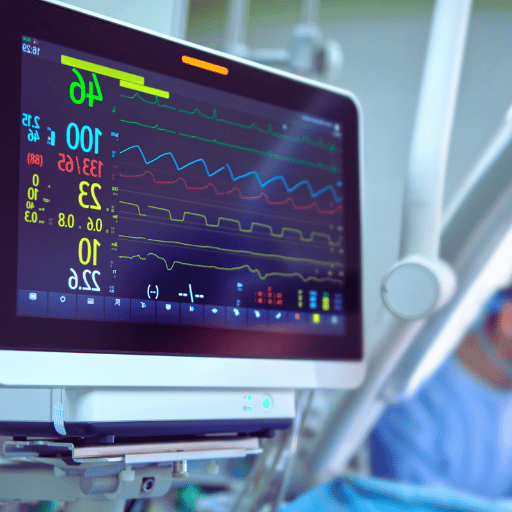
Diagnostic display covers, patient monitor windows, and surgical lighting lenses. Medical design requirements are highly stringent in terms of cleanliness, durability, and biocompatibility.
Technical Specs
- Autoclave rated (121–134 °C)
- Chemical resistance
- High transmittance (>92%)
- ISO 13485 compliant

Industrial Control Panels
HMI overlays, outdoor display windows, and equipment sight glasses. These industrial environments require high impact resistance and thermal cycling endurance.
Technical Specs
- Thickness: 4mm – 10mm
- Temp: −40 °C to +85 °C
- AG etch for sunlight readability
- IP65/67 compatible

Automotive Smart Cockpits
Center console displays, instrument cluster covers, and HUD combiners. Automotive glass must withstand extreme thermal cycling and meet tight safety parameters.
Technical Specs
- Thermal cycling: -40 °C to +110 °C
- Low birefringence for HUD
- CNC-machined shapes
- ECE R43 / FMVSS 205 standards
Thermal Tempering vs Chemical Tempering — Process Comparison
How Chemical Strengthening Differs From Thermal Tempering
Chemical strengthening (also know as chemical tempering or ion-exchange strengthening) is a whole other ballgame. Chemical strenghtening involves immersing the glass in a bath of molten potassium nitrate, at 380-450 C for 4-16 hours. Small sodium ions in the glass are replaced by potassium ions (K+) in the bath. The K+ ions are about 30% larger than the Na+, so they “crowd” the surface, creating enormous compressive stress. Unlike thermal tempering which creates surface compression by rapid cooling of the entire piece, ionic contrast create a superficial only effect.
| Parameter | Thermal Tempering | Chemical Strengthening |
|---|---|---|
| Process | Heat to 620–700 °C + rapid air quench | Ion exchange in KNO3 bath at 380–450 °C |
| Cycle Time | 4–8 minutes | 4–16 hours |
| Surface Compressive Stress | 80–150 MPa | 600–1,000 MPa |
| Depth of Compression Layer | ~20–25% of thickness per side | 20–100 μm |
| Minimum Glass Thickness | 3 mm | 0.1 mm |
| Compatible Materials | Soda-lime, low-iron, borosilicate | Aluminosilicate, soda-lime, specialty compositions |
| Optical Distortion | Minor roller wave + quench marks | Virtually none |
| Post-Treatment Cutting | Not possible | Possible with score-and-break (limited) |
| Relative Cost | Lower (faster cycle, simpler equipment) | Higher (salt bath, longer cycle, material cost) |
Saiwei’s Dual-Process Advantage
Most glass fabricators offer either thermal tempering or chemical strengthening. Saiwei Glass operates both processes under one roof, along with CNC machining, waterjet cutting, edge grinding, AR/AG/AF optical coatings, and silk-screen printing. Such integrated capability means that our engineering team can recommend the optimal process for each application without being constrained by equipment limitations.
For B2B clients, this means a much leaner supply chain. Instead of relying on multiple vendors who may or may not be located nearby-to a cut shop, a tempering house, a coating machine, etc.-you can deal with a single qualified supply who manages end-to-end production. Lead times are shorter, parts are not damaged in transit, quality control is tighter.
Not sure which tempering process suits your application?
Talk to Our Engineering TeamTempered Glass Thickness Calculator
Determine the optimal glass thickness for your application based on load requirements, dimensions, and glass type.
Parameters
Results
Enter your parameters and click Calculate to see recommendations.
Recommended Thickness
— mmEstimated Weight
— kgSafety Factor
—Glass Area
— m²

Custom Tempered Glass — Cut to Size & Engineered to Spec
CNC Machining & Waterjet Cutting for Precision Shapes
Even though standard rectangular panels are a simple design problem, most B2B applications have custom profile requirements: radiused corners, mounting holes, sensor cutouts, cable notches or complicated contoured profiles. All precise shaping is done at Saiwei Glass before the panel is tempered via one of two technologies.
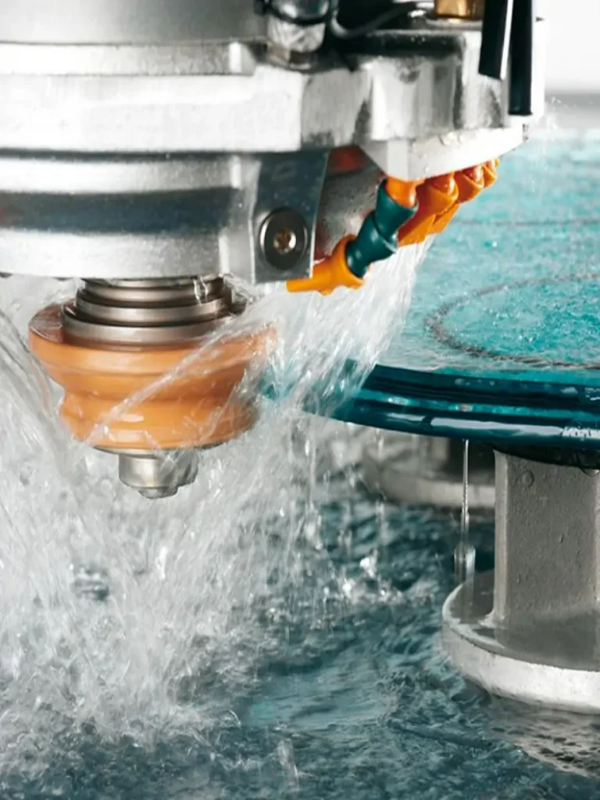
CNC glass machining is used for precise hole drilling, milling, edge profiling and chamfering. Positional accuracy is within 0.05 mm. Our centers use diamond-bonded tooling with a continuous coolant stream to eliminate any chance of microcracking at cut edges-(any micro crack left before tempering can become a stress riser that causes spontaneous panel failure). Tool paths are programmed from customer supplied CAD files in the customer file formats (DXF, DWG, STEP, IGES).
Waterjet cutting is used for complex freeform shapes, tight inside radii and heavy panels where scoring is difficult or impossible. Our waterjet operates at 60,000 psi with garnet media, giving you a surface quality ready for tempering and polishing in most circumstances. Waterjet is also the best choice for coated or laminated glass with no delaminating.
Finished tempered glass dimensions are usually held to within 0.5 mm (thermal relaxation of the tempering process can cause minor dimensional shifts) and hole position and cutout features within 0.1 mm (these are established during CNC machining since they are frozen in prior to temper).
Post-Processing — AR/AG/AF Coatings & Silk-Screen Printing
In most B2B projects, tempered glass serves as the substrate, not an end product in its own right. Most B2B applications require one or more surface coatings for optimal optical performance or aesthetics.
AR coating
AR coating lowers surface reflectance from ~8% (both sides, uncoated) to <1% and increases transmittance to 95%. This is critical for display cover glasses that must be very readable in sunlight. Our AR coatings are vacuum sputtered, rated 5H pencil hardness and 500 cycles of steel-wool abrasion.
AG coatings
AG coatings produce a matte texture that cuts down reflected light resulting in far less glare. This is more useful in outdoor industrial displays, automotive applications that will be exposed to sunlight when the light incident being absorbed by an AR coating is not enough to prevent glare. AG levels are specified as the haze percentage — usually 5-25% for the application.
AF (anti fingerprint)
AF (anti fingerprint/oleophobic) coating is a fluoropolymer layer that reduces the surface energy so that any fingerprints and oils can be easily wiped off. This is an important coating for touch operated products in the consumer electronics industry, where frequent cleaning takes place, and in medical applications where sterilization is commonplace. SAWAF is one type of AF coating that we deposit as a topcoat over our AR or AG layers.
Silk-screen printing
Silk-screen printing deposits opaque/translucent ceramic ink patterns which are then fired at high temperature during the tempering process itself. Typical uses include: black border bezels on the aesthetic face of medical instruments, corporate logos, warning labels, scale markings and decorative motifs. Our printing resolution allows for 0.15 mm line widths.
From Prototype to Mass Production
SAIWEI’s vertical production allows our clients to go from prototype to pilot to series production with the same process flow. Prototype orders range from 1-50 pieces with the same tooling that the series production runs use. Our lead times are generally 5-7 business days for prototypes, 15-25 business days for production order, depending on complexity and coatings used.
We recommend initial projects a DFM review, where our engineers review the customer’s drawings and check for issues (minimum hole-to-edge distances, stress concentration areas, coating compatibility, etc.) and give recommendations prior to tooling. This step avoids costly design iterations.
Upload Your Drawing for a Free DFM Review
Submit Your DesignWhy Choose Saiwei Glass as Your Tempered Glass Manufacturer
0+
Years in Operation
0
sqm Facility
0
Professionals
0
Industry Verticals
Integrated Capabilities Under One Roof
Process integration is the main benefit to working with Saiwei. Our 5,000 square meter production line in Dongguan combines the entire glass fabrication chain: CNC scoring and cutting, automated edge grinding, waterjet cutting, thermal tempering, chemical strengthening, AR/AG/AF optical coating, silk-screen printing into one location. Your order goes directly from the float line to the finished, coated, printed part ready for inspection and packing.
What are the benefits of such process integration? Every transfer to a different vendor-from cutter to temperer to coater-creates excessive handling risk (chips, scratches, cross contamination), increased communication overhead (spec misinterpretation), uneven product quality, increased lead time. Our quality team creates quality assurance check points at every step along the way using the same standards and measurement devices, and our engineers are able to walk from the CNC cell to the temper line in two minutes flat, to troubleshoot any process issues.
This vertical integration is a key advantage of working with SAIWEI for complex multi-process parts such as a tempered glass panel with CNC cutouts, polished edges, silk-screened bezel, and AR/AF coating stack. In a typical fragmented supply chain, this part would go through 4 or 5 separate vendors. Here it is one purchase order, one quality contact, and one shipment.
Serving Global B2B Clients
Our 90 person team includes a group of English speaking project engineers, quality engineers, and logistics managers who have worked on international B2B transactions before. We support general trade terms (FOB-shenzhen/dongguan, CIF, DDP), provide inspection reports in customer-specified format and ship via well-established lines to North America, Europe, and SEA.
4 Key Industry Verticals
In our 16+ years of business, we have developed particular expertise in 4 key verticals: Consumer-electronic covers (cover glass for phone, tablet, and wearable applications), Medical-equipment covers (cover glass for diagnostic and patient-monitoring panels), Industrial controls (HMI panels, ruggedized displays, sight glasses), Automotive smart cockpits (center console and instrument cluster covers). The diverse richness of this cross-market experience offers you the benefit of our engineering staff being able to preempt design issues particular to your market vertical before they arise.
Fully-qualified certifications and standards
Our processes are carried out under ISO 9001 quality practices. All products are designed, manufactured, handled, and tested to ASTM C1048, EN 12150-1, ANSI Z97.1, and your specifications. Certification packs, test data, and inspection reports come with every delivery.
Tempered Glass Pricing — What Affects Cost?
Pricing tempered glass is not straightforward because the figure is not a static value-it changes quite a bit based upon the size, volume, and additional value-added operations. In B2B markets, industrywide, the average range for standard custom-to-order laminated and tempered glass panels falls between $5-$40 per sqft.
Cost Factor
Impact on Price
Notes
Glass Thickness
Thicker = higher material cost
4 mm is the most cost-effective standard; 3 mm is the minimum for thermal tempering
Glass Type
Specialty glass costs more
Clear soda-lime is lowest; low-iron, tinted, and borosilicate cost 1.5–3× more
Size & Shape
Non-rectangular shapes increase cost
Complex CNC cutouts add $0.50–$3.00/piece depending on number of features
Edge Finishing
Polished edges cost more than seamed
Seamed (safety) edge: included. Flat polished: +$0.30–$1.00/linear ft. Pencil polished: similar.
Coatings
Significant adder
AR coating: +$2–$8/sqft. AG etch: +$1–$4/sqft. AF: +$0.50–$2/sqft. Stacked coatings cumulative.
Silk-Screen Printing
Moderate adder
Screen setup: $100–$300 per design. Per-piece cost: $0.20–$2.00 depending on print area and colors.
Order Volume
Higher volume = lower unit cost
Volume pricing starts at 500+ pieces. Prototypes (1–50 pcs) carry setup overhead.
Quality / Inspection
Tighter specs increase cost
Standard QC vs. 100% optical inspection vs. customer-specific inspection protocols.
Cost Projection Example
A realistic example: 6 mm clear soda-lime panes, rectangular, seamed edges, no coating, 1,000+ piece quoted order size, shows the price range when buying via a direct-from-the-mill supplier such as Saiwei as roughly $8-$15 per square foot. Incorporating CNC cutouts, polished (hand or machine finished) edges, AR coating, silk-screen printing increases price per square foot to roughly $20-35.
The Supply Chain Advantage
Direct from the source pricing is generally 30-50% lower than distributor or trading company buying quotes because of the absence of middleman margins and lower communication overhead-not to mention greater logistical convenience. This approach gives you an expensive-to-stock commodity at B2B quantities, a competitive advantage.
Get Your Custom Quote in 24 Hours
Request a QuoteInteractive Thermal Tempering Tools
Frequently Asked Questions
The main limitations are: (1) It cannot be cut, drilled, or edge-worked after tempering—all fabrication must happen beforehand. (2) Slight roller wave distortion may be visible from the horizontal tempering furnace, which can matter in optical applications. (3) Nickel sulfide (NiS) inclusions can cause rare spontaneous breakage; a heat-soak test per EN 14179 reduces this risk but adds cost and lead time. (4) Tempered glass shatters entirely into small granular fragments when broken—beneficial for safety but it means the panel is completely lost and cannot be salvaged. For projects where post-breakage retention matters, laminated tempered glass or heat-strengthened glass in a laminate is the standard workaround.
Rapid cooling solidifies the surfaces first, locking them in compression. The core stays in tension. Any force must overcome that compressive layer before a crack can start.
Thermal tempering uses rapid air cooling after heating to 620–700 °C, producing about 80–150 MPa of surface compressive stress. It works best for glass ≥3 mm thick and is cost-effective at high volumes. Chemical tempering (ion exchange) submerges glass in a molten potassium nitrate bath at 380–450 °C, swapping smaller sodium ions for larger potassium ions. The ion-exchange process yields 600–1,000 MPa of surface compression and handles glass as thin as 0.1 mm. Chemical tempering also preserves better optical quality and allows post-tempering cutting in some cases, but costs more per piece and takes longer. For example, a 0.7 mm smartphone cover glass would use chemical tempering, while a 6 mm shower door panel would use thermal.
4–5× stronger than annealed glass, 150–200 °C thermal shock tolerance, safe granular breakage pattern, and low per-unit cost at volume.
Most soda-lime float glass, low-iron glass, tinted glass, and some borosilicate compositions can be thermally tempered, provided the glass is at least 3 mm thick. Patterned and coated glass can also be tempered if the coatings withstand 620–700 °C. Fused silica and other ultra-low-expansion glasses do not benefit from the process.
Tempered glass typically costs $5–$40 per square foot depending on thickness, size, edge work, coatings, and order volume. Standard 6 mm clear tempered panels in volume orders sit near $8–$15/sqft. Custom shapes with CNC cutouts, polished edges, AR/AF coatings, and silk-screen printing push the price toward the higher end. Freight, MOQ, and import duties also affect unit cost. As a practical example, a 200-piece order of 6 mm clear tempered glass at 300 × 400 mm with polished edges might land around $10–$12/sqft direct from a manufacturer like Saiwei, compared to $18–$22/sqft through a domestic distributor—a savings of 30–50%.
No. Heat-strengthened glass is about 2× stronger than annealed glass; fully tempered glass is 4–5× stronger. The trade-off is breakage pattern: heat-strengthened glass breaks into larger pieces, which is useful in laminated assemblies where post-breakage retention matters.
Tempered glass handles continuous operating temperatures up to about 250–300 °C and thermal shock differentials of 150–200 °C. Prolonged exposure above 300 °C can relax the tempering stresses. For sustained high-temperature use, borosilicate or ceramic glass is a better choice.
Tempered glass is used wherever safety, strength, and thermal resistance are needed: smartphone cover glass, shower enclosures, glass doors, automotive windows, oven doors, industrial HMI touch panels, medical device displays, and architectural facades. In B2B contexts, it is commonly specified for electronic display covers and control panel overlays.
No. Cutting, drilling, or grinding releases the stress balance and shatters the panel. All fabrication happens before tempering.