Get in Touch with Saiweiglass


★★★★★
INDUSTRY VERIFIED
Soda Lime Glass — The World’s Most Versatile Glass Material
Soda Lime Glass: The Complete Guide to Properties, Composition, and Industrial Applications
Cost effective, easily shaped, and suitable for commercial use – so from display glass panels to home appliance covers. See why 90% of all glass is soda lime.
70%
SiO₂ Composition
>89%
Light Transmission
1M+
Annual Capacity
What Is Soda Lime Glass?
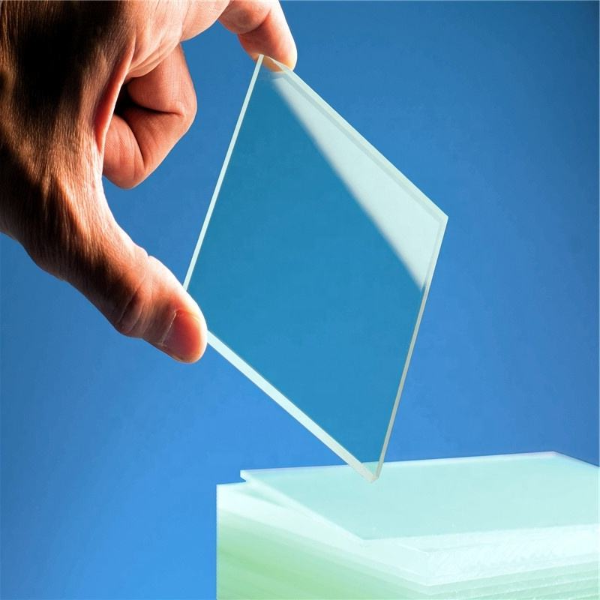
Soda lime glass – also called sodalimesilica glass, float glass or simply standard glass – is the dominant form of glass in use today; estimated to constitute 90% of all glass ever manufactured. As such, it forms the backbone of the modern glass industry.
Soda lime glass is In essence,” a network of silica (SiO) with the network formers, soda (NaO) and lime (CaO). Soda conducts as a flux – reducing the melting temperature from over 2,000 to around 1,100. Lime conducts as a stabiliser – improving chemical durability to make the glass water insoluble.
Arguably the most workable glass material available, soda lime is easy to redeform and remelt, and handles reprocessing in-furnace with ease. Recyclable without degradation and with abundance of raw materials, it is the most low cost form of glass.
Common Uses of Soda Lime Glass
- Window panes and architectural glass the (float) flat glass industry.
- Bottles and jars packaging for food, drink and pharmaceutical use.
- Tableware, bakeware and oven dishes drinking glasses, plates and cookware.
- Industrial cover glass data panels, touch panels and control panel covers.
- Car glass screens (laminated glass) and side windows (tempered).
We purchase and process soda lime every day at SW GLASS and regularly mark its impressive optical and mechanical qualities, temper ability, and cost effectiveness as a core advantage of our industrial cover glass applications.
Soda Lime Glass Composition and Chemical Formula
By known formula, the chemistry of soda lime glass remains almost identical over time, ensuring predictable and constant properties in every batch.
| Component | Chemical Formula | Percentage | Function |
|---|---|---|---|
| Silica | SiO₂ | 70–75% | Primary glass former; provides the network structure (silicon dioxide) |
| Sodium oxide (Soda) | Na₂O | 12–16% | Flux; lowers melting temperature from ~1700°C to ~1000–1500°C |
| Calcium oxide (Lime) | CaO | 5–12% | Stabilizer; improves chemical durability, prevents water solubility |
| Magnesium oxide | MgO | 0–4% | Improves workability and reduces devitrification tendency |
| Alumina | Al₂O₃ | 0–3% | Enhances chemical resistance and mechanical strength |
| Iron oxide | Fe₂O₃ | Trace | Unavoidable impurity in sand; causes characteristic green tint at edges |
Raw Materials
The three main raw materials that comprise soda lime are:
Silica sand (quartz)
The basic source of silica, (SiO) which must possess a purity of at least 99% for use in optical quality glass.
Soda ash
(Sodium carbonate, NaCO) – the fluxic component of soda lime. Practical melting (less than 1700C) is impossible without soda.
Limestone
(Calcium carbonate, CaCO) – the stabilize, gravity fed at a ratio of 16:1 into the electric furnace. The addition of lime to the recipe makes the soda-silica glass water insoluble.
These raw materials are then blended with cullet (ground-down recycled soda lime glass) in initial batching, providing an additional 25-50% resource saving energy and materials without effecting the quality of the end product.
Key Properties of Soda Lime Glass
Knowing the physical and chemical properties of soda lime glass ensures optimum material selection, and below is a detailed specification table.
| Property | Value | Notes |
|---|---|---|
| Density | 2.44–2.52 g/cm³ | Slightly heavier than borosilicate (~2.23 g/cm³) |
| Refractive Index | 1.51–1.52 | At 589 nm (sodium D-line); excellent optical clarity |
| Melting Temperature | 1000–1500°C | Softening point ~700 °C |
| Thermal Expansion Coefficient (CTE) | 8.5–9.5 × 10⁻⁶/°C | Higher than borosilicate; key factor in thermal shock sensitivity |
| Thermal Conductivity | ~1.0 W/(m·K) | Low; glass is a natural insulator |
| Hardness (Mohs) | 6–7 | Comparable to feldspar; scratch-resistant under normal use |
| Light Transmission | >89% | Clear float glass, visible spectrum |
| Dielectric Constant | ~7.0 at 1 MHz | Relevant for capacitive touch and sensor applications |
| Chemical Resistance | Moderate | Resistant to most acids; susceptible to strong alkalis and HF |
| Mechanical Strength (Annealed) | 30–70 MPa | Tensile strength of untreated glass |
| Mechanical Strength (Tempered) | 120–200 MPa | 4–5× improvement over annealed |
Property Highlights
Optical Transparency is another of soda lime glass’s exceptional qualities. Actual light transmission across the visible spectrum can be as high as 89% or more. Clear float soda lime glass is an excellent consumer product for display cover glass, touchscreen panels and architectural glazing. With the addition of our anti-reflective (AR) coating in our U. S. facilities, transmission can be increased to 95%+.
Industrial usage indicates a long service life due to its good durability in normal use. Soda lime glass has excellent chemical corrosion stability in contact with water, acids and even most aggressive environments. The material can perform well for decades or more without deterioration.
Tempering is perhaps the Industrial front of soda lime glass’s advantage. Its relatively high coefficient of thermal expansion (a hindrance for good thermal shock resistance) leads to a perfect orienting for physical and chemical strengths by both chemical and physical treatments. Both physical and chemical hardening techniques are highly effective on soda lime glass.
Soda Lime Glass vs Borosilicate Glass
Comparison of soda lime glass to borosilicate glass is one of the most common inquiries we receive from engineers and buyers. Both materials are excellent, but used in the same application profile, one is better suited to the specifics of each task. Knowing the specifics of each material is critical to making the right choice from the beginning.
| Property | Soda Lime Glass | Borosilicate Glass |
|---|---|---|
| Composition | 70% SiO₂, 15% Na₂O, 9% CaO | 80% SiO₂, 13% B₂O₃ |
| Thermal Expansion (CTE) | 8.5–9.5 × 10⁻⁶/°C | 3.3 × 10⁻⁶/°C |
| Thermal Shock Resistance | Low (~60°C) | High (~160°C) |
| Melting Point | ~1000°C | ~1650°C |
| Chemical Resistance | Moderate | Excellent (resists acids, alkalis, organic solvents) |
| Cost | Lower (most cost-effective glass type) | 3–5× higher |
| Tempering Capability | Easily tempered (chemical + physical) | Difficult to temper (low CTE limits process) |
| Impact Resistance (Tempered) | Higher when tempered | Lower (cannot be effectively tempered) |
| Common Applications | Windows, displays, appliance panels, cover glass | Laboratory glassware, cookware, pharmaceutical vials |
When to Choose Soda Lime Glass
Soda lime glass has the advantage of being less costly than borosilicate when it is the desired choice. An additional advantage is that soda lime can be effectively tempered using both physical and chemical processes, with the obvious advantages in protection and mechanical strength. With no modifications, tempered soda lime glass achieves mechanical strength of 120-200 MPa. No destructive shards are formed in the break, tempered soda lime glass will break into small, relatively harmless pieces.
When to Choose Borosilicate Glass
The major advantage that borosilicate has over soda lime is in its excellent chemical and thermal shock resistance. Its coefficient of thermal expansion is only 3.3 10/ C making it resistant to sudden contact with differing Temperatures in the concentration range of 300-500 C. Borosilicate does not leach chemicals even in extreme pH environments and is thus the conventional choice in applications utilizing aggressive chemicals, be it table ware, laboratory ware or pharmaceutical packaging. It is the addition of the B2O3 constituent that affords borosilicate the excellent chemical and thermal shock properties.
Applications of Soda Lime Glass Across Industries
Soda lime glass is the appropriate choice when cost is the principal consideration, for applications requiring its excellent durability and impact resistant cladded strength, and when tempering is necessary for safety and handling. We can temper soda lime glass for application at a mechanical strength ranging from 120-200 MPa or more, far more than can be economically obtained with borosilicate glass. None of the dots will shatter into dangerous shards, soda lime glass when chemically hardened, comes apart into thousands of glass fragments of manageable size.
Thermal shock and chemical resistance are where borosilicate glass really outperforms soda lime. Its coefficient of expansion is a low 3.3 × 10⁻⁶/°C allowing it to withstand heat differential approaches of around 300°C without shattering. It also contains no leachable chemicals and maintains its inert properties even at extremely high or low pH levels. This is why borosilicate is considered the ‘working man’ of the glass industry, designated for use in chemical production, handling and pharmaceutical/ laboratory equipment, and even art ware.
We process both Borosilicate and soda lime, but for industrial display and cover glass applications, we have vast experience in the use of chemically strengthened soda lime glass. Our experience dictates that 95% of touch panel, HMI display and appliance cover glass projects are appropriately served by chemical strengthening or tempering of soda lime glass. The cost is considerably lower, and the end result appears to be more robust.
01
Touch Display & Control Panels
Industrial HMI panel displays, marine navigation screens, crane operator display covers, and self-service kiosk screens. We manufacture soda lime cover glass for control panels as thin as 2.0 mm. For example 240×206×2.0mm crane display panel with chemically strengthened and screen-printed finish.
02
Household Appliances
Cover glass for coffee machines, oven doors, heater control panels, range hoods and refrigerator display windows. These require tempered soda lime glass that can withstand moderate thermal cycling in use and from the safety parameters attached to contact with food.
03
Smart Home & IoT Devices
Designed for Socket switch panels, thermostat covers, smart home hub screens and security panel touch systems… These glass product commonly use ultra thin chemically toughened soda lime glass with multi-colored screen printing branding interfaces.
04
Lighting Applications
Garden lamp lenses, wall washer covers, pool light windows, and architectural lighting diffusers.. We use ultra-clear soda lime glass with high-temperature silk screening on lighting items that demand high light transmittance and outdoor performance.
05
Automotive & Aerospace
For vehile-mounted display covers, instrument panel glass, dashboard touch screens and head-up display substrates. Cover glasses for automotive are required to have “Close dimensional tolerance, Anti-glare surface treatment and Chemical strengthen for anti-vibration properties”.
06
Medical Devices
Display cover glasses for patient monitors, diagnostic panel equipment, and surgical device panels. We manufacture biocompatibility certified high Quality medical grade cover glass like a 170×82×2.0 mm AG-etched soda lime glass for a medical device display.
How Soda Lime Float Glass Is Made
The float glass process was revolutionary and invented by Sir Alastair Pilkington in 1959. All most all of soda lime flat glass today is produced by this process. It produces flat glass with no appreciable deviation in the plane within the limits of the process.
01
Batch Mixing
Silica sand, soda ash, and limestone are weighed and mixed with cullet (recycled glass fragments)
02
Melting
The batch is heated to ~1500°C in a continuous furnace; raw materials melt together and fuse into molten glass
03
Floating
Molten glass is poured onto a bath of molten tin at ~1000°C, forming a perfectly flat, uniform ribbon
04
Annealing
The glass ribbon passes through an annealing lehr for controlled cooling, relieving internal stress
05
Cutting
Cooled glass is inspected for defects, scored, and cut into standard sheets for distribution
Why the Float Process Matters for Industrial Applications
The float glass process results in a soda lime glass with properties essential to subsequent processes:
Consistent thickness
May be kept under 0.1mm variation of thickness is very necessary when the material is to be cut by CNC with high accuracy, and display cover glasses for high-technology instrument.
Optical flatness
The molten tin bath produces very smooth fire-polished surfaces on both sides so grinding and polishing are not required.
Qualité constante
Production en continu (fours tournant 24h24 10 15ans) garantit la reproductibilité d’ une série à l’autre.
Wide thickness range
Standard float glass is produced from 0.55 mm to 25 mm thick.
Tempered and Chemically Strengthened Soda Lime Glass
Strengthening transforms ordinary soda lime glass from a brittle material into a high-performance engineering substrate. We use two distinct strengthening methods at SW GLASS, each suited to different thickness ranges and performance requirements.
Physical Tempering (Heat Strengthening)
- Glass is heated to 620–680°C (above the annealing point but below the softening point)
- Rapidly cooled with high-pressure air jets (quenching)
- Creates compressive stress on the surface and tensile stress in the interior
- Result: 4–5× stronger than annealed glass
- Minimum thickness: 3 mm — thinner glass cannot survive the thermal quenching process
- Easily shatters into small small pieces (relatively benign chunks of >100—50 mm area)
- Certifiable to EN 12150 (thermally toughened soda lime silicate safety glass)
- Cannot be cut, drilled, or modified after tempering
Chemical Strengthening (Ion Exchange)
- Glass immersed into a hot (400°C) potassium nitrate (KNO₃) salt bath
- Large K⁺ ions replace smaller Na⁺ ions on the glass surface resulting in a residual compressive stress
- Thus will: CS (>450 MPa), DOL (>8 μm)
- Work with glass thinner than 3 mm – the only practical strengthening method for ultra-thin cover glass
- Maintains full optical clarity with no surface distortion
- Can be cut before strengthening for tight dimensional control
- Process time: typically 4–8 hours depending on desired DOL
Choosing the Right Strengthening Method
The most common decision between physical tempering and chemical strengthening is glass thickness. For glasses 3 mm thick and greater, physical tempering is more cost effective and provides sufficient strength. For negatives lower than 3 mm, chemical strengthening is the only process option. We selectively to treat glasses such as thicker substrates by physical tempering and then to chemically strengthen them in specialist applications requiring the highest possible performance. Both methods form residual surface compressive stress that significantly enhances impact resistance, surface durability and flexural strength.
Custom Soda Lime Glass Processing by SW GLASS
Dongguan Saiwei Glass Co., Ltd (SW GLASS) is a modern glass deep processing manufacturer with 10 years’ OEM experience. We supply to a range of world leading customers in the industrial, consumer and medical device sectors.
10+
Years OEM Experience
50+
Product Technicians
100+
Automated Equipment
1M+
Annual Capacity
3
Production Facilities
Processing Capabilities
- CNC precision cutting & edging
- High-precision screen printing (multi-color)
- Chemical strengthening (CS>450 MPa, DOL>8 μm)
- Physical tempering (EN 12150 compliant)
- AG (Anti-Glare) etching — single/double side
- AR (Anti-Reflective) coating — single/double side
- AF (Anti-Fingerprint) coating
- ITO conductive coating (3–800 Ω/sq)
- Hole drilling & slot grooving
- Step glass processing
Quality Certifications
- ISO 9001:2015
- EN 12150
- Medical Biocompatibility
- SEB Group Authorization
Glass Thickness & Strength Calculator
Enter panel dimensions and application details to get a recommended glass specification
Input Parameters
Engineering Specifications
Enter your panel parameters and click
Calculate Specification to see results.
Recommended Thickness
— mm
—
Dimensions & Weight
— × — mm
—
Strengthening Spec
—
—
Stress Classification
—
—
Ready to Start Your Soda Lime Glass Project?
From material selection to finished cover glass – our engineering team is ready to support your project with custom processing, rapid prototyping, and volume production.
Request a Custom Quote