Get in Touch with Saiweiglass


Silk Screen Printing
Silk Screen Printing on Glass — Precision Industrial Glass Printing by Saiweiglass
From ultra-thin cover glass for consumer electronics to architectural ceramic frit panels for curtain walls, Saiweiglass offers highly detailed silk screen glass printing in paint quality ceramic enamel fired at 620-700C. Every print is permanently bonded and scratch proof, built to last decades.
Get Instant Quote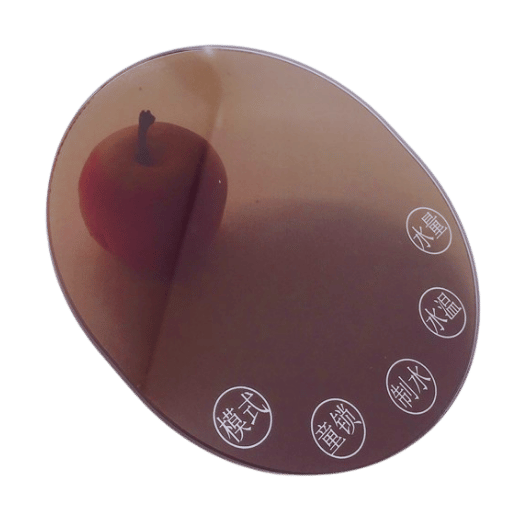
What Is Silk Screen Printing on Glass?
Silk screen printing on glass is an industrial decorating process whereby specially formulated paint usually ceramic glaze is transferred using a fine mesh screen to the surface of a substrate; then pre-baked until the ink, composed of ceramic pigments is melted. This process is used in contrast to simpler screen printing processes on textiles or paper, as it requires highly durable inks with knowledge of the extreme furnace temperatures the painted glass has to endure.
The earlier name for silk screen work; meshes were once made from silk thread. Now, commercial glass screen printers use stainless steel or polyester mesh with a precise mesh count between 60 and 400 threads per inch depending on the image detail and the amount of ink deposit required.
What sets screen printing on glass apart from most printing processes is the heating process. Once the ink has been silk screened, the coated glass proceeds into a furnace at a temperature of 620-700C, at which time the ceramic pigmented ink passes from being a thick coating on the surface into a molecular bond with the surface of the glass workpiece itself; the ink will not peel, fade, scratch, degrade by sunlight or weathering or react to common pollutants or chemicals.
For more than 16 years, Saiweiglass has run screen printing presses in conjunction with CNC machining, waterjet cutting and chemical strengthening locations to facilitate the entire process from raw substrate to complete finished item.
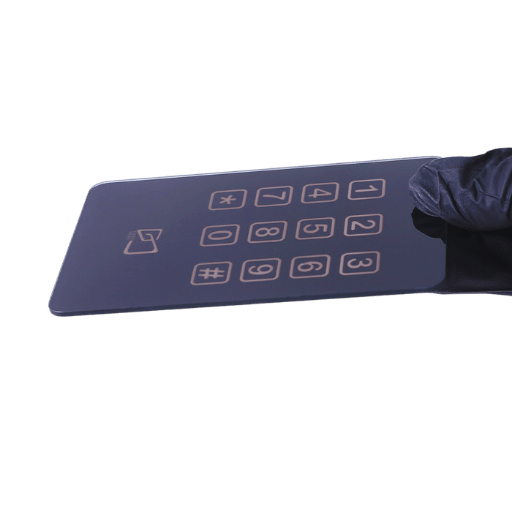
How the Glass Screen Printing Process Works
Industrial screen printing on glass occurs in six distinct stages, each stage is where the quality of the finished piece depends; any individual step can affect the finished appearance of every piece produced with speed, skip the process and the finished piece is compromised. Here is our line at work:
Step 1 — Artwork Preparation
Design & Film Output
The customer’s concept artwork is converted into production ready film positives. Each color will require a separate positive and each positive requires its own screen. Dimensions, registration marks and bleed controls are checked prior to moving on. For extremely accurate cover glass applications, the tolerances are held to 0.1mm.
Step 2 — Screen Making
Stencil & Mesh Preparation
A fine mesh screen, a polyester for low volumes or intermediate detailed print, or a stainless for continued precision in repetitive work, is coated with a photosensitive emulsion followed by a period of drying in a clean, dry environment. The positive imagery is placed upon the freshly coated screen and exposed to a UV light. The action of the UV light exposes the emulsion in those areas not protected by the negative. The unexposed resin washes away freely leaving the parts of the mesh that have to remain open during the ink application. The selection of mesh count has even more influence over the quality of the finished print than the selection of a paint: 80–120 is desirable for depositing a high degree of opaque ink, while 200–400 allows best detail reproduction.
Step 3 — Ink Preparation
Mixing & Viscosity Control
Ceramic glaze paints are prepared by mixing together metal oxide pigments with finely ground glass making powder until the formulation appears fairly uniform, then the viscosity is checked and modulated according to the mesh count as well as the film deposit thickness one wishes to achieve. This balance is critical in practice — if the paint is too thick, the mixture will clog the mesh; if it is too thin, it will bleed beneath the stencil.
Step 4 — Printing
Ink Application via Squeegee
The glass is clamped on the print bed and held in position by vacuum hold down. The squeegee moves across the screen moving the ceramic ink across the surface and through the mesh openings onto the glass. The pressure of the squeegee, the angle of the edge and speed of the stroke are adjusted to suit each job. This is where 98% of the skill of the printer determines the quality of the product. If more than one color is involved the designs will be successive printed and dried in stages prior to the next application.
Step 5 — Drying
Controlled Evaporation
The printed glass then enters a drying tunnel running at 150–200°C where the solvent is driven off. The ink film should be free from pinholes and bubbles and evenly dried before entering the tempering furnace. Finding this stage rushed is one of the common causes of printing faults in inferior glass printing units.
Step 6 — Firing & Tempering
Permanent Fusion at 620–700°C
The glass is brought to the tempering oven at 680–720°C, a double action takes place: the glass is heat treated to a certain extent to be safe (tempered) and the ceramic ink is permanently fused into the glass surface. Pigment particles melt and bind to the glass substrate, meaning that once cooled down, the printed surface can not be removed by any practical way. And this is the secret behind the durability of ceramic screen printing.
Types of Ink for Screen Printing on Glass
The ink you choose affects the life span, the color intensity and the suitability of the application. Not all inks are the same. There is a common mistake made by buyers who only consider color and price – choosing the incorrect ink to withstand their environment.
| Property | Ceramic Enamel Ink | Organic Ink | UV-Curable Ink |
|---|---|---|---|
| Firing Temperature | 620–700°C | 150–200°C (dry only) | Room temp (UV cure) |
| Durability | Permanent — fused into glass | Moderate — surface adhesion | Moderate — surface coating |
| UV Resistance | Excellent (decades) | Limited (fades in 3–5 years) | Good (5–10 years) |
| Scratch Resistance | Excellent — part of glass surface | Poor — can be scratched off | Moderate |
| Chemical Resistance | Excellent | Poor | Moderate |
| Color Opacity | High — thick opaque layer | Medium | Medium-High |
| Exterior Use | Yes | No | Limited |
| Food Safe Options | Available (certified) | Limited | Generally no |
| Best For | Architecture, automotive, electronics | Decorative indoor glass | Short-run decorative, signage |
With any glass item that is going to be exposed to sunlight, weather, cleaning and other chemicals or physical abuse, ceramic enamel ink is the only professional choice. It’s the higher firing point that’s really noticeable – organic inks are just dried onto the surface, whereas ceramic pigments become integrated into the glass.
For all screen print jobs at the Saiweiglass facility, ceramic enamel is our default color medium. We have an inventory of over 200 Pantone-matched ceramic colors and have the capability to custom-mix to any RAL or proprietary color formula. For cover glass applications in consumer electronics, we also provide UV-curable specialty inks requiring low-temperature curing to prevent damage to existing pre-applied coatings.
Glass Types Suitable for Screen Printing
Since the vast majority of flat glass substrates can be screen printed, it is not a matter of whether you can successfully screen print a particular type of glass, but which type of glass is suitable for your application.
| Glass Type | Thickness Range | Screen Print Compatibility | Typical Applications |
|---|---|---|---|
| Soda-Lime Float Glass | 2–19 mm | Excellent Standard substrate | Architecture, partitions, furniture |
| Low-Iron (Ultra-Clear) Glass | 3–19 mm | Excellent Best color accuracy | High-end displays, color-critical applications |
| Tempered (Toughened) Glass | 3–19 mm | Print BEFORE tempering only | Facades, spandrel panels, safety glazing |
| Chemically Strengthened Glass | 0.5–2 mm | Excellent Print before or after strengthening | Smartphones, tablets, touch panels |
| Aluminosilicate Glass | 0.5–3 mm | Excellent High surface hardness | Cover glass, wearables, medical devices |
| Borosilicate Glass | 2–10 mm | Good Higher softening point requires adjustment | Laboratory, lighting, high-temp applications |
| Laminated Glass | 6–40 mm (assembly) | Print on component lite before laminating | Safety glazing, automotive, acoustic panels |
Tempered Glass Cannot Be Screen Printed
A common surprise for many buyers: glass cannot be screen printed once it is tempered. It is impossible to cut, drill or reheat tempered glass as it will shatter. Screen printing needs to be applied to annealed glass. The tempering cycle then effectively completes the firing of the ink within the same heat to produce the strengthened, heat fired glass and screen print. This approach is common practice on all architectural screen printed glass across the globe.
Ultra-Thin Cover Glass for Electronics
For ultra-thin (< 1 mm thick) cover glass panels used in consumer electronics, medical technology etc our chemically strengthened and aluminosilicate glass substrates provide the high quality surface necessary to allow fine-detail screen printing with registration of 0.1 mm.
Silk Screen Printing vs Digital Printing on Glass
Both of these glass printing processes can be performed with ceramic inks that are fired for permanent results. It is really a matter of what complexity of a design you have, how many pieces you need, and how important cost is. Here is an honest comparison based on what we see on our production lines:
| Factor | Silk Screen Printing | Digital Printing |
|---|---|---|
| Ink Layer Thickness | 15–40 microns (thick, opaque) | 5–15 microns (thinner) |
| Color Opacity | Excellent for solid colors | Good — but may need multiple passes for full opacity |
| Design Complexity | Best for solid colors, patterns, text | Photographic images, gradients, multi-color artwork |
| Setup Cost | Higher (custom screen per color) | Low (no physical screen needed) |
| Cost per Piece (500+ units) | Lower — screen cost amortized | Higher at volume |
| Cost per Piece (<100 units) | Higher — screen cost not amortized | Lower |
| Color Matching | Precise Pantone/RAL matching | CMYK process — close but not exact |
| Production Speed (large runs) | Faster — continuous printing | Slower — each piece printed individually |
| Design Change Flexibility | New screen required | Instant — change digital file |
| Durability After Firing | Equal (both use ceramic ink fired at 600–700°C) | Equal |
Our Recommendation
For one to three solid colors with graphic lines, and 500 or more pieces, screen printing will always be cheaper, better, thicker (as pixels per inch, not just ink thickness, directly affects opacity) and fundamentally “better.” Photographic images or more complex colors and/or smaller cycles? Then digital makes more sense.
Many customers run multi-process jobs, combining screen-printed backgrounds with digitally overprinted graphics. We do it here all the time, as it gets you the ultimate in durability with fine design flexibility.
Applications of Screen Printed Glass Across Industries
Screen printed glass finds applications in an incredible number of industries. What all of them have in common is a need for reliable, well-applied, visually stable graphics on various types and thicknesses of glass.
Consumer Electronics
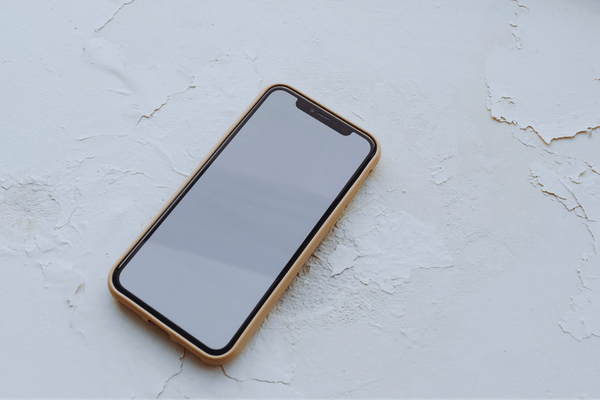
Smart phone cover glass, with screen printed bezel, logo, sensor window and decorative border on chemically strengthened, aluminosilicate glass as thin as 0.5mm.

Architectural Facades
Ceramic frit spandrel glass, decorative curtain wall panels, privacy partitions and bird friendly glass (dotted and line patterns). Screen printing with ceramic enamel frit is the de-facto industry standard for architectural exterior applications.
Automotive & Smart Cockpit
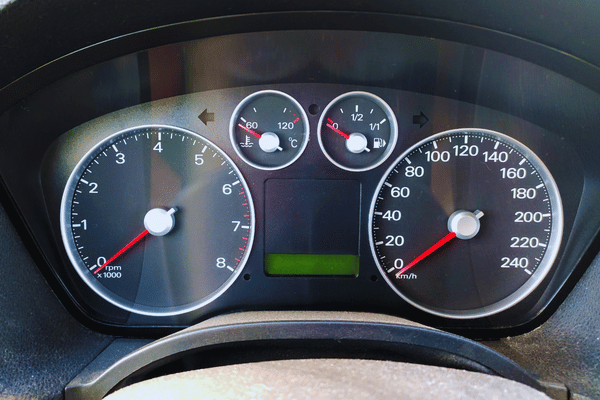
Instrument cluster cover glass, center console displays, head up display (HUD) components, interior trim panels. Automotive screen printing requires tight tolerance specifications and withstands high areas of thermal shock, a capacity of ceramic inks.

Industrial Control Panels
Industrial equipment glass touch interfaces, HMI panels, elevator control interfaces, medical devices. These applications require high resolution, anti-glare (AG) or anti-fingerprint (AF), and scratch-resistant qualities from the printed ink.

Lighting & Home Appliance
LED lighting covers, oven door glass (with heat resistant print symbols), cook top panels, switch panels, decorative panels for both interiors and furniture. Tempered glass products, with high temperature screen printing, must survive the continuous thermal cycling of applications such as ovens or hot household environments.
Saiweiglass has historically been very successful providing screen printed glass parts across these five sectors. We produce a catalog of over 40 different categories of screen printed glass products- from luxury optical components to 60′ x 120′ architectural panels- and we can apply our imaging technology to just about any of them.
Get Instant QuoteQuality Control & Industry Standards for Silk Screen Printed Glass
Screen printing on glass for industrial use is not the same as decorative printing — the standards are exacting, and the consequences of quality failures are measured in project delays and warranty claims, not just aesthetics. Here is what professional quality control looks like in our facility:
Adhesion Testing
Every batch of production undergoes cross hatch adhesion testing in accordance with ISO 2409. A grid is scored into the fired-on ink layer and is tested with adhesive tape – a properly bonded ceramic enamel will show zero delamination. All ink lift is rejected, which is indicative of incorrect firing temperature or contamination of the glass surface.
Color Consistency
Color is measured with a spectrophotometer against the approved sample. We hold a Delta E (ΔE) tolerance of ≤2.0 across production runs — tight enough that the human eye cannot distinguish variation. For Pantone or RAL critical colors, we maintain master color standards and verify against them at the start of every shift.
Dimensional Accuracy
Print registration is verified against design specifications using optical measurement systems. For cover glass applications, we hold position accuracy to ±0.1mm — essential when printed borders must align with display bezels, touch sensors, or camera apertures. Architectural panels follow a less demanding ±0.5mm standard.
Durability & Weathering
Ceramic screen printed glass is tested for UV resistance (1,000+ hours accelerated weathering), chemical resistance (acid and alkali exposure), thermal cycling (–40°C to +85°C), and abrasion resistance. These tests confirm the printed surface will perform for the design life of the building or device — typically 25–30 years for architectural glass.
Our printing plant operates under ISO 9001:2015 quality assurance and adheres to standards including EN 12150 (thermally toughened glass), ISO 12543 (laminated glass), and ASTM C1048 (heat treated flat glass). At each shipment we include a Certificate of Conformance along with datasheets of all tests undertaken.
Screen Printed Glass Project References
CASE STUDY — CONSUMER ELECTRONICS
Touch Panel Cover Glass for Smart Home Controller
A European smart home device producer needed 0.7mm chemical strengthened cover glass with screen printed bezels, icons, and sensor window – all in matte black ceramic ink with 0.1mm registration accuracy. The negative screen area had to be precisely aligned with the capacitive touch areas without any interference.
Result: 50,000 pieces delivered over 6 months with 99.2% first-pass yield
The primary difficulty was achieving this level of screen definition on ultra-thin glass through the chemical strengthening process. Our approach was to print a raw aluminosilicate before strengthening. The 400C ion exchange process does not alter fired ceramic ink.
CASE STUDY — ARCHITECTURAL GLAZING
Ceramic Frit Spandrel Panels for Commercial Office Tower
An architectural fabricator was producing 6mm tempered frit-glass panels in a custom gradient pattern from 60% screen coverage at the top to 20% at the bottom. The architect specified RAL 7016 color, with 1.5 E tolerance, across 2,400 panels.
Result: Full order delivered in 10 weeks with zero color rejections
Gradient patterns are among the most difficult to print, as the frit density transition has to be consistent from panel to panel. We created three separate screens, and used our spectrophotometer-based quality assurance system to guarantee color match quality every 20th panel.
CASE STUDY — INDUSTRIAL EQUIPMENT
HMI Control Panel Glass for Industrial Automation System
A machinery producer required tempered glass panels with multi-color screen printing, antipollution coating, and anti-glare surface treatment – all on one 4mm substrate. The panels had to withstand several years in an industrial factory environment: oil mist, cleaning solvents, and repeated handling.
Result: Passed 500-hour salt spray and 10,000-cycle abrasion testing
“We had tested printed panels from three suppliers before Saiwei. The others all showed ink lifting or color shift after our chemical resistance testing. Saiwei’s ceramic print was the only one that survived our full qualification protocol.”
Our Screen Printing Glass Capabilities & Custom Solutions
Saiweiglass functions as a full-service glass shop, with screen printing as one of our capabilities in an integrated manufacturing ecosystem. The significance of that is that most screens-glass orders also need cutting, edging, strengthening, coating, or laminating – taking care of all those steps here cuts lead time, cost, and risk.
| Capability | Specification |
|---|---|
| Printing Method | Flat-bed silk screen printing (semi-automatic & automatic lines) |
| Maximum Print Size | 1500mm × 2500mm (single pass) |
| Minimum Print Detail | 0.15mm line width / 0.3mm dot diameter |
| Registration Accuracy | ±0.1mm (cover glass) / ±0.5mm (architectural) |
| Glass Thickness Range | 0.5mm – 19mm |
| Ink Types | Ceramic enamel (standard), UV-curable, organic |
| Color Matching | Pantone, RAL, custom — ΔE ≤ 2.0 |
| Colors per Design | Up to 6 colors (separate screen per color) |
| Surface Treatments | AG (anti-glare), AR (anti-reflective), AF (anti-fingerprint) — before or after printing |
| Post-Print Processing | Tempering, chemical strengthening, laminating, CNC edge finishing, waterjet cutting |
| MOQ | 100 pieces (custom screen) / 500 pieces (price-optimized) |
| Sample Lead Time | 5–7 working days |
| Production Lead Time | 15–25 working days (order size dependent) |
Standard steps for custom projects:
Step 1
Send files and specs
Step 2
Engineering evaluation, DFM feedback (1-2 days)
Step 3
Sample production (5-7 days)
Step 4
Customer approval
Step 5
Production
Step 6
QA inspection, shipping.
Custom Screen Printing On Glass Guide Tools
Access our specialized interactive suite designed to streamline your glass manufacturing process, from initial method selection to precise cost forecasting.
Interactive Tool
Method Selector
Evaluate different screen printing techniques and find the one that perfectly matches your glass design requirements and project budget.
Launch Selector
Interactive Tool
Cost Estimator
Generate instant project quotes and production timelines by inputting your specific glass dimensions and screen printing parameters.
Launch Estimator
Interactive Tool
Glass Checker
Run a technical verification on your glass material to ensure it meets the necessary standards for high-quality screen printing durability.
Launch Checker
Frequently Asked Questions About Glass Screen Printing
What is silk screen printing on glass?
Glass screen printing is an industrial process by which ceramic enamel ink or dye is forced through a fine net stencil using a squeegee onto a flat glass surface. The squeegee pushes the ink across the surface of the mesh. Ink deposited on the glass is fired in the tempering process which fuses the ink into the glass permanently. This process renders the surface scratch resistant, weatherproof and long-lasting (decades). Ceramic screen printing is the industry standard for any type of commercial/decorative plastics, tempering, or electronic cover glass.
What ink is used for screen printing on glass?
For long-term industrial use, ceramic or frit based ink (also called ceramic frit ink) is always used. This ink or dye contains a finely ground mixture of metal oxide particles and a thin layer of glass powder all suspended within a carrier (binder). When fired at 620-700C, the inks or dyes will fuse into the glass surface and then be permanently inert. Several alternative products such as organic-based inks or UV-curable inks are available but are intended for applications at lower operating temperature and are not recommended for outdoor use.
Can you silk screen print on tempered glass?
The answer is yes, but the glass needs to be printed prior to tempering, rather than after. Because the glass will shatter if you attempt to reheat it, the only option if the glass has already been tempered is to produce the art work on paneled annealed glass, and then send it through the tempering oven (680-720C). The ink firing occurs during the tempering operation which occurs on the same tandem oven.
What is the difference between silk screen printing and digital printing on glass?
Screen printing pushes Ink through a stenciled mesh pattern using a rubber squeegee. The ink is deposited at a relatively thick layer (15-40 microns) which is perfect for covers, solid colors, high opacity, 1-color designs, and large orders. Digital printing sprays ink directly onto the glass using inkjet heads at a correspondingly thinner layer (5-15 microns). The process can produce photographic detail and tonal gradation, without the need for screens. Screen printing usually is most economical (under $12/ft2) above 500 pieces, whereas digital printing excels at small runs with complex images. Both can use carefully formulated ceramic inks which fire to the same durability qualities.
How to print on glass permanently?
Ceramic enamel silk screen printing with a high temperature firing of 620-700C (1150-1300F) is unquestionably the most durable glass printing process. When the ceramic mineral pigments are fired the material dissolves into the glass substrate at a molecular level and bonds to that matrix. Intermolecular bonding isotopes the surface of the substrate and provides UV/chemical/weathering durability for many decades, making it the source material of every piece of automotive and architectural glass requiring silk screen.
What is ceramic frit glass?
Ceramic frit glass sandblasted with high temperature ceramic inks then fired during tempering is another means of permanently fusing the decoration into the glass surface. In this application, a very thin layer of ceramic frit glass (a low-expansion weight of ground, colored glass) is deposited onto the surface of the raw glass and then melted during the tempering in a controlled process. The result is an extremely durable flat glass with permanent patterns that can be used for spandrel panels, architectural translucent applications, bird friendly glass, and interior partitions. In fact, it is one of the largest architectural applications of glass silk screening.
What are the advantages of screen printing on glass?
Advantages include: high durability of the permanent ink-glass bond; excellent chemical, mechanical, and UV exposure resistance; precisely duplicated Pantone colors repeatedly on thousands of units; thick opaque ink coverage; great pricing on production runs over 500 units; and the process is ready to receive downstream treatment options including tempering, lamination, and insulating glass pack assembly.
What is the disadvantage of silk screen printing on glass?
Disadvantages include: a separate screen for each color can be costly for multi-color designs; screen set-up cost makes lots of less than 100 units at a time expensive; photographic images, soft shades, and smooth tonal gradations are hard to achieve; and a new screen must be produced before any redesign. Complex designs with multiple colors and photographic images under 100 pieces are much more economical to print via digital.
What types of glass are suitable for screen printing?
Acceptable glasses include any flat process glass: soda-lime float glass, ultra-clear low-iron glass, tempered glass (before tempering), chemically strengthened glass, aluminosilicate glass, borosilicate glass, and ultra-thin glass (down to 0.5mm). The glass surface must be mechanically clean and free of coatings on the back side of the print pattern. Most accurately reproduced colors are printed on the low-iron glasses, which are likewise the most costly.
How much does custom screen printed glass cost?
Pricing is a function of four cost drivers: the type of glass used (specific strength and thickness), the ink type (ceramic enamel vs. organic), the complexity of the design (number of colors, coverage area, degree of detail), the number of pieces ordered. For example, the incremental cost of a ceramic enamel silk screen printed, tempered glass is approximately $3-$12 per sq. ft. over the raw float glass cost, with additional volume discounts available for lots over 1,000 pieces. Please tell me your specifications for a detailed quote.
What is the difference between screen printed glass and back painted glass?
Screens printed glass has a ceramic enamel fused into the surface at 620-700C - it is scratch-proof and chemical resistant and rated safe for application both indoors and out. Back painted glass involves the use of silicone-based paints onto one side of the glass at lower temperatures - this provides a very even solid color, though can be only suitable for indoors and not quite as resistant to environmental damage. Screens printed is capable of supplying patterns, images and gradients. Back painted is supplies as a single solid and opaque covering.
Is screen printed glass durable and weather-resistant?
When printed with ceramic enamel ink and fired to specification, screen printed glass is one of the most chemically resistant decorative glasses available. The ceramic frit effectively becomes part of the surface of the glass and therefore cannot peel, or become discolored or degraded by the effects of UV, rainfall, temperature fluctuation (-40C to +85C) or cleaning chemicals. Modern screen printed architectural panels will approach 40 years service in an exposed curtain wall have no free-gms visible deterioration.