Get in Touch with Saiweiglass


CHEMICAL STRENGTHENING
Chemical Strengthening Glass — Precision Ion-Exchange Solutions
Our chemically strengthened glasses span from 0.4 mm ultra-thin aluminosilicate to 6 mm industrial cover glass – Saiweiglass suppliers of chemically strengthened glass suitable for impact resistance, high optical clarity and tight dimensional tolerances in electronics, medical, automotive or industrial applications.
Get Instant Quote
16+
Years Experience
5,000
m² Facility
0.4–6
mm Thickness
≥600
MPa Compression
What Is Chemically Strengthened Glass?
Chemically strengthened glass is one type of strengthening method which relies on a chemical process post production. This process is called ion exchange, which after it takes place increases the strength of the glass.
In water annealed glass no internal strength is generated, as it has no inherent resistance to impact and to surface cracks. Chemically strengthened glasses obtain a surface compression layer which resists breaking.
This ion exchange process takes place in a bath of molten potassium nitrate salt. Ions with a smaller diameter that Na are exchanged by diffusing out of the glass, while larger ions, K, from the bath diffuse into the glass surface. This dense layer intensively compresses the glass surface and counteracts the tensile stresses at the outermost layer, therefore preventing any internal fracture to propagate.
What makes this method especially valuable is that it works on very thin substrates (from 0.4mm) unlike thermal tempering methods. Moreover, the optical properties of the glass remains unaffected since no optical distortion occurs during the smoothing process. For the handset industry, the automotive industry and in display cover applications, these are non-negotiable requirements.
How the Ion-Exchange Process Strengthens Glass
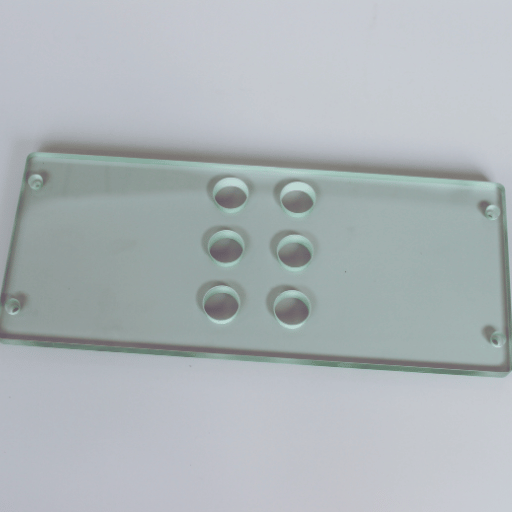
Saiweiglass operates K+ ion exchange lines for over 10 years, processing aluminosilicate, soda-lime and specialty glasses. Our chemical strengthening facility forms part of a total integrated manufacturing solution including CNC cutting, waterjet processing, edge machining and surface polishing.
In order to define the parameters for a solid, consistent product, it is important to understand how a chemical strengthening process works. Although the science is simple, the application details are more complicated; glass composition, time, temperature and salt specifications are significant in obtaining a repeatable result.
Substrates are inspected and tested for dimensional accuracy and defect free surfaces. They are pre-treated before entering the strengthening process, which is is performed after patterning, drilling and edge finishing (although it can be processed simultaneously).
Substrates are immersed in the molten salt bath, maintained at 380–450 °C. Temperature control matters — run too low and diffusion stalls; run too high and the glass structure relaxes. Saiweiglass uses 99%+ purity potassium nitrate to ensure consistent ion exchange results across every batch. Larger potassium ions replace smaller sodium ions at the glass surface. Case depth — or depth of compression (DOC) — builds up to 15–60 μm depending on glass type and soak duration. Aluminosilicate glass achieves deeper DOC than soda-lime glass under identical conditions because its more open molecular network allows faster ion diffusion.
Once removed from the salt bath, hot glass is cooled under time and temperature controls to prevent thermal shock. All samples are subjected to surface compression measurement by scattered-light polariscope, optical distortion inspection, and dimensional verification. Qualifying samples are those with a specified minimum level of surface compression.
The net effect: a compressive stress layer at the glass surface toughening the material to 6 to 8 times the bending strength of a normal annealed panel with reduced scratching potential and enhanced impact performance, yet interior tension – a balanced stress system which provides strength without the fiercely explosive shattering behavior of thermally tempered. For demanding safety applications, chemically strengthened glass can be laminated with PVB or SGP interlayers to produce a toughened laminate that sustains the fragments when broken.
Glass Types Suitable for Chemical Strengthening
Not all glass compositions respond equally to the ion-exchange process. Alkali content is the key factor – specifically, the concentration of sodium oxide (NaO) available for exchange with potassium ions. Here are the three primary glass families we process at Saiweiglass:
Best Results
Aluminosilicate Glass
Composition:
SiO + AlO + NaO (high alkali content >10%)
Surface Compression:
700–900 MPa
Case Depth (DOC):
30–60 μm
Typical Thickness:
0.4–2.0 mm
Applications:
Smartphone cover glass, tablet screens, smartwatch displays
Key Advantage:
Highest strength and deepest ion penetration due to open glass structure
Notable Products:
Similar composition to Gorilla Glass, Dragontrail, Xensation
Cost-Effective
Soda-Lime Glass
Composition:
SiO₂ + Na₂O + CaO (standard float glass)
Surface Compression:
300–500 MPa
Case Depth (DOC):
15–30 μm
Typical Thickness:
1.0–6.0 mm
Applications:
Industrial panels, appliance windows, lighting covers
Key Advantage:
Lowest material cost, widely available as flat glass substrate
Limitation:
Shallower case depth limits maximum achievable strength
Specialty
Borosilicate Glass
Composition:
SiO₂ + B₂O₃ + Na₂O (low alkali)
Surface Compression:
200–350 MPa
Case Depth (DOC):
10–20 μm
Typical Thickness:
0.7–4.0 mm
Applications:
Laboratory glassware, optical windows, sight glass
Key Advantage:
Excellent thermal shock resistance + low thermal expansion coefficient
Limitation:
Lower alkali content means limited ion exchange depth
Glass composition is the single biggest variable in chemical strengthening outcomes. When quoting a project, our engineers always request the glass datasheet first – knowing the exact NaO and AlO content lets us predict the achievable compression and case depth before running a single piece through the salt bath.
Chemically Tempered Glass Applications Across Industries
Chemically strengthened glass has become the default choice wherever thin, scratch-resistant, optically clear glass is required. Here is where our customers deploy it:

Consumer Electronics
Cover glass for smartphones, tablets, laptops, smartwatches, and wearable fitness devices. Typical spec: 0.55-1.1 mm aluminosilicate with 700 MPa compression.

Medical Devices
Patient monitor displays, ultrasound screens, diagnostic equipment windows, dental imaging panels. Demands: optical clarity + chemical durability + easy sterilization.
Automotive & Aerospace
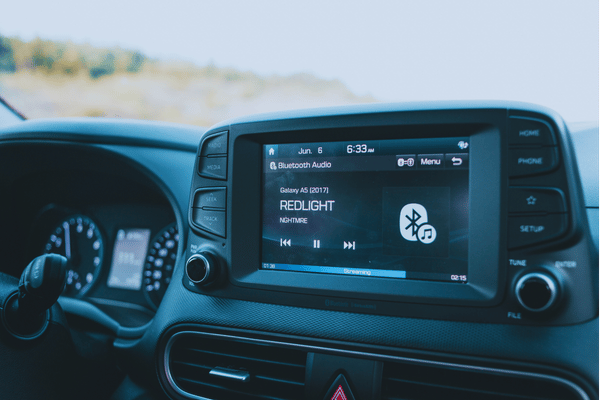
Instrument cluster covers, infotainment touchscreens, HUD (heads-up display) components, and windshield interlayer glass. Automotive OEMs increasingly specify chemically tempered glass for interior displays.

Industrial Controls
HMI touchscreen panels, PLC display covers, CNC machine interfaces, EV charging station screens. Requires high impact resistance in factory environments.
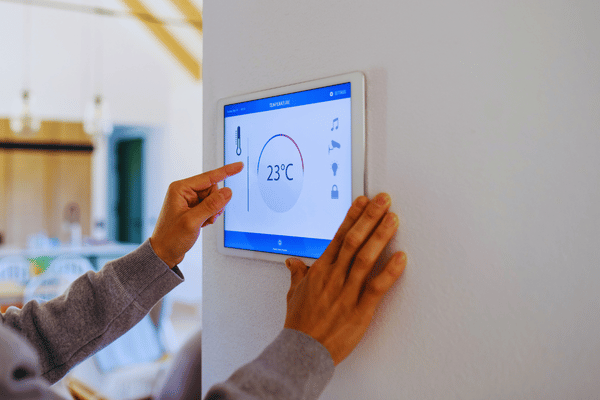
Smart Home & IoT
Examples of common product applications for chemistry strengthened glass include:temperature control panels, smart doorbell displays, intercom monitors, home automation controllers. The trend toward thinner bezels creates a higher demand for chemically strengthened cover glass edge-to-edge.
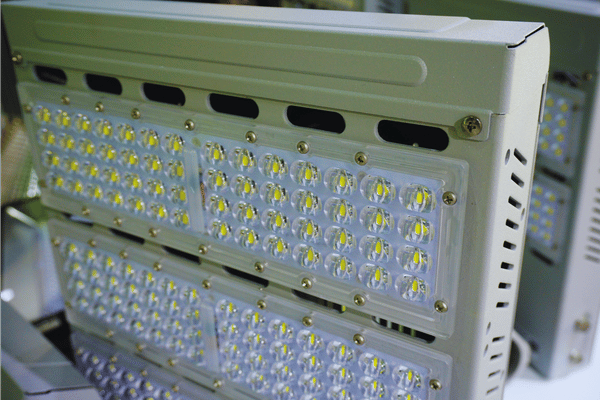
Lighting & Optics
LED lenses, domed high power lighting enclosure covers, windows in optical instrumentation. Chemical strengthening protects against physical impacts without sacrificing optical performance.
Technical Specifications and Chemical Strengthening of Glass
All of these diverse applications have the same challenge to overcome:chemistry strengthened glass that remains as thin as possible, as strong as needed for handling, and as transparent as desired for visual application. Saiweiglass chemistry strengthening process offers a single step solution to all three.
Parameter
Specification
Notes
Glass Thickness Range
0.4 – 6.0 mm
Thinner glass = more suited to chemical vs. thermal
Maximum Panel Size
1,200 × 800 mm
Larger sizes available with lead time
Surface Compression (CS)
600 – 900 MPa
Aluminosilicate; 300–500 MPa for soda-lime [ASTM C1422]
Depth of Compression (DOC)
15 – 60 μm
Function of glass type + soak duration
Salt Bath Temperature
380 – 450 °C
Controlled ±2 °C [Process data]
Immersion Duration
4 – 16 hours
Longer soak = deeper DOC, diminishing returns past ~12h
Salt Purity
≥99% KNO₃
Impurities degrade surface quality
Bending Strength
≥450 MPa
Per ASTM C158 4-point bend test [ASTM C158]
Surface Hardness
6.5 – 7.0 Mohs
Vickers hardness ≥550 HV
Optical Distortion
<0.1 diopter
Virtually zero for display applications
Edge Finishing Options
Seamed, flat polished, beveled, 2.5D rounded
CNC + waterjet pre-strengthening
Additional Coatings
AR, AG, AF, ITO, silk-screen printing
Applied pre- or post-strengthening per spec
Dimensional Tolerance
±0.05 mm
CNC machining tolerance [Process data]
Custom Glass Fabrication: Quality Certifications and Testing Standards
One common misconception: Chemically strengthened glass does not have to be thicker. Our strengthening process is dimensionally neutral: unlike thermal tempered glass, no bow or roller wave distortions are introduced. This means your CNC-machined tolerances are maintained through the chemistry strengthening process – important for critical-fit parts in both medical and automotive applications.
Certifications
ISO
ISO 9001
Quality Management System — all processes certified
ASTM
ASTM C1422
Standard Specification for Chemically Strengthened Flat Glass
CE
CE
European Conformity — compliant for EU market export
IGCC
IGCC
Insulating Glass Certification Council — glass fabrication standards
SGCC
SGCC
Safety Glazing Certification Council — safety glass compliance
RoHS
RoHS
Restriction of Hazardous Substances — environmental compliance
Testing Protocol per Batch
Surface compression measurement: — scattered-light polariscope, every production batch
In order to meet tight dimension tolerances, chemistry strengthening takes no additional volume. Acid etch and optical assessment of witness samples to ensure process consistency.
Statistical 4-point bend strength test per ASTM C158specimens selected according to process variability.
Optical distortion viewing station and transmission percentage measurement.
Dimensional match with CNC specifications verified by coordinate measuring machine (CMM).
Dimensional quality inspection: dimensional measurement, surface quality, visual assessment, scratch under controlled light source.
Full test report provided with shipment. For industrial specifications, can coordinate test procedures to match your incoming quality control criteria – just supply documentation during the quoting process.
Project References: Chemical Tempering Glass in Action
Consumer Electronics
Smartwatch Cover Glass — Wearable Device OEM
Challenge
1.3-inch circular cover glass at 0.55 mm thickness required ≥700 MPa surface compression with edge-to-edge optical clarity and 2.5D rounded edges.
Solution
Aluminosilicate substrate, precision CNC contouring, followed by 8-hour potassium ion exchange. Anti-fingerprint (AF) coating applied post-strengthening.
Result
Achieved 780 MPa surface compression with 42 μm DOC. Passed 1.2-meter face-down drop test onto 180-grit sandpaper. Production yield: 96.8% across 50,000-unit run.
Medical Devices
Patient Monitor Display — Medical Equipment Manufacturer
Challenge
12.1-inch rectangular cover glass for bedside patient monitors. Required anti-glare (AG) treatment, chemical strengthening, and silk-screen printed bezel border — all on 1.1 mm soda-lime glass to meet cost targets.
Solution
AG coating applied first, then high-temperature silk-screen printing for the bezel, followed by chemical strengthening. Sequence matters: the silk-screen ink must withstand 420 °C salt bath temperature without degradation.
Result
Surface compression reached 380 MPa (within soda-lime capability), sufficient for wall-mounted hospital environment. AG haze maintained at 25±3% post-strengthening. Zero optical defects in silk-screen border zone across 8,000-unit production run.
Automotive
Instrument Cluster Glass — EV Manufacturer
Challenge
Curved instrument cluster cover for electric vehicle dashboard. 2.0 mm aluminosilicate, gentle 3D curve (radius 1,500 mm), anti-reflective (AR) coating on both surfaces, chemical strengthening to automotive impact specifications.
Solution
Hot-bending to achieve the 3D curve, followed by CNC edge finishing, dual-side AR coating, and 12-hour ion exchange to maximize case depth for automotive durability requirements.
Result
835 MPa surface compression with 55 μm DOC — exceeding the OEM’s 800 MPa minimum requirement. AR coating reduced reflection from 8% to <0.5% per surface. Passed automotive thermal cycling test (-40 to +85 °C, 500 cycles) with no delamination or compression degradation.
Custom Chemical Strengthening for Your Project
Whether prototype or large volume production, every Saiweiglass project begins with a consultation – not a catalog. Here’s a general flow of our custom glass processing works from initial inquiry to delivery:
01
Technical Consultation
Send us your design images and drawings along with your application environment and preferred glass type. Specify your target analysis levels and intended strengthening method. We will evaluate and respond with recommended approach within 48 hours.
02
Prototyping & Validation
Initial 5-20 sample articles created and tested. Customer approval on sample test reports including bend strength, DOC, surface compression and dimensions. Additional iterations at no charge for the first two rounds.
03
Production & QC
Sales of 50-500,000+ products begin after first article approval. Load cell strength testing for each lot, in addition to qualification test analysis report. Additional surface treatments integrated in our cleanroom facility.
04
Packaging & Logistics
Optional packaging design for the most delicate substrates. Worldwide high and low temperature consolidation including risk assessment packaging, air, sea, and express freight. Provide analysis documentation and test reports for customs clearance.
Standard Lead Times
| Stage | Timeline | Notes |
|---|---|---|
| Technical Review & Quote | 1–2 business days | Faster for standard specs |
| Prototype Samples | 5–7 business days | After drawing approval |
| Production (≤10,000 pcs) | 10–15 business days | After sample approval |
| Production (>10,000 pcs) | 15–25 business days | Dependent on surface treatments |
Chemical Strengthening Glass Tools
Leverage our suite of online tools to optimize your glass strengthening processes. Accurately evaluate parameters, estimate compression, and compare operational costs for your specific applications.
glass strengthening method selector
Evaluate your specific glass material and performance requirements to determine the most effective strengthening parameters.
Use Tool →
compression estimator
Calculate estimated Depth of Layer (DoL) and Compressive Stress (CS) limits for precision structural engineering.
Use Tool →
chemical vs thermal cost comparison
Analyze the long-term ROI and upfront operational costs between chemical and traditional thermal tempering processes.
Use Tool →
Frequently Asked Questions About Chemical Strengthening
What is chemically strengthened glass and how is it different from tempered glass?
Chemically strengthened glass is a type of glass that gains increased strength through a post-production ion-exchange process, where smaller sodium ions on the glass surface are replaced by larger potassium ions from a molten salt bath. Unlike thermally tempered glass, which uses rapid cooling to create surface compression, chemical strengthening works at the molecular level. This means chemically strengthened glass can be processed much thinner (down to 0.4 mm), retains superior optical clarity with virtually zero optical distortion, and can still be cut or drilled after treatment — something thermally tempered glass cannot do without shattering.
How does the ion-exchange process work in glass strengthening?
Glass goes into a molten potassium nitrate salt bath at 380–450 °C and stays there for 4 to 16 hours. During that soak, smaller sodium ions at the glass surface migrate out while larger potassium ions from the bath push in. Because potassium ions are roughly 30% bigger, they physically crowd the surface layer and generate compressive stress — 600 to 900 MPa in a good aluminosilicate substrate. That built-in compression is what makes the glass so much harder to break: any crack has to overcome the compression before it can propagate. Deeper case depth means more punishment the glass can absorb before failure. Most of our production runs target a minimum 30 μm DOC for consumer electronics applications, going up to 55 μm for automotive-grade parts that face harsher handling.
What types of glass can be chemically strengthened?
Three main glass types are suitable: aluminosilicate glass (best results — highest surface compression, deepest ion penetration), soda-lime glass (cost-effective, moderate strengthening, widely available), and certain borosilicate glass formulations (limited ion exchange due to lower alkali content, but suitable for specialty optical applications). The glass composition — specifically its sodium oxide content — determines the achievable surface compression and case depth.
How strong is chemically strengthened glass compared to annealed glass?
Chemically strengthened glass is typically 6 to 8 times stronger than standard annealed glass in bending strength. Surface compression values reach 600–900 MPa for aluminosilicate substrates, compared to near-zero compressive stress in annealed glass. In practical terms, chemically strengthened cover glass at 0.7 mm thickness can withstand drops from 1.0–1.5 meters onto rough surfaces — a performance level impossible for annealed glass of the same thickness.
Is chemically strengthened glass scratch resistant?
Yes. Surface hardness after ion exchange reaches 6.5–7 on the Mohs scale — noticeably harder than both annealed and thermally tempered glass. Additional AS and AF coatings can be applied post-strengthening for even more protection.
Can chemically strengthened glass be cut or drilled after treatment?
Yes — this is one of the major advantages over thermally tempered glass. Because chemical strengthening creates a thin compressive layer (typically 15–60 μm deep) rather than the deep stress profile of thermal tempering, the glass can still be cut, drilled, and edge-finished after strengthening. At Saiweiglass, we typically complete all CNC machining before chemical strengthening, then perform only minor edge refinements post-treatment when needed.
What are the standard thickness ranges for chemical strengthening?
Chemical strengthening is particularly well-suited for thin glass that cannot be thermally tempered. Saiweiglass processes glass from 0.4 mm to 6 mm thickness. The most common range for electronics cover glass is 0.55–1.1 mm, while industrial panels typically use 1.0–3.0 mm. Glass thinner than 2.5 mm generally cannot be thermally tempered, making chemical strengthening the only viable strengthening method.
Which industries use chemically strengthened glass?
Key industries include consumer electronics (smartphone and tablet cover glass), medical devices (patient monitors, diagnostic equipment), automotive (instrument clusters, infotainment displays), industrial controls (HMI touchscreen panels), aerospace and defense (avionics displays), and smart home devices (thermostat panels, intercom screens). The common thread is the need for thin, optically clear, impact-resistant glass.
How does chemical strengthening affect optical clarity?
Virtually zero distortion. The ion-exchange process does not alter surface geometry, so the original flatness and optical quality carry through to the finished piece.
What certifications should I look for in a chemical strengthening supplier?
Look for ISO 9001 quality management certification for consistent process control. For safety glass applications, verify ASTM C1422 compliance (Standard Specification for Chemically Strengthened Flat Glass). CE marking is required for European markets. Industry certifications such as IGCC and SGCC membership indicate adherence to glass fabrication best practices. Saiweiglass holds ISO 9001 certification and processes to ASTM C1422 standards.