Get in Touch with Saiweiglass


AG Etching
AG Etching Glass: Custom Anti-Glare Surface Treatment for Display Cover Glass
We chemically etch cover glass to scatter reflected light and kill screen glare — permanently. Five standard AG grades, full in-house processing, and we handle cutting, strengthening, etching, coating, and printing under one roof.
Request a Quote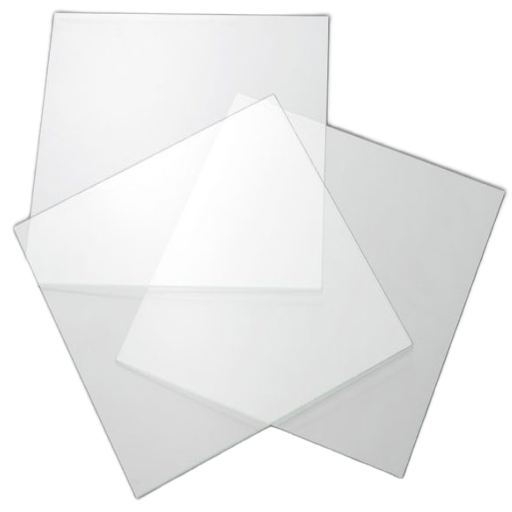
16+ Years
Glass Fabrication
5,000 m²
Production Facility
Haze 1–25%
5 Standard AG Grades
10–130 GU
Full Gloss Range
ISO Certified
9001 / 12150 / 10993
What Is AG Etching Glass?
AG etching glass is cover glass with a chemically roughened surface that scatters reflected light instead of bouncing it back as glare. The texture is etched into the glass itself using a controlled acid bath — it can’t peel, wear off, or delaminate. That permanence is the whole point.
How It Works
Glass goes into a controlled HF (hydrofluoric acid) bath. The acid eats microscopic pits into the surface. Those pits scatter incoming light in every direction instead of reflecting it straight back as a mirror image. Deeper, denser pits = more scattering = higher haze and lower gloss. Shallower, finer pits = less haze = sharper image.
The texture is in the glass, not on it. Nothing to peel. No layer to wear through. The surface keeps the native hardness of the glass substrate — 7H+ on the pencil hardness scale.
Three Ways to Make Glass Anti-Glare
-
Chemical etching
acid-treats the glass surface. Permanent, 7H+, ±1% haze consistency.
-
Spray coating
applies a particle-loaded polymer. Cheaper, but 3H-4H hard and wears over time.
-
Film lamination
sticks a textured polymer sheet on. Cheapest, peels and yellows within 2-3 years.
Our AG Etching Process
Here’s what happens on our production floor. Six steps, one facility, all monitored by experienced technicians. The result: ±1% haze tolerance, batch after batch.
1
Incoming Glass Inspection
Every substrate gets checked before it touches the etching line — thickness, flatness, surface quality, edge condition. We cross-reference the material cert against your order spec. Glass that doesn’t pass incoming QC gets rejected. We’d rather catch problems here than after etching.
2
Precision Cleaning
Multi-stage ultrasonic cleaning with DI water. Any residual oil, dust, or cutting fluid on the surface causes uneven etching, so we take this step seriously — multiple rinse tanks, cascading DI water, sub-micron cleanliness target.
3
Chemical Etching
This is where the magic happens. Clean glass goes into our proprietary HF-based acid solution. Four variables control the outcome: etch time, acid concentration, bath temperature, and agitation rate. We have locked-down recipes for all five standard AG grades, and our process engineers develop custom recipes when your application doesn’t fit the standard range. Real-time monitoring keeps every panel in a batch within spec.
4
Neutralization & Rinse
The acid reaction has to stop cleanly. Glass passes through a neutralization stage, then multiple DI water rinses, then filtered hot-air drying. No water spots, no residual chemistry. All acid waste is treated and neutralized per environmental regulations.
5
Post-Treatment (Optional)
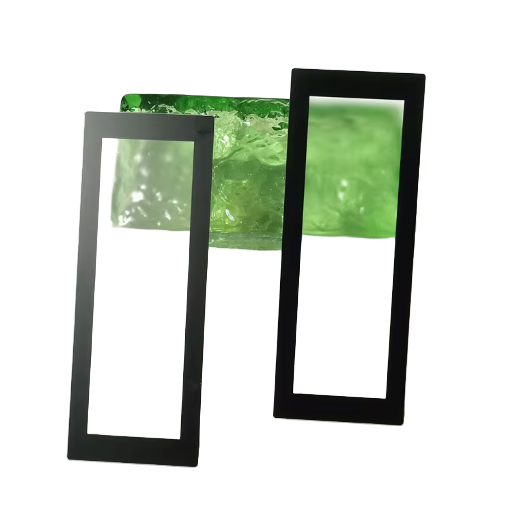
This is where our single-source advantage shows up. Depending on your needs, we run the AG glass straight into chemical strengthening (ion exchange for impact resistance), AR coating (vacuum-deposited for reflectance reduction), AF coating (oleophobic for fingerprint resistance), or silk-screen printing (bezels, logos, icons) — all without the glass leaving our facility. See how AG etching fits into our touch display modules.
6
Quality Control
100% of panels get measured — haze (ASTM D1003), gloss at 60° (ASTM D523), transmittance (spectrophotometer). Sampling checks add surface roughness via profilometer (ISO 4287) and visual defect inspection under controlled lighting. Anything outside grade tolerance gets pulled. Full inspection data is documented and available on request.
Anti-Glare Etching Technical Specifications
Five standard grades. Each targets a different balance between glare reduction and image clarity. Custom grades outside these ranges are available — just tell us what you need.
Ultra Light
Haze (%)
1 – 3
Gloss (GU @60°)
100 – 130
Roughness Ra (μm)
0.05 – 0.15
Transmittance
> 91%
Best For: 4K/OLED, consumer electronics
AG-Light
Haze (%)
3 – 8
Gloss (GU @60°)
70 – 100
Roughness Ra (μm)
0.10 – 0.30
Transmittance
> 90%
Best For: Tablets, laptops, medical monitors
AG-Medium
Haze (%)
8 – 15
Gloss (GU @60°)
40 – 70
Roughness Ra (μm)
0.30 – 0.80
Transmittance
> 89%
Best For: Industrial HMI, automotive, kiosks
AG-Heavy
Haze (%)
15 – 25
Gloss (GU @60°)
15 – 40
Roughness Ra (μm)
0.80 – 1.50
Transmittance
> 88%
Best For: Outdoor displays, direct sunlight
AG-Custom
Haze (%)
Customized
Gloss
Customized
Roughness Ra
Customized
Transmittance
> 87%
Best For: Application-specific solutions
Testing Standards & Capabilities
Standards: ASTM D1003 (Haze), ASTM D523 (Gloss), ISO 4287 (Roughness), ASTM D1044 (Abrasion).
Capability: Thickness 0.4–6.0 mm | Max Size 1500×1000 mm | Single or Double-sided etching | All substrates supported.
Application Guidelines
Rule of thumb: Keep haze below 8% for 4K and OLED displays to avoid sparkle artifacts. For industrial and outdoor screens where readability beats sharpness, 10–20% haze hits the sweet spot.
Anti-Glare Etched Glass Industry Applications
Different industries need different AG specs. Click on any industry below to reveal the specific grades and treatments required for optimal performance.
Consumer Electronics
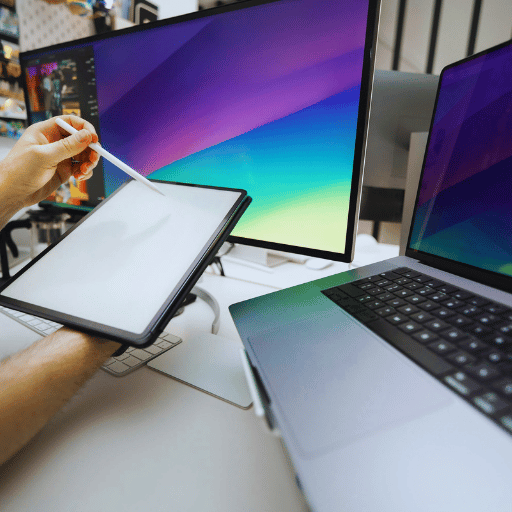
Tablets, laptops, monitors, e-readers. Low haze preserves sharpness on high-res displays. Paired with AF coating for smudge resistance on touch screens.
AG-Ultra Light / Light | Haze 1–8% | + AF
Medical Devices
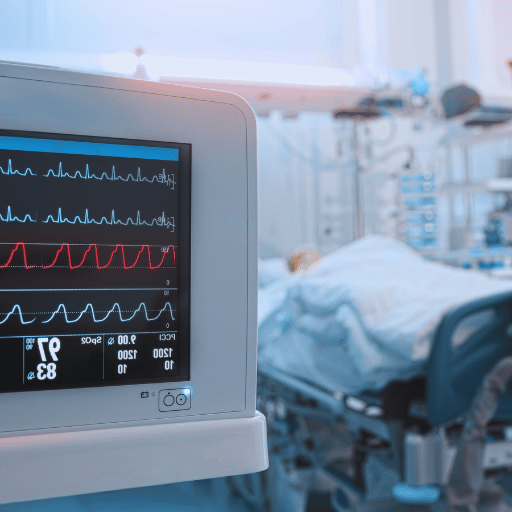
Patient monitors, diagnostic displays, surgical screens. ISO 10993 biocompatibility required. AG + anti-bacterial (AB) coating for infection control in clinical environments.
AG-Light | Haze 3–8% | ISO 10993 | + AF + AB

Industrial HMI
Factory panels, SCADA terminals, CNC interfaces. Oil, dust, chemical splashes, vibration. Chemically strengthened AG glass sealed for IP65 ingress protection.
AG-Medium | Haze 8–15% | Chem strengthened

Automotive Displays
Center consoles, instrument clusters, HUD covers. Must handle -40°C to +105°C. OEM gloss targets around 110 GU. Must be optical bonding compatible.
AG-Medium | Haze 8–12% | 110 GU | Optical bonding

Outdoor Kiosks & Signage
Self-service kiosks, wayfinding, digital menu boards. Direct sunlight, rain, vandalism. Maximum haze + AR coating for sun-readable performance behind 1000+ nit displays.
AG-Heavy | Haze 15–25% | + AR | 1000+ nits

Smart Home & IoT
Thermostats, home panels, smart mirrors, appliance displays. Thin glass (0.55–1.1 mm) with subtle AG and 2.5D curved edges for a premium residential aesthetic.
AG-Ultra Light | Haze 1–5% | Thin 0.55–1.1 mm
AG Etching vs Spray Coating vs AG Film
Three ways to add anti-glare. They look similar on a spec sheet but behave very differently in the field.
Factor
Chemical Etching
Spray Coating
AG Film
Durability
Permanent (part of glass) Best
Moderate (wears) Good
Low (peels, bubbles) Poor
Optical Uniformity
±1% haze Best
±3-5% Good
±2-3% Good
Hardness
7H+ Best
3H-4H Good
2H-3H Poor
Transmittance
>89% Best
>85% Good
>82% Poor
Chemical Resistance
Excellent Best
Moderate Good
Poor Poor
Temp Resistance
>500°C Best
<200°C Good
<80°C Poor
Cost
Medium-High Good
Low-Medium Best
Low Best
Best For
Premium displays, harsh environments
Cost-sensitive indoor
Temporary / retrofit
Bottom line: If the product needs to last more than a few years in a real-world environment, etching is the only option that won’t degrade. Spray coatings work for indoor products with a 2–5 year lifespan. Films are fine for prototypes, retrofits, and anything temporary.
AG Glass vs AR Glass
These two get confused constantly. Both “reduce reflection,” but the physics is completely different — and picking the wrong one costs you readability in the field.
AG glass has a matte micro-texture that scatters reflected light. You stop seeing sharp mirror images of lights and windows. Trade-off: some haze, which softens the image slightly.
AR glass uses multi-layer thin-film coatings to cancel reflections through destructive interference. The surface stays perfectly clear. Reflectance drops from ~4% per surface to below 0.5%. Trade-off: higher cost, fingerprints show up clearly, and the coating scratches more easily than etched glass.
Parameter
AG (Anti-Glare)
AR (Anti-Reflective)
Mechanism
Scatters light (matte surface)
Cancels light (thin-film interference)
Surface
Matte / semi-matte
Clear / glossy
Image Clarity
Slightly reduced (haze)
Full clarity
Fingerprints
Hidden Best
Very visible Poor
Reflectance
4–8% (diffused)
<1% (specular)
Durability
Permanent Best
Coating scratches Good
Cost
Lower Best
Higher Good
Best For
Touch-heavy, variable lighting
Viewing-only, controlled lighting
AG + AR Combined
For the toughest lighting conditions — outdoor kiosks, car dashboards, operating rooms — you want both. AG scatters the point-source glare, AR kills the residual reflected energy. We etch first, then vacuum-deposit the AR layers on top. That sequence matters — doing it backwards destroys the coating.
We do both treatments in-house, so we control layer compatibility and cut the quality risks that come from shipping half-finished glass between vendors.
Ag Etching Glass Combined Surface Treatments — AG + AR + AF + Chemical Strengthening
Real products rarely need just one treatment. A medical display might need AG + strengthening + AF coating. An automotive screen needs all four layers. Most glass fabricators can do one or two and outsource the rest. We do all four in-house.
The Four-Layer Stack
1
Chemical Strengthening (Ion Exchange)
Glass goes into a molten potassium salt bath at ~400°C. Larger K+ ions replace smaller Na+ ions in the surface, creating a compressive stress layer (40–100 μm deep) that dramatically increases impact and scratch resistance.
2
AG Etching (Anti-Glare)
The strengthened glass gets chemically etched. The etch removes only 1–5 μm of surface — the compressive stress layer (40–100 μm) stays intact. Single-sided or double-sided.
3
AR Coating (Anti-Reflective)
Multi-layer thin-film deposition (Nb₂O₅ / SiO₂) on the etched surface. Drops reflectance below 0.5% across the visible spectrum. Works with the AG texture — etching handles point-source glare, AR handles overall reflected energy.
4
AF Coating (Anti-Fingerprint)
Oleophobic fluoropolymer applied as the final layer. Fingerprints, oils, and water bead up and wipe off easily. On AG surfaces, the AF fills the micro-texture valleys without changing the anti-glare optical properties.
Why this matters:
Every vendor handoff introduces risk — re-handling scratches, contamination from different cleanroom standards, spec miscommunication, weeks of shipping time. We’ve seen customers come to us after multi-vendor chains produced inconsistent results three runs straight. One roof, one quality system, one team. That’s how you get consistent glass. Talk to us about combined treatments for your touch display module.
Ready to Specify AG Etching Glass?
Tell us your application, display panel, and environment. We’ll recommend the right AG grade, substrate, and combined treatments — and ship prototype samples.
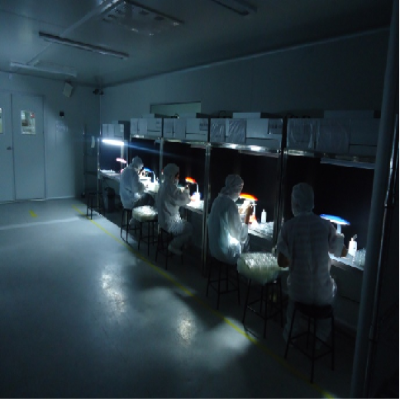
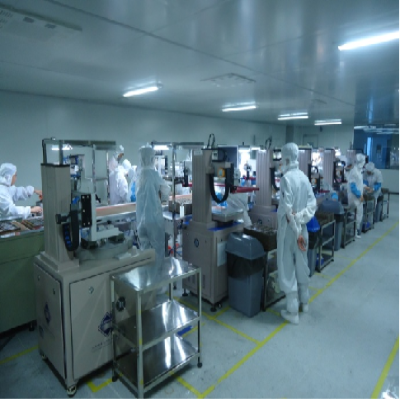
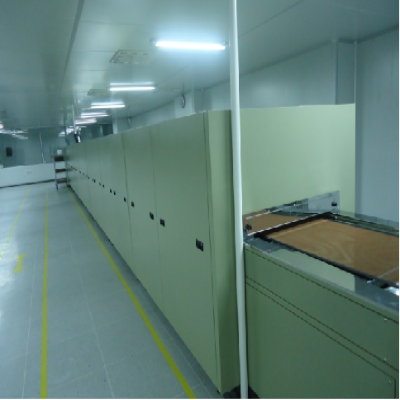
Advanced AG Etching Production & Inspection Facilities




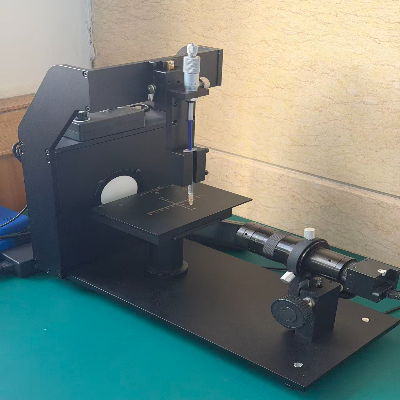
AG Etching Quality & Certifications
These aren’t just logos on a webpage. Auditors visit regularly, and every cert is backed by documented procedures our team follows on the production floor daily.
ISO 9001:2015
Quality Management
EN 12150
Safety Glass
ISO 10993
Biocompatibility
SGS RoHS
Hazardous Substances
SGS REACH
Chemical Safety
Fortune 500
Authorized OEM Supplier
AG Etching Testing Standards
- ASTM D1003 — Haze and transmittance. 100% panel testing.
- ASTM D523 — Gloss at 60°. 100% panel testing.
- ISO 4287 — Surface roughness (Ra, Rz). Sampling per AQL.
- ASTM D1044 — Taber abrasion (500 cycles, CS-10F, 500g). Per recipe qualification.
- MIL-C-675C — Coating durability for AR/AF (adhesion, humidity, salt spray).
AG Etching Production Capacity
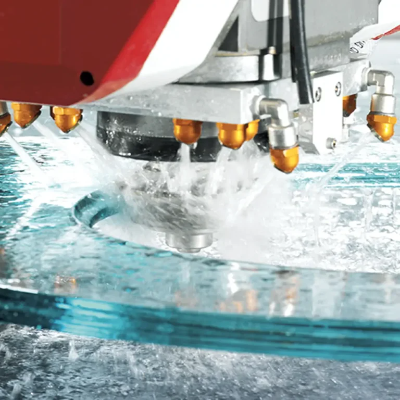
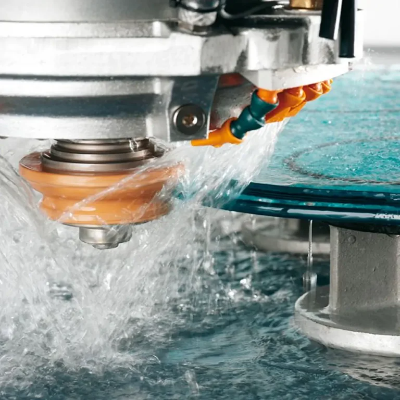
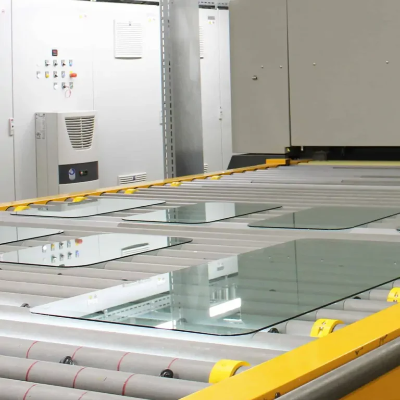
Three production bases. 5,000+ m² total. 90+ people. 100+ pieces of automated equipment. We handle 50-piece prototype runs and six-figure mass production. Multiple sites = supply chain redundancy.
Why SaiweiGlass for AG Etching
There are dozens of AG glass suppliers. Here’s why OEM teams keep coming back to us:
✓
16+ years in precision glass fabrication
Thousands of customer projects, from smartphone glass to 65-inch interactive displays.
✓
Full in-house process
Cutting, strengthening, AG etching, AR/AF coating, silk-screen. No outsourcing. One facility.
✓
5 standard AG grades + custom
2% haze for 4K OLED or 20% for an outdoor kiosk — we have validated recipes ready.
✓
Substrate-agnostic
Corning, Schott, AGC, soda-lime, borosilicate, custom. Optimized etch parameters for each.


✓
Certified Quality
ISO 9001, EN 12150, ISO 10993, RoHS, REACH. Certified for medical, auto, and industrial.
✓
Prototype to mass production
Low MOQ for design validation. Scale seamlessly to high-volume for launch.
✓
Fortune 500 OEM authorization
We consistently pass the rigorous supplier audits that smaller shops simply can’t.
✓
3 production bases
Massive capacity to scale. Built-in redundancy to guarantee delivery on time, every time.
Start with SaiweiGlass AG Etching Glass
Share your display spec and application. We’ll recommend the grade, substrate, and treatment stack — and ship prototype samples for your evaluation.
Glass Etching Service Substrate Compatibility
We don’t require a specific glass brand. Each glass chemistry etches differently, so we tune the acid parameters accordingly. Here’s what we process regularly:
| Substrate | Type | Compatible | Notes |
|---|---|---|---|
| Corning Gorilla Glass | Aluminosilicate | Yes | All generations (3 through Victus 2). Validated recipes on file. |
| Schott Xensation | Aluminosilicate | Yes | Xensation Up and Flex. Strong for automotive. |
| AGC Dragontrail | Aluminosilicate | Yes | Standard and Star grades. Consumer electronics focus. |
| Soda-Lime | Standard Float | Yes | Most cost-effective. Clear, low-iron, and tinted available. |
| Borosilicate | Heat-Resistant | Yes | Lab instruments, medical, high-temp industrial. |
| Custom Aluminosilicate | SaiweiGlass In-House | Yes | Optimized for AG etching + chemical strengthening combo. |
Interactive AG Etching Engineering Tools
AG Specification Selector
Select your application parameters below and we will recommend the optimal anti-glare etching specification for your project.
Open SelectorAG Treatment Comparison Calculator
Compare the three main anti-glare treatment methods across key performance metrics to see why chemical etching leads the industry.
Compare MethodsGlass Substrate Configurator
Build your custom AG glass specification step by step. Configure substrate, thickness, AG grade, treatments, and dimensions.
Start ConfiguringFrequently Asked Questions
AG scatters reflected light with a matte texture — reduces mirror glare, hides fingerprints, costs less, adds some haze. AR cancels reflections with thin-film coatings — keeps full clarity, drops reflectance below 0.5%, but shows fingerprints and costs more. Combining AG+AR on one panel gives maximum readability.
For anything that needs to last: yes. Etching is permanent (part of the glass), 7H+ hardness, ±1% haze, survives >500°C. Spray coatings are 3H-4H, ±3-5% haze, degrade above 200°C. Coatings work for budget indoor products. Etching is the right call for premium displays, harsh environments, medical, and automotive.
Below 8% for 4K/OLED (avoids sparkle). 1–8% for consumer electronics. 8–15% for industrial HMI and automotive. 15–25% for outdoor kiosks in direct sunlight. Lower haze = sharper image, less glare reduction. Our engineers help you pick based on your panel and environment.
It doesn’t. The etch modifies only the top 1–5 μm of the glass surface — far too shallow to interfere with capacitive touch sensors. AG etched glass is fully compatible with PCAP touch panels and optical bonding. No sensitivity loss, no accuracy impact.
Yes. We typically strengthen first (ion exchange creates a 40–100 μm stress layer), then etch (removes only 1–5 μm). The compressive stress layer stays intact. Result: impact-resistant glass with anti-glare performance in one piece.
AG film is an adhesive polymer sheet — 2H-3H hardness, peels at edges, bubbles in humidity, yellows from UV. AG etched glass has the texture built into the glass surface — 7H+ hardness, >89% transmittance, permanent, zero delamination risk. For any product lasting over 2 years, etched glass wins.
Consumer electronics (1–8% haze), medical devices (3–8%, ISO 10993), industrial HMI (8–15%, chemically strengthened), automotive (8–12%, 110 GU), outdoor kiosks (15–25%, AG+AR), and smart home (1–5%, thin glass, 2.5D edge). Each vertical gets a different grade and treatment combo.