Get in Touch with Saiweiglass


Wearables
Display Cover Glass for Wearable Devices & Industrial HMI
Chemically strengthened cover glass and accuracy cover lens solutions for smartwatch, fitness trackers, medical wearables, factory HMI panels. Special shapes, AR/AF/AG coatings and IK10-rated protection – made in Dongguan since 2004.
Since 2004
Experience50+ Countries
Global MarketsCustom OEM
Full SupportISO 9001
Quality Certified


What Is Display Cover Glass and Why It Matters
Display cover glass serves as the protective interface mounted directly on top of the active glass screen panel of an electronic device. Its primary role is as an external barrier protecting the solid-state display – LCD, OLED, or AMOLED underneath – from scratching, impacts, particulate matter, moisture, and potentially damaging fingerprint contamination in everyday use. Without this barrier, most active layers inside an electronic display would be visible as well as irreparably damaged within mere weeks of average handling.

What differentiates purposeful cover glass from generic window glass lies in properties and manufacture. Standard glass has relatively low break stress and shatters in large, sharp fragments. Cover glass is usually either chemically strengthened through a process of ion exchange or in common use among precision electronic devices – thermally tempered.. In that process, a panel of glass is heated to a temperature well above its strain point and suddenly cooled, forming a surface layer in tension. Cover glass however largely favors the use of chemically strengthened substrates. By submerged in a concentrated salt bath in New York or other industrial regions, high surface compressive stresses are induced, providing resistance to localized forces that everyday driving or handling applies to a device: keys in a pocket, ice or gravel thrown at car body panels.
Any form of durable, resilient cover glass became a proven concept with Corning’s Gorilla Glass, showing that a by its nature thin still intact glass area could survive the extremes of everyday life by smartphones while remaining optically clear enough for practical use. That premise was rapidly adopted for smartwatches, fitness trackers, industrial HMI displays, digital signage, heads-up displays, and categories of medical devices where image viewability equals patient safety.
At each stage of mature product development, the cover glass specification influences adjacencies such as drop test margins, readability in ambient light, PCAP touch layer attachment, aesthetic bezel appearance, and finished device thickness. Getting the glasses specification correct at the design stage far greater than most engineering teams realize – only truly revealing itself after the first failures in the field.
Key protection functions:
scratch resistance (Mohs 6.5–9 depending on material), impact absorption, optical transmittance ≥92% at 550nm, touchscreen compatibility, and environmental sealing as part of the display stack.
Cover Glass Material Types — Tempered, Chemically Strengthened & Sapphire
Not all cover glass materials behave the same. Your substrate material largely dictates scratch resistance, impact resistance, minimum achievable thickness, and cost. Four substrate types every devise specification specialist needs to understand:
| Material | Mohs Hardness | Impact Resistance | Optical Transmittance | Min. Thickness | Cost Level | Typical Applications |
|---|---|---|---|---|---|---|
| Soda-lime tempered glass | 5.5 | Moderate — thermal compressive stress ~100 MPa | ~91% | ~1.8mm | Low | Budget consumer electronics, basic screen protectors |
| Aluminosilicate chemically strengthened | 6.5–7 | High — ion exchange, ≥600 MPa surface compression | ≥92% | 0.33mm | Medium | Smartwatches, fitness trackers, PCAP touch panels |
| Sapphire crystal | 9.0 | Very high — brittle under sharp point impact | ~85% | 0.3mm | Very high | Premium smartwatch glass, luxury wearables |
| Dragontrail glass (AGC) | 6.5–7 | High — aluminosilicate chemistry | ≥92% | 0.33mm | Medium | Asian-market smartphones, wearables |
Industry Standards
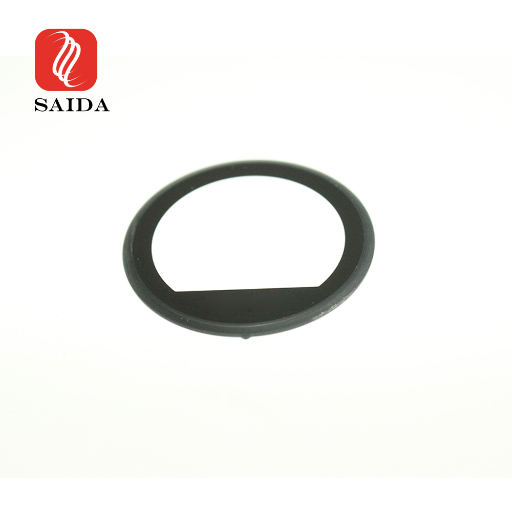
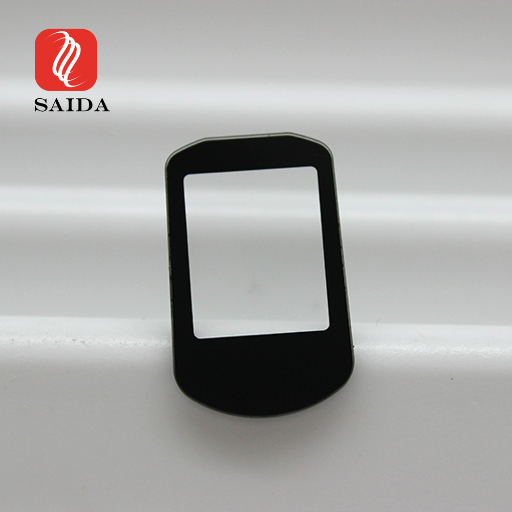
Aluminosilicate chemically strengthened glass remains the predominate choice among cover glass for smart wearables. It is known for its ability to be CNC cut to both round and square formats, achieving the 0.55mm minimum thinness mandated by wearable device manufacturers. Where a supplier will, AGC’s Dragontrail glass is a comparable aluminosilicate product to achieve similar MOHS 6.5-7 pick resistance.
Sapphire & Premium Options
Sapphire covers cost and forecast sales premiums over other options and is generally only found on flagship smartwatch lines. Its appearance is exceptionally resistant to typical heavy scratches – only abrasive materials of diamond hardness and silicon carbide will leave noticeable marks.. Sapphire however unlike chemically toughened glass is more fragile when impacted with a sharp pointed object – an important detail when choosing protection levels for line items that may be dropped onto kitchen or industrial floors corner-first.
Material Selection Guide
Polycarbonate lens covers are used sometimes as a plastic substitute for extreme weight reduction, although they are more prone to scratching. In many cases where a specification requires glassto screen to protect and still retain optical quality, alumino-silicate, chemically strengthened category is where to start for most OEM programs.
Compare MaterialsWearable Device Cover Glass Applications
Wearable devices have requirements for cover glass that are fundamentally different than those for either smart phones or tablets. Because of the smaller form factor, the profile has to be even thinner and because it is worn on the body, it experiences ongoing exposure to perspiration, liquid water and occasional bumps all day long. Anti-fingerprint coating and ultra-thin profile cannot be add-ons; they have to be built into the design from the beginning.
Custom Cover Glass Manufacturing Process
Our custom cover glass process from blank sheet to finished part passes through eight process phases, each with stringent quality checks. Our process takes place at our 2,000 sq.m. facility in Dongguan, China (close to Hong Kong/Macau/H.K.) the home of our glass cut & finish process which includes CNC control cutting, chemical increased strength firing, coating chambers, and a clean-room lamination bay.
01
Raw Glass Sheet Procurement
— We source premium float glass or special aluminosilicate grade glass from trusted, approved vendors. Full sheet optical evaluation is made at this point for flatness, transmittance, and foreign inclusions before beveling & cutting. Medical & defense programs require full length & batch-wise conformance analysis.
02
CNC Edge Profiling
— A CNC edging machine provides 0.05 mm accuracy on each dimension of the finished part. Round, square, rectangular and backplane profile designs are possible. A CAD program from the end-user (DXF input) is converted directly into the CNC drive vectors, avoiding manual re-trace and opportunity for dimensional error.
03
Finishing – Edge Grinding & Polishing
After initial machining, the glass edges contain countless tiny micro-cracks. Without further intervention those cracks propagate corrosion under impact, creating weak points. Quality edge grinding with diamond wheels removes these flaws, followed by polishing to the edge profile (flat, C-chamfer, or R-chamfer).
04
Chemical Strengthening by Ion Exchange
— Glass test samples are inserted into an 400-450°C molten bath of potassium nitrate (KNO3) for 4-8 hours. Smaller sodium ions in the glass matrix surface are exchanged for larger potassium ions in the bath. The mismatch in size induces a layer of surface compressive stress, 600 MPa surface compressive stress, 20m DOL, normal to the exterior surfaces. This layer distinguishes chemically-strengthened cover glass from traditional tempered car glass and enables ultra-thin profiles in the wearables form factor
05
Surface Coating Application
— Depending on the requirement, AR (anti-reflective), AF (anti-fingerprint/oleophobic), AG (anti-glare), and HC (hardcoat) coatings are vacuum-deposited or wet coated onto the chemically-strengthened aluminosilicate cover glass panels. Coating layer thickness and adhesion are measured via spectrophotometric measurement and tape-pull adhesion testing respectively prior to acceptance of the batch.
06
Screen Printing
— Black-border bezels, cell-phone branding, calibration marks, and special-function elements are silk-screen printed on the annealed cover glass components. Ink composition and curing conditions are determined such that delamination does not occur during normal operation of the lifetimes of the consumer products.
07
Final Inspection
— Each receive its own optical inspection (surface quality, inclusions, coating uniformity), dimensional inspection (optical comparator or CMM), and abrasion testing (pencil hardness per ASTM D3363, ring-on-ring flexural test on sample batches) and if applicable final HMI panels undergo IK impact testing per IEC 62262 on sample basis.
08
Clean-room Packaging
— Optically-polished glass is Ultrasonic cleaned and dried, then packed in a clean-room environment. Individual pieces are separated by protective interleaf films. Packaging is sized to withstand standard container shipping without damaging the coated surfaces.
Cover Glass Technical Specifications & Testing Standards
The following parameters describe the properties of our standard aluminosilicate cover glass product group. Custom parameters outside these specifications are also available.
Thickness Range
0.33–3.0mm
Custom down to 0.1mm for specialty applications
Mohs Hardness
6.5–7
Chemically strengthened aluminosilicate substrate
Surface Compressive Stress
≥600 MPa
After ion exchange strengthening process
Depth of Layer (DOL)
≥20μm
Compressive stress penetration depth
Optical Transmittance
≥92%
Visible light, 550nm reference wavelength
Impact Rating
IK07–IK10
Per IEC 62262; IK10 = 20J withstand
Operating Temperature
-40°C to +85°C
Thermal cycling tested per MIL-STD-810G
Dimensional Tolerance
±0.05mm
CNC profile; tighter tolerance on request
Shape Options
All Formats
Round, square, rectangular, freeform CNC
| Standard | Scope | Test Condition / Threshold |
|---|---|---|
| IEC 62262 | Mechanical impact protection — IK code system | IK10: 20J impact per pendulum test protocol |
| ASTM D3363 | Film hardness — pencil test method | Hardness grade reported; pass = no visible cut through coating |
| ISO 9001:2015 | Quality management system | Full QMS compliance; third-party audited annually |
| MIL-STD-810G | Environmental engineering — temperature, vibration, humidity | Method 501.6 (high temp), 502.6 (low temp), 514.7 (vibration) |
| ISO 22196 | Antimicrobial surface activity testing | Available for medical wearable applications on request |
Display Glass Coating Options — AR, AF, AG & Hardcoat
The function of a given coating is to eliminate or mitigate a specific weakness of the bare glass: glare to reduce optical readability or manufacturability; fingerprints to reduce touchscreen deficiencies; glare outdoors to reduce energy costs or permit short-burst viewer observation; scratches to maintain appearance and substrate integrity. Coatings can be combined or used independently as needed. AR+AF coating is most frequently used on high-end smart-watch cover glass, while AG coating is the most desirable for outdoor, HMI, harsh-environment cover glass applications where a matte surface is acceptable.
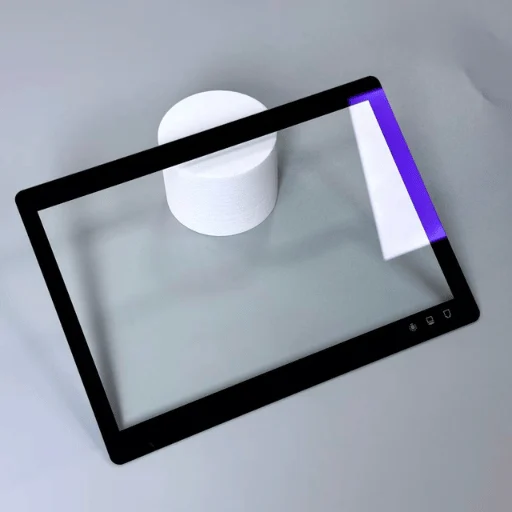
AR
Anti-Reflective Coating
Multi-layer vacuum deposit to minimize surface reflectance from 4% to less than 0.5 % to reduce occupant eye glare in a windshield or HMI display. The effect results from destructive interference using each coating layers high/low refractive index alternately.
- Improves display contrast in bright ambient light
- Critical for outdoor HMI panels and sport smartwatches
- Process: physical vapor deposition (PVD) in vacuum chamber
- Abrasion-resistant hard layer applied on top of AR stack
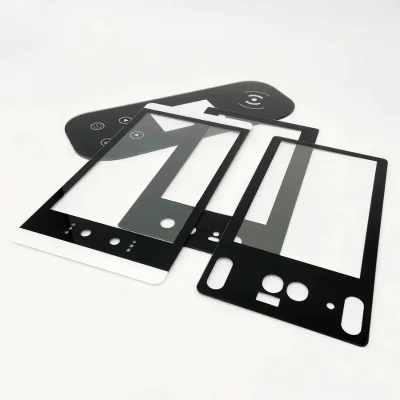
AF
Anti-Fingerprint / Oleophobic
Molecular fluorocarbon film that creates a low surface energy oleophobic (oil-repelling) surface on the cover glass. The water contact angle is over 110; the uncoated glass surface measures approximately 30.
- Fingerprint and smear marks wipe off easily
- Surface remains smooth and clean-feeling through daily use
- Essential for all consumer wearable touchscreens
- Typical durability: rated for 10,000+ wipe cycles

AG
Anti-Glare Coating
Creates a milled or etched textured surface that diffuses reflected light rather than eliminating it. The matte surface finish lessens overhead glare reflective to illuminate best.
- Preferred for industrial HMI and digital signage applications
- Reduces eye strain in high-ambient-light environments
- Slight reduction in display sharpness versus AR coating
- Can be combined with AF for outdoor touch panels
HC
Hardcoat
Abrasion resistant coating which raises a surface pencil hardness to 9H per ASTM D3363. Enables modern cell phone specifications by providing an extra measure of protection from the fine scratches introduced by keys, metal edges and sliding contact that marry out and reduce the display aesthetic to the end user over the run of the product.
- Extends the visible lifespan of the display glass surface
- Can be applied to glass or polycarbonate substrates
- Often used as the top layer over AR coating stacks
- Deposited layer thickness: 3–8μm
Common combinations: AR+AF is the standard for smartwatch and fitness tracker cover glass — AR improves display readability while AF keeps the surface clean. AG+HC is preferred for industrial HMI panels where matte surface and abrasion resistance matter most. AR+AF+HC is available for premium wearable and medical-grade programs.
Wearables Quality Certifications & Compliance
Our quality system and compliance documentation is maintained to support customer qualification programs in the consumer electronics, medical device and industrial world. These standards and certifications are valid for our cover glass and cover lens portfolio:
System Standard / 01
ISO 9001:2015 — Quality Management System
Third-party certified QMS governing all manufacturing processes from incoming material inspection through finished goods. Annual surveillance audits verify ongoing compliance across our Dongguan production facility.
Lab Verification / 02
SGS Testing Certification
Independent SGS laboratory testing confirms that our products meet specified performance parameters. SGS test reports are available to customers for import compliance and procurement qualification purposes.
Environmental / 03
RoHS 2.0 Compliance (Directive 2011/65/EU)
All products comply with the EU Restriction of Hazardous Substances directive, restricting use of lead, cadmium, mercury, hexavalent chromium, and brominated flame retardants. Full material declarations available on request.
Chemical Safety / 04
REACH Regulation Compliance
Products are screened against the REACH SVHC candidate list. Declaration of conformance is supplied with each order for EU-bound shipments.
Regulatory / 05
CE Marking Documentation
Technical files supporting CE marking are maintained for display component categories where CE marking applies to the customer’s end product. We work with customers’ regulatory teams during product qualification.
Durability / 06
MIL-STD-810G Environmental Testing
For defense and heavy industrial programs, we support MIL-STD-810G testing — including high temperature (Method 501.6), low temperature (Method 502.6), and vibration (Method 514.7) — conducted at accredited third-party test labs.
Wearable Device Glass Engineering Tools
Cover Glass Material Comparison
Compare scratch resistance, optical transmission, minimum thickness, and cost profile from the pillar-page data.
Cover Glass Coating Stack Advisor
AR lowers reflectance, AF fights finger oil, AG controls glare, HC extends abrasion life.
Custom Cover Glass Lead-Time Estimator
Uses the page’s own delivery windows: same-day sample acceleration, 7-15 business days for existing tooling, 15-25 for new custom profiles.
Frequently Asked Questions
The strengthening mechanism is fundamentally different:
Tempered glass 62oC, then fast cocld with ar Surtace conracts taster than the core, thus creates a field of mechanical surtace compresion of 10 MPa.Impactinvolves fracture anywhere from minimum 1.8mm thick to inappreciable thicknes. Cannot be subsequently cut, shaped or bent. Chemicaly strengthened glass invoves KNO3 moten salt bath immersion at 400 -450 Cfor 4-8 hours. Large potassium ions suc into the surtace removing relativelysmller sodium ions, whereby a depth 20m adds 600 MPa of chemicalsurface compression. Thin as 0.33mm possible, and even 0.1mm is avalable for speciapurposes.
In wearable and high precision industrial applications where weight and footprint heavily drive design decision, chemical stengthened glass offers thinner profilecapabilities and greater surface compression than other products with no minimum thickness limitations
Yes our standard service mode is to match any level of customization and imagination, We have CNC grinding capabity of o.0mm dimensional tolerances in round.square,rectangular and custom shapes Please send us your DXF or 2D enginering drawing as a photograph and we will provide confimation of feasbility within 1business day.
Colorcoating (AR, AF, AG, HO ptions are avalable in single or buit up layer stack individualy orin combinations.Single or muiti-color sik screened bezeland ogoprinting is also offered. New custom profie requires ony thatwe take your drawing file and generate a CNC toolpath – no need for redesign or fabrcation on your side
K10 is the IEC 6262 impact code set mostoften required or desired for industial HMl panels used for factory automation, marine, public transit K10 reads to 20joules of energy – or the equivalent of the sudden impact of a 5kg object falling from 400 mm in height.
Compared to KO7, which protects up to 2 joules, K1 certification must be atained and can be specifed in the HMIdesign at time of purchase. That electrical aspectbecomes crtcaly important in the hot dusty, and mechanicaly aggressive pysical circumstances you wil se on the shop floor, the dockside shipyard, the vehicebase depot, or in the 24-hr operation support center.
It is easy to forget about light reflection coeficientsin a glass surface uncoated glas reflection is about 4% of incident ight at each surface losing % totalforastandard glas window or panel n the presence of brilant overhead lighting refiected incident ight from the panel surfaces acts like a blazing overhead ight bulbexactly the side-scan you do not want to see when you are trying to focus on the screen contents.That is where AR coating comes in. Employing a stack of vacuum deposition thin-fim layers wih aternaing high and low reftaction index AR coating disperses thephase of refected waves cauing cancllaton by destructive interference The resuting design refection from the glass surface drops wel below 0.5%, preservingdisplay contrast even against glaring outdoor conditions. That is wly we speciry AR coating for outdoor HMl panels,coining martwatches, and warables to be used indynamic lighting situations.
Choos your colors carefuly.Irecommend SO 901 2015 (quality managementsystem- validated manufacturig proces with third -party audit),SS or equivalentthird -partytestig certficate. RoHS 20 (EU Directive 2011/65/EU – restriction of hazardous substances.REACH regulation (EU violation of principles for chemicalsafety).
For mecdical wearable or similar related to defnse addtional certication standards are aranted: SO 22196 (antimicrobial actvity ofsurtaces), MlL-STD-810G(environments qualfication) We at Saivei Glass maintain al four primary cerification standards and willbe glad to support your qualification during inspection.
There are 6 primary actual factors which directly impact the unit cost. From highest impact to lowest:
- Glass material – soda-lime is lowest and saffron crystal is highest
- Coating stack thickness – additional process cost
- Complexity of shape CNC freeform profile more expensive than rectilinear
- Thickness – ultra-thin glass lless than 0.5mm) increases chips and trim time
- Order volume – increases of 1000 pieces or more reduces unit price proportionally
- Color printing – adds additional step to processing sequence
Our GBA proximity to the Guangdong glass and chemical supply is generally advantageous for pricing.
Time is mostly driven by if you already have a tool design or profile profile and if your coating stack is within our designated process window.
Existing tooling for standard shapes: typically 7-15 business days after receipt of order and deposit.
Custom cnc profiles with new tooling alow 15-25 business days Stock profiles wil ship 15-25 business days after receving df or dwg shape file. sample orders forqualification testing are prioritized and can often be shipped same day, We recommend geting your engineering drawing to us eary in your product developmentcycle so glass qualification does not end up on your critical path to production.