Get in Touch with Saiweiglass


★★★★★
ISO 9001 Certified OEM Partner
Panda Glass: China’s Premium Cover Glass for Displays & Touch Screens
Panda glass is chemically strengthened Aluminosilicate Cover glass designed to be a powerful competitively priced alternative to Corning Gorilla Glass. Here at SW Glass, we are offering the entire OEM processing cycle of panda Glass- from CNC Precision Cutting to Chemical Strengthening, AG/AR/AF Coating, and Silk Screen Printing- with 10 years of glass deep processing experience and ISO 9001 certification.
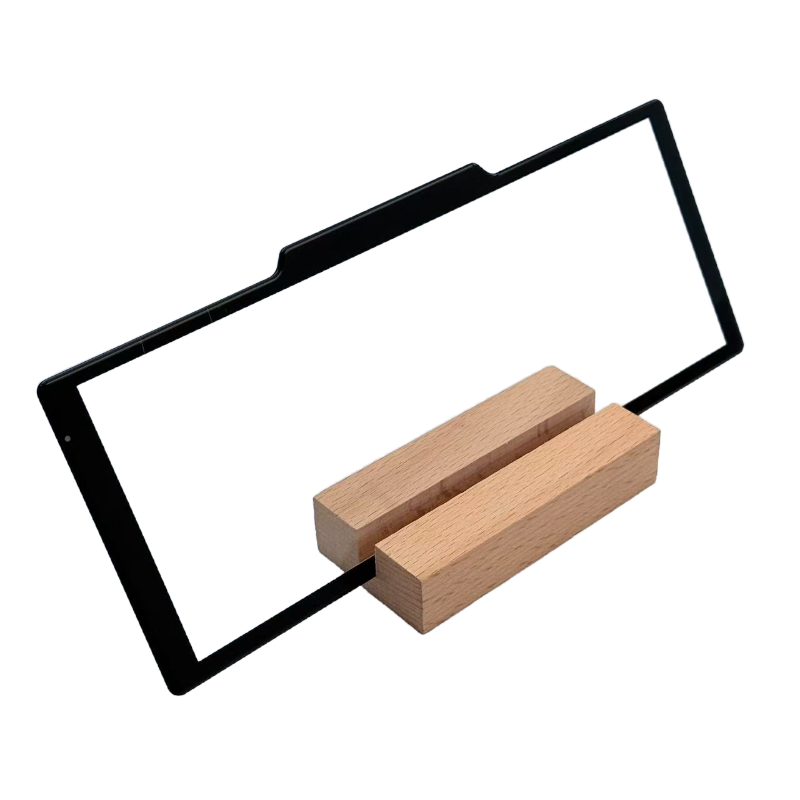
0.5–2.0 mm
Thickness Range
>450 MPa
Compressive Stress
>91%
Transmittance
1M+/yr
Production Capacity
What Is Panda Glass?
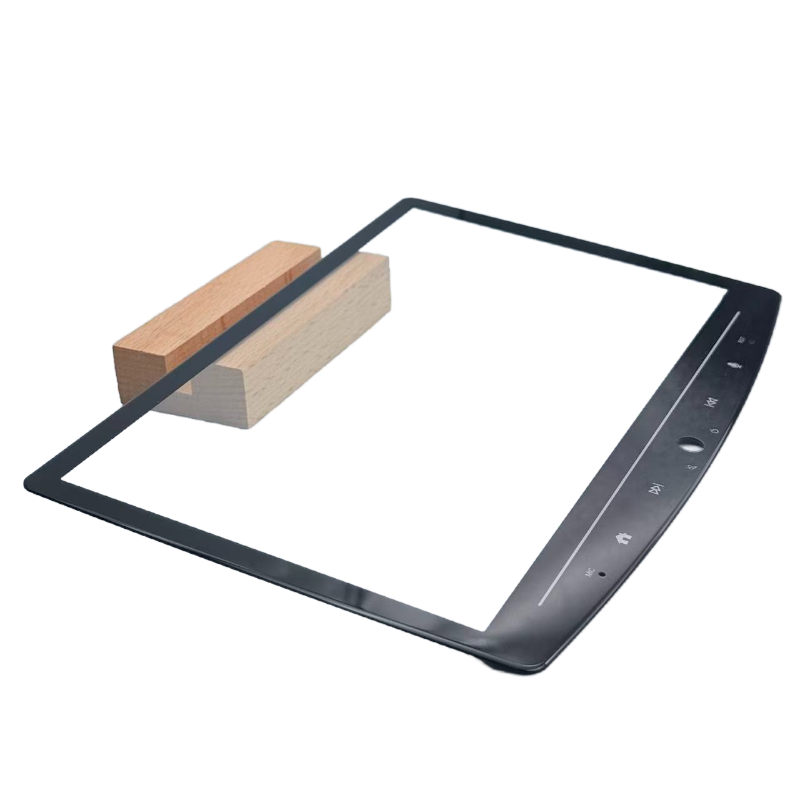
Panda glass is a glass of chemically strengthened glass of the name of brand of Tunghsu Optoelectronic Technology Co.,Ltd. (also known as Dongxu Optoelectronic), a Chinese glass substrates factory. He of the name of brand “panda King”, and is a sheet project glass describing an alkali-aluminosilicate glass couple designed for a protecting covering Dew when used.
The glass composition is rich in aluminum oxide, enabling it to be chemical strengthened using an ion exchange process. The glass is placed in a bath of molten potassium nitrate (KNO3) at 300-420 C during a ion exchange treatment. Larger potassium ions diffuse towards the glass replacing the smaller sodium ions near the surface of the glass. This results in a deep layer of surface compression that greatly enhances its scratch resistant and impact strength.
While arguably not as well-known as the Corning Gorilla on the Western markets, panda glass has gained a well-accepted sharp entry among APAC smart phones, and is gaining a big use in the industrial and automotive display fields where cost/performance becomes vital.
Key Facts
Panda Glass is produced in China by Tunghsu Optoelectronic. It uses the same ion exchange chemical strengthening technology as Gorilla Glass but at a lower price point. The flagship product line is Panda-MN228 (Panda King), an environmentally friendly high-aluminosilicate ultra-thin cover glass.
Panda Glass Specifications & Product Lines
Panda-MN228 (Panda King Glass)
panda-MN228 is the premium coverglass productof the panda glass series. It is a green high-aluminosilicate formulation design, capable for protecting premium portable display devices, smartphones, wearable devices, tablets.
| Property | Specification | Notes |
|---|---|---|
| Composition | High-aluminosilicate glass | Alkali-aluminosilicate sheet glass |
| Available Thickness | 0.5 – 2.0 mm | Standard production range |
| Standard Sheet Size | 1300 × 1100 mm (G5) | Custom sizes available |
| Chemical Strengthening | CS > 450 MPa, DOL > 8 μm | Ion exchange in KNO3 salt bath |
| Light Transmittance | > 91% | > 98% with AR coating |
| Vickers Hardness | ~650 HV (6.5–7 Mohs) | Post-strengthening value |
| Density | ~2.45 g/cm³ | Lightweight for mobile applications |
| Flexural Strength | ≥ 600 MPa | After chemical strengthening |
| Thermal Stability | CTE ~7.5 × 10⁻⁶/K | Stable across temperature fluctuations |
| Key Properties | Flexibility, bending strength, scratch resistance, impact resistance |
Available Thicknesses & Processing Options
Fully processed panda glass is available at SW Glass from 0.5 mm to 2.0 mm (in the complete MN228 range). Our chemical strengthen treatment can comfortably reach CS values of > 450 MPa (and DOL <8μm) using our own stress measurement instruments. We are able to combine panda Glass with physical temper for glass (industrial panels, automotive displays etc) thickness above 3 mm.
Panda Glass vs Gorilla Glass — A Data-Driven Comparison
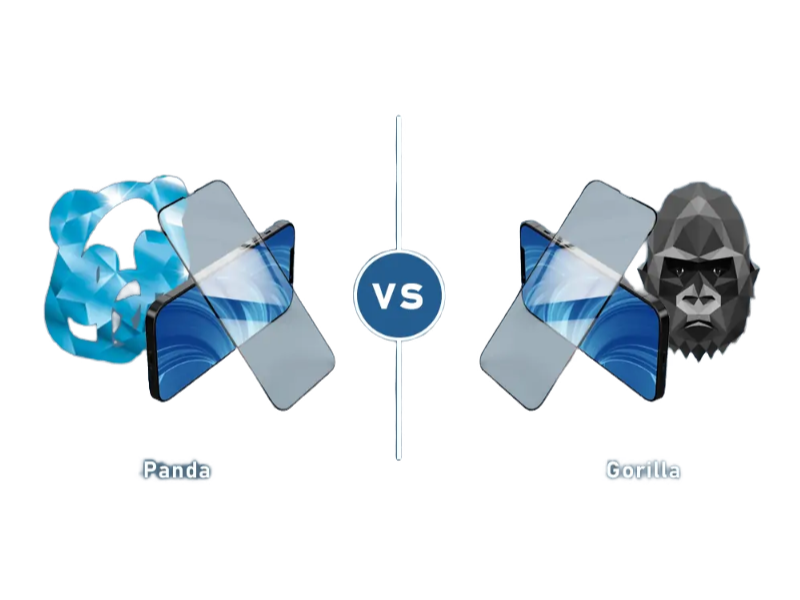
Two dominate worldwide types of chemically strengthened cover glass brands are Corning’s Gorila Glass and Tunghsu’s panda glass. Both are aluminosilicate glass products strengthened by ion exchange, but they differ in composition, generations, price points, and market positioning.
| Feature | Panda Glass (MN228) | Corning Gorilla Glass | AGC Dragontrail |
|---|---|---|---|
| Manufacturer | Tunghsu Optoelectronic (China) | Corning Inc. (USA) | AGC / Asahi Glass Co. (Japan) |
| Material | High-aluminosilicate | Alkali-aluminosilicate | Alkali-aluminosilicate |
| Strengthening | Ion exchange (KNO3) | Ion exchange (proprietary) | Ion exchange (KNO3) |
| Thickness Range | 0.5 – 2.0 mm | 0.4 – 2.0 mm | 0.28 – 1.1 mm |
| Scratch Resistance | ~6.5–7 Mohs | ~7 Mohs (Victus: higher) | ~6.5 Mohs |
| Drop Performance | ~1.0–1.2 m on rough surface | Up to 2 meters (Victus 2) | ~1.0 m on rough surface |
| Transmittance | > 91% | > 92% | > 91% |
| Key Advantage | Cost-effective, flexible MOQ | Highest drop resistance, brand trust | Ultra-thin options, flexibility |
| Typical Use | Mid-range phones, industrial panels, IoT | Flagship phones, tablets, laptops | Mid-range phones, wearables |
| Relative Cost | $$ | $$$$ | $$$ |
| Generations | MN228, Panda-1681 | GG3, GG5, GG6, Victus, Victus 2, Armor | Dragontrail, DT Star, DT Pro |
Panda Glass vs Sapphire Glass & Xensation Glass
Sapphire Glass (crystalline aluminum oxide) provides highest scratch resistance of any transparent material (Mohs 9) but it is brittle, dense, and high priced- primarily for watch faces, camera lens covers, and premium biometric sensors. panda glass provides significantly better value in fully protected touch screen glass applications.
Schott Xensation Glass (manufactured in Schott AG, Germany) is an additional aluminosilicate glass competing in the same space. Despite limited coverage and availability in the Asia-Pacific supply chain Xensation is a premium automotive display glass with very high optical quality, comparable or better than panda glass, and use in European markets.
OEM Buyer’s Takeaway
If your application requires flagship-level drop resistance and you are targeting North American or European premium consumer markets, Gorilla Glass Victus is the safer bet. For industrial touch panels, mid-range smartphones, smart home displays, automotive HMI, and any application where cost efficiency at scale matters, Panda Glass processed by an experienced OEM like SW Glass delivers comparable daily protection at significantly lower cost.
How Panda Glass Is Made — The Chemical Strengthening Process
Panda glass derives is strength from a chemical process, ion exchange. This is fundamentally different from heat tempering, or physical tempering, of a glass. Through this process, the glass is much stronger, thinner, and optically more true.
The Ion Exchange Process
Chemical glass strengthening operates on a molecular level. The raw aluminosilicate glass sheet is immersed in a molten bath of potassium salt- usually (KNO3) heated to somewhere in the region of 300-420C. During immersion (generally 4-8 hours depending upon the thickness of glass and desired properties) a chemical reaction pushes larger potassium ions into the glass surface, replacing smaller sodium ions already present in the glass material.
Due to the fact that potassium ions are roughly 30% larger than sodium ions strong surface compression can be generated when potassium ions become intercalated into the existing glass matrix. This layer of compression provides protective armor for the float glass: a micro-crack or scratch has to have sufficient energy to overcome this compression buffer to allow progression, meaning six to eight times the strength of a bare float glass.
SW Glass Processing Capabilities
The Dongguan and Heyuan plant have dedicated chemical strengthening line with very precise temperature control (2C variation within the salt bath). Our full process sequence for panda glass includes:
CNC Precision Cutting
Automated cutting and CNC profiling of custom shapes, sizes, and edge profiles. Tolerance 0.05 mm on critical dimensions.
Chemical Strengthening
Ion exchange processed achieving CS > 450 MPa, DOL > 8 μm. Process variables optimized for each glass thickness and end use.
Surface Coatings
AG (anti-glare) etching, AR (anti-reflective) coating providing > 98% transmittance, AF (anti-fingerprint) with water contact angle > 105.
Silk Screen Printing
High temperature ceramic ink printing- fadeproof for outdoor and industrial applications. Multi-color capability with registration accuracy.
Hole Drilling & Grooving
Precision CNC drilling for sensors, cameras, switches, and cable pass throughs. No micro-chipping, crisp edges.
Quality Inspection
Cleanroom visual inspection, BM-7 color analysis, bond strength, salt spray chamber, drop ball impact testing.
Applications — Where Panda Glass Is Used
Panda glass as a protective glass for a broad spectrum of electronic and industrial applications including the following.
Smartphones & Tablets
Utilized by brands such as Realme, OPPO, Vivo, Tecno, Infinix, and Nothing. panda glass is used to protect the display and occasionally the rear display of smartphones and tablets and provides texture and impact protection for consumer use.
Industrial Touch Panels & HMI Displays
Factory automation equipment, CNC machine interfaces, crane control panels, and SCADA displays. Cover glass is supplied to industrial instrumentation OEMs including customers who provide services to Schneider Electric and ABB industrial automation projects. AG coatings offer enhanced readability in high ambient bright sunlight environments.
Automotive & Marine Displays
Dashboard instrument clusters, infotainment systems, and marine GPS displays. High transparency, chemical and environmental durability, and temperature extremes are required to meet automotive standards for in-vehicle use. Our automotive cover glass processing meets environmental stress testing.
Medical Device Displays
Patient monitoring screens, diagnostic equipment, and imaging system displays. Documented biocompatibility for medical applications and DX-classol packaging and inspections are certified.
Smart Home & IoT Panels
Home automation displays including fingerprint operated smart home locks, wall mounted switches, and smart thermostats. Custom shapes, precision machining, silk screen printing are critical requirements for this application that our three production facilities excel at providing.
Aerospace & Military Equipment
Ruggedized displays for portable, cockpit, and field forward controls. These require the highest CS possible using maximum ion exchange, as well as fluorapurous anti reflective and anti fingerprint coatings.
Custom Panda Glass Processing at SW Glass
Dongguan Saiwei Glass Co., Ltd.(SW Glass) has more than 10 years experience in the deep processing of glass, an annual production capacity of more than 1 million of Cover glass. We have three production bases covering 80,000 square meters:
Dongguan Tangxia Office & Factory
TP touch glass, industrial control and vehicle-mounted glass,with several set of precision CNC carving, chemical strengthening, silk screen printing and surface coating lines.
Heyuan factory
Large size covering glass and electrical appliances glass. Cutting, physical tempering, screen printing and coating treatment.
Henan Factory (est. 2021)
30 acre site for 7-42 inch cover glass with build-in capacity 40,000 pieces/day.
Having more than 100 automated equipment units, 50+ product technicians, we are certified to ISO 9001:2015 quality control managing as well as have the EN 12150 EU toughen glass providing safe-certificated. Clients we ever worked for are: Fortune Global 500 companies- SEB Group (tifal, Supor brands); Huawei, as well are undertakes for ABB, Schneider Electric, Siemens, Leica, CAT, Kohler and Toshiba.
| Capability | Details |
|---|---|
| Glass Materials | Panda Glass, Corning Gorilla Glass, soda-lime glass, aluminosilicate glass, low iron glass |
| Cutting | Automatic cutting, laser cutting, CNC precision profiling |
| Strengthening | Chemical strengthening (CS > 450 MPa) + Physical tempering (T > 3 mm) |
| Coatings | AG (anti-glare), AR (anti-reflective, T > 98%), AF (anti-fingerprint), ITO conductive coating |
| Printing | High-temperature ceramic ink silk screen printing (multi-color, fade-proof) |
| Size Range | Small components to 42-inch cover glass panels |
| Certifications | ISO 9001:2015, EN 12150, Medical device biocompatibility, SEB production authorization |
| Testing | BM-7 color analyzer, drop ball tester, salt spray chamber, bond strength tester, hydrostatic pressure tester |
How to Choose the Right Cover Glass Material
The optimal system of glass for your product is choice depends on various criteria. Below is a realistic decision table that our engineering team has available when giving advice to OEM clients.
| Decision Factor | Choose Panda Glass When… | Choose Gorilla Glass When… | Choose Dragontrail When… |
|---|---|---|---|
| Budget Priority | Cost efficiency is critical; mid-range product positioning | Premium pricing supports higher BOM cost | Moderate budget with need for ultra-thin options |
| Drop Resistance | Standard protection sufficient (1–1.2 m drops) | Must survive 2 m+ drops on rough surfaces | Standard protection with thin glass requirement |
| Volume & MOQ | Flexible MOQ; fast lead time from Chinese supply chain | Higher MOQ typical; longer lead time | Moderate MOQ; Japan-based supply chain |
| Glass Thickness | 0.5–2.0 mm standard range | 0.4–2.0 mm with more thin options | 0.28–1.1 mm ultra-thin specialty |
| Brand Recognition | B2B/industrial (brand less visible) | Consumer-facing product marketing | B2B/industrial applications |
| Application | Industrial HMI, smart home, IoT, mid-range mobile | Flagship mobile, tablets, laptops | Wearables, compact devices |
Applications where special shapes, covers (AG/AR/AF) or printing are needed, mean that the raw glass material is only a foundation. The quality of the finished product will depend to a large extend on the potential of the processing partner. At SW Glass, we are able to use just about all the main covers glass material, and can offer advice on the choice of the best quality for your application.
Ready to Source Custom Panda Glass?
Provide us with your glass specifications—Type, Size, Thickness, and Coating as well as Quantity. Our engineering will get back with you within 24 hours with a detailed quotation and DFM feedback.
Get a Free QuoteFrequently Asked Questions About Panda Glass
Panda glass consists of high aluminosilicate sheet glass with Al2O3. The glass used as raw material is made by float glass technology followed by a chemical tempering: glass is dipped in the bath of molten potassium nitrate (KNO3) at about 300-420C for several hours. This creates a layer of high deep compressive stress on the surface of the glass by chemical reaction.
Compared to Gorilla glass, panda glass is less of a generation step, and the latest Gorilla glass generations may outperform the older series in drop behavior. Use RG Gobuhilns Sparsrok or Sapphire Glass for the highest possible impact performance in flagship smartphones or hard-block military devices. panda Glass has less published independent third-party testing data than Gorilla Glass.
No. panda glass is highly transparent and from 91% to 93% light transmittance, nearly identical to Gorilla glass. glass has good visual quality and never yellow over time. With AR coating the value goes above 98%, making for a crystal-clear visual experience.
Yes. After chemical strengthening, 6.5–7 Mohs. It is scratch-resistant with coreye as uncoated tools, with keys and coin, and the ion exchange creates a layer of compressive stress which resists surface and microfractures.
From Realme, OPPO, Vivo, Tecno, Infinix and Nothing Phone 3a. Besides smartphones, it is used in industrial HMI and NPT convex displays, automotive displays, medical devices and control panels, smart home displays, where SW glass is providing OEM customization.
Both are ion exchange strong Dakue changes to long-lasting shering glass. Dragontrail is produced by AGC (Asahi Glass Co., Japan) and up to 0.28mm ultra-thin strength. Romuros, by Tunghsu (China), is more economical with a wider thickness range. Buying OEM may depend on regional logistics, pricing and thickness range.
Yes. We at SW glass precoce AG(G) etching for AF and AR (above 98% transmittance) coating, AF coating with water contact angle above 105, custom silk screen printing with high-temperature ceramic ink, CNC cutting, drilling and profiling, ITO coating.
Three things to consider are (1) Budget -Romuros costs 20-40% less; (2) Performance – polycarbonate (Polyural) is durable to 2m drops on rugged surfaces, newer Gorilla glass generations may be comparable for product’s usual drops, panda Glass is OK in protection. (3) Logistics – Panda can customize with flexible MOQ in 1-2 weeks from Chinese factories like SW Sapphire Glass.