Get in Touch with Saiweiglass


Sunlight Readable & Weather-Resistant Glass for Outdoor and Marine Displays
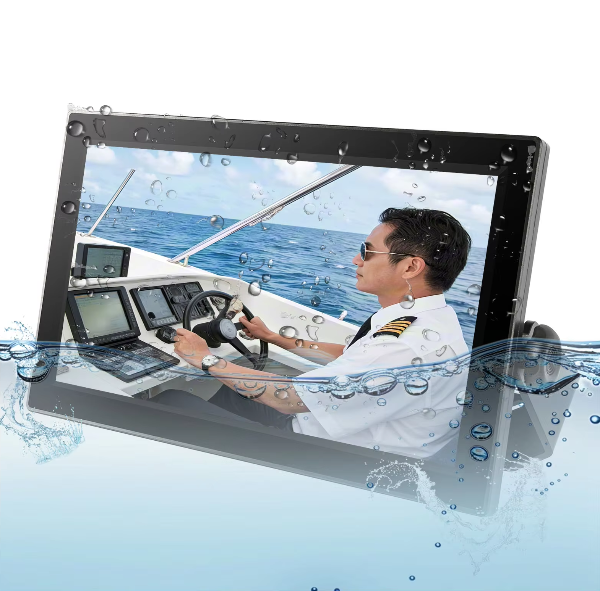
This page is aimed at OEM teams that require a sunlight readable display front stack, not at buyers shopping our finished monitor range. Saiwei supplies the glass, outdoor touch screen sensor and optical bonding layer that enable an LCD to be viewed in direct sunlight, driving rain, condensation and marine spray, while the housing, circuitry, back light and final system rating stay on the equipment side.
20+
Years Manufacturing
50+
Countries Served
0.33-6mm
Strengthened Glass
MOQ 1
Minimum Order
3-Day
Sampling
What OEM teams usually need to solve first
Readability
A panel can be bright enough on paper, yet still appear washed out in direct sunlight as reflection at the cover glass and the air gap diminish contrast.
Touch Behavior
An outdoor touchscreen that functions well on the bench can fall apart when moisture droplets, gloves or salt deposits arrive. Touch calibration is not an afterthought.
Environmental Wear
UV, moisture, change of temperature, seawater spray, cleaning solutions all attack edges, seals, coatings, border panels well before they attack the LCD itself.
Scope Control
Buyers must understand what the glass supplier is responsible for, what the display partner is responsible for and what the target OEM must validate. That prevents a great deal of “chasing the horse”.
What Is Sunlight Readable and Weather-Resistant Display Glass?

A sunlight readable display is not a single designated part number. It is a stacking decision. LCD type, backlight power and lumen level are important to know, but the front glass controls how much of that light the user actually observes. If the glass produces excessive reflection, if the air gap bounces internal reflection around or if the border design allows dust and rain to gather at the view, the end user will not consider it sunlight readable regardless of what the LCD datasheet specified.
That is why outdoor teams typically consider the front stack three layers: the visible cover glass, the touch element and the optical layer residing between the glass and the LCD. Some projects stay with a cover glass because the OEM is “locked” into a predesigned display/mount set. Others “bond” up as a stack to achieve greater outdoor visibility, a 1/3 thinner profile or a reduced internal reflection. There is no “best” answer. There is a optimal level for each project.
Weatherproof glass are not round. Buyers tend to use the term “weatherproof” as if the glass itself creates a waterproof touchscreen. It does not. The glass can contribute to the plan through water resistant coating, increased strength, border masking and better bonding choices, but raindrop penetration, chassis gasket compression, venting, connector sealing and enclosure drainage remain in the full assembly. That fact is significant. It places the quotation in perspective and renders the validation plan transparent.
| Stack Function | What Saiwei Can Supply | What Stays System-Level |
|---|---|---|
| Front cover layer | Custom cover glass, chemically strengthened glass, printing, CNC shaping and edge work | Mechanical bezel, enclosure compression, final impact requirement |
| Touch input | Capacitive touchscreen or resistive touch panels | Controller tuning, firmware response, water rejection behavior |
| Optical path | Optical bonding support for display assemblies | LCD selection, high brightness backlight, ambient light sensor logic |
| Compliance baseline | ISO 9001 plus RoHS and REACH listed on official product page | Finished monitor IP code, marine approval, EMC and vessel integration |
| Sampling and entry quantity | MOQ 1 piece and 3-day sampling | Program release schedule, production forecast and logistics plan |
How Outdoor Touch Screen Stacks Stay Readable in Direct Sunlight
The outdoor readability is largely a contrast issue. Direct sun falls on the front surface, ambient light reflects off of the cover lens and then the visitor sees the content fight off of the reflection. That is why a sunlight readable LCD is not just brighter backlights. You need a front stack that reflects less, or diffuses glare in a controlled manner or removes the internal air boundaries that make the screen appear milky. When someone says they want an outdoor touch screen display, this is what they are usually referring to.
AG and AR do varying degrees of the same job. Anti-glare is beneficial where the source of unwanted light is harsh and point-source reflection. Anti-reflective is preferable when clarity and contrast are the priority. An inherent trade-off exists; however, as a heavy AG layer can soften the sharpness of a picture, reducing fine detail, which would be wasteful in a UI displaying fine text and KPI data. Sometimes, teams settle on a moderate surface coat combined with optical bonding as opposed to relying on a single coating to do all the work.
Optical bonding really proves itself on outdoor applications. Without it, all that brightness can be a bit underwhelming. The extra internal reflections from the air-gap dampen contrast and give the panel a dim appearance. Once the stack is optically bonded, it almost always appears darker in a pleasing, more anchored way, which is instantly noticeable in applications such as wayfinding, outdoor kiosk, digital signage and dockside terminal developments.
What matters more than people expect
- Border selection. If the edge mask is wrong, then the stack can appear cheap even when the image quality is excellent.
- Viewing angle. What appears bright and readable straight on may not work when viewed from the side, or down a raised pedestal.
- Enclosure aperture. An overly deep bezel can present its own shadowing and reflection issues.
- Touch mode. Glove sensitivity, moisture/dirty finger behavior and pcap interfacial requirements are best designed to suit the application before the front stack height is finalized.
In summary: If direct sunlight presents the issue, the overall solution usually calls for some combination of higher brightness, reduced reflection and reduced internal air. Solving all three with sheer nit alone is costly and sub-optimal.
Common outdoor touch screen design notes
If your space is in public use, then, you are not only optimizing for sunlight readability; you are considering physical durability, cleaning and irregular user interaction. Kiosk programs benefit from shock resistant front border styles, and screens that maintain readability despite dirt, scratches, fingerprints and hastily wielded wipes. Outdoors open-frame builds are feasible if the final enclosure is watertight.
In outdoor unpaid installations, an ambient light sensor can be valuable on the electrical side, helping to minimize brightness to contrast intensity swings across nightly and daily cycles. This is not a glass feature, but it does alter how intensely the front stack must be tuned. Clients seeking both good day-readability and pleasant evening operation should be advised of this.
Terms buyers use in RFQs
Cover Glass, PCAP Touch and Optical Bonding for Outdoor Displays
There are three standard configurations available as an outdoor or marine display front end. Cover glass only. This works when the customer has already found a working LCD and touch solution design and just wants a custom front lens. Glass plus touch. This is the standard progression when the OEM wishes to have a more attractive user interface, improved mounting control, and a single procurement for the cover glass as well as the projected capacitive or resistive touch layers. Bonded stack. This is the more expensive approach; however, this will be able to correction any readability or package thickness problems that as a rule are more difficult to improve.
Projected capacitive touch is the default for more hi-tech touch screen styling, slick graphics and a little multi-touch. Resistive certainly retains its daisy-like charm. If got wet hands, a stylus and gloves may all have a new-found allure. Customers often ignore that as being so yesterday. Not always true. For a deck HMI or service panel where the operator may have gloves on and be muttering about spray the simple approach is more often than not, wiser than marketing.
Assembly optical bonding is not required on every build. On some more protected pieces of equipment, the optical bond with air gap can be acceptable for servicing, but when the project is in full bright sunlight, bigger vibration, or the stack height requirements get tighter, optical bonding can do more than one job at a time – making the sunlight readability better, making the image seem cleaner, and hiding internal dust or a changing look while moving.
Level 1
Cover Glass Only
Ideal if the OEM already has control of the touch sensor and LCD panel. Works well for outdoor LCD upgrades, retrofit glass replacements, or projects that only require chemical strengthening, AR, AG, AF or Ceramic frit on the front surface.
Fastest to align. Least control over total screen readability.
Level 2
Glass + Touch Sensor
A good choice for outdoor touch screen and industrial touchscreen applications in which the end user requires one supplier for cover glass, pcap touch or resistive touch, border design and front end integration.
Typical optimal condition for kiosks, chargers, and HMI panels.
Level 3
Optically Bonded Stack
Worth of expected at the beginning, such as the required is direct sun illumination, vibration, a thin assembly, or higher visual quality, etc.. To be particularly useful for sunlight readability, marine bridge or helm usage.
Requires more work at the beginning, but often a cleaner solution to implement.
| Need | Usually Favours | Why |
|---|---|---|
| Lower front reflection | AR plus optical bonding | Reduces both surface reflection and air-gap reflection |
| Glove or tool input | Resistive or tuned PCAP | Depends on whether gesture support matters more than tolerance to contact conditions |
| Cleaner industrial look | Cover glass plus PCAP | Front surface becomes easier to wipe and easier to seal visually |
| Strong sunlight readability | Bonded stack with balanced surface treatment | The stack keeps more useful contrast in bright ambient light |
| Quick sampling path | Cover glass or glass plus touch | Lower assembly complexity means faster first-pass validation |
Marine Touch Screen Requirements: Waterproofing, Salt Spray and Vibration
Mariners live with a separate set of abuse. Dew settles or condenses on the face. Salt haze dries or crystallizes on the face. Vibration gets into all the edges and seals. Display is sitting on a helm station, on a workboat control, on a bridge, or at a deck HMI where water is not going to refrains from sitting on the display. It’s not only “is it waterproof”. The real question is, “can the entire front stack still be expected behave the same way month after month after month of splashing, rinsing, and transit?”.
First rule: scope. An item of marine display glass does not carry the entire marine rating on its own. IEC 60529 provides the common language behind IP code, and IEC 60945 often defines the environment for the marine navigation and radiocommunication equipment. Both are system level considerations. However, the glass and touch decisions do determine whether the whole product even has a chance. Border design, touch technology, bonding technique, coating lifespan, mounting approach all feed into that outcome.
Water is the great dividing line for marine projects. If the surface will endure only occasional splash, a tuned projected capacitive solution may still be the best solution. If the surface will be immersed in water for hours, or if the operator must touch through gloves, in unstable conditions, a resistive solution can be easier to justify. There is nothing to recommend choosing the more difficult technology if it offers no value.
Bridge Display
Navigation and command visibility
Bridge applications demand tactile, stable readability, with controlled reflection and a display stack that does not look washed out when a lot of daylight enters the wheelhouse. Optical bonding here offers a good case.
Helm Station
Touch under splash and movement
It’s not just viewability at the helm. It is also input behavior when the boat rolls, the operator can not remove their gloves, and the environment is occasionally wet.
Deck HMI
Seal lines and edge durability
Deck equipment will be splashed, soiled, cleaned, and likely to get beaten up in one ugly cycle. Ceramic frit and disciplined edge design count more than they appear on the engineering drawing.
AG, AR, AF and Ceramic Frit: Surface Treatments for Harsh Environments
Outdoor conditions can over-simplify surface treatment requirements for many projects. Buyers request anti-glare because they do not like the reflection. But then the pictures are not as clear. Or they ask for anti-reflective because the display must be readable, but then the fingerprint smudges and the salt deposits become equally annoying. A better approach is to match the treatment to the problematic image, then evaluate whether layering makes sense.
Saiwei already separates these capabilities across its product range, including AG glass, AR glass, AF glass, chemically strengthened glass, and optical glass solutions. That makes it easier to build the front stack as a set of choices rather than a one-line coating request.
| Treatment | What It Helps | Where It Fits | Watch-Out |
|---|---|---|---|
| AG | Diffuses glare and hot reflections | Outdoor kiosk, public terminal, sun-exposed panel | Too much haze can soften fine graphics |
| AR | Lowers reflection and keeps image clearer | Sunlight readable display, helm and bridge view area | Surface cleanliness becomes more visible if AF is skipped |
| AF | Improves smudge resistance and wipe-down feel | High-touch equipment, public interaction, wet cleaning cycles | Does not replace AG or AR for visibility work |
| Ceramic frit | Masks edges, hides adhesive, supports border durability | Outdoor and marine assemblies with exposed borders | Should be specified together with gasket and view area geometry |
Why ceramic frit deserves a bigger role
Border frit is one of those details technical people see as cosmetic until the equipment is operating outside in sunlight. A poorly applied border treatment will fade, appear uneven, or reveal the glue lines that give the product a worn look. Ceramic frit can be fired in to the glass so the border is probably more stable with outdoor sun than other approaches, plus it helps hide the mounting details and gives a tidier visual appearance.
Where coatings should be decided
Make those choices before the graphic is frozen. Not later. Surface choice interacts with touch tuning, optical bonding, border styling and the content in the shop itself. A character display and a bare button-driven deck panel may not want the same surface finish.
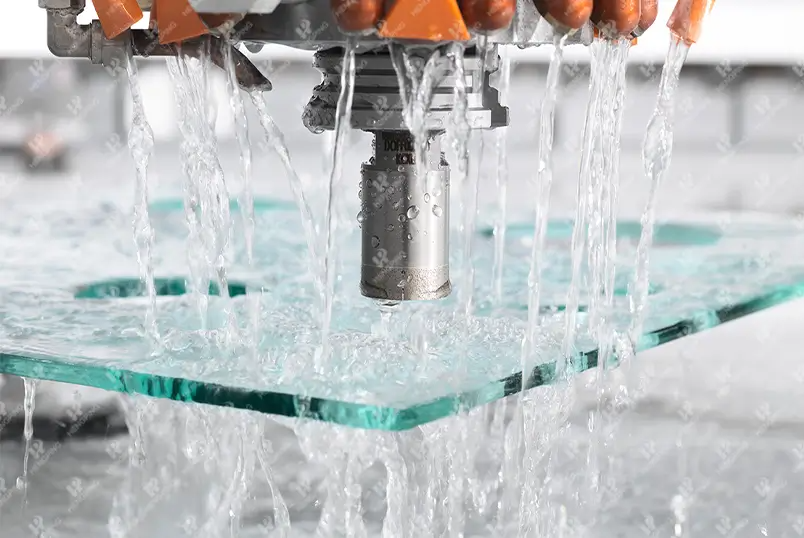
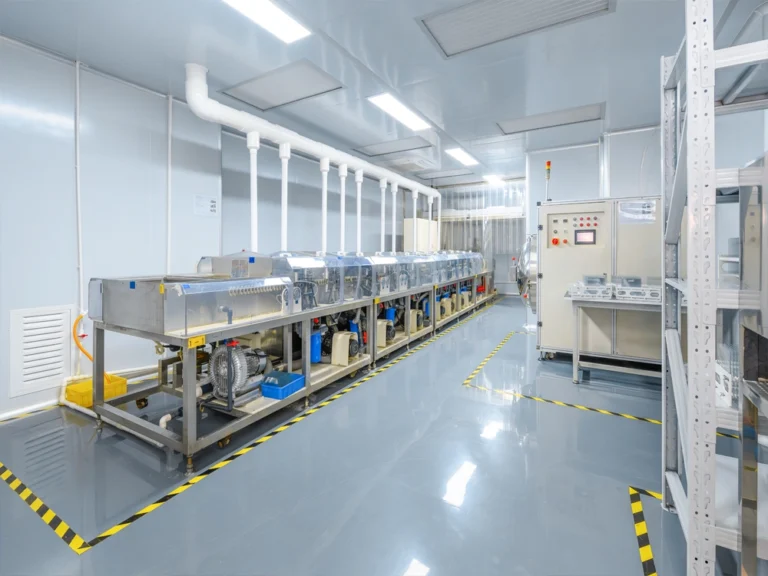
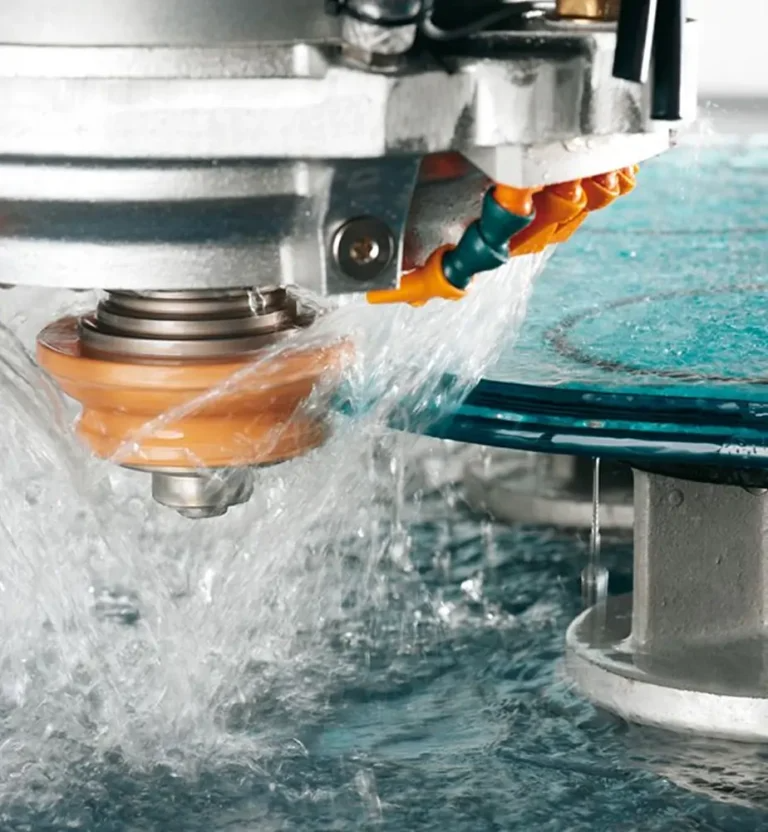
Quality Assurance | Trusted Marine Display glass Manufacturer in China




Outdoor & Marine Applications: Kiosks, Helm Stations and Deck HMIs
There is where the component-page methodology becomes relevant. You will find finished monitors across the web, you need to think one layer deeper if you are the equipment builder. Most outdoor touch screen, marine display and video display applications start with the application profile, then move back into the right stack.
Outdoor Kiosk
Wayfinding, ticketing, charging and public service equipment
These projects care about sunlight readability, repeated public touch, cleaning, and physical impact. A cover lens with tuned surface treatment plus PCAP touch is a common place to start. If the kiosk will be outdoors all day long, optically bonded construction generally comes into play.
Design note: public spaces best location magnifies glare because the user does not get to choose his viewing angle. It needs to look good when the sun is not cooperating.
Marine Helm
Navigation, engine data and control interfaces
In this situation the front stack must remain legible when the ship alters azimuth and your customer hastily glances rather than proceeds patiently through the content. Water behavior and glove logic matter perhaps more than on land-based equipment. Marine touch screen stacks often benefit from strong border masking and cautious touch determination early in the program.
Design note: on a helm, a touch miss is more annoying than a higher bill of material. That changes the technology conversation.
Deck HMI
Workboat panels, service stations and exposed operator controls
Deck HMIs see spray, dirt, cleaning, and impact in one package. Buyers often start by demanding all-weather glass, but what they actually need is a front stack that gives the enclosure a clean sealing window and still appears professional after a few months in the field.
Design note: if the operator wears gloves to touch more often than bare fingers, resistive touch may remain a more effective choice. Not glamorous. Effective.
Sunlight Readable Display Price Factors and OEM Supply Workflow
Buyervers look for sunlight readable display pricing, but outdoor and marine component projects are not just one-price jobs. The quote varies by part size, glass type, thickness, edge finishing, coating stack, touch technology, optical bonding stack, drawing complexity and purchase volume. A plain cover lens and a bonded outdoor touch or safing glove sensor is different contract work, even if the visible surface is not so different.
There’s an easier way to look at the price. Instead of requesting a dollar per finished outdoor monitor, model where the project fits on the stack scale. Coverglass only? Glass plus touch? Fully bonded module? That single choice generally accounts for most of the price delta. The rest then just follows from manufacturing process requirements: hole count, border labeling, special shape, surface treatment, validation vehicle and packaging.
Main price drivers
- Part dimensions: length, width, cutouts, edge finish, logo or border mask pattern.
- Material selection: soda-lime or aluminosilicate, and whether chemical strengthening is required.
- Surface package: AG, AR, AF or combination treatment route.
- Touch path: cover glass only, resistive, or integrated projected capacitive.
- Bonding path: air-gap, semi integrated, or fully optical bonded process.
- validation route: samples, pilot, reliability screening, production estimates.
01
Drawing Review
Share the mechanical drawing, visible area, active area and environment summary.
02
Stack Choice
Define whether the job is cover glass, glass plus touch, or a bonded assembly.
03
Surface Plan
Choose AG, AR, AF and ceramic frit based on actual use, not guesswork.
04
Sample Build
Validate readability, border look, touch behavior and stack thickness.
05
Pilot Check
Run the agreed environmental and assembly checks with the OEM team.
06
Production Launch
Lock the drawing, release the tooling path and move to scheduled supply.
Why Saiwei for Outdoor and Marine Glass Integration
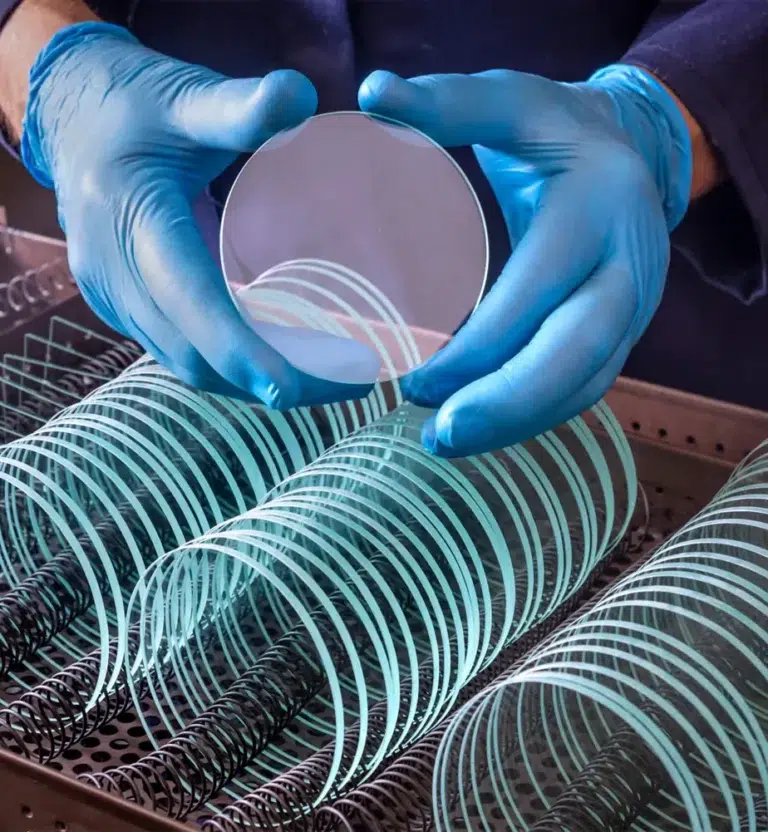
Saiwei is not producing every element of the display chain. That is useful to know. Its official pages point to the part of the stack it can actually own: cover glass, touch panel integration, optical bonding, and strengthened glass processing. The chemically strengthened glass page also gives some concrete numbers: since 2004, more than 20 years of manufacturing, 2,000+ customers around the world, 50+ countries served, and a 0.33-6 mm thickness range for that family.
The touch screen glass page also lists the operating facts many buyers want up front: ISO 9001, RoHS and REACH, capacitive and resistive touch panels, optical bonding support, MOQ 1 piece and 3-day sampling. That still does not make the company a marine electronics brand. It does make Saiwei a practical source for the glass-plus-touch-plus-bonding layer many outdoor and marine OEMs still piece together from multiple suppliers.
-
Useful when you need a touch screen glass supplier that can also discuss bonding and touch integration, not just a raw lens vendor.
-
Useful when your project may move from cover glass to a touch display module-style assembly path later and you’d like fewer handoff gaps.
-
Useful when the drawing must support both cosmetic quality and field durability, especially around the black mask and edge work.
-
Useful when the buyer wants an honest answer about what the supplier can build and what the OEM still must validate at system level.
Outdoor Display Stack Selector
Use this selector to decide whether your project should stay at cover glass only, move to glass plus touch, or go all the way to a bonded outdoor stack. The logic follows the page guidance: direct sun pushes toward bonding, steady water and glove use can change touch choice, and the final IP rating still belongs to the complete enclosure.
Project Inputs
Application
Readability
Water
Operation
Scope
Saiwei officially lists cover glass, capacitive and resistive touch, and optical bonding support on the touch screen glass side of the business.
Recommendation
Select your project conditions on the left to calculate the suggested stack, touch path, and validation notes.
Recommended Stack
…
…
Touch Path
…
Surface Package
…
Why This Mix Fits
- Direct sun and vibration both increase the value of optical bonding.
- Heavy glove use and persistent water justify an early PCAP versus resistive decision.
- Ceramic frit matters when the border must hide adhesive and hold up after long outdoor exposure.
0
Bonding pressure
0
Touch difficulty
0
Sunlight load
Reminder: the final waterproof or marine approval still belongs to the assembled enclosure, connector, and mounting system.
Ready to scope the front stack?
If Saiwei is able to share the drawing, application type, quantity range and whether the build requires cover glass only, glass plus touch, or a bonded stack, he can take the discussion from generic sunlight readable display stagnation to a real manufacturable proposal.
Get a Quote for Outdoor & Marine Glass