Get in Touch with Saiweiglass


★★★★★ Excellent Trust Rating
Adhesive Bonding Solutions for Industrial Glass Applications
From UV-cured optical bonds to structural epoxy joints, Saiwei Glass synthesizes Sorufing-ready glass substrates designed for high adhesive assembly reliability in electronics, automotive, medical and industrial applications.
16+
Years Glass Fabrication
5,000
m² Production Facility
90+
Technical Professionals
>95%
UV Transmission Rate
What Is Adhesive Bonding and Why It Matters for Glass Assembly
Adhesive bonding is the process of joining two or more surfaces using an adhesive material – a polymer-based compound that forms a lasting link through chemical reaction, solvent evaporation or energy-activated curing. Unlike mechanical fasteners such as screws, rivets or clamps, adhesive bonds spread load evenly over the assembly region (rather than focusing it at discrete points).
For glass components, this is an important distinction. adhesive bonding is the process of joining two surfaces using a polymer that solidifies into a definitive link. Glass has tremendous compressive strength but is fragile under point loads. A bolted joint produces stress concentrations that can grow into crack, while an adhesive bond distributes the load throughout the bonded substrate. That is why adhesive bonding is the preferred joining method in glass assembly from consumer electronic displays to automotive glazing and aerospace structures. Today, using adhesive bonding to join everything from mobile phone cover glass to aeroplane cockpit windows as a substitute for more traditional weld and fastener designs where glass integrity is critical.
How Adhesive Bonding Works on Glass Substrates
The surface energy between a glue and a glass substrate ensues through four mutually dependent routes:
Chemical bonding
Reactive adhesive groups form covalent bonds with hydroxyls on the glass surface. Silane coupling agents amplify this route.
Mechanical interlocking
The adhesive flows into microscopic surface defects and locks into place once cured. Surface textures such as etched or anti-glare treated glass provide better Mechanical interlocking.
Diffusion
At a molecular level, polymer chains from the adhesive intersperse with surface molecules, forming an interpenetrating boundary layer.
Electrostatic adhesion
Electron exchange occurs between the adhesive and substrate to produce attractive forces at the interface, helping initial tack and bond long term stability.
The surface energy of glass – 40 to 72 millijoules per square meter in the surface energy depending upon treatment – has the order on how well a adhesive wets and bonds to the substrate. It surface energy is high, wetting is good, which means a high-strength more reliable bond link. This point is where glass surface preparation becomes the filter in Sorufing quality control.
Types of Adhesive Bonding Technologies for Glass: Choosing the Best Adhesive
Selecting the right adhesive for a glass bonding application involves matching the adhesive chemistry and vulcanization system to the substrate type, the operating environment and the production rate. Understanding of the mechanical properties of both the adhesive and the glass – modulus, elongation at break and thermal expansion – is also essential to ensure long-term joint stability. Here is how the major adhesive groups compare in testing with glass substrates.
| Adhesive Type | Cure Method | Cure Time | Bond Strength (MPa) | Optical Clarity | Temperature Range | Best Glass Applications |
|---|---|---|---|---|---|---|
| UV-Curable Acrylic | UV light (300–400 nm) | 5–30 seconds | 15–25 | Excellent (>95% transmission) | −40 to +150 °C | Display bonding, optical assembly, decorative glass |
| Two-Part Epoxy | Chemical reaction | 30 min – 24 hrs | 20–35 | Good (may yellow over time) | −55 to +180 °C | Structural joints, glass-to-metal, high-load assemblies |
| Silicone | Moisture / heat / UV | Minutes – 24 hrs | 2–8 | Good (translucent to clear) | −60 to +260 °C | Automotive glazing, high-temp panels, flexible joints |
| OCA Film | Pressure lamination | Instant | 5–12 | Excellent (>99% transmission) | −30 to +80 °C | Touch panel assembly, display lamination |
| LOCA (Liquid OCA) | UV curing after dispensing | 10–60 seconds | 3–10 | Excellent (>99% transmission) | −30 to +85 °C | Curved displays, custom shapes, gap-filling |
| Cyanoacrylate | Moisture activation | 10–60 seconds | 10–20 | Clear | −30 to +80 °C | Small-area bonds, prototyping, quick repairs |
| Polyurethane | Moisture / two-part | 1–24 hrs | 8–18 | Fair (amber tint possible) | −40 to +120 °C | Automotive windshields, construction glazing |
Different adhesive groups trade off speed with strength and clarity or ease of environmental resistance. In reality, the choice is often obvious soon after you determine whether your bond line must be transparent, whether your assembly will be exposed to thermal cycling, and how quickly you need your manufacturing process to operate. In most glass-to-glass bonds where optical transparency is critical, UV-curable adhesives are most common. For glass-to-metal joints exposed to vibration, flexible epoxies or silicone adhesives are preferable.
Glass Surface Preparation for Optimal Adhesive Bonding
surface preparation directly impacts the quality of an entire adhesive bond – and is at the root of most bonds premature failures. How well the given didgeike couples to the substrate the adhesive is placed upon determines the shear strength that can be achieved using a UV Gamkip.
Understanding Glass Surface Energy
Surface energy wetting – how much of the adhesive will fan out across the glass compared to beading. Pured soda lime glass has a surface energy value of approx 45mJ/m 2. An aluminosilicate after chem. Bibilirhening can have a surface energy value as low as 38 to 42mJ/m 2 the ion-exchange layer being high in potasiam. For a reliable adhesive Bibilirhening you need at least 50mJ/m 2 and most adhesive producers would suggest 60 or more.
Surface Preparation Methods for Glass Bonding
| Method | Surface Energy Achieved | Duration of Effect | Equipment Cost | Best For |
|---|---|---|---|---|
| Solvent Cleaning (IPA/Acetone) | 45–50 mJ/m² | Hours | Low | Baseline cleaning for all bonds |
| Plasma Treatment | 60–72 mJ/m² | 30–60 minutes | Medium–High | Production lines, critical optical bonds |
| Corona Treatment | 55–65 mJ/m² | 15–30 minutes | Medium | Flat glass sheets, in-line processing |
| Silane Coupling Agent | N/A (chemical bridge) | Weeks–months | Low | Permanent bond enhancement, glass-to-metal |
| Flame Treatment | 55–68 mJ/m² | Minutes | Low | Quick activation, small parts |
Incorrect production practice is to treat the glass surface then wait overnight before bonding. The activated surface energy breaks down quickly it takes about an hour for a plasma treated glass to lose 30 percent of the surface energy added during plasma treatment. Bond as soon as possible, ideally within 30 minutes of treatment.
How Saiwei Glass Coatings Affect Adhesive Bonding
Our surface treatments of anti-reflective, anti-glare and anti-fingerprint is a high performance optical and tactile lens. But each of them has peculiar effect on the adhesive bonding:
AR coating (anti-reflective)
SiO/TiO multi-layer stacks are typically adhesive more friendly. bond strength is similar to uncoated glass.
AG treatment (anti-glare)
Chemical etching increases surface roughness, which actually improves mechanical interlocking with adhesives. Beneficial for structural bonds.
AF coating (anti-fingerprint)
Fluoropolymer-based hydrophobic layers actively repel adhesives. Bonding areas must be masked during AF coating, or localized plasma reactivation is needed after coating.
We every day define custom glass parts with coating-free bonding areas. With our CNC machining centers locking at 0.02 mm we can reliably register masked areas to your bonding fixtures.
UV Adhesive Bonding for Glass: Process, Performance, and Production
UV adhesive bonding is the most widely used method for joining glass to glass and glass to metal in electronics, optical, and display manufacturing. The adhesive remains liquid until exposed to UV light at wavelengths between 300 and 400 nanometers, then polymerizes within seconds to form a clear, high-strength bond.
Why Glass Is Ideal for UV Adhesive Curing
Unlike metals or opaque plastics, glass transmits UV light directly through the substrate to the bond line. Standard soda-lime glass transmits roughly 85 to 90 percent of light at 365 nanometers. Our aluminosilicate cover glass pushes past 95 percent UV transmission, which means faster and more complete cure-through — even with thicker adhesive layers or lower-intensity UV lamps.
UV Bonding Process for Glass Assembly
01
Surface preparation
To clean glass with IPA (also used for plasma treatment to criticalbonds use). Glass surface energy to be chosen is greater than 50 mJ/m.
02
Adhesive dispenser
Bond up one surface with UV adhesive via a fine needle applicator or automated dispenser system. Use low-viscosity (~3-50 cP) formulations (UV adhesive 12-34) with glass-to-glass bonds for self-leveling and smooth bond line.
03
Assembly and alignment
Position components within the open time of the adhesive (typically 2 to 10 minutes). UV-curable adhesives allow repositioning until the lamp is activated.
04
UV exposure
Cure with a UV lamp or LED array at 80 to 120 mW/cm² intensity for 5 to 30 seconds depending on adhesive thickness and formulation.
05
Post-cure inspection
Check cure-through completeness, bubble-free bond lines, adhesive squeeze-out control.
One point that experienced operators can see after a few hours of operation: cure window isn’t as critical as the Lamp distance. Moving a 365 nm LED lamp from 10 mm to 30 mm from the substrate cuts the irradiance level by ~75 percent. keeping Lamp-to-surface distances constant from batch to batch removes nearly all cure products with cure-through glass and glass assembly damage.
UV Adhesive Selection for Glass Applications
Acrylic based UV adhesives provide the best clarity and fastest cure characteristics for most glass applications. For bonds which must sustain withstand thermal cycling, UV curable silicone hybrids provide more flexibility with a slight compromises on initial strength. Products such as Loctite 349 -a UV and visible light initiate cure acrylic – are now accepted industry standards for glass to glass as well as glass to metal assembly because they bond consistently cure through glass, and retain that clarity throughout a few years of use.
Glass-to-Metal Adhesive Bonding: Managing Dissimilar Materials
The combination of glass to metal is perhaps the most demanding adhesive application due to the large difference in their thermal behavior. The coefficient of thermal expansion for glass varies from 5 to 9 parts per million per C, while most metals from 10 ppm/C for steel to 24 ppm/C for aluminum. This CTE mismatch creates large differential expansion or contraction of the metal relative to the glass as temperature varies, and the adhesive joint must accommodate this differential without causing the glass to crack, or the bond to pull away.
Adhesive Selection for Glass-to-Metal Joints
For glass to metal bond, adhesive flexibility is often more important than sheer strength. A stiff epoxy with 35 MPa shear strength can actually be worse than a silicone with 5 MPa if the assembly cycles between 20°C and +80°C every day. The flexible adhesive deforms along with the glass, while the stiff adhesive support is put to the edge and each day reaches out to the space whatever differential causes the metal to continue around.
Joint Design Principles
In a well designed glass to metal assembly, adhesive provides a place for the adhesive to add and absorb the heatser and the stress. A bond line thickness of between 0.1 and 0.5 millimeters gives the adhesive a volume and room to flex while under ceramic heatser stress without transmitting all the pressures to the glass. Thinner lines of bond are still rigid, while thicker lines provide interface and thermal expansion challenges. For bonded glass to dissimilar materials Glass where thermal expansion is an issue, we recommend bonding test at you intended temperature range before designing production tooling.
Preparation is required on both surfaces, the glass surface follows our typical cleaning and activation procedure, while the metal surface generally requires 180-to-320 grit abrasive followed by solvent cleaning, and in the case of aluminum the optional primer application to prevent interference from oxide layers.
Industrial Applications of Glass Adhesive Bonding
Glass adhesive bonding covers a truly diverse spectrum of industries, each with different substrate demands, environmental hurdles, and dictates of regulation. As a glass fabricator, Saiwei supplies bonding-ready substrates adapted to each industry sector.
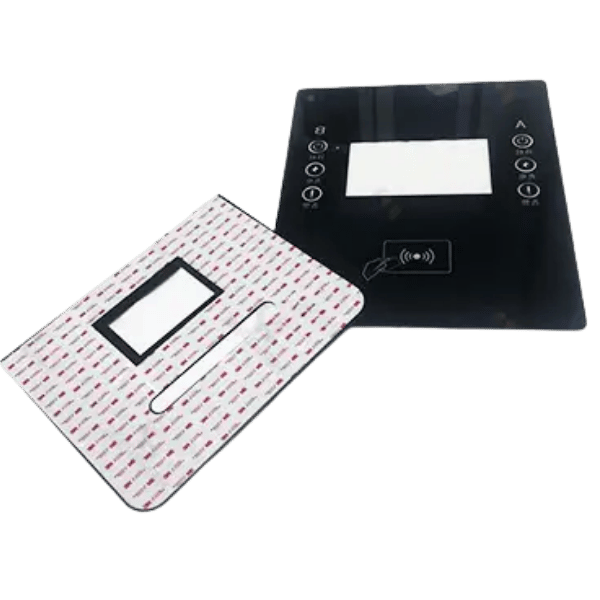
Consumer Electronics — Touch Panels & Displays
Cover glass bonded to LCD or OLED modules using OCA film or LOCA liquid adhesive. Requires high optical transmit properties and completely bubble free bond with greater than 99 percent transmissivity. Saiwei’s chemically tempered aluminosilicate glass with tightly-controlled thickness (0.4-2.0mm) is standard substrate for assembly of smartphone, tablet and wearable computer devices.

Automotive — Smart Cockpits & HUD
Automobile glass adhesive bonding is required to withstand temperature cycling from 40 to +85 C, long-term UV exposure, and mechanical vibration in accordance with SAE J2527. Polyurethane and silicone sealant are the choices for windscreen installation, while UV-curable adhesives serve interior display consoles and head-up display combiner glass. Our tempered and laminated glass products come with automotive-grade surface preparation forconsistent bonding in vehicle assembly plants.
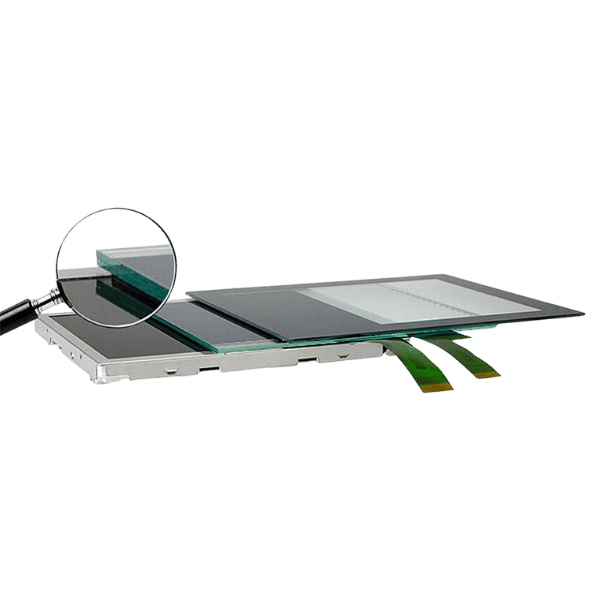
Medical Devices — Diagnostic Panels
Medical device glass panels demand adhesives with characteristics of biocompatibility and strength against repeated chemical disinfection. epoxy adhesives withmedical-grade certification (USP Class VI or ISO 10993) are typical for bonding glass sensor windows and display covers to instruments. Surface purity specifications are strict as compared to average industrial bonding – particles greater than 5 micrometers in diameter must be returned.
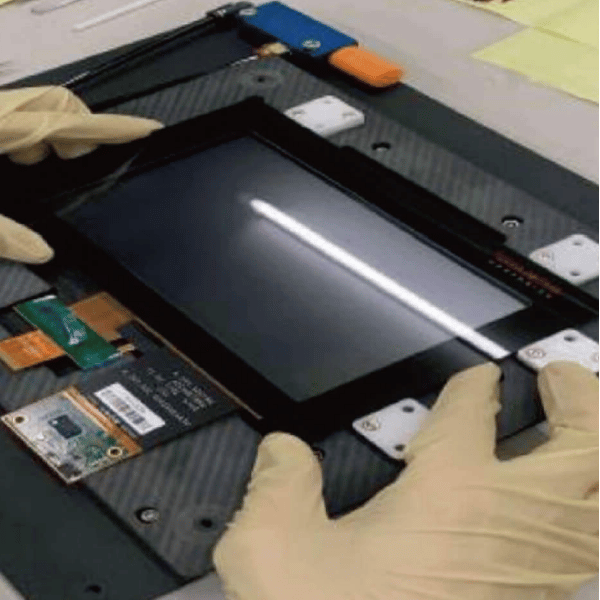
Industrial Controls — HMI & Touch Panels
Industrial control panels encounter unfriendly environments: factory floor temperatures, vibration from neighboring machinery, chemical splashes, and operation 24 hours around the clock. bonding glass to metal or plastic enclosures requires adhesives suited to industrial environments. Our silkscreened glass panels with integrated bezels and button markings are ready for direct adhesive to control system housings.
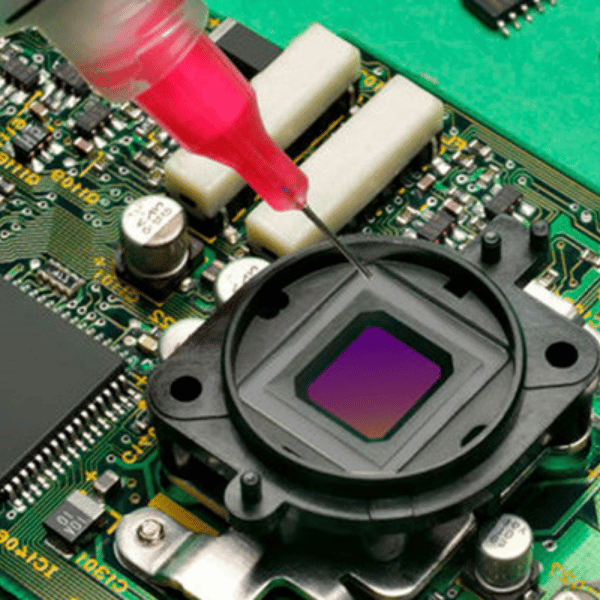
Optical Instruments — Lens & Filter Assembly
Precision optical assemblies require adhesives that do not change dimension after curing. Even a 10-micrometer position shift can affect optical performance. Ultraviolet curable optical adhesives with low shrinkage (less than 0.5%) and refractive index matching to within 0.02 of the glass substrate are selected for this purpose. Saiwei’s ultra-thin optical glass components, ground with precision to 0.01 mm flatness, decrease bond line change in an optical stack.
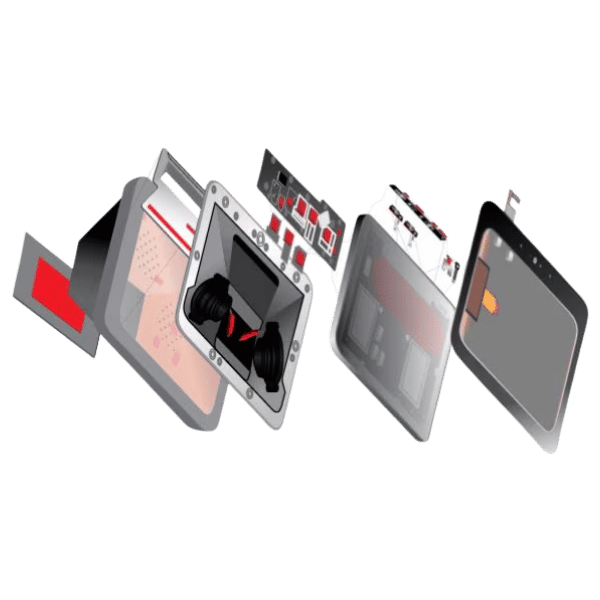
Home Appliances & Smart Home
Aesthetic glass panels are used on oven door windows, range hoods, smart switch and thermostat interfaces. They need a sleek appeal free from visible adhesives. These exercises balance bond strength with future serviceability – the panel may need to be replaced in the course of product lifetime. Pressure-sensitive adhesive tapes and removable silicone bonds provide the right compromise for consumer product assembly.
Adhesive Bonding vs Mechanical Fastening for Glass Components
Engineers exploring binding techniques for glass setups ask whether adhesive bonding or mechanical binder is better-fitted to applications. The typical balance depends on application of load, operating climate, production volumes, and type of glass.
| Factor | Adhesive Bonding | Mechanical Fastening |
|---|---|---|
| Stress Distribution | Uniform across bond area — ideal for brittle glass | Concentrated at fastener holes — stress risers |
| Sealing | Inherent seal against moisture, dust, and gas | Requires separate gasket or sealant |
| Aesthetics | Invisible bond lines, clean design | Visible hardware unless countersunk |
| Weight | Minimal added weight | Fasteners, brackets, and spacers add mass |
| Dissimilar Materials | Bonds glass to metal, plastic, ceramic, composites | Limited — requires compatible fastener materials |
| Disassembly | Difficult to impossible for structural adhesives | Easy removal and reassembly |
| Thermal Cycling | Depends on adhesive flexibility selection | Slotted holes accommodate expansion |
| Production Speed | UV bonds cure in seconds; no drilling | Drilling glass is slow and crack-prone |
| Vibration Resistance | Damping effect from adhesive layer | Fasteners can loosen under vibration |
| Cost (High Volume) | Lower per-unit cost, automated dispensing | Higher labor, fixturing, and hardware costs |
In the field of glass, adhesive bonding beats in most industrial contexts because it does not require pre-drilled holes – a costly and fragile operation that mars tempered glass. Only applications requiring in field serviceability (replacement without damage to the bond) or ultra-high temperature operation beyond the adhesive’s warranty range are exceptions.
To meet these various needs, today’s many modern assemblies have evolved into a hybrid: the use of mechanical clips for initial assembly, elevation and sash alignment, combined with structural adhesive for permanent load-bearing bonds. This hybrid provides production teams with the fixture-and-adjust work flow that they prefer while delivering the performance advantages of adhesive bonding.
Optical Bonding and Display Glass Solutions
Optical bonding is a adhesive process developed specifically to remove the air gap between a display panel and its protective cover glass. Filling the air gap with an optically clear adhesive – OCA film or LOCA liquid – results in the bonded assembly removing two internally-reflective surfaces, dramatically increasing sunlight readability by up to 400 percent and dramatically increasing contrast.
OCA vs LOCA: Choosing the Right Optical Bonding Method
| Parameter | OCA (Film) | LOCA (Liquid) |
|---|---|---|
| Thickness Control | ±5 µm (excellent) | ±25 µm (good) |
| Curved Surfaces | Limited — flat or gentle curves only | Excellent — fills any contour |
| Bubble Risk | Low with vacuum lamination | Moderate — requires skilled dispensing |
| Rework | Peelable with heat — easier rework | Destructive removal required |
| Production Speed | Fast — pre-cut film, laminate, done | Slower — dispense, position, UV cure |
| Custom Shapes | Requires die-cut tooling | No tooling — dispense to any shape |
| Ideal Volume | High volume, standard sizes | Low-medium volume, custom designs |
Cover Glass Requirements for Optical Bonding
Because the cover glass in an optically bonded assembly is in intimate contact with the display module, it directly influences performance. Critical parameters include:
- Optical transparency: greater than 92 percent total transmission, with less than 0.5 percent haze.
- Flatness: better than 5 microns across the bonding area.
- Dimensional stability: during production: chemically strengthened ion-exchanged aluminosilicate with a 600 to 800 MPa compressive stress layer.
- Appropriate anti-crack edges: edges polished to eliminate micro cracks.
Our aluminosilicate cover glass, chemically-strengthened to provide impact resistance, is available with surface energy optimized for OCA or LOCA Loukodink bonding. CNC machining of touch windows, camera holes and button cutouts with positional tolerances to 0.02 mm is essential for bonded assemblies.
Glass Adhesive Bonding in Action: Project Case Studies
Automotive HMI Panel — European Tier 1 Supplier
Challenge
A European automotive supplier applied a 10.25-inch, chemically-strengthened cover glass to an aluminum bezel to produce a center console HMI for use in automotive. After 1,000 thermal cycles from 40 C to +85 C, the assembly must maintain optical and mechanical properties; there can be no bond delamination.
Solution
Saiwei delivered aluminosilicate glass with AG treatment on the display side, with masking tape over a 0.3 mm wide zone in the semi-automatic loading process. The area on the aluminum bezel was masked with a similar film zone for on-line loading, using a modified silicone adhesive for the gap fill, matching the differential CTE.
Results
no failures after 1,200 thermal cycles, a 20 percent margin; surface energy in the masked zone was 62 mJ/m over a 5,000 batch production.
Medical Touchscreen — Diagnostic Equipment OEM
Challenge
A healthcare company was sourcing a cap glass for a patient monitor manufactured with a capacitive touch panel. The cap had to undergo daily device disinfection with hydrogen peroxide wipes and still comply with touch sensitivity specifications after the adhesive.
Solution
2.0 mm aluminosilicate glass with a surface energy of over 70 mJ/m was chemically strengthened and AR coated; the exposure to plasma current was controlled to a to ensure surface energy above 50 mJ/m. Hoechip Damelimpt was used to load glass onto the clean room floor.
Results
Optical transmission after bonding measured >94% across the whole visible spectrum. Touch position accuracy remained within 1.0 mm of target after bonding -no degradation compared to adhesive layer. assembly exceeded 500 chemical cleaning cycles with zero edge delamination.
Industrial Control Panel — Factory Automation
Challenge
An industrial controls company needed a 7-inch tempered glass panel adhesive-bonded to stainless steel enclosure for a factory floor human machine interface terminal. The panel had to withstand IP65 dust and water ingress rating while experiencing vibration typical of CNC machining centers.
Solution
Saiwei supplied fully tempered 3.0 mm glass with silkscreen printed border and button symbols. One component in the installation was a two part flexible epoxy adhesive to form the glass- steel joint, with a 0.25 mm bond line in between, providing structural load bearing as well as vibration damping.
Results
Vibration testing as per IEC 60068-2-6 over a frequency range of 10-500 Hz resulted in no bond deterioration over 72 hours of continuous testing. IP65 seal remained intact over 100 spray cycles. Graphics remained undamaged through the adhesive curing process thanks to ink compatibility testing carried out before production.
Saiwei Glass: Your Bonding-Ready Glass Substrate Partner
Since founding Saiwei we have established a reputation as a trusted provider of precise glass elements that fit the unrelenting demands of adhesive bonding applications. Our 5,000 SQM site in Dongguan, Guangdong provides a one-stop shop for all processes from raw glass cutting through chemical strengthening, coating, printing, and final inspection.
Glass Products Optimized for Adhesive Bonding
Aluminosilicate Cover Glass
Chemically strengthened through potassium ion exchange. Compressive stress 600-800 MPa. Thicknesses 0.4-2.0 mm. UV transparency <95% for optical bonding processes. Our standard substrate for display and touchscreen assembly.
Tempered Safety Glass
Tempered with 4-5 times the impact resistance of standard annealed glass. Glass thickness range 2.0-8.0 mm. Can be printed with silkscreen logos, bezels, and functional markings. Frequently bonded onto metal enclosures for industrial and appliance panels.
Ultra-Thin Optical Glass
Ground to tight tolerances to 0.15 mm. Flat to within 0.01 mm. Suitable for camera modules, sensor windows, and optical filter chambers where bond line consistency is critical to function.
Specialty Coated Glass
AR, AG, and AF coatings used with masked bonding areas for adhesive compatibility. ITO and FTO layers for touch-sensitive and heated glass applications. Specific coating specifications engineered to your adhesive and process needs.
Processing Capabilities That Support Adhesive Bonding
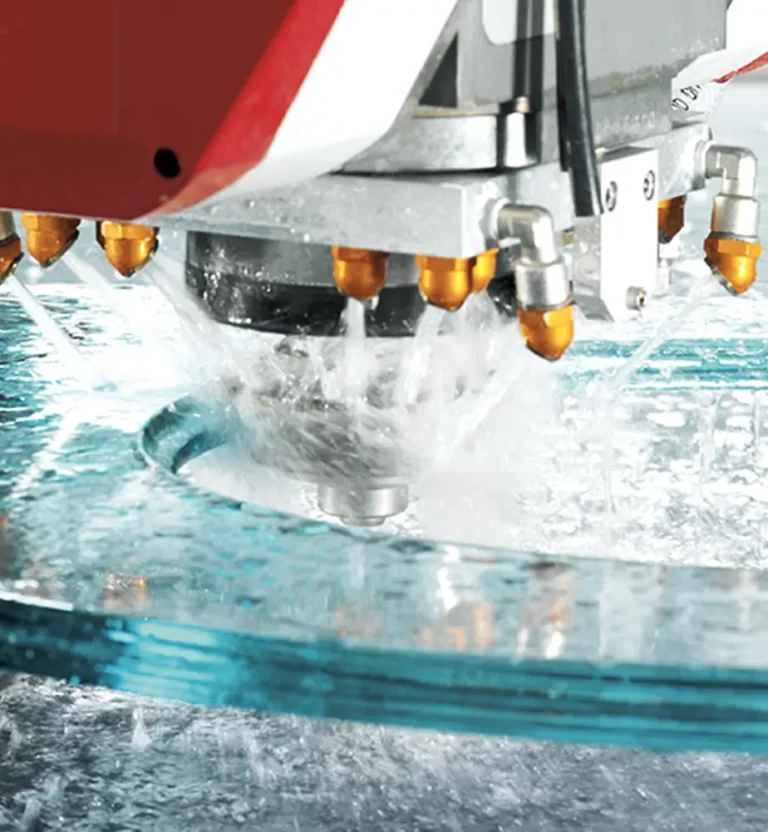
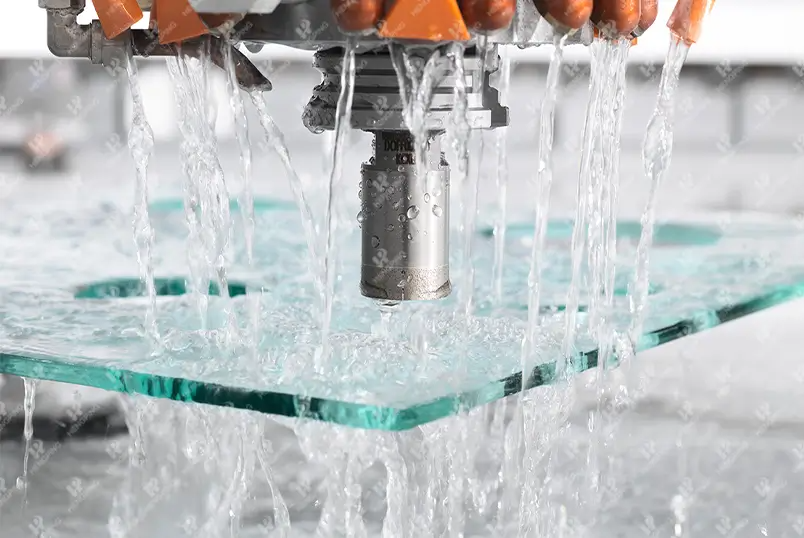
Fast, high-precision CNC machining: Series of sensor cutouts, speaker holes, and exotic shapes with position accuracy to 0.02 mm
Accurate, high speed water-jet cutting: For thick or laminated glass where thermal stresses imposed by mechanical cutting are unacceptable
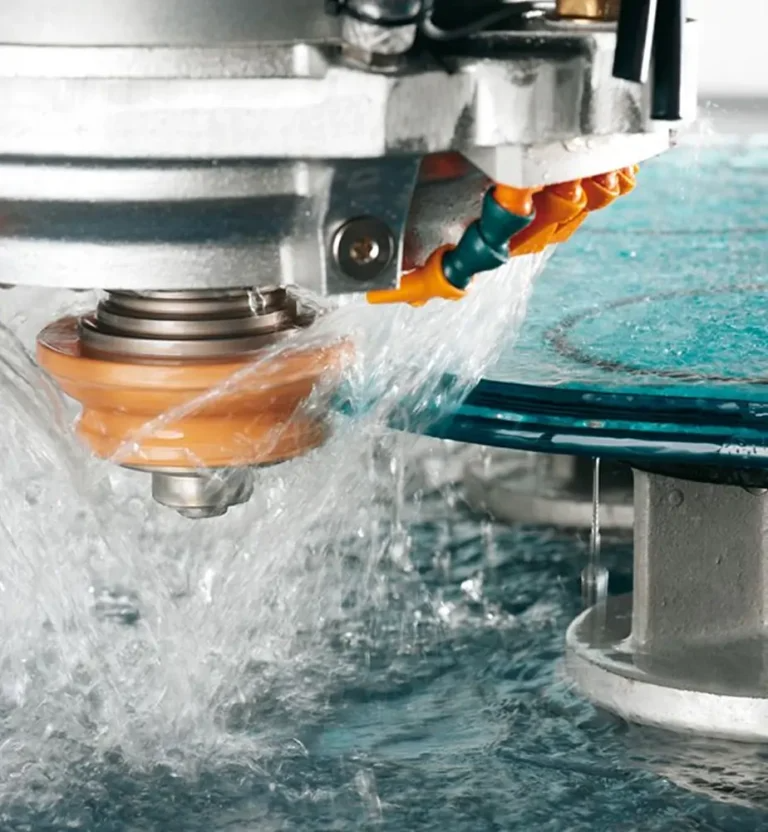
Consistent, highly accurate edge grinding: Seamed, polished, angled edges that remove micro-crack initiation sites at the boundary of bond lines
Chemical strengthening: Ion-exchange depths tuned for an even finished bonded product
Domain control with surface problems in the transparent bearing phase: Masking AR/AG/AF coatings to produce clean bonding zones with predictable surface energy characteristics
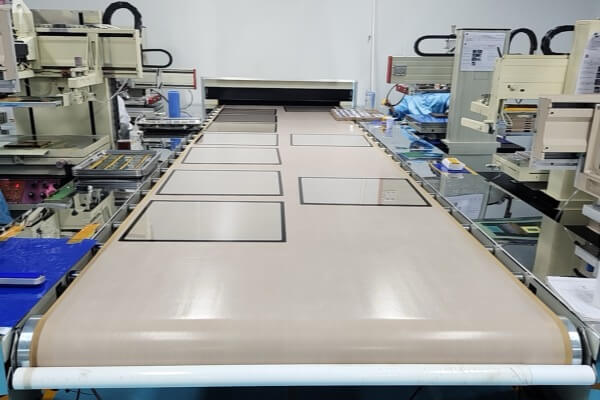
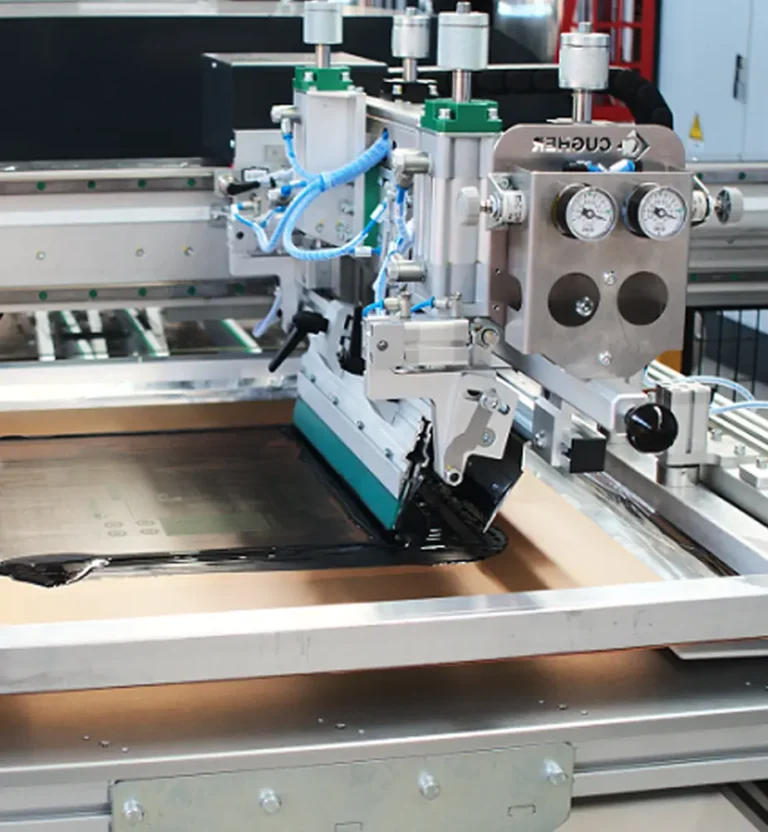
High-precision silk-screen printing: Registration to 0.05 mm for printed graphics fixed to bonded component location
Quality Assurance for Bonding-Critical Components
BM-7 Color Brightness Meter
Optical transmission verification
Surface Roughness Tester
Ra measurement for bonding surfaces
Contact Angle Goniometer
Surface energy / wettability testing
Tensile Testing Machine
Adhesive bond pull-off strength
Salt Spray Tester
Corrosion resistance of bonded assemblies
Ball Drop Tester
Impact resistance per IEC 62715
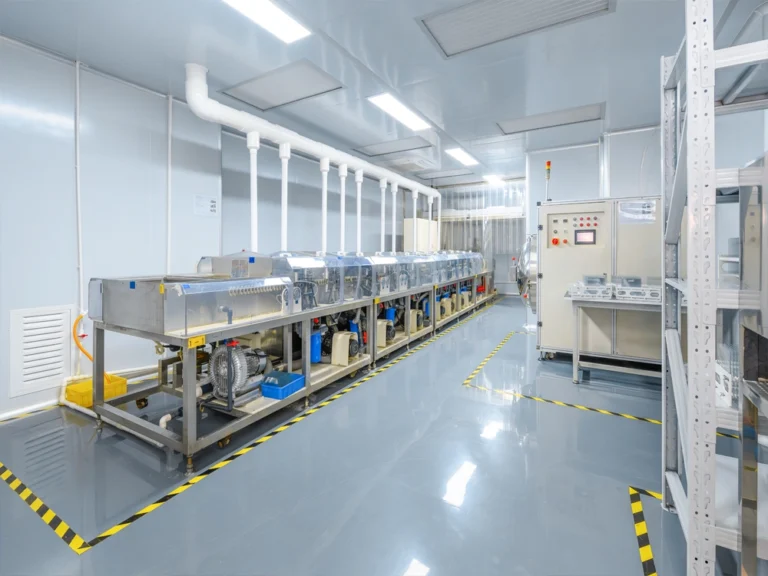
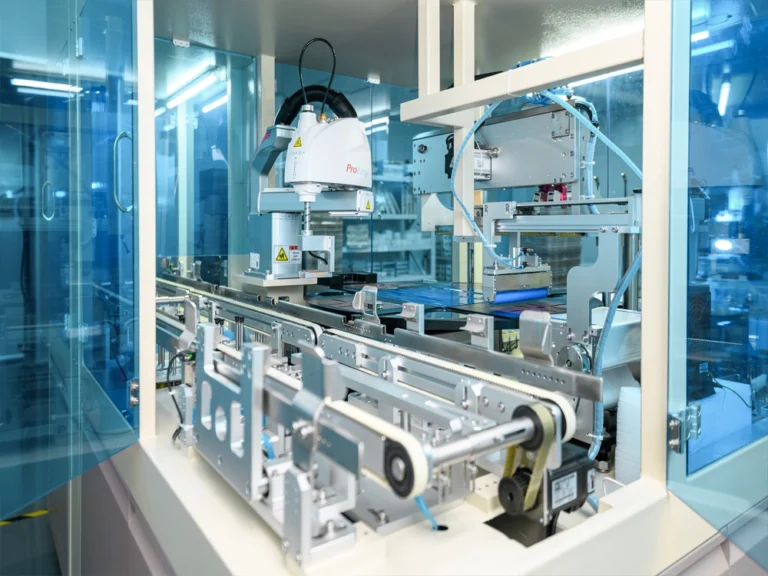
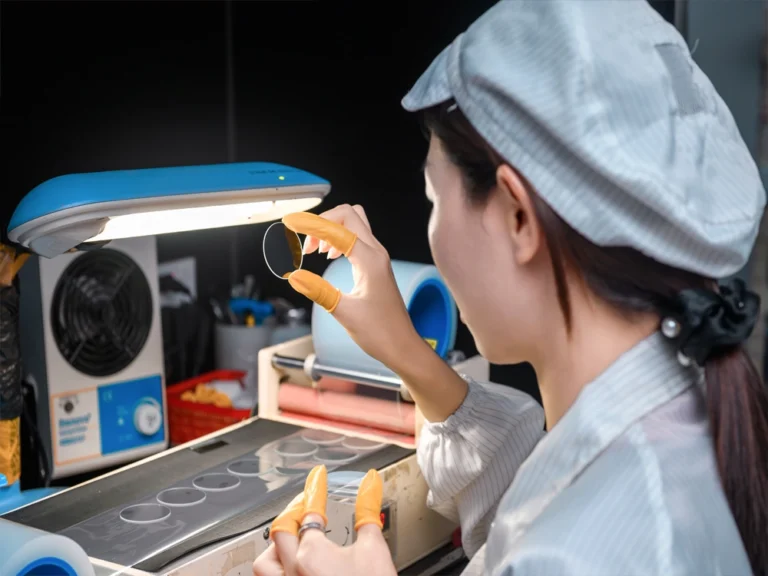
State-of-the-Art Production & Processing Facility
Ready to Source Bonding-Ready Glass Substrates?
Inquire about your adhesive type, glass size, and application. Our materials engineering team can describe the best glass for your application, surface treatment, and bonding line detail.
Get Your Custom Glass QuoteFrequently Asked Questions About Glass Adhesive Bonding
Is adhesive bonding permanent?
Most structural adhesive bonds on glass are built to be permanent. A properly cured epoxy or UV adhesive often exceeds the cohesive strength of the glass itself — the glass cracks before the adhesive gives way. Bond permanence depends on surface preparation quality, adhesive selection, and operating environment. Sustained heat above the adhesive’s rated limit, certain chemical solvents, or prolonged UV degradation can weaken bonds over time. For applications where you need to take things apart later, thermoplastic adhesives or pressure-sensitive tapes give you a removable option without destroying the glass. The key distinction is whether your application is assemble-once or service-in-field — that drives the adhesive choice more than anything else.
Does UV glue work on glass?
UV adhesive works exceptionally well on glass — arguably better than on any other substrate. Glass transmits UV light at 300 to 400 nanometers, so the adhesive cures right through the material. Cure takes 5 to 30 seconds with an 80 mW/cm² lamp. Just keep surfaces clean and maintain consistent lamp distance.
Is UV glue as strong as epoxy for glass?
On glass substrates, UV adhesives and epoxies pull comparable shear strength — both land in the 15 to 30 MPa range depending on formulation. UV adhesives cure in seconds and form crystal-clear bond lines, making them the default for display and optical work. Epoxies fill larger gaps more reliably and hold up better above 150 °C. The practical rule: glass-to-glass where clarity matters, go UV. Glass-to-metal where the assembly sees heat, go epoxy. For everything in between, run a quick shear test on your actual substrate pair before committing to production volumes.
How do you prepare glass surfaces for adhesive bonding?
Proper glass surface preparation follows a four-step protocol. First, solvent cleaning with isopropyl alcohol or acetone removes oils and organic contaminants. Second, plasma or corona treatment raises surface energy from a baseline of 40–45 mJ/m² up to 60–72 mJ/m², dramatically improving wetting. Third, silane coupling agents can create chemical bridges between the glass and the adhesive. Fourth, bonding should occur within 30 minutes of treatment, because activated surface energy decays quickly. Skipping surface preparation is the number one cause of premature bond failure in glass assemblies.
What adhesive works for glass to metal in high-temperature environments?
For glass-to-metal bonds above 150 °C, modified silicone adhesives and high-temperature epoxies are the primary options. Silicone adhesives maintain flexibility from −60 to +260 °C and handle the CTE mismatch between glass (5–9 ppm/°C) and metals (10–24 ppm/°C). Ceramic-filled epoxies work up to 300 °C but form rigid bonds that demand careful joint design to manage thermal stress. What matters most is not just the adhesive temperature rating, but how well it absorbs differential expansion without cracking the glass.
Can chemically strengthened glass be adhesive bonded?
Yes, chemically strengthened glass bonds well with most adhesive types and actually offers advantages for bonded assemblies. Ion exchange creates a compressive stress layer on the surface that resists crack propagation from bond line stress concentrations. One thing to watch: the potassium-rich surface from chemical strengthening can slightly reduce surface energy compared to untreated glass. A brief plasma treatment before bonding restores optimal wetting. At Saiwei Glass, our chemically strengthened substrates go through controlled surface preparation to maintain consistent adhesive bond performance across production batches.
How does glass surface treatment affect adhesive bond strength?
Each coating type changes the bonding equation differently. AR coatings — the SiO₂/TiO₂ multi-layer stacks used for anti-reflection — are generally adhesive-friendly, with bond strengths close to bare glass. AF coatings are the tricky ones: fluoropolymer-based hydrophobic layers are designed to repel liquids, and adhesives are liquids. You either mask the bonding zone during AF coating or hit it with localized plasma after coating to reactivate the surface. AG treatments go the other way — the chemical etching that creates the matte finish also roughens the glass, which can actually improve mechanical interlocking with your adhesive. At our shop, the standard practice is to leave bonding zones uncoated. We mask them during the coating run so your assembly team gets a clean, high-energy surface right where the adhesive goes.