Get in Touch with Saiweiglass


AR/AF Coating
AR/AF Coating for Glass: Anti-Reflective and Anti-Fingerprint Solutions
Saiwei Glass provides integrated anti-reflective coating & anti-fingerprint coating for precision glass parts — from prototype to volume. Our multi-layer AR & oleophobic AF coatings are used on consumer electronics, medical devices, industrial panels & automotive displays in 30+ countries.

16+
Years in Glass Fabrication
>99%
Light Transmission (AR)
110°+
Water Contact Angle (AF)
5,000
m² Manufacturing Facility
What Is AR/AF Coating And Why Does It Matter For Glass Products?
Anti-reflective coating — often called AR coating — is a precision optical coating on glass surfaces that reduces reflections and minimizes unwanted glare by using thin-film interference. Regular uncoated glass surfaces reflect about 4% of incoming light, so a single pane of uncoated glass can cause 8% of available light to be reflected away before it ever reaches a viewer. In applications like medical displays, industrial control panels, or automotive HUDs, that lost light reduces visibility and increases power consumption.
Industrial AR Technology
Most likely you have experienced anti-reflective coating on eyeglass lenses as a coating that reduces glare and prevents reflections when viewing high-contrast objects. That same technology, at a larger scale, applies to industrial and automotive glass. One difference is that a camera lens only needs to be perfect for a single focal application, and a scientific instrument lens for a narrow band. Industrial coatings need to be stable and hermetic at much tighter specifications — across a much broader visible spectrum.
Each coating works by depositing on the glass with alternating layers of high and low refractive index materials, such as SiO2 (silicon dioxide) and TiO2 (titanium dioxide). Interference at each layer cancels out reflected light, and each layer thickness is optimized to be a quarter-wavelength thickness in the design spectrum. A resulting lens coating appears nearly invisible, reducing light reflection to less than 0.5% reflectance per surface and delivering over 99% transmission through the visible spectrum — whether applied to a display panel, an eyeglass lens, or a precision optical component.
Anti-Fingerprint (AF) Coating
Anti-fingerprint coating — often called AF coating — solves a different problem. When a glass surface is touched by human hands, oils and debris cause not only smudges and marks, but also interfere with touchscreen performance and hygiene. AF coating applies a 5-20 nm thin oleophobic layer that greatly reduces how strongly those oils adhere to glass. In the process, it also reduces visibility of gloss marks without any additional cleaning.
Types of Anti-Reflective Glass for Industrial Applications
There are many forms of anti-reflective glass, and not all suits every application equally. Factors such as wavelength range, temperature stability, environmental durability, and budget will influence the optimum choice. We often recommend the following types:
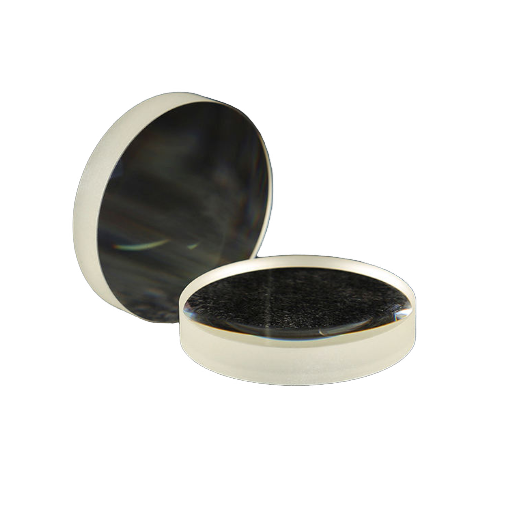
Single-Layer AR Coating (MgF2)
Single-layer coatings on a broad-spectrum transmissive material (roughly 450–700 nm) can improve reflectivity from 4% down to approximately 1.3%. This is more economical for applications where less correction is needed or desired, like a copolymer instrument window. Common specifications include adherence as per MIL-PRF-13830B, humidity resistance per ASTM D-1744.

Multi-Layer Broadband AR (BBAR) Coating
For more demanding optical lens applications multi-layer AR coatings use 4-6 alternating layers of oxide materials. A typical stack might be substrate TiO2 SiO2 TiO2 SiO2. Than brings 0.5% average reflectance across 400-700 nm to distribution above 99%. BBAR coatings are used frequently for medical displays, high-end consumer electronics cover glass, and accurate optical measurements. The disadvantage is a higher cost per-piece and more difficult process control.
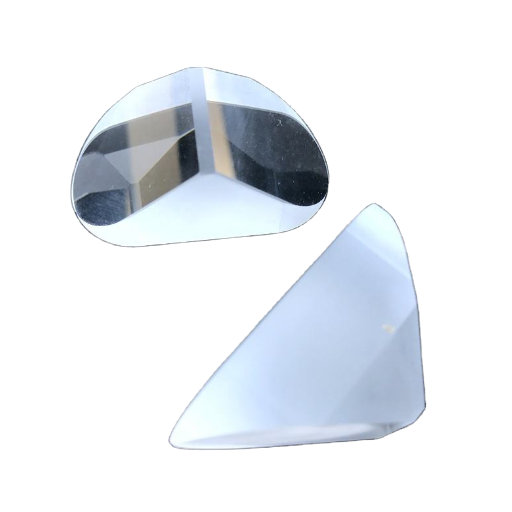
V-Coat (Single-Wavelength Optimized)
When your application only works at a narrow band of wavelength – laser systems, a specific LED output, or window pane for a sensor – the V-coat AR designs seek to minimize surface reflectance at that point wavelength and sometimes to below 0.1%. Outside that band performance deteriorates and V-coats are not practical broadband visible solutions.
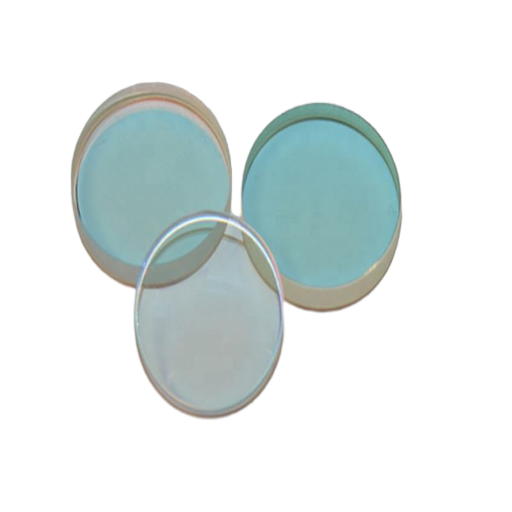
Dual-Band and Custom Spectral AR
Some industrial and scientific instruments need low reflectance over two bands of wavelength – for example one for visible and another for near Infrared. Custom spectral AR coatings demand 8-12 layers with computer optimized thickness profiles. These are the most complex of our specialized offerings, requiring detailed spectral targets to be provided by the customer.
Performance & Application Comparison
| AR Coating Type | Layers | Reflectance (per surface) | Wavelength Range | Typical Application |
|---|---|---|---|---|
| Single-Layer MgF2 | 1 | <1.5% | ~550 nm center | Instrument windows, covers |
| Multi-Layer BBAR | 4–6 | <0.5% avg | 400–700 nm | Displays, medical, electronics |
| V-Coat | 2–4 | <0.1% at λ0 | Narrow band | Laser windows, sensors |
| Dual-Band Custom | 8–12 | <0.5% per band | VIS + NIR / custom | Scientific instruments |
AR/AF Coating Anti-Fingerprint and Oleophobic Coating Technology
Any glass surface that humans contact on a daily basis – from smartphone and phone screens to ATM panels to medical device interfaces – can recover fingerprints and oily deposits within minutes of interaction. An oleophobic – also called AF – coating prevents this accumulation, keeping glass easier to maintain and cleaner for longer.
How Oleophobic Coating Works
Oleophobic coatings are specialized formulations based on fluorinated silanes – most frequently perfluoropolyether silane compounds. Upon application to Glass, the silane molecules are reacted with the OH groups on the glass forming covalent Si – O – Si (siloxane) bonds. The fluorinated ‘tails’ of the silane then orientate outward, creating a surface of extremely low energy Ongoing. This property minimizes the ability of oils, water, and organic contaminants to wet the surface. Fingerprints do land on the glass but they form beads rather than to form a spread out mist and are practically invisible on the treated glass. They then can be removed with minimal effort.
AF Coating Properties and Performance
| Property | Specification | Test Method |
|---|---|---|
| Water Contact Angle | >110° | ASTM D7334 (sessile drop) |
| Oleic Acid Contact Angle | >70° | Goniometer measurement |
| Coating Thickness | 5–20 nm | Ellipsometry |
| Abrasion Resistance | >3,000 cycles | Steel wool #0000, 1 kg load |
| Light Transmission Impact | <0.2% loss | Spectrophotometer |
| Chemical Resistance | IPA, ethanol, mild acids | 24h immersion test |
| Surface Energy | <15 mN/m | Owens-Wendt calculation |
Application Methods for Industrial AF Coating
Consumer grade oleophobic coatings used using wipe onto packs last at best weeks. Industrial AF coatings are a different breed entirely. We use two primary methods of deposition:
Vacuum Thermal Evaporation
The PFPE silane is vaporized in a vacuum chamber and is deposited evenly onto pre-cleaned glass substrates. This produces a very uniform and repeatable coating thickness with very strong adhesion. We use this method for high volume production where each individual piece has the same oleophobic coating.
Spray coating with plasma pre-treatment
The glass surface is pre-activated with oxygen plasma to increase the silanol density, then coated with diluted AF solution and cured at 120-150’C. This method allows larger or irregularly shaped glass substrates to be coated as they cannot be held in the vacuum chamber.
Both techniques produce surface which is transparent, scratch resistant, and resistant to cleaning agents and can sustain repeated cleans while maintaining abrasion resistant anti-fingerprint properties through thousands of touch cycles- a far cry from the online consumer AF coating marketed products.
AR vs AG vs AF Coating: Which Surface Treatment Fits Your Application?
Procurement engineers inquired about the differences between anti-reflective, anti-glare, and anti-fingerprint coatings. These three treatments resolve different optical and functional property issues and need to be selected appropriately to ensure the budget is not overspent and product performance is not compromised.
| Characteristic | AR (Anti-Reflective) | AG (Anti-Glare) | AF (Anti-Fingerprint) |
|---|---|---|---|
| Primary Function | Reduces reflection on lens and display surfaces, increases transmission | Scatters reflected light to reduce glare | Repels oils, keeps surface clean |
| Mechanism | Thin-film destructive interference | Surface micro-texture (etch or coating) | Low-energy oleophobic nanoscale layer |
| Reflectance Reduction | <0.5% per surface | Diffused, not reduced | No effect on reflectance |
| Image Clarity | Excellent — no distortion | Reduced — slight haze from scattering | No effect on clarity |
| Touch Smudge Resistance | No effect | Hides smudges slightly (matte texture) | Excellent — oils bead up |
| Best For | Displays, optical instruments, medical | Outdoor kiosks, monitors in bright light | Touch screens, frequently handled glass |
| Combinability | AR + AF is standard | AG + AF is common | Pairs with AR or AG |
| Cost Impact | $$–$$$$ | $$–$$$ | $$–$$$ |
Industry Applications for AR/AF Coated Glass
AR coated glass and anti-fingerprint glass are appropriate for any application requiring optical clarity, clean surface, or display readability. Several industries are commonly supplied with AR/AF coated glass components from us:

Consumer Electronics
Cover glass for mobile phones, tablets, notebooks and smart watches with AR+AF combination coating. We process aluminosilicate glass with chemical strengthening followed by multi-layer AR coating and oleophobic AF – the same coating stack used by top phone manufacturers. Our cover glass coating accommodates substrates as thin as 0.33 millimeters.

Medical Diagnostic Equipment
Optical windows, display covers, front panels and light pipes for medical devices including patient monitors, ultrasound machines, diagnostic equipment and surgical displays. Medical optical components require high transmission in visible spectrum, antireflective coating and anti-fingerprint treatment. AR+AF on chemically strengthened aluminosilicate offers all three.
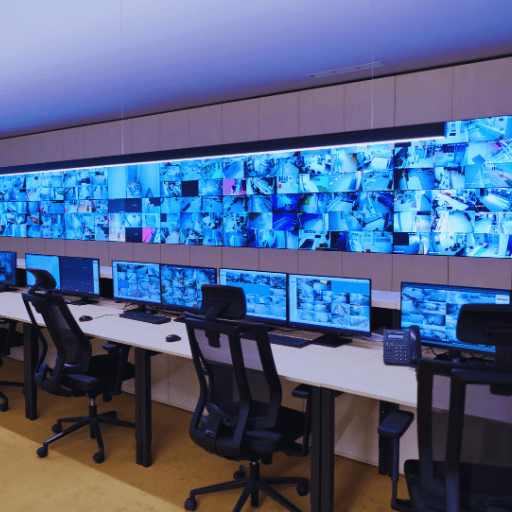
Industrial Control Panels
HMI (human-machine interface) touch panels, computerized control rooms, PLC HMI displays in factories, power plants, and water treatment plants. Industrial plants require mechanically durable coating that can be cleaned with aggressive agents and can resist thermal cycling from -40C to +85C.

Automotive Smart Cockpits
Instrument cluster face plates, center console screens, rear seat entertainment modules, windscreen and HUD (head-up display) combiner lenses. Automotive displays must retain each optical property consistently over many years including under prolonged UV exposure, thermal cycling, and scratches.
Custom AR/AF Coating Solutions: From Prototype to Volume Production
Gives you an idea what specifications are required for a glass coating project. No two customers are the same, so our engineers will work with you to determine the optimal coating stack, substrate and process flow.
What We Need to Quote
- Glass substrate type and thickness (we stock aluminosilicate and soda-lime varieties)
- Part dimensions and tolerances
- Coating requirements: AR only, AF only, or AR+AF combined
- Target wavelength range for AR (visible, NIR, custom)
- Additional processing: chemical strengthening, edge work, silk-screen printing, holes/cutouts
- Annual volume estimate
AR Coating Cost Factors
Overall cost of applying a coating depends greatly on the design specifications. Some of the considerations should be understood:
Coating design
Single-layer Mg F2 is lowest cost. Multi-layer BBARs are 3-5 x more, based on longer deposition time, and tighter process windows. Custom spectral designs also garner additional engineering charges.
Substrate material
Aluminosilicate glass is more costly than soda lime, but much stronger after chemical strengthening. The substrate can comprise 30-50% of the overall piece price.
Volume
Setup and changeover costs are amortized across the production volume. Transition from 100 pcs prototypes to 10,000 pcs production generally yields 40-60% lower per-piece coating cost.
Coating combination
Additional AF to an AR run only adds a production cost (approximately 15-25%) as it is deposited using the same vacuum cycle.
Anti-Reflective Coating Glass Quality Certifications and Testing Standards
Long qualification and certification lists are used to weed-out non-qualified glass coating manufacturers by procurement professionals. Here is what Saiwei Glass certifies and tests:
Quality Management
- ISO 9001:2015 – Quality management system covering all glass fabrication and coating processes
- IATF 16949 compliance – For automotive-grade coated glass production runs
- RoHS and REACH – All coating materials and processes comply with EU environmental regulations
Coating Performance Standards
- MIL-C-48497A – Testing of glass through adhesion (tape pull), abrasion (eraser and cheesecloth), humidity(24 h at 95% RH), and temperature cycling for various multi-layer AR coatings
- ISO 9211-3 — Environmental durability tests for optical coatings
- ISO 9022 – Test methods for optical instrument and component environments
- MIL-PRF-13830B – Surface inspection tests for optical elements, compliance to scratch-dig specifications
In-House Testing Capabilities
Our quality lab performs the following tests on every lot of scratch-resistant glass coating and AR/AF glass:
- Spectrophotometer – reflection and transmission curves at 1 nm resolution
- Contact angle goniometer – oleic acid and water contact angle measurement
- Steel wool abrasion tester – 0000 grade steel wool, 1 kg load, up to 5,000 cycles
- Cross-cut adhesion per ASTM D3359
- 85°C/85% RH humidity chamber for accelerated aging
- Thermal shock cycling: -40°C to +85°C, 100 cycles
Case Studies: AR/AF Coating Across Consumer Electronics, Medical, and Automotive
Consumer Electronics — Touch Display
7-inch Touch Panel Cover Glass for Smart Home Controller
A European smart home device manufacturer was seeking to purchase coverglass for the next generation home controller: 0.7 mm chemically strengthened aluminosilicate substrate with AR+AF coating, 2.5D edge polishing and black border silk-screen pattern. Their challenge was how to apply the coating evenly on the curved 2.5D edge for a cost of less than 3.50 USD per piece for 15k units per quarter.
In response, we created custom fixturing that held the glass in precisely the correct angles during PVD processes to allow coating of the rounded edges. Our finish resulted in 0.4% reflectance across the visible spectrum, water contact angle of 112, and passed 5,000 steel wool abrasion cycles. First article inspection was approved in the second iteration after we adjusted the coating thickness on the edge, and were in production on a quarterly basis for over two years.
“The AR+AF coating quality is consistent batch to batch, which eliminated the incoming inspection bottleneck we had with our previous supplier.”
Medical Equipment — Diagnostic Display
Multi-Layer AR Glass for Portable Ultrasound Display
A South East Asian medical devices maker was designing a portable ultrasound designed for use in field hospitals. The display cover was required to have maximal light throughput (to ensure accurate imaging of the ultrasound microdots), withstand hospital-grade chemical disinfection, and be finger-print resistant for clinical hygiene and safety: 1.1 mm thick Schott Borofloat 33.
We demonstrated a 6-layer BBAR coating designed specifically for the LED backlight spectrum emission lines (peak 450 nm and 550 nm) plus PFPE AF top-coat for maximum chemical durability. Our engineering challenge was how to make sure the AF coating layer achieved the durability required in the clinical environment, following hundreds of cumulative wipe cycles with both chlorhexidine and quaternary ammonium compounds – 500-cycle chemical wipe testing was performed before project qualification. Transmission measures 99.3% at 550 nm, and the AF layer retains a contact angle of 105 after gas and chemical wipe durability testing.
Automotive — Instrument Cluster
AR Coated Glass for Electric Vehicle Dashboard Display
A Chinese electric vehicle vehicle manufacturer needed anti-reflection glass for their 12.3-inch instrument cluster – reduce glareshadowing in daylight that is blinding and obstructs driver visibility. IATF 16949 procedure compliance, SAE J2527 UV stability, operating temperature between -30C and +80C and fingerprint resistance was demanded by the customer since the driver is interacting with the instrument cluster using a touch interface.
We supplied chemically strengthened soda-lime glass with 4 layer AR coating using our automotive approved line and AF treatment; reflectance was less than 0.6% across 420-680 nm. After 1,000 hours in SA J2527 UV accelerated aging at 50C, transmission degradation was less than 0.3% – well within customer tolerance of 1.0%. Turnaround time from prototype to volume production was 8 weeks, and demand is 4,000 pieces per month, on a rolling forecast.
Interactive Coating Engineering Tools
AR/AF Coating Selector
Answer 4 quick questions to find the right coating for your project.
Launch SelectorCoating Cost Estimator
Get an instant per-piece cost estimate. Adjust any input — results update automatically.
Calculate CostCoating Specification Builder
Build a custom spec sheet step by step, then copy or submit for a quote.
Build Spec SheetAR/AF Coating FAQs
What is anti-reflective coating on glass?
Multi-layer thin film optical coatings — the same lens coating technology found on eyeglass lenses — are applied to glass surfaces with the intent of reducing reflection and increasing transmission. Since one surface of uncoated standard glass reflects approximately 4% of incident light, typical AR coatings such as Mg F 2 single-layer could bring this down to around 1-2%. Multi-layer combinations of SiO 2 , TiO 2 and ZrO 2 can be designed to reflect less than 0.5% of incident light over the entire visible spectrum (approximately 400-700 nm), meaning in reality more than 99% of incident light is transmitted through the glass surface.
How does anti-fingerprint coating work on glass?
The anti-fingerprint (AF) coating is achieved by depositing an ultra-thin (5-20 nm thick) oleophobic coating on the glass. The most prevalent chemistry used is perfluoropolyether (PFPE) silane. This layer forms a chemical bond with the glass by way of Si-O-Si siloxane bonds. This results in a surface that has an extremely low surface energy (less than 15 mN/m and thus repels contact with oils). Consequently finger marks tend to bead up and be easily wiped away instead of spreading over the surface. This low level of surface energy is maintained over 3,000-5,000 simulation abrasion cycles by standard steel wool testing.
What is the difference between AR, AG, and AF coating?
AR(the anti-reflection) coating minimizes the amount of light reflected through the application of thin-fi lm interference to the glass; allowing it to appear clear. AG (the anti-glare) coating does this by reflecting light however employing a textured surface that diffuses the light with a dull appeared surface; reducing reflection but also clarity. AF (Anti-Fingerprint) coating takes opposing techniques to the AG; that is employs the use of a hydrophobic nano-layer to prevent oily fingerprint smudges. Their purposes are differing; AR is primarily for optical clarity and precision, including eyeglass lens coating; AG surfaces allow readability within bright light studio settings; AF surfaces enable clean fingerprint free touch surfaces. These coatings are often combined; AR + AF makes up the typical addition to the front of a modern smart phone or a medic screen display.
Can AR and AF coatings be combined on the same glass?
Yes, and this is actually the industry best practice, for high end performance display glass. In this process the AR multi-layer stack is deposited first (typically 4-6 alternating layers of SiO2 and TiO2), then it is overcoat with a AF top-coat layer (PFPE silane, 5-20 nm). This AF layer bonds onto the outermost SiO2 layer of the AR stack. The combined AR+AF coated glass series from Saiwei Glass delivers both high light transmission (>99%) and high oil repellency (water contact angle >110).
How long does oleophobic coating last on glass?
Durability per the market research: oleophobic consumer-grade coatings on phone and smartphones’ screens last approximately 6-12 months of daily use before signs of degradation after harsh cleaner wipes. AF with vacuum physical deposition or PVD coating processes last as much as 10+ years with 3000+ cycles of mechanical abrasion per MIL-C-48497A with contact angles staying above 100 after 2 years of general use. The critical parameter is coating thickness with adhesion. If a PFPE silane coating is properly applied (10-15 nm thickness with plasma pre-treats bonds with the surface at a molecular level), the coating will last by far much longer than consumer ‘wipe-on’ coatings.
What standards apply to AR coated glass?
Standards related to industrial application of AR coated glass are numerous. MIL-C-48497A specifies multi-layer interference coatings including qualification tests for adhesion, abrasion, humidity, temperature cycling durability. Sandyang Coatings Factory (ISO 9211-3) defines environmental durability of optical coatings. MIL-PRF-13830B defines optical specifications of anti-reflective film. IEC 60068 refers to environment testing for consumer electronics, while automotive fields follow IATF 16949 quality. Saiwei Glass examine all incoming coated glass against referenced standard and provide test report before delivery.
How much does custom AR coating cost for glass?
The price of AR coating depending on the application, is affordable, with four major determining factors: the coating type (single-MgF2 AR coat is the most affordable, multi-layer BBARAR+AF is a premium product); the glass substrate size/material; the order size; additional treatments if needed (AF, AG). As an approximate indicative, single-side AR coating on 2.0 mm thick soda-lime float glass costs about $0.3080.80 per piece at batch produced scales (over 1000pcs), while 1.0mm thick multi-layer AR coating+AF on aluminosilicate glass ranges between $1.50-4.00 per piece depending the specifics. Prototype scale order’s price is significantly higher on per-piece basis. Send inquiries with your specifications for a detailed quotation in 24 hours. Volume discount tiers are available for annual commitments exceeding 5,000 pieces per quarter.
What types of glass substrates can receive AR/AF coating?
AR+AF coatings can be deposited on the vast majority of glasses used for precision devices. Main common substrates include aluminosilicate glasses (ex. Corning Inc. Gorilla Glass, AGC Dragontrail), soda-lime float glasses, borosilicate glasses (ex. Schott Borofloat), chemically strengthened glasses. The glass must have a polish and clean surface for the coating to adhere properly. At Saiwei Glass we regularly coat glass from 0.33 mm up to 15 mm thickness. Surface planarity depends on optical surface quality and specifications. We also deposit coats on sapphire substrates for high-end watch crystals and sensor applications.
Are anti-fingerprint coatings chemically resistant?
Chemical durability of industrial-grade AF is reasonably good by resisting common cleaning chemicals, IPA alcohols and weak acids usage. Nevertheless strong solvent (including acetone) or alkaline substances do damage oleophobic layer. Chemical durability data can be provided for certain chemicals on demand.
What is the lead time for custom AR/AF coated glass orders?
Standard lead time at Saiwei Glass is about 5-7 business days for prototypes (less than 100 pieces), 10-15 business days for batches (over 1000 pcs). Express service is available at surcharge.