Get in Touch with Saiweiglass


Dragontrail Glass
AGC Dragontrail™ Glass Processing: Properties, Applications & Expert Fabrication
All in one technical guide for AGC Dragontrail chemically strengthened glass – materials, property, and types to practical use and professional deep processing by Saiweiglass.

0+
Years Experience
0+
Equipment Units
0M+
Annual Capacity
0+
Technicians
What Is AGC Dragontrail™ Glass?
Dragontrail is an alkali-aluminosilicate sheet glass originally developed in Japan by one of the world’s largest flat glass producers. Introduced in 2011, Dragontrail was designed as a premium cover glass material to meet the demands of a fast-growing smartphone and tablet market, offering a cost-effective alternative to other chemically strengthened cover glass products available at that time.
Its name epitomizes the material’s fundamental promise: high Strength-To-Weight/Thickness ratio. Dragontrail is an alkali-aluminosilicate type of glass. It is a member of a select family of glass, consisting of Si O, with alternate addition of Al O and alkali metal oxides, which has a molecular structure that is advantageous in a process of chemical strengthening, ionexchange. It turns a relatively weak sheet of glass into a damage tolerant cover.
Dragontrail is extremely fine, produced in thicknesses from 0.4mm-2.0mm, but possesses strength qualities that surpass normal soda lime variants by a large margin. According to published specifications, chemically strengthened Dragontrail possesses approximately six times the strength of equivalent thickness soda-lime float glass. This strength to weight ratio made it attractive for use in portable electronics where weight is very important.
Dragontrail has primarily been used as a cover glass for consumer electronics – a transparent display protection layer that sits directly above the LCD or OLED screen of a mobile phone, tablet, notebook computer or touch screen device. Its unique properties have resulted in other switching markets for use in industrial touch panels, point-of-sale (POS) terminals, automotive displays, medical equipment screens and wearable devices.
Dragontrail was launched as a cost-effective alternative to other premium cover glass products, and it gained a foothold in the mid-range smartphone market, domestic devices in Japan, and industrial touch-screen applications where higher specifications are needed within manufacturing budgets. Dragontrail has been adopted by numerous leading Japanese and international electronics manufacturers for smartphones, tablets, and industrial displays.
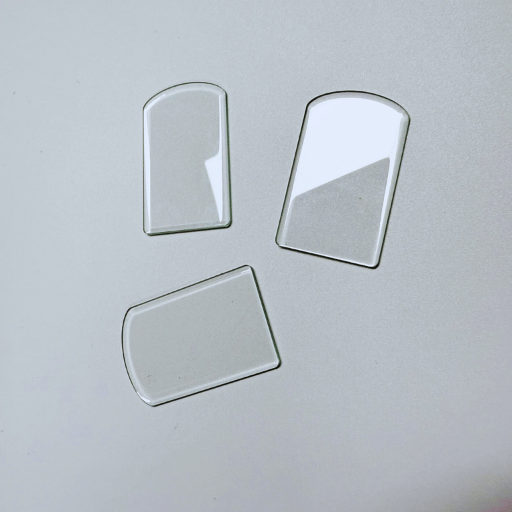
The Science Behind Dragontrail: Ion-Exchange Strengthening
What sets Dragontrail glass apart is the chemical strengthening process which is through the ion-exchange as described in the text. And through this chemical strengthening process, the Dragontrail glass can change the surface of the glass material and it will act very different to the ordinary annealed or thermal tempered glass in the other hand.
// 01
The Ion-Exchange Process
In chemical tempering, the Dragontrail glass sheets are immersed completely in an aqueos KNO salt bath at a range of -52 to C. Sodium ions (Na+ )at the glass surface are replaced by the larger potassium ions (K+), which diffused out of the salt bath at these tempering temperatures while the sodium ions diffuse into the glass surface. Each exchange is one for one: one sodium ion diffuse out of the original glass surface and one potassium ion diffuses in.
What matters most is the size differential. The cation size of alkali metal ions has the largest variation in the periodic table. Larger cations being stuffed into sites previously occupied by smaller cations induce a very high level of stress. Potassium 1.382 Angstroms , isthe largest of all alkali metals, squarely larger than sodium 1.024 Angstroms. When large potassium ions that occupy sites previously held by smaller sodium ions, a task 10,000 times more difficult than pulling off a set of double-dutch at the club, they effectively are stuffed into sites that are too small for them. Because of the size differential between the sodium ions, the original glass constituents, and the large potassium ions used in strengthening leads to smaller size sodium ions being “stuffed” into sites meant for large potassium ions producing a giant compressive stress in the surface layer.
// 02
Compressive Stress and Depth of Layer
A set of two oppositely charged sodium and potassium ions for a pair of any one of the site locations in the silica network allows the calcium oxide ions, not shown, to pull sodium and potassium ions pairs in equal and opposite forces cancelling out to allow the large volume ion pairs to sit squarely in their sites. When the potassium ions replaced smaller sodium ions, the ionic Net positive charge was aligned by the surrounding silica network. If this sounds familiar, it should. This formed a hypothetical build-in armor to the glass. Put simply: for Dragontrail, surface compressive stress CS typically can achieves 600 800 MPa,see the published specification for the glass. DOL is a function of the specific product and process variables, but ultimately is designed to be spread out within the principles defined above.
Glass composition was specifically tailored by the researchers that led to the development of the Dragontrail formulation as environmentally friendly. Downg and others demonstrate the not so benign nature of the chemical composition of specialty glasses to the environment in arsenic (As?O2), antimony (SbO), and lead (Pb?O2) in the base glasses when used as fining and property-modifying agent flyings. This is a vast improvement over the xeno-specific requirements of the world’s leading thermal tempering technique which utilizes sand and soda in its process to be discussed later. See data on the agitation chemical salt, potassium nitrate, a proven benign fertilizer. As you can see it is not likely to have any undue impact on the surf ace aspects of the glass.
// 03
Float Process Manufacturing
Dragontrail is produced using the float production approach. Raw, molten materials are poured onto a large, molten tin bath to produce the optically perfect ones. Float processing results in no surface striae from imperfections, no silica scratch formations, no air bubbles, discontinuities, or imperfections interfering with the pristine surface quality of the high performance cover glass. Amorphous float processing produces no material that would not be acceptable for high performance cover applications. The little bit of float is cut with a glass cutter, transported to the ion exchange line, and prepped for received by the next step.
// 04
Environmental Considerations
The Dragontrail glass composition is environmentally friendly, as highlighted by singling out the absence of arsenic (As?O2), antimony (SbO), and lead (Pb?O2) components. Use of these old world ingredients in particular is prohibited in today’s RoHS-compliant, environmentally friendly, lead-free finished products for the electronics supply chain. has dedicated themselves to formulating the special atitic composition without such exotic components. In addition, the chemicals used to effect each of the features required of the product are represented here.
As for strengthening chemicals, potassium nitrate, a common salt used as an egg supplement fertilizer, is a very benign chemical in the context of the manufacturing method. When used in the ion-exchange technique under a high temperature regime, the in situ chemical analyses are conducted to establish the parameters accordingly. Comparisons are made before and after to change and establish the conditions. For the heating process, the treatment results in no perceptible distortion. That means no sliding of the glass out of plane at the edges, no waviness of the edges, and no narrowing of the thickness across the extruded batch.
Dragontrail vs Other Chemically Strengthened Glass: Side-by-Side Comparison
Competition in the chemically strengthened cover glass market has driven innovation over the past decade. Both Dragontrail and its competitors are premium grade chemically strengthened alkali aluminosilicate materials with documented performance parameters.
| Property | Dragontrail | Other Premium Cover Glass |
|---|---|---|
| Origin | Developed in Japan | Developed in USA |
| Glass Type | Alkali-aluminosilicate | Alkali-aluminosilicate |
| Manufacturing Process | Float process | Fusion draw process |
| Strengthening Method | Ion-exchange (KNO₃ bath) | Ion-exchange (KNO₃ bath) |
| Vickers Hardness | 595–672 kgf/mm² (Pro variant) | 622–701 kgf/mm² (varies by gen.) |
| Key Advantage | Cost-effective, flexible sourcing | Higher drop resistance, brand recognition |
| Typical Use Case | Mid-range phones, industrial panels, POS | Flagship smartphones, premium tablets |
| Market Position | Budget to mid-tier | Premium tier |
| Environmental Claims | No arsenic, antimony, or lead | No arsenic or antimony |
| Number of Generations | 4 variants (Standard, X, Pro, Star) | 7+ generations |
| Production Status (2026) | Discontinuing Q3 2026 | Active, ongoing development |
An Honest Assessment
Both technologically are extremely capable products. The market and performance differences are actually less significant in practical testing scenarios. When tested on a simple drop resistance test, some competing products may have the upper hand in the latest generation, while Dragontrail prioritized a balance between impact strength and cost-effectiveness.
For industrial applications and touch panel functionality, Dragontrail proved to be a powerful, cost-effective product. It is marketed and intended more often for rugged fixed-position equipment with lower drop event frequency, making it a strong choice for commercial and industrial deployments.
After the announcement to cease Dragontrail production, the landscape is shifting. For most markets, the availability of advanced chemistry and lower priced substrates opens up new competition. Buyers will need to review an expanding choice of panel suppliers and the inherent trade-offs involved.
Technical Specifications & Performance Data
Below are specifications tabulated from published technical literature and standard data, representing typical values for Dragontrail glass under basic conditions of manufacturing and bulk glass performance:
| Property | Value | Test Standard |
|---|---|---|
| Composition | Alkali-aluminosilicate | — |
| Available Thickness | 0.28 – 2.0 mm | — |
| Density | 2.49 g/cm³ | — |
| Vickers Hardness | 595 – 672 kgf/mm² | ISO 9385 |
| Young’s Modulus | 73.6 GPa | ASTM C623 |
| Visible Light Transmittance | ≥91% (at 0.7mm thickness) | — |
| Compressive Stress (CS) | 600 – 800 MPa (typical) | — |
| Mohs Scale Hardness | ~6.5 | — |
| Thermal Expansion Coefficient | 86 × 10⁻⁷/°C | — |
| Softening Point | ~570°C | — |
| Strain Point | ~508°C | — |
| Poisson’s Ratio | 0.23 | — |
Interpreting the Numbers
A Vickers Hardness of 595 to 672 KgF/mm2 places Dragontrail Pro into the high end of performance cover glass materials. For comparison, standard soda-lime glass measures around 500-550 KgF/mm2. A rating of around 6.5 on the Mohs scale indicates Dragontrail will be scratched by most readily available materials (a steel key at ~5.5, for example) but will not be scratched by many common minerals, quartz sand such as with 7, which causes most pocket scratches on phones.
Transmittance of 91% or more per 0.7mm thickness provides excellent visibility for display applications. Combined with the opportunity to add additional AR coatings during fabrication this means Dragontrail cover glass can improve display viewing in the device rather than hinder it.
Young’s modulus of 73.6GPa defines a glass of moderate stiffness resisting bend under load, relevant for applications where cover glass can experience pressure or flex, for example large-format touch panels or consumer devices where extreme user pressure can be applied to the screen during use. Its co-efficient of thermal expansion and softening point detail limits on manufacturing processes, especially for silk-screening and screen printing.
Industry Applications for Dragontrail Cover Glass
All these properties of chemical resistivity, optical transmittance, and processability have resulted in a flexible, multi industry use material. Each industry application will have specific considerations that alter the glass’s thickness choice, surface treatment and process parameters.
Smartphones & Tablets
Dragontrail’s first foray into cover glass in the consumer electronics world. Small 0.4-0.7mm thick glasses for ultra-light protection over capacitive touch screens. Displaces more expensive competing cover glass in the mid-range of phones, for customers sensitive to costs.
Industrial Touch Panels
Touch screen interface displays, POS (point-of-sale) terminals and self-service kiosk screens, factory automation panels. This consumer interface environment demands scratch resistance for public use durability and chemical strengthening qualities to moderate Vibrasonic8 environment.
Automotive Displays
Infotainment system screens in vehicle dashboards, digital speedo/distance measures and in car touch screen controls. Automotive uses require high temperature operation, glare reduction for daytime use and sufficiently -cycled designs to survive extreme cold to hot transitions from parked condition to powered operation.
Medical Devices
Medical monitors and diagnostic screens, endoscope/operating room navigation systems, analysis laboratory instrument displays. Medical design requirements require proven biocompatibility, while use surfaces require chemical resistant, depth of field clarity and resistance to poor disinfectant chemicals.
Wearable Technology
Next generation smart watches, fitness trackers, augmented reality glasses. Wearable designs drive all-glass form factors as the minimal thickness necessary for the application. Fully chemical strengthened, scratch resistant surfaces are essential.
Aerospace & Military
In harsh cockpit displays, avionics panels and portable communications. This market not only push the limits of Dragontrail’s capabilities, drawing on every desirable property, but also set strict standards for environment and vibration endurance testing such as MIL-STD.
Representative Case Studies
Case Study: Industrial HMI Panel for Outdoor Kiosk
A self-service kiosk manufacture had this challenge; a touch-screen kiosk used outdoors. Cover glass had to be anti-glare or anti-reflective, chemical strengthen-edged for durability in public use, laser cut for a front-mounted camera lens and ambient light sensor.
Solution: Saiweiglass fabricated Dragontrail panels with AG etched surface treatment, chemical strengthening of CS > 450 MPa, CNC-milled sensor apertures (0.05mm positional tolerance), and edge polishing to remove stress concentration points. Strengthening bath temperature was held at 400C for optimum layer depth on the 2.0mm substrate.
Result: 50,000+ units delivered AG haze 4-6% CS> 450 MPa Zero field failures in 18 months
Case Study: Medical Device Display Cover Glass
Faced with a PCaaS customer Mon-monitor supplier, a leading medical device manufacturer was particularly concerned with biocompatibility and chemical resistance in selecting an ideal cover glass. The 170 82 2.0mm display panel was destined for a clinical environment where frequent surfaces cleaning takes place with isopropyl alcohol, hydrogen peroxide, and various other disinfectant solutions. Saiweiglass recommended Dragontrail for its chemical stability and advanced processing through our chemical strengthening line, culminating in an AF (anti-fingerprint) oleophobic coating that allowed high building, simple surface cleanup. FTS biocompatibility testing affirmed the panels were suitable for prolonged surface contact with skin in patient monitoring settings. After validation, the client approved after initial prototype validation, enabling a transition to series manufacturing within 6 weeks of the first engineering sample.
Case Study: Automotive Instrument Cluster Display
Application dashboard digital instrument cluster, commercial vehicle platform.
Material Dragontrail 1.1mm
Coating AR (anti-reflective)
Transmittance >94% (with AR)
Operating Temp -40°C to +85°C
Thermal Cycling 500 cycles passed
CS >500 MPa
Dimensions 292 × 110 × 1.1mm
AR coating minimised the surface reflectance below 1% per side, enabling >94% transmittance for high-contrast readability in varied ambient cabin lighting. OLED-powered, high temperature screen printing created a black physical bezel mask (printing withstands continuous UV exposure at high service temperature). 500 cycles, – 40C to +85 C thermal screening was passed per the client’s internal protocol.
Our Dragontrail Glass Processing Capabilities
Saiweiglass (Dongguan Saiwei Glass Co., Ltd) is the umbrella name for our commercial processing facilities located in Heyuan city and our foCtdungguan Dongguan basin. Our team of 50+ technicians handles cover glass substrates including Dragontrail and other chemically strengthened glass with more than 10 years of experience for OEM specifications.
Precision CNC Cutting & Edging
Multiaxis CNC machinery enables fix-cut, profile cut, hole-mill, radius-cut, and radius-corner cuts, shapes, and patterns with 0.05mm maximum tolerance in positional accuracy. edges can be rough, beveled, or polished to reduce stress generating edge irregularities that could cause pre-strengthification fractures.
Chemical Strengthening
Inhouse KNO ion-exchange strengthening baths feature precisely controlled extraction temperatures. We achieve CS > 450 MPa, DOL > 8 m. Bath parameters optimized for glass type, thickness, and stress target prior to processing.
Surface Treatments: AG / AR / AF
AG etching to reduce surface reflectance of highly sunlit environments. Anti-reflective (AR) multilayer vacuum coating enhancements to over 94% transmittance. OP oleophobic nano-coating repelling and aiding removal of fingerprints. AR and AF can be applied together, or individual surface treatments, specifications dictated by design needs.
High-Temperature Screen Printing
Multicolor ceramic ink screen printing for bezels, backlit legends & icons, images & decorative pattern etching. Inks are dried at high temperature to forge images resistant to harsh service environments, UV exposure, chemical contact, and weather degradation.
Hole Drilling & Grooving
1.Precision machining of sensor window openings, button apertures, speaker holes, microphone ports and connector cut-outs from chemically strengthened glass.0CAD toolpaths controlled by CNC machinery, providing edges free from break-out and chipping. Graphitech applications demand “clean” edges to protect the shear stresses adjacent the perforation, actually strengthening the glass around these openings through the support of compressive stress layers.
OEM Custom Fabrication
2.Full-service OEM partner for production of finished products from prototype to volume manufacture. Capable of exceeding 1M units annually. NPI support through rapid prototype tooling, first-article inspection reports and design-for-manufacture comments prior to the purchase of production tooling.
Process Flow
- Raw Material
- Cutting
- CNC Edging
- Strengthening
- Surface Treatment
- Printing
- QC Inspection
- Packaging
Quality Certifications & Testing Standards
Quality management systems are certified to relevant certifications at each of our global manufacturing locations. These approvals are attestation to the high level of quality demanded by our global customer base, leading innovator in industrial, medical, automotive and consumer electronic markets.
Certifications & Compliance
ISO 9001:2015
ISO 9001:2015 — Quality Management System (UKS8)
Materials, processes and finished goods packaging are covered under our ISO 9001:2015 – UKS8 certification.
EN 12150 / EN 12400
EN 12150 & EN 12400 — Construction & Architectural Standards
Compliance to EN 12150-Commissioned to EN 12400 production standards. Demonstrated to be delivering internationally approved standards of chemically tempered glass for construction and architectural markets.
ISO 10993 / SGS
ISO 10993 — Medical Device Biocompatibility
Quality assurance documentation for medical device graded cover glass as biocompatibility tested by SGS against ISO 10993 guidelines for covers products used in hospital environments.
OEM Approved
Home Appliance Production Approval
Production approval from major home appliance manufacturers — appointed supplier of glass cover products to household electrical appliance producers.
In-House Testing Equipment
Our inspection laboratory is capable of furthering incoming, in-process and outgoing inspection to ensure quality standards are maintained throughout the manufacturing cycle:
| Equipment | Function |
|---|---|
| BM-7 Color Analyzer | Measures luminance, chromaticity, and color temperature of coated glass to verify optical specifications |
| Salt Spray Chamber | Accelerated corrosion testing (per ASTM B117) to validate coating durability under harsh environmental exposure |
| Drop Ball Tester | Impact resistance testing: calibrated steel ball dropped from controlled heights to verify chemical strengthening effectiveness |
| Bond Strength Tester | Adhesion testing for printed ink layers, coatings, and laminated components using pull-off and cross-hatch methods |
| Electrostatic Field Meter | Measures surface static charge levels on glass panels — critical for cleanroom-grade display cover glass |
| Hydrostatic Pressure Tester | Evaluates glass panel resistance to uniform pressure loads for architectural and industrial enclosure applications |
BM-7 Color Analyzer
Measures luminance, chromaticity, and color temperature of coated glass to verify optical specifications
Salt Spray Chamber
Accelerated corrosion testing (per ASTM B117) to validate coating durability under harsh environmental exposure
Drop Ball Tester
Impact resistance testing: calibrated steel ball dropped from controlled heights to verify chemical strengthening effectiveness
Bond Strength Tester
Adhesion testing for printed ink layers, coatings, and laminated components using pull-off and cross-hatch methods
Electrostatic Field Meter
Measures surface static charge levels on glass panels — critical for cleanroom-grade display cover glass
Hydrostatic Pressure Tester
Evaluates glass panel resistance to uniform pressure loads for architectural and industrial enclosure applications
Statistical Quality Inspection (AQL)
Every order is statistically sampled according to specific AQL inspection tolerances that are set by the customer. Documented inspection reports are supplied with finished orders recording the status of dimensional tolerances, optical properties, compression strength, and visual appearance.
Dragontrail Glass Market Outlook & Alternative Materials
Why Dragontrail Is Being Discontinued
Since Dragontrail’s introduction in 2011, the cover glass market has significantly consolidated. Competing products have established dominant market share in flagship and mid-range consumer devices. Most of the original addressable market is now fragmented across industrial, automotive and budget segments. Excess capacity and downward pressure on average selling prices, combined with insufficient order volume, led to the decision to discontinue this product line. Specialty glass markets have experienced price compression due to globalization and increased domestic supply capacity in China.
Impact on Current Users
Existing specifications for organizations using Dragontrail need to identify and qualify alternative materials for future supply systems. Key considerations are specification validation, new qualification test regimes (for specified uses affected by new materials), potential design adjustments (bending differences, thickness change) and re-negotiation of supply agreements with fabrication partners.
Alternative Cover Glass Materials
We process all high volume cover glass materials. Several alternative materials provide viable transition options for current Dragontrail users:
Premium Aluminosilicate Glass
Leading chemically strengthened cover glass from major international producers. Premium position with strong market acceptance across multiple segments including flagship smartphones and tablets.
Lithium Aluminosilicate Glass
European-made lithium aluminosilicate glass with advanced toughness and scratch resistance. A valuable option for design-driven and high-specification applications.
Chinese Aluminosilicate Glass
Domestically produced aluminosilicate cover glass, competitively priced and well-positioned for Chinese supply chains. Increasingly adopted for mid-to-high range phones and industrial applications.
Standard Aluminosilicate
Generic aluminosilicate glass substrates supplied by multiple global producers. Good cost reducers where cover glass specification is not strictly dictated by end users.
Soda-Lime with Strengthening
Affordable soda-lime float glass processed chemically to strengthen it. A budget-friendly option suitable for larger form factors where weight is less critical.
Saiweiglass Can Help You Transition
Allmaincover glass substrates are well-processed by our factories located in Dongguan and Heyuan. For end-users that uses Dragontrail, our specialists would provide materials specific testing samples, run qualification testing on customer parts design using alternative materials, then help identify the most cost-effective solution. Please contact us for a transition session.
Get Instant QuoteDragontrail Glass Engineering Tools
Optimize your product development with our precise calculators, material finders, and treatment selectors designed for industrial applications.
Alternative Finder
Compare technical specifications and discover the most suitable glass alternatives for your engineering requirements.
Explore Tool
Thickness Calculator
Calculate precise structural thickness to ensure optimal durability, safety, and performance in end-user devices.
Explore Tool
Treatment Selector
Identify the ideal chemical strengthening and coating processes to maximize scratch and impact resistance.
Explore Tool
Frequently Asked Questions
Neither is categorically superior. Dragontrail offered compelling cost-performance for B2B and industrial applications, while competing premium cover glass leads in drop resistance and carries stronger brand recognition in consumer electronics. Your optimal choice depends on application requirements: for fixed-mount industrial displays, Dragontrail’s value proposition was often stronger; for consumer devices where marketing perception matters, competing products may have the advantage.
Dragontrail glass has been adopted by numerous leading Japanese and international electronics manufacturers for their smartphone, tablet, and e-reader product lines. It was especially popular in Japanese-market smartphones and mid-range devices worldwide.
Dragontrail Pro is the high-hardness variant in the Dragontrail product family. It achieves Vickers hardness values of 595 to 672 kgf/mm² under ISO 9385 testing, representing a measurable improvement in scratch resistance over the standard and X variants. Pro maintains the core alkali-aluminosilicate chemistry and ion-exchange strengthening process while delivering enhanced surface durability for demanding applications.
Dragontrail’s strength comes from chemical ion-exchange strengthening. During this process, glass is immersed in molten potassium nitrate (KNO₃) at approximately 380–420°C. Larger potassium ions replace smaller sodium ions in the glass surface layer, creating compressive stress of 600 to 800 MPa. This stressed surface layer resists crack initiation and propagation, making the glass far more damage-resistant than untreated glass of the same composition and thickness. Bath duration and temperature are carefully controlled to achieve the desired depth of layer, typically targeting 8 micrometers or more for optimal performance in cover glass applications. Compared to thermal tempering, ion-exchange produces roughly six times greater surface strength.
Yes. The manufacturer has announced the cessation of Dragontrail production at the Takasago plant in Japan, scheduled for Q3 2026, citing declining market pricing and weak order growth. No direct replacement product has been announced. Current Dragontrail users should begin planning material transitions. Alternatives include premium aluminosilicate glass, lithium aluminosilicate glass, Chinese aluminosilicate glass, and standard aluminosilicate substrates.
Yes. No glass is unbreakable. Ion-exchange strengthening dramatically improves damage resistance versus soda-lime glass, but sufficient impact force or bending beyond tolerance will still cause fracture.
Critical factors include: glass thickness (0.28–2.0mm available range), surface treatment requirements (AR, AG, AF coatings), target compressive stress and depth of layer values, dimensional tolerances and cut-out geometry, printing requirements (bezel masking, branding), production volume and delivery schedule, and quality certification needs. Given the upcoming discontinuation, also evaluate alternative substrates in parallel to avoid supply disruption.
Dragontrail is produced using the float process: molten alkali-aluminosilicate glass flows onto a bath of molten tin, creating perfectly flat, uniform sheets with controlled thickness. These sheets are then cut to size using CNC equipment, edge-finished, and processed through chemical strengthening in a molten KNO₃ ion-exchange bath at around 400°C. Potassium-for-sodium ion swapping creates a high-compressive-stress surface layer that gives the finished glass its characteristic strength and scratch resistance. After strengthening, optional surface treatments such as AR, AG, or AF coatings can be applied to meet specific application requirements without affecting the compressive stress layer.