Get in Touch with Saiweiglass


Reliable Cover Glass Solutions for Medical Devices
Medical Display Glass & Touch Screen Solutions
Custom cover glasses, PCAP touch panels, and TFT display modules — medical touch screen display solutions for patient monitors, surgical displays, diagnostic imaging workstations, and medical kiosks. Designed per IEC 60601 and ISO 13485 specifications.
22+
Years in
Glass
Glass
2″-32″
Size
Range
Range
50+
Countries
Served
Served
200+
Overseas
Customers
Customers
What Is Medical-Grade Display Glass?
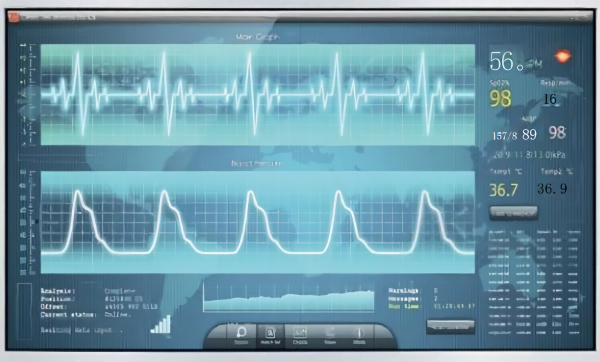
Medical-grade display glass covers the plate and touch panel substrates for use with the healthcare environments—glass in front of the LCD/TFT/OLED display modules in medical devices. These are not the finished monitors, but the layer of glass you actually touch and see through.
What differentiates us from standard consumer glass? It’s three factors.
Chemical resistance:
Dust collection in hospitals is cleaned using cloths saturated with sodium hypochlorite, isopropy alcohol, or quaternary ammonium compounds. Standard soda-lime glass coatings can’t take the repeated chemical blasts. medical-grade has coatings rated for over 10,000 wipe cycles, with clinical-strength disinfectant.
Optical performance:
Performing radiology or mammography reading with a diagnostic display requires a very accurate reproduction of levels of gray scale and color. The cover glass should result in more than 95% of the light transmittance, while the haze can’t exist more than 2% so as to not interfere with the DICOM Part 14 calibration curves. That’s a significantly tighter tolerance than you’ll observe on a consumer tablet.
Mechanical strength:
Medical devices are dropped, banged against bed rails, wheeled around on mobile carts over tile floors. Chemically strengthened glass, ion-exchanged at about 400 C, gives the impact resistance margin that keeps the display intact in everyday hospitals
Saiwei Glass invests in the design and manufacturing of cover glass and touch panel assemblies and has been doing so since 2004. We currently provide glass components to over 2,000 product variation across our current portfolios; from medical monitors, HD display modules and touch panel assemblies, we supply the glass component layer for medical device manufacturers building patient monitors, surgical displays and clinical workstations.
Medical Touch Screen Technologies — PCAP & Resistive
Selecting which touch technology to employ for a medical is not simply a matter of specifications; it also depends on the clinical workflow, the environment, and the end users of the screen. Here is an overview of how two main types compare in daily healthcare use.
Projected Capacitive (PCAP) Touch Panels
PCAP is becoming the new standard for most new designs of medical touch screens. The capacitive touch sensor grid is mounted behind a piece of solid cover glass with no air space in between, offering no flexible membrane to have fatigue or wear out. Our medical-grade PCAP is capable of 10 point multi-touch and is extremely reliable when using wet or dry gloves – a feature that the operating room staff will not give up.
Firmware tuning matters more than most suspect. The average PCAP controller chip set for consumer applications will approximately 30% of glove touches pass unnoticed through nitrile gloves. Our panels is calibrated with sensitivity and filtering thresholds that yield greater than 98% accuracy through nitrile. HDMI and DisplayPort interfaces work with standard medical display controllers without driver software modification.
Compared to run-of-the-mill touchscreens like solutions from Elo or other manufacturers, our medical-grade touchscreen panels are OEM-only products engineered specifically for integration into medical grade monitors — not finished monitors themselves. One candid reality: cost. PCAP panels can be 40-60% more expensive than resistive, when measured at equivalent physical sizes. Our 15.6-inch touchscreen monitor is a flat panel with an embedded PCAP version usually retailing at least 50% higher than resistive. Market penetration is aided by the fact that this second tier adds very little cost to the overall Unit price.
Resistive Touch Screen Solutions
Those expensive resistive panels are relegated to a few specific regions of even the cost-sensitive medical world. Certainly, in any field applications where multi-touch selection is not required and limited auto-calibration implications are acceptable, 4 wire or 5 wire resistive touch is still a good choice. Laboratory analyzers, pharmacy medication dispensing machines and some veterinary uses of monitors are successful with these less durable devices. Signature capture on the patient driver suite sometimes makes use of the stylus and this is inherently possible with resistive touch.
The greater trade off here are the durability issues. Resistance layers begin to suffer premature wear in the 1- 5 million touch cycle range and, especially in high-clinician volume front-desk work; this can translate into the need for panel replacement after only 3 to 4 years. PCAP modules inherently do not have a wear layer and exhibit extreme durability in both individual hardened impacts, and sustained thousands-of-visits brisk single touches.
Touch Screen Specifications
| Parameter | PCAP Touch Panel | Resistive Touch Panel |
|---|---|---|
| Size Range | 2″ – 32″ diagonal | 2″ – 22″ diagonal |
| Cover Glass Thickness | 0.5 mm – 10 mm | 0.5 mm – 3 mm |
| Touch Points | 10-point multi-touch | Single touch |
| Glove Operation | Yes (firmware-tuned) | Yes (native) |
| Response Time | < 10 ms | < 15 ms |
| Transmittance | > 90% | > 80% |
| Touch Life | Unlimited (no wear layer) | 1–5 million touches |
| Interface | USB / I2C / HDMI | USB / RS-232 |
| VESA Mount Compatible | Yes | Yes |
| Liquid Resistance | Water, blood, saline | Water only |
| Operating Temp | -20°C to +70°C | -10°C to +60°C |
| Structure | G+G / G+F / G+FF | Film + Glass (P+G) |
Source: Saiwei Glass’s catalog 2025. VESA mounting holes provided for in accordance with VESA MIS-D/E specs.
Cover Glass for Medical Devices — Materials & Coatings
A most important discriminator between a durable application and just one more fad of technology for the sake of, is the cover glass covering the panel. Since it is the only tactile material in the device to be touched by clinicians and providers, numerous combination of chemistry, material and thickness are critical to the application serving to its full 2 to 3 decade service life, and not exhibiting viewing issues that drive provider operator calls into the vendor support area in year 1.
We make cover glass from both soda-lime, aluminosilicate base glass options. Soda-lime glass offers advantage financially when appearance is behind a bezel or shroud; such as bedside domed monitors, where direct delivery impact is minimal. Aluminosilicate best cost advantage is delivered in the form of deeper ion-exchange compression layer, combined with higher surface hardness; this earns it the right to premium handset status where durability daily is such an important factor (pocket carry, frequent handling).
In a typical ion-exchange process, work is performed at approx 400C in molten potassium nitrate. Inward migration of smaller sodium ions and surface packing by larger potassium ions is the matter of a few minutes cycle time. Ion height and depth are controlled by sealing process time and temperature; on a 1.1mm aluminosilicate substrate, we can reliably achieve 600 MPa or more of surface compressive stress -with ion-exchange depth of approximately 40 microns. Durable for IEC 62715-6-1 drop-ball testing.
Our 3A lamination line supplies anti-glare (AG), Anti-reflective (AR), and oleophobic coatings in various combinations as per application needs.
Anti Glare (AG)
Glare effect greatly minimized in illuminated operating rooms with adjustable surgical lights. Haze levels can be selected from 5% to 40%-range, depending on whether diagnostic viewing enabled image clarity or patient adjacent screens in brightly lit rooms matter more.
Anti Reflective (AR)
Multi-layer optical coating structure with transmittance levels well over 95% and surface reflection less than 1%. Essential to applications involving diagnostic and radiology pathways where native DICOM Part 14 calibration must be unaffected by cover glass.
Anti fingerprint (AF)
Oleophobic coating layers based on fluoropolymer chemistry. Makes the surface easy to clean with contact angle ratings exceeding 110. Can be coated out to 5,000+ wipe cycles without evidence of deterioration.
For infection-sensitive healthcare environments we offer the application of our silver-ion antimicrobial treatment during glass tempering. The silver ions are locked into the glass surface – not a topcoat that wears off – providing ongoing antimicrobial treatment that minimizes bacterial colonies on the touch surface between cleaning rounds.
This is important for patient room touch screens, emergency department triage stations, and self-service check-in kiosks, all places where multiple people will contact the same surface during the day. The coating continues to work and does not diminish during cleaning.
Note: Note that the antimicrobial coating is not meant to replace cleaning protocols. It reduces the microbial burden between regularly scheduled disinfection rounds, but still should be part of your protocols.
Medical Display Applications — From Patient Monitors to Surgical Systems
Different medical applications place different demands on the display glass and touch panel. Here is how our components stack up across the field:
Patient Monitoring Systems
Bedside and central station monitors need chemical resistant cover glass appropriate for daily disinfection. Touch panels for medical carts must be managed with gloved input over a uneven tile floor. Typical size: 10″ to 15.6″ with PCAP multi-touch. Wide viewing angles for high brightness patient rooms.
Surgical & Operating Room Displays
Operating-room grade glass requires AG coating to prevent dazzle from intense surgical lighting. Cover glass for surgical visualization monitors is typically 24″ to 32″ with 4k resolution fitment. Splash rated at IP54 or higher. image viewing clarity is essential – surgeons depend on real-time vision during procedures.
Diagnostic Imaging Workstations
Radiology and mammography reading stations require the highest optical precision. AR coated cover glass with transmittance above 95% provides superior image quality for DICOM-compliant grayscale rendering. viewing angle uniformity over the entire surface prevents luminance shifts during clinical viewing. Dual monitor configurations are also common.
Medical Kiosk & Self-Service Terminals
Patient check-in kiosks and pharmacy points-of-sale require high-traffic equipment built for patient engagement. Antimicrobial glass coating improves infection safety. Vandal-resistant cover glass in the 4mm to 6mm range can withstand the abuse of a busy public-access stand. Multi-touch PCAP interfaces for signature input and menu navigation.
Dental & Veterinary Equipment
Dental imaging touch displays and veterinary monitors must be small at 7″ to 12″ with AG coating to mitigate reflections from intense dental lights. Compatibility with dental sterile wipes and disinfectants, including sterilization wraps, is critical.
Lab & Diagnostic Instruments
Laboratory testing equipment, blood gas analyzers, and point-of-care devices for lab results viewing all need small TFT display modules in the 3.5″ to 7″ range. Resistive touch may be preferred for stylus use depending on the form factor. Power supply constraints make low-energy display modules desirable.
Certifications & Compliance — IEC 60601, FDA, ISO 13485
Medical equipment regulation puts strict demand on component suppliers. Our quality management practices and material certification satisfy the requirements that medical device manufacturers require of glass and touch components.
ISO 9001:2015
RoHS 2011/65/EU
REACH
FCC Part 15
IEC 60601-1 Compatible
IEC 60601-1 (4th Edition) governs the electrical safety of medical electrical equipment. Though this regulation applies at the systems level rather than individual component level our touch panels and display modules are suitable for inclusion into 60601-1 IEC certified systems. Creepage lengths, leakage current pathways, and earth buses are considered in our system panel design. Material certification and test results necessary for our OEM customers to achieve their IEC 60601 certification are provided.
Our manufacturing meets ISO 13485 standards across all our products for design control, risk management, and traceability. All batches of medical-grade glass are identified by lot number and traceable to raw material certificates and batch chemistry. Traceability documentation is supplied to our OEM customers for their own FDA 510K and CE MDR submissions.
All OEM packages include material composition data, biocompatibility test reports and EU MDR 2017/745 compliance documentation for submission with the EU MDR. We have assisted over 200 overseas medical device OEM customers through their regulatory procedures across 50+ countries.
Our products fully comply with RoHS and REACH directives. Material safety data sheets are provided with each glass composition or coating chemistry. Medical purchasing teams check for compliance every order before starting any qualification process.
Case Studies — Medical Display Glass in Real Projects
Patient Monitor Cover Glass — Chemical Resistance Validation
A European medical device manufacturer required cover glass to close a new generation patient monitor deployed across ICU and general ward applications. Their legacy supplier’s glass crackled and crazed after only 6 months of constant daily disinfection with chlorine-based cleaners. We delivered 1.1mm chemically strengthened soda-lime glass with AF coating rated for 10,000 wipe cycles using sodium hypochlorite at 0.5% concentration. During the qualification phase we simulated 3 years of cleaning cycles with accelerated aging tests. At the end, there was no evidence of progressive surface degradation – the contact angle remained exceeding 100.
Clinical Result
Zero field returns for glass surface degradation after 18 months of deployment across 400+ units.
Surgical Display PCAP Panel — Gloved Touch in the OR
The main concern from the OR team was consistent touch response through double-gloved hands for the duration of demanding procedures. standard PCAP controllers were only achieving approximately 70% detection accuracy with sterile surgical gloves. Our firmware calibration boosted the detection sensitivity margin and optimized the noise rejection algorithm – without false positives occurring due to saline splash.
Result: Deployed in 15 operating rooms. Touch reliability complaint rate: 0% after 12 months.
Performance Specifications
| Requirement | Target | Achieved |
|---|---|---|
| Touch accuracy | > 95% | 98.4% |
| Response time | < 15 ms | 8 ms |
| Splash resistance | IP54 | IP54 |
| AG haze level | 25% ± 5% | 24% |
Diagnostic Workstation Glass — Optical Precision for Radiology
Design challenges involved with getting the cover glass just right for a mammography reading station versus most medical display devices. The radiologist needs to be able to distinguish subtle tissue density gradients – any optical distortion from the cover glass layer directly impacts the accuracy of diagnosis.
We fabricated AR-coated aluminosilicate cover glass with a transmittance measure at 97.2% (target was 95%+) and surface reflection of only 0.7%. The glass maintained DICOM Part 14 GSDF calibration during integration with the display panel.
Optical Validation
Optical transmittance 97.2% achieved. GSDF calibration maintained within ±3% of target luminance.
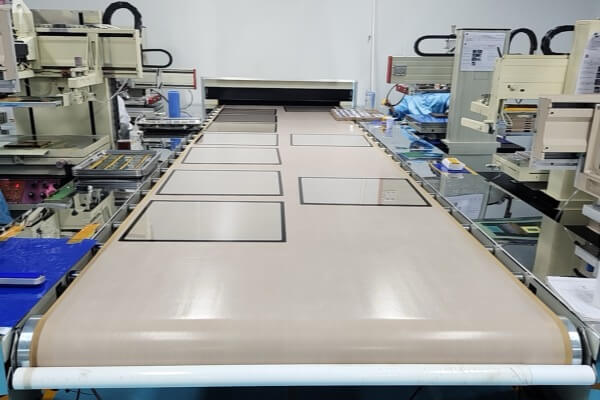
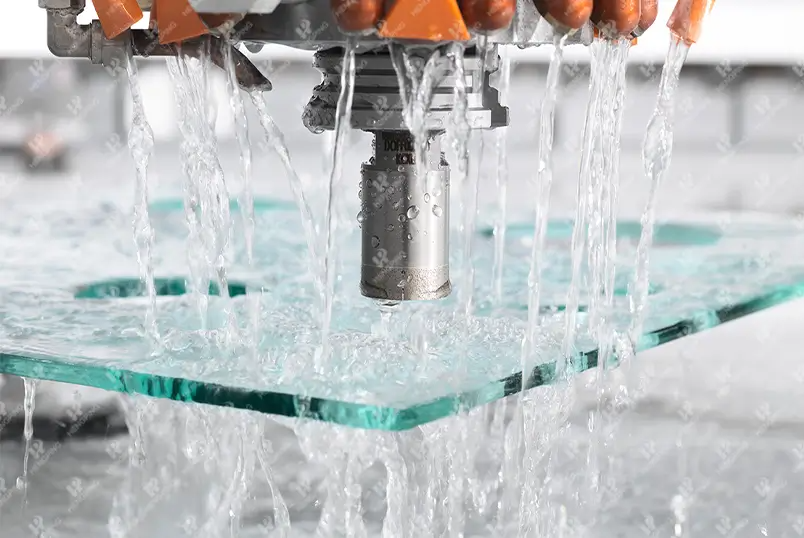
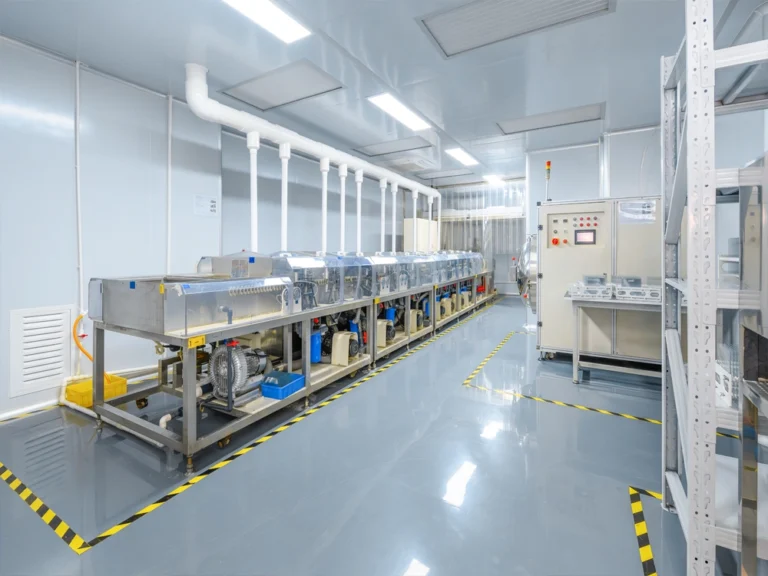
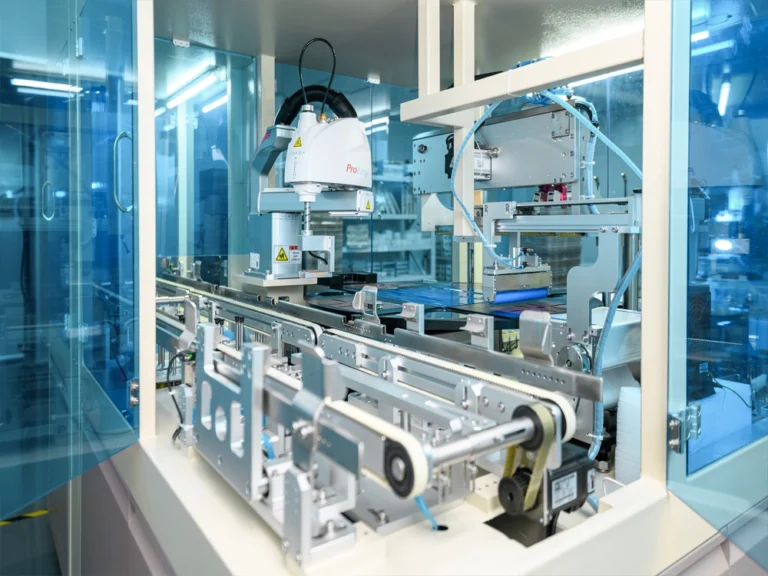
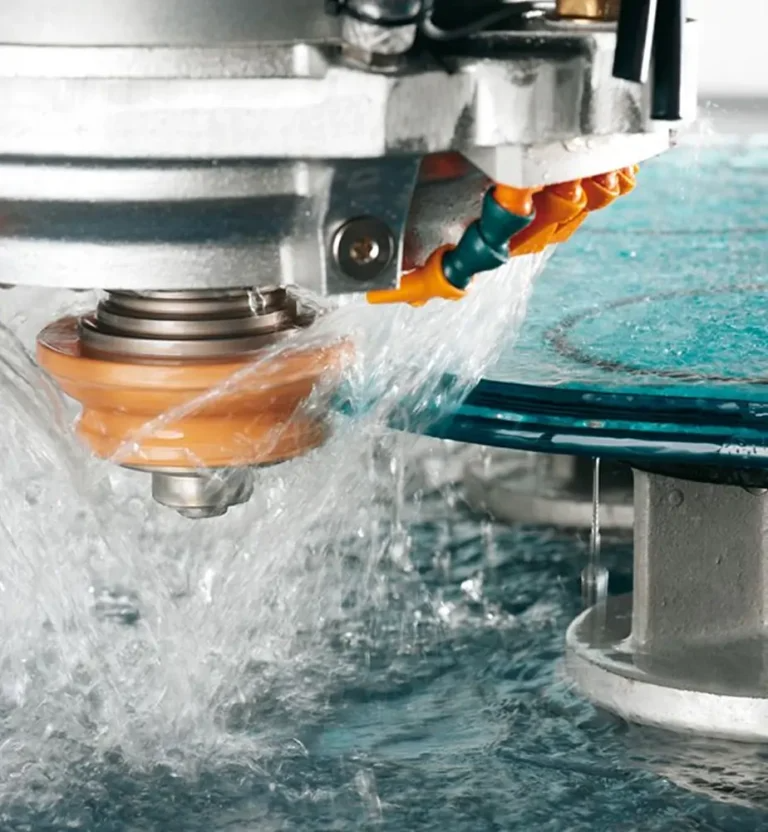
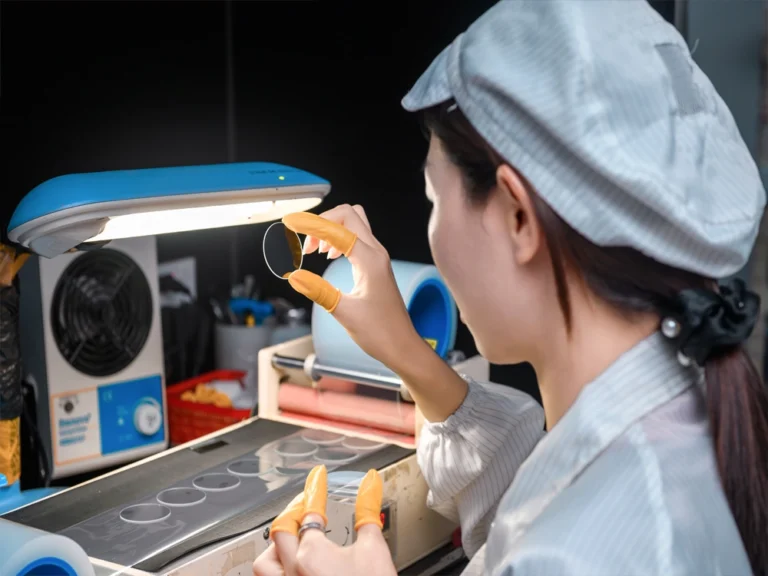
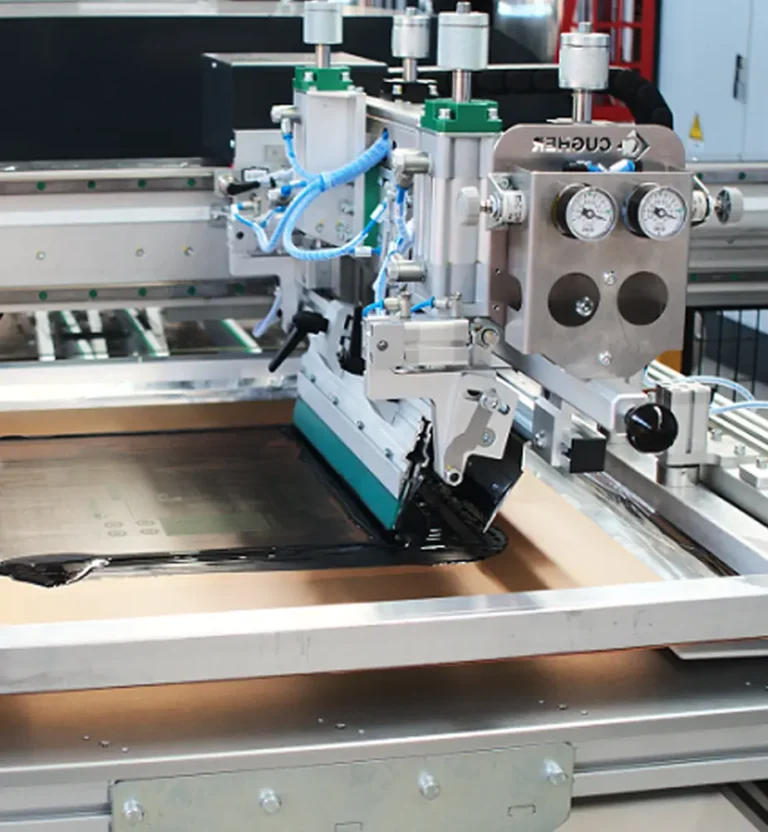
Quality Assurance | Trusted Medical Display Glass Manufacturer in China

Medical Display Glass Pricing & OEM/ODM Services
The price of medical display glass is highly variable and procurement teams are right to want to understand these factors before approaching lead suppliers for quotes. Here are the cost influences and our OEM manufacturing process.
Price Factors
| Factor | Impact on Cost | Notes |
|---|---|---|
| Glass Size | Larger = higher unit cost | Small (2″–7″) vs. large (21″–32″) can differ 3–5x |
| Glass Material | Aluminosilicate > soda-lime | Aluminosilicate typically runs 30-50% more than soda-lime |
| Surface Coating | Each coating adds to cost | AG alone < AR alone < AG+AR+AF (full 3A treatment) |
| Touch Integration | PCAP > resistive > cover-only | PCAP adds controller IC + sensor layer + bonding |
| Antimicrobial Treatment | Adds to base glass cost | Silver-ion integration during tempering process |
| Order Volume | Higher volume = lower unit cost | MOQ 500 pcs for standard; 100 pcs for custom |
| Custom Shape | Tooling charge applies | Non-rectangular shapes require CNC cutting tooling |
OEM/ODM Workflow
Most medical device glass projects follow this process:
1. Specification review
Your design teams send drawings, optical specs, mechanical specifications, and environmental warranty conditions. We review these within 2 days and raise concerns.
2. Prototype pieces
5 – 50 samples manufactured for your design verification and studies. Typical prototype turnaround is 10-15 days.
3. Design iteration
When levels of coating, touch, or size need adjustment we scale and resample. Most medical designs undergo 2-3 iterations before the design is frozen into a specification.
4. Production qualification
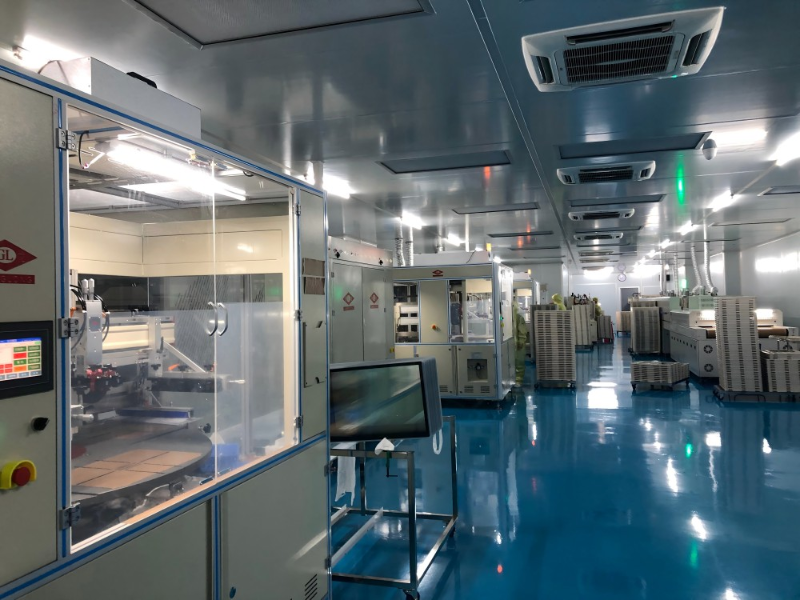
Once your engineering group makes the call on sample approval we produce a pilot lot for process validation Your quality team is free to visit our Dongguan fab for the qualification audit.
5. Volume production
15-20 business day lead time on cover glass, 25-35 business days on PCAP touch panel assemblies. Annual blanket orders with quarterly releases are available.
PCAP vs Resistive Touch — 5-Year Total Cost of Ownership
Compare the true long-term cost of capacitive and resistive touch panels for your medical device deployment. Enter your configuration below to see where PCAP’s durability advantage translates into real savings.
PCAP Total Cost
—
over selected period
Resistive Total Cost
—
over selected period
PCAP Savings
—
vs resistive over period
Cost Breakdown by Category
PCAP Touch Panels
Initial Units
—
Replacements
—
Labor Cost
—
Resistive Touch Panels
Initial Units
—
Replacements
—
Labor Cost
—
Cumulative Cost by Year
PCAP Touch
Resistive Touch
Interactive Engineering Tools
Utilize our dynamic tools to build precise cover glass specifications and calculate total ownership costs for your medical device deployments.
After-Sales Support & Technical Assistance
Medical device manufacturing does not end with the first shipment Our support framework is designed for the long product lifecycles created by medical equipment, typically 7-10 years for Class II products.
Dedicated account manager
Every medical OEM customer gets a single point of contact that understands their product line, qualification history, and compliance requirements.
Technical support
Our engineering team provides guidance with glass material selection, coating specification, touch panel integration, and display module compatibility during your design phase-before an order is placed.
Quality documentation
Lot-traceable inspection reports, material certificates, and test data ship with every order We keep records for a minimum of ten years compliance per ISO 13485 for medical components.
Warranty
24 month warranty on manufacturing defects for all medical-grade glass and touch panel products. Claims are settled within five business days with replacement or credit.
Shipping
We ship DDP (Delivered Duty Paid) to major markets or FOB Shenzhen, as per your directions. Packaging is ESD safe and adheres to ISTA 2A transit standards.
We want to be alerted if there is a failure in the field—return glass or touch panels will be subjected to a free of charge failure investigation and the data used to improve our manufacturing process.
Frequently Asked Questions — Medical Display Glass
A projected capacitive (PCAP) touch sensor detects dielectric change in the sensor grid when a conductive object approaches. Med., PG12 latex and nitrile gloves create enough static capacitance to interfere with the sensors standard firmware. medical-grade PCAP panels are loaded with optimization that we have tuned for wet and dry glove use outside the standard specifications-supported 10-point multi-touch with surgical gloves.
IEC 60601-1 electrical safety and IEC 60601-1-2 EMC compliance are standard requirements. ISO 13485 may also apply. FDA 510(k) or CE MDR marking depends on target market. Saiwei Glass carries RoHS and REACH certification across all product lines.
Silver-ion coatings are deposited into the glass surface during processing. Silver ions disrupt bacterial cell walls and slow reproduction between cleaning cycles. Most relevant for patient-facing touch screens in outpatient kiosks and triage stations.
All our medical display glass and integrated Touch Surfaces panels are made in the range 2 to 32 inch diagonal measurement. Cover glass wall thickness options are specified from 0.5mm to 10mm. Smaller panels in the 2 to 7 inch range are used for handheld diagnostic devices and portable patient monitors. Medium-sized 10 to 15.6 inch touch screen monitor panels are widely employed in bedside monitors, anesthesia monitors and medical carts. 21 to 32 inch models are used with surgical displays, diagnostic machines and wall-mounted patient information systems.
3A processing is commonly applied across all three surface treatments. Anti-glare coating minimizes specular reflection from surgical outfit lighting and general light sources, haze levels from 5% to 40%. AR treatment increases light-through to over 95%, an important trait for diagnostic displays where the image lucidity levels are used to arrives at diagnosis. AF coatings use oleophobic chemistry to prevent the deposit of skin oils to artificial surfaces and ensure that they may be quickly cleaned during routine wipe-downs.
Chemically strengthened glass derives from a high temperature ion-exchange process where the glass sheet is immersed in a molten potassium salt bath. Sodium ions in the glass surface layers are displaced by the larger potassium ions and a compressive stress is imposed to form, boosting impact resistance and scratch performance. Typical glass can endure a 500mm diameter steel ball drop. For medical applications where the device is more likely to be nudged against a bedrail or dropped onto a tile floor, we’re here to tell you that give the extra impact mitigation you get from chemically strengthening the glass is hard to beat.
PCAP touch screens boast multi-touch capability, greater optical transmittance, and longer service lifetime because there is no wearable film. They operate with gloves provided the right driver firmware has been installed. Resistive touch panels are cheaper, will work with any stylus, and do not inevitably require a new driver calibration in order to work with gloved hands. For new designs today specify PCAP for patient-facing applications such as bedside monitors and patient registration stations. Resistive remains viable for lab equipment and cost-sensitive kiosk use.
Finished cover glass, with or without an anti-reflective coating, can be shipped in as few as 15 to 20 working days for large batch costs for quantities over 500. Custom shapes, internal architecture and PCAP coatings may take between 25 and 35 days with regular production tooling. For prototype samples, 5 to 50 piece runs can usually be completed within 25 days. Signed annual blanket orders on quarterly releases are available.