Get in Touch with Saiweiglass


Automotive Display Glass Solutions — Saiwei
Cover glass, PCAP touch panels, and TFT display modules for center consoles, instrument clusters, and head-up displays. Serving the auto industry since 2004 — from single prototypes to volume OEM production.
Get a Quote →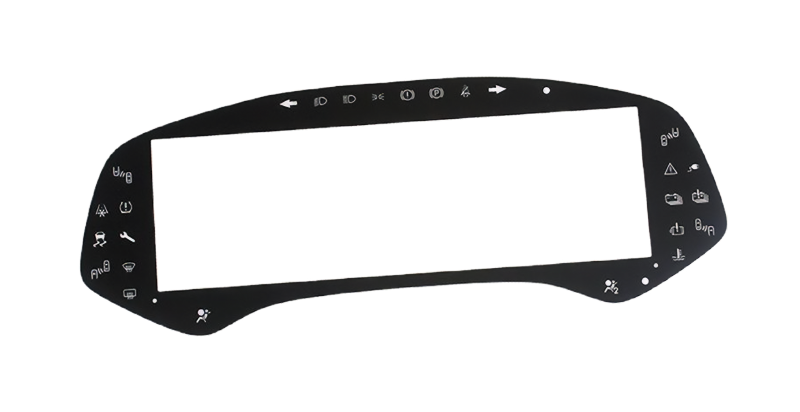
- 20+
- Years in Glass & Display
- 50+
- Countries Served
- -40°C to 85°C
- Operating Range
- 2,000+
- Products Developed
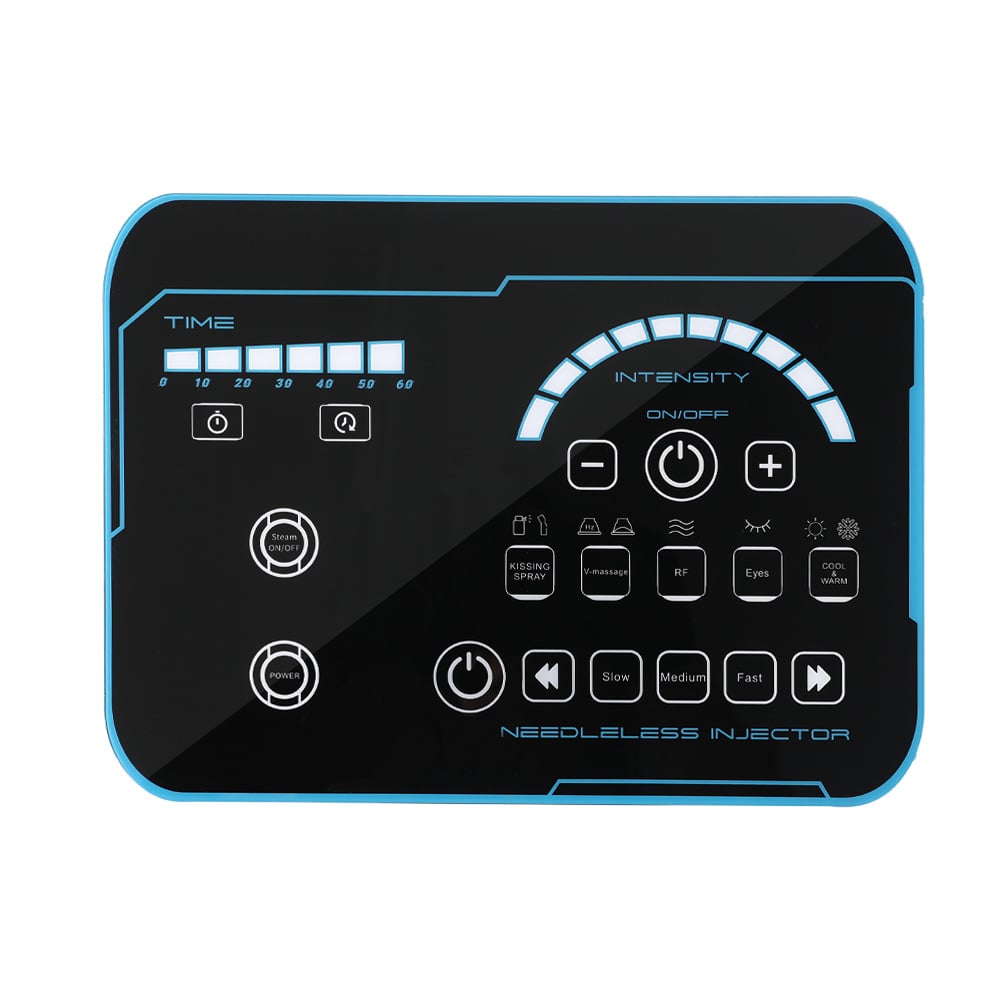
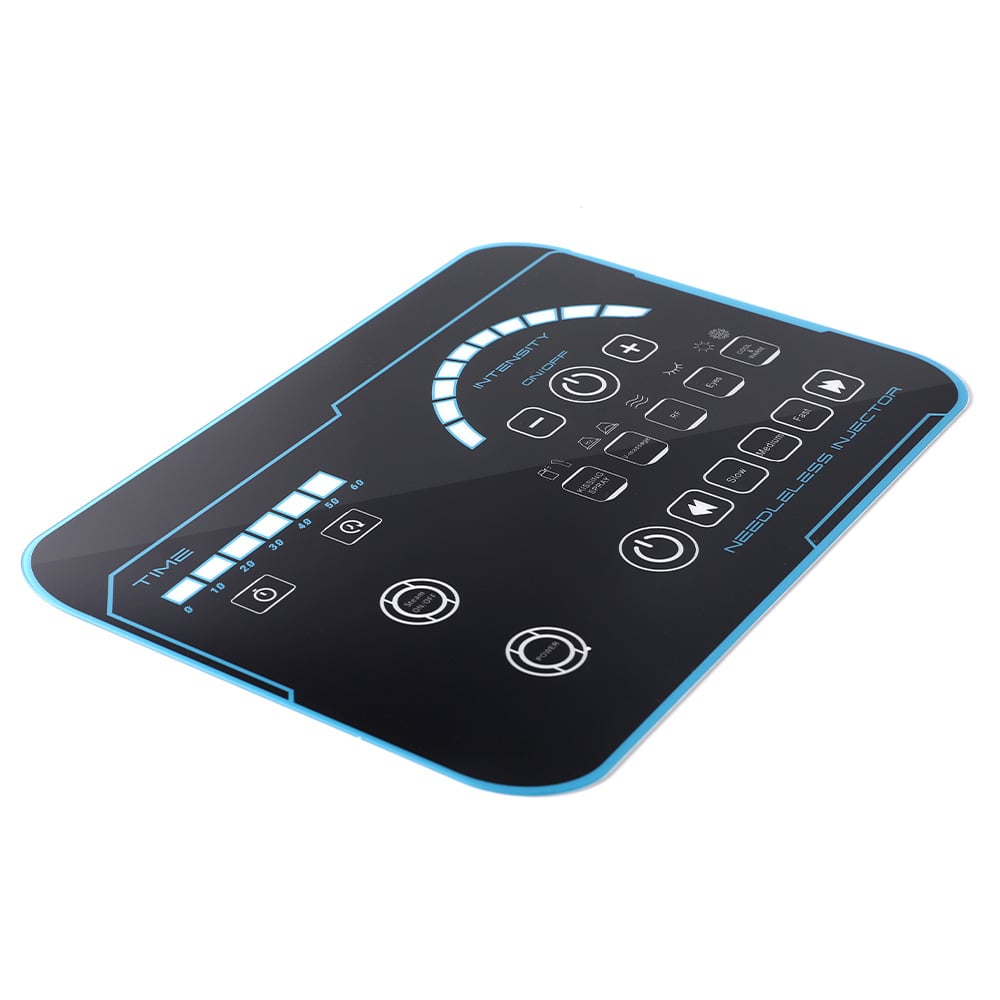
What Is Automotive Display Glass?
Cover glass, PCAP touch panels, TFT display modules for center consoles, instrument clusters & head-up displays. Serving the auto industry since 2004, from first prototypes to volume OEM production.
In the automotive world, display cover glass is the transparent cover panel that rides in front of dashboard screens, instrument clusters and heads-up display projection devices inside your vehicle. This glass is different from the soda-lime automotive glass used in windshields & side windows because it goes through chemical strengthening – an ion exchange (noble gas treatment) where, in an intensive bath of molten potassium salt, much larger potassium ions swap for small sodium ions in the glass surface. This generates compressive stress, resulting in impact resistance 4-8x that of common automotive glass.
That extra toughness is relevant because automotive display glass endures relentless vibration, thermal cycling from well below freezing up to well above 80 C inside the car, and of course the occasional painful knee assault. Automotive display glass also hosts functional coatings, including anti-glare (AG), anti-reflective (AR), & anti-fingerprint (AF) layers to keep the screen as legible as possible and improve ease of interaction. For the driving experience, excellent display glass means the difference between squinting at a washed-out entertainment screen and having a clear, unified control interface that works anywhere.
Display Glass Technology for Automotive
Luxury & commercial transports entertainment display panels can be as large as 15.6″, and often use AF coatings for interaction security. Certain displays have built-in ambient light sensors that automatically adjust brightness levels.
01
Chemically Strengthened Glass
Chemical-stressed glass by ion exchange in the molten salt bath (ca 380-420C for 4-8 hours) produces a compressive stress layer 20-50m thick in the cover glass. Results: glass with much improved impact resistance at thinner profiles than thermally tempered possibilities. Thinner cover glass = lighter display assembly – a priority as vehicle design teams push to reduce weight in electric vehicles, and this technology plays a central role in achieving that goal.
02
Anti-Glare / Anti-Reflective / Anti-Fingerprint Coatings
AG coating employs controlled chemical etchings to diffuse reflected light and dramatically reduce solar annoyance – vitally important for screens with a windshield inclination. AR multi-layer coating boosts visible light transmission to >95% and reduces reflectance to <1%. AF oleophobic coating offsets the effects of fingerprint oils on the glass surface. These layers can be combined: AG+AF for matte-finish touchscreens, or AR+AF for high-performance instrument panels.
03
Optical Bonding
In-filling the air space between cover glass and display with a transparent bonding compound gets rid of internal reflections. Under direct sun an optically bonded display still delivers readability whereas an air-gap solution would wash out. Bonding has the added benefit of improving display clarity aesthetics and impact durability – a glass-panel-laminated assembly beats two separate elements.
04
PCAP Touch Sensor Integration
Projected capacitive sensors observe finger location through the cover glass without requiring any pressure – an automotive must. SWLCD provides solutions with several sensor grid designs: G+G (Glass+Glass) for maximum ruggedness, G+F (Glass+Film) for cost advantages, or P+G (Plastic+Glass) for corner bending applications. Sensor grid options support up to 10 touches at once and can be adapted for glove detection or window sticker gesture-based ADAS commands.
Key Applications for Automotive Display Glass
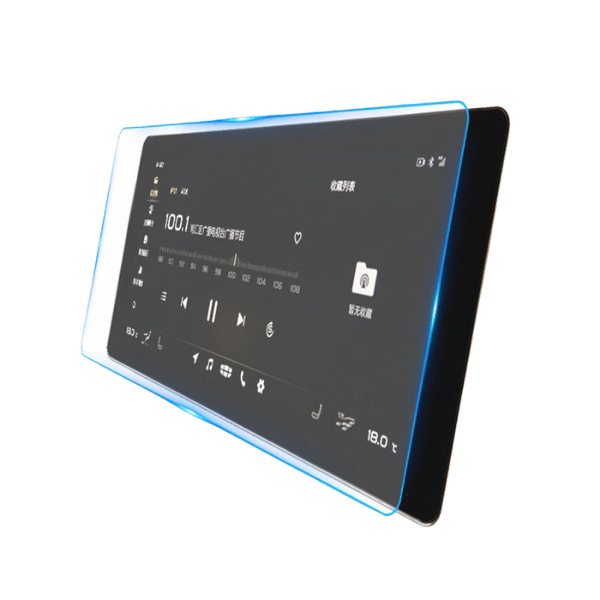
Center Console & Infotainment Displays
During the past ten years, design lexicons have gone from two or three small dials to entire digital wraparound cockpits with curved, edge-to-edge clear panels. Every new vehicle platform requires a different blend of thickness, glazing spec, touch sensor fit, and optical bonding, which is why a manufacturer that can handle all those layers under one roof accelerates development so effectively.
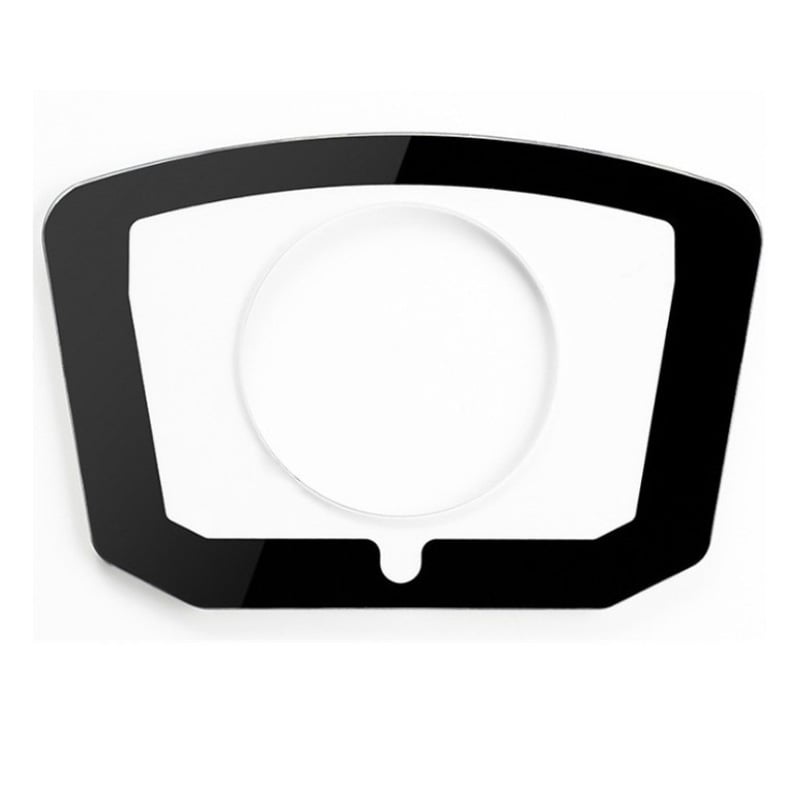
Digital Instrument Clusters
Center console displays are a central user interface. These units are commonly 8″ to 15.6″ across, contain PCAP touchscreens and optical bonded layers for sunlight readability; and drive navigation, entertainment, air vents, and overall vehicle settings.
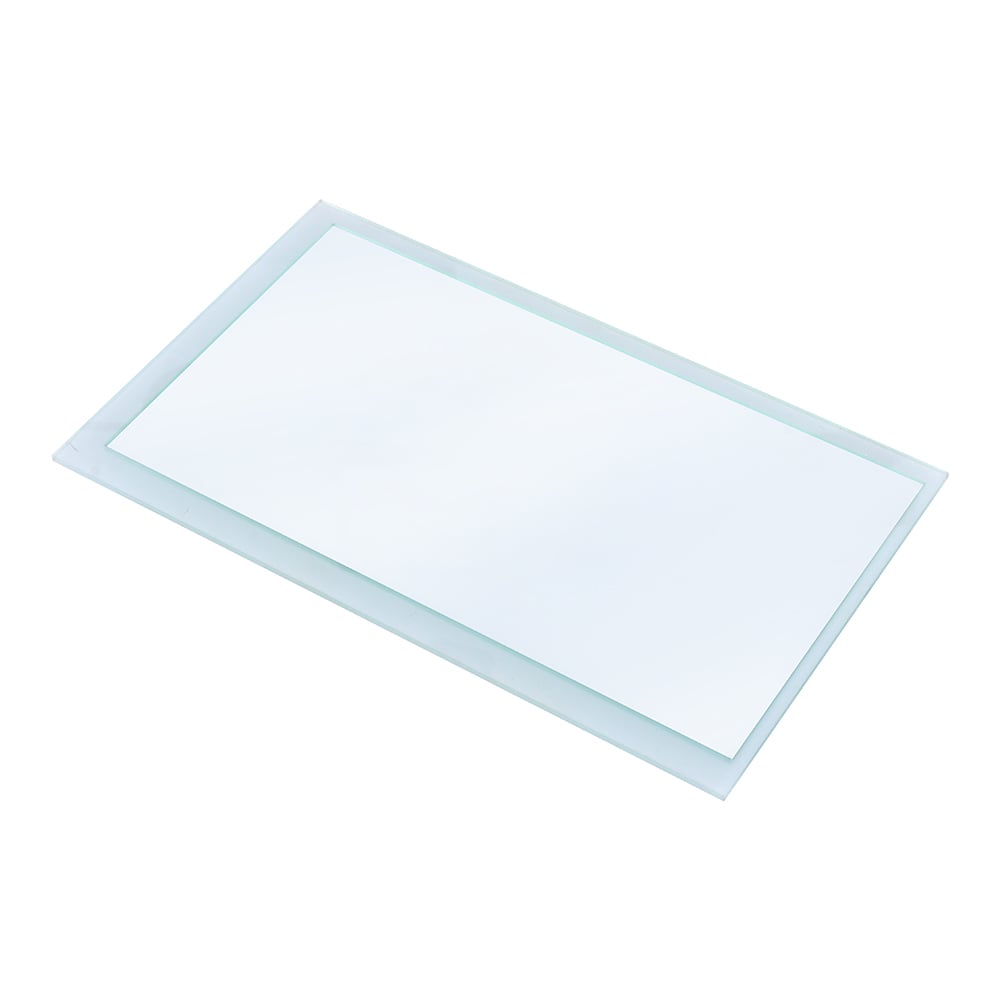
HUD Cover Glass
Upgrading from traditional gauges to digital readouts requires very high-Brightness TFTs (600-850 cd/m for SWLCD’s 10.3″ & 12.3″ models), as well as low-glare cover glass for unobscured driver focus. Cabin mounting behind the wheel needs tight shape tolerance with curved surfaces.
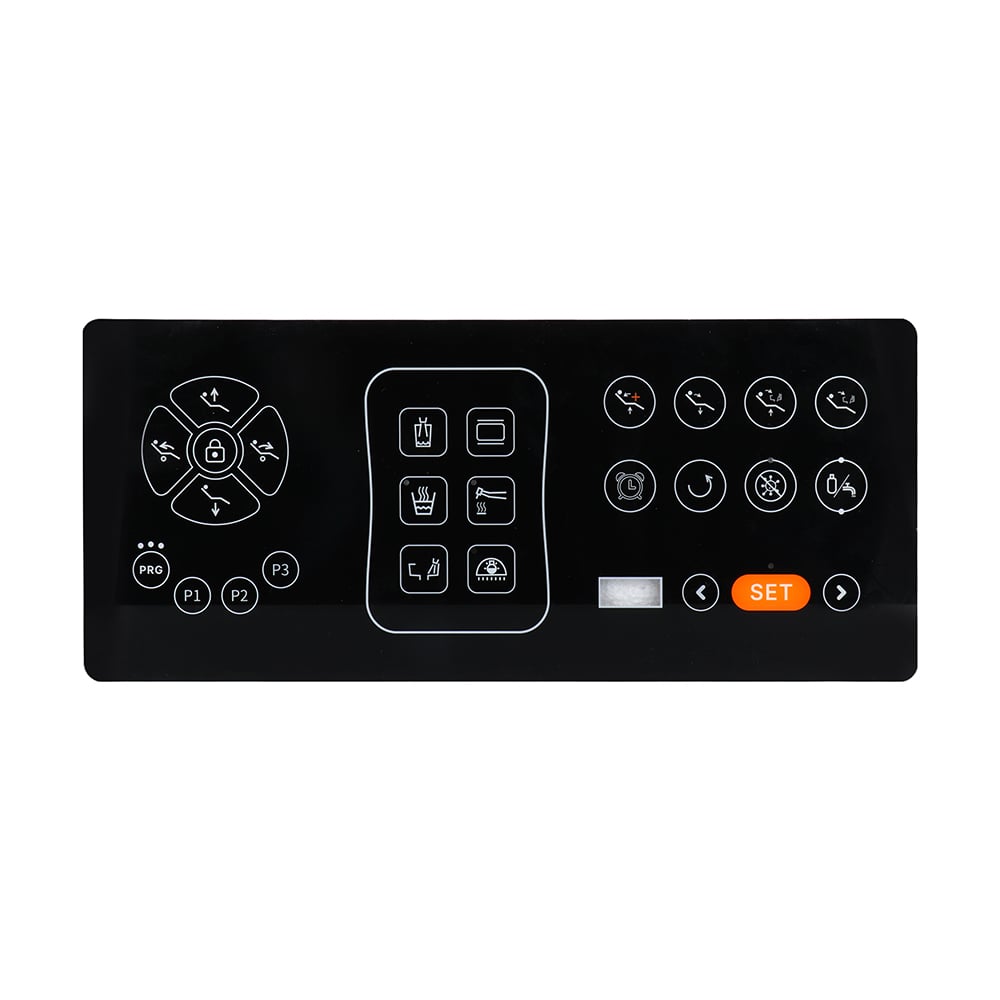
Rear-Seat & Passenger Displays
Head-up display units cast speed, navigation graphics & ADAS prompts onto the windshield. Cover glass over the head-up display projection device needs tight control of optical characteristics-surface flatness below 0.1mm deviation and low birefringence- to project the interfaces without distortion.
Automotive Display Glass Solutions — Product Range
With solutions for automotive display projects at three levels – cover glass, touch-enabled panel, and a complete module solution – each product family is standardized on the same chemically strengthening glass platform.
TFT Display Modules for Automotive
| Parameter | 10.3″ Automotive TFT | 12.3″ Automotive TFT |
|---|---|---|
| Resolution | 1280 × 480 | 1920 × 720 |
| Interface | LVDS | LVDS |
| Brightness | 600 cd/m² | 850 cd/m² |
| Operating Temp | -40°C to 85°C | -40°C to 85°C |
| Viewing Angle | IPS, 170°/170° | IPS, 170°/170° |
| Touch Option | PCAP (G+G / G+F) | PCAP (G+G / G+F) |
| Cover Glass | 0.55–6mm, chemically strengthened | 0.55–6mm, chemically strengthened |
Source: Saiwei Glass catalog. Custom dimensions available from 0.96″to 15.6″ Display sizes. Other interfaces available: MIPI, RGB, MCU, SPI.
Cover Glass & Touch Panel Capabilities
| Capability | Specification |
|---|---|
| Glass Thickness Range | 0.55 mm – 10 mm |
| Surface Treatments | AG (Anti-Glare), AR (Anti-Reflective), AF (Anti-Fingerprint) |
| Touch Structures | G+G, G+F, G+FF, P+G, P+F |
| Max Touch Points | 10-point multi-touch |
| Cover Glass Max Thickness for Touch | Up to 10 mm |
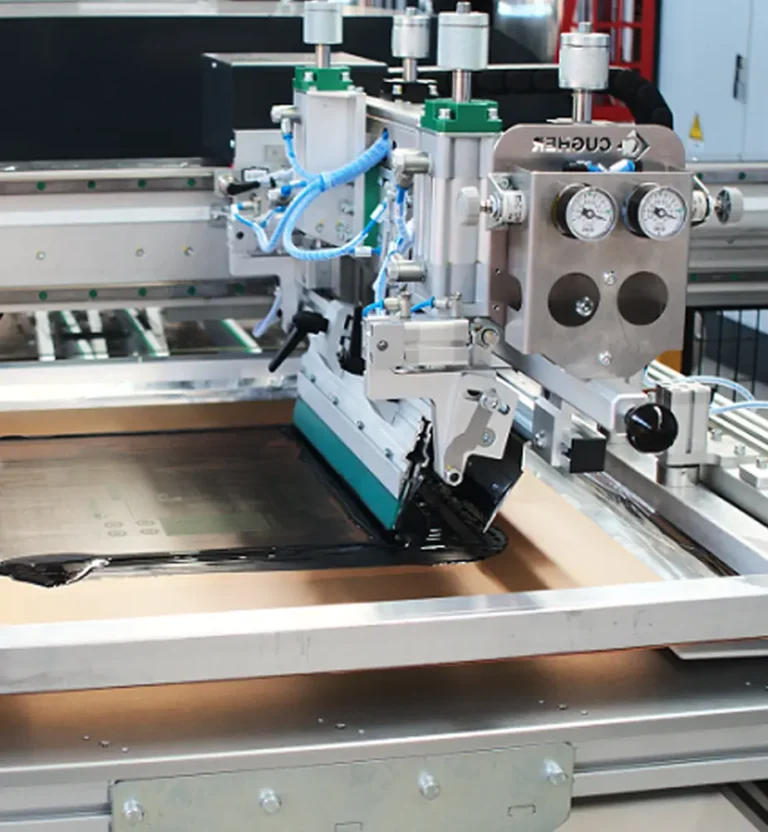
| Printing | Silk screen, black/white border masking, custom colors |
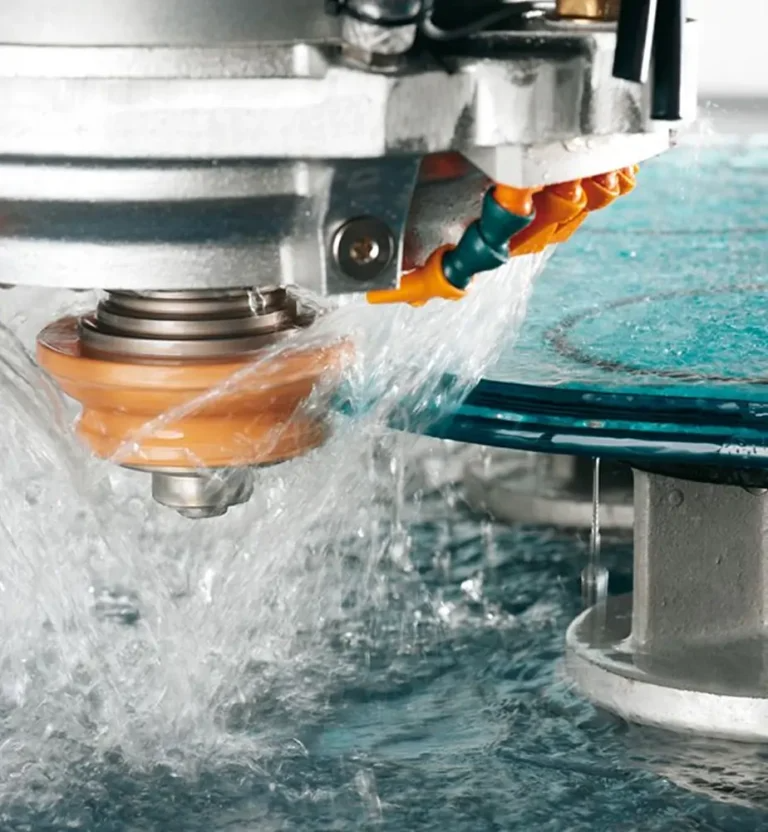
| Shape Processing | CNC cutting, edge grinding, curved profiles |
| ESD Immunity | ≤20 kV (contact & air discharge) |
Source: Saiwei Glass catalog – test data performed in accordance with internal automotive qualification standard.
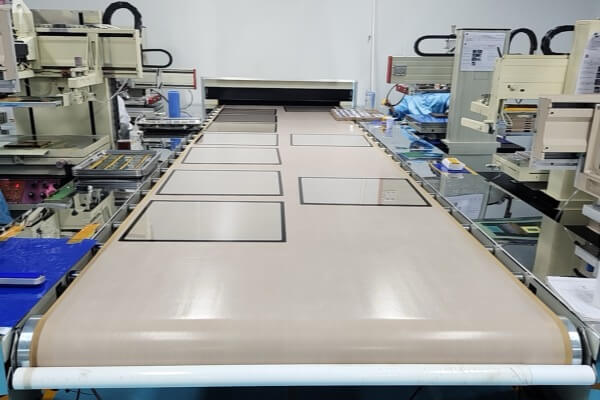
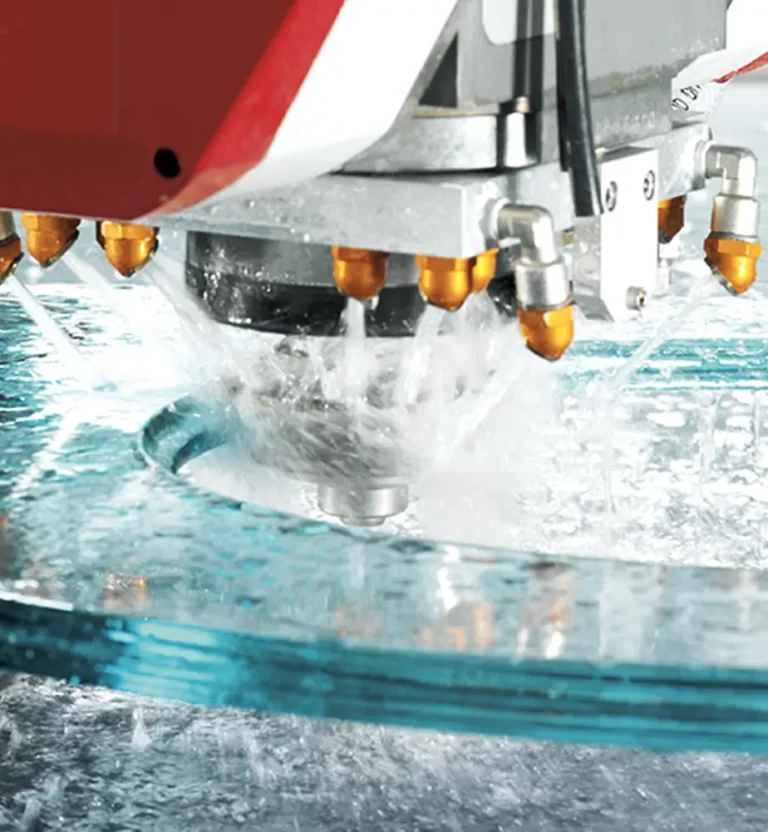
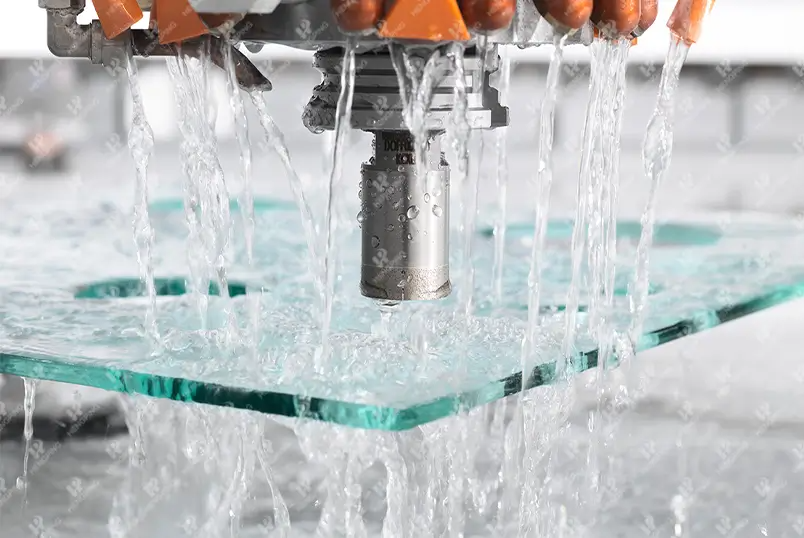
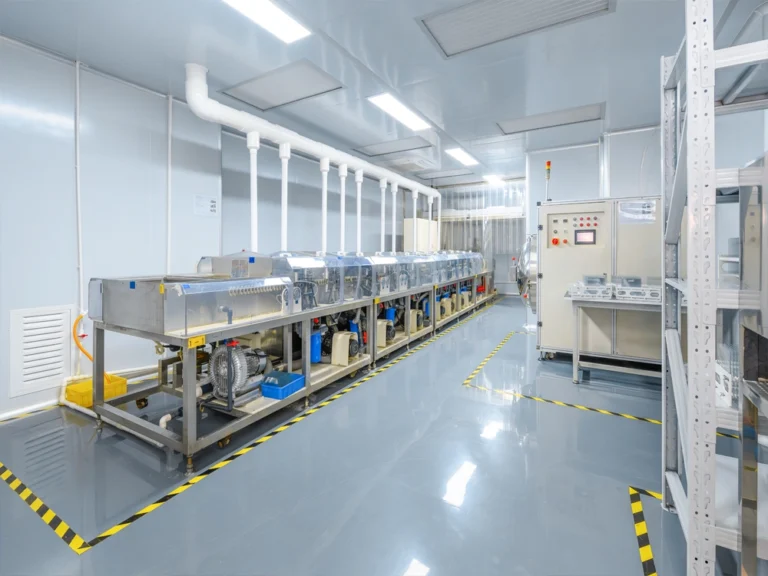
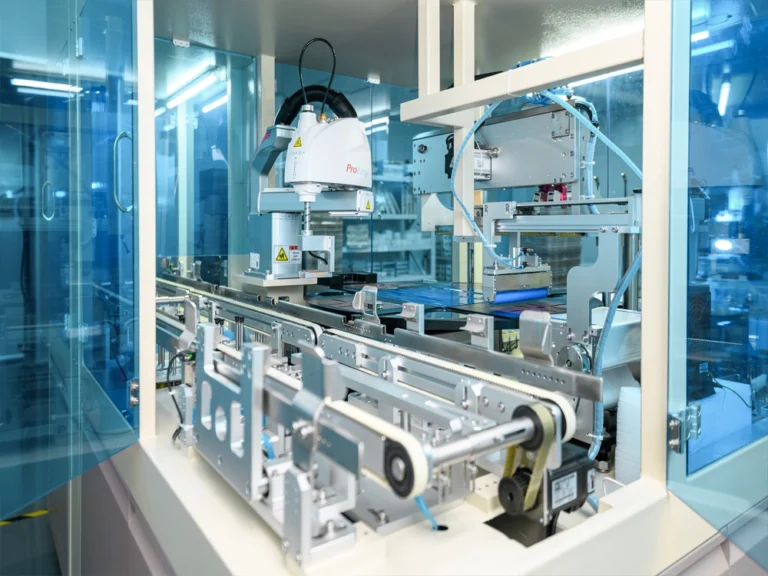
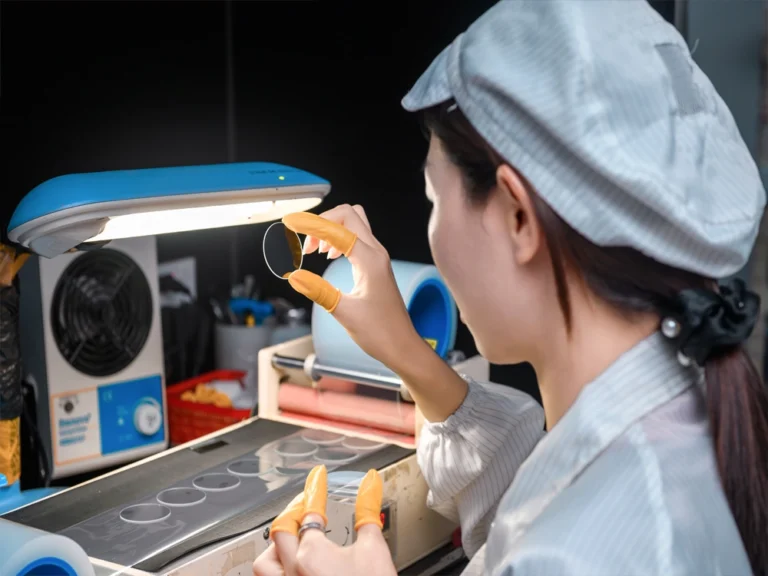
Quality Assurance | Trusted Automotive Display glass Manufacturer in China
Case Studies — Automotive Display Projects
Project A — Electric Vehicle Dashboard
Dual-Screen Cockpit: 10.3″ Cluster + 12.3″ Center Console
An electric vehicle startup had a need for a continuous dual display configuration for their flagship vehicle. Both were to live under one continuous cover glass with a 3D shape profile, bonded without any noticeable air gaps. Our engineering team created a single tool (with two forging molds) that produced a single-piece rigid AG+AF coated cover glass molded to the shape of the vehicle body, then it was CNC-machined and bonded to the 10.3-inch instrument cluster and the 12.3-inch infotainment module in a single step. The instrument cluster screen is fed at 600 cd/m through LVDS, while the infotainment display is driven at 850 cd/m for maximum exterior light viewing. The assembled module passed the client foamed-in-place 1000 hour cycle testing on first pilot.
Project B — Commercial Vehicle HMI Panel
Ruggedized 10.1″ Touch Display for Fleet Management
A commercial vehicle manufacturer wanted a ruggedized HMI panel built into trucks used for general construction/mining work. The truck cabins experienced vibration three times higher than a passenger car, and the drivers wanted to be able to wear gloves when operating controls. Our team selected a 2.0mm thick chemically strengthened cover glass (a lot more thick than our typical 0.7-1.1mm used in cars) with a P+ G touch structure dialed in for using large gloves on the production system, then calibrated the firmware to reject rain-splash false touches on the windshield-facing surface. After six months on these field trucks, the fleet owner had experienced no touch panel failures in 200+ trucks, making SWLCD the specified display glass for their next vehicle platform.
Project C — HUD Projection Cover Glass
AR-Coated Cover Lens for Head-Up Display Unit
A Tier 1 supplier wanted glass to populate a new HUD projection system that would go onto all the new vehicles. Since a HUD relies on light reflecting off a very smooth glass surface there was a number of strict specs on the flatness (<0.08mm), flat uniformity (<0.02mm), and reflectance(<0.5%). Our engineers worked with the Tier 1 to develop a custom anti-reflective multi-layer coating stack tailored to the system's LED light source, and went through three machining tests to demonstrate at 0.01mm this glass matched the customer's specs for flatness, in perfect tune with the software calibration built for the current product. The end result is a vehicle with a very fast HUD system, nicely and affordably installed in a custom-designed, flat car cover.
Automotive Display Glass Manufacturer — Why SWLCD
20+ Years in Glass & Display Manufacturing
Since 2004 SWLCD (Saiwei Glass) has manufactured LCD modules – evolving first in Shenzhen then upgrading to a dedicated Industry 4.0 facility in Dongguan by 2021. Having manufactured on the order of 2k display lines across 50+ different markets reveals the common pitfalls of glass processing which the company has learned to avoid.
Full Vertical Integration
Where the vast majority of display suppliers are either coating one layer – glass cutting, or touch data patterning, or module assembly – SWLCD handles the entire stack in house: glass procurement and ion exchange strengthening, coatings, touch lamination, TFT assembly, and cover glass bonding. For automotive this is advantageous because single-source responsibility accelerates qualification cycles with less vendor duplication.
Automotive-Grade Reliability Testing
All automotive display glass shipments undergo SWLCD’s qualification process in-house: thermal cycling (-40C to 85C, 1,000 hours), vibration tests, ESD immunity (up to 20kV), pull force tests on connectors, accelerated aging with UV light exposure. These tests reveal failure mechanisms that only come out after thousands of miles in the vehicle (delamination at coating interfaces, touch drift under thermal soak, connector fatigue from on-road vibration).
Certifications
- ISO 9001:2015
- RoHS 2011/65/EU
- REACH
- FCC
- SGS Verified
R&D staff make up 40% of the workforce- a number that reflects the engineering complexity involved, with each automotive project presenting new glass shape, coating family, integration limits.
Custom Automotive Display Glass — OEM Process
Every automotive system has new and different requirements. Our 20+ years of automotive experience means many projects proceed from the early concepts to production smoothly with points to adapt to immediate production, keeping multivendor supply chains from becoming expensive and time-consuming road blocks.
01
Requirement Review
Glass thickness, target size, coating specification, touch capability, operating temperature range, volume forecast. SWLCD’s engineering team provides DFM feedback within 2 business days.
02
Material & Structure Selection
Glass type (aluminosilicate vs. soda-lime strengthened), sensor structure (G+G for durability, G+F for cost, P+G for complex shapes and curved designs), coating stack (AG/AR/AF combinations), and bonding method.
03
Prototype & Testing
First samples within 15–20 days. Functional testing includes touch linearity, optical measurements, and basic thermal cycling. Refinements typically take 1–2 iterations.
04
Qualification & Pilot Run
Full reliability testing per automotive protocols. Pilot production batch for on-vehicle validation. Total development cycle from design confirmation to pilot: typically 30 to 45 days.
05
Volume Production
Cleanroom manufacturing, 100% optical inspection, serialized traceability. Connectivity with OEM ERP systems for delivery scheduling and quality reporting.
Automotive Display Engineering Tools
Access our interactive guides and comparison matrices to evaluate, configure, and specify the optimal glass and touch solutions for your automotive display projects.
Optical Bonding Decision Guide
Answer 5 critical application questions to evaluate whether optical bonding will deliver measurable readability and durability gains for your specific display environment.
Access Tool
→
Automotive Touch Screen Technology Comparison
Compare PCAP G+G, G+F, P+G, and Resistive touch sensing technologies based on cost, durability, and curved design capabilities to find your optimal stack-up.
Access Tool
→
Start Your Display Glass Project Today
Ready to develop your new vehicle display program? From single prototypes to full OEM production, SWLCD has the experience to deliver to your schedule.
Request a QuoteFrequently Asked Questions
Designed for vehicle interiors, automotive display glass is chemically strengthened cover glass engineered for dashboards, instrument clusters, and HUD systems. Unlike regular soda-lime glass, it undergoes ion exchange to achieve higher impact resistance, withstands temperature cycling from -40°C to 85°C, and carries specialized coatings (AG/AR/AF) that reduce glare and fingerprint marks inside the cabin.
Three main product lines serve the automotive industry: cover glass panels (0.55mm to 10mm thickness, CNC-cut to custom shapes), PCAP capacitive touch panels (G+G, G+F, and P+G sensor structures with up to 10-point touch), and integrated TFT display modules (10.3-inch and 12.3-inch automotive-grade units with LVDS interface).
Three treatments are available: Anti-Glare (AG) etching for sunlight readability, Anti-Reflective (AR) coating for 95%+ light transmission, and Anti-Fingerprint (AF) oleophobic coating. All three can be combined on one panel.
Ion exchange processing replaces smaller sodium ions with larger potassium ions in the glass surface, creating a compressive stress layer. The result is roughly 4 to 8 times the impact resistance of untreated glass at the same thickness. For in-vehicle applications, this means a thinner, lighter cover glass that still passes automotive vibration and thermal shock testing.
Yes. SWLCD’s engineering team handles the full customization process: glass thickness and material selection, CNC cutting to curved or irregular shapes, coating specification, optical bonding method, touch sensor configuration (mutual or self-capacitive), and connector/interface matching (LVDS, MIPI, RGB). Typical development cycle from design confirmation to pilot production runs 30 to 45 days.
Most OEM programs specify -40°C to 85°C operating range, while engine bay-adjacent installations may require -40°C to 105°C. All SWLCD TFT modules pass 1000-hour thermal cycling at these extremes.
SWLCD supplies cover glass for heads-up display projection units and ADAS-integrated center consoles. HUD cover glass requires tightly controlled optical properties — surface flatness, low birefringence, and precise wedge angle — so the projected image onto the windshield stays sharp and distortion-free. The cover glass also integrates with proximity sensors and ambient light sensors used in advanced driver assistance systems.
PCAP (Projected Capacitive) detects finger touch through changes in an electrical field across a sensor grid — it supports multi-touch, works through gloves with tuned firmware, and allows thicker cover glass up to 10mm. Resistive panels sense pressure between two conductive layers — cheaper, but limited to single-touch and less durable for in-vehicle vibration environments. Most new automotive programs specify PCAP.