Get in Touch with Saiweiglass


Borosilicate Glass
Borosilicate Glass: Heat & Chemical Resistant Glass for Industrial Applications
borosilicate glass is a type of glass made of boron trioxide (BO) and silica(SiO) that has high durability, high Chemical durability, and is thermal shock resistant. It is what goes in your lab beakers, what stays behind your LED lighting covers, and what goes into your industrial touch screen panels when no other glass can take it.


3.3×10⁻⁶/K
Thermal Expansion
500°C
Working Temp
>90%
Light Transmittance
Class 1
Hydrolytic Resistance
What Is Borosilicate Glass?
Origins & Ingredients
borosilicate glass owes its existence to a pair of ingredients: boron oxide (B₂O₃) and silica. The first ever silicate glass produced by German chemist Otto Schott at Jena in 1893, borosilicate glass was made to remedy a long-standing problem in the optical and laboratory worlds – the popular soda-lime glass core fracturing during rapid thermal cycling.
Modern Applications
For the modern thermally stressed user, borosilicate glass is just everywhere: scientific beakers, pharmaceutical vials, industrial sight glasses, lighting covers, and touch screen visual elements all benefit from its properties. Over the years, the Corning Museum of Glass reports that the development of this gadget has proved to be one of the most important in the history of modern glass production.
Thermal Resistance & Innovation
The scientific breakthrough behind the glass.
B₂O₃ Core
Schott’s innovation was the addition of boron trioxide into the glass network. The boroz molecules generate boroz and boroz linked groups within the silica network,
Low Expansion
producing a tight, consistent, glass that expands and contracts less than traditional glass in rapid temperature changes. This is the secret behind why borosilicate glass can withstand rapid heating and cooling.
Est. 1915
By 1915, the American Corning Glass Works had brought the technology from German patents
Muzipa Brand
and famous labeled it under the brand name Muzipa, bringing it into mass production at a more affordable price for both laboratories and the hot plasma cookware.
Chemical Composition and Structure of Borosilicate Glass
All properties of borosilicate glass are entirely dependent on its chemical formula. Unlike typical glass (mainly silica, Soda, and Lime) borosilicate glass substitutes most of the alkalis with boron oxide. This is reflected at the molecular level.
| Component | Borosilicate Glass | High Borosilicate | Soda-Lime Glass |
|---|---|---|---|
| SiO₂ (Silica) | 70–80% | 75–81% | 70–75% |
| B₂O₃ (Boron Trioxide) | 7–13% | 12–15% | 0% |
| Na₂O (Sodium Oxide) | 4–8% | 3–5% | 12–16% |
| Al₂O₃ (Aluminium Oxide) | 2–7% | 2–5% | 0.5–2% |
| CaO (Calcium Oxide) | 0–1% | <0.5% | 5–12% |
Upon solidification of the glass melt the boron oxide functions as a flux and a network former. The Moleculec of BO creates bor, bor,z and bor,z oxide linkages in the silica network, creating a more condensed and regular amorphous structure. It is why boron Butilit displays such low levels of coefficient reduction – the white hot atoms do not move as far apart when heated. We therefore end up with a durable glass of high chemical durability that makes up the majority of our laboratory beakers, pharmaceutical packaging and industrial process equipment.
Key Properties of Borosilicate Heat Resistant Glass
Four glass properties of borosilicate make it such a flexible material for the harshest environments: thermal properties, chemical persistence, optical presentation and mechanical strength. This is what the numbers effectively mean:
Thermal Properties
CTE 3.3 × 10⁻⁶/K
A low coefficient of thermal expansion gives borosilicate glass the advantage in a rapid temperature change of up to 160C without shattering. It is rated for a working temperature of 500C. Its melting point is in the region of 1,648C and the softening at 820C. In pragmatic order, you can et meander a borosilicate sight glass along a 300C activity line and rinse it under chilly water without difficulty – try exactly that with soda-lime glass!
Per ISO 3585:1998 — Borosilicate glass 3.3 properties.
Chemical Resistance
Class 1 Hydrolytic
According to DIN ISO 719, this glass has Class 1 (HGB 1) hydrolytic resistance, the best possible performance. It resists attack by water and most acids (except hydrofluoric), salt solution, and organic solvents. That chemical strength is why borosilicate is the ideal material pharmaceutical manufacturers choose for type I borosilicate vials for injectable drugs. Unlike soda-lime glass, it does not leach alkali ions as with soda-lime glass, so liquids stored in it stay chemically stable for years; only strong alkali solutions of pH 12+ and hydrofluoric acid will cause measurable surface degradation.
Optical Properties
>90% Transmittance
Optical clarity remains above 90% transmittance for visible wavelengths (380-780 nm), with a refractive index of 1.474 at 587.6 nm. Its coefficient for thermal expansion means less stress birefringence – key for great optical windows and display cover glass. Our lighting cover projects regularly specify in borosilicate 3.3 mm to deliver 91-92% transmittance while retaining heat resistance up to 350 C continuous operation.
Mechanical Strength
Mohs 6.5
Density is 2.23 g/cm – 0.27 lower than soda-lime- glass 2.50 g/cm. Hardness is 6.5 Mohs. Tensile strength is around 40-70 MPa, compressive strength 500-1,000 MPa. Still, impact strength is a function of temaporing vs. intrinsic glass toughness; all glasses are brittle. But borosilicate it handles thermal stress far better than mechanical stress; thermal shock resistance is its major strength.
Density
2.23 g/cm³
Thermal Conductivity
1.14 W/m·K
Refractive Index
1.474
Electrical Resistivity
10¹⁵ Ω·cm (25°C)
Dielectric Constant
4.6 (1 MHz)
Young’s Modulus
64 GPa
Types and Classifications of Borosilicate Glass
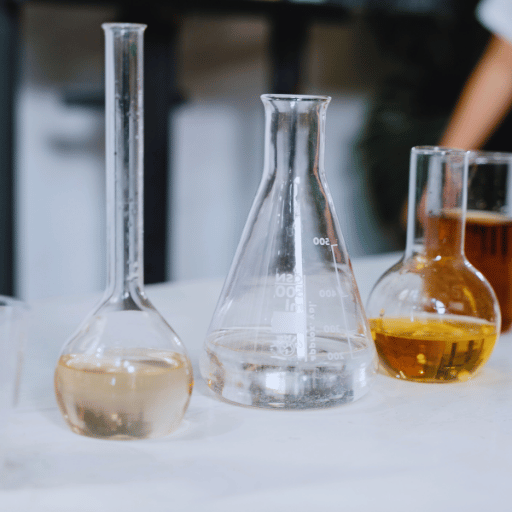
Not all borosilicate glass is equal. The article ASTM E438 amends laboratory glass to types and the boron content affects performance. The classifications relevant to industrial purchase are:

B₂O₃ 12–15%
High-Borate (Type I Class A)
- CTE: 3.3 × 10⁻⁶/K — the “3.3 glass” standard
- Highest chemical durability and thermal shock resistance
- Trade names: SCHOTT DURAN, Corning 7740, BOROFLOAT
- Applications: laboratory beakers, pharmaceutical vials, viewing glasses, borosilicate glass tubing, lighting covers
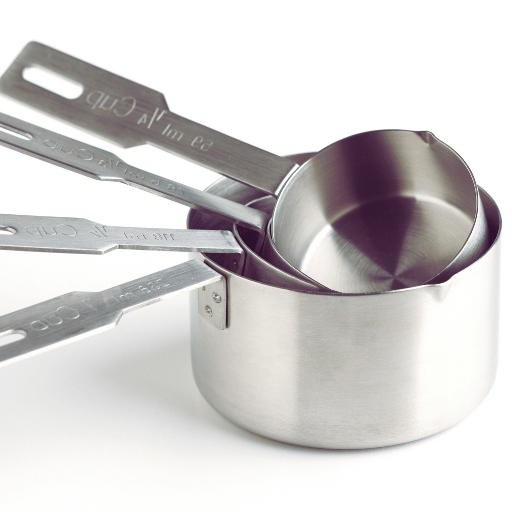
B₂O₃ 7–10%
Standard Borosilicate
- CTE: approximately 4.5–5.0 × 10⁻⁶/K
- Lower boron content reduces cost
- Adequate for moderate heat cycling
- Commonly used in: cookware, bakeware, everyday glassware, measuring cups
SPECIALTY
Pyrex Brand Glass
- European Pyrex: still made from borosilicate (Arc International)
- US modern pyrex: switched to tempered soda-lime glass in 1998
- Today borosilicate compositions are no longer associated with the brand name of pyrex.
- Verificare le scritte! “PYREX” (italico, europe: borosilicate) è glassa a soda-lime, “pyrex” (minusculi, us) no.
Important Notice
Never use normal borosilicate in industrial and technical use, always specify high-borate borosilicate (ASTM E438 Type I Class A, complying with ISO 3585). Ordinary borosilicate will be suitable for consumer use i.e. glassware and the glass cookware, but it will not meet the more exacting tolerances required by laboratory equipment or industrial process glass.
Borosilicate Glass vs. Soda-Lime
Purchasing teams often compare borosilicate glass to soda lime glass. Both are silicate glasses, but they solve different problems. Here is a chart of measured difference in properties, not marketing hype.
Thermal Cycling & Applications
A CTE difference of 3.3 vs 9.0 tells us borosilicate handles temperature swings around 4 better than soda lime. For applications like industrial sight glasses, oven viewing windows, or lighting covers which undergo thermal cycling every day, soda-lime glass will simply fail.
The Tempering Misconception
Soda-lime glass can be tempered to boost impact strength by 4-5, but tempering does nothing to increase its thermal shock resistance. If your application is exposed to heat, borosilicate wins.
| Property | Borosilicate | Soda-Lime |
|---|---|---|
| CTE (×10⁻⁶/K) | 3.3 | 9.0 |
| Thermal Shock | ~160°C | ~37°C |
| Max Temp | 500°C | 250°C |
| Resistance | Class 1 | Class 3 |
| Density (g/cm³) | 2.23 | 2.50 |
| Relative Cost | 3–5× | Baseline |
Industrial Applications of Borosilicate Glass
borosilicate glass is chosen for applications where heat resistance, chemical resistance or optical clarity (usually all three) is required: The following list is ordered in terms of importance to industry, according to purchasing patterns.

Laboratory & Scientific Equipment
Laboratory work is the original use case. borosilicate laboratory glass- beakers, test tubes, laboratory flasks, glass piping, and Erlenmeyer flasks- used to handle repeated autoclaving at 134C and acid exposure without degradation. Made from borosilicate glass. Beakers passes ISO 3585,9ATastm E438.

Lighting & LED Cover Glass
LED modules with high Power and halogens fixtures produce large amount of heat flux into the lens surface. With a max 350 C continuous surface temperature, Green house effect. with optical cover glass can keep >91%transmittance of borosilicate. we make cover glass for outdoor flood lights, stage lighting and even lampshade of head lamp welding assembly that soft glasses turn yellow and crack after few months.

Industrial Touch Screen & Display Cover Glass
For industrial HMI panels, medical monitors, outdoor interactive terminals, the borosilicate cover glass offers thermal stability and good electrical insulation. Chemical strengthened (ion exchange) can supplement surface hardness more then 700 HV, has considerable for highest traffic touch interfaces. Our CNC cut with an accuracy of 0.05 mm on display cover glass to 800 600 mm.

Household Appliance Panels
Oven doors, coffee machine reservoirs, lids for the air fryer and microwave oven turn table plates, all benefit from borosilicates thermal shock resistance. This is the area of contact with borosilicate glass that customers see most and purchase/ use without consciously noticing. It accommodates the temperatures of an oven exceeding 200 C+ and the rapid cooling when the door opens. Used frequently throughout cookware and bakeware, borosilicate glass is dishwasher safe and isn’t naturally attracted to food smells.
Pyrex Borosilicate Glass Manufacturing and Processing
Making glass from borosilicate requires a much hotter furnace and tighter process controls when compared to soda-lime glass products that. Other the induction step, each phase in the U-W factory has its own tolerances which will ultimately affect your end product.
01
Batch Mixing
Quartz sand + borax + soda ash + alumina weighed to ±0.1%
02
Melting
1,648°C in platinum-lined or electric furnace
03
Forming
Float, draw, blow, or press depending on product
04
Annealing
Controlled cooling at 560°C to relieve internal stress
05
Fabrication
CNC cutting, drilling, edge grinding, polishing
06
Surface Treatment
Chemical strengthening, AG/AR/AF coating, silk printing
As shown at 1,648C against approximately 1,000 Celsius; it’s easy see why borosilicate glass feels suffer from the higher melting relative to soda-lime because of special furnace power. On top of that, hotter melting temperatures working times to settle the bubbles (seeds) from the glass fusing.
At SW Glass, it’s our process cabin where we use to know you’ gain the most value. Our process services include:
CNC Precision Cutting & Drilling— tolerances to 0.05mm on difficult geometries
Chemical Tempering (Ion Exchange)—a surface layer of compression leading to impact resistant 3-5 times versus sanowsed machined glass
AG Etching (Anti-Glare)—reduces the surface reflective effects on di.
AR Coating (Anti-Glare)—transmittance increased from 91% to 97% at design wavelengths.
AF Coating (Oleophobic)—a slippery oleophobic surface for screens and LED touches.
Silk-Screen Printing— branding, measurement marks, functional graphics Fired @ 500 Celsius to become permanent.
Is Borosilicate Glass Safe?
“Is borosilicate glass toxic?”has appeared in increase in results throughout forums and consumer-occured searches, and it’s a simple have this answer: borosilicate glass is a safe material in contact with eat, for medical manufactures and scientific examination. The lists are here after the explanation.
No BPA, no lead, no cadmium
Plastic is unneeded with glass; we do not contain any heavy metal; the main components of borosilicate glass, thesilicas, the boron oxide), the aluminium Gizz(bes) and the sodium Gizz(bes), are inert to the post-form producing vessel.
Chemical leach does not have glue
Hydrolytic resistance Class 1 (DIN ISO 719) 1 is for film control with the surface of a glass that is release very few limes in the shared liquids. soda-lime glass at Class 3 releases into 4 dangerous measure higher aluminum and sulfuric many foreign medications prescribe borosilicate 5 as packages in drugs.
FDA/ EU approved
borosilicate glass conforms to all relevant FDA 21 CFR food-contact regulations and EU Regulation (EC) No 1935/2004 for the use of materials intended to come into contact with foodstuffs.
Autoclave & sterilization safe
borosilicate glass of laboratory-grade can be safely autoclaved up to 134C C with no loss of structure or toxicity.
A word of caution
borosilicate glass is not ‘unbreakable’. It will break into sharp-edged shards if broken unlike tempered glass, which breaks into smaller duller granules. Use caution when cleaning up broken borosilicate glass just as you would any glass. In its form as a material, it is undoubtedly one of the most chemically stable and lowest-toxic glassmaking compositions known to modern man.
✅ FDA 21 CFR
✅ EU 1935/2004
✅ ISO 719 Class 1
✅ BPA-Free
✅ Lead-Free
Custom Borosilicate Glass Solutions by SW Glass
SW GLASS (Dongguan Saiwei Glass Co., Ltd) have been working on processing borosilicate glass for industrial clients during the last 10 years. We are capable to do the entire fabrication chain, including raw sheet cutting up to final coated, Tvisthad, but ready for line installation.
Annual Output
1,000,000+ pcs
Thickness Range
0.5–25 mm
CNC Tolerance
±0.05 mm
Max Panel Size
1500 × 1000 mm
Clients Manufacturer of multi-national appliances, European light fitting OEMs and Medical equipment Integrator R&D Our team produces to the manufacture of ISO 9001:2015 and is experienced with CE U.S. and European lighting safety glass spec EN 12150. No matter if 500 custom-cut pieces of borosilicate glass tubing or 50,000 a month hit your manufacturing lines—We can scale our production.
ISO 9001:2015
EN 12150
RoHS Compliant
REACH Compliant


Borosilicate Glass in Action: Project Case Studies
European LED Lighting Manufacturer — Cover Glass
Location: Germany | Timeline: 2024 Q2–Q3 | Volume: 35,000 pcs/month
A German OEM lighting manufacturer needed switchable cover-glass for their outdoor flood-light applications, with a 250C continuous surface temperature rating. were supplied by a previous supplier whose soda-lime glasses were yellowing after only 6 months UV + heat exposure.
Fed high borosilicate glass 4 mm with AR on one side, silk-screened brand markings. Glass with borosilicate did not show surface degradation after 250C operation and winter -20C to power-up thermal cycling. Chemical strengthening increase drop test pass from 60% (annealed) to 97%.
Result: Zero field returns for thermal cracking over 12 months. Transmittance maintained at 93.2% after 5,000-hour accelerated aging test. Impressed by the results, the client expanded the order to include their indoor track lighting line.
Medical Equipment Integrator — HMI Display Panels
Location: South Korea | Timeline: 2024 Q4 | Volume: 8,000 pcs/quarter
A medical device manufacturer asked us to supply a display cover glass for patient monitors, which was to be able to tolerate everyday chemical disinfection with ForGizers and Peracetic acid. The current cover glass was showing surface hazing after three months with the cleaning cycle.
We finished 2.5 mm boroniatorulte panels with AG (anti- glare) etching and AF (anti-fingerprint) coating. Chemical resistance was strong enough to preclude the surface hazing that had ruined soda-lime covers in the past. 4-month post-installation wipe cycle simulations with hospital grade disinfectant without detectable change in the glare or touch sensitivity.
Result: Surface haze reduced from 3.2% to below 0.5% after 6 months of clinical use. Product passed IEC 60601-1 electrical safety testing with the new borosilicate cover. Now, the client specifies borosilicate for all new monitor product lines.
Appliance OEM (SEB Group) — Oven Door Panels
Location: France (production in China) | Timeline: 2023–ongoing | Volume: 20,000+ pcs/month
SEB Group, appliance manufacture in a Fortune Global 500 companies, required the internal oven door panels to withstand the 280 C operating temperature of the convection ovens, but still give a good visual image for the consumer. They also required the silk screen printed safety markings to be durable and not peel or fade after many years of hot working conditions.
Provide 5 mm Muso-mivitorulte panels with high temperature silk printing (fired at 520 C), fine edge polishing (since draw is not a glossy one). Usually every piece inspected three times such as after cut, after printing and after polishing with AQL 1.0 for key defect.
Result: Consistent supply since 2023 with a defect rate below 0.3%. Silk-screen markings showed zero degradation after 2,000 hours of accelerated thermal aging at 300°C. SW Glass is now an approved glass producers on SEB’s qualified vendor list for borosilicate components.
Borosilicate Glass Engineering Tools
Glass Type Comparison Tool
Select 2 or 3 glass types to compare their properties side by side.
Access Comparison ToolBorosilicate Glass Thermal Expansion Calculator
Calculate how much a glass piece will expand or contract with temperature changes.
Access CalculatorFrequently Asked Questions
Is borosilicate glass safe for food and drinks?
Yes is contains no BPA, no lead and no cadmium for you. No chemicals leaches out of it into food/fluid even at elevated temps. Complies with FDA 21 CFR and EU 1935/2004food-contact requirements. Dishwasher-proof.
Why did Pyrex stop using borosilicate glass?
Corning sold the licensing of the pyrex brand to Corelle Brands (previously World Kitchen) in 1998 for the US market, and the new owners switched the manufacturing process from borosilicate to tempered soda-lime glass to minimize costs. soda lime is cheaper to generate and is more resistant to impact drops.However, the EU Pyrex (Arc International) still heats with borosilicate glass. And that’s why modern US Pyrex asks on drops less well but resists thermal shock more poorly than its stable borosilicate ancestor.
What is the maximum temperature for borosilicate glass?
500 C (932 F) for under continual use. Strain point; 515C; annealing point: 560C; softening point: 820C. Many engineers hold the extended weight below 450C to add margin. Our lighting covers are rated at 350 C in continual use to account for hotspots during installation near the LED setup.
What are the disadvantages of borosilicate glass?
Cost is the key factor here, and borosilicate sits 3-5 the co$t of soda-lime glass for same dimensions. In addition, melting temperatures are set higher (around 1,648 C versus 1,000 C for soda lime), resulting in greater energy costs. Its impact resistance, while comparable to tempered soda-lime glass is to be more fragile on impact; a spilled borosilicate beaker willmore than likely crack to bits as opposed to shattering into small pieces like tempered soda-lime glass. Another concern is that it can’t be recycled with standard soda-lime glass waste due to its higher melting point. For most non-thermal or chemical uses, soda lime makes more economic sense.
Can borosilicate glass break?
Yes. Borosilicate glass is resistant to thermal shock up to 160 C without cracking, much better than soda-lime glass (37 C). However, it won’t withstand any kind of hard scratch, and is pretty legendary for being brittle. There is one advantage; becomes more predictable in its glancing impact though: it does not blow up into bits like tempered ones; rather, it showers sharp, but distinctive pieces. For thermal & impact endurance it is best to is use chemical strengthening, which can boost surface compression levels to enable moderate drop & vibration loads.
What is the difference between borosilicate and regular glass?
In addition, normal glass (soda-lime glass) consists of 70% silica, 15% soda (NaO) and 10% lime (CaO). Borosilicate nearly substitutes most soda and lime with 7-13% boron trioxide, which decreases thermal-expansion by 3. This means borosilicate glass can live through sudden temperature swings without cracking, is far more resistant to acids and chemicals, and passes more light in the UV and near IR spectrums. Soda-lime glass is less expensive and stronger when tempered, and is what we use for window, bottle and jar manufacturing.
How can you tell if glass is borosilicate?
Three tests-in-the-field: First inspect it! In laboratory situations, glassware usually has a mark which resembles a “Boro 3.3” or has the DURAN, pyrex (European) or Kimble stamp. Second giving it a light tap will produce a ring of each material, in borosilicate the note will be slightly higher in pitch because of the different elastic modulus. Third and the most reliable test in the field is a polariscope- boron silicate produces very little stress birefringence in comparison to tempered soda-lime glass which has significant colour stress-patterns. As one expects in a manufactering QC situation, a measuring density (soda-lime 2.50 g/cm boro silicate 2.23 g/cm) gives a clear answer.
Is borosilicate glass better than tempered glass?
2 types of ampco for various applications. Use Mumsomivitorulte if the problem is heat cycling—freezer to oven, autoclave runs, lighting enclosures. Use tempered soda-lime if impact protection is the priority—phone screens, shower doors, storefront glass. Tempered hits 4-5 the impact strength but will shatter in below 70 C thermal swing.
What is high borosilicate glass?
High borosilicate glass (also refered to as high-borate borosilicate) has 12-15% boron trioxide (BO) as opposed to 7-10% in regular borosilicate. The high boron content decreases the coefficient of thermal expansion and enhances chemical durability. High borosilicate glass is ASTM E438 Type I Class A as well as meeting ISO 3585 for laboratory apparatus. Typical commercial names include SCHOTT DURAN, Corning 7740, and BOROFLOAT. Laboratory beakers, pharmaceutical vials, high temperature lighting lenses use this material as a standard.