Get in Touch with Saiweiglass


Industry Trusted Quality
Touch Screen Glass Solutions for POS & Self-Service Kiosks
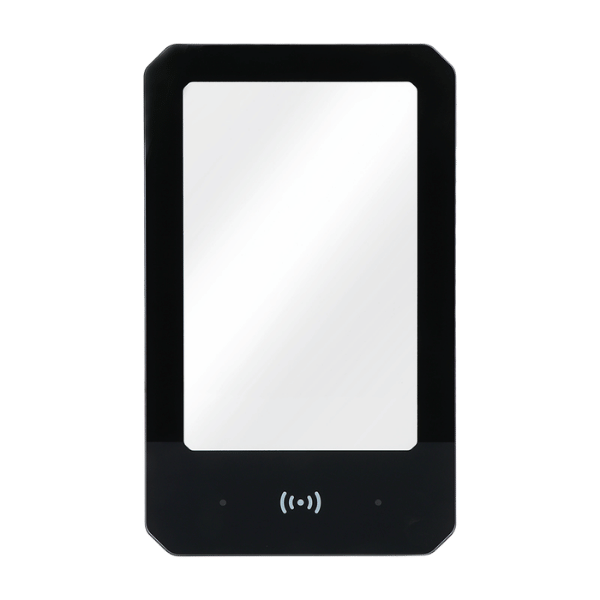
From countertop POS terminals to outdoor ATMs, we produce custom touch screen glass panels that are engineered to perform in the real world. We use projected capacitive technology, silver anti-glare and antimicrobial coatings, precision CNC cutting — all built to match your exact LCD dimensions since 2004.
20+
Years Manufacturing
200+
Global Clients
50+
Countries Served
2000+
Product Models
What Is Touch Screen Glass for POS & Kiosk Systems?
Touch screen glass is the transparent facing that covers an LCD display while conducting touch signals to the sensor layer underneath. For a POS terminal or self service kiosk, this panel has a dual job: it protects the display beneath from impacts and moisture, and conducts the electric signals downward from the customer’s finger to the capacitive grid behind. To end users, the viewing surface is a layer of glass – everything else is behind it.
Industrial Durability Standard
Regular shopping/safety glass does not have the strength or quality assurance to withstand the types of operator contact for which a POS or kiosk monitor requires. Touch screen glass needs to be of sufficient strength to be tempered or chemically hardened. It needs to be cut with millimeter accuracy to fit directly into the device enclosure without gaps. It needs to offer optical qualities at least equivalent to piece of standard optical glass to keep the LCD below easily read by checkout associates. And it needs to be scratch resistant enough to withstand shopping, writing, and pointing with keys for years on end (6H or higher, on the Mohs scale).
PCAP Touch System Mechanics
The mechanics of a modern PCAP (projected capacitive) touch system, the technology adopted for POS and kiosk panels in early 2004, requires a film of glass to be the dielectric between the panel viewer and the capacitive sensor beneath. This sensor has dozens of tiny printed electrodes arranged in an accurate grid pattern across the surface. When you touch with a conductive stylus or your fingertip, the counterfeld grid detects the change. The PCCAP controller processor sends back a two-dimensional coordinate pair to the host computer, milliseconds after the event. In the entire system, the glass panel itself has no moving parts. PCAP touch panels covered with specially-formulated coatings survive just as long in high traffic operations as the screens behind them, and often stay in use years longer.
Engineered Coatings & Features
A functional touch screen glass module has a glass surface for both surface protection and for conduction of signals to the sensor underneath. Coatings add important features for particular deployments. Anti-glare (AG) is necessary in retail environments to disperse reflection from bright overheads. Anti-fingerprint (AF) minimizes visible finger smears from continued use. Anti-reflective (AR) improves sunlight readability. Antimicrobial (AM) inhibits bacteria forming on a touchscreen monitor in high cycle environments. These pads of glass are a carefully-engineered component – not a simple sheet of protection.
Types of Touch Screen Glass Technology
Four touch screen technologies are common in POS and kiosk hardware. They each work differently, and the selection impacts your glass design, sensor implementation, and durability over time. The same projected capacitive touchscreens used in handsets and tablet devices are now widely used in commercial applications – but much larger and with tougher glass. Knowing your options enables procurement to direct the supplier to specify the correct conductive material stack and glass type, rather than simply choosing whatever the previous iteration used.
Projected Capacitive (PCAP)
PCAP encapsulates the vast majority of capacitive touch screens in current commercial builds. A grid of transparent conductive electrodes – usually ITO (indium tin oxide) – is located beneath the coverglass. This sensor grid uses changes in mutual capacitance to detect touch input at each electrode intersection — the same projected capacitive principle that smartphones rely on, scaled up for commercial displays. Modern PCAP panels use mutual capacitance sensing – rather than self-capacitance – to enable multi-touch operation; a true multi-touch system independently scans each electrode crossing, while self-capacitance panels can only detect single touches. The IC-based controller monitors all the grid values, interprets them, then provides the host (PC or monitor) with 10ms-time precision of touch locations. The sensor surface layer is sealed underneath the glass, so insensitivity to spills or surface scratches prevents a reduction in touch accuracy or reporting latency. Most touch screens use PCAP today — it is the dominant multi touch technology for POS touch screen and kiosk touch display applications at virtually every production volume.
Resistive
Resistive touch is an older technology based on two flexible layers of conductive material separated by spacers. Pressing down on the top layer completes a circuit at that point. Resistive is compatible with any object – glove hands, pens, even fingernails – however it only supports single-point detection, the top layer begins to wear from the continual contact, and image fidelity from the extra-glass stack degrades over time. A high-worker flow POS touch screen conducting 500+ interactions per day generally exposes surface damage within 18 months.
Infrared (IR)
IR systems use cameras in a bezel around the display to view a grid of light emitted from the panel edge. Any break in the grid indicates a touch. No cover glass coating is necessary, making IR advantageous in very large panels – over 40″. However, the light frame remains physical depth on large set-ups, surface dust or water can cause false triggers.
Surface Acoustic Wave (SAW)
SAW relies on ultrasonic wave transmission across the front panel surface. Touches absorb the wave energy, which is then sent back to the receiver to identify the point. SAW offers excellent image fidelity and the support for stylus operation, but water droplets and surface contamination are falsely recognized as touches, a terrible hazard in outdoor applications.
| Feature | PCAP (Recommended) | Resistive | Infrared | SAW |
|---|---|---|---|---|
| Touch accuracy | Sub-mm (±0.5mm) | ±1–2mm | ±1mm | ±1mm |
| Multi-touch support | Up to 40 touch points | Single touch | Multi-touch | Single touch |
| Durability | Excellent — no wear surface | Moderate — surface wears | Good | Moderate |
| Glove compatibility | Yes (firmware-tunable) | Yes (any object) | Yes | Stylus/firm object |
| Cost | Moderate to high | Low | Moderate | Moderate |
| Best for | POS, kiosk, ATM, payment terminal | Low-volume legacy devices | Large-format displays | Controlled indoor environments |
Glass Solutions for POS Terminals & Payment Devices
A POS point of sale screen sits on a counter all day. It receives hundreds of customer touches, a an aggressive spray of cleaning solution, a card edge contact, and the occasional inadvertent contact with a shopping bag handle. How the glass is specified determines whether screens only last one year, or four, and how frequently our maintenance crews are replacing panels, or performing other, more productive tasks.
Size Range and Cutting Precision
The majority of retail shop counter top POS terminals use screen formats from 10″ to 15.6″. Payment terminal displays for customer facing applications are generally in the 4.3″ to 7″ range. Press-fit automated manufacturing CNC equipment can cut screens sizes from 3.5″ up to 65″ with tolerances of 0.1mm – so whether you want a standard size (10.1, 13.3) or a non-standard form-factor for a custom payment terminal chassis, we cut from your DXF drawings. We also machine the following edge profiles: flat, beveled, chamfered. Some integrators ask about acrylic as an alternative — it is lighter, but it scratches easily and yellows under UV, making it unsuitable for scratch-resistant POS installation where optical performance matters over a 3-5 year service life.
Anti-Glare for Retail Lighting
Retail store ceiling lighting utilizes a mixture of fluorescent and/or LED array lighting. These sources either shine directly into a glossy POS display, or reflect off it to wash out the display area. AG (anti-glare) coating employs a number of controlled acid etch patterns to defuse this reflection, reducing directed reflectance from a range of 4-8% down below 0.5%. The majority of kiosk integrators find that this alone handles 90% of ambient light reflectivity issues, and AR (anti-reflective) coating is only required for displays which are exposed to direct sunlight. For indoor POS terminal display screens, AG coating is the lowest cost and most effective solution.
Antimicrobial Coating for High-Touch Surfaces
Touch screen monitors that are used in retail establishments, (supermarkets, fast food restaurants, etc.) endure many hands per hour of operation. Silver ion (AM) coating inhibit bacteria growth by between 91% and 99.9%, maintaining health standards between cleaning cycles, by preventing pathogen transfer without altering the visual or tactile experience. Antimicrobial touch screen coatings add an additional 15-20% to unit cost. For back office applications, this is an unnecessary precaution; for high customer traffic applications like restaurants and grocery stores it pays for itself in reduced cleaning costs, shorter training time, and fewer verification recordings.
Edge-to-Edge (Bezel-Free) Design
Bezel-free design POS panels require the glass to be bonded flush with the outside edge of the chassis. They are silk-screened with halftone (or full tone) Pantone colors directly onto the glass surface, eliminating bezel frames, and resulting in ultra-thin devices. This method guards against light ingress, which is one of the most common causes of contrast degradation at high network screen-to-lit environment brightness levels, which is when indeed retail POS displays need to look their sharpest.
EMI Shielding Compatibility
With the proximity of NFC and contactless card reader technology, and barcode scanner electronics, EMI shielding by way of a thin layer of ITO (Indium Tin Oxide) deposited onto the glass, is necessary to prevent RF energy backscatter from interrupting touch detection. This often has to be added in a retrofit application, after the touch screen monitor glass has already been sourced without an EMI layer.
Touch Screen Glass for Self-Service Kiosks & ATMs
Kiosk & ATM glass see environments that would rapidly kill a standard POS panel. Public facing unsupervised kiosk, sometimes outdoors – the glass must withstand impact, temperature swings, UV exposure, and the occasional malice damage situation. Self service kiosk screen specification are even more demanding than countertop POS type installations and the glass choice shows it.
Display Sizes for Kiosks and ATMs
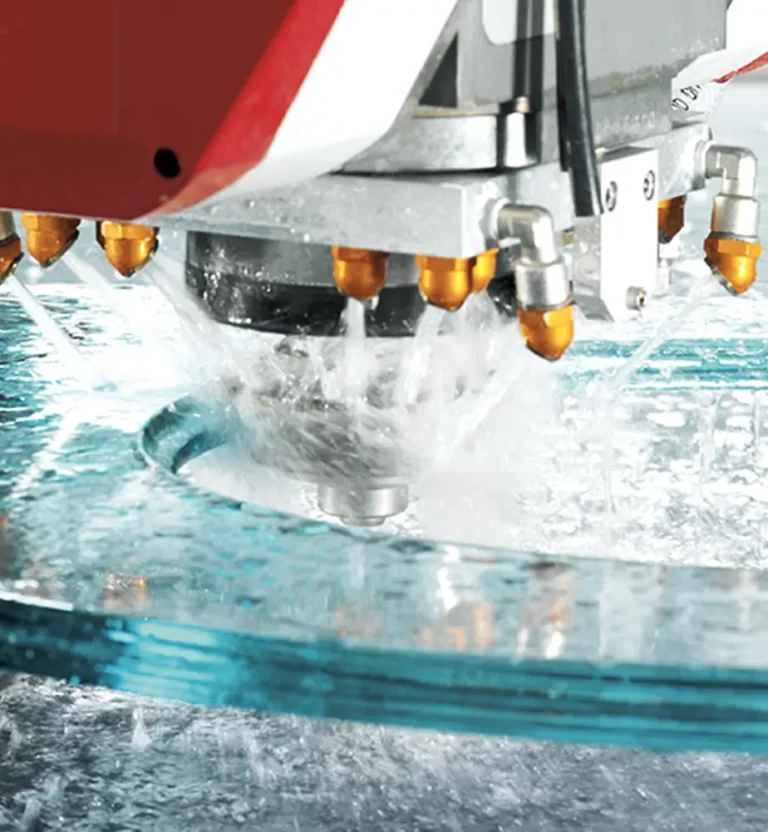
Self service kiosks run 15″-32″ open cell panels. Main interactive screens in airport check-in, and hotel self registration kiosks lean towards 17″ to 21.5″. ATM main panel primarily 15″ to 17″, with secondary customer facing 4.3″ to 7″. We maintain inventory and produce cut-to-size kiosks and ATMs in all standard dimensions in this range; custom contours cut with our CNC water jet as required for curved or otherwise non-rectilinear enclosure designs.
Vandal-Proof Toughened Glass
Public kiosks in transportation centers and retail plazas face vigilant impact from time to time. IK07 rating requires panels to survive a 2 joule impact; IK08 a 5 joule impact. We achieve the latter with 3mm chemically or thermally toughened glass paired with précised controlled fragmentation behavior. When broken in conditions specified by IK rating, the toughened glass does not large shards, but small blunt fragments that pose less risk of abrasions to nearby riders, shoppers, and kiosk operators. ATM faceplate glass specified in most banking programs is IK08 standard.
Outdoor Readability and AR Coating
Outdoor kiosk screen appearance fails first at the display surface. Ordinary soda lime glass with no treatment angles 8-12% of incident light; the LCD backlight, even at 1,000 nits, remains unreadable in direct sunlight. AR coating on top of the optics reduces reflection below 0.5%. We combine the AR solution with 1,000 nits backlight specification recommendation to OEM suppliers – the glass improves visibility; the LCD is the technical limit.
Wide Temperature Range Certification
Outdoor ready kiosk monitor performance waxes and wanes with ambient temperature ranges from tropic 50+C to continental frost -15C to +65C. Ordinary glass adhesives and coatings fall out of specification from 10C to +60C. Our outdoor rated kiosk glass is glued with high Tg optical adhesives, and coated with thermally and chemically stable coatings specified from 20C to +70C as standard. Aluminosilicate glass expands much less than soda lime, eliminating coating delamination issues we have corrected for three separate users of soda lime outdoor kiosk glass in the Middle East.
IP65 Sealing Compatibility
IP65-rated kiosks require glass to remain sealed against dust and water ingress when it is screened off. We precision polish the glass edge to a flat profile that mates with silicone gasket to achieve IP65 sealing. Edge-bonding recommendations are issued to the enclosure fabricator to maintain IP65 at the glass panel perimeter. The water-proofing of outdoor kiosk water resistant touchscreen only works if water cannot reach the switches, sensors, or other functional features it’s mounted behind.
Key Properties & Technical Specifications
All of our shipped glass panels are configured to a spec sheet associated with the customer’s part number. Below are the general specs that we standardize on for our entire POS & kiosk glass lines. Nearly all of the parameters can be manufactured anywhere within the limits during the DFM review. We provide full-range customization of thickness, shape, coating stack, and silk-screen printing… a free-of-charge DFM review is included with any qualifed program.
| Property | Specification |
|---|---|
| Glass Type | Soda-lime, Aluminosilicate (Dragontrail / Gorilla equivalent), Borosilicate |
| Thickness Options | 0.55mm, 0.7mm, 1.1mm, 1.8mm, 2.0mm, 3.0mm |
| Surface Hardness | 6H–9H (Mohs scale) |
| Light Transmittance | ≥92% (with AR coating applied) |
| Touch Points | Up to 40 simultaneous (PCAP) |
| Response Time | <10ms |
| Operating Temperature | −20°C to +70°C standard; −30°C cold-start option |
| Coatings Available | AF (anti-fingerprint), AG (anti-glare), AR (anti-reflective), AM (antimicrobial) |
| Surface Treatment | Chemical etching, silk-screen printing, CNC edge grinding, chamfering, polishing |
| Electrode Material | Indium tin oxide (ITO), vacuum sputtered deposition |
| Size Range | 3.5″ to 65″ (custom sizes manufactured to drawing) |
| Shape | Rectangle, circular, custom contour (CNC water jet cutting) |
| Bonding Method | OCA (optical clear adhesive) laminate or air-gap |
| ESD Protection | IEC 61000-4-2 Level 4 (±15kV contact, ±8kV air discharge) |
| Impact Rating | IK07 standard (2J); IK08 available (5J) at 3mm tempered |
| UV Resistance | UV-blocking interlayer available for outdoor LCD protection |
Response time below 10ms is critical for signature capture terminals and PIN entry screens, where the user’s handwriting or input must keep up with the display output in real time without any delays. For menu-selection displays, 15ms is fine – specifying 10ms when 15ms will do just adds to the cost of the controller IC selection. We identify this trade-off during application review and help the user to choose the right performance tier — whether the glass screens go into a single countertop terminal or a fleet of LCDs in kiosk housing across multiple locations.
Anti glare touch screen glass and antimicrobial touch screen coatings can be applied together in one coating deposition run in our facility. We also provide dual AG+AM coatings for all touch-enabled display panels or as cover glass for LCD panels that will be installed where solar UV degradation of the LCD backlight would be an issue(eg: adjacent windows in a food court or theme park seating area.)
Custom Touch Screen Glass Manufacturing Process
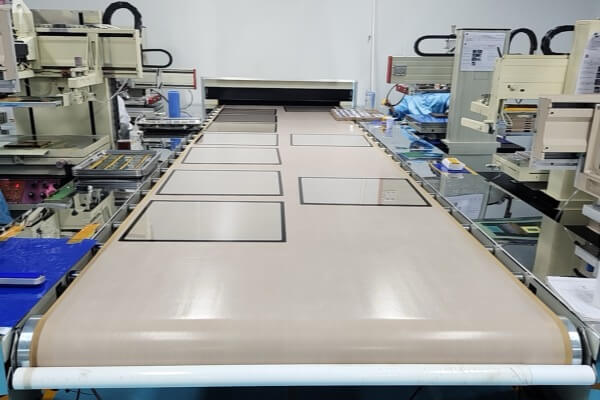
We have been running manufacturing lines for touch screen glass manufacturer operations consistently since 2004. Our six-step process below applies to any order – whether 100 pieces of standard POS glass or 50,000 pieces of customized kiosk panels for a multinational program. Process consistency lets us hold tight tolerances at volume and reliably ship to same spec not only on one-time orders, but on repeat orders, sometimes years later.
01
Glass Cutting — CNC Precision Cutting
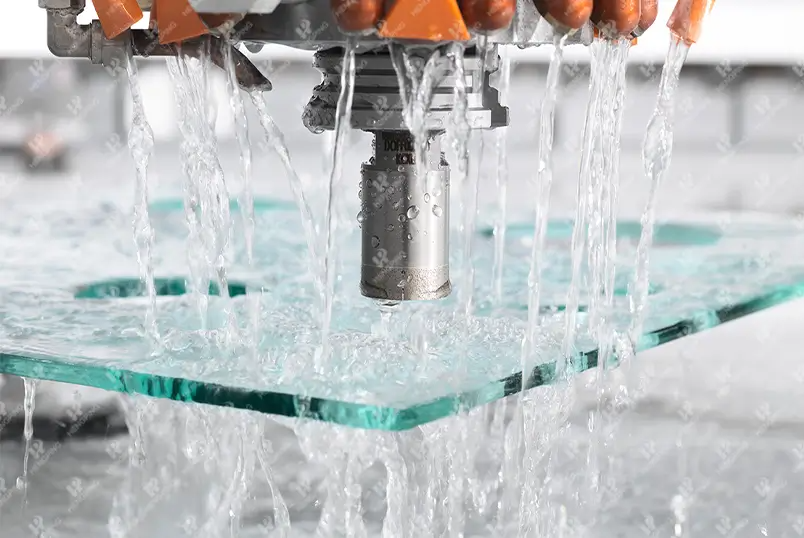
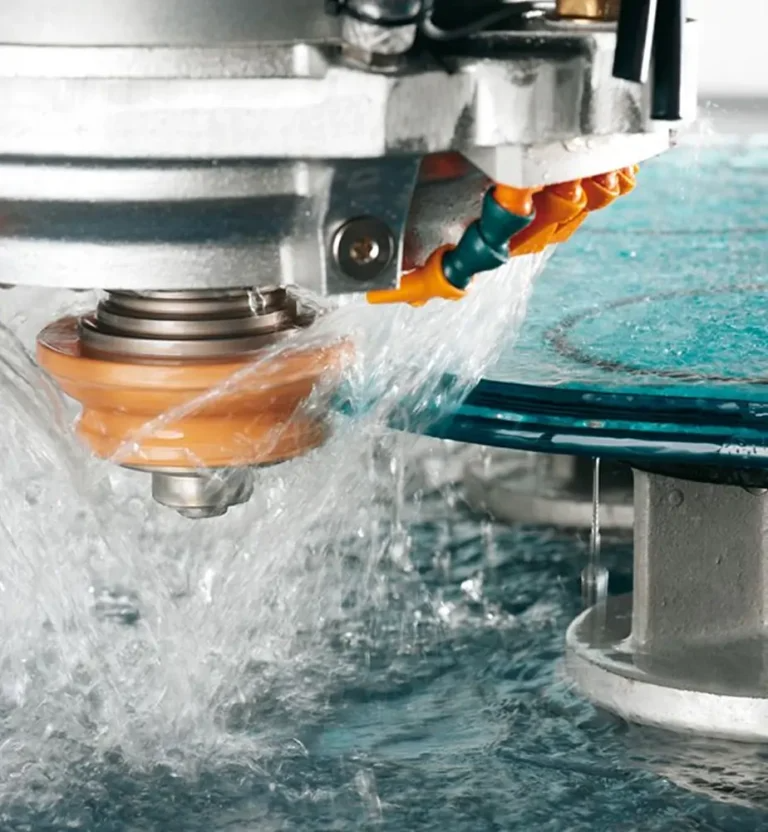
Raw glass sheets are fed into CNC scribing machines that are programmed from the customer’s DXF file. Cutting tolerance is 0.1mm for all straight dimensions. Where irregular holes or cutouts are necessary, a CNC water jet cutter handles the outline geometry without micro-cracking from the edges we get with a scribe wheel in traditional glass shaping. Every cut part is measured to fit the specifications prior to profiling.
02
Edge Processing — Grinding, Polishing, Chamfering
Edges on raw-cut glass contain micro-cracks that are stress intensifiers under the bending load while assembly. Diamond wheel edge grinding eliminates the damage layer and crafts the edge profile –flat, beveled, or chamfered, dependant on the customer drawing. Polishing reduces edge roughness below Ra 0.2m, required to seating with IP65 gaskets without gaps or leaks. This step also lessens the chance of chipping in device assembly.
03
Strengthening — Chemical Tempering
The glass is placed in a pool of molten potassium nitrate at 430 dc. Sodium ions migrate out of the surface and are replaced by larger potassium ions causing a state of surface compression. At 1.1mm, the cover glass reaches a surface compressive stress in excess of 650 MPa with a case depth of 30-50m way greater in strength compared to thermal tempering at this thickness. Aluminosilicate glass attains surface compressive stress in excess of 800 MPa and this is the reason it is the standard minimum specification vandal exposed kiosk panel and outdoor ATM glass.
04
Surface Treatment — Functional Coatings
AG coating is applied by controlled acid etching which results in a micro-rough surface on the glass which diffuses specular reflection. AR coating creates a strong destructive interference of reflected light through the use of multi-layer thin-film coating deposition using alternating SiO2/TiO2 stacks. AF coating is applied with a fluoropolymer coating through vacuum deposition. AM coating uses silver ion doping of the glass surface. QC acceptance tests defined for each are: AG using a gloss meter, AR using a spectrophotometer, AM using the JIS Z 2801 bacterial inhibition test.
05
Printing — Silk-Screen and Digital Printing
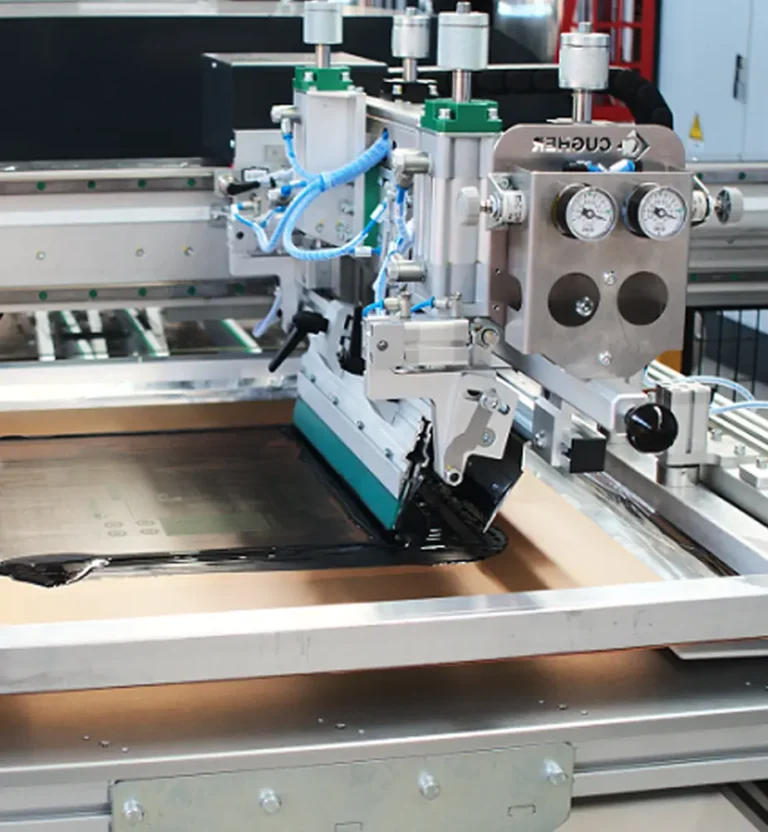
Screen printing and digital printing covers up opaque borders, logos, button markings and regulation markings in ceramic ink onto the glass. A fired temperature of 550-600C causes the ceramic ink to fuse into the glass surface film. Unlike UV-curable ink, this ceramic bond won’t peel or chip at edges — it fuses into the glass surface. Registration accuracy is 0.15mm from datum.
06
Quality Inspection — 100% Optical and Functional Testing
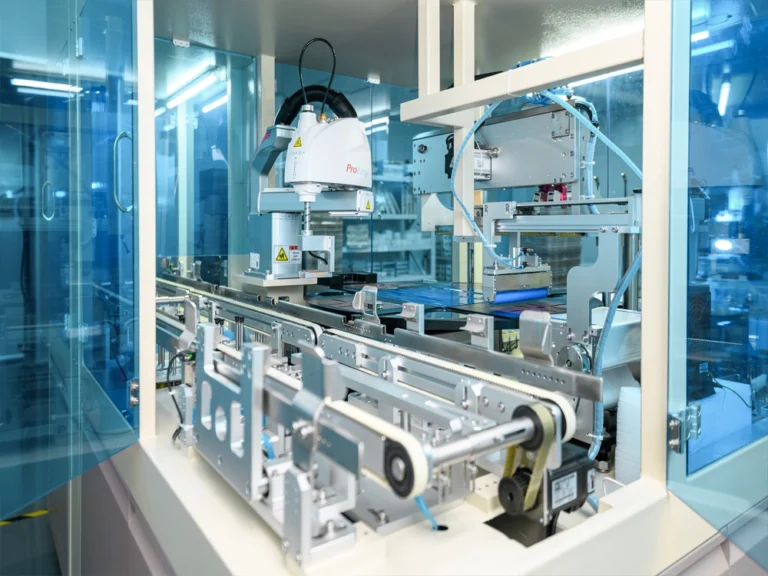
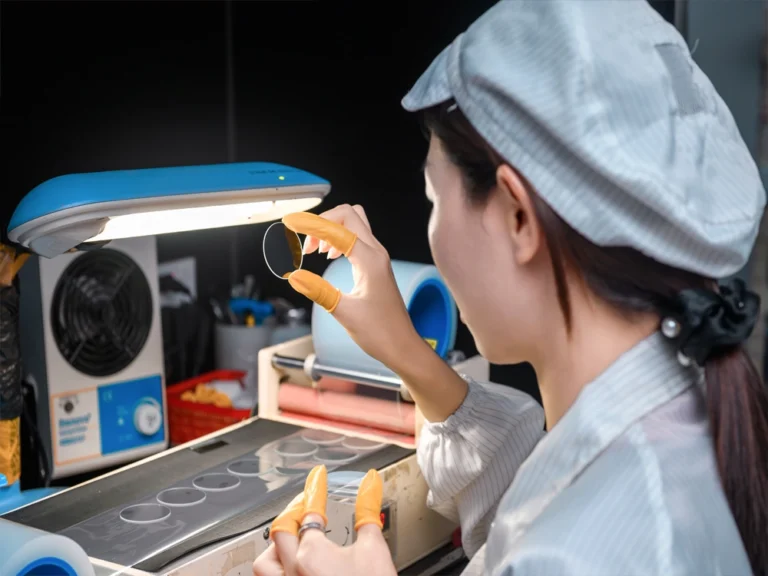
All units are inspected through automated optical inspection (AOI) for bubbles, inclusions, scratches, edge chips, paint defects. Plated Capacitive touch (PCAP) sensor panels are subjected to functional touch testing on calibration points throughout the full touch grid to check for response consistency as well as dead spots. Dimensional testing is performed on a sample at 10 % of each batch utilizing CMM. If a unit is found to be out of tolerance, it is discarded and recycled – we do not recycle defective glass for shipment.
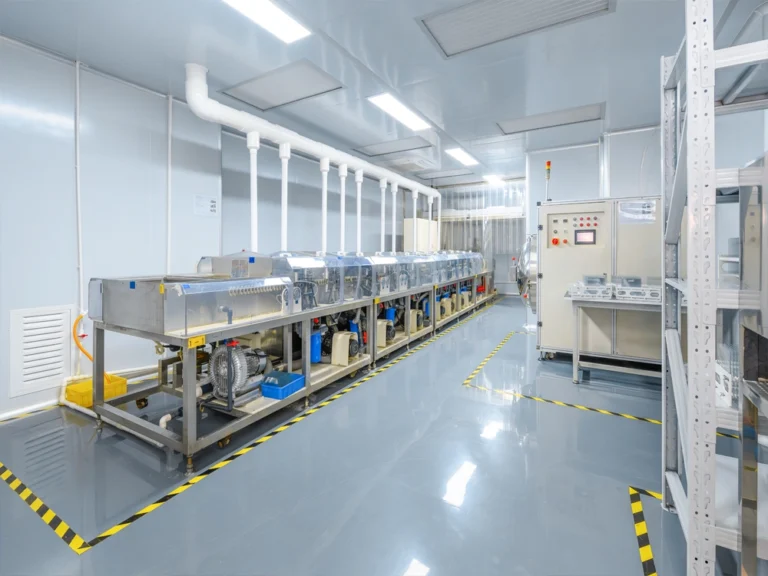
The state of the art in this spec demands capital-intensive equipment: CNC water jet cutters, sputtering chambers for ITO and coating deposition, chemically tempering furnaces with tight temperature control, etc. For that reason, the quality of glass processing cannot be reproduced by assemblers, since they view glass as just another commodity component. What separates a panel lasting three years in the field versus one undergoing delamination at month seven. The answer is virtually unknowable in the final product, but is determined in steps two and three: edge quality, depth of length and width temper, etc.
How does that manufacturing precision translate into real-world deployment outcomes? The following case studies show what happens when glass is specified correctly from the start.
Industry Applications & Case Studies
Here are three of the projects from our deployment portfolio. They represent three different types of interface glass selection challenge in POS and kiosks. None of them were solved by the first specification we supplied—that’s part of what our engineering review process is for.
Quick-Service Restaurant Chain, Southeast Asia
The challenge
Servicing a 500-outlet QUICK-SERVICE restaurant chain, self-service, countertop POS updates: worn resistive touch panels were failing because of surface wear. Screens were failing 4.7% per month, resulting in excessive and unnecessary service costs. Management demanded an antic-glare solution even under bright ceiling spotlights, and antimicrobial protection, for their food handling environment. Previously, their supplier purchased these as two distinct line items, complicating the process.
Our solution
10.1″ PCAP cover glass specified with 1.1mm chemically tempered soda-lime AG+AM dual coat integral to a single deposition process. AG coating cut surface reflectance to zero compared with 0.4% in the previous specification, eliminating the ‘glare’ issue documented in field repair operator reports. Silver ion AM coating delivered 99.8% effective bacteria kill-rate to the primary touch surface when tested to JIS Z 2801.
Results
In the 18 months following deployment into the field, the PCC reported a 40% reduction in screen-related service call issues. Actual service body-panel failure rate was <0.5% for the entire 3 year original warranty period.
‘Our annual budget for screen replacements was 2%. In practice the actual was 0.4%. That dual AG/AM glass solved two problems we were treating as entirely separate procurement projects.’
European Bank ATM Refresh Program
In a major European retail banking group’s ATM network, we replaced the display panels in all 1200 units as part of a security and serviceability upgrade. Previously, the glass spec supplier was providing 2.5mm thick float annealed soda-lime panels with no certification documented for scratch resist, impact tolerances or thermal cycling.
Manufacturers supplied 15″ vandal-proof glass at 3mm chemically tempered for impact strength and chemist verified PC version-verified AR+AF coating, operating range specified from -30C to +70C to match original product spec and cover northern European branch locations. Price was 22% below previous spec supplier for equal order volume.
1,200
ATM units
99.7%
Uptime 18 months
22%
Cost reduction
IK08
Impact rating
Average uptime 99.7% relates only to glass-related desktop faults – breakage, delamination, coating deterioration. Zero panels were returned with faults to the original server. Three panels were replaced during the 18 month period of the study for vandalism damage outside the impact test spec IK8 levels, at that one branch site. Enclosure redesign rather than specification change was recommended.
Airport Self-Check-In Kiosks, Middle East
The challenge
An operator’s self-check-in terminals were installed with normal two-way soda-lime glass and internal AG coated anti-glare layers. Within 5 months 23% of panels exhibited excessive screenshot image distortion, coating delamination, and propagating micro-fracture growth near mounting holes. Summer ambient temperatures in terminal topped out at 45C with direct solar glare at specific hours of the day.
Root cause research
Standard float soda-lime has a thermal expansion coefficient of 8.5×10⁻⁶/C. 45C ambient + solar load + terminal internal air temperature of 23C put surface temperature at 68 C – left the working window of the existing coating system. AG coating applied to standard soda-lime float substrate only chemically tempered to 1.8mm, uneven residual stress amplified warping under sustained thermal load.
Implementation & results
New panels used aluminosilicate ceramic manufacturer (Dragontrail) glass at 2mm chemically tempered to 820 MPa surface compression. AR+AG dual layer coating was reformulated with a higher thermal transition temperature binder above 80C surface temperature. An interlayer UV-blocking UV absorber was added to prevent solar UV photons penetrating through the terminal skylights from degrading the optical adhesive used in lamination.
Zero screen-related field failures in all 80 replacement panels over 14 months operation. Customer throughput scores at those units were in the high 90s pre and post the failure period.
Quality Certifications & Compliance Standards
Commercial POS and kiosk programs are run in a heavily regulated procurement environment, with standards like the following requiring commercial hardware vendors to be certified against quality system, material safety, EMC performance, and product safety issues. The standards listed below demonstrate Saiwei Glass’s ongoing active certification status in compliance issues raised by all. Audit records are available on request. For our clients, these certifications translate directly into quality and reliability guarantees that hold up under procurement audits.
ISO
9001
ISO 9001:2015 — Quality Management System
The scope of our QMS emphasizes the entire process from raw receiving to final shipping. Third-party audit in a recognized certification body every year. For POS and kiosk customers, ISO 9001 specifically demonstrates process compliance is independently monitored and not self-reported.
ISO
14001
ISO 14001:2015 — Environmental Management
The chemical tempering and coatings processes creates an weblike byproduct of potassium nitrate and complex chemistry flows that must be managed. Certification in ISO 14001 program indicates our real world reduction goals are documented and active - essential to EU and Japanese procurement programs.
SGS
SGS Testing & Certification
SGS tests our product against material specifications and performance benchmarks an independent verification trail for POS and kiosk buyers who are unable to visit the manufacturer, and is often required by banks and retailers for corporate policy reasons.
RoHS
RoHS Directive 2011/65/EU — Hazardous Substances
All our glass and coating products adhere to the existing EU restrictions of substances banned from electronics in RoHS compliant products. This is mandatory for any POS or kiosk concept to be introduced into the European Union and United Kingdom markets. We include RoHS documentation with each shipped batch.
REACH
REACH Regulation (EC) No 1907/2006
REACH covers chemical materials used in our new coatings and optical adhesives. We keep a current declaration of all approved chemicals or SVHC for inclusion in bill of materials and downstream chemical transparency reporting.
FCC
Pt15
FCC Part 15 — EMC Compliance
FCC Part 15 deals with electromagnetic emissions from our ITO-coated PCAP panel products. This is a requirement for POS and kiosk products to be sold within Canada and the United States. Manufacturing parameters of deposition are kept within the FCC acceptable sheet resistance range that meet emissions without added EMI shields.
CE
CE Marking — EU Product Compliance
CE marking signifies our active capacitive touchscreen now meet EU standards for health and safety and environmental management under the proposed Low Voltage Directive and EMC Directive. For any commercial hardware introduced into European free-trade systems, CE marking is a minimum requirement.
IEC
61k4
IEC 61000-4-2 — ESD Protection
Despite efforts to eliminate contaminants, ATM and outdoor kiosk glass will generate electrostatic charge in low-humidity environments. IEC 61000-4-2 certification Level 4 tests confirm our screens pass the required contact and air discharge voltages without functional decrease - a requirement for maintenance of position payment transaction security.
UL /
IEC
UL 60950-1 / IEC 62368-1 — Product Safety
Product safety for information technology and telecommunications systems. Our PCAP touch panels meet the needed specifications for incorporation into compliant finished commercial products - required for deploying North American and European commercial electronics through regulatedretail and banking equipment platforms.
Quality Assurance | Trusted POS & Kiosk glass Manufacturer in China
After-Sales Support & Engineering Services
Dedicated project engineers are assigned to every account that passes the sample qualification stage. This engineer has familiarity with your part numbers, your acceptance tests, your project schedule, and your end-use environment - they are the single contact point for technical questions, process notification, and shipping inquiries. Our approach is not a call-center model.
72h
Sample delivery for standard specs
24h
Technical support response time
2 yr
Standard warranty on all panels
5 yr
Extended warranty available
Free
DFM review for new programs
48h
Replacement ship time (safety stock)
The standard warranty period of 2 years covers manufacturing defect, coating delamination, and dimensional non-conformance. An extended warranty period of 5 years is available for high-volume accounts and includes a guarantee of field failure rate: if the failure rate exceeds 0.5% on an annual basis within the warranty window, we reimburse for replacement panels at no charge. For active customer deployment of more than 1,000 units, our replacement glass program maintains safety stock at our warehouse against an agreed failure budget, ensuring expedited replacement within 48 hours of a validated claim rather than waiting on a new production batch.
Our industry solutions team additionally provides mechanical integration review services early in your design process. If your kiosk or POS terminal design is still in CAD, we can advise on glass mounting, sealing strategy, and thermal considerations prior to tooling - thus avoiding costly redesign after first article production.
Glass Durability ROI Calculator
Compare 5-year total cost of ownership: standard panels vs. premium engineered touch screen glass
Your Deployment Parameters
Standard Glass — 5-Year TCO
$0
0 replacements/yr at 0% failure rate
Premium Engineered Glass — 5-Year TCO
$0
0 replacements/yr at 0% failure rate
0
Break-even point (months)
0
Fewer service calls per year
0x
Panel lifespan multiplier
Year-by-Year Cumulative Cost Comparison
Standard Glass
Premium Glass
Based on real deployment data: A 500-unit QSR chain achieved <0.5% annual panel failure rate with Saiwei chemically strengthened glass, down from 4.7% with their previous supplier — reducing annual service dispatches by 85% and saving over $30,000 per year in field replacement costs alone.
Ready to Upgrade Your POS & Kiosk Displays?
Key in your glass specs and operation environment. Our engineers will review that information and respond with a recommended guideline specification within 24 hours--not a product brochure, not a chatbot.
Contact Our Engineers Today