Get in Touch with Saiweiglass


★★★★★
Est. 2004 • Trusted Globally
Touch Display Modules
Touchscreen LCD TFT Display Modules — Custom Touch Screen Solutions for Every Interface
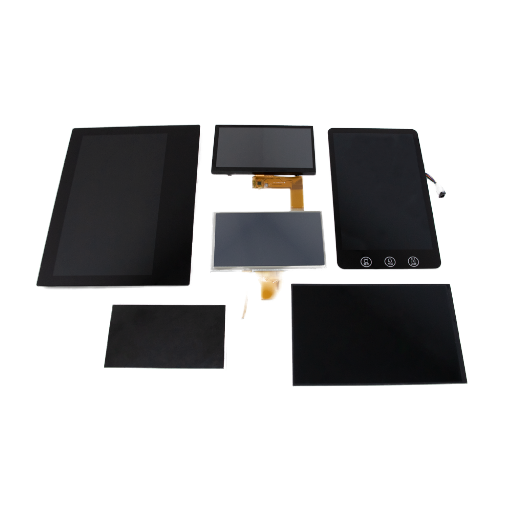
SWLCD builds touchscreen display modules from 2.8″ to 15.6″ with capacitive and resistive touch panels, SPI and I2C interfaces, and IPS technology for wide viewing. Over 2,000 display configurations shipped to 50+ countries since 2004.
Request a Quote
Certified Quality (ISO 9001 / RoHS / CE)
2,000+
Display Configurations
About the Manufacturer
SWLCD — Touch Display Modules Manufacturer & Supplier
We’ve been at this since 2004. Started in a small workshop in the Greater Bay Area, now shipping to over 50 countries.
19+
Years in Business
2,000+
Display Models
50+
Countries Served
ISO 9001
Certified QMS
SWLCD is a Shenzhen-based high-tech enterprise that designs and manufactures LCD and touch display modules for embedded applications across dozens of industries. Here’s the short version of our story: we set up shop in the Guangdong-Hong Kong-Macao Greater Bay Area back in 2004 — right in the middle of the world’s fastest electronics supply chain. Nineteen years later, we’ve developed more than 2,000 standard and non-standard lcd displays, and roughly 200 merchants across 50+ countries carry our products. In China alone, about 1,500 end customers in 30+ provinces run SWLCD screens in their devices.
The Journey to Precision
Not going to pretend we got here without bumps. Early on, we were a small team doing mostly character LCDs and monochrome panels. The shift to full-color tft lcd and capacitive touch happened around 2012, and honestly it took us a couple of years to get the optical bonding right. But that struggle is part of why our process is solid now — we learned the hard way which adhesive formulations survive 85°C storage and which ones delaminate after six months.
Flexibility & Follow-Through
What keeps customers coming back (many have been with us 10+ years) is the mix of flexibility and follow-through. We handle everything from a 2.8 inch lcd touch screen prototype for a wearable startup to a 2,000-piece run of 10.1″ industrial HMI panels with chemically strengthened cover glass and anti-glare treatment. And yes — we actually pick up the phone when something goes sideways during integration. You’d be surprised how rare that is in this industry.
Product Range
Touchscreen Display Module — From Compact to Large-Format
We keep a broad catalog so you don’t have to piece together display, touch panel, and controller from three different vendors. One module, one supplier.
2.8″ – 3.5″ | 240×320
Compact TFT Touch Modules
Small-form-factor lcd touch screen modules for handheld tools, wearables, and IoT endpoints. SPI interface standard, optional I2C touch controller. Capacitive or resistive touch panel. Works well with ESP32 and similar microcontroller boards.
4.3″ – 5.0″ | 480×272 / 800×480
Mid-Range Display Modules
The workhorse size for HMI dashboards, automation panels, and POS terminals. Available with IPS for wide viewing angles, RGB parallel interface for fast refresh, plus optional UART control. Popular in industrial control systems and kiosk builds.
7.0″ – 10.1″ | 1024×600 / 1280×800
Large-Format Touchscreen Modules
High-resolution tft lcd displays for medical devices, vehicle infotainment, and smart-home hubs. LVDS or MIPI DSI interface, optical bonding available, multi-touch capacitive panels. IPS technology is standard on 7″+ sizes.
PCAP | Up to 10-Point
Capacitive Touch Panels
Projected capacitive touch with multi-touch gesture support, high optical clarity, and lcd capacitive touch bonding options. Ideal for consumer electronics and medical-grade user interface designs where responsiveness matters.
4/5-Wire | Pressure-Based
Resistive Touch Panels
Resistive touch panel options for gloved operation, stylus input, and wet environments. Proven reliability in factory floors, outdoor kiosks, and field instruments. Cost-effective for projects that don’t need gesture control.
OLED | AMOLED
OLED Display Modules
High-contrast oled panels for wearables, instrumentation, and applications where deep blacks and thin form factor are critical. Available in small sizes (0.96″ to 2.4″) with SPI or I2C interfaces.
Need a Custom Configuration?
Modified interfaces, brightness levels, cover glass, optical bonding — we handle it all. Tell us what you need.
Request a Quote
Touch Display Module Selector
Answer 4 quick questions and we’ll match you with the right SWLCD module for your project.
Technical Data
Touch Display Module Specifications & Capacity
Real numbers, not marketing fluff. Here’s what our standard modules actually deliver.
| Size | Resolution | Panel Type | Touch | Interface | Brightness | Temp Range |
|---|---|---|---|---|---|---|
| 2.8″ | 240×320 | TFT | Capacitive / Resistive | SPI | 300 cd/m² | -20°C to +70°C |
| 3.5″ | 320×480 | TFT IPS | Capacitive | SPI / RGB | 400 cd/m² | -20°C to +70°C |
| 4.3″ | 480×272 | TFT | Capacitive / Resistive | RGB / SPI | 500 cd/m² | -20°C to +70°C |
| 5.0″ | 800×480 | TFT IPS | Capacitive | RGB / MIPI | 500 cd/m² | -30°C to +80°C |
| 7.0″ | 1024×600 | IPS | Capacitive (PCAP) | LVDS / RGB | 700 cd/m² | -30°C to +80°C |
| 10.1″ | 1280×800 | IPS | Capacitive (PCAP) | LVDS / MIPI DSI | 800 cd/m² | -30°C to +85°C |
| 15.6″ | 1920×1080 | IPS | Capacitive (PCAP) | eDP / LVDS | 1000 cd/m² | -20°C to +70°C |
Environmental Capability
A few notes worth flagging. The brightness figures above are for standard-backlight modules. We stock high-brightness variants (1,000+ cd/m²) for sunlight-readable applications — outdoor kiosks, marine panels, that sort of thing. Temperature range can be extended to −40°C to +85°C on select models with industrial-grade LCD cells, but you’ll want to validate with a sample first because the response time at −40 is… not great. It works, but don’t expect snappy animations at that extreme.
Touch & Integration
On the touch side: our capacitive controllers (GT911, FT5x06 family, CST328) support up to 10-point multi-touch, and the I2C report rate typically sits around 100Hz. The resistive option uses 4-wire analog with a dedicated ADC controller. If you need a specific SPI interface configuration or custom FPC pinout, that’s a standard modification — no NRE for pin-swap changes on orders above 1K pieces.
B2B & OEM Services
Wholesale Touch Screen Module Supplier — OEM & ODM
Whether you need 50 samples or 50,000 production units, we scale with you.
OEM & ODM Capabilities
Build to Your Exact Spec
You provide the design, we manufacture. OEM means we follow your specifications precisely — your drawings, your BOM, your requirements, delivered with production-grade quality control.
We Handle the Design Too
Based on your requirements, we take care of the design. Most customers start with our standard module and request 2–3 modifications: a different FPC connector, adjusted backlight current, or custom cover glass shape. That’s a straightforward ODM job.
Full-Custom Projects
For unique board layouts, proprietary touch controller integration, or modules that need to fit inside an existing enclosure with no room to spare — we assign a dedicated project engineer from our R&D team. Turnaround from design confirmation to first article is typically 3–4 weeks.
Ordering & Logistics
MOQ
No minimum for standard catalog modules. Custom modules start at 500–1,000 pcs depending on modification complexity.
Wholesale Pricing
Volume breaks at 1K, 5K, and 10K+ units. Fleet orders and multi-year supply agreements get additional reductions — ask us for a bulk quote.
Shipping
DHL/FedEx/UPS express for samples (3–5 days worldwide). Sea freight for production volumes. FOB Shenzhen or CIF to your port.
Payment
T/T, PayPal for samples, L/C for large wholesale orders. Net-30 terms available for established accounts.
Ready to Discuss Your Project?
Send us your specs. We’ll get back to you within 24 hours with a preliminary quote and timeline.
Common Touch Display Modules Challenges — And How We Fix Them
These are real issues our engineering team deals with every week. Not theoretical — pulled straight from support tickets and project kick-offs.
01
“The touch panel stops responding when we mount it near the motor controller.”
EMI Interference in Industrial Capacitive Touch Panels
EMI interference killing capacitive touch is probably the most common complaint we hear from automation customers. The fix isn’t always obvious — sometimes it’s a grounding issue on the FPC cable, sometimes the touch controller’s noise threshold needs recalibrating for that specific electrical environment. We supply modules with shielded FPCs and grounded bezels for industrial control systems, and our firmware engineers can tune the touch controller’s filtering parameters for your specific noise profile.
Case Study
Bavaria Packaging Line — GT911 Controller Recalibration
We had a packaging-line automation company in Bavaria reach out last year. They’d bought touchscreen display modules from another supplier and the capacitive touch kept freezing every time the servo drives ramped up. Phantom touches, missed inputs — the operators were ready to rip the panels off the machines.
Our team flew out a set of replacement modules with redesigned ground planes and a recalibrated GT911 controller. Took about three weeks from first email to working prototypes. The phantom touches dropped to zero. The factory floor supervisor (a guy named Klaus, very matter-of-fact) told us: “It just works now. That’s all we wanted.” Fair enough.
02
“We need a touch screen module that works with gloves in a wet environment.”
Glove-Compatible & Wet-Environment Touch Modules
This one comes up a lot in food processing, pharma, and outdoor installations. Capacitive touch normally struggles with gloves because the sensor needs direct skin contact to detect the electrostatic change. Two paths here: we can supply a resistive touch panel (works with any input, including gloved hands and stylus), or we can tune a thicker-glass capacitive module specifically for glove operation. The second option costs a bit more and requires custom firmware calibration, but you get the visual clarity of capacitive with glove compatibility.
Case Study
Cold-Chain Warehouse HMI — Rotterdam, −30°C Operation
A cold-chain logistics company in Rotterdam needed 7-inch HMI touch display module screens for their warehouse temperature monitoring stations. The operators wear insulated gloves — thick ones, not the thin nitrile kind. Standard capacitive panels? Completely dead to gloved input.
We shipped them a batch of 7″ IPS modules with resistive touch panels and a 3mm chemically strengthened cover glass rated for cold storage. Operating temperature down to −30°C. They tested for two months in live conditions before placing the production order. Honestly, the resistive touch was the right call here — no firmware tuning needed, no recalibration, just pressure-based input that works every time. Sometimes the older technology is the better answer.
03
“The display is unreadable in direct sunlight.”
Sunlight-Readable Displays — Optical Bonding & High Brightness
Sunlight readability is an optical bonding problem more than a brightness problem — though brightness matters too. When you have an air gap between the touch panel and the lcd, light bounces between those layers and washes out the image. Optical bonding fills that gap with a clear adhesive, cutting internal reflections by about 50%. Combine that with a high-brightness backlight (800–1,000 cd/m²) and anti-glare treatment on the cover glass, and you get a touch display module screen that’s legible even at noon in Arizona.
Case Study
Drone Ground Station — 10.1″ Display for Full-Sun Field Use, Austin TX
Okay, this one’s a fun one. A drone ground-station manufacturer in Austin, Texas needed 10.1-inch screen displays for their portable control units. These things sit on tripods in open fields — zero shade, full Texas sun. Their previous displays (from a competitor, not us) were basically mirrors past 10 AM.
We built them a custom 10.1″ IPS touchscreen display with 1,000 cd/m² brightness, optical bonding, and AR-coated cover glass. First prototype arrived in about 25 days. The customer’s feedback after field testing: “We can actually see what we’re flying.” Which, you know — seems like a baseline requirement for a drone controller, but apparently the bar was that low.
04
“Our current supplier can’t guarantee long-term supply for our product lifecycle.”
Long-Term Supply Continuity for Industrial Display Modules
Industrial products often need 10+ years of supply continuity. Consumer-oriented display vendors drop models every 18 months. That’s a real mismatch. SWLCD commits to long-term availability on industrial module lines — we keep Bill of Materials locked and maintain panel sourcing relationships with BOE, Tianma, and Innolux to manage end-of-life risk. If a panel does get discontinued, we qualify a pin-compatible replacement and provide a transition kit with updated documentation.
Case Study
UK Medical Device — FDA-Cleared Drop-In Replacement, 10-Year Agreement
A medical devices manufacturer in the UK had a 5-inch lcd touch display in their patient monitoring unit. Their original display supplier notified them of end-of-life with just 60 days’ notice — and they had an active FDA-cleared configuration. Switching displays means re-certification. That’s not a 60-day job. More like 6–8 months.
They came to us asking if we could produce a drop-in replacement: same 800×480 resolution, same RGB interface pinout, same mechanical footprint, compatible optical stack. We matched everything within tolerance. The medical team validated the swap in their test harness in under a week. Been shipping to them for three years now, and we’ve committed to a 10-year supply agreement on that module. Long-term sourcing isn’t glamorous, but it matters — especially when regulatory approvals are on the line.
Inside SWLCD
Our Factory & Production Facility
A look inside our Shenzhen production base — from SMT lines and clean rooms to final QC and packing. Every module ships from here.
Factory Tour


8,000+
m² Production Area
6
SMT Lines
200+
Workers
ISO 9001
Certified
Technology Guide
Understanding the Technology Behind Touch Display Modules
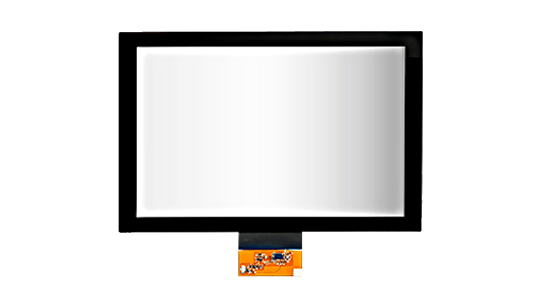
Touchscreen technology merges a display and a touch panel into a single input surface. That much is obvious. But the details matter when you’re specifying a module for a real product.
The core of any touch display module is the tft lcd (or oled, in some cases) that renders your graphics, paired with a touch sensor layer that detects where and how the user interacts. IPS technology gives you wider viewing angles and better color consistency, which is why we default to IPS on anything 5″ and above. For smaller sizes where viewing angle isn’t as critical, standard TN-type tft panels keep the cost down without sacrificing much.
Making the Right Choice: Capacitive vs. Resistive
Capacitive Touch (PCAP)
PCAP uses a grid of transparent electrodes to sense finger proximity. It supports multi-touch gestures, offers excellent optical clarity, and has no moving parts. The tradeoff? It needs skin contact (or a conductive stylus), costs more, and is more sensitive to EMI noise. Ideal for consumer-facing products.
Resistive Touch
Resistive touch works on pressure. Press down and two layers make contact. Any input works: fingers, gloves, pens. Cheaper, immune to surface contaminants, and robust against electrical noise. But it cuts into optical performance slightly and lacks multi-touch. Great for medical devices needing gloved operation.
Here’s the thing — neither technology is universally “better.” Picking the right one depends on environment, input method, touch performance requirements, and budget. That’s where talking to an actual engineer (like our team) saves you time versus guessing from datasheets.
Connectivity & Intelligence in Touch Display Modules
On the connectivity side, most modules offer SPI for compact MCU wiring, I2C for the touch controller, and RGB parallel or LVDS for higher-bandwidth pixel data.
Some of our displays bundle a built-in GPU that handles rendering locally, so your host MCU only sends high-level commands. That’s worth looking at if you want to keep your firmware simple and combine industry-leading touch screens with minimal processing overhead.

Comparison Tool
Capacitive vs Resistive Touch Screen
Side-by-side comparison with application-specific recommendations. Pick your use case below to see which technology fits best.
Capacitive (PCAP)
Multi-Touch
Up to 10 points
Optical Clarity
90%+ transmittance
Gesture Support
Pinch, swipe, rotate
Durability
No moving parts, scratch-resistant
Glove Compatibility
Limited (needs tuning)
Wet Environment
Can cause false inputs
Cost
Higher ($$ – $$$)
EMI Sensitivity
Moderate — needs shielding
Resistive (4/5-Wire)
Multi-Touch
Single-point only
Optical Clarity
~80% transmittance
Gesture Support
Tap and drag only
Durability
Flexible layers, can wear
Glove Compatibility
Excellent — any input
Wet Environment
Works well with water
Cost
Lower ($ – $$)
EMI Sensitivity
Low — pressure-based
Select Your Use Case for a Recommendation
Consumer / IoT
Smart home, wearable
Industrial / HMI
Factory, automation
Medical Device
Patient monitor, lab
Outdoor / Kiosk
Sunlight, weather
Gloved / Wet
Food, pharma, cold-chain
Vehicle / Marine
Dashboard, boat, EV
Applications
Where Touchscreen Display Modules Get Deployed

Industrial Automation & HMI
Factory floors, process monitoring, SCADA panels. Our modules go into PLCs, RTUs, and standalone HMI units. The 7″ and 10.1″ IPS panels with capacitive touch are the go-to picks here. Shielded FPC cables and wide temp ranges ensure durability.

Medical Devices & Diagnostics
Patient monitors and lab instruments. Medical-grade modules handle disinfectant wipe-downs and sometimes full IP65 sealing. We support certification (IEC 60601) and supply anti-microbial coatings. Touch performance is flawless.

Consumer Electronics & IoT
Smart home panels and EV chargers. The 2.8-inch and 3.5″ modules fit tight enclosures and run on low-power microcontrollers. SPI interface keeps pin count minimal. Perfect for thermostats and smart switches.
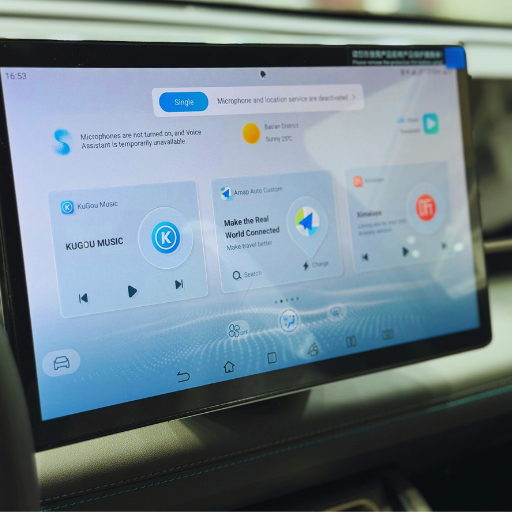
Vehicle & Transportation
Dashboard clusters and fleet terminals. Automotive-grade modules need wide temp tolerance and optical bonding to prevent delamination. We supply screens for EV chargers, truck telematics, and agriculture.
Selection Guide
How to Choose the Right Touch Display Module
Picking a module isn’t complicated once you break it down into five decisions.
1
Size and resolution
Match these to your content. A 240x320 panel is fine for menus. If rendering charts/maps, step up to 800x480+. Don’t over-spec (e.g. 1080p on 4″) to save power.
2
Touch type
Capacitive for bare-finger gestures. Resistive for gloves/stylus. If unsure, order samples of each. A 20-minute hands-on test is better than any datasheet.
3
Interface
SPI for low-pin MCUs. RGB parallel for decent frame rates. LVDS/MIPI DSI for high-throughput 7″+ panels. Ensure host processor compatibility.
4
Environment
Indoor consumer? Standard specs. Outdoor/Industrial? Need wide-temp, optical bonding, and conformal coating. Check operating temp, IP rating, and EMI.
5
Lifecycle
Need 5+ years production? Ask about long-term supply commitments first. Don’t get stuck scrambling for a replacement 18 months later when a display gets EOL’d.
Touch Display Modules FAQs
A touch screen module is basically a display and a touch panel bonded together into one unit — the touchscreen consists of a display (usually a liquid crystal display) paired with a touch-sensitive layer on top. A touch screen consists of several layers: the LCD cell, backlight, touch sensor, controller IC, and cover glass. When you tap or swipe, the module translates that input into X/Y coordinates that your microcontroller or embedded system uses to control graphical interfaces. Most of our modules include an onboard controller that talks over SPI interface, I2C, or UART so you don’t have to handle the raw signal processing yourself.
Pretty straightforward, actually. You call the touch display via SPI for pixel data and I2C for touch events. Most of our modules work out-of-the-box with common libraries — LovyanGFX, TFT_eSPI, LVGL. Wire up the SPI pins (MOSI, MISO, CLK, CS, DC), connect the I2C touch lines (SDA, SCL), and you’re running. The ESP32 has enough processing power to drive modern UI elements and graphical interfaces at 800x480 resolution over RGB parallel, and even higher if you use a PSRAM-equipped variant. We provide reference schematics for ESP32 integration on our download page.
SWLCD modules are available in sizes from 2.8″ all the way up to 15.6″. The small ones (2.8-inch, 240x320) are great for handheld gadgets. Mid-range 4.3″ to 5″ modules come in 480x272 and 800x480 resolutions — that’s the sweet spot for most automation dashboards. For anything that needs serious pixel density, the 7″ and 10.1″ IPS panels at 1024x600 and 1280x800 are where we’d point you. And yes, we do offer screens with liquid crystal displays in custom form factor shapes if your enclosure demands it.
Absolutely — and honestly, industrial HMI is where about 40% of our volume goes. Module screens are also advantageous for industrial control systems because they consolidate the display, touch input, and controller into one component that mounts directly into a panel cutout. Our industrial-line modules come with industry-leading touch screens with liquid crystal technology, chemically strengthened cover glass, excellent viewing angles, and shielded connectors. They handle the vibration, temperature swings, and electrical noise you’d expect on a factory floor.
Depends on the application. Capacitive touch gives you multi-touch, gesture control, and better optical clarity — it’s what people expect from a modern touchscreen. We recommend it for consumer products, medical devices with bare-hand operation, and any user interface that benefits from swipe and pinch gestures. Resistive touch is the pick for gloved environments, stylus input, and situations where cost is tight. It’s simpler, proven, and doesn’t care what you poke it with. We’ve shipped both technologies to the same customer before — capacitive for their consumer line, resistive for the industrial version.
For off-the-shelf catalog modules, zero MOQ. Order one sample if you want. Custom modules (modified interface, brightness, cover glass) typically start at 500–1,000 pieces. The exact number depends on how complex the modification is — a simple FPC pinout change is different from a full-custom PCB layout. Wholesale quantities (5K+) get volume pricing and dedicated account management. Drop us a message with your quantity and configuration, and we’ll give you exact pricing within a day.
The baseline is ISO 9001 (our QMS), CE marking, and RoHS compliance across the full product line. Beyond that, it depends on your target market. We support IEC 60601 documentation for medical devices, IATF 16949 processes for automotive customers, and can provide materials data for UL and AS9100 filings. If you need specific third-party test reports (EMC, safety, environmental), we can run those through our partner labs and provide the certs as part of the project deliverables.
Standard modifications — changed interface, adjusted brightness, custom cover glass with screen only the touch panel — take about 15–20 working days. That gets you a fully functional prototype, not a mockup. More involved jobs (custom PCB, special optical bonding, unique hardware design requirements) push to 25–30 days. We ship prototypes via DHL or FedEx express, so add 3–5 days for transit. One thing to note: time or to display keypads and input areas onto custom glass adds about a week for tooling.