Get in Touch with Saiweiglass


Low Iron Glass
Low Iron Ultra-Clear Glass – Custom Deep Processing
Achieve more than 91% visible light transmittance with almost no green tint. We supply custom-processed low-iron glass for touch displays, industrial panels, lighting, and architectural applications — tempered, laminated, coated, and cut to your specifications.
Get Instant Quote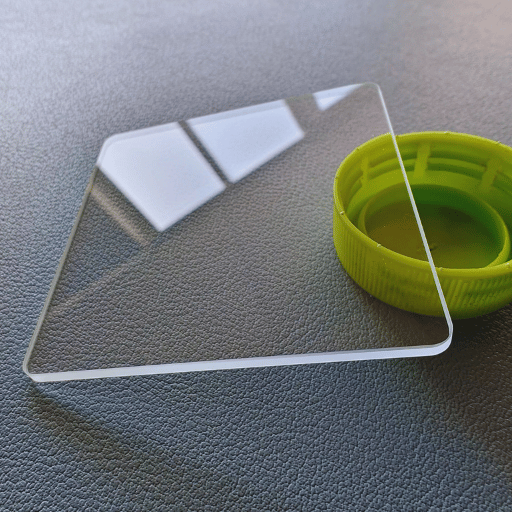
What Is Low Iron Glass? Definition, Composition & How It Works
Low-iron glass is a premium breed of float glass that has been processed and produced with significantly lower iron content than conventional clear glass. Ordinary clear float has 0.1% Fe2O3 caught up in its chemistry. This element is responsible for absorbing specific wavelengths of light, which results in the consistently green tint seen from the glass edges as well as through the body of transparent glass. By keeping the iron content below 0.015%, low-iron glass totally eliminates this distortive green effect.
It begins with sourcing high-potency silica sand for each production batch. The cantilevered float glass manufacturing stage provides the perfect opportunity to optimize glass formula by minimizing the content of contamination metal precursors. (Sand, soda ash, dolomite). The resultant float glass substrate will have excellent color clarity- some would say water-clear — transparency that gave low-iron glass its predominate industry name of crystal prince.
Depending on manufacturer you may refer to this kind of glass as ultra-clear float, extra-clear float, or high-transparency float. You may also see it branded as Starphire (Vitro), or Optiwhite (Pilkington) or UltraClear (Guardian). No matter what and no matter which maker, all of these grades belong to the category of reduced-iron float glass that has been manufactured for higher clarity. Here at SW Glass, we buy elite low-iron float glass substrate material, and undertake all downstream deep processing- CNC profiling, fabrication, tempering, coating, and screen printing in our own facilities.
Low Iron Glass vs. Standard Clear Glass: The Visible Difference
This difference becomes less and less visible as the glass sheet becomes thinner, but at some thickness and size limits it is impossible to miss:
Low Iron Glass
- Visible light transmittance: >91%
- Edge color: faint blue or colorless
- Color rendering: true, neutral hue
- Fe2O3 content: <0.015%
- Best for: displays, lighting, color-critical applications
- Cost premium: typically 15–25% over standard clear
Standard Clear Glass
- Visible light transmittance: ~83–84%
- Edge color: noticeable greenish tint
- Color rendering: slight green distortion
- Fe2O3 content: ~0.1%
- Best for: general glazing, utility windows
- Cost: baseline pricing
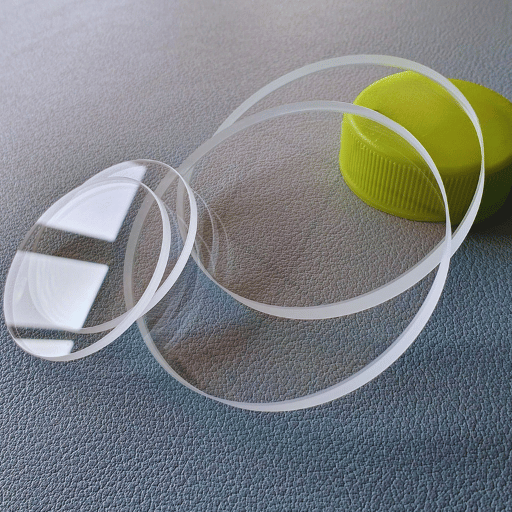
The easiest way to differentiate will be in the visual appearance of the edge; place a sample of normal float side-by-side with low-iron test sample on plain white surface- the greenish reflection of ordinary float will immediately stand out. Once as seen in the eyes, it is caused by iron oxide content naturally present in standard float glass. As a consequence, the glass body carries a green-tinted bias and imperfect color fidelity becomes a design compromise. It is precisely in these color-critical applications that we most appreciate the benefits of low-iron glass and its higher spectral transmittance.
Types of Low Iron Glass We Process
From raw float sheets to finished components — all processed in our three production facilities.
Low Iron Float Glass
The base material. Annealed low-iron float glass substrates, available from 0.7mm to 19mm thick. The starting point for all subsequent treatment and modifications. Suitable for cutting to individual pieces for end-use applications that do not require further strengthening.
0.7 – 19 mm
Low Iron Tempered Glass
Thermally toughened to EN 12150 specifications, with 4-5 times the strength of annealed float glass. When broken, it shatters into small relatively harmless fragments. Designed for use in demanding safety-conscious real world industrial, architectural, appliance and automotive applications. Minimum thermal tempering thickness: 3mm.
EN 12150 CERTIFIED
Chemically Strengthened Low Iron Glass
Ion-exchange toughened, with a compressive stress in excess of 450 MPa above a layer depth greater than 8 microns. Suitable for the manufacturing of ultra-thin high-strength solutions – as low as 0.7mm thickness – as well as being the precursor of visual clarity for touch screen cover glass and small packages of electronics panels that require conventional thermal treatment to be infeasible.
CS >450 MPa | DOL >8 um
Laminated Low Iron Glass
Two or more layers of low-iron substrates bonded with PVB or SGP interlayer film. Provides safety and security benefits by preventing glass failure from causing personal injury and product damage, and maintains visual clarity for shows and displays. Commonly specified for architectural facades, decorative wall partitions, and overhead glazing where both safety and transparent clarity are a priority.
PVB / SGP INTERLAYER
Low Iron Acid Etched Glass
Chemical etching produces a uniform, satin-finish frosting on one or both sides of a premium high-performance, clear glass solution. Unlike sandblasted finishes, acid etching is consistently smooth and dust- and fingerprint-resistant. And the neutral color of the low-iron base makes the frosting appear clear no matter how high the contrast needs to be for commercial, retail and residential high-end decoration projects.
SINGLE / DOUBLE SIDE
Low Iron Patterned & Printed Glass
High-temperature ceramic screen printing on low-iron substrates provides fade-proof, highly visible graphics for hard outdoor lighting, appliance and display applications. The combination of fired-on protection and a totally clear base makes virtually any color combination possible for retail, commercial and public service branding.
HIGH-TEMP CERAMIC INK
Surface Treatments & Coatings for Low Iron Glass
Low-iron glass is an excellent light transmission medium for advanced surface treatments because its neutral hue does not impair pigmentation with unwanted green tints. We offer the following coatings on low-iron substrates:
01
AG (Anti-Glare) Etching
Chemical etching provides a textured haze layer which will distribute the incident light reflected from the surface, mixed-glass, or other profile images with relatively muted high-light effects. Available single and double-sided. Glare index:50-115. Typical haze index range:4.7-11. Great for outdoor signage as well as vehicle-mounted screens where freshness has to be visible.
02
AR (Anti-Reflective) Coating
Multi-layer, vacuum-deposited external coatings that reduce single-side reflectivity to below 1% and double-side to below 2%. Represented to increase transparency to over 94%, and 98% respectively. Indispensable in retail display applications and museum exhibits where highly reflective ghost images overwhelm the displays.
03
AF (Anti-Fingerprint) Coating
Nano-coatings on the low-iron substrates create a water- and dust-repellent surface with a contact angles measured above 105 degrees. Consequently, fingerprints and other oils do not adhere to the substrate and it continues to remain sparking clear. It can be regularly cleaned with water or a damp cloth. Popular in high-performance medical and industrial touch interfaces.
04
ITO Conductive Coating
Indium tin oxide sputter electrode-coated low-iron glass for use as capacitive touch screen, LCD display, smart home controllers, and solar cell substrates. Available with sheet resistance ranges from 3 to 800 ohms/cm2.
Production Note
In addition to optical coatings, we also produce low-iron glass for back-painting wall panels, low-e coatings for energy-efficient architectural film, and ceramic screen printing for appliance panels or light covers. These various treatments are applied in our dedicated coating and cleanroom facilities, where we operate our own optical performance testing equipment prior to shipment.
Technical Specifications & Available Thicknesses
Specification
Value
Notes
Material
Low-iron float glass (ultra-clear)
Fe2O3 < 0.015%
Available Thicknesses
0.7, 1.1, 1.6, 1.9, 2.2, 3.1, 3.9, 5, 6, 8, 10, 12, 15, 19 mm
Custom thickness on request
Maximum Panel Size
Up to 2440 × 3660 mm
Depends on thickness
Visible Light Transmittance
>91% (at 6mm)
Per ISO 9050
Chemical Strengthening (CS)
>450 MPa
For glass ≤ 2.2mm
Chemical Strengthening (DOL)
>8 μm
Ion-exchange process
Thermal Tempering
EN 12150 compliant
For glass ≥ 3mm
AG Etching Gloss Range
50 ± 10 to 110 ± 10
Single or double side
AR Coating Transmittance
>94% single / >98% double
Multi-layer vacuum deposition
AF Coating Water Contact Angle
105° ± 5°
Hydrophobic nano-coating
Screen Printing
High-temp ceramic ink, multi-color
Fade-proof for outdoor use
Edge Processing
Seamed, beveled, pencil-polished, CNC profiled
Custom edgework available
Shape Options
Rectangle, circle, custom CNC shapes
Tolerance: ±0.1mm (CNC)
Hole Drilling
Available, min diameter 3mm
Position tolerance ±0.15mm
Our Processing Capabilities: CNC, Tempering, Screen Printing & More
Three manufacturing centers with over 100 equipment lines from raw glass to finished component.
01
Precision Cutting
02
CNC Profiling & Edging
03
Hole Drilling
04
Cleaning & Inspection
05
Strengthening
06
Screen Printing
07
Surface Coating
08
QC & Packaging
Our Dongguan Tangxia factory is used for TP touch glass as well as industrial control panels and vehicle mounted glass. We have a large-format cover glass facility in Heyuan for electrical appliances, supplying lines dedicated to thermally tempering. Our 30-acre Henan factory, opened in 2021, specializes in high-volume 7-42 Inch cover glass, planned to produce 40,000 pieces per day.
Our 50 product technicians keep the entire process tight; we run constant chemical strengthening baths, with tightly controlled temperature and time settings in order to consistently achieve CS above 450 MPa. Our CNC machining centers are capable of all shapes, finished shapes such as irregular cut-outs and step glass, as well as drilling – the difference between a deep processing specialist and a commodity supplier is all in the details.
Low Iron Tempered Glass | Certified for Quality & Safety
ISO
ISO 9001:2015
Quality Management System — covers full production cycle from incoming material inspection to final packaging.
EN
EN 12150
EU Toughened Safety Glass Certification — thermally tempered glass meets European fragmentation and safety requirements.
SGS
SGS Test Reports
Third-party testing for ultra-clear glass samples per EN 12150-1:2015 standard. Reports on file for customer review.
BIO
Medical Biocompatibility
Biocompatibility testing report for glass used in medical device display applications.
SEB
SEB Group Authorization
Production authorization from SEB Group (Fortune Global 500, parent of Supor/Tefal brands).
Low Iron Glass Pricing: Key Cost Factors
The relative pricing of low-iron glass is affected by several interrelated factors. Understanding these factors can help sourcing teams plan budgets and see where issues can be adjusted for better value.
Glass Thickness
Thicker glasses use more raw material and take longer to process. The premium that low-iron glass commands over standard glass is consistent across many thicknesses, usually about 15-25%.
Processing Complexity
When cutting down and shipping, simpler orders without CNC profiling, hole drilling, or complex edge processing cost less. Each additional process involves additional labor and machinery running time.
Strengthening Method
Chemical strengthening tends to be more costly per-pc than thermal tempering because of the bath chemistry and higher cycle times.
Surface Coatings
AG etching, AR multi-layer coating, AF nano-coating and ITO coating each significantly impact on cost. A multi-coat layer like AG + AF will generally cost more than a single-treatment. Vacuum deposition machines make AR coatings the most expensive.
Order Volume
Cost per-unit drops quickly as quantity increases. Clients who purchase 5,000+ pieces at a time get better deal than those needing a few prototype iterations. Our production system is flexible enough for competitive small-machine-run samples, up through continual high volume manufacturing.
Customization Level
Custom shapes, printing logos, packaging, and monitoring steps will add to final costs. Rectangular shapes with standard edge profiles represent the most cost-effective option.
Low Iron Glass vs Clear Glass: Side-by-Side Comparison
Select a comparison category to explore the differences in detail. All data based on 6mm thickness unless noted.
| Property | Low Iron Glass | Standard Clear |
|---|---|---|
| Visible Light Transmittance | >91% | ~83% |
| Solar Transmittance | ~90% | ~82% |
| UV Transmittance | ~85% | ~72% |
| Color Rendering Index | >98 | ~94 |
| Edge Appearance | Faint blue / colorless | Green tint |
| Body Color | Neutral, colorless | Slight green bias |
| Iron Oxide (Fe2O3) | <0.015% | ~0.1% |
| Hardness (Mohs) | 6-7 | 6-7 |
| Density | ~2.5 g/cm³ | ~2.5 g/cm³ |
| Temperable | Yes (EN 12150) | Yes |
| Chemical Strengthening | CS >450 MPa | CS >400 MPa |
| Laminatable | Yes | Yes |
| Raw Material Cost | Higher (+15-25%) | Baseline |
| Color Accuracy Value | Excellent | Moderate |
| Best For | Displays, lighting, facades | General glazing, utility |
| ROI Justification | Color-critical apps | Budget-sensitive apps |
Low Iron Glass Edge
Crystal Clear
Virtually no color — faint blue edge
Standard Glass Edge
Green Tint Visible
Iron oxide causes greenish hue
Which Glass Should You Choose?
LOW IRON
Touch Screen Displays
Color accuracy and clarity are non-negotiable for HMI panels, medical monitors, and consumer electronics.
LOW IRON
Architectural Facades
Large panels amplify the green tint of standard glass. Low iron maintains color neutrality at any scale.
LOW IRON
Solar Panel Covers
Every percentage point of transmittance increases photovoltaic output. Low iron maximizes energy harvest.
LOW IRON
Display Cases & Retail
Products behind the glass need to appear in true color. No green distortion means accurate product presentation.
STANDARD CLEAR
Utility Windows
Where visual clarity is not the primary concern and budget optimization matters more.
STANDARD CLEAR
Interior Partitions (Basic)
For functional separation where color accuracy is secondary to cost efficiency.
Need Low Iron Glass for Your Project?
SW Glass provides custom-processed low iron glass: tempered, laminated, coated, and cut to spec. 10+ years OEM experience, ISO 9001 certified.