
Get in Touch with Saiweiglass



GW
I explore display glass processing, optical bonding, and surface treatments. My writing explains how material choices and production steps relate to the finished panel, helping readers understand the terms used in supplier discussions and clarify the requirements that matter for their own display project.
Optical Bonding: Complete Guide to Process, Materials & Applications

Quick Specs Bonding Methods LOCA (wet) / OCA (dry) / Hybrid gel Adhesive Refractive Index 1.47 – 1.52 (matched to glass at ~1.50) UV Cure Wavelength 365 – 405 nm Operating Temperature −40 °C to +85 °C (standard); up to…
How AG Glass Is Made: Process Explained

Quick Specs — AG Glass Manufacturing Primary Methods Chemical etching, spray coating, magnetron sputtering Typical Substrate Soda-lime glass, borosilicate, 0.5–6 mm Surface Roughness (Ra) 0.5–2.5 μm (adjustable) Light Transmittance ≥89% (etched), ≥90% (spray coated) Haze Value 1–25% (application-dependent) Gloss Range…
How to Choose the Right AG Glass Gloss Level

Quick Specs — AG Glass Gloss at a Glance Gloss Range 10–110 GU (per ASTM D523, 60° measurement angle) Haze Range 1.5%–17% (inversely proportional to gloss) Transmittance Up to 92% at high gloss levels Measurement Standard ASTM D523 / ISO…
Types of AG Glass: Chemical vs Coated
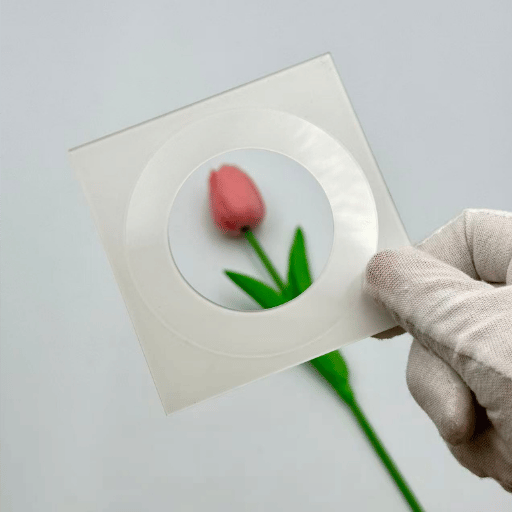
Quick Specs: AG Glass Types Compared Specification Chemical Etching Spray Coating Sputtering Surface Roughness (Ra) 0.5–3.0 μm 0.3–1.5 μm 0.1–0.5 μm Light Transmittance 92–95% 88–92% 90–94% Haze Range 2–28% 5–40% 1–15% Gloss (60°) 40–90 GU 30–80 GU 60–110 GU Pencil…
AG Glass for Industrial Control Panels: Complete Guide
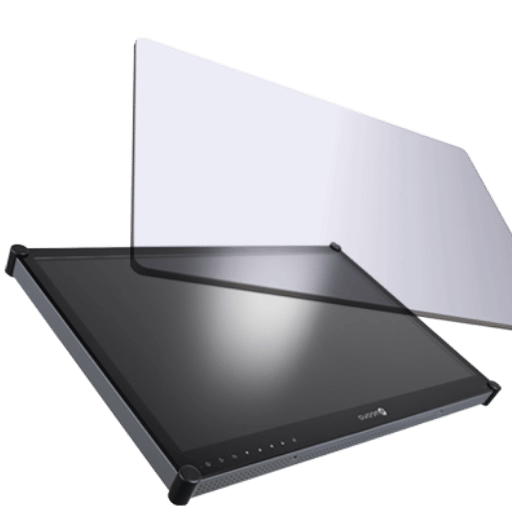
Quick Specs Light Transmittance ≥89% (per ASTM D1003) Haze Range 1–25% (tunable by application) Surface Gloss 15–135 GU Surface Roughness (Ra) 0.5–2.5 µm Surface Hardness ≥7H (pencil test) Reflection Reduction 70–90% vs untreated glass What Is AG Glass and Why…
AG Glass Optical Parameters: A Technical Reference
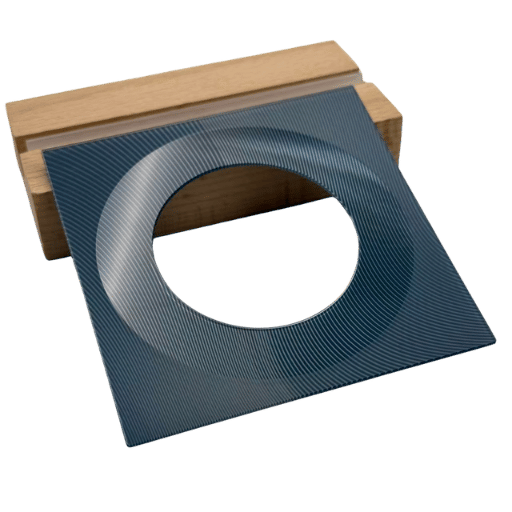
Quick Specs Transmittance (visible) 88–93% @ 380–700 nm Haze 1–30% Gloss (60°) 10–135 GU Surface Roughness (Ra) 0.05–1.5 µm Distinctness of Image (DOI) 10–95 (scale 0–100) Available Thickness 0.5–6.0 mm (tolerance ±0.10–0.15 mm) All AG glass plates begin as a…
Ion Exchange Parameters for Chemically Strengthened Glass: A Process Engineering Guide
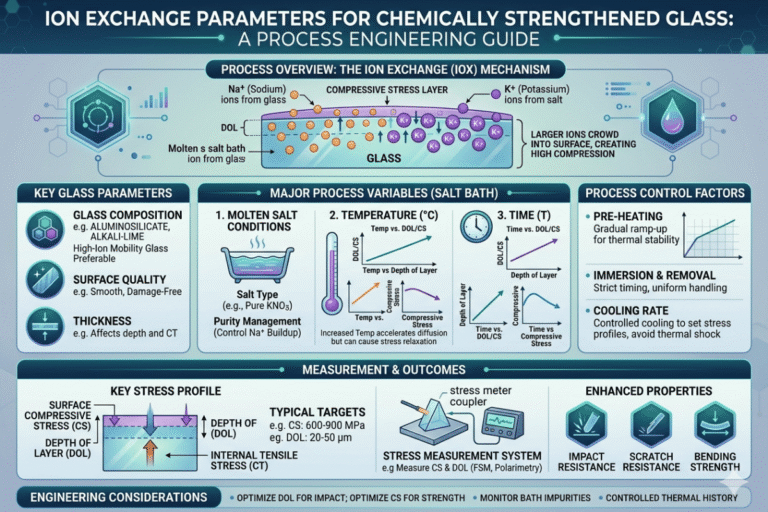
Quick Specs Surface Compressive Stress (CS) 600–1,200 MPa (substrate-dependent) Depth of Layer (DOL) 20–100 µm (K⁺–Na⁺ exchange) Salt Bath Temperature 380–500 °C (molten KNO₃) Immersion Time 4–30 hours typical; up to 120 hours for deep DOL Strength Gain vs. Annealed…
How Foldable Glass Changed Smartphones — Samsung UTG, Corning, and SCHOTT Compared
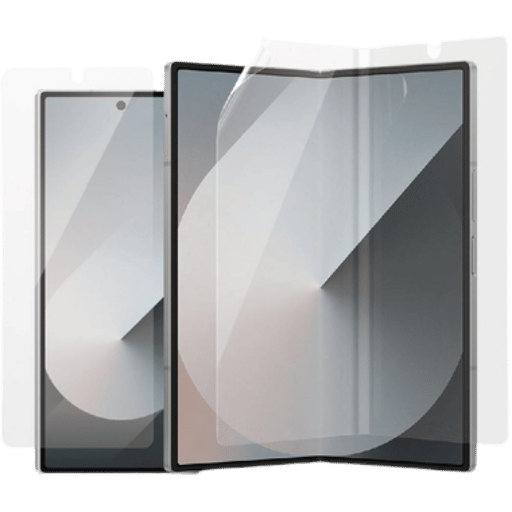
Quick Specs Material Ultra-thin glass (UTG), chemically strengthened Thickness Range 25 – 100 µm (foldable applications) Minimum Bend Radius <1 mm (SCHOTT UTG after processing) Fold Endurance 200,000 – 300,000+ cycles Key Suppliers Samsung Display, SCHOTT AG, Corning Inc., Nippon…
How Much Does Ultra-Thin Glass Cost? A Detailed Pricing Breakdown

Quick Specs Definition Glass substrates below 1.0 mm thickness Thickness Range 0.03 mm (30 µm) to 1.0 mm Price Range $8–$300+ per square foot (varies by thickness and chemistry) Common Chemistries Soda-lime, borosilicate, aluminosilicate Key Applications Foldable displays, semiconductor wafers,…
How Ultra-Thin Glass Is Made — From Raw Materials to Sub-Micrometer Sheets
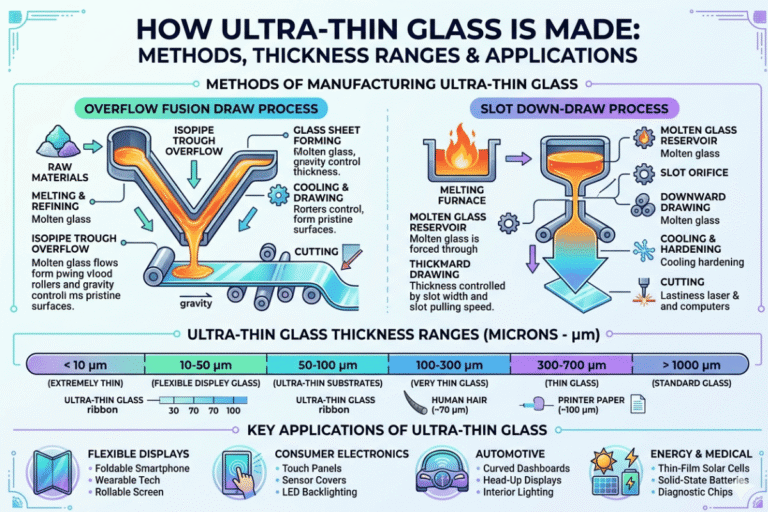
Glass that is thinner than a human hair is now so flexible that it can be bent over a 5 mm radius and not shatter. Glass that will be used in devices before they are rolled, folded, worn, or inserted…