Get in Touch with Saiweiglass




Quick Specs — AG Glass Gloss at a Glance
| Gloss Range | 10–110 GU (per ASTM D523, 60° measurement angle) |
| Haze Range | 1.5%–17% (inversely proportional to gloss) |
| Transmittance | Up to 92% at high gloss levels |
| Measurement Standard | ASTM D523 / ISO 2813 |
| Common Substrates | Soda-lime glass, aluminosilicate glass |
| Customizable | Single-sided or double-sided AG treatment |
What Is AG Glass Gloss and How Is It Measured?

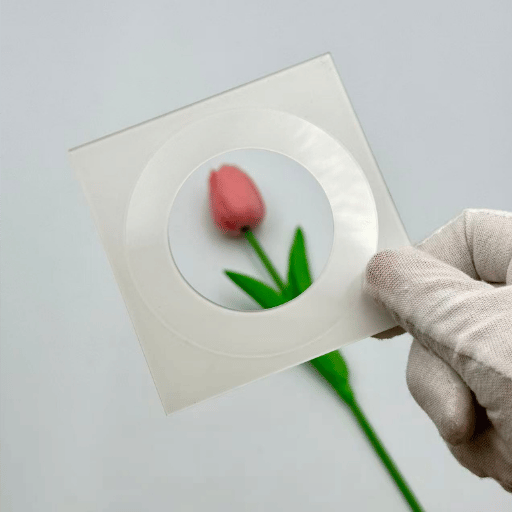
Gloss Magnified Specular Ratio describes the amount of specular reflection at a 60 degree angle compared against a measured black glass calibration standard rated at 100 GU. (gloss units) a higher gloss value indicates a high reflection of light in a mirror type reflectance from the AG glass surface; conversely, a low gloss indicates strong anti-glare diffusivity.
The testing protocol for this system is based on ASTM D523. ASTM D523 specifies three different geometries for the evaluation of glossiness; the 60° geometry is the standard starting geometry applied to any surface prior to additional test geometries. When the 60° reading registers in excess of 70GU, a second reading of the sample is recommended at 20° in order to differentiate the high gloss surfaces more precisely, the decrease in angle offering improved resolution. When the surface has very little light intensity in transmission in relation to the 60° measurement and reads less than 10GU, a third test data point at the 85° geometry allows the measurement of the minimal reflection that the lowest gloss surfaces generate.
In practice, anti-glare glass AG surfaces measured around 100 GU on average. An untreated soda-lime glass panel measures about 110 GU. After etch, the glass surface micro-grooves induce in the AG glass scatter incident light, increasing the dispersion of the reflected light and lowering the gloss values from around 15 to in some cases 95 GU, depending on the depth of etch applied and the size of the gravel particles in the micro-texture. When the gloss value remains around or above 100 GU, then optical clarity exhibits a significant haze of 90+ percent; as the GU value decreases, haze increases, and more anti-glare gloss level becomes available in the image.
One engineering note: ASTM D523 procedures specify a 2 GU variance among successive measurements of the same sample on the same location of the test sample. When evaluating the responses of ag glass samples, always get 5 or more readings over the surface and find the mean. The standard glossmeter used for ASTM calibration makes its initial calibration on a black glass because the black glass tile (refractive index 1.567) is the ASTM D523 specified reference plane for the measurement. Any variation at the beginning of the calibration process will be reflected in the subsequent measurements, moving the entire system downward or upward.
The Relationship Between Gloss, Haze, Transmittance, and Clarity

The performance of ag glass is closely related appears to have four distinct parameters that are separately responsive to diametrically different physical effects. gloss appears to capture the specularity of the surface, by catching specular reflection; haze measures the percentage of scattered light of transmitted light which passes more than 2.5° from the source beam; transmittance measures the percentage of the broader transmitted light beam which passes through the glass; and clarity – also called image clarity (DOI) – measures the accuracy with which the glass can reproduce fine high-contrast detail on the transmitted or reflected image.
This system is ruled by one fundamental rule: the higher the gloss, the lower the haze. When the surface roughness prevents diffuse reflection on the AG glass, lower gloss is detected; when the roughness leaves more haze remaining in the transmitted image, the gloss drops accordingly. Transmittance of ag glass is not dramatically affected by etching – even heavily etched AG presents 86+ percent total transmittance. This is because the haze only affects the angular distribution of the passing light, redistributing it. AG glass will still transmit light through its entire thickness, it is just that the scatter angle is now wider.
Clarity: this is one parameter that catches many engineers unprepared. A panel with very low haze and transmittance (and consequently very high DOI) can still look blurry if the surface micro-structure creates micro-lensing effects. There is no penalty in having an unequal distribution of gloss versus the etch pattern: the correlation with clarity is not linear at all – it is a function of the separation (spatial frequency) of the etch structure and the pixel density of the display in place. In general: the higher the clarity requirement, the narrower the window of acceptable gloss.
| Gloss (GU) | Haze (%) | Transmittance (%) | DOI / Clarity (%) | Anti-Glare Effect |
|---|---|---|---|---|
| 20 GU | 15% | 86% | 42% | Heavy diffusion; reflected images fully broken up, no visible mirror reflections |
| 40 GU | 10% | 88% | 58% | Strong diffusion; reflected objects appear blurred and shapes are softened |
| 60 GU | 6% | 90% | 72% | Moderate diffusion; ambient reflections visible but dimmed and defocused |
| 80 GU | 3% | 91% | 85% | Mild diffusion; slight softening of reflected bright light sources only |
| 110 GU | 1.5% | 92% | 95% | Minimal diffusion; near-identical to untreated glass, almost full mirror reflection |
With these optical systems the relationship between gloss and clarity is not linear: it takes a sigmoidal shape. At less than 30 GU very little clarity is produced – as greater the haze scrambles fine spatial frequencies. At over 80GU variations clarity is no longer produced – the surface texture is no longer capturing enough light to produce the contrast. Between 40-70 GU lies the transition zone is where product designers can make a number of different trade-offs.
How Surface Roughness and Etching Create Different Gloss Levels

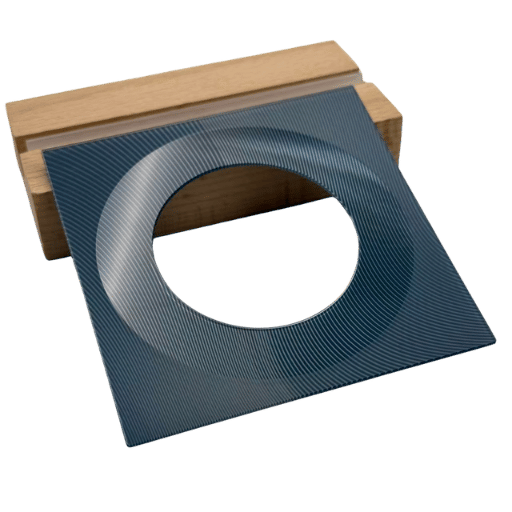
Every ag glass panel begins with a primitive smooth sheet (either soda-lime or aluminosilicate glass), polished up with sheer glass finesse. Anti-glare performance starts in the etching bath – an aqueous hydrofluoric acid (HF) etch attack – are initiated at a very carefully balanced rate. Etch depth may range from 0.05 mm/hr to 0.07 mm/hr – in that very thin film there is varied formation of microscopic peaks and valley structures from which the light reflected is scattered.
Surface roughness refers to the geometrically defined characteristics of those bumps and hollows – Ra (raw) or arithmetic roughness. After the etching – the size of the micro particles and their arrangement relative to each other will just quickly determine the gloss level. Very small particles span of ag glass – equivalently very tight, gentle features, or deep, wide features – mean very high gloss, because the specular reflection predominates. Very large particles span of ag glass – i.e. very deep, wide features, very low gloss because diffuse reflection takes hold.
Where the etching is very well focused and tightly controlled – the ag glass surface will be smoothly distributed over the entire panel. Where the etch chemistry is inconsistent – cold spot effects, uneven acid strength or uneven dwell time – that random spread of ag glass particles will spawn the often dreaded Sparkle. Sparkle manifests as a regular galore of glittering snow-y surface – and becomes very obvious on 200 plus PPI displays. When the pixel pitch is below the etch feature size, where the etch feature sizes are no longer visible – the otherwise small inconsistencies in the etch pattern may be very obvious as surface graininess.
Very little sparkle will be present if the feature diameters are designed to be below the pixel pitch. For a 27 inch 4K display (roughly 163 PPI, 0.156 mm pixel pitch) – the etch features will have to be generated at an average diameter of less than 80 μm. This ensures the sparsity of the scattering pattern – below the visible threshold.
The choice of material is also important. etch chemistry along the same lines for soda-lime glass and aluminosilicate glass will be very different on account of these substrates’ varied oxide contents. Aluminosilicate glass—which is generally the choice for enhanced scratch resistance—tends to produce a more controlled and finer etch texture than soda-lime, which has a softer and more reactive surface.
The latter requires a somewhat shorter etch time so as not to nosedive past the target roughness. When ordering the etched AG glass, always check which substrate has been planned for by the manufacturer, as the same etch recipe will achieve radically different gloss levels on different glasses.
Engineering Note – Ra by Application: Medical displays where DICOM calibration is a concern, optimal Ra range is 0.5-1.0 μm (gloss 70-95 GU). Industrial HMI panels under factory lighting conditions are optimal at 0.5-1.5 μm Ra (gloss 40-75 GU). Outdoor kiosks and transit displays exposed to direct sunlight hitting the panel are best at 1.0-2.5 μm Ra (gloss 15-45 GU).
The Ra ranges are a result of field testing in multiple deployment environments – not a theoretical model.
AG Glass Gloss Ranges by Application: Which Level Fits Your Product?

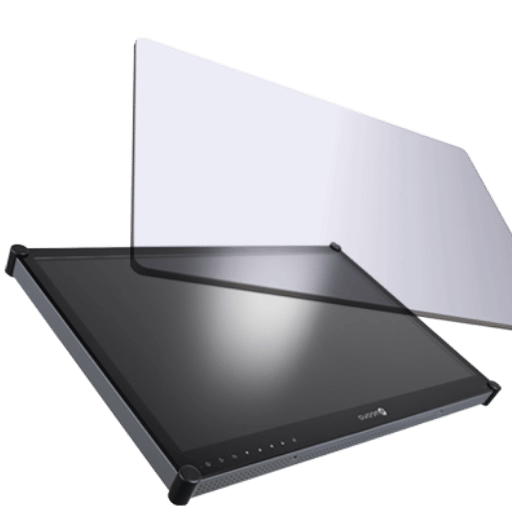
Choosing the right gloss level is about action frames, not display specs. An anti-glare AG glass window that looks fantastic inside a hospital reading room might melt in front of a bus shelter kiosk. Below is a table illustrating several levels of gloss along with corresponding applications and measurable optical properties of AG glass at each level.
| Gloss Range (GU) | Application | Anti-Glare Effect | Transmittance | Best For |
|---|---|---|---|---|
| 15–40 GU | Outdoor kiosks, ATMs, transit displays | Strong — eliminates mirror reflections from direct sunlight at 80,000+ lux | 86–88% | Direct sunlight environments with ambient light above 50,000 lux |
| 40–60 GU | Industrial HMI, agricultural machinery | Moderate-strong — diffuses overhead factory lighting at 2,000–5,000 lux | 88–90% | Semi-outdoor settings, bright factory floors, warehouse terminals |
| 60–80 GU | Consumer electronics, medical devices | Moderate — reduces glare from office lighting at 300–500 lux | 90–91% | Indoor controlled lighting, office tablets, bedside monitors |
| 80–95 GU | Medical imaging, POS terminals | Mild — softens only direct point-source reflections | 91–92% | High-clarity indoor applications where image fidelity is critical |
| 95–110 GU | Automotive dashboards, high-res displays | Minimal — nearly identical to uncoated glass | ~92% | Clarity-critical applications, 4K/8K panels, OLED instrument clusters |
✔ Low Gloss (15–50 GU) — Advantages
- Eliminates mirror reflections in sunlight above 50,000 lux
- Reduces eye fatigue during extended outdoor use
- Fingerprint smudges less visible on matte texture
- Works well with lower-PPI panels (100–150 PPI)
⚠️ Limitations
- Transmittance drops to 86–88%, dimming the display
- Sparkle artifacts on displays above 200 PPI
- Color saturation reduced by 8–12% compared to bare glass
✔ High Gloss (80–110 GU) — Advantages
- Transmittance at 91–92% preserves full display brightness
- DOI/Clarity above 85% — sharp text and fine detail rendering
- No sparkle even on 4K/8K screens (300+ PPI)
- Color accuracy maintained within ΔE < 1.5
⚠️ Limitations
- Minimal anti-glare — mirror reflections persist in bright environments
- Fingerprints and surface oils clearly visible
- Not suitable for outdoor or high-ambient-light installations
Another frequent mistake: indicating 110 GU for outdoor kiosks. At 110 GU, the effects of the anti-glare are insignificant — the glass appears as if it were two days old and no coating. Would be responsible user will be no more difficult to see his face in the glass, which if the content of the screen.
If the glass is for outdoor exhibitions (such as those exposed to the sun at midday), the recommended value should be less than 50 GU.
PPI Consideration: Displays with a pixel density over 200 PPI require a gloss level over 70 GU not to Display the place. This is a geometry issue, when etch features are larger than the pixel pitch, they become a tiny lens and send the light from several pixels to the same focal point – producing a grainy place. High resolution displays and custom ag glass solutions require finer place pattern (smaller gloss) to stay under place visibility.
How to Specify AG Glass Gloss for Your Next Order

No matter if you are selecting the reference proposal, the appropriate ag glass for 1 prototype, or scaling to production loads of 10,000+ panels, the specification process is the same five steps. Omitting any of the steps – especially number five – exposes you to the risk of batch rejection when the delivered panel fails to meet requirements.
5-Step Specification Checklist
Step 1 – Determine the operating environment. Note ambient lighting where the display will be used. Indoor office (300-500 lux), bright factory (1,000-5,000 lux), covered outdoor (10,000-20,000 lux), direct sunshine (80,000 lux+).
Increasing ambient light requires decreasing the gloss. This one variable narrows half of the gloss possible selection.
Step 2 – Match the display PPI. Record the target display module PPI rating. Sub-150 PPI, any gloss level works with no sparkle risk. 150-200 PPI, keep gloss above 50 GU. 200+ PPI keep above 70 GU unless your manufacturer states a low sparkle etch process. This ensures minimum gloss for display pixel density.
Step 3 – Consider the presentation distance. Closer presentation (under 40 cm, POS terminals, bedside medical monitors) requires higher clarity. Distant viewing (1+ meters transit displays, digital signage, all-glass windows) can accept a wider range of gloss with no user perception of reduced clarity.
Step 4 – Select substrate material. Soda-lime glass is more affordable and suitable for fixed installations. Aluminosilicate costs 3-5x more, is 6-8x more scratch resistant (Mohs 7 vs Mohs 5.5) – ideal for direct user interaction/touchscreen surfaces. Material choice affects obtainable gloss level types.
Step 5 – Gather 3 samples for evaluation. Request your AG glass supplier provide samples at 20 GU intervals. Mount in real module and evaluate under actual deployment lighting conditions. Record imaging. A 10 GU difference that seems subtle on datasheet images can produce a perceptible negative effect on performance.
Pro Tip: Always test sample panels in the actual deployment environment – not in a conference room. 30 minutes of field testing could prevent weeks of re-ordering and delays when a panel is shipped without sparkle.
Common Mistake: Omitting dummy samples and going straight to production based on datasheet values. Variations of 10 GU across the same batch are normal, but in our experience this is the threshold between a functional panel and a rejection. 15+ inch panels should specify 5 GU uniformity across 5+measurement points.
Interested in matching the best gloss level to your display? If interested in ag glass samples with your target gloss, substrate choice and panel dimensions available to specify, please contact saiweiglass.
Frequently Asked Questions
Q: What is the difference between AG glass gloss and haze?
View Answer
Gloss and haze quantify two different kinds of optical behavior. Gloss quantifies specular, or mirror, reflection from the glass surface; hence the units (gloss units aka GU) at a 60° angle per the ASTM D523 procedure. haze is an even simpler, yet no less penetrating measurement: the part of the transmitted light that is scattered over 2.5° away from its present trajectories.
Conversely, these are simple inverse quantities – as one goes down, the other inevitably rises.20 GU panels are roughly 15% haze; 110 GU panels are a mere 1.5% haze. Conversely, both numbers are reasonable values to find on any ag glass spec, yet each describe the opposite end of the same physical spectrum: surface scattering.
Q: What AG glass gloss level is best for touchscreen displays?
View Answer
For indoor touch-screens, 60-85 GU is fine. This range offers sufficient anti-glare dose to suppress finger-oil-glare images while maintaining image resolution. Touch operation means handheld viewing within 40 cm, where clarity has more effect than signage.
For outdoors touchscreen, reduce to 30-50 GU for contrast fine enough in sun, etc.
Q: How do you check the quality of anti-glare glass?
View Answer
Quality inspection of anti-glare glass requires several measurements and visual inspections. First, gloss should be measured at five locations on the panel using a calibrated ASTM D523 glossmeter (glossmeter) at a 60° angle – all values should be within 5 GU of specifications. Second, haze and transmittance should be measured with a haze meter per ASTM D1003 to verify that the reported optical values correspond to specifications.
Third, a ‘sparkle test’ should be performed by mounting the glass on a high PPI display (200+ PPI) and observing from 30 cm under manufacturer’s controlled lighting- no appearance of graininess should be observed. Fourth, an adhesion test should be performed on any oleophobic or anti-fingerprint coatings with a cross-cut tape test per ASTM D3359. Fifth, when observed under collimated light at a 15° grazing angle, etch uniformity should be checked for pitting or surface contamination.
Record all measurements, including panel serials, to ensure they can be correlated.
Q: Does AG glass gloss level change over time?
View Answer
Chemical etching surface texture is permanent—chemical etching physically changes the glass so the base gloss level does not degrade with age. Present surface contamination (oils, dust, cleaner residues) can temporarily cause the gloss to increase by 5-10 GU by dusting in the micro-structure. Cleaning restores the original reading.
Q: What is the difference between AG glass and AR glass?
View Answer
AG (anti-glare) glass and AR (anti-reflective) glass address the same issue – unwanted reflection – but in very different ways. ag glass achieves this through a physically etched surface that diffuses incoming reflected light many ways, breaking a mirror-like reflection into a soft, diffuse glow, while AR coatings use thin-film layers (usually multi-layer dielectric stacks) to cancel the reflection by destructive interference. The application of AG treatment reduces the gloss from 110 GU to between 15 and 90 GU, while AR coatings cut the total reflectance to less than 0.5%, while the gloss remains close to 100 GU.
Some combinations of both treatments are used in a single application.
Q: Is AG glass suitable for outdoor applications?
View Answer
Yes – ag glass is made to excel in brightly lit conditions and outdoor deployment is therefore one of its best potential use cases. For direct-sunlight deployment, choose a gloss level (15-40 GU) with chemical strengthening (ion exchange) for impact resistance for outdoor use. Use this AG treatment in combination with an oleophobic coating to deter rain etching and fingerprint trapping on outdoor touchscreens.
Find the Right AG Glass Gloss Level for Your Project
Tell us your display specs, environment, and target gloss range — we will match you with the right AG glass configuration.
Our Perspective on This Guide
This guide on AG glass gloss level selection reflects saiweiglass’s direct manufacturing experience producing anti-glare panels across 10-110 GU for industrial, medical and consumer display applications. All specifications, Ra values and optical information published here is based on our own tests and experience from actual project installations, not on extrapolated specifications. We share this information because well informed buyers ask for more accurate specifications which translate directly into fewer sample iterations with saiweiglass and shorter time-to-market for everyone involved.
References & Sources
- ASTM D523 — Standard Test Method for Specular Gloss
- ISO 2813 — Paints and Varnishes, Determination of Specular Gloss
- Konica Minolta — Understanding Gloss Standards & Units
- Wikipedia — Haze (optics)
- Wikipedia — Glossmeter
- US Patent US20120300307A1 — Engineered Antiglare Surface to Reduce Display Sparkle