Get in Touch with Saiweiglass


Quality Control in Optical Glass Production

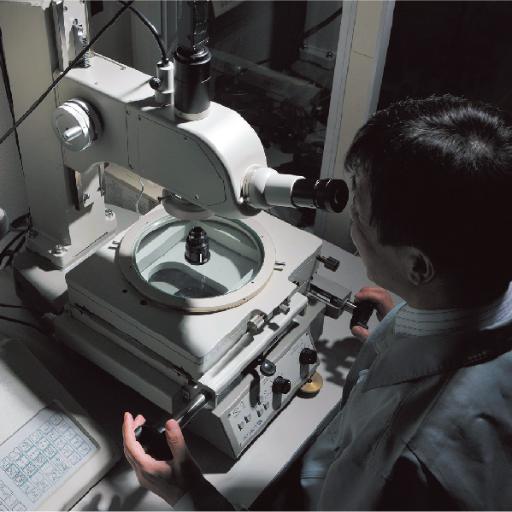
Optical glasses of better grade often referred to as optical glass are essential in diverse industries. These range from medical gadget manufacturers to telecommunication and airspace systems. However, what factors contribute towards the accuracy and efficiency of this valuable material? This can be attributed to the stringent quality assurance measures. In this article, we shall look at the methods and techniques that are involved in the production of optical glasses which help to ensure the better quality and performance of the product. It does not matter if you handle such devices or are just interested in the perfect lenses, optics, and everything that surrounds them, certain devices, processes, and designs of construction that create the work standards will be explained, and you will have a better understanding of why and what is achieved by optical glass QC.
01
Introduction to Optical Glass Quality Control

The main goal of optical glass QC is to check that every piece of glass produced complies with the appropriate standards of clarity, strength, as well as the sharpness scale. Every process of glass production, including material selection, melting, shaping, and finishing, entails a thorough check of its efficiency parameters. Modern equipment, such as spectrophotometers and interferometers, is employed to examine inconsistencies, uniformity, and accurate readings of the sample. Furthermore, in meeting industry regulation, utmost care is taken to ensure that high-quality optical glass can be relied upon irrespective of the sophistication of the end use such as cameras, microscopes, and telescopes.
02
The Importance of Quality Control in Optical Manufacturing
In the manufacture of accessories and tools for optics and precision engineering, quality inspection plays a decisive role. Processes aimed at production are used to manage and control technological procedures and prevent defects from arising in the semi-finished products as well as the finished products. Therefore, on the one hand optical glass QC ensures that products meet highly decorated orders. On the other hand, defects always overtake steady testing. Some optical components do not even reach a stage of steady testing, they are rejected before that stage.
This requires strict standards for optical manufacturing processes for high performance optics as well as in ensuring that high quality optical components are produced that meet the specific requirements. This means checking level of smoothness of the surface, consistency of materials used and accuracy of dimensions in order to provide the required optical result. The use of various inspection methods including test instruments as well as philosophical observations enables the producer to detect the necessary deviations that may affect performance.
Moreover, adherence to the quantitative and qualitative international standards strengthens the confidence of industries that dwell on precision optics. High performance optical components ensure that devices and systems are able to achieve high success at the end of the day and under maintenance either prolong their efficiency or extend their lifetime. After all, a strong commitment to quality control does not only encourage the progress of technology; it offers useful assurance that in an environment where it is critically important, there will be operability and safety.
03
Overview of Optical Components and Their Applications
Optical components are extremely important in a sector where plastilenses and optical glass QC are often required, let aside scientific other kinds. This is especially salient with respect to lenses, mirrors, prisms, and filters in regard to their light altering capabilities. To illustrate, lenses have proved to be very indispensable in optical imaging devices especially microscopes and cameras to project enlarged and sharp images. In periscopes or spectrometers, the purpose is to alter or deviate the light rays and this is possible using the mirrors as well as prisms. As far as photography, display applications or lasers are concerned, some types of wavelengths are restricted using filters and polarizers.
New evidence suggests that optical parts are increasingly integrated into diverse areas such as telecoms, hospitals, and AVs among others. Take optical fibers – they’re revolutionary for they permit the transfer of data at very high speeds without breaking even with the force of gravity. Understanding the significance of these cables for long distances allows one to appreciate the advances made in structural connection. Regarding the illustration of medical equipment, endoscopes and optical coherence tomographic (OCT) scopes are examples, that make use of exquisite optics to perform high quality diagnosis. However, it’s the advent of self-guiding cars that heavily depend on LIDAR sensors which consist of optical glass QC components that allows the acquisition and provision of the information pertaining to the whereabouts of objects and directions.
That is because, there is never-ending need for downsized but efficient optical devices. They are needed in the development of the next generation optical devices, or in the case of the construction of more robust equipment for space missions, or even the enhancement of the simplest consumer devices through fresher approaches to innovation.
Telecoms
Optical fibers enabling high-speed data transfer over long distances
Medical
Endoscopes and OCT scopes using precision optics for high-quality diagnosis
Autonomous Vehicles
LIDAR sensors using optical glass QC components for environment mapping
04
Key Objectives of Quality Control in Glass Manufacturing
The quality control in the manufacture of optical glass aims at guaranteeing that each product is up to the required standard and satisfies the expectations of the customers. The main purpose of quality control is to achieve the following goals:
01
Delivering Quality Products
Improvement in the thickness, clarity and finish of the surface and its uniformity is very important in manufacturing quality glass. There is, therefore, a close supervision throughout production in order to notice visible defects such as occurrence of bubbles or scratches or warp.
02
Guaranteeing Safety
Such materials should always come together with safety provisions, especially concerning the use in buildings, vehicular and electronic industries. Quality control enables the proper evaluation of the impact, ability to last, and thermal capacity to make sure that the products will be safe to use.
03
Improving the Production Process
Detection and establishment of variation highly contribute towards reduction of waste materials in production and improve the efficiency of such activities. Furthermore, higher quality drives the processes down the cost curve due to modern inspection technologies e.g. automated optical systems.
04
Adhering to Appliance-oriented Specifications
Various sectors require distinct capabilities in glass, such as ensuring its different applications within the optical glass have a QC or quality check, or the regulation of different components of the product. Norms have been put in place to ascertain the specific purpose of the glass.
05
Environmental Management Compliance and Its Benefits
Minimizing and controlling all the three areas during production guarantees compliance with the international environmental regulations making the sustainable development goals easier to achieve.
When all quality control techniques are applied, to ensure a good end quality of the product alone doesn’t justify those actions — there is a positive effect on the strategy of the company, and of course, on the image of the brand.
05
Raw Material Inspection in Optical Glass Production
Assessing the Quality of Silica and Additives
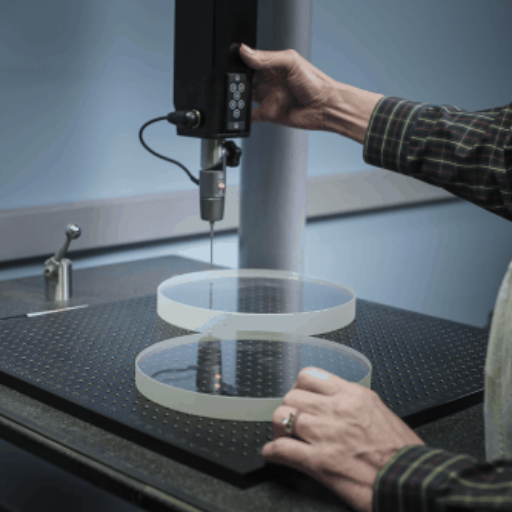
Silica and additives are critical quality control factors in the production of optical glass because they form the basis of the product. The most pure silica becomes very important when you are trying to clarity the optics or eliminate the composition of bubbles or other forms of inclusions within the glass. In order to determine the quality of the silica, there are carefully controlled laboratory processes such as the use of spectrographs for the determination of impurities alongside the new particle size determination methods that can be used to determine the particle size distribution. QA in optical glass production is an important aspect.
Multiple oxides as additives such as boron, titanium, sodium, and others are characterized in terms of purity, chemical reactivity and stability specifications. These components affect important parameters such as refractive index, heat resistance, durability and many others. In addition, advanced instruments such as X-ray fluorescence (XRF) and inductively coupled plasma (ICP) analysis are used to examine and confirm the chemical composition for conformity to the standards of production. The integration of modern data trends and available analytical instruments helps optical glass manufacturers improve the processes and quality of the products thus meeting the requirements of industrial as well as environmental optical glass QC.
| Instrument / Method | Purpose | Application |
|---|---|---|
| Spectrographs | Determination of impurities in silica | Raw material purity assessment |
| XRF Analysis | Chemical composition confirmation | Additive characterization |
| ICP Analysis | Elemental and chemical verification | Conformity to production standards |
| Laser Measurement | Homogeneity and scatterability of raw material | Inline raw material inspection |
| Automated Imaging | Physical defect and foreign matter detection | Inline inspection systems |
Inline Inspection Techniques for Raw Materials
Inline techniques are of high importance in the optical glass materials QC process. They help in the detection of any form of impurities, inconsistences or existence of any other rejection forms in the production line. This is advantageous as inline detection minimizes the possibilities of having any defectives at the end of the production line, upholding the required optical glass QC standards.
The main principle of spectrometry is measuring material properties accuracy in terms of purity, density and refractive index. Laser measurement devices are mostly applied in the measurement of raw material homogeneity and scatterability to ascertain whether those materials meet the set optical performance criteria. Systems with automated imaging are an alternative approach, which afford the opportunity for images of raw materials and their physical custodianship and/or physical disruption to be analyzed to check whether they possess any foreign matter or physical vandalisations.
Inline inspection technologies offer several advantages to manufacturing process as compared to manual ones, for example, this helps to reduce production waste as well as downtime associated with the product line inspection. Such technologies not only improve performance of workers but also maintain the right quality standard which is a prerequisite for production of optical components of glasses for use in a variety of applications such as in telecommunication, medicine or defense. Techniques used in inline inspection have been enhanced and the advancements continue as the evaluation of the use of optical glasses increases and developments in optical glass QC are also made.
Impact of Material Quality on Final Products
The material used for production of optical glass, determines the resultant effect on how good and how long the product will serve it purpose without meeting failure points. The highest quality ingredients such as the ones that are basically pure e.g. silica, are key to ensuring that the final product has all the necessary qualities of optical transparency, light passage and refraction. Any imperfections or the lack of uniformity in raw materials can cause defects in the glass like striae, air bubbles or inclusions that reduces its optical accuracy which is crucial for advanced uses of the glass.
Recent analysis emphasizes the increase in the requirement for advanced materials that are transparent to visible light and can withstand harsh tests without changing state. Industries ranging from photonics to augmented reality and even vehicle automation solutions illustrate examples where the demand for clear and strong optics is evident. For instance, lenses with little or no light distortion are a prerequisite for AR gadgets and hence the quality of materials used in their manufacturing is of paramount importance. In the same way, the optical systems used in the car safety applications such as automatic braking or lane keeping systems need to perform well in metal encapsulation trays supplied with perfect pieces of arylic cap without bubbles as well as in cases over extended ambient temperatures.
Technological innovations such as automatic precision blending of chemicals and analysis of compounds in situ have been adopted to support good practices from optical glass QC. Stressing the importance of material quality, it enables manufacturers to produce optical glass components for rapidly evolving technologies that surpass high expectations in performance.
06
Manufacturing Processes and Quality Control Checkpoints

Key Manufacturing Steps in Optical Glass Production
1
Choosing the Raw Materials
Glass is used in various applications, and each requires a specific raw material. It is noteworthy that the impurities have to be reduced when producing optical glass since the high level of purity affected the critical properties of this glass.
2
Composition Preparation
High weighing scales are used to ensure that all the elements are mixed with, as may be required to maintain uniformity across the composite optics.
3
Fusion
The resultant powder is then placed in a furnace that has extremely high temperatures. This enhances the fusion of powder to form molten optically glass.
4
Purification
The glass that has been molten is cleansed of any bubbles or immiscible materials and other undesired phenomena that would deteriorate the quality of the glass.
5
Shaping
In this process, the glass is trained or shaped into desired models like blocks or sheets subjecting cooling and casting procedures.
6
Thermal Treatment
This is the process where the optical glass is placed in an environment where the temperature is carefully reduced in order to relieve the internal forces that develop in the glass while maintaining its strength.
7
Ample Testing
The optical glass quality control (QC) is performed for every produced set, an assessment that includes examining the characteristics such as optical and physical uniformity or dimensions in a glass.
Identifying Common Defects During Production
Problems relating to optical glass QC may at times or another occur during glass production. Here are some of the more frequently cited of these defects:
| Defect Type | Description | Impact |
|---|---|---|
| Bubbles & Inclusions | Minute amounts of air or other materials within the glass | Affects clarity and uniformity |
| Inhomogeneity | Uneven distribution of materials within the glass | Affects refractive index accuracy and function |
| Striae | Visible markings and streaks from faults in melting or integration | Impedes light passing through the glass |
| Fracture Tension | Internal tensions from shock cooling or improper annealing | Induces cracks or lessens glass longevity |
| Surface Imperfection | Scratches, pits, or surface warping | Degrades optical performance significantly |
In order for a consistent quality to be produced, those procedures must be closely adhered to which means periodic quality checks have to be carried out to make sure the defects are handled before the glass can be considered ready and prepared for optical glass QC applications.
Measurement Techniques for Optical Properties
The accurate measurement of optical properties forms the backbone of ensuring the quality and performance of optical glass. Various methods are used to ensure values of refractive index, dispersion, and transmittance are within required tolerances. Such measurements allow optical glass to satisfy even the highest levels of demand from optical applications.
Method 01
Refractive Index Measurement
Refractive index is an important characteristic of optical quality glass that determines the degree of bend undergone by light as it passes through glass. The characteristic is usually determined using an Abbe refractometer or interferometry. These techniques provide high precision. Consequently, strict monitoring of the refractive index values confirms the glass meets the intended specifications for application.
Method 02
Optical Transmission & Absorption Testing
Depending on its application, an optical glass should be transmitting a specific wavelength of light. Optics can utilize spectrophotometry to measure the transmittance and absorbance of glass at various wavelengths. This tool will ensure minimum energy losses and appropriate function in OT applications that demand excellent optical clarity, like, say, lenses and prisms.
Method 03
Surface & Wavefront Analysis
Optical surface quality and wavefront precision are usually evaluated through the use of instruments such as profilometers and interferometers. These measurements will detect any imperfections or deviations that might affect the output and the high-precision equipment allows checking that the optical surface is best for smoothness and lacks any defects to meet industrial standards.
07
Inspection Methodologies for Optical Glass
Current Inspection Techniques: Interferometry and Spectrophotometry
Technique A
Interferometry
Interferometry is an important technique for control of optical glass with its wide applications in measuring high precision flatness, curvature, and wavefront errors. The operation of its technique depends on the study of the interference patterns that are formed when the reference beam of light is allowed to interact with the test surface. These patterns provide the detailed data of surface deviations at the micron or sub-micron level. Interferometry finds good use in applications that demand great accuracy, are non-destructive, and are able to ensure the quality control of advanced optical components.
Technique B
Spectrophotometry
Glass such as optically transparent laser or LED glass has been subjected to spectrophotometric investigation. It helps assess the transmission, reflection, and absorption properties of optical glass as they vary with light wavelengths. What the spectrophotometer gives from passing light through the glass and measuring its intensity at specific wavelengths is enlightenment as to the optical clarity and performance of the material, and a crucial fact in choosing appropriate glass for applications in which exact light transmission or color accuracy is warranted, such as lenses and filters. Therefore, the techniques of interferometry and spectrophotometry work together in providing optical glasses, which fulfill stringent specifications.
Advanced Methods: Surface Profilometry and 3D Analytics
Profilometry as concerns optical glass QC comes in handy because it accurately conveys the surface morphology of the glass. The determination of the surface, especially the roughness, flatness or other microgeometries occurs in subliminal accuracy levels due to the integration of profilometry with such a non-contact technique as white light interferometry. This makes the glass meet very high quality standards as required for the performance of the optics.
This also is another reason why high profile metrology is integrated with today’s 3D analyzing of the samples. Besides, sophisticated software is acceptable for reproducing minute details of the glass surface in the three dimensions to identify to the manufacturers the surface imperfection that can make the glass non-optical. This integration offers an unrivaled accuracy in manufacture, thereby helping to homogenize optical elements industrially which are used in applications, such as imaging systems, or in telephoto lenses.
Utilizing Inline Inspection Systems for Real-Time QC
In light of QC in optical glass manufacturing, it is important to note that inline inspection systems are instrumental. Such systems enable glass parts to constantly pass in front of the sensors for inspection and any faults or variations can be detected immediately. When defects are detected and corrected early in the supply chain, the manufacturer gets to avoid wastage and ensures that only the best products go through the process.
The most sophisticated inline inspection systems incorporate automatic defect detection, the primary mechanisms of which are the acquisition of high-resolution images and correlation. The systems check such items the smoothness of the surface, the thickness, and the accuracy of the dimensions, to fulfill the standards required. Such inspection takes place in the course of production which helps the manufacturers achieve retention and avoids any further impairment which could have affected the quality of the separated final product.
Installing inline inspection to the production line considerably optimizes all its stages. Full control over the current manufacturing process and instant data reproduction enable operators to make changes at an appropriate moment, minimize the idle time and enable higher manufacturing productivity in this focus. This methodology of quality assurance is real-time oriented, and ensures optical glass QC while avoiding any disturbance in the production activities along with globalization ceases.
08
Industry Standards and Compliance in Optical Glass QC
Overview of Relevant Certifications and Benchmarks
Quality control processes for optical glass are in line with the applicable Israeli standards so that there is consistency in the work. Some of the most pertinent certifications in this field are ISO 9001 dealing with proper management of standards and ISO 10110 which deals with the standard specification of optics and optical instruments. In the defense and aviation sectors, optical elements must often be made to comply with MIL-PRF standards, such as MIL-PRF-13830B, as these standards define the surface and functional parameters. Moreover, the regularization of all these aspects makes sure that the suppliers of optical glass QC products are able to meet the high standards of accuracy required within the industry and beyond as well.
| Standard / Certification | Scope | Industry Sector |
|---|---|---|
| ISO 9001 | Proper management of quality standards | General manufacturing |
| ISO 10110 | Specification of optics and optical instruments | Optical manufacturing |
| MIL-PRF-13830B | Surface and functional parameters for optical elements | Defense & Aviation |
Importance of Compliance for Optical Component Performance
It is important that optical components are subject to the highest standard to ensure they work optimally. Specifications like ISO 10110 and MIL-PRF-13830B focus on the accuracy of such standards as surface quality, clarity of the optics, and the robust nature of optical glass QC. For instance, the use of such materials in aerospace or high-end imaging processes and failure to conform is not an option; functionality may be compromised, components may wear out faster, or worse, missions will fail. Meeting these standards also helps manufacturers in fulfilling the industry’s expectations, promoting global interoperability and safety, and enables them to gain the confidence of the consumers. Therefore, it is necessary to meet such requirements in order to achieve better optical glass performance and maintain the competitive edge in the market.
09
Challenges in Optical Glass Quality Control
Maintaining quality control standards in optical glass QC faces numerous obstacles. Fluctuation in the composition of raw materials will lead to variations in glass quality, which in turn compromises transparency and reduces efficiency. Such a tight cluster of control ensures moderation of such external impacts as the changes in temperature and cooling rates, an undertaking that is not always problem-free. And many cases of bubbles, inclusions, and other defects visible to the naked eye are easily prevented. Because such straightforward solutions cannot always be applied, once implemented, strict compliance with the standards and regulations becomes a costly and lengthy process for optical glass manufacturers. Tying up these quick dots is the provision of high-quality optical glass output for high quality.
Reference Sources
-
Providing the Quality Control in Manufacturing of Optical Elements
Link to source
Discusses in-process and finished product inspection methods, emphasizing the importance of high-quality optical glass in manufacturing. -
An Overview of Some Recent Developments in Glass Science and Their Relevance to Quality Control in the Glass Industry
Link to source
Explores advancements in glass science and the lack of standardized quality control norms in the optical glass industry. -
Comprehensive Analysis of Automotive Glass Production: Challenges, Defects, and Quality Management Strategies
Link to source
Focuses on challenges and strategies for quality control in automotive and optical glass production. -
The Production Quality Control Process Enhanced with Augmented Reality Glasses
Link to source
Examines the use of augmented reality in quality control processes within production environments. - Optical Glass Solutions
10