Get in Touch with Saiweiglass


Optical Glass vs Plastic Optics Comparison: Understanding Glass and Plastic Lenses

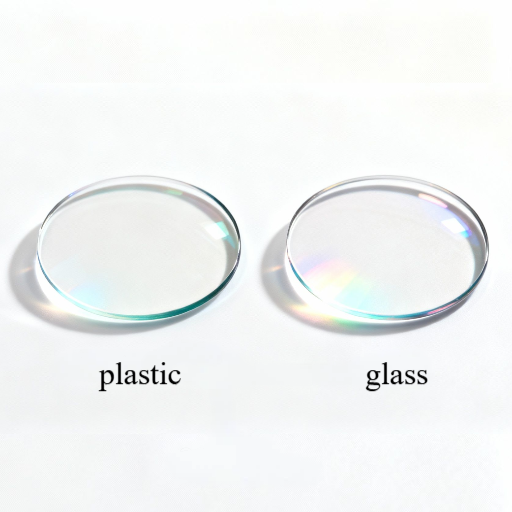
When picking the perfect optical lenses, the question of glass vs plastic optics has always been debatable by the specialists and the buffs of the industry. They both come with their own benefits as well as disadvantages. Therefore, the choice relies heavily on the requirements of the individual. The following article grabs attention to the various characteristics of the optical glass and the plastic lenses, such as the ways of their work, their resistance to forces applied by the user, their weight and the degree to which they are cost-efficient. Understanding the technology behind precision optics, picking sunglasses, or selection of appropriate multiple lenses, this article will serve as an all-in-one guide that will ensure the most favorable resolution of the next question. This is just a sampler of all the primary and secondary characters of each lens type that we are going to analyze.
Introduction to Optical Lenses
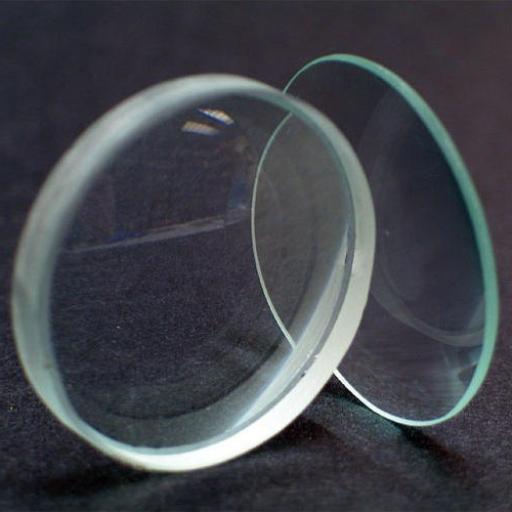
An optical lens is a piece of transparent material discerningly developed to enhance or attenuate the incidence of the light beam via the mechanism of refraction. It has become a general conception that such device comes in handy in a great number of purposes like correction glasses, camera, microscope or even telescopic devices. Lenses can be either optical glass or plastic, each type possessing a different set of advantages in relation to the specific purpose it will be used for. This can be as simple as glass vs plastic optics, with glass being appreciated for its very high transparency and being resistant to scratches where plastics are lighter and cheaper. However, one can easily appreciate such lens systems in a better way by knowing how each one works, what its limitations are and how it can be easily or cheaply solved, therefore giving the customer better information on which system he requires.
What are Optical Lenses?
Lenses are usually made of transparent material, whether glass or plastic, which is intentionally curved to help focus and guide light. Their use is evident in most optical devices including enhancing vision magnifying or taking pictures of objects where the light is bent and focused. The basic principle involves the lens form and its shape, either convex to converge or concave to diverge the light as it passes across the lens. Progress in science and technology has made contemporary optical lenses more advanced including components such as coatings that prevent reflection, UV protection and blue light filters. Therefore, they can be used in a wide array of settings including those as simple as glasses and cameras to more complicated like optics and lasers.
Importance of Lens Materials
It is essential to meticulously think over the material from which the lens is made as it affects its heaviness, strength, clearness and serviceability. For instance, glass lenses are perfect for those optics which need to be extremely accurate without any scratch i.e., photographic optics, glass vs plastic optics. Everyday eye wear and children’s glasses, on the other hand, can be made from plastic lenses which do not weigh much but can resist any impacts more than other materials. Higher index plastics provide thinner and lighter form than typical plastics invite stronger prescriptions. Higher performance material such as polycarbonate and Trivex are lightweight but very impact resistant as well, aside from protecting the eyes against UV rays thus highly recommended for sports optic lenses and safety glasses. Moreover, any lens material can have coatings like anti-reflective, anti-scratch, blue relieving among others to improve functionality and comfort. Choosing an appropriate lens material is critical to achieving precise vision correction as well as sufficient longevity depending on the applications when required.
Overview of Glass and Plastic Lenses
Glass Lenses
Glass and plastic both have their merits and demerits, making them stand out according to their respective utilities; glass lenses are renowned for their exceptional visual clearness and scratch-resistance. Besides, with their density, they offer sharper focus when compared to other materials. Be that as it may, glass lenses are heavier and shatter in a snap with impact, defaming their utility for eyebrows-raising but riskier sports activities such as hitting the punching bag or squash or even for children’s eyeglasses.
Plastic Lenses
On the contrary, plastic lenses are more lightweight and resistant to hits; these make them good for daily wear along with a sporty lifestyle. The modern plastic lens materials, for instance, high-index plastics, aim to so effectively amend vision while being thin and lightweight, especially for higher prescriptions. Additionally, plastic lenses prove to offer lifelong accessibility by providing coatings such as anti-reflective (AR) and UV-withstanding ones. Thus, plastic lenses, with such coatings, become more serviceable and comfortable for everyone.
To all appearances, glasses or plastic lenses have much to do with an individual’s own needs and lifestyle. Good ones to talk about in sight with a tough line and almost no extra problem with weight could be his glasses, with plastic lenses just famous for being a world of such comfort. Being sure of each good thing could be a very adequate help because that way, all of us can make a choice that is in tune with our hopes or with how we have been looking so far.
Key Differences Between Glass and Plastic Optics
01
Durability: Scratch Resistance and Thermal Stability
Glass lenses generally present some advantage in terms of preventing scratches, mainly because they are harder than plastic lenses. This is good news in that a clear glass would be produced without those scratches caused by everyday handling. In addition to considerable heat and external conditions, plastic lenses would buckle, whereas, glass ones would not. Love the fact that progressive lenses manufacturers are conscious of the wellbeing of their lenses so that they can serve the consumer best.
On the contrary, plastic lenses are softer by nature, which makes them more liable to pick up scratches easily; on the positive side, they can be coated with improved scratching-resistant coatings. While this is thankfully true, in the ultimate of like scenarios, plastic lenses can rise to the occasion as proving reliable in temperatures which would naturally have been employed in everyday outdoor activities.
The choice between glass and plastic lenses is mostly determined by the intended use and care considerations. Glass lenses are chosen by many users for their maximum durability and high resistance, meaning they can withstand physically demanding environments. However, for those users who prefer lightweight and impact-resistant lenses, plastic lenses are a good choice. Nontheless, plastic lenses also add scratch coating, which makes them even more suitable.
02
Optical Performance: Refractive Index and Clarity
Typically, an in-depth analysis of the optic line would indicate differences between glass and plastic in terms of refractive index and clarity, and it would go as far as to link them with particular advantages depending upon the design requirements. In general, however, the refractive index of glass lenses will be within the range of 1.5 to 1.9, giving rise to a thinner lens, and hence, offering an efficient optical quality. Thus, the greater the refractive index, the lesser the amount of distortion and the greater the quality of visual clarity, positioning it as premiere for the precision application to be of help in the numerous scientific instrumentation and luxurious optics.
On the other hand, plastic lenses generally have an index varying from 1.5 to 1.7-about even lower than that of a glass lens. Modern improvements in material technology have stirred the prodigy of high-index plastics-which, however, vie, to some extent, with the conventional glass lens. These materials can be put through coatings or undergo treatments that may provide some clarity and reduction in chromatic aberrations-making them suitable for eyeglasses and devices in which weight and impact resistance are crucial.
Glass Light Transmission
≥ 90%
Clear, glare-free imaging
Polycarbonate Transmission
88–91%
Varies by coating & quality
When it comes to glare or interreflection, the glass provides better performance in clarity and light transmission, while a plastic of good quality acts as another/all-around lighter choice for daily use. The decision between the two will come down to the specification of optical quality versus durability and weight relative to the intended application.
03
Manufacturing Costs: Tooling, Material, and Volume
Several aspects are apparent when discussing the manufacture costs of glass versus plastic optics. Glass optics require more complex tooling procedures due to the material being very hard and the high precision needed for the subsequent grinding and polishing. This therefore results in higher tooling costs upfront as well as potentially longer production times. Glass material is also costlier than plastics, thereby increasing costs further.
The opposite combination of types of plastics has one of the most rewarding show states as far as production economics go. With scalable, cost-effective manufacturing methods, like injection molding for mid and high volume production, the initial cost of molds can be very high, but with large production volumes, the subunit cost can be very low—a major consideration for consumers when choosing cheap manufacturing for high-volume applications of long life use. On top of that, their lighter weight might also mean less money spent on shipping and handling.
In the end, specialty optics, i.e. glass optics, are best for those applications where precision and performance are justified by cost and where plastic is indicative for less expensive, high-volume packing applications, where moderate optical performance is permissible, instead.
Advantages and Disadvantages of Glass and Plastic Lenses
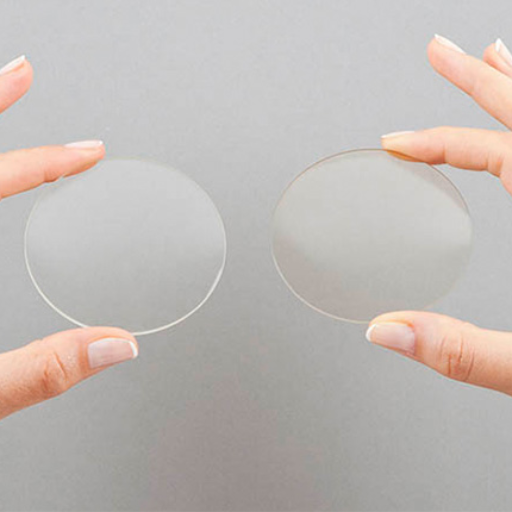
SummaryPlastic lenses are lightweight and cost-effective but may scratch or degrade, while glass lenses provide superior optical clarity and scratch resistance but are heavier and more breakable.
Comparative Analysis: Glass vs Plastic
| Key Point | Plastic | Glass |
|---|---|---|
| Weight | Lightweight | Heavy |
| Durability | Less Fragile | Fragile |
| Scratch Resist | Low | High |
| Optical Clarity | Moderate | Superior |
| Cost | Affordable | Expensive |
| Heat Tolerance | Moderate | High |
| UV Protection | Requires Coats | Built-in |
Applications of Glass and Plastic Lenses
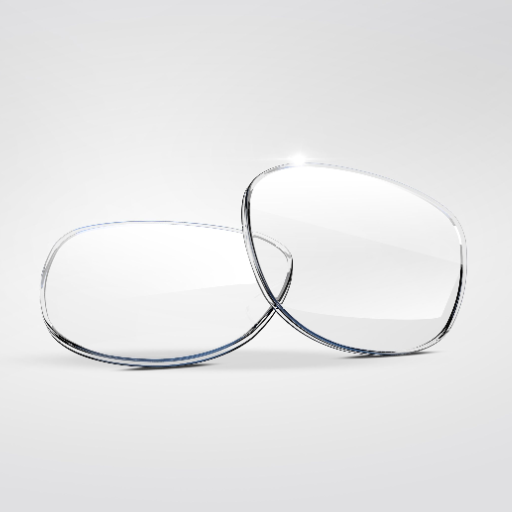
🔬 Medical Devices and Glass Lenses
Glass lenses with superior optical clarity and durability under heat are key to the advancement of cutting-edge medical devices. Glass lenses are critical to optical instruments such as microscopes, endoscopes, and diagnostic imaging devices because of their precision and undesired distortions. This sense of resilience-rather scratch resistance besides low tolerance of wear distributions that may occur over time-tends to create a reliable means of commitment within one of the most critical regions or systems in a medical field. This is as the natural characteristics of the lenses help safeguard the sensitive instruments against radiation damage from light, while withstanding sterilization and high heat. Even though they are heavier than plastic and much more fragile, glass often guarantees undistorted definition and reliability-the ultimate quality that is required in fields of maximum precision.
📱 Consumer Electronics and Plastic Lenses
Plastic lenses have seen a notable rise within the consumer electronics industry, being favored for their amorphous potential, lower prices, and dynamic affordances. Polymer technology’s most modern advancements have been seen as making tough materials that can well hold up with any rigid specifications from devices, such as camera phones, tablets, or lenses according to quality requirements. An increase in search volume—35% as reported from market trends-analysis conducted over 1 year—is emerging as a direct consumer preference toward portable, efficient electronic technologies with plastic lenses on their side-as with being formed into complex shapes-and the resistance to impact signify a valuable asset in designing the new wave of screens, optics, wearables. Cost wise, plastic lenses are outstanding for tomorrow’s best innovation in consumer electronics, given their features.
🚗 Automotive Technology: Glass or Plastic?
Due to the advancements in automotive technology, glass and plastic lenses behave differently and each is suitable for different ranges of applications. Glass lenses are known for their break-proof and scratch-resistant nature and the ability to provide perfect optical clarity for long periods of time. However, these glasses are heavier and may shatter and splash in all directions. Although light, plastic lenses are sturdy against impact and can be moulded into complex shapes suitable for modern design requirements and advanced lighting systems. With weights ever decreasing and sizes ever expanding, that are more difficult to manufacture using plastic, almost all the latest automotive vehicles prefer plastic lenses, because of their versatility and safety improvements, while glass still finds certain areas of steady applications in high-end or luxury setups where the requirement of good optics is a must.
Environmental Impact of Glass and Plastic Optics
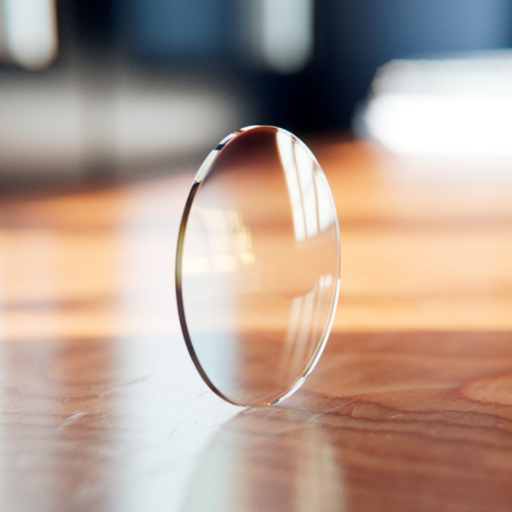
Recyclability of Glass vs Plastic
Both glass and plastic have distinct recyclability traits, with glass being infinitely recyclable without quality loss, while plastic’s recyclability varies greatly depending on its type and often degrades in quality after multiple cycles.
| Parameter | Glass | Plastic |
|---|---|---|
| Recyclability | Infinite | Limited |
| Quality Loss | None | Degrades |
| Types Recycled | All | Varies |
| Energy Needed | High | Moderate |
| Reuse Rate | High | Low |
| End Product | Same | Different |
Manufacturing Processes and Their Impact
Glass Optics
The manufacturing of glass optics is fundamentally different from plastics, imparting distinct environmental and practical implications. Glass optics are made by heating raw materials, like silica, up to very high temperatures, and then shaping and cooling them down to satisfy the customer demand. A vast chunk of energy is consumed in this process, thereby creating a high carbon footprint in comparison to plastic manufacturing. On the other hand, glass production results in the making of immensely durable, top-quality items with fantastic optical clarity and minimal environmental impact. The disposal of glass hardly invites any argument in the realm of environment because glass is inert and infinitely recyclable.
Plastic Optics
The manufacturing of plastic optics is mainly comprised of techniques such as injection molding or extrusion, requiring much less energy and able to be conducted at lower operating temperatures, which significantly speeds up the process and cuts down on production costs. This is inevitably a better option for scalability and affordability. Plastic optics might still need to be coated for the finishing perform to match that of glass on an optical level, while its degradation-potential flaws bring it disadvantages. Likewise, environmental repercussions from the plastic optics used are thus salient enough owing to the fact that plastic eventually leads to environmental pollution, when discarded inappropriately or imperfectly recovered.
Conclusion
In conclusion, glass optics have a long life, are more easily recycled, and are better environmentally than plastic optics do have a lower energy demand. Plastic optics are mostly first choice for those applications that require a relatively smaller cost to anything mass-produced. However, the complications of durability in the long term pose a significant issue, particularly with waste management. Therefore it may be concluded that depending on the purpose and intended lifespan of the product, each material will display unique advantages and disadvantages.
Emerging Trends in Sustainable Optical Materials
In the effort toward sustainability with respect to optical materials, certain significant trends have surfaced:
- 01
Biobased Polymers
One is the development of biobased polymers from plant oils and cellulose that are renewable sources, thereby moving away from the fossil fuel feedstock. - 02
Advanced Recycling Technology
Besides that, recycling technology is being developed allowing materials recovery from out-of-service optical devices for reuse. - 03
Hybrid Materials
Additionally, hybrid materials, as lightweight and durable as plastic while still keeping some of the functional properties of glass, have come to the fore. The aim is to minimize environmental impacts whilst maintaining performance and cost effectiveness.
Reference Sources
-
-
Specifying Glass and Plastic Optics – What’s the Difference?
Link to source
This paper discusses the unique freedoms and options offered by plastic optics compared to conventional glass optics. -
Plastics as Optical Materials
Link to source
Explores the optical properties of plastics and their applications, comparing them to traditional glass optics. -
Selection of Plastics for Optical Applications
Link to source
Provides an overview of plastic optics, including their hardness and how they compare to glass in optical applications. -
Investigation of Techniques for Fabricating Plastic Optical Components
Link to source
Examines the fabrication techniques for plastic optical components and compares their properties to glass optics. - Optical Glass Solutions
-
FAQ