Get in Touch with Saiweiglass


Top 15 Anti-Fingerprint Glass Manufacturers to Watch in 2026: Updated List


Anti-fingerprint glass protects clear optics without leaving a trace of smudges, making it suitable for high-quality display visuals in smartphones, automotive displays, and industrial touch panels. The overall cell and glass technologies available for the AF glass process are equally as relevant. What is the technology of the anti-fingerprint glass, what are anti-smudge abilities, and how do the cover glasses, tempered glasses, and ultra-thin custom glasses play in today’s AF market?
01 / Introduction
Introduction to Anti-Fingerprint Glass

Anti-fingerprint coatings, a common barrier against fingerprints, tend to diminish and/or lessen darker spots, while leaving the transparency and tactile sensitivity unaffected. Resulting from the application of an oleophobic and hydrophobic layer, the coating will augment the repellency and ease of cleaning upon the glass panel or glass cover. Ultimately, the equipment becomes costly, leading, through a balance of proper adhesion to the substrate, to maintain acceptable transmittance and assisting touch-screen performance. AF glass is extensively used for bespoke cover glass in smartphones, automotive displays, and precision touch screen units.
What is Anti-Fingerprint Glass?
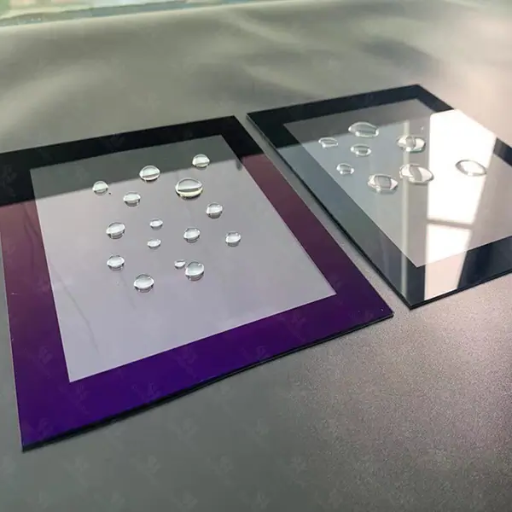
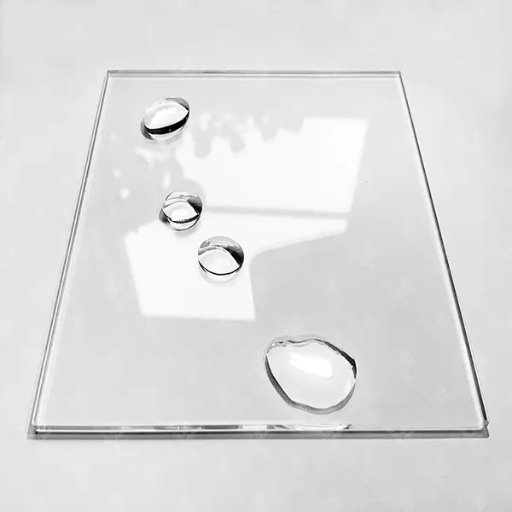
The oleophobic coating on AF Glass sufficiently reduces any damage from oils and smudges while keeping transparency and sensitivity of the touch response intact. The application deposits essentially a physically sound, wear-resistant layer of coating on the glass surface to minimize oils from skin contact, in turn minimizing the need for cleaning and maintaining transmission over the life of the glass. High-end anti-fingerprint solutions maintain the intended transparency and maintain a smooth touch response on capacitive touchscreens while maintaining the appearance of a low fingerprinting regime for a clean look at all times when applied to tempered glass, ultra-thin cover glass, or custom glass substrates.
Importance of AF Coating in Modern Glass Products
Pillar 01
Easy Cleaning
Improved surface feel with stable touch characteristics and effortless wipe-down performance.
Pillar 02
Optical Fidelity
Uniform thickness coatings ensure durability while meeting optical transmittance and inspection criteria.
Pillar 03
Durability
Superior bonding reduces maintenance costs and extends the lifecycle of glass cover components.
High-quality AF coatings make a world of difference to users with respect to easiness of cleaning, stability of touch, and ensuring the optical fidelity. A high-quality anti-fingerprint coating can improve the user’s overall experience through its ability to clean easily, an improved surface feeling with stable touch characteristics, and the claims of optical fidelity and transmission. The superior bonding and uniform thickness of coatings ensure durability under daily use and cleaning routines. Surfaces with AF coating enhance the first impression, reduce maintenance cost, and meet stringent inspection criteria across varied glass types for manufacturers of glass cover components and custom cover glass.
Overview of the Anti-Fingerprint Market
Tempered and ultra-thin glasses are designed to facilitate a good balance copolymer plan while dealing with the adhesion factor to bonding glass or glass fibers. Also, there is another healthy pretreated bonding of these glasses giving the hinges a central scent, so one could safely assume that, prior to the arrival of the af hotline, anti-fingerprint coatings on templated or modified surfaces would be the most convenient as part of needed reductions in the mechanical stress of the interlayers prepared with glass-and-glass composites.
02 / Rankings
Top 15 Anti-Fingerprint Glass Manufacturers

Ranked by specialization, innovation, and global market presence.
03 / Comparison
Comparison Table of Top Anti-Fingerprint Glass Manufacturers

Discuss chemistry of the coating, adhesion strength, transmittance, durability, and types of glass supported with documentation. This would help buyers integrate into an evaluation of the anti-fingerprint (AF) glass options applicable to a smartphone, touch screen, automotive display, or industrial tools. Each row should entail: anti-fingerprint coating chemistry, hydrophobic and oleophobic balance, durability on glass surface, compatibility with tempered glass and ultra-thin cover glass, and whether custom cover glass and quality inspection documentation for AF-coated pieces would be provided.
| Aspect | Details to Compare |
|---|---|
| Coating performance | Anti-fingerprint chemistry; hydrophobic/oleophobic balance; adhesion strength; optical transmittance; surface durability |
| Glass and documentation | Compatibility with tempered glass and ultra-thin cover glass; availability of custom cover glass; AF-coated quality inspection documentation |
04 / Specifications
Key Features and Specifications
Rank controlled contact angle, confirmed bond strength, and transmittance/haze data across different thickness. Give further details about light transmission percentages, and haze, together with complete optical color neutrality, to ensure screen brightness is protected. Please list the thickness supported by ultra-slim to ultra-strong tempered glass, edge finishing, and glass cover geometries. Include results of long-term environmental and abrasion testing, easy-to-clean claims with custom glass processing availability, and rated AF anti-fingerprint properties.
| Specification Area | Details to Provide |
|---|---|
| Optical Performance | Light transmittance percentages, haze values, optical color neutrality, transmittance/haze across thickness ranges |
| Material and Design | Supported thickness ranges (ultra thin to robust tempered glass), edge finishing, glass cover geometries |
| Surface and Durability | Measured contact angles, verified adhesion, environmental and abrasion test data, easy to clean performance |
| Processing and Coatings | Availability of custom glass processing, consistent AF anti-fingerprint outcomes |
05 / Pricing
Pricing and Value Analysis
Calculate the cost per m² complemented by yield, rework, and cleaning-cycle savings for an accurate figure of total cost of ownership encased in a schiff of fingeretrace resistance. Higher end anti-fingerprint versions do command higher costs per unit though end up paying themselves off through fine measurable transmission and adhesion that endures, with less than normal claims returing post quality checking. Check tiered prices for volume orders, custom-made cover glass lead time, as well as the possibility of bundling such services as coating certification. Do make sure the consideration of saving and anti-salient properties for smudge/crude oil beats in smart phones, touch panel devices, and automotives.
Consider
Volume Tiered Pricing
Check for cost reductions on bulk orders and negotiable lead times for custom cover glass.
Consider
Coating Certification Bundles
Look for services that bundle AF quality certification documentation with orders.
Consider
Total Cost of Ownership
Factor in yield, rework savings, and cleaning-cycle reductions for true per-m² value.
06 / Performance
Performance Metrics: Light Transmittance and Durability
Examine the anti-fingerprint coating systems with aesthetically pleasing low fingerprints on the glass surface. These coatings should provide high transmittance, low optical shift, stable retention of repellency that can endure extensive abrasion/chemical/humidity cycles.
| Performance Metric | What to Verify |
|---|---|
| Contact angle retention | Track oleophobic decay rates and repellency after repeated cycles |
| Scratch resistance | Assess durability across each type of glass and substrate |
Ensure AF coated samples preserve touchscreen responsiveness and optical uniformity on tempered glass, ultra thin cover glass, and complex glass cover shapes.
07 / Benefits
Benefits of Using Anti-Fingerprint Coated Glass

Antifingerprint (AF) coating diminishes smudging so as to enable clear transparency and to resist wear while compromising with a good adhesion and graded touch sensitivity. The hydrophobic and oleophobic properties of the coating will come into play, presenting adherence to its platform, thereby resisting wear and scratch when integrated with a touchscreen. The appearance of a fingerprint is controlled while cleaning is made easy thanks to the top glass, ultra-thin cover glass or unique cover glass.
Ease of Cleaning and Maintenance
Reduced surface energy provides for quick wipe-downs without streaking and wastage of cleaning chemicals/platforms. Very sturdy anti-fingerprint coating for resistive overlays are there to keep chemical use and downtime at bay, all while sustaining high optical transmission and ensuring optical neutrality on cover assemblies of touch screens. The strong adhesion of the coating system ensures that the af-coated surface meets stringent quality control and is well-preserved under repeated microbial stress tests with some consumer electronics products, as well as laboratory/industrial equipment.
Enhanced Aesthetic Appeal
“AF layers help in keeping the fingerprint minimal with the company in optical uniformity, gloss, and color accuracy.”
— AF Glass Technology Overview
Smudge repellent layer enhanced the optical uniformity and transmittance to preserve a crystal appearance. This substance condenses the fingerprints into halos and haze on glasses used in screens located in automotive displays and custom architectural glassworks. While the technology of the coat guarantees the measured consistency with a layer of constant thickness to make sure that the AF glass preserves gloss and contrast and repel the remains from causing light scattering effects on the glass surface.
Impact on User Experience and Longevity
The long-lasting adhesion coupled with high resistance to scratching expand the longevity of the screen and hence minimize the frequency of cleaning for better usability. The antifingerprint coat lowers the incidence of the fingerprint build-up on the surface and hence guarantees clear sight, also within the navigation of use in bright areas. The adhesion aid coupled with the selection of the material empire also greatly improves the service life of tempered glasses and ultra-thin substrates, hence destined for long and far-reaching optical stability. Af anti-fingerprint solutions actually in the glass set with everything to gain for the long-term lifecycle value, enhanced even further from the good result provided by quality control critique last but not least because a reduced necessity for cleaning hopefully deflects chemical wear.
08 / Conclusion
Key Takeaways and Future Trends in Anti-Fingerprint Glass

Key Takeaway
Verified repellence, high transmittance, durable adhesion, and proven touch sensitivity characterize AF glass. Remember to prioritize AF coated solutions providing repellency guarantee and easy-to-clean capacity for glass panels all while maintaining that the touchscreen stays responsive.
Proper implementation of it all can balance the durability of the coating, anti-fingerprint efficacy, and quality control data for consistent performance and long product life, from cellphones to automotive displays to industrial equipment.
Summarizing the Best Manufacturers
Top suppliers will then mix intense chemistry, clear production, rigorous experiments with a scalable production flow, and the relevant documentation. Their premium anti-fingerprint portfolios extended to tempered glass, ultra-thin varieties, and cover glasses adapted for ultimate transmittance, repellency, and sub-adhesion. The top suppliers also offer performance metric documentation available with extremely rapid sample turnaround and a large-scale process for anti-fingerprint glass to limit understanding, shield optical integrity on touch screens and panels.
Future Innovations in AF Coating Technology
- → Self-healing matrices
- → Green curing processes
- → Smart inline inspection
- → Longer-lasting repellency
- → Index-matched coatings
- → Multi-functional stacks
Expect more enduring repellency, self-healing matrices, green curing, and smart inline appearance inspection. Coating tech developments would aim for contact angles that hold longer than usual, direct disintegration tests of oleophobicity, and index matching to maintain translucency on curved or ultra-thin glass products. Expect highly integrated smart inline quality inspection; better adhesion promoters for emerging substrates; and the ionomeric organosiloxane adhesion layer, multi-functional stacks that composite anti-smudge stacks with anti-glare or scratch-resistance but not at the expense of glass surface feel or touch screen sensitivity.