Get in Touch with Saiweiglass



About 1 out of 31 hospitalized patients in the U.S. on any given day has a healthcare-associated infection, according to the 2024 CDC HAI Progress Report. Surface-mediated transmission is one input to that number, and no doubt why procurement teams at display OEMs, medical-device manufacturers, and architectural suppliers are adding antibacterial glass to their specifications. Getting it right turns out to be more difficult than it sounds: half the panels described as “antibacterial” fail the protocols buyers assume they passed.
This guide is intended for B2B buyers determining how to identify, specify, and source antibacterial glass for hygiene-critical environments – including OEM antibacterial glass panels and services. It discusses the chemistry of active ions, the JIS Z 2801 and ISO 22196 test protocols, the certifications that matter, pricing bands readers can use for estimation, and the red flags that identify a compliant vendor from a story marketer.
Quick Specs: Antibacterial Glass at a Glance
- Efficacy standard — R ≥ 2.0 on JIS Z 2801 or ISO 22196 (equivalent to 99% bacterial reduction against S. aureus and E. coli)
- Active-ion choices — Silver (Ag⁺) lifetime ion-exchange; Copper (Cu²⁺) 5-10 yr; zinc oxide (ZnO) 3-7 yr; titanium dioxide (TiO₂) 3-5 yr, photocatalytic
- Optical transparency — ≥ 91% transmission for cover-glass use cases
- Hardness — Mohs 7+ after chemical strengthening
- Thickness menu — 0.55-2.0 mm (display cover); 3-12 mm (partitions, doors); 6-24 mm (laminated architecture)
- Conformity — JIS Z 2801, ISO 22196, EN 12150 (toughened), plus US EPA registration where marketed with public-health claims.
What Actually Defines “True” Antibacterial Glass
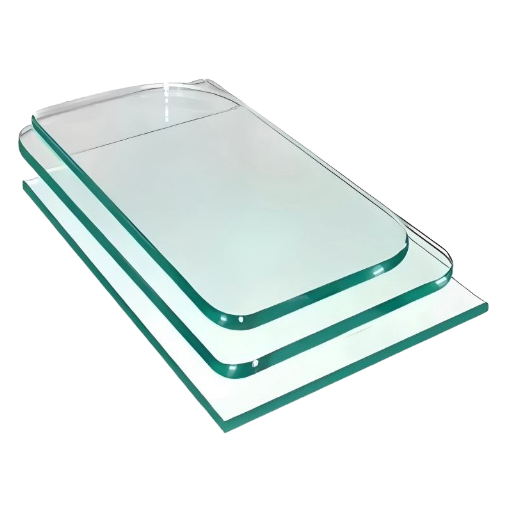
For B2B purchases, antibacterial glass is defined as glass that visibly and measurably reduces bacterial survivability when put through an acceptance contact protocol – not a disinfectant spray or a loosely marketed “hygienic” glass. Separating the two comes down to one thing: the test protocol.
Standard here is JIS Z 2801 (the Japanese Industrial Standard) or if marketed globally ISO 22196. Both inoculate a test panel with Staphylococcus aureus and Escherichia coli, incubate at 35 ± 1 °C for 24 hours, then count surviving colonies against an untreated control. The antibacterial activity value R is the log reduction — a panel must show R ≥ 2.0 (99% reduction) to qualify as antibacterial under the standard; R ≥ 3.0 (99.9% reduction) is the industry-premium level most display OEMs require.
Since the criterion affects human health, US regulation layers in yet another: marketing a glass item with any public-health antibacterial assertion then subjects it to the EPA antimicrobial pesticide registration process under FIFRA. Learn more in the compliance segment – it is the single factor most buyers overlook that turns out to be the largest cost pain point.
Practical takeaway: If a supplier cannot produce a current JIS Z 2801 or ISO 22196 test report naming both test organisms plus the R-value, what is being sold is not antibacterial glass — it is decorated glass with a marketing label.
How Antibacterial Glass Works: Ion Mechanisms Compared
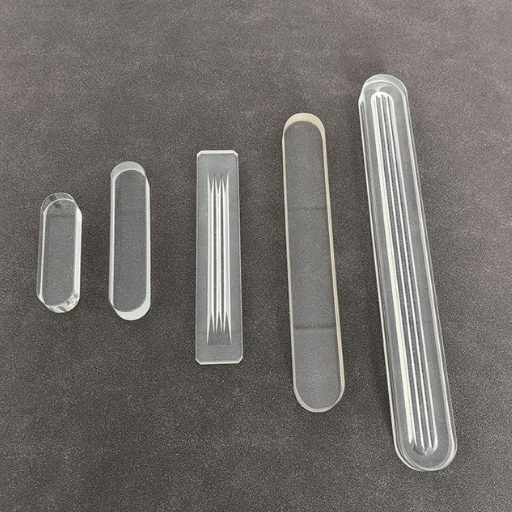
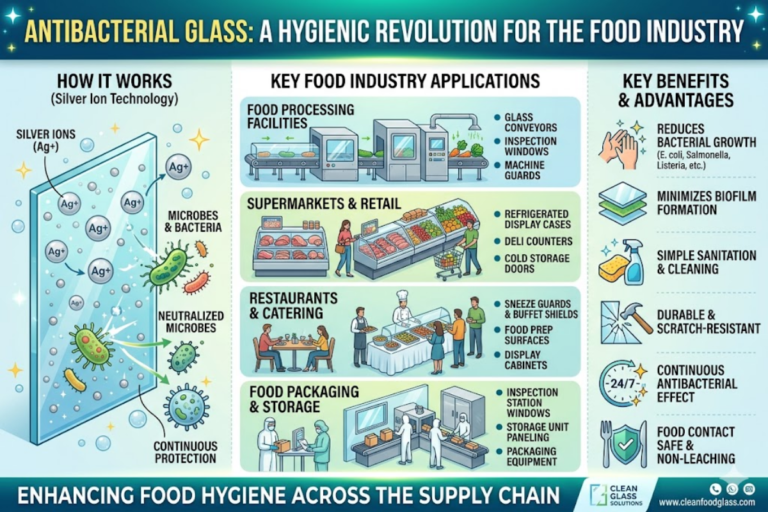
antibacterial activity in glass results from metal ions-the antibacterial agent- incorporated slowly from the surface. The ions diffuse to work individually in the bacterial cell to disrupt membrane proteins or DNA. They also act as bactericidal to inhibit the growth on contact with S. aureus and E. coli, while to a lesser extent the antimicrobial effects are likewise active against fungus species when the glass is designed to satisfy both JIS Z 2801 and JIS Z 2911.
Four chemistries of ions predominate in commercial glass produced with proven antibacterial properties-values, and they are not interchangeable by spec sheet.
Both silver ion-exchange and silver nanoparticle surface aliazings are the two most studied pathways to delivery from peerreviewed work. The former provides a fairly reliable in matrix performance while the latter offers a more rapid initial kill but a much reduced service life. Both deliver the same antimicrobial properties at the microbial level the difference is the duration of the reservoir.
| Ion Chemistry | Mechanism | Durability Window | Best Fit |
|---|---|---|---|
| Silver (Ag⁺) | Cell-membrane disruption + protein denaturation | Lifetime when ion-exchanged into glass matrix | Displays, touchscreens, long-service medical |
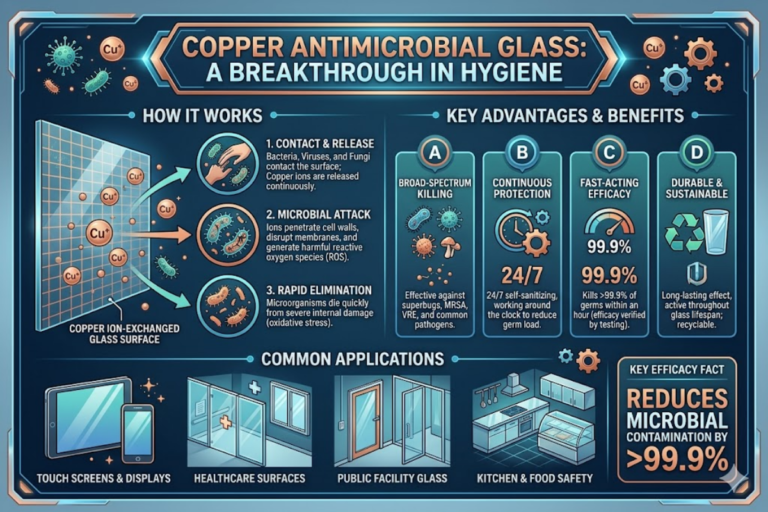
| Copper (Cu²⁺) | DNA damage + broad-spectrum oxidative stress | 5-10 years | Food-prep surfaces, HVAC, high-touch retail |
| Zinc oxide (ZnO) | Reactive oxygen species + direct contact | 3-7 years | Cost-sensitive architectural, partition glass |
| Titanium dioxide (TiO₂) | Photocatalytic ROS (requires UV/visible light) | 3-5 years; light-dependent | Windows, skylights, sunlit interiors |
Silver holds the largest commercial volume — roughly 44.3% of the global antibacterial glass market in 2024, per Grand View Research. Durability explains it: silver ions distributed by high-temperature ion-exchange live inside the glass matrix and keep replenishing the surface for the life of the panel, while copper and zinc are usually doped into the glass batch or a thin surface layer and deplete as ions migrate out. For a closer look at the chemistry trade-offs, our breakdown of silver versus copper ions walks through the selection logic.
Practical, question not only “what ion” but how is it incorporated – ion-exchange, melt-doped or surface-coated. Surface coated panels cease to be active as the coating wears off, ion-exchange panels don’t.
Antibacterial vs. Antimicrobial vs. Bioactive Glass
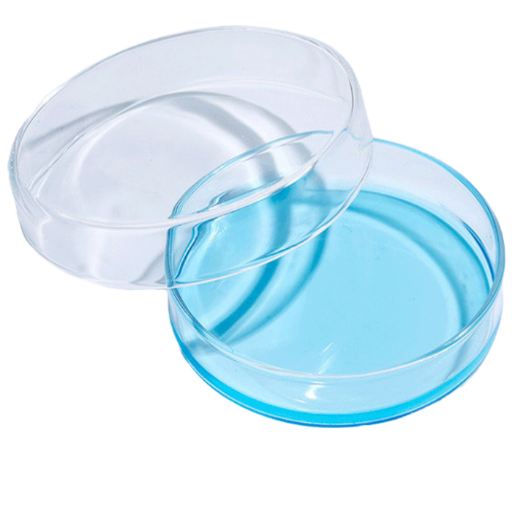
These three terms show up in supplier datasheets, and they are not interchangeable. Confusing them could lead a purchasing department to buy the wrong component in the shortest time.
| Term | What It Kills | Typical Application Domain | Relevant Standard |
|---|---|---|---|
| Antibacterial glass | Bacteria only (S. aureus, E. coli as reference) | Displays, partitions, touchscreens, cover glass | JIS Z 2801, ISO 22196 |
| Antimicrobial glass | Bacteria + fungi + sometimes viruses/protozoa | Hospitals, food service, architectural | JIS Z 2801 (bacteria), JIS Z 2911 (fungi), ISO 21702 (viruses) |
| Bioactive glass | Not a cover product — bonds with bone/tissue | Surgical implants, dental scaffolds, bone grafts | ISO 10993, FDA 510(k) |
Antimicrobial is the umbrella term — a product described as antimicrobial usually includes antibacterial activity, but the reverse is not guaranteed. For a side-by-side walk through the labeling rules, see how antimicrobial differs from antibacterial glass.
Bioactive glass is the one most B2B buyers misfile. Bioactive glass — think Bioglass 45S5 — is engineered to react with bodily fluids and form a hydroxyapatite interface for bone bonding. It is a scaffold material, not a cover material. If your procurement spec requests “bioactive glass panels for a hospital nurse-station backsplash,” someone has copied language from a dental-implant paper. The correct term there is antimicrobial or antibacterial.
8 Specifications You Must Verify Before Ordering
Here is where you will print this page and tape it to your RFQ template. There is a correct test report or datasheet answer for each of these questions if the supplier is standoffish on any of these consider it a red flag:
- Antibacterial activity value (R). Demand R ≥ 2.0 for general use and R ≥ 3.0 for medical or food-contact environments. A credible test report states R for both S. aureus and E. coli separately.
- Test standard cited by number. “JIS Z 2801” or “ISO 22196” — not “antibacterial tested” and not “lab verified.” The 2011 and 2010 revisions remain the working references; the harmonized standards are technically equivalent on method, organisms, and calculation.
- Test organism coverage. Both S. aureus (Gram-positive) and E. coli (Gram-negative) are mandatory — a report showing only one organism is incomplete.
- Active ion chemistry and integration method. Ask whether the ion is ion-exchanged into the glass, doped into the melt, or applied as a surface coating. Ion-exchange gives lifetime performance; coatings do not.
- Accelerated durability data. A credible supplier runs post-abrasion or post-immersion JIS Z 2801 — for example, 48-hour water immersion followed by re-testing. This is where spray-on “antibacterial coatings” collapse.
- Optical clarity (LT%). For display and touchscreen use, demand ≥ 91% light transmission; for architectural use, ≥ 88% is acceptable.
- Mechanical properties. Thickness tolerance (±0.05 mm display, ±0.2 mm architectural), flexural strength (≥ 200 MPa post-toughening), Mohs hardness (7+ for aluminosilicate chemically strengthened), and edge quality (ground/polished per EN 12150 if toughened).
- Shelf life and re-test cadence. Some ZnO-doped and TiO₂-based glasses lose measurable activity within a few years; ask for the supplier’s field-performance data or a retest obligation in the PO.
Practical takeaway: These eight items are what should appear on the incoming inspection checklist; only when all these are OK on paper and in first-article inspection can you proceed with the commercialization conversation.
OEM Customization: Sizes, Coatings, Shapes & Tolerances

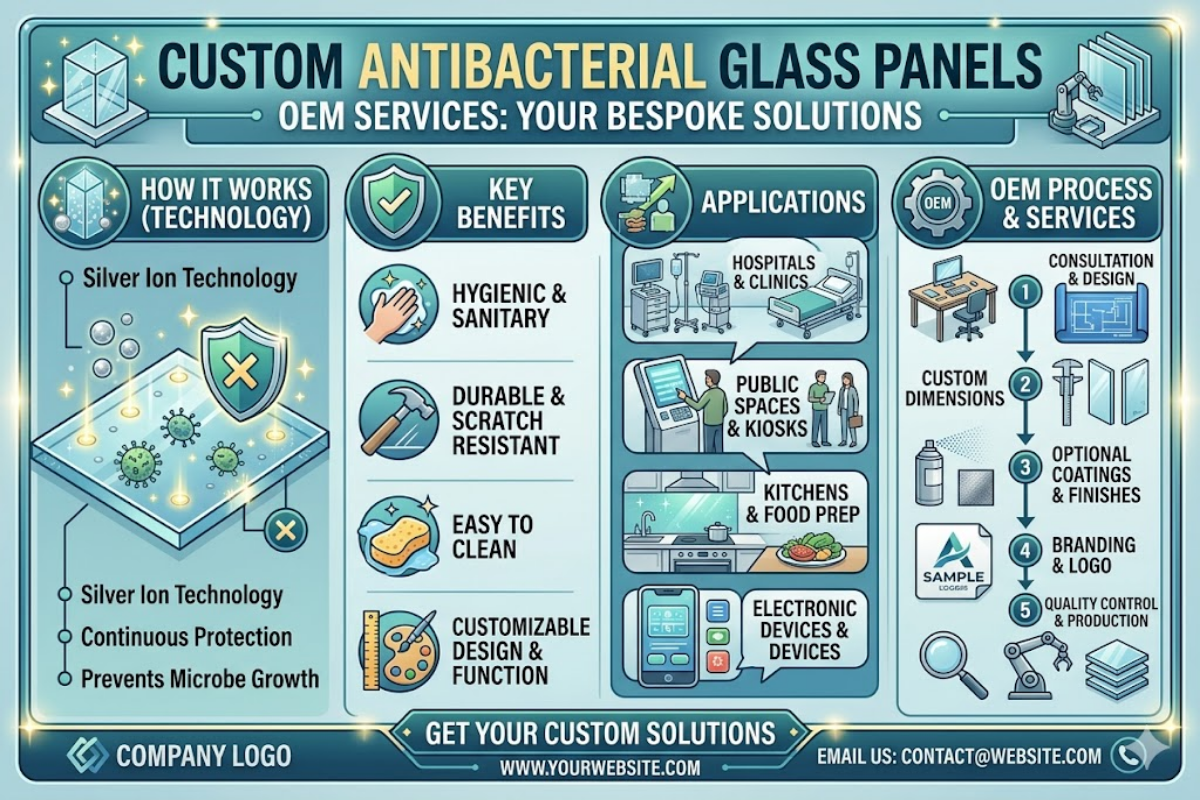
Here’s where “custom antibacterial glass panels – OEM services” actually means some thing. Most B2B projects do not need a generic SKU; they need a glass product molded to a bezel, a sensor window, a partition frame, or a cleanroom door. An OEM supplier typical customization menu looks like this.
Standard OEM Customization Menu
- Cut size – custom dimensioned to 0.1 mm (display cover) or 0.3 mm (architectural).
- Shapes — rectangular, round, irregular contour, internal cut-outs (CNC)
- Edge treatment – ground, polished, chamfered, C-edge for frameless mounting.
- Stackable surface coatings – AG (anti-glare), AR (anti-reflective), AF (anti fingerprint).
- Printing and branding — silkscreen, laser-etch logos, icon cut-outs
- Lamination — PVB or SGP interlayers producing a glass/polymer composite (6-24 mm total, for partitions, sliding doors, patient rooms).
- Toughening – chemical strengthening (aluminosilicate) or thermal tempering (soda-lime) as defined by EN 12150.
Engineering Note — Ion-Exchange Tolerance Control
In silver ion-exchange processing, bath temperature, time, and AgNO₃ concentration determine both ion penetration depth and residual surface compression. Running the exchange at 400 °C for 4-8 hours in a 95:5 KNO₃:AgNO₃ bath typically yields an exchange depth of 10-20 µm. Specifying “silver ion-exchange to ≥ 10 µm with R ≥ 3.0 retained after 48-hour water immersion” on the purchase order locks the supplier into real performance, not a first-hour lab result. Anti-fingerprint coating layers (AF coating working principle) and anti-reflective layers can be built up over the silver ion-exchanged layer without inhibiting antibacterial performance; just ensure the coating vendor properly specifies compatibility.
Realistic OEM MOQ for custom antibacterial glass panels runs much lower than for custom glass bottles. A mature OEM factory with its own ion-exchange kiln and cutting lines can quote 50-500 m² for a first run, with 30-45 day lead times covering tooling, cutting, strengthening, ion-exchange, and testing. Buyers accustomed to 10,000-piece bottle MOQs are often surprised that panel OEM is more flexible — panel-cutting economics differ from blown-glass economics. For a look at what a full manufacturing setup looks like, see Saiwei Glass OEM capabilities.
Key takeaway: Specify the integration method (ion-exchange vs. coating) explicitly in the PO. A supplier offering ion-exchange on aluminosilicate is engineering for a decade of service; a supplier quoting a spray-on finish is engineering for a cleaning cycle.
Certifications & Test Documentation to Demand
A competent supplier provides you a compliance binder with four docs, before you ask for them. Missing documents are your early warning signal.
| Document | Issuing Body | Why It Matters |
|---|---|---|
| JIS Z 2801 / ISO 22196 test report | Accredited third-party lab (SGS, TÜV, Intertek) | Primary evidence of antibacterial performance |
| EPA registration or statement of non-claim | US Environmental Protection Agency | Required if marketing public-health claims in the US |
| EN 12150 / ASTM C1048 certificate | European or US safety-glass body | Mandatory for toughened glass in building codes |
| ISO 9001 quality-system certificate | Accredited registrar | Indicates consistent process control lot-to-lot |
EPA registration is underweighted. Under FIFRA, any US-distributed product with a antibacterial claim directly or indirectly to the public – “kills germs,” “protects against E. coli,” “antibacterial protection,” etc – must be EPA-registered, according to the legislation on the books. The Treated Articles Exemption applies only to nonpublic-facing claims. Enforcement is not theoretical: according to Beveridge & Diamond’s 2025 regulatory review, EPA undertook 20+ antimicrobial-related FIFRA enforcement actions in the first half of 2025 alone.
Practical call-out: If your marketing will claim the glass “kills bacteria” or “protects health,” you need an EPA-registered product in the US supply chain. If marketing only says the glass “has been tested for antibacterial activity per JIS Z 2801,” you have more flexibility — but sales and marketing must hold the line on language.
How to Vet an Antibacterial Glass Supplier
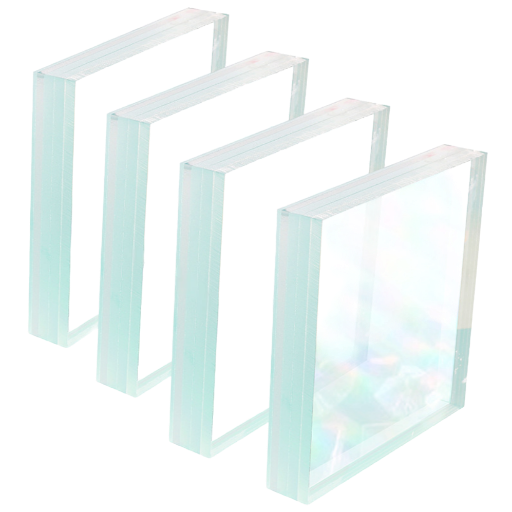
Most vetting failures are not about the glass. They are about asking the wrong questions.
The 5-minute red-flag screen. Before the technical deep-dive, ask the supplier these four questions:
- Ask: “Can you send me the JIS Z 2801 report with test date and lab name?” if you are met with a stall or a report older than 3 years, this is a warning sign.
- Ask: “Is the antibacterial activity from an ion-exchange process, a melt-doped glass, or a surface coating?” If you receive no reply, you are talking to a trader, not a producer.
- Ask: “Have you run JIS Z 2801 after simulated service aging?” A reliable supplier will reference abrasion, immersion, or UV-exposure retest data.
- Ask: “Who is your EPA registrant of record for the US market?” If the respondent is “we don’t need one” without qualification of Claim scope, they misunderstand EPA regulation.
Common misconception — sprayed-on “antibacterial coatings.” A 2025 study in Applied and Environmental Microbiology tested a commercial quaternary-ammonium spray-on biocide in a working microbiology lab and found that three ethanol or water wipes were sufficient to remove detectable anti-S. aureus activity. In real cleaning cycles the coating did not last 30 days. Any supplier quoting an after-market spray as a substitute for integrated ion chemistry is selling you a cleaning-cycle problem, not a durable surface.
Field-vetting shortcut: Request a witness retest — ship the supplier’s panel to an independent lab (SGS, Intertek, TÜV) and pay for your own JIS Z 2801 result against both S. aureus and E. coli. Expect to pay under US$800, and the result resolves every ambiguity in the supplier’s paperwork.
Cost Drivers & Realistic Pricing Ranges
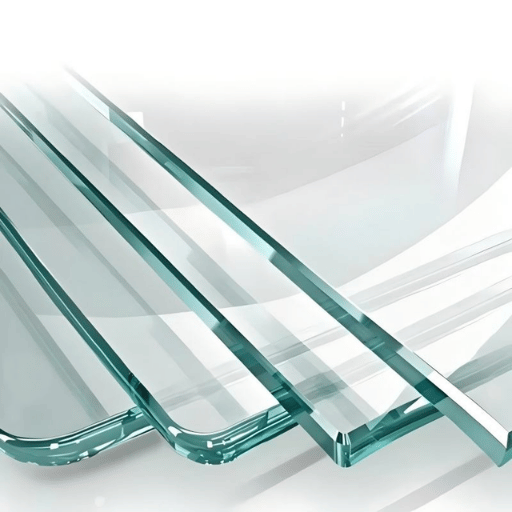
Globally, the antibacterial glass market reached roughly USD 290 million in 2024 and is projected to compound at 6-7% annually through the end of the decade. Pricing is not uniform across that market — four levers explain most of the variance you will see in quotations.
| Cost Lever | Low End | High End | What Drives the Delta |
|---|---|---|---|
| Ion chemistry | ZnO / TiO₂ | Silver ion-exchange | Silver premium + longer kiln time |
| Integration method | Surface coating | Ion-exchange | Durability premium — 3× typical |
| Substrate | Soda-lime | Aluminosilicate | Hardness, scratch resistance, cover-glass grade |
| Compliance scope | JIS report only | JIS + EPA registration + EN 12150 | EPA adds five- to six-figure upstream cost |
Pricing in this market moves on ion cost, kiln time, and paperwork overhead more than on glass-substrate cost. Buyers who specify “silver ion-exchange on aluminosilicate with EPA registration and 48-hour immersion retest” pay multiples of a ZnO-doped soda-lime panel — but they are also buying a different product. Matching the spec to the actual duty cycle of the application is the only way to avoid overpaying (or underbuying). For cover-glass substrates that pair well with chemical strengthening, see our notes on aluminosilicate glass.
Key takeaway: Get at least three quotations and compare them line-item on integration method, test report scope, and EPA status — not on per-square-meter price alone.
Frequently Asked Questions
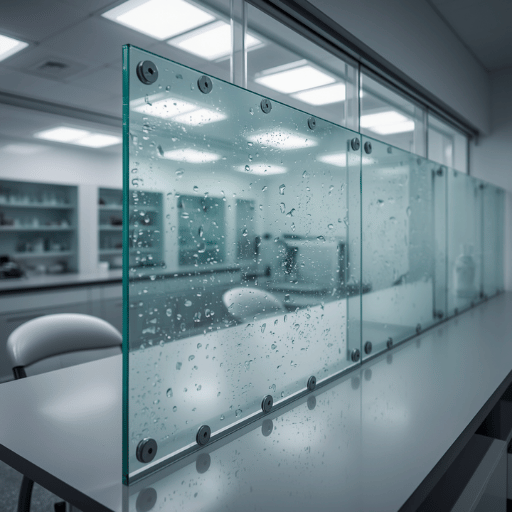
What is antimicrobial glass?
View Answer
Antimicrobial glass is flat glass whose surface reduces the viability of microorganisms — bacteria, and in some formulations fungi or viruses — through metal ions (silver, copper, zinc) released from the glass matrix or a thin surface layer. It is used in displays, touchscreens, partitions, and architectural applications. Antimicrobial is a broader term than antibacterial; antibacterial glass addresses bacteria only.
Which quality of glass is best for antibacterial applications?
View Answer
Chemically strengthened aluminosilicate glass with silver ion-exchange is the highest-durability option for long-service installations — it pairs Mohs 7+ surface hardness with ≥ 91% optical clarity and lifetime antibacterial performance. For cost-sensitive architectural uses where surface wear is modest, ZnO-doped soda-lime toughened glass is serviceable for 3-7 years. The best glass is the one whose ion chemistry, integration method, and certification scope match the duty cycle you have to document.
Do antibacterial ion coatings wear off over time?
View Answer
It depends on how the ion is integrated. Surface-applied spray coatings lose activity within a handful of cleaning cycles — a 2025 peer-reviewed study found that three wipes with ethanol or water removed detectable anti-S. aureus activity from a tested quaternary-ammonium spray. By contrast, silver ion-exchanged glass retains activity for the service life of the panel because ions are held inside the glass matrix and replenish the surface as they migrate out.
Is antibacterial glass the same as bioactive glass?
View Answer
No. Bioactive glass (for example, Bioglass 45S5) is a specialty material formulated to bond with bone and soft tissue; it is used in dental scaffolds, surgical implants, and bone-graft substitutes. Antibacterial glass is a cover, partition, or architectural material that resists surface microbial growth. The two serve entirely different markets and are regulated differently — bioactive glass falls under medical-device frameworks (FDA 510(k), ISO 10993), whereas antibacterial cover glass is specified against JIS Z 2801 / ISO 22196.
What minimum order quantity is realistic for OEM antibacterial glass panels?
View Answer
A mature antibacterial glass OEM factory with its own ion-exchange kiln typically accepts first-run orders of 50-500 m² — far lower than custom glass-bottle MOQs that can exceed 10,000 units. Lead times run 30-45 days for custom sizes, edge treatment, strengthening, ion-exchange, and pre-shipment testing. Stock-size orders can ship in under a week. Confirm MOQ, lead time, and first-article inspection terms in writing before opening a PO.
Do I need FDA or EPA registration for antibacterial glass in a medical device?
View Answer
It depends on the marketing claim and the end product. Glass sold as a component of a medical device generally falls under FDA medical-device regulation alongside the device (510(k) or higher, per device class). Separately, any public-health antibacterial claim marketed to US customers — “kills bacteria,” “antibacterial protection” — triggers EPA antimicrobial pesticide registration under FIFRA, regardless of form factor. The Treated Articles Exemption does not cover explicit or implied public-health claims. Buyers should clarify with regulatory counsel whose registration (component supplier’s or device manufacturer’s) will carry the claim.
Need a quote on custom antibacterial glass panels?
Saiwei Glass runs silver ion-exchange on aluminosilicate substrates with in-house JIS Z 2801 pre-compliance testing. Share your panel dimensions, thickness, and target R-value for a tooling-ready quote.
A note on sources.
Test-method definitions (JIS Z 2801, ISO 22196, R-value calculation) are drawn from peer-reviewed and accredited-lab references cited below. Market-sizing figures are cross-verified across three independent research firms (IMARC Group, Grand View Research, Verified Market Research) and reported as a rounded midpoint. Durability claims for spray-on biocides reference the 2025 study published in Applied and Environmental Microbiology. OEM capacity and lead-time ranges reflect current Saiwei Glass manufacturing practice and are indicative — final quotations depend on specification, volume, and compliance scope. Where the literature does not give a single definitive number (e.g., ZnO/TiO₂ field durability), we present ranges rather than precise values.
References & Sources
- Current HAI Progress Report — US Centers for Disease Control and Prevention
- Critical physiological factors influencing antimicrobial testing according to ISO 22196 / JIS Z 2801 — PLOS One (via NIH PubMed Central)
- Antimicrobial Efficacy Testing for Surface-Bound Antimicrobial Products — Intertek
- Antimicrobial Pesticide Registration — US Environmental Protection Agency
- PRN 2000-1: Applicability of the Treated Articles Exemption to Antimicrobial Pesticides — US EPA
- Real-world testing of the durability claims of a commercially available spray-on surface biocide (2025) — American Society for Microbiology, Applied and Environmental Microbiology
- Antimicrobial non-porous surfaces: comparison of ISO 22196:2011 and ISO 7581:2023 — Frontiers in Microbiology
- Antibacterial Glass Market Size, Share & Industry Report, 2030 — Grand View Research
- Global Antibacterial Glass Market Statistics 2024-2033 — IMARC Group
- EPA Continues Focus on Antimicrobial Pesticide Enforcement in 2025 — Beveridge & Diamond
Related Articles
- Antimicrobial vs. Antibacterial Glass: A Buyer’s Clarification Guide
- Copper vs. Silver Antimicrobial Glass: Which Ion Chemistry Wins Where
- Antimicrobial Glass for Hospitals: Application Guide
- Aluminosilicate Glass: Substrate Guide for Cover-Glass OEM
- Corning Gorilla Glass: Material Reference for OEM Buyers