Get in Touch with Saiweiglass


Copper vs Silver Antimicrobial Glass: Which Ion Wins for Your Application

Copper vs Silver Antimicrobial Glass: A Data-Driven Comparison for Engineers and Specifiers
An honest compare from a manufacturer who sells both-when the copper ion glass wins, when the silver ion e×change wins and the optical, regulatory and procurement trade-offs nobody else talks about.
📐 Quick Specs: Copper vs Silver Ion in Glass
- Spezies spezifisch: Ag (antibakteriell, viruzid im Verschluss-, wirksam für Fusspilz bzw. fungi secundus); Cu (bakterizid, viruzid im Verschluss, wirksam gegen Sprossen pilz.)
- EPA status: (continuous sanitizer) Cu alloys 95.6% -Registered (Reg. No. 82012-1), Ag – not registered as surface sanitizer
- Optical Neutrality in Glass; Ag equal to (bear in a crucible 63 gm of this); Cu (if not co-doped with Zn the glass is said to have a hue due to yellow/brown fit and the blue co-doping system is not enough for 2005); E less than (0.08 the term blue due to the presence of a co-doped triplet, related to blue 630830 nm detection photo flash;
- Cost of raw material ratio: Cu I ~0.17/oz so Ag I I $ 25/oz (~100× cheeper)
- Markedsandele, antimikrobielt glas 2024: Sølv-baseret 90,4% (Grand View Research)
- Inhibition of bacterial resistance development: Cu inhibits horizontal gene transfer; Ag resistant strains documented
While most copper vs. silver comparisons you find online are prepared by companies that only stock a silver or only offer a copper solution, we design, manufacture, and has available antimicrobial glass, with both: silver ion exchange (our display-quality panels) and copper ion technology (healthcare and architectural surfaces), so we have no motive to say one is better than the other for your particular application. We compare the ions along the dimensions that ultimately determine the specifications sheet: performance within your environment, the manufacturing process that secures the ion within the glass, the optical and regulatory compromises, and the five-year total cost of ownership. We reference both sides of the published research where our evidence points differently.
At a Glance — Copper vs Silver Antimicrobial Performance
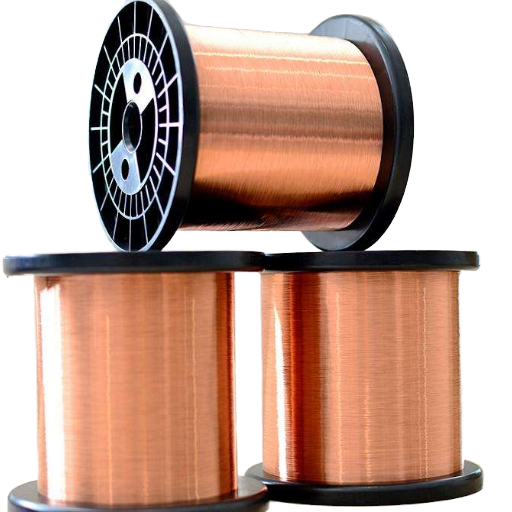
On a stainless steel coupon at room temperature and dry, copper kills 99.9 percent of E. coli within an average of 2.2 hours. Silver, under the same conditions, performs abysmally. One 2022 review by Esco Lifesciences summarizes the data simply: at room temperature and approximately 20 percent relative humidity, “Silver antimicrobial activity is almost inexisting.”1 Dampen the surface, increase the relative humidity, and suddenly silver ions are dissolving in the solution, attacking the thiol groups in the bacterial cell wall, acting as a biocide.
Neither one is better than the other. They are simply suited to differing environments.
For glass, that environmental sensitivity is less relevant than two other facts. One, according to the 2024 industry report from Grand View Research, silver-based antibacterial glass owns an estimated 90.4% of the world market share—leveraging the substitution value advantage of color-neutrality and ion-exchange durability rather than the traditional reliance on kill speeds.2 Two, copper has gained a regulatory “seat at the table” that no silver glass has earned: the EPA Register EPA Registration No. 82012-1 covers copper alloys with at least 95.6% copper as a continuous antimicrobial surface,4and that registration was revised in 2020 to enable residual efficacy claims against the SARS-CoV-2 virus.5 Silver has no equivalent United States surface-sanitizer registration.
| Dimension | Copper Ion | Silver Ion |
|---|---|---|
| Dry-surface kill speed (E. coli) | ~2 h to 99.9% | 5–24 h, often longer at <30% RH |
| Wet-surface kill speed | Maintained or enhanced | Strong, often outperforms Cu |
| Spectrum | Bacteria, viruses, fungi, fungal spores | Bacteria primary; virus/fungi secondary |
| EPA continuous-sanitizer status | Registered (Reg. No. 82012-1) | No equivalent surface registration |
| Color in glass | Brown/red tint unless co-doped with Zn | Color-neutral, ≥91% LT typical |
| Raw material cost | ~$0.17 per ounce | ~$25 per ounce |
| Resistance development | Blocks horizontal gene transfer | Silver-resistant bacterial strains documented |
If your spec is centered on interior display surfaces, capacitive touchscreens, or visible-light-optical clarity there is one clear winner here: silver ion exchange. If the glass is to be exposed to high-moisture sterile environments- operating rooms, food prep, mass transit handrails- copper’s broader spectrum and EPA-backed continual claim makes its dark tint a more serious contender. Sections below explore why and the behavior of each ion once permanent beneath the glass surface instead of living on top as a coating.
How They Kill — The Mechanism Difference Behind the Numbers
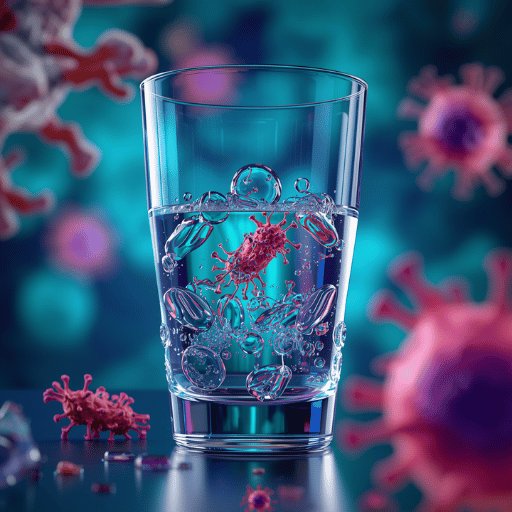
Both copper and silver are broad-range biocides; they are just toxic in different ways. As the first-century-plus of biocidal research shows, knowing the mechanism can show why the two metals behave so differently in dry versus wet environments and why hybrid Cu-Ag formulas are catching on.
The copper mechanism: oxidation cycling and DNA damage
Silver and copper have been “integrated into materials science and microbiology for over a century” according to the University of Utah, and they kill in different ways. Copper will alternate between its two ionic forms Cu I and Cu II in the presence of tissue, gene rating the reactive oxygen species which cause the damage to cells and denaturation. A 2025 study by Sciencedirect of copper oxide nanoparticle ROS generation versus harshness of conditions illustrated the ROS damage to bacterial DNA as a primary failure mode for treated cells. Since copper’s Cu I / Cu II cycling does not require moisture to progress, it is why copper and copper blends work on dry surfaces where silver cannot.
But there is a second-order effect often overlooked in comparison blogs. Multiple peer-reviewed scientific studies and a popular Reddit forum r/science thread reveal that copper alloys prevent horizontal gene transfer of genetic resistance between bacteria, while the bacteria that survive then go on to pass along resistance dominant plasmids. Silver does not offer these additional protections and silver resistant strains of bacteria have already been observed in hospitals.
The silver mechanism: thiol binding and membrane rupture
Silver ion (Ag ) attacks bacteria along three pathways. In the cytoplasm, Ag ions bind to thiol groups disrupt the cytoplasmic membrane structure. Generated from the silver surface; Ag ions can bind to DNA within a bacterial cell and disrupt its reproduction. Silver ions are capable of building their own reactive oxygen species and Gold Nanoparticles can generate this ROS too. Efficiency in ROS production is dependent on the efficiency of the corresponding reduction of silver ions. Most silver salts vary in their solubility; AgO can produce a more sustained level release of ions than AgNO and therefore exhibit a greater biocidal value.
What this means inside a glass matrix
However, when the metal is incorporated into the silica matrix and not merely coated on the top, the kinetics are different. Silver ion exchange in soda-lime or aluminosilicate glasses results in an almost permanent Ag ion reservoir which outwardly diffuses when bacteria by and deposit moisture on the surface. Copper doped glass-ceramics, though, react in a different way – Cu(I) ions are held in a controlled crystalline phase and can leach Cu(I) ions in a controlled and biocidally useful way.
When both formulations are successfully made, the time of equal biocidal activity lasts for the life of the glass. However, it is interesting to note that a Sciencedirect study on silver-zinc-copper-doped soda lime glass found that pure copper can potentially fail to release ions in a biocidally useful way when not formulated appropriately – a counterintuitive result we will get to in the manufacturing method section below. Basically, for the procurement engineer, it is not the ion alone that matters – it is also how it has been incorporated into the glass.
Antimicrobial Efficacy Data — JIS Z 2801, ISO 22196, and the EPA Test Methods
Only three test standards represent the bulk of published efficacy data on antimicrobial glass and surface coatings. For homogenized comparison, JIS Z 2801 (Japan, 2010) and ISO 22196 (international, 2011) are nearly identical—they both 24 hour expose a known inoculum of bacteria on the test surface at 35 C and 90% relative humidity before assessing log reduction relative to an untreated control. One 2024 review in PMC NCBI found ISO 22196 to be “the gold standard for antimicrobial surface coatings” but also pointed out that the high humidity in this condition favourably biases silver into making a comparison.6 The alternative EPA copper-alloy protocol uses a totally different kind of exposure that is more applicable to discrete dry indoor surfaces, which partially explains how copper can have a one-year sanitizer claim under that platform instead of JIS conditions.7
Engineering Note: Instructions for the reading of a JIS Z 2801 R-value
The standard upon which antibacterial activity is generally reported is R = log(N / N), where N is the colony count from an untreated control after 24 h, and N is the colony count from the cleaned surface. R 2 indicates a 99% reduction, R 3 a 99.9% reduction, and R 5 a 99.999% reduction. An R-value alone is not a guarantee of a hospital-grade or food-contact rating.
These ratings depend on further regulatory verification. U.S. FDA, EPA, and EN 1276 protocols are the industry standards.
A glass with R 2 for E. coli will not necessarily function equivalently against a fungal spore or an enveloped virus unless they are approved testing agents.
| Test Standard | Condition Bias | Expected Cu Result | Expected Ag Result |
|---|---|---|---|
| JIS Z 2801 (35 °C, 90% RH, 24 h) | Wet, warm — favours Ag | R ≥ 3 typical | R ≥ 4 commonly reported |
| ISO 22196 (same parameters) | Wet, warm — favours Ag | R ≥ 3 typical | R ≥ 4 commonly reported |
| EPA copper-alloy protocol (dry, ambient) | Dry, room temp — favours Cu | 99.9% in 2 h registered | Often fails baseline |
| EN 1276 (suspension, 5 min) | Liquid contact — favours Ag | Cu salts effective | Ag salts effective |
All gram positive microorganisms such as S.aureus and gram negative types such as E. coli show up on the standard organism panel and both copper and silver prove to have anti-bacterial properties against the entire panel whilst providing documented different log-reduction values in some instances. Fungus testing generally looks at either Aspergillus niger or Candida albicans in JIS Z 2801’s antifungal annex; here it is the spectrum of antimicrobial activity and whether the material inhibits spores of fungi in addition to fungi itself that will determine the appropriate specification for food-services or outdoor architectonic applications. Some hybrid antimicrobial products also incorporate a third antimicrobial agent — usually titanium dioxide as a photocatalyst layer — that extends the UV endurance of either copper or silver, while preserving the antibacterial properties of the base glass. The antimicrobial properties of silver have been characterised most thoroughly in nanoparticle (Ag NPs) form against gram-negative species, where the properties of silver release into a wet inoculum drive the kinetics. Comparing two antimicrobial-silver glass datasheets the first question should be “which standard was the silver tested under and with which organism?” for example, a good R 2 value against S. aureus on a JIS-coupon will not provide the assurance that 99.9 percent reduction in two hours of a high-traffic post-consumer surface does in EPA dry conditions. Saiweiglass are happy to specify and provide R 2.5 against S. aureus and E. coli for our silver-ion antimicrobial glass in JIS standard, this is a result comparable with the 90percent market share silver has in display material and electronics.
Inside the Glass — Ion Exchange, Coating, and Embedded Methods
Most copper-versus silver comparisons end at “what kills it best?” for a procurement engineer specifying antimicrobial glass the more relevant discussion is how is the metal bonded to the glass and choices are ion exchanged, a chemical paint applied directly to the aluminosilicate and a ceramic/sol-gel spray applied piggybacked with anti-fingerprint or anti-glare coating options from whichever supplier has the more efficient method for the application required.
1. Ion exchange (silver, sodium-replacement)
Ion exchange immerses a chemically strengthenable glass, aluminosilicate, in a molten silver-nitrate or silver-zinc-copper salt bath at ca 400 C. Silver ions diffuse into the surface and replace sodium ions in the silica network creating a lasting store of silver several micrometers into the finished glass, not an exfoliated coating. A silver-zinc-copper doped soda lime glass, published in a peer-reviewed US Journal of Glass Science research paper was proven to show antimicrobial profile after 500+ washdown cycles where surface plated glass products degraded in 6-18 months. This process is used in most silver ion anti-microbial glass on the market today.
✔ Advantages
- Permanent — lasts the lifetime of the glass
- Hospital-grade cleaners do not strip the active ion
- Muffle ends compatible with chemically strengthened aluminosilicate (Mohs 7+) base glass
- Color-neutral; ≥91% light transmission preserved
⚠️ Limitations
- Higher per-unit cost than coating
- Restricted to glass chemistries that exchange Na⁺ readily
- Silver favours wet-environment applications
- No EPA continuous-sanitizer registration
2. Surface coating (silver or copper nanoparticles in a binder)
A silver, copper, or silver/copper nanoparticle suspension is spray applied or dip-coated onto the glass and heat cured into a thin polymer or sol-gel layer. Coatings are inexpensive and are able to be applied to most glasses. They can subsequently be specified with anti-fingerprint or anti-glare coatings over the top. Trade-off here is durability. A report on antimicrobial coatings published in 2026 noted the cost of silver nanoparticles in the polymer matrix results in snowballing costs of the final product and in use the active nanoparticles are progressively lost and the antimicrobial effect is lost in 6-18 months.
3. Embedded glass-ceramic (copper-glass-ceramic powders)
A 2019 Nature Communications publication detailed a copper-glass-ceramic powders with in-situ cuprite nanocrystals to release Cu(I) in a self-limiting, water-mediated manner. Latex paints loaded with the powders resulted in a >99.9% reduction in colony forming units for S. aureus, P. aeruginosa, K. aerogenes, and E. coli under the EPA copper-alloy test method – similar efficacy to a solid copper surface, but at a lower cost and without the unwanted eye-catch consumption of a large coppery-brown number on the surface. That same technique can be sintered with a glass-bonded ceramic tile, giving a copper-based antimicrobial surface into Healthcare flooring or architectural cladding that is not instantly apparent as utilitarian: no one has ever complained the room was too red-brown.
Optical, Aesthetic, and Mechanical Trade-offs in Glass Applications
If the glass is positioned in front of an LCD or OLED panel, colour fidelity is a strict requirement. Human eyes begin noticing colour casting at a Delta E (following the CIE 1976 Lab*) of 3; just barely perceptible colour shifts in the displayed image. Infections control waterborne illnesses relies on at least a Delta E of 3 – but this drifts into the orange-red with copper-doped glasses, depending on the ratio of Cu(II) to Cu(I) and how best the material was annealed9. One 2025 Scientific Reports paper showed that by Cosputtering copper with zinc in a nanostructured ultra-thin layer of metal on Gorilla Glass, Delta E could remain below 3 while the glass maintained >80% light transmission with the EPA-approved efficacy in killing waterborne bacterial strains. a real engineering “home run”, but not not a process most antimicrobial glass manufacturers currently operate.
Silver ion exchange does not suffer the same issues. Silver in low concentrations is effectively invisible to the human visual receptors in the silica matrix; the glass composites pass >91% light transmission with imperceptible colour change. A significant reason for silver avascular domination in the display glass market segment.
Purchasing error we observe frequently within the OEMs: the buyer chooses the copper-doped antimicrobial glass for a public-facing touchscreen install because they read that copper kills faster, then discover the material displays, and refuses the product. Faster killing is a fact, and the colour alteration perceptible; the specifications must account for both. For architecture panels, signage, coughing handrails or sneeze guards, and foodservice equipment where the warmer hue is desired or at least not immediately apparent – copper is an option. For a mobile display, Medical monitor, electric touch interface – silver ion exchange wins on the optical spec first; efficacy is a second consideration once nothing else is in the running. Saiweiglass typically combines silver ion exchange with our gold standard anti-fingerprint (AF) coating on display glass, reserving the copper-glass-ceramic for surfaces where degradation of the colour specification is not key.
Cost, Durability, and Real-World Application Fit
As far as raw materials market pricing, raw silver trades at approx twenty five dollars per troy ounce, and raw copper continues around seventeen cents per ounce.20 Based on raw material values, that ratio is about one-hundred-to-ones in Copper’s favor. With EOScu’s biocide blog-series some up-to-date tracking, the unabashed cost was made clear: at today’s retail metals pricing, silver costs close to $400 per pound while copper is just under three fifty.21 For the antimicrobial glass market conception to size, if spec rules were only based on raw material costing, copper should have long since dominated.
Is it not. Silver-based antibacterial glass holds 90.4% in 2024 because of the loaded cost per finished glass unit is relative to manufacturing method rather than raw material. Ion exchange consumes only a few micrograms of silver per m 2—mere rounding error compared to the cost of the chemically strengthened aluminosilicate base glass and the energy intensive ion-exchange bath.
Copper-glass ceramic processing can use controlled atmosphere sintering and more tolerant formulation specification, and the headline metal cost is reversed as soon as the glass goes off the production line.
| Application | Recommended Ion + Method | Why |
|---|---|---|
| Capacitive touchscreen, smartphone, tablet | Silver ion exchange on aluminosilicate | Color-neutral, durable, ITO-compatible |
| Hospital ICU touch surfaces | Copper alloy or Cu-glass-ceramic | EPA continuous claim, broad spectrum, prevents resistance spread |
| Medical device display | Silver ion exchange + AF coating | Optical clarity + biocompatibility + sterilization durability |
| Architectural panels, sneeze guards | Copper-glass-ceramic embedded | Slight warm tint acceptable; broader microbial spectrum |
| Public-transit handrails, ticket kiosks | Copper alloy or hybrid Ag-Cu-Zn | High-traffic dry surfaces; copper kills faster |
| Food-service equipment | Silver ion exchange (FDA GRAS path) | Wet contact, food-safe, lifetime stability |
📐 Engineering Note: Five-year TCO framework
The defensible TCO comparison spans 5 years and factors in the loaded cost of glass, the frequency of reapplication for the wear away coatings, and the cost of cleaning chemicals. Both ion-exchanged silver glass and embedded copper-glass-ceramic are single installation materials. Surface coatings — silver or copper — must be reapplied every 12 18 months which adds a factor of 3 5 to the original cost over the comparison period.
To the buyers requesting a TCO worksheet that replacement cycle is the key variable, not the cost of the metal.
Which Should You Choose? — A Decision Framework
Four questions separate out nearly every example of copper-vs-silver antimicrobial glass spec that rolls through our OEM intake:
- Is the glass in front of a display, screen or imaging surface?Yes→Color neutrality is the test. Select silver ion exchange. Copper-doped glasses will almost always fail the E<hreespecification unless it is a co-sputtered Cu-Zn nanostructured film, which is rare at present in the commercial field.
- 2. is the surface exposed to a dry ambient humidity environment with an ongoing sanitizer claim requirement?If so, silver will perform poorly at low-humidity testing conditions and silver does not have an EPA ongoing-sanitizer registration (42) for surfaces. Consider using copper alloy or copper-glass- ceramic.
- Is the application in a healthcare setting or in an application where antibiotic-resistance sensitivity is important?Copper truly is effective in limiting horizontal gene transfer in bacteria and is a undervalued benefit in ICU, hospital surface, and animal husbandry applications. Narrow copper.
- Is the application demanding standards on not just display-grade optics but broad-spectrum continuous antimicrobial activity?The honest answer is both pure silver and pure copper are compromised here. Hybrid silver-zinc-copper ion-exchanged glass is the active research frontier and the The Frontiers 2024 review records synergist efficacy benefits. Query your supplier if they can prepare a hybrid formulation.
A note on bias
Saiweiglass produces both silver-ion antimicrobial glass and copper-ion antimicrobial glass. We have no margin incentive to push you toward one over the other. The recommendation that fits your environment is the one that ships you a part that performs over five years. To run a side-by-side test against your application before specifying, request a free sample of either ion treatment and evaluate it under your actual operating profile.
Frequently Asked Questions
Is silver or copper better as an antimicrobial?
Neither is universally better. Copper kills bacteria, viruses, fungi, and fungal spores faster on dry, room-temperature surfaces and is the only metal the U.S. EPA has registered as a continuous antimicrobial surface. Silver dominates wet, warm conditions and is the only practical choice for color-neutral display glass. Choose by environment and optical requirement, not by headline kill speed.
Which metal is the most antimicrobial?
Neither is better for every microbial or environment condition. Copper is a faster-killing option for handling bacteria, viruses, fungi and fungal spores on dry, room temperature surfaces, and is the only metal that has been registered by the US EPA as a residual antimicrobial surface. Silver outperforms in wet, warm conditions, and is the only choice for practical color-neutral display glass. Environment and optical requirements should guide your choice, not headline kill speed.
Does antimicrobial glass kill viruses, or only bacteria?
Across the broadest spectrum of microbes and environment conditions, copper has the greatest published efficacy data, EPA registration, and hospitals studies to support its claims. A popular amateur r/science thread reported results from copper hospital-bed surfaces which had 95% fewer bacteria colony counts than standardplastic-surfaced beds under ICU conditions. Silver has a more established published record of performance in wet aqueous systems, as a medium in medical devices, and in topically-applied wound dressings.
How long does the antimicrobial effect last on copper-doped versus silver-doped glass?
Both copper and silver show antiviral capability, but the registered claims differ between metals. Copper alloys have the residual efficacy registered by the EPA (2020) against SARS-CoV-2. Silver-doped glasses show antiviral activity in lab environments and are frequently registered for antibacterial use, but then the viral claim is a matter of registration documentation, not the viability of silver for that purpose. Check the certification document, not the antimicrobial category.
Will copper-doped glass have a brown tint?
Pure copper in glass produces a brown-to-red tint, which fails the ΔE<3 requirement most display specifications enforce. Hybrid copper-zinc nanostructured films can reduce the colour shift to ΔE under 3, but the technology is rare in commercial production today. For colour-critical display, signage, and imaging applications, silver ion exchange remains the practical choice.
Does a JIS Z 2801 R ≥ 2 result mean the glass is hospital-grade?
No. R ≥ 2 indicates a 99% reduction in the tested bacterial strain under the standard’s specific conditions — 35 °C, 90% relative humidity, 24 hours. Hospital-grade or food-contact certification requires additional regulatory evaluation (FDA, EPA, EN 1276) against the relevant organisms and surface conditions. The R-value is a useful screening metric, not a regulatory pass on its own.
Can I combine copper and silver in one antimicrobial glass formulation?
Yes, and there is a recent line of research showing hybrid silver-zinc-copper ion-exchanged glasses achieve co-action benefits not found in either ion individually. In our 2024 Frontiers in Bioengineering review, we found a co-action mechanism in which silver yielded water-activated durability and copper contributed dry-surface behavior when co-bonded in glass. Commercialized grades are still typically mono-metal, but mixing your own batches is a matter of requesting a multi-metal line from your supplier.
What is the standard test for verifying antimicrobial glass efficacy?
The most commonly used standards for antimicrobial glass and surface coatings are JIS Z 2801 (Japan, 2010), and the harmonized ISO 22196 (international, 2011). Both expose a standard inoculum to the surface for 24 hours at 35 C and 90% r h, then deliver the log reduction. For dry surface continuous, sanitizer claims the EPA cooper-alloy protocol applies.
Always make sure to know which Standard, type of organism, and condition profile the supplier carried out before comparing datasheets.
A Note on Sourcing
The guidelines documented herein are based upon our study of peer reviewed anti-microbial-glass papers, the 2024 Grandview Research report on the anti-microbial glass market, US EPA registration, FIFRA registration findings, EPA protocol documents, and the production experience of our own silver ion exchange, copper glass-ceramic line in our Dongguan factory. We have published data on these two technologies to Fortune 500 healthcare, electronics and architectural OEMs. We note where application data is skimpy.
We issue general technical guidance only – determine your own application risk profile, regulatory environment and operating conditions against current agency standards prior to stage-appropriate performance specification.
Want to test both ion treatments against your application?
Saiweiglass ships free silver-ion and copper-ion antibacterial glass solutions samples to qualify B2B accounts. 7 day sample lead time, MOQ from production-line minimums, OEM-ready.
Related Reading
- Saiweiglass product range using antiviral glass production Silver ion & copper ion available Certified JIS Z 2801 OEM/ODM available
- Aluminosilicate glass –the chemically strenable base glass for silver ion exchange
- Corning Gorilla Glass – High quality aluminosilicate substrate in the use of antimicrobial display applications
- What is AF Coating?Working principle explained – How AF coating integrates with Silver ion antimicrobial coating?