Get in Touch with Saiweiglass



Quick Specs
| Light Transmittance | ≥89% (per ASTM D1003) |
| Haze Range | 1–25% (tunable by application) |
| Surface Gloss | 15–135 GU |
| Surface Roughness (Ra) | 0.5–2.5 µm |
| Surface Hardness | ≥7H (pencil test) |
| Reflection Reduction | 70–90% vs untreated glass |
What Is AG Glass and Why Do Industrial Control Panels Need It?
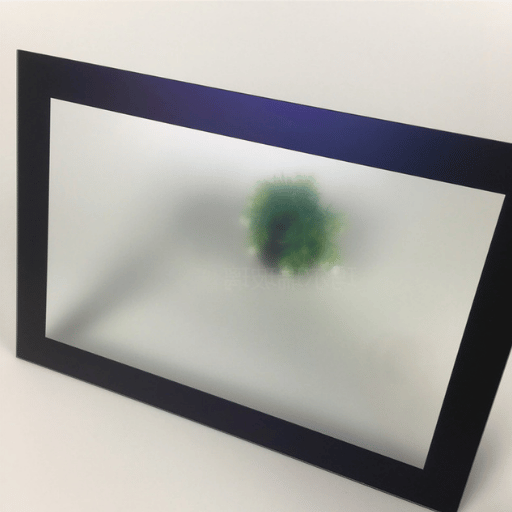
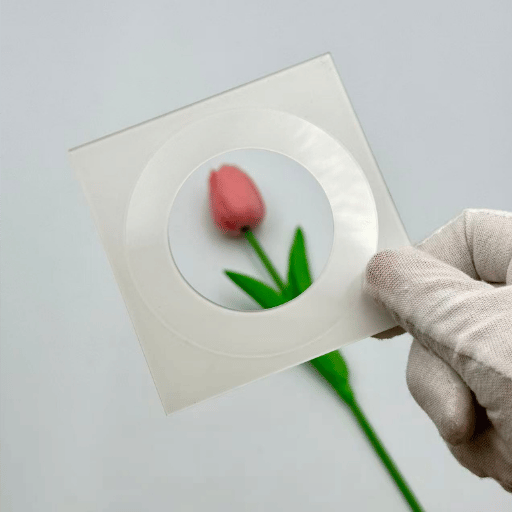
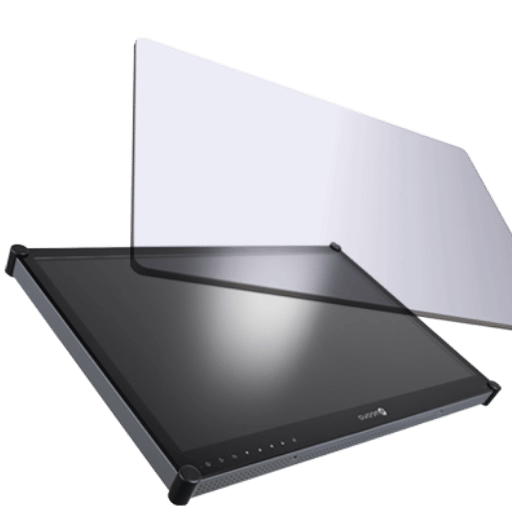
Ag glass (anti-glare glass) – Is a display cover glass that has its surface micro-etched or coated in a planar manner to scatter incoming light, which inhibits specular reflection by 70-90% and preserves screen clarity at high ambient light.Best results that can be obtained from this investment. It is the most commonly specified glare-reduction treatment for industrial LCD panels, HMI touch screens and monitor assembly in factory environments.
A standard untreated float glass surface reflecting 4-5% of the ambient light is considered were it is considered brightly lit (on a factory floor using overheads which can reach 500-1,000 lux). Reflections will crush the contrast ratio of a display native by placing it on a bright factory floor from 400:1 down to approximately 4-5:1. At that contrast level operators cannot see alarms, process data, or graphic processes.
They make errors in reading the temperature setpoint or miss alarms; they create real production risks.
AG treatment causes the reflected light to disperse in a broad field of view as opposed to reflecting in a tight bundle directly into the viewer’s eyes. A controlled surface roughness (generally Ra 0.5-2.5 m) causes this dispersal and can be described as dispersed reflectivity. With dispersed reflection, the reflected image appears soft and dispersed and the display content always remains perceptible even when viewed directly beneath the light source.
What makes AG glass especially appropriate for industrial electronics is the combination of the optical and physical performance of this product. Industrial grade AG glass retains 89 % light transmittance per ASTM D 1003 test method, while offering at least 7H surface hardness while on pencil test scale. (the glass would not scratch with care of industrial hands and tools and cleansing agents, still being fine for clear-sighted operators to use on monitor their processes in general)
Chemical Etching vs Spray Coating — Two AG Glass Manufacturing Methods
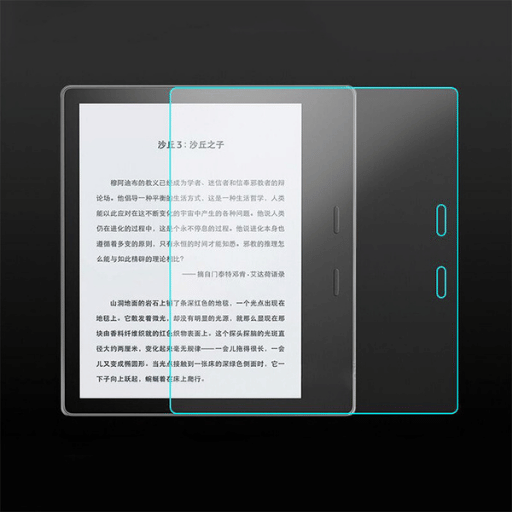
Ag glass can be manufactured by two different processes: chemical etching and spray coating; both of which alter the surface roughness to diffuse glare. Precision achieved, reliability of the method and the production costs are key considerations when selecting cover glass for the industrial control panels.
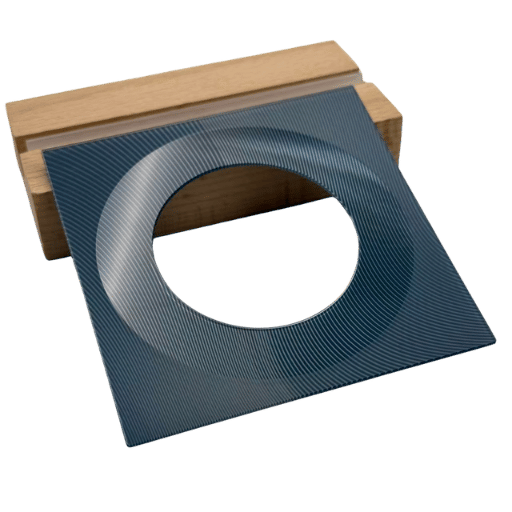
Chemical etching involves dissolving very fine patterns into the glass surface by applying a carefully controlled acid action. Etch depth is normally around 0.05-0.08 mm, and results in a permanent micro-texture with a surface roughness (Ra) of between 0.5 and 3.0 m. Since the treatment reacts with the glass substrate, rather than building material to it, the anti-glare property cannot peel or flake, or wear off during the panel’s useful life.
Gloss level smoothness across a chemically etched panel does not exceed 5 GU. That is often not detectable visually even on large display surfaces under diffuse light.
Spray coating is applied over glass as atomized particles (standard 2-5 μm dia.) to induce roughness. Compared to chemical etching, this process is 30-40% cheaper, with no requirement for additional curing time/costs. But, it is suitable only for mass-consumer level electronics and signage where serious environmental stress is not too high.
Atomized ag glass (which is spray-coated over it) has a larger variation of glossiness (about 10-15 GU differential) on its surface, when applied on large glass areas. Also, the coating slowly destabilizes as it degrades due to exposure to industrial cleaning liquids or repeated manual wipes.
For industrial display applications, choice of method often depends on the environment being used. Factory floors with oil mist, chemical vapors or aggressive cleaning protocols will be more likely to select chemically etched ag glass panels for their permanence and chemical resistance in harsh environments.
| Parameter | Chemical Etching | Spray Coating |
|---|---|---|
| Surface Roughness (Ra) | 0.5–3.0 µm | 0.8–5.0 µm |
| Etch Depth | 0.05–0.08 mm | Surface-level only |
| Uniformity | ±5 GU tolerance | ±10–15 GU tolerance |
| Durability | Permanent (part of glass) | Coating may degrade |
| Haze Control | 1–25% (precise) | 5–40% (less precise) |
| Cost | Higher | 30–40% lower |
| Best For | Industrial/medical displays | Consumer electronics, signage |
📐 Engineering Note
For industrial control panels in harsh environment conditions, chemically etched treatment becomes embedded in the glass substrate, creating a high-quality finish that meets industrial maintenance protocols for safe handling and chemical cleaning agents. Spray coatings, while usable for consumer-handled products, presents additional risk of damage from repeated application of chemical disinfectants such as isopropyl alcohol or commonly-used cleaning solvents.
Key Specifications for AG Glass in Industrial Displays
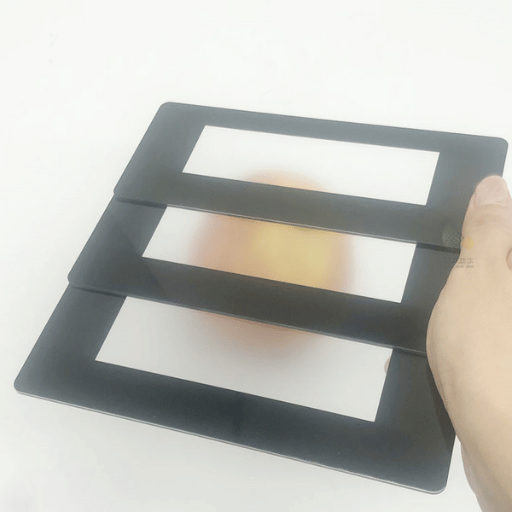
To specify the ag glass solution for a particular application of a industrial display, the optical parameters need to be balanced against each other for the operating viewing conditions and required performance. Of four main specifications, surface roughness, haze, gloss and transmittance, the selections need to be made as a set rather than independently.
Below is a table estimating the recommended specification tolerances across four key display groups. These ranges are derived from industry accepted standards and production test data from ag glass manufacturer production lines serving each industry.
| Parameter | Medical Displays | Industrial Controls | Outdoor Signage | Automotive |
|---|---|---|---|---|
| Ra Roughness | 0.5–1.0 µm | 0.5–1.5 µm | 1.0–2.5 µm | 0.8–1.5 µm |
| Haze | 2–8% | 4–15% | 10–25% | 3–10% |
| Gloss (GU) | 90–135 | 50–90 | 15–45 | 50–110 |
| Transmittance | ≥92% | ≥89% | ≥85% | ≥90% |
Haze and transmittance data should be validated with ASTM D1003 methodology, since it is the nationally accepted standard for light transmission and scattering measurement of transparent materials. When reviewing vendor datasheets, be sure that they followed this protocol rather than a proprietary measurement procedure.
Surface hardness is significant for applications of ag glass at industrial touch screen. Panel surfaces should demonstrate a 7H or harder pencil hardness to resist scratching from repeated touch interactions, stylus contact and standard cleaning methods. For high volume kiosk applications, using a 9H thickness specification ensures a sufficient scratch resistance reserve.
Haze and image clarity have an interrelationship that is not linear. If haze is kept below 5%, the anti-glare effect is subtle enough to maximize image contrast in controlled lighting environments. If haze exceeds 15%, glare is significantly reduced and images softening can reach levels that impair industrial readout displays, although they still remain acceptable.
📐 Engineering Note
ag glass manufacturer third-party tests for industrial display # require haze uniformity of +/- 5 GU across the panel for both. If the variation is not within this toleranced value, differences are visually perceptible under flat lighting in testing applications; however, once installed they frequently go unnoticed.
AG Glass vs AR Glass — Which Treatment Fits Your Display?
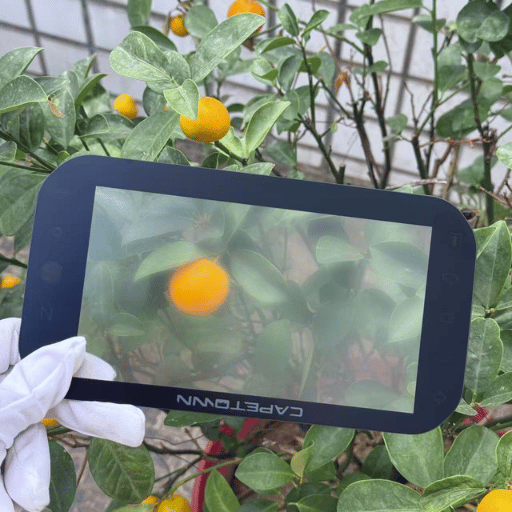
AG (anti-glare) and AR (anti-reflective) both work to lower reflection and glare on display screens, but they operate through different optical principles. For selection of cover glass for industrial control panels, making the right choice prevents images from becoming washed out in bright environments or resolution from becoming undefined, with clear visual distinctions.
Ag glass uses surface micro-etching to create a dimpled surface that diffuses reflected light across a wide viewing angle. Instead of disappearing, the reflection becomes dispersed, distributing the reflected energy so no bright origin is perceptible. AR glass, relying on multiple fine layers of optical coatings (typically between 4 and 6 layers of metallic oxide), creates destructive interference between wavefronts that effectively cancels out the reflection.
| Parameter | AG Glass | AR Glass |
|---|---|---|
| Mechanism | Surface micro-etching | Multi-layer optical coating |
| Reflectance | 1–3% (diffused) | <0.5–1% (cancelled) |
| Transmittance | ≥89% | ≥95% |
| Image Sharpness | Slight softening | Full clarity maintained |
| Resolution Limit | <300 PPI recommended | No limit |
| Cost vs Untreated | +15–25% | +50–80% |
| Outdoor Performance | Good (diffuses glare) | Excellent (reduces reflection) |
| Touch Compatibility | Excellent | Good (coating wear concern) |
| Cleaning Resistance | High (etched into glass) | Moderate (coating sensitive) |
✔ AG Glass Advantages
- Lower cost than AR: +15–25% vs +50–80%
- Permanent treatment resists cleaning chemicals
- Matte surface hides fingerprint marks and minor scratches
- Excellent capacitive touch panel compatibility
- Customizable haze from 1–25% for different environments
⚠ AG Glass Limitations
- Slight image softening above 10% haze
- Not recommended for displays above 300 PPI
- Lower transmittance (≥89%) than AR (≥95%)
- Diffused reflection still visible in very high ambient light
- Surface texture can trap fine dust particles
For displays over 300 PPI, the AG micro-texture results in detectable interference effects—sometimes called “sparkle”—that compromise the perceived image quality. In those situations AR coatings are the right product for fine-resolution medical monitors, precision tools, and display equipment where pixel-by-pixel clarity is critical. For most industrial LCD and TFT screens under 200 PPI, anti-glare glass is the superior value.
Industrial Applications — Where AG Glass Makes the Biggest Difference
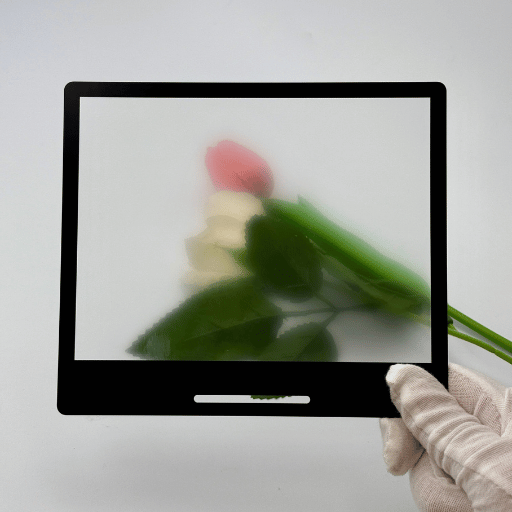
Industrial ag glass is used most extensively in display environments where the combination of extremely high ambient light, direct contact and severe operating environment prevail. Below is an application matrix indicating Industry segments, recommended AG specifications and the key advantages for anti-glare treated environments.
| Industry | Display Type | Recommended AG Spec | Why AG Glass |
|---|---|---|---|
| Factory Automation | HMI touch panels | Ra 0.5–1.5 µm, Haze 4–12% | Oil/dust environments, frequent touch |
| Medical Equipment | Diagnostic monitors | Ra 0.5–1.0 µm, Haze 2–8% | Bright operating rooms, glove touch |
| Self-Service Kiosks | Interactive touch screens | Ra 0.8–1.5 µm, Haze 5–15% | High ambient light, public fingerprints |
| Outdoor Signage | screen displays | Ra 1.0–2.5 µm, Haze 10–25% | Direct sunlight, rain/dust |
| Automotive | Dashboard displays | Ra 0.8–1.5 µm, Haze 3–10% | Windshield reflections, temperature swings |
Factory automation is the largest-volume market for industrial ag glass display panels. HMI (Human-Machine Interface) touch panels in manufacturing lines are exposed to overhead fluorescents or LED light, oil mist expelled by CNC machinery, or persistent operator input with security gloves. AG treatment diminishes reflective glare while matte surface finish lessens conspicuous fingerprint accumulation – a persistent maintenance issue in clean-room and food-processing environments.
Medical applications require the most stringent optical specifications. In Operating rooms and imaging suites Diagnostic monitors are subject to superbright ambient lighting levels (often over 1,500 Lux during surgical procedures) yet clinicians require high image fidelity. Low haze ag glass at 2-8% represents the optimum between glare reduction and diagnostic image clarity
Operating temperature range is another major limitation to all industrial applications. All standard industrial ag glass panels are rated for -20C to +70C continuous operation. Touch panel compatibility is preserved when surface roughness is less than Ra 2.0 m (beyond that point, capacitive touch sensitivity goes down as the increased surface roughness prevents optimal finger-to-sensor coupling.)
How to Select AG Glass for Your Control Panel Project
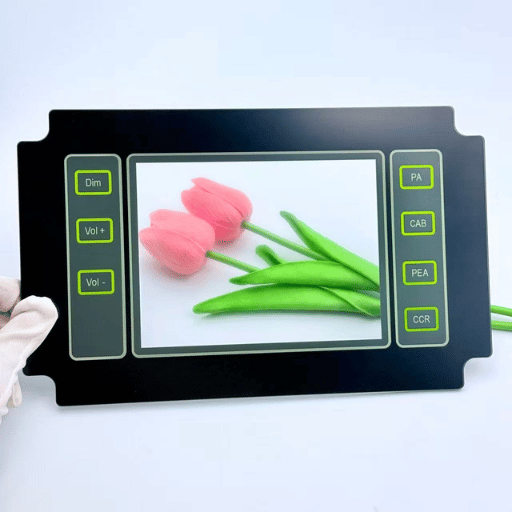
Correct specification of the ag glass can be found by working through five decision stages in order. Each decision you make from one to five reduces the allowable value range of the parameter you are considering until you’ve found a specification that fits your panel operating range, display specifications and your budget.
For the commencement of a new control panel project or the review of a glass manufacturer for an existing design, use the following checklist:
- Environment operating conditions-Indoor controlled (office, lab), indoor harsh (factory floor), semi-outdoor (cover loading dock), or full outdoor(outside exposed to sun). the higher the severity of environmental the higher a device had to achieve baseline haze. By comparison the increase in minimum haze was about 5% for each.
- Set display resolution—Under 150 PPI, normal ag glass performs optimally at all haze values. 150–300 PPI, present a low-haze AG (less than 10%) to prevent sparkle from being detected. Over 300 PPI, look at AR coating performance, or try out low-haze AG samples before settling on display.
- Confirm touch specifications – Capacitive touch panels need Ra below 2.0 μm for touch finger detection. Resistive touch devices can accept roughness ratios of at least two times higher.
- Enter cleaning procedure—Chemical agents (ISOPROPYL alcohol, n-ammonia, etc.) is used by your maintenance personnel, obtain chemically etched ag glass. If your maintenance staffs only dry-wipe, buy spray coated AG glasses from cheaper environments.
- Durability expectations for finish – 7H pencil hardness as baseline for normal industrial service. 9H very high traffic kiosk and public facing touch screens where scratch grade has a direct impact on life cycle of the vehicle.
If OEM integrator is buying large quantities of a customizable ag glass panel, the qualification should also include requesting the test certificates for haze, transmittance, and directional glossiness (experimental values) for ASTM D1003; check that the supplier will be able to maintain specification through production runs—not just initial samples.
💡 Pro Tip
Request sample panels with 3 levels of haze: 5%, 10%, and 20% and test in the actual operating lighting environment before launching into production. Something that was fine in office lighting can look quite different in the 800-lux environment of the factory floor.
Frequently Asked Questions
Q: What is AG glass?
View Answer
AG (anti-glare) glass has a micro-etched or coated surface that scatters reflected light, lowering glare by 70-90%. Surface hardness of industrial-grade ag glass is 7H with over 89% transmittance.
Q: Is AG glass compatible with touchscreens?
View Answer
Yes. ag glass can be specified for both capacitive and resistive touch panels. To ensure full touch sensitivity, roughness Ra is limited to 2.0m when the touch panel is capacitive.
Surface roughness of the glass is typically within Ra 0.5-1.5m for the industrial AG panel. Touch response is insensitive to temperature (-20°C to +70°C) across this operating range.
Q: What types of AG glass are there?
View Answer
Basically two forms: chemically etched ag glass, acid-washed to produce permanent microscopic light-texturing at Ra 0.5-3.0 m, and spray coated AG glass, with particles of Ra 0.8-5.0 m. Chemically etched gives more uniformity and endurance at scale for industrial. Spray coating is 30-40% less in cost and preferred in settings where environmental demands and requirements are lower.
Q: How does AG glass impact display durability?
View Answer
A.G. treatment has no effect on the glass substrate. Chemically etched ag glass preserved the hardness of the host glass (7H pencil test). Micro-texture instead aided in hiding light surface scratches and masking finger print marking from view more than in the un-textured glass.
Q: How to identify the anti-glare side of AG glass?
View Answer
Place the edge of your finger lightly on each surface. The AG side is now quite gritty/dull compared with the oily, glossy stock. By reflected light, the diffused reflections can be seen on the treated side and sharp mirror image of an overhead light source on the untreated side.
Q: What makes AG glass different from regular glass?
View Answer
Indeed, the regular float glass would have reflected about 4-5% of ambient light on each surface thus distracting the glare on displays. AG glass reduces this back to about 1-3% with its textured surface reflecting scattered light. One trade-off is that image resolution is slightly decreased but would not be noticed at less than 300 PPI resolution. For most industrial control panels running at 100-200 PPI, this reduction is negligible and the glare elimination benefit far outweighs any softening.
The AG glass specification is used for industrial display where readability with high light levels takes priority over pixel level resolution.
About This Analysis
Since 2009, Saiwei Glass has been manufacturing ag glass for industrial display applications by providing etched, coated cover glass panels for HMI and kiosk integrators in 30+ countries. Specification data in this guide tabulates the values derived from our production testing of anywhere from 0.33mm to 12mm AG glass panels—calibrated according to ASTM D1003 measurement procedures in our proprietary optical laboratory.
References & Sources
- ASTM D1003 — Standard Test Method for Haze and Luminous Transmittance — ASTM International
- ISA-101.01 — Human Machine Interfaces for Process Automation Systems — International Society of Automation
- MIL-STD-1472 — Human Engineering Design Standards — U.S. Department of Defense
- IEC 61131-3 — Programmable Controllers Programming Languages — International Electrotechnical Commission
- Panel Design Standards Reference — Control Design