Get in Touch with Saiweiglass



Quick Specs
| AR Glass Light Transmittance | >99% (multi-layer coating at 550 nm) |
| AR Glass Residual Reflection | <0.5% per surface (multi-layer); 1–2% (single-layer) |
| AG Glass Haze Range | 1–25% (tunable by etch depth) |
| AG Glass Etch Depth | 0.05–0.07 mm (chemical etching process) |
| Cost Differential | AG glass costs 30–50% less than equivalent AR glass |
| Primary Mechanism | AR = thin-film destructive interference; AG = surface scattering |
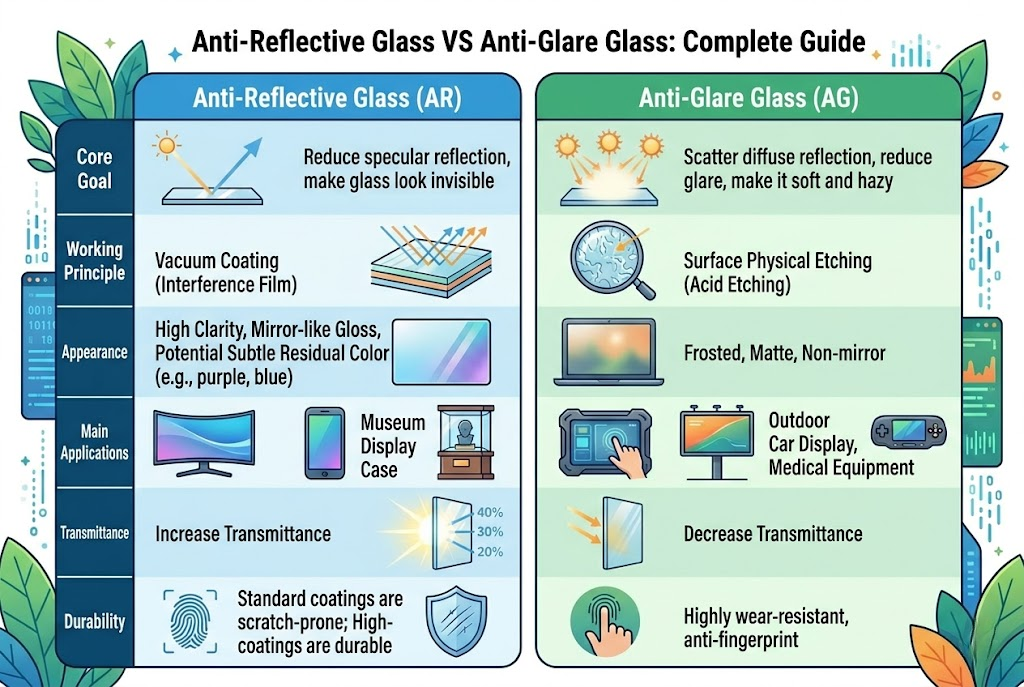
anti-reflective glass and anti-glare glass are used interchangeably, but actually solve two very different optical issues with completely different technology. Anti-reflective (AR) glass relies on thin-film coatings to cancel reflected light waves through destructive interference, while anti-glare (AG) glass relies on roughening the surface to scatter the incoming light rays and diffuse reflections. Selecting the wrong optical for your application can cause drain on budget, poor images, or unresolved glare so your optical isn’t even worth the effort.
This quick guide goes into how anti-glare and anti-reflective coatings work, measurable performance specs, practical applications, cost considerations, and a decision chart to help match the right glass to your needs.
Anti-Reflective Glass and Anti-Glare Glass at a Glance
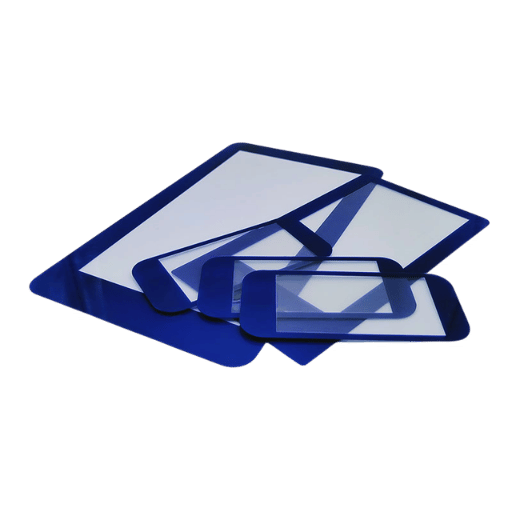
Is anti-glare and anti-reflective the same thing? Actually, no. What can be second guessed as anti-glare and anti-reflective, anti-reflective and anti-glare are two totally different technology options. The real difference between the two is how each solution handles waste light.
AR glass removes reflection by allowing more light to pass through the base glass. Meanwhile, anti-glare glass scrambles the visual aspect of glare by scattering reflected light across a broader angle, so it no longer forms a mirror-like reflection on the surface of the glass.
| Parameter | Anti-Reflective (AR) Glass | Anti-Glare (AG) Glass |
|---|---|---|
| Mechanism | Thin-film destructive interference | Surface etching / roughening to scatter light |
| Light Transmittance | >99% (multi-layer at 550 nm) | 88–92% (depends on haze level) |
| Residual Reflection | <0.5% per surface (multi-layer) | 4–8% (specular reduced, total similar) |
| Haze | <0.5% | 1–25% (tunable) |
| Image Clarity | Crystal clear, true-to-life colors | Slightly softened, haze-dependent |
| Fingerprint Visibility | Highly visible on smooth surface | Less visible due to matte texture |
| Cost | Higher (vacuum deposition process) | 30–50% less than equivalent AR |
| Best For | Museums, galleries, high-end displays | Outdoor kiosks, touch panels, industrial |
💡 Pro Tip
So you can think of AR glass as eliminating reflections altogether (“disappearance”) or the AG glass as making reflections dazzle even more-scrambled as a dull fog instead (“diffuse reflections”). Both are effective at minimizing visual discomfort, but they do it through opposite focus.
How Anti-Reflective Coating Works
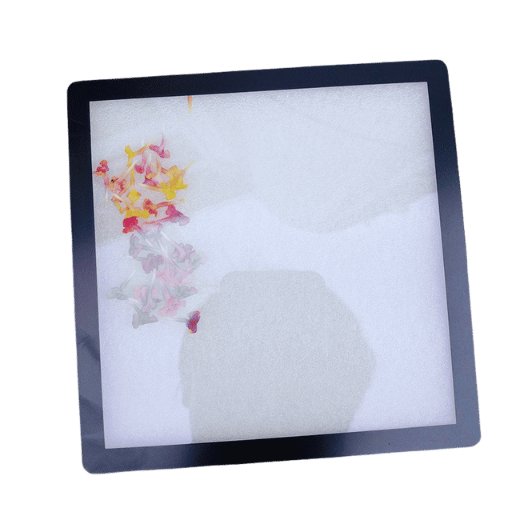
A anti-reflective coating is a thin Ketivets layer applied to the two sides of a base glass. The optical coating lessens reflection by taking advantage of a principle called destructive interference-where two light waves negate each other when they piggyback in the wrong phase.
The layers of an ar coating are engineered to a very specific thickness of one quarter wavelength (/4) of the light in question. When the lights rays hit the coated surface, some reflect off the top of the coating layer and some reflect off of the boundary layer between the coating and the glass. As the optical thicknesses the coating, the reflected rays travel an equal path lengths of exactly half a wavelength (/2), causing the rays to arrive 180 out of phase. They negate each other-this is destructive interference and the light passes through.
Single-Layer vs Multi-Layer AR Coatings
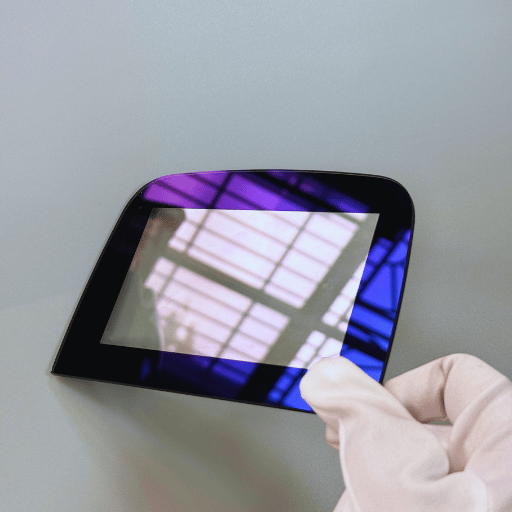
One layer ar coating usually use magnesium fluoride (Mg F) and reduces reflection from into 4percent per surface (bare glass) roughly 1-2percent per surface. This is good for only a specific wavelength band and residual light can leave a weak purple or green tinges.
Multi-layer ar coatings build on the thin film approach to add multiple layers of different indexes of refraction – often combinations of titanium dioxide (Ti O), silicon dioxide (Si O), and aluminum oxide (Al O). According to optical coating findings published in Energies (MDPI), complex multi-layer configurations achieve residual reflection below 2tenths percent per surface through the visible spectrum (400-700 nm). In trial runs, researchers have proven 99percent transmittance at 550 nm with 0.15 percent reflectance—and levels of 91percent transmittance at 550 nm with 8percent reflectance.
>99%
Transmittance (multi-layer)
<0.2%
Residual Reflection / Surface
λ/4
Film Thickness Per Layer
📐 Engineering Note
For broadband AR performance across 430–660 nm, target absolute reflectance (Rabs) ≤ 0.6% per optical surface at normal incidence (0–15° angle) using unpolarized light. Multi-layer designs with alternating high-index (TiO₂, n ≈ 2.4) and low-index (SiO₂, n ≈ 1.46) layers are the industry standard. Coating adhesion should meet MIL-C-675C or ISO 9211 requirements for environmental durability.
How Anti-Glare Coating Works
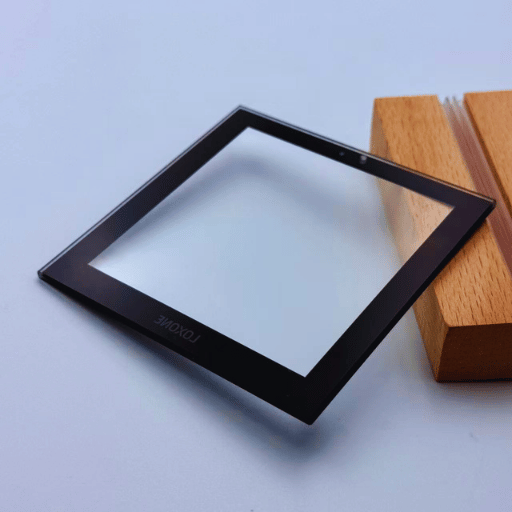
anti-glare glass takes the polar opposite approach to controlling unwanted glare (anti-reflection). Rather than reducing all form of reflection, AG glass diffuses the beam (also called breaks down specular reflection) – the mirror-like reflection you are used to seeing from uncoated glass – utilizing an obstructive texture on the microscopic level. Incoming light is reflected at sharp angles to the irregular surface leading to a diffuse reflection (diffuse glare). Instead of a crisp image of light sources on the other side of the glass you receive a subdued glow.
Manufacturing Methods
The typical process to produce a anti-glare glass uses chemical acid etching of the glass surface, dissolving it at a predictable rate over every square centimeter of glass at an etch depth of 0.05-0.07 mm. This process produces the most consistent result worldwide and standard in industrial, medical, and automotive uses. (±5 GU batch consistency). Hydrofluoric acid most often used, although the process can also be carried using plasma or abrasive spraying processing techniques.
Other known approaches include spray coating, which deposits artificial particles onto the surface, and physical coating, which scatter a rough surface coating on the surface. Chemical etching becomes part of the glass rather than sitting on top of it, giving it the edge in durability.
The Haze-Clarity Tradeoff
Balancing glare reduction with clarity is the central challenge of anti-glare glass. More haze means better diffusion of ambient light — but it does soften the image and reduce contrast behind the glass. Here is how those tradeoff metrics break down:
| Haze Level | Range | Glare Reduction | Best Application |
|---|---|---|---|
| Low | 1–8% | Mild — preserves high contrast and color accuracy | Medical imaging displays, photo editing monitors |
| Medium | 8–20% | Moderate — good for overhead lighting environments | Office monitors, retail POS, industrial panels |
| High | 20–25% | Strong — handles direct sunlight but reduces sharpness | Outdoor kiosks, automotive displays, ATMs |
⚠️ Important: Sparkle Effect
Pairing AG glass with high resolution displays (4k and above) the texture itself may stimulate the eye to notice a sparkle artifact (graininess) in light backgrounds. This occurs when the pattern of the texture resonates with the pixel pitch as the light strikes the screen surface. AGC Inc. states the sparkle reduction of their newest AG glasses is 30%, while maintaining strong anti-reflective performance. Corning’s Gorilla Glass matte finishes boast a 50% sparkle reduction. Request sparkle test results from your AG glass supplier if you are specifying AG for 4k displays.
Anti-Reflective Glass vs Anti-Glare Glass — Side-by-Side Comparison
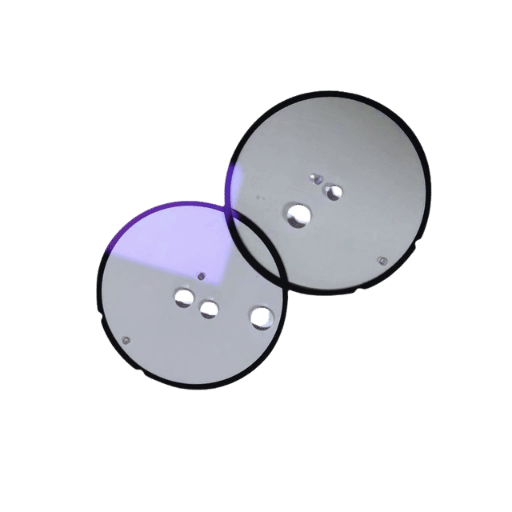
A comparison at a few of the measurable metrics between anti-glare and anti-reflective glass shows the performance advantage clearly when you focus on the real specification rather than the marketing language. Below is a side-by-side comparison across seven key dimensions for glass you are likely to use in on a project:
| Dimension | Anti-Reflective (AR) Glass | Anti-Glare (AG) Glass |
|---|---|---|
| Light Transmittance | >99% at 550 nm (multi-layer) | 88–92% (varies with haze level) |
| Reflection Handling | Eliminates — coating reduces reflected light to <0.5% | Diffuses — scatters reflected light over wide angle |
| Image Clarity | Maximum transmittance, zero haze, sharper colors | Slightly softened image, reduced contrast at higher haze |
| Resolution Compatibility | No resolution of the display is lost | Possible sparkle artifact at 4K+ (pixel pitch dependent) |
| Touch / Fingerprint | Smooth surface — fingerprints highly visible | Matte texture — fingerprints less visible |
| Durability | Coating can degrade with harsh chemicals; scratch-sensitive | Etched texture is part of glass; more impact resistance |
| UV Protection | Can incorporate UV-blocking layers in multi-layer stack | No inherent UV protection (requires separate treatment) |
Untreated glass reflects roughly 8% of the light passing through it (4% per surface). ar coating responds directly to this with a multi-layer AR coating that encourages more of the light to go where you want it – through your glass. this extra upgrade raises the reflection noted in your specs from 8% down to 0.1%. Anti-glare glass takes a different approach — rather than eliminating reflection, it transforms specular reflection into diffuse reflection so the bounce spreads across a wider viewing angle.
For those applications where image resolution and colour neutrality are higher priorities – museum displays, gallery framing, premium retail displays – AR glass is the natural choice. For areas with bright light sources and frequent direct contact, AG will produce a more maintainable view of the image.
✔ AR Glass Advantages
- Maximum clarity — glass virtually “disappears”
- True-to-life color reproduction
- No image softening or sparkle artifacts
- Can be customized for specific wavelengths
- Available with integrated UV blocking
⚠ AR Glass Limitations
- 30–50% more expensive than AG glass
- Fingerprints and smudges highly visible
- Coating can be damaged by abrasive cleaning
- Less effective in extremely bright light sources, extreme Hozdib Vubevam
- Requires controlled manufacturing environment (vacuum deposition)
✔ AG Glass Advantages
- 30–50% lower cost than AR for equivalent glass size
- Effective glare reduction in bright sunlight
- Matte finish hides fingerprints and smudges
- Etched surface is more durable and scratch-resistant
- Tunable haze levels (1–25%) for specific application needs
⚠ AG Glass Limitations
- Reduced image sharpness (especially at haze >15%)
- Sparkle artifacts possible on 4K+ displays
- Lower overall transmittance (88–92%)
- Not suitable where true color accuracy is critical
- Cannot match AR glass for reflection elimination
💡 Pro Tip
A typical error with glass specification is using AG glass for high resolution displays where colour correctness is paramount. Although AG handles glare, the softening of the image is too apparent when the haze is over 15%. For display use where readability and resolution are both required, low haze (1-8%) AG glass or oleophobic coated AR glass can be suitable to eliminate fingerprints.
Best Applications for Each Glass Type
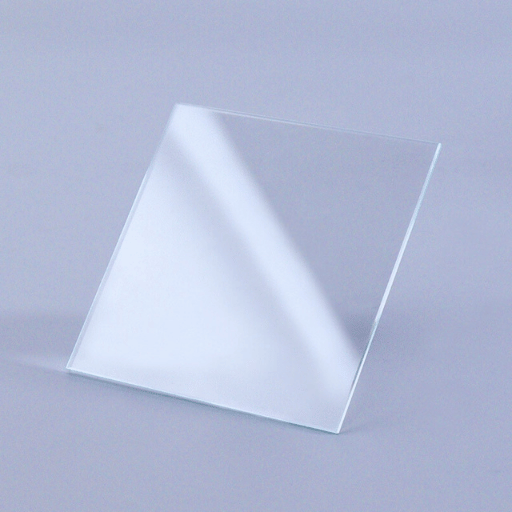
The choice between anti-reflective or anti-glare glass in a display environment is mainly a function of the installation site. Here is a sample of industry segments and the typical application for each glass.
Where Anti-Reflective Glass Wins
- Museum displays – the traditional method of protecting artwork and artifacts is to use AR glass which allows close viewing of the item without disrupting with reflections. Custom AR museum glass with ar coating and UV filtration typically costs an extra $100-175/sq ft but will provide the most life preservation and highest transmittance for the same application.
- Picture framing – where the Nwasag of glass presents a mirror reflection that obscures the framed work of art or objects, anti-reflective glass is the obvious choice, especially in rooms with overhead lights or reflective windows facing the frame.
- High-end retail displays – Jewelry, Wines, or electronics are all best viewed through AR glass so customers see the items behind the glass without the light sources impacts of an unfiltered environment.
- Solar panel cover glass — Research published in pv magazine (2024) describes novel hydrophobic AR coatings for solar glass that increase light capture by reducing surface reflection — directly improving energy yield.
- optical optics – Telescope or microscope mirrors or camera lenses rely on the multi-layer properties of ar coatings to transmit the maximum light and reduce internal reflection where the reflective surface tends to cause ghosting artefacts.
Where Anti-Glare Glass Wins
- Direct sunlight outdoors displays or digital signage – When in excess of 500 lux, AG glass with medium-high haze (10-25%) scatters ambient light is recommended for best performance and image readability.
- Automotive information systems – Dashboard instrumentation, center consoles, or head-up display systems present rapidly changing illumination conditions. Anti-glare glass keeps the glare down without the cleaning and maintenance problems of ar coating in a demanding, high-touch environment.
- Industrial displays – Manufacturing facilities illuminated by overhead fluorescent fixtures tend to have persistent reflections off of the glass displays. Anti-glare cover glass at a moderate haze level strikes a balance of practicality and performance.
- Medical viewing stations – Diagnostic and operational displays used in the operating theatre are under very bright lights. AG glass at low haze levels (1-8%) will ease eye fatigue through long sessions with minimal touch points.
- Touch-ready information displays – self-serve checkouts, state wayfinding information screens, and ATM interfaces are frequently touched by end users in a hurry. Anti-glare glass panels are fingerprint resistant and easier to clean than AR coatings.
Cost and Durability Comparison
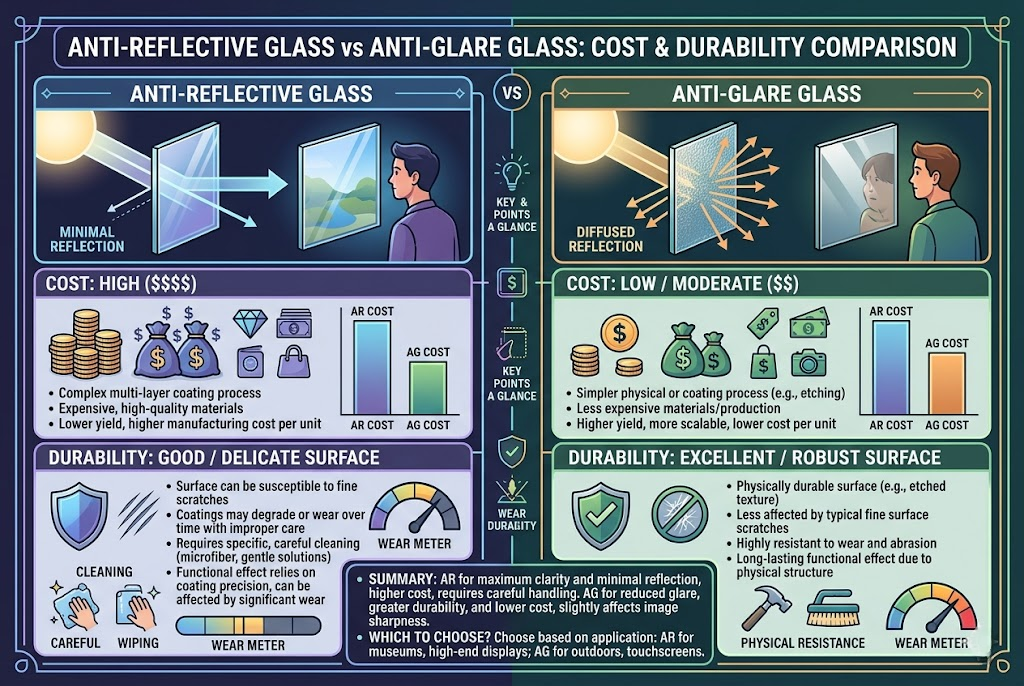
Budget remains a common influence for AR vs AG glass selection. Pricing differences are examples of the extra processing steps used to manufacture each product.
Manufacturing Cost Drivers
ar coatings requires vacuum deposition – a complex, tightly controlled process where individual thin-film layers are deposited onto the glass in a vacuum chamber, one at a time. To produce multi-layer AR coatings, a manufacturer may perform 4-8 individual slide in/slide out deposition steps, each with precision thickness control. This higher manufacturing complexity increases the cost of AR glass significantly above the competing anti-glare solution.
AG glass fabrication through chemical etching uses a much less complex batch process. Multiple panels are etched in batches, with the etch level and haze depending on the time in acid bath and the strength of the acid solution. Process infrastructure has a lower cost, and throughput is higher.
| Cost Factor | AR Glass | AG Glass |
|---|---|---|
| Price Premium vs Untreated | 2–4x (multi-layer); 1.5–2x (single-layer) | 1.2–1.5x |
| Museum / Framing Grade | $100–175 per sq ft (with UV protection) | $20–50 per sq ft (non-glare framing glass) |
| Lead Time | Longer (vacuum chamber capacity) | Shorter (batch acid etching) |
| MOQ Sensitivity | Higher MOQs for custom wavelength specs | Flexible — haze level adjustable per batch |
Durability and Maintenance
AG glass has a long-term advantage in durability. Its anti-glare treatment is etched into the surface of the glass (rather than deposited on its surface), and cannot delaminate or peel if protected from scratches. It offers a better impact resistance as well, due to surface compression from the etching process.
ar coatings used as optically are more sensitive to damage. Blunt abrasives or acidic solutions during cleaning, or handling the panel roughly, can erode the thin-film layers of an AG vapor deposit over time. Most AR-coated glass is recommended to be cleaned only with soft microfiber cloths and pH-neutral solutions to retain Ketavate quality.
💡 Pro Tip
For high-use finger touch displays, the long-term ownership costs are lower with AG glass. while AR-coated glass may need to be recoating or completely replaced after 3-5 years of intensive finger use, etched AG glass will retain its properties for the entire lifespan of the panel and can be cleaned with standard solutions.
How to Choose the Right Glass for Your Project
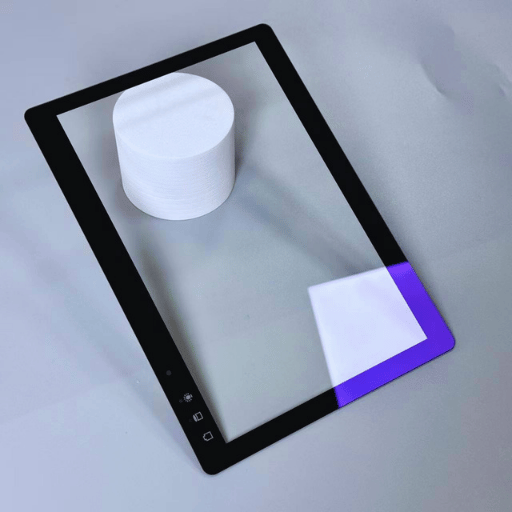
The decision to choose a glass coating is driven by the four variables mentioned above, as your lighting condition, transparency goal, price constraint, and intended contact touch point durability requirements inform a standard manufacturer presentation for project selection.
Decision Framework: AR Glass or AG Glass?
- Ambient indoor lighting + maximum transparency AR glass (galleries, jewelry cases, museum display windows)
- Sunlight or bright interior lighting AG glass with moderate haze 8-20% (outdoor signs, specialty display cases)
- Having 4K or higher resolution + indoors OR minimal haze AG glass (1-8% haze) with sparkle testing
- Repeated finger touch interactions AG glass (consolidate finger prints + simple to clean)
- Budget constraints first and foremost AG glass (cheapest solution, most readily available)
- Requires color fidelity AR glass (no haze to cause color shift)
- Both internal and external light sources present Consider AR glass that features oleophobic top coat (test both with your specific display panel)
- ✔
Define your ambient light range (lux measurement at installation location) - ✔
Order samples of your actual display panel to compare, most photos and spec sheets do not simulate the real visible spectra - ✔
For AG glass: specify haze level, gloss (GU), and sparkle test requirements with your RFQ - ✔
For AR glass: ensure coating compliance with MIL-C-675C or ISO 9211 depending on environmental need - ✔
Don’t forget the entire lifetime cost of ownership, AR glass will often require recoating, AG glass will not
If the coating you should receive is not clear, ask for sample AR glass and sample AG glass from your source and compare them directly in your actual application conditions. opticalli ar coatings are spectacular in the optical showroom, but in the field, their optical performance depends on the combination of display substrate, ambient lighting environment, and user charging conditions at the installation site.
Frequently Asked Questions
Q: Is anti-reflective the same as anti-glare?
View Answer
No. AR glass uses thin-film coatings to cancel reflected light through destructive interference, bringing residual reflection below 0.5% per surface. AG glass roughens the surface to scatter light into a soft diffuse glow instead of a sharp mirror image. Same problem, different mechanisms.
Q: Which is better, anti-glare or anti-reflective glass?
View Answer
Neither solution is outright better — each excels under different conditions. AR glass is generally better for viewing situations that demand optical transparency, true-to-life color rendering, and minimal light loss (museums, galleries, optical instruments). AG glass is the stronger choice for high ambient-light situations, touch-interactive surfaces, and projects where some softening of the image behind the screen is acceptable. Many factors are at work here, mostly environmental and budget related.
Q: What are the disadvantages of anti-glare glass?
View Answer
Its main drawback is loss of sharpness. Surface roughening that scatters glare also affects the image behind the glass, with the effect becoming more pronounced at higher haze levels (above 15%). On high-end displays (4K+), AG glass can produce a recurring “sparkle” artifact — a visible graininess on light backgrounds. Overall transmittance through AG glass (88–92%) is also lower than AR glass (above 99%), with some possible muted colors. For color accuracy or detail-sensitive projects, such as photographic or scientific imaging, these trade-offs may be an issue.
Q: Can you combine anti-reflective and anti-glare coatings on one glass?
View Answer
It is possible, but unusual and adds complexity. Several manufacturers do produce composite solutions — AG etch on one side, AR coating on the other. This creates glare diffusion on the external face with reflection elimination on the inside. The additional price for this treatment pairing is high. In practice, hybrid panels make sense only in specific scenarios: museum cases near windows where both external glare and internal reflection must be controlled, or architectural glass walls facing south in bright climates. For the majority of cover glass, industrial panel, and framing applications, a single treatment matched to your primary need delivers better value and a simpler supply chain.
Q: How much does anti-reflective glass cost compared to anti-glare glass?
View Answer
AR glass often costs 30-50% more than AG glass of comparable size and refractive index. In museum and protective framing situations, high-quality AR glass with UV suppression is often priced at $100-175 per square foot, with ordinary non-glare framing glass at $20-50 per square foot. In industrial cover glass, AR is also noticeably more expensive due to the additional cost of the vacuum deposit. Pricing varies depending on coating complexity (single vs multiple layers), size, number of units ordered, and additional treatments like oleophobic, UV suppressing, etc.
Q: Does anti-reflective glass scratch easily?
View Answer
AR coatings are more sensitive to surface damage than AG treated glass. The ultra-thin film layers can be gouged or dulled by grit or harsh cleaning products. In practice, well-made AR coatings — including those built to MIL-C-675C or ISO 9211 specifications — benefit from hardened final layers that withstand normal handling. Responsible maintenance with soft microfiber cloths and neutral pH cleaner extends coating life considerably. AG glass, by contrast, has its treatment etched directly into the glass surface, giving it far better scratch and abrasion resistance.
Need AR Glass or AG Glass for Your Project?
Saiweiglass supplies custom anti-reflective and anti-glare glass solutions for displays, architecture, and industrial applications. Contact our team to discuss specifications and get a quote.
About This Analysis
Saiweiglass manufactures both anti-reflective and anti-glare glass products for industrial and commercial clients. The transmittance, haze, and cost data in this guide are drawn from published optical coating research, industry standards (ISO 9211, MIL-C-675C), and publicly available manufacturer specifications. We have aimed to present both glass types objectively — neither is universally superior, and the right choice depends on your project’s specific optical, environmental, and budgetary requirements.
Related Articles
References & Sources
- Anti-reflective coating — Wikipedia
- Anti-Reflective Coating Materials: A Full Review from PV Perspective — MDPI Energies
- Novel hydrophobic, antireflective coating for solar glass (2024) — pv magazine International
- Understanding key design principles of antireflection coatings — Laser Focus World
- AGC Develops Anti-Glare Glass for 4K HD Displays — AGC Inc.
- Prediction and analysis etching model of anti-glare glass roughness — ScienceDirect