Get in Touch with Saiweiglass



Dd
I cover industrial glass selection, including optical appearance and thermal processing. My writing focuses on the practical differences between common materials and treatments, helping readers compare product descriptions and identify the performance details that should be discussed before approving a glass specification or sample.
Low Iron Glass vs Clear Glass: Transmittance, Color & B2B Use Cases
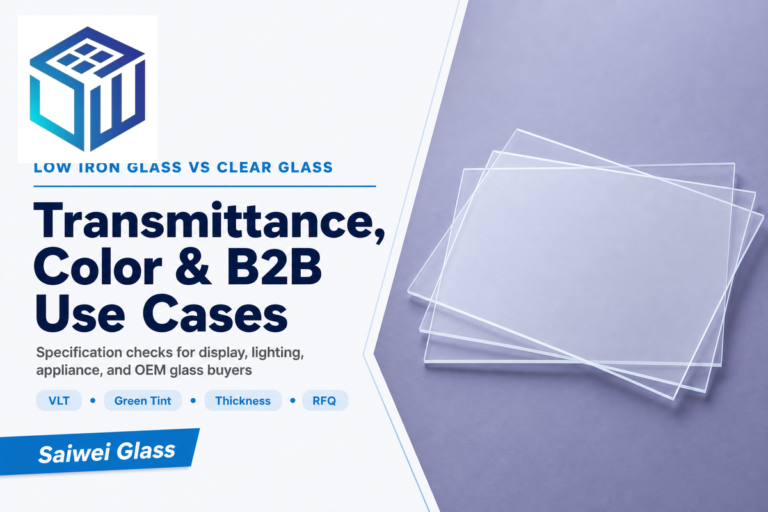
Low iron glass vs clear glass is a material-selection question, not just a visual preference. For color-critical panes, low iron glass gives maximum clarity and a more neutral pane, while standard clear glass is still the practical glass type for…
Thermal Tempering Process: From Annealed Glass to Safety Glass
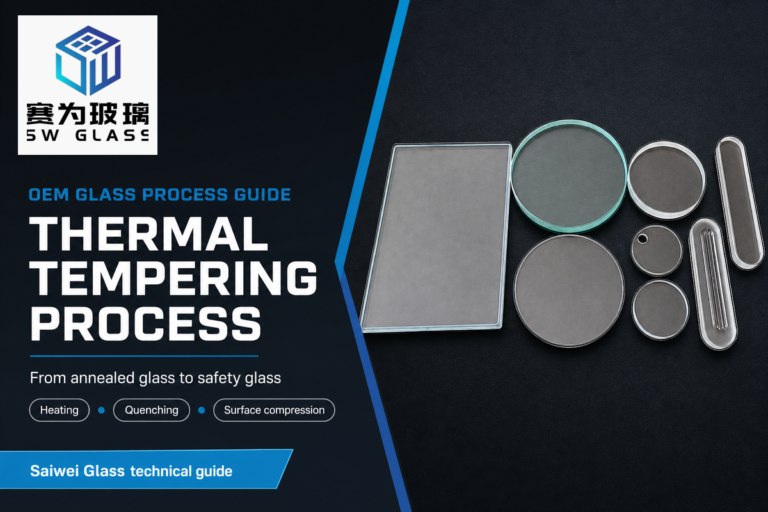
The thermal tempering process is a controlled glass heat treatment method that turns annealed glass into tempered safety glass by heating the glass, rapidly quenching it, and locking the outer surface into compression. This article covers glass thermal tempering, not…
ITO Coating Process & Cost Breakdown: Magnetron Sputtering, Sheet Resistance Tuning
What’s the cost of ITO coating? ITO coating process and cost is a procurement specification for how indium tin oxide is deposited on glass, how the transparent conductive film is tuned, and how much inspection risk the buyer asks the…
ITO Glass Explained: Properties, Conductivity & Industrial Applications
Industrial conductive glass guide ITO glass is a glass substrate coated with indium tin oxide, a transparent conductive oxide that lets light pass while carrying electrical current across the glass surface. It’s used when engineers need a transparent electrode for…
AG vs AR vs AF Glass Coating: Which Surface Treatment Does Your Touch Screen Need?

All touch screen glass suffers from the same three enemies: the glare that overpowers the image, the reflections that conceal the display image, and the fingerprints that smudge the image after every swipe. Surface treatment technology presents a solution –…
Touch Screen Glass Explained: Technology, Types, and Selection Guide

Quick Specs Common Glass Types Soda-lime, borosilicate, aluminosilicate (chemically strengthened) Typical Thickness 0.55 mm – 3.0 mm (application-dependent) Light Transmittance ≥90% (capacitive panels) Surface Hardness 6H–7H (Mohs 6–7 for cover glass) Primary Touch Technologies Projected capacitive (PCAP), resistive, SAW, infrared…
How to Choose the Right Touch Screen Glass for Your Application
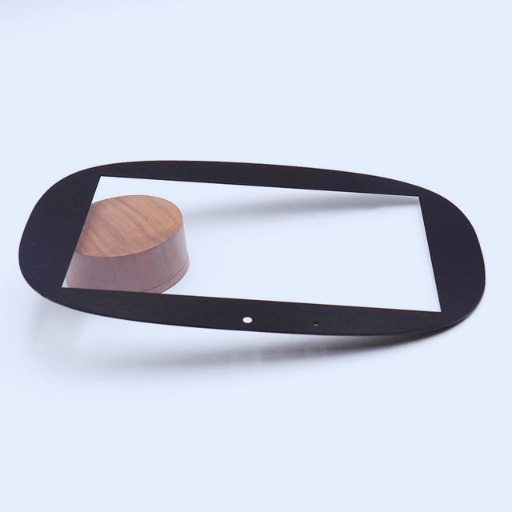
Cover glass – which is the outermost transparent layer on a touchscreen – does far more than just defend the display underneath. It also impacts how the device responds to user input, how long it will last in field condition,…
What is Anti-Reflective Glass?
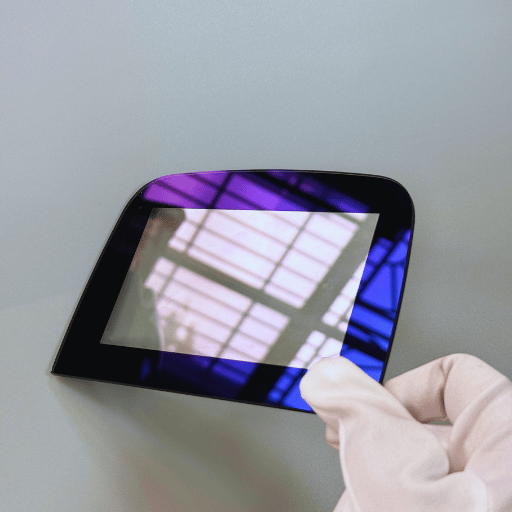
Roughly 8% of all visible light hitting normal glass bounces back off each of its two surfaces. This causes glare to have an unsightly sheen to them, results of overbright museum displays, and less electricity from reduced panels. anti-reflective glass…
Complete Guide to Glass Coating Types: AR vs AG vs AF

Each display, instrument panel, and touch screen relies on a glass surface formulated for one of the three most common coating environments. The 3 most common types – AR (anti-reflective), AG (anti-glare), and AF (anti-fingerprint) – each address a different…
How Does Anti-Reflective Coating Work on Glass?

Every glass surface you look through is reducing the intensity of the light. Untreated glass reflects about 4% of incident light per surface, so one panel loses about 8% of the light trying to pass through. anti-reflective coating addresses this…