Get in Touch with Saiweiglass

Dd
I cover industrial glass selection, including optical appearance and thermal processing. My writing focuses on the practical differences between common materials and treatments, helping readers compare product descriptions and identify the performance details that should be discussed before approving a glass specification or sample.
Car Dashboard Screen: An OEM Engineering and Sourcing Guide
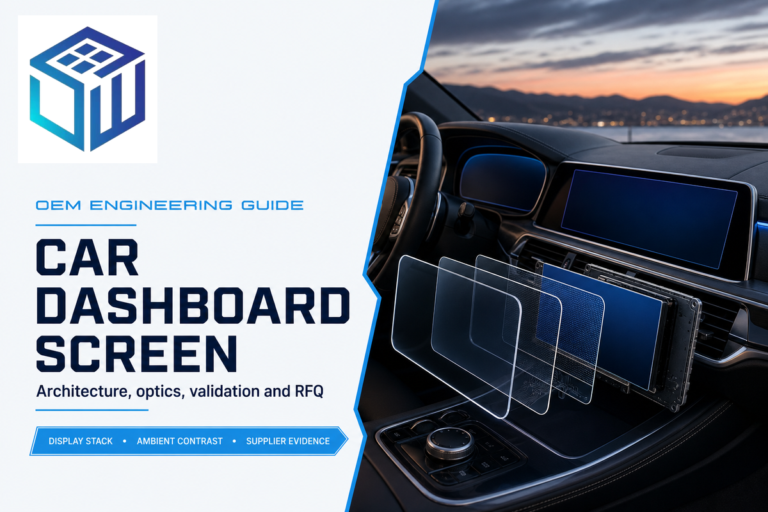
An in-vehicle display used for driver information, control, entertainment, and/or passenger functions is called a car dashboard screen. While determining the screen size and the peak brightness is certainly important in selecting a display for human-machine-interface applications, for an OEM…
Vehicle Touchscreen Engineering Guide: Stack, Validation, and RFQ
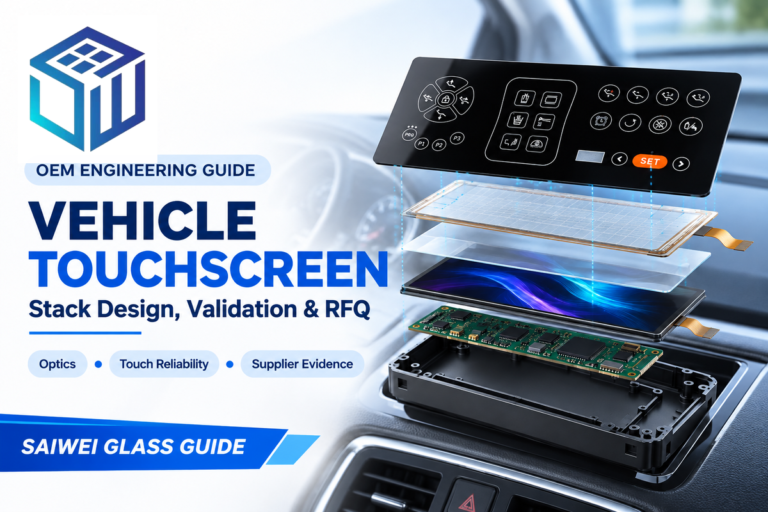
OEM Engineering Guide A touchscreen is more than a display with a touch layer. It’s a stack of optical, electrical, mechanical, and surface systems. If those layers are specified independently, a sample can look acceptable on a bench yet suffer…
LOCA Bonding: Selection, Process Control, and Validation
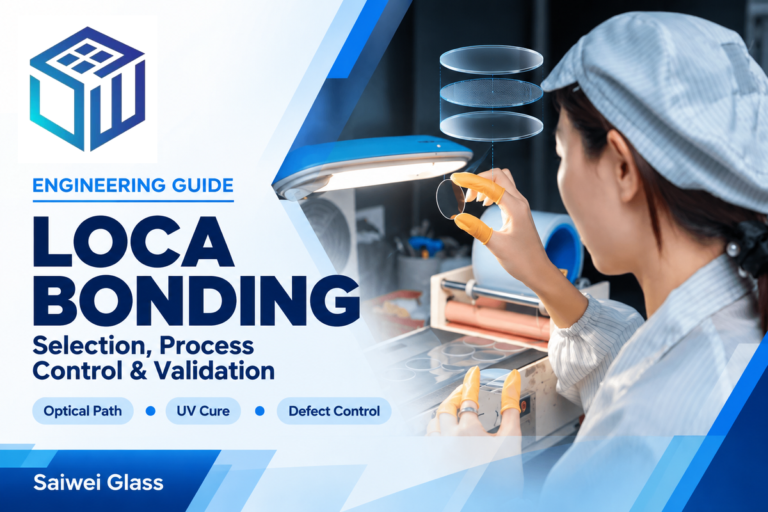
Display Bonding Engineering Guide LOCA bonding is an optical assembly process for filling the gap between display layers with a transparent liquid adhesive; use this guide to compare adhesive options, define a repeatable UV-cure process, diagnose visible defects, and build…
Transflective Display: A Complete Engineering and Buyer’s Guide
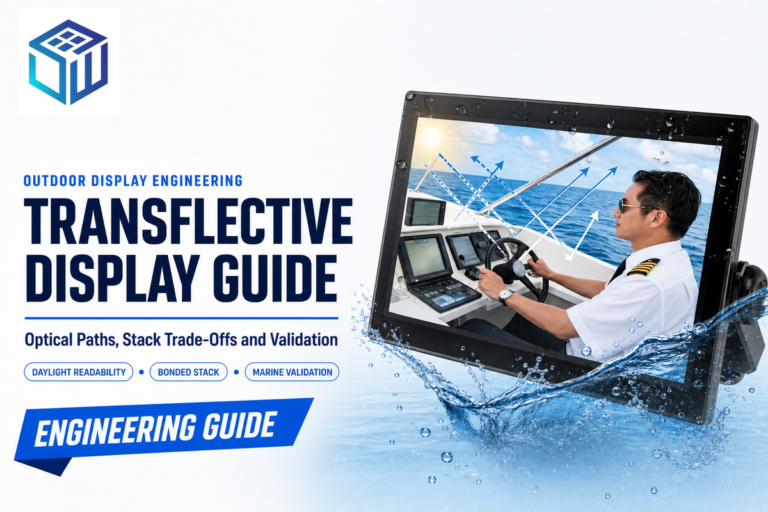
A transflective display is an LCD display designed to form an image with two light paths: It reflects ambient light in bright conditions and transmits light from a backlight when ambient light is insufficient. A transflective LCD display or TFT…
Anti Glare vs Anti Reflective Glass: An Outdoor Display Test Guide

Anti glare vs anti reflective refers to two different ways of controlling visible reflections on display cover glass, and the better choice for an outdoor or marine display should be determined on a powered assembly in its actual lighting geometry.…
Low Iron Glass vs Clear Glass: Transmittance, Color & B2B Use Cases
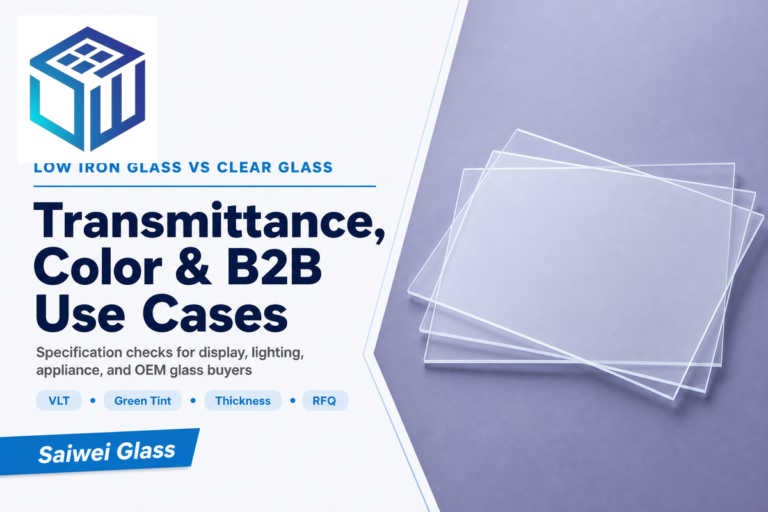
Low iron glass vs clear glass is a material-selection question, not just a visual preference. For color-critical panes, low iron glass gives maximum clarity and a more neutral pane, while standard clear glass is still the practical glass type for…
Thermal Tempering Process: From Annealed Glass to Safety Glass
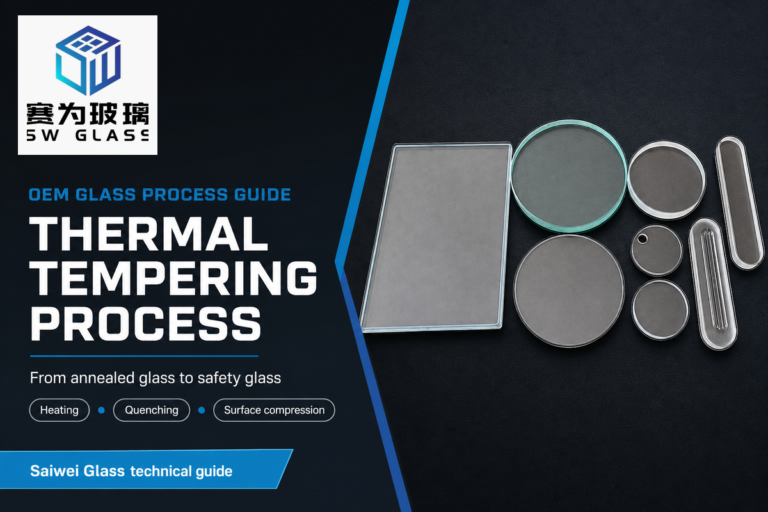
The thermal tempering process is a controlled glass heat treatment method that turns annealed glass into tempered safety glass by heating the glass, rapidly quenching it, and locking the outer surface into compression. This article covers glass thermal tempering, not…
ITO Coating Process & Cost Breakdown: Magnetron Sputtering, Sheet Resistance Tuning
What’s the cost of ITO coating? ITO coating process and cost is a procurement specification for how indium tin oxide is deposited on glass, how the transparent conductive film is tuned, and how much inspection risk the buyer asks the…
ITO Glass Explained: Properties, Conductivity & Industrial Applications
Industrial conductive glass guide ITO glass is a glass substrate coated with indium tin oxide, a transparent conductive oxide that lets light pass while carrying electrical current across the glass surface. It’s used when engineers need a transparent electrode for…
AG vs AR vs AF Glass Coating: Which Surface Treatment Does Your Touch Screen Need?

All touch screen glass suffers from the same three enemies: the glare that overpowers the image, the reflections that conceal the display image, and the fingerprints that smudge the image after every swipe. Surface treatment technology presents a solution –…
Trending now