Get in Touch with Saiweiglass



Dd
I cover industrial glass selection, including optical appearance and thermal processing. My writing focuses on the practical differences between common materials and treatments, helping readers compare product descriptions and identify the performance details that should be discussed before approving a glass specification or sample.
Touch Screen Glass Explained: Technology, Types, and Selection Guide

Quick Specs Common Glass Types Soda-lime, borosilicate, aluminosilicate (chemically strengthened) Typical Thickness 0.55 mm – 3.0 mm (application-dependent) Light Transmittance ≥90% (capacitive panels) Surface Hardness 6H–7H (Mohs 6–7 for cover glass) Primary Touch Technologies Projected capacitive (PCAP), resistive, SAW, infrared…
How to Choose the Right Touch Screen Glass for Your Application
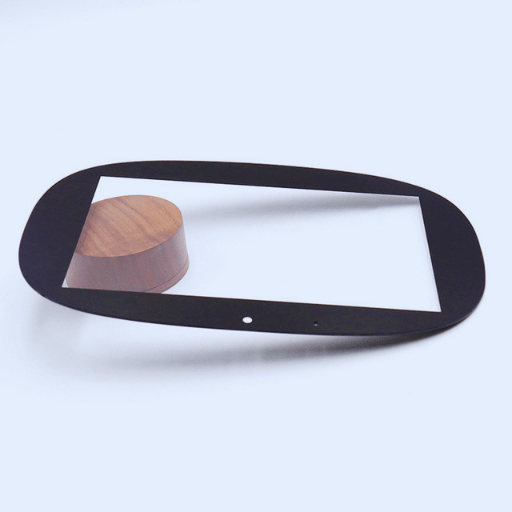
Cover glass has numerous functions. It offers impact protection to the display and supports user input. It also influences the field failure rate and how users perceive the contents on the display. Covering glass used in a consumer tablet or…
What is Anti-Reflective Glass?
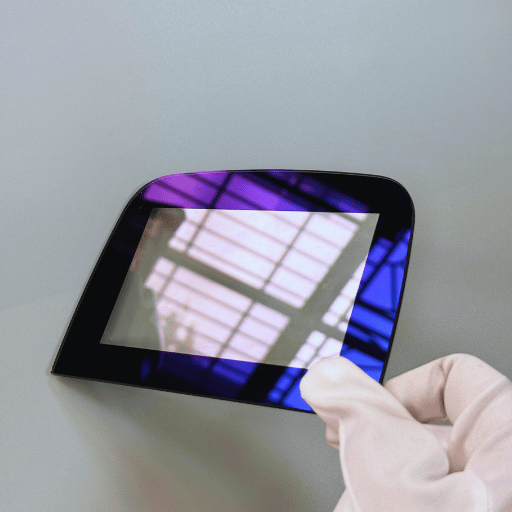
Ordinary uncoated glass reflects about 4% of incident light at each air-glass surface, or roughly 8% across both surfaces, near normal incidence. These reflections can reduce the effectiveness of displays and photovoltaic panels. Anti-reflective glass reduces reflection. Its reflectance and…
Complete Guide to Glass Coating Types: AR vs AG vs AF

Each display, instrument panel, and touch screen relies on a glass surface formulated for one of the three most common coating environments. The 3 most common types – AR (anti-reflective), AG (anti-glare), and AF (anti-fingerprint) – each address a different…
How Does Anti-Reflective Coating Work on Glass?

Every glass surface you look through is reducing the intensity of the light. Untreated glass reflects about 4% of incident light per surface, so one panel loses about 8% of the light trying to pass through. anti-reflective coating addresses this…
Anti-Reflective Glass vs Anti-Glare Glass: Complete Guide

Quick Specs AR Glass Light Transmittance >99% (multi-layer coating at 550 nm) AR Glass Residual Reflection <0.5% per surface (multi-layer); 1–2% (single-layer) AG Glass Haze Range 1–25% (tunable by etch depth) AG Glass Etch Depth 0.05–0.07 mm (chemical etching process)…
Trending now