Get in Touch with Saiweiglass


What Is AG Glass: Complete Guide


In terms of current technology and design, the application of anti-glare (AG) glass has become a vital component of both efficiency and aesthetic. What is AG glass, and how come it is one material which is being used in so many segments from gadgets by consumers to interior and structural design? This thorough post discusses what AG (Anti-Glare) glass is, how the technology is applied, what advantages it offers, and where it is utilized. Anybody who is interested in technology, design or other new age materials will find this article helpful as it explains the importance and usefulness of AG glass in the present time. Different ways of improving the availability of this versatile material will be examined in this paper.
Introduction to AG Glass
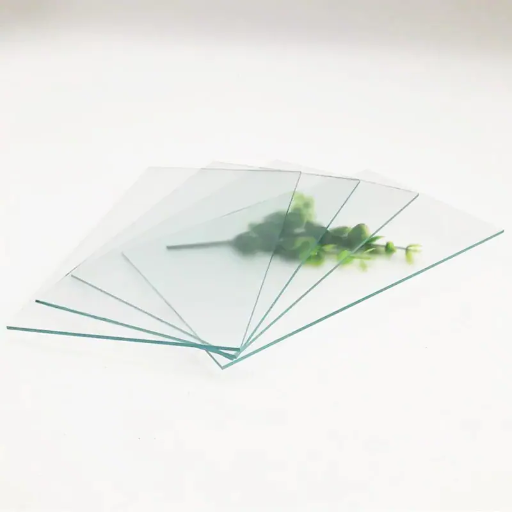
AG (Anti-Glare) glass is a specially treated glass that is designed to reduce glare and reflection on its surface. This high quality glass qualifies as the glass because it is made into a format that diffuses the light in a way that allows screens, displays, and other glass applications to be perceived easily even during daylight or in bright indoor light. This performance glass improves visibility, reduces eye strain, and allows greater satisfaction in viewing. In view of their superior qualities this glass is widely used in fields such as technology in electronic displays and architecture where it increases the aesthetics and function in glass installations.
Definition and Overview of AG Glass
AG, or anti-glare, glass is a type of glass that undergoes a treatment or receives a surface texture intended to reduce the amount of glare due to the reflection on its surface. The dispersed light rather than allowing it to reflect directly into the viewer’s eyes is a key determinant for enhanced clarity and readability of AG glass under various light conditions, particularly direct sunlight. In this way, AG glass is extensively used in electronic gadgets like smartphones, tablets, and monitors and are applied to architectural projects where glare reduction is vital for visual comfort.
In the latest developments, it can be clearly observed that AG glass is mingling with new technologies such as anti-fingerprint coatings and added scratch resistance, rendering it more light-hearted and durable for today’s hi-tech plant and apparatus. This cocktail of innovation thereby places AG glass in a position that undermines cordiality for the user and craftsmanship in technology design, which is essential for meeting today’s consumer and industrial demands.
History and Development of Anti-Glare Technology
The development of anti-glare (AG) technology started in the mid-20th century when reflections were to be reduced on optical instruments and glass surfaces. Initially, the efforts were toward creating coatings suitable for achieving a substantial reduction in the reflectance of the light source — ergo, improved clarity and visibility. So by the 1970s and 1980s, the AG coatings were well established for the better performance of camera lenses, eyeglasses, and screens under bright light conditions.
In the late 1990s and early 21st century, the demand for AG technology rose significantly after the rapid growth of personal and industrial technology. Modern technologies emerged from manufacturers trying to produce more durable and efficient coatings to withstand daily abuse while keeping up optical quality as well. This AG technology not only boasts coating properties but also offers further benefits, like capacitation, antismudging, higher scratch resistance, and breezy cleaning. These advancements result from years of research and innovation from usability and comfort enhancements of screen-dependent worlds.
Understanding Anti-Glare Properties

Anti-glare (AG) properties enable the ability to reduce the reflection of light on a certain surface, hence facilitating field of sights for screens or displays in high-light conditions by utilizing special coatings or surface treatment. The effect is achieved by diffusing light and thus minimizing glare. Therefore, AG glass creates an environment supported even better by improving visibility, reducing eye strain, and offering excellent user experience, particularly in situations of heavy lighting or outdoors.
What is Anti-Glare Glass?
An Anti-reflective glass is the kind of glass engineered to reduce the reflection of light on its surface and render visibility, as well as comfort to the user. This could be achieved by introducing specific modifications to the surface or by the application of special coatings that disperse incoming light, thus markedly reducing light reflection. Normally appearing in computer screens or screens of handheld gadgets like tablets and cell phones, anti-glare glass presents substantial relief in environments filled with light, or in any case, in open spots where natural sunlight might interfere with the resolution of the screen. Recent advancements have delivered a better formula to ensure that existing anti-reflective glass remains durable and effective while also giving it better scratch and fingerprint resistance. This progress has allowed for the integration of anti-reflective glass as an integral part of display technology for personal applications that offer an optimal balance between visibility and comfort for users in various industries.
How Anti-Glare Works: The Science Behind It
The anti-glare feature in a screen works by taking the light reflection back from the surface. The visibility of the screen will be improved, and watching a screen will become more comfortable. This is usually done by enhancing roughened surface finishes that allow for the scattering of incoming light onward. Impressing upon the context, the surface reduces glare by bouncing the light in all directions instead of one maxima, improving visibility.
The antireflection phenomenon works in accord with principles interpreted by the twin sciences of optics and materials science. Coating materials have refractive properties that are designed to interfere with or cancel the reflection of light. These coatings are thin and are designed to work through a wide range of light wavelengths. Essentially, by altering the behavior of light when it encounters the coated surface, glare reduction is achieved while the visual quality overall is maintained.
Anti-glare technology is widely used for everyday items like computer screens, smartphones, glasses, and car windshields. It enhances visual performance, reduces eye strain due to severe reflections, and is an essential element in high ambient light conditions to ensure that users can work best when interacting with a display on-demand.
Comparing AG Glass with Traditional Glass Types
Anti-glare (AG) glass can be compared to traditional glass types like clear glass, frosted glass, tempered glass, laminated glass, and coated glass.
| Key Point | AG Glass | Clear Glass | Frosted Glass | Tempered Glass | Laminated Glass | Coated Glass |
|---|---|---|---|---|---|---|
| Reflection | Reduced | High | Moderate | Moderate | High | Variable |
| Clarity | High | Very High | Low | High | Very High | High |
| Strength | Moderate | Low | Moderate | High | High | Moderate |
| Usage | Displays | General | Privacy | Safety | Safety | Applications |
| Durability | High | Low | Moderate | High | Very High | Moderate |
| Light Diff. | Even | Uneven | High | Minimal | Minimal | Variable |
The table highlights the distinctions in reflection, clarity, strength, usage, durability, and light diffusion between AG glass and traditional glass types, aiding in informed selection for specific needs.
Types of AG Glass
AF Glass vs. AR Glass: Understanding the Differences
AF glass and AR glass differ in their primary purpose, surface coating properties, light reflection handling, and application areas.
| Key Point | AF Glass | AR Glass |
|---|---|---|
| Purpose | Fingerprint resistant | Anti-reflective |
| Coating | Oleophobic | Anti-glare |
| Light Reflection | Reduces smudges | Minimizes reflection |
| Durability | High resistance | Moderate resistance |
| Use | Touchscreens, displays | Optics, screens |
AG Film: Applications and Advantages
The AG (Anti-Glare) coating is specially designed to reduce glare for better visibility in different lighting conditions. This is mainly used in displays and screens, which allows the distraction-free enhancement of working or leisurely comfort for the viewer. So AG film has been popular with smartphones, tablets, laptops, and monitors as they are often used under different light conditions. Besides, AG film is largely performing its job in the automotive display, industrial touch panels, and medical devices for clear readings during critical operations.
AG film has the advantages of reducing eye strain in glaring light and providing screen protection without interfering with existing screen layers. Most notably, it remains unbeaten in minimizing the possibility of scratches or even the formation of fingerprints under normal use. Moreover, AG film allows pixels to burn under a clear layer of meinda without any restriction to the original picture brightness or color accuracy due to advancements in technology.
Applications of AG Glass
Application 01
AG Glass in Consumer Electronics
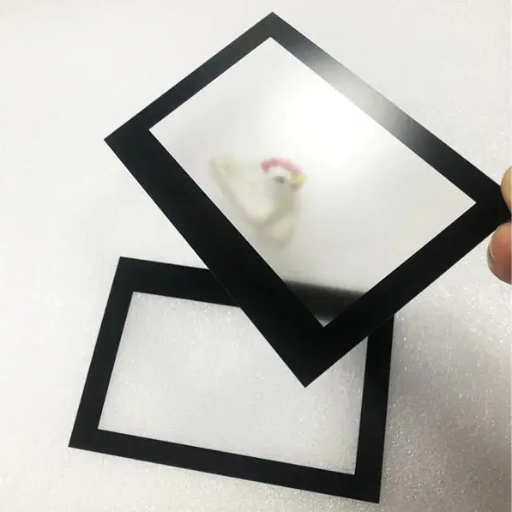
AG glass is prevalent in consumer electronics for enhancing user quality and ensuring device durability. Therefore, AG glass is often used on smartphones, tablets, laptops, and monitors, serving as an anti-glare shield weakening reflections and making the display more visible, especially in conditions where natural light is very bright. Moreover, AG glass resists scratches and finger marking and thus supports greater resilience to normal environmental wear and tear. It is a characteristic that necessitates its presence in modern electronic devices to bring about functionality and durability.
Application 02
Use of Anti-Glare Glass in Automotive Industry
The anti-glare acid glass plays a fundamental role in the automotive industry today for safety and improved user experience. It finds extensive use in vehicular displays involving navigation systems, infotainment screens, and instrument clusters to prevent sunlight or headlamp reflections that would compromise road visibility for the driver and other car occupants. In addition, this can benefit road safety greatly with AG glass only under the conditions of least eye strain over long journeys, enhancing the readability of displays against various lighting conditions. Beside displays, the AG coating on windshields and side mirrors lowers glares from headlights or sunlight in the driver’s or any occupant’s eyes, positively enhancing driving safety. These new uses do underline the importance of advanced material such as the AG glass in modernizing the automotive experience in terms of user and vehicle safety.
Application 03
AG Glass in Architectural Design
A major material used in modern architectural designs offers both functional and aesthetic advantages and is now presented by AG (Anti-Glare) glass. Some of the most substantial advantages include glare reduction yet excellent light transmission, making these useful for making building facades, skylights, and large windows. Indeed, there comes the extra benefit of allowing natural light to pour into interiors without the feeling of discomfort or the strain of visual distractions. In addition, AG glass works toward energy efficiency in accommodation with artificial lighting such that heat gains are minimized, thereby augmenting the sustainable character of building design.
According to the most recent data, it has been found that in the design, the use of antibacterial glass is increasingly applied to high-traffic areas like commercial buildings, museums, or retail spaces, to get benefits on transparency and restrict reflection on glass surfaces. Such practical design aesthetics are then employed with a more fabulous enhancement of design flexibility wherein architects are advancing themselves to achieve a harmonious equilibrium between transparency and privacy. AG glass, as an integral element of contemporary buildings, melds effectively with other high-performance materials to address the needs of environmentally responsible, visually spectacular and practical buildings.
Manufacturing Processes of AG Glass

01
Etching Techniques for AG Glass
Etching of AG (anti-glare) glass is crucial to bestow its characteristic surface properties, to minimize glare, and to accentuate clarity. For instance, it will involve forming the surface of the glass with microscopically smooth roughness. Here, light hitting the rough texture will be refracted, in some cases, ending light scattering, where such light was to illuminate the surface; thus, the reflected light has been diffused and disarranged to accentuate the effect of a mirror reflection.
One method to create etching in AG glass is by using chemicals. With this method, glass is immersed in an acidic solution. The acid interacts with the glass surface to create a fine rough textured layer that produces a perfectly diffused anti-glare finish, thus perfect in settings having a strong light incidence like outside bright interiors. This is highly valued for its precision requirements and ability to uniformly achieve results on all types of glass.
Mechanical etching is another extensively used technique, where abrasive materials are used to physically modify the glass surface. Performed through sandblasting or grinding, the process produces great similarity in influencing the texture and light-scattering capacity. Mechanical etching has great value for purposes or, should one say, complete utility as each specific uniqueness implies the usefulness of the material. Either method will ensure the durability and functionality of AG glass making it a versatile option for many different industries.
02
Spraying AG: Overview of the Process
AG coating involves a special material that is sprayed onto specific substrates like glass to create a smooth surface that reduces glare and enhances the distribution of light. The process generally starts with a well-cleaned surface so that the anti-glare material would properly adhere. The application is carried out by spraying evenly on the surface, using precision equipment, to create a consistent finish. Nozzle type, spray pressure, and other environmental conditions play vital roles in making the application uniform and effective. After fusing, curing via heat or UV radiation is done to solidify the layer. This process finds popular use for the inability to break the bank in injection molding and plating applications of different shapes and sizes — perfect for optical applications like screens and lens.
03
Quality Control in AG Glass Production
In the AG glass factories, the quality control process is quite sophisticated; it ensures that stringent criteria are met so that the final product stays within the defined norms of modern scientific development. This operation involves multi-level investigation and examination to ensure factors such as the homogeneity of AG coatings, clear visuals, and durability under changing conditions, among others. They are joined by an upsurge in data acquisition systems, pixel microscope systems, and spectrophotometers that are used to gauge the capacity of the light being diffused.
Reports suggest that AI-Vision Technology-based automated quality control systems have a greater uptake in AG glass production. In this system, minor defects such as differences in coating and scratches on the surface can be detected. This technology has also become a pinion testing mechanism certifying AG glass under real environmental conditions, such as temperatures above and below extreme limits, humidity, and ultraviolet rays, to evaluate AG glasses in its working conditions and across different applications for AG glasses. The assimilation of this technique and the rigid technical approach underscores the commitment to provide excellent AG glass for industries such as electronics, automotive, and consumer devices.
Reference Sources
-
Prediction and Analysis Etching Model of Anti-Glare Glass Roughness Based on Machine Learning Method – Focuses on the etching process in anti-glare glass production and its impact on surface roughness.
-
Evaluation of Anti-Glare Coating Glass for Photovoltaic Modules – Examines the optical properties and effectiveness of anti-glare coatings, particularly for photovoltaic applications.
-
Kinetic Study on Preparation of Anti-Glare and Anti-Reflective Frosted Glass by Acid Dissolving Salt Solution Etching Method – Explores the preparation methods for anti-glare and anti-reflective glass using innovative etching techniques.
-
Novel Manufacturing Process for Anti-Glare of LCD Cover and Development of Haze Model – Discusses a novel manufacturing process for anti-glare coatings on LCD cover glasses, including the development of a haze model.
- AG Glass