Get in Touch with Saiweiglass



What Is Anti-Reflective Coating on Glass?

anti-reflective coating on glass (an optical coating applied) is a thin-film device placed on glass surfaces that reduces glare through destructive interference, increasing transmission through the glass substrate. By adding precise layers of metallic oxides onto the first and back surfaces of a sheet of glass, textile producers can decrease glare loss from about 8% down to less than 0.5% – effectively rendering the glass invisible to the viewer.
Standard uncoated glass will reflect approximately 4% of incident light at each air-glass interface. With two exposed surfaces per sheet, that’s a loss of roughly 8% of the incoming light. For a display case containing a solar panel, carrying images, or acting as a storefront window, losing sixteen photons out of the twelve hundred that hit each square millimeter of glass is a problem both with optics and in terms of revenue.
ar coating works by applying layers of metallic oxides – most commonly SiO₂ (silicon dioxide), TiO₂ (titanium dioxide), ZrO₂ (zirconium dioxide), Al₂O₃ (aluminium oxide), and MgF₂ (magnesium fluoride) – onto the glass substrate. Every layer is tuned to a specific optical thickness so that waves reflected from adjacent layer boundaries cancel one another. The result: greater transmittance, reduced glare, and a clearer view. Increasingly, flat glass and precision-curved glass manufactured today ships with factory-applied AR coatings as default rather than the add-on option.
~8%
Uncoated glass reflectance (both surfaces)
<0.5%
Residual reflectance with multi-layer AR
94%+
Reduction in surface reflectance
Fundamentally, anti-reflective coating is not a surface paint. It is a physically active optical coating that alters the behavior of light on a fundamental level – with quantifiable performance effects for every standard sector that utilizes flat or curved glazing.
How Does Anti-Reflective Coating Work? The Science Behind AR Glass
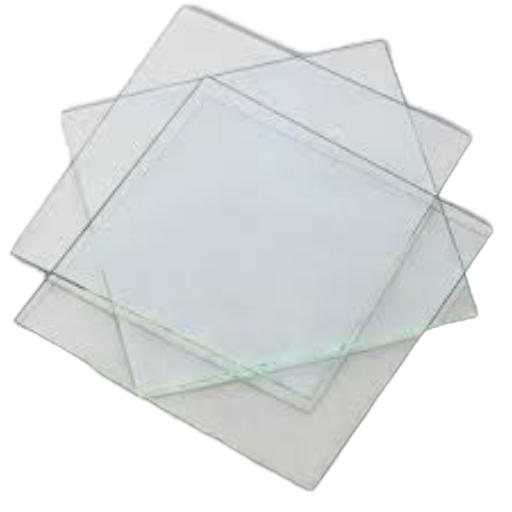
The physical process behind anti-reflective coating is known as thin-film interference – specifically, destructive interference between two pathways of reflected light. When incident light strikes a coated surface, some of the photons reflect off the top of the coating while some reflect off the glass interface below. If the coating is applied at just the right thickness, these two reflected waves will be 180 out of phase when they combine, cancelling each other out and releasing the energy that would have become glare back into the environment.
The optimum thickness for a single coating in a ar coating is /4 – one quarter of the target wavelength for the incident light. For green (about 550nm), the resulting coating thickness translates roughly to 137nm. When the path difference between the two reflected waves matches half a wavelength, that produces the 180 phase shift that causes the two waves to cancel each other out.
Single-layer coatings use a single material – MgF₂ was the original option, with a refractive index of 1.38 – and work effectively at a particular wavelength. Many practical applications require more range. Multi-layer ar coatings compose three to seven alternating high and low-refractive index layers (for example, TiO₂/SiO₂ pairs), resulting in broadband zero-reflection performance by spreading the destructive interference effect across the entire spectrum.
| Type | Layer Count | Residual Reflectance | Spectral Coverage |
|---|---|---|---|
| Single-layer (MgF₂) | 1 | ~1.5% | Narrow (one wavelength) |
| Multi-layer broadband | 3–7 | <0.5% | Full visible spectrum |
| Nano-textured (moth-eye) | Surface structure | <0.1% | Ultrabroadband |
Key takeaway: The wavelength-specific physics of destructive interference underpin ar coating technology and distinguish it from standard limitations controls or etching treatments. Every physical property – transmittance, glare level, color neutrality – can be traced back to this optical effect.
Types of Anti-Reflective Coatings for Glass

ar coatinges aren’t all the same. Your substrate, environment, required durability, and budget determine which type is necessary. Here are the principal kinds of coating currently in use in optical, architectural, and industrial glass:
Single-layer MgF₂. This is the most basic type, with just a single, very thin coating of magnesium fluoride on the surface of the glass. Reflectance is reduced from 8% to approximately 1.5%, which is adequate where color neutrality is not critical. It is very inexpensive, very common, and suitable for less-critical applications. It does only absorb one wavelength, though, so there is often some residual color cast.
Multi-layer broadband AR. This is the relatively complex type, with something like three to seven layers of alternating high/low index-high index oxides—most often, TiO₂ and SiO₂. Residual reflectance will be below 0.5% across the entire visible spectrum. Found on high-quality glasses lenses, museum display cases, optical devices, and high-end architectural glazing, it is also applied to three-dimensional curved glass surfaces in automotive and retail display applications, where broadband performance at sharp angles is essential.
Sol-gel / wet-chemical AR. Coatings of this kind are applied by dipping or spun-on techniques, with a liquid precursor solution being laid on the glass. Subsequently cured and heated, the porous silica that results creates a gradient refractive index, achieving reflection reduction. Cost is low, and it is relatively straightforward to scale, so it is common in large solar-panel cover-glass. Durability is the factor that suffers—the sol-gel coatings are more susceptible to humidity cycling and abrasion.
Magnetron sputtered coatings. Using a vacuum chamber and physical vapour deposition, this is a type of sputtering coats a glass panel in high vacuum. Offers very precise control over layer uniformity and depth, so it is the preferred choice in high-end optical and industrial glass. It has excellent adhesion and durability.
Nano-textured moth-eye AR. A bio-inspired approach, this type of designed in large arrays of tiny bumps approximately 200nm high that create a gradient refractive index. Since the bumps are smaller than the wavelength of visible light, light reacts the same way as it would for a flat interface. This creates ultrabroadband low reflection and no residual color. Because the structures are tiny, though, manufacturing cost remains high.
Etched AR: uses some form of acid or fluoride-based chemical etchant to roughen the surface of the glass on a microscopic level. While technical details actually make it ‘soft’ in a way, etching is still marketed under the umbrella term.
| Type | Method | Residual Reflectance | Durability | Best For | Cost |
|---|---|---|---|---|---|
| Single-layer MgF₂ | Vacuum deposition | ~1.5% | Good | Basic optics, low-budget glazing | $ |
| Multi-layer broadband | Vacuum sputtering / evaporation | <0.5% | Excellent | Optics, display, architectural, automotive | $$ |
| Sol-gel wet-chemical | Dip / spin coating | 1–2% | Moderate | Solar panels (large area) | $ |
| Magnetron sputtered | PVD vacuum chamber | <0.3% | Excellent | Industrial glass, precision optics | $$$ |
| Nano-textured moth-eye | Nanoimprint / etching | <0.1% | Good (surface dependent) | AR/VR, premium displays | $$$$ |
| Etched AR (acid) | Chemical surface treatment | ~8% (scattered) | Good | Matte-finish glazing | $ |
Memorandum: make the choice of coating a matter of residual reflection, durability, combinations, and ultimately, cost. Multi-layer, vacuum-deposited coatings deliver the best possible broad-spectrum intensity values; but they come with a significant investment in manufacturing equipment.
Key Benefits of Anti-Reflective Glass
ar coating does way more than this aesthetically. The advantages are quantifiable in very tangible terms of power produced, visual clarity, or retail conversion for a storefront.
92% → 99%+
Light transmittance improvement
3–6%
Solar panel power gain (DOE data)
$5.6B
Global AR coatings market, 2025
The transmittance of uncoated glass is approximately 92%. However, it is possible to improve that above 99% with a high-quality multi-layer ar coating glass. That is a 7 percent increase, yet it is immensely significant when dealing with optical instrumentation and solar power collection where every photon is valuable.
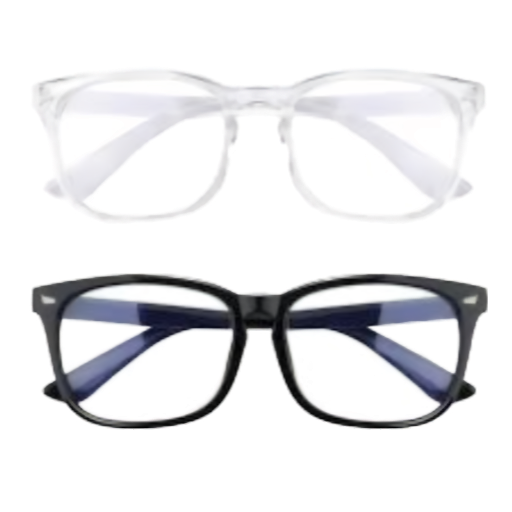
Glare and visual comfort: Eliminating specular reflection from 8% to less than 0.5% removes the mirror effect uncoated glass exhibits in brightly lit ambient environments, vastly improving visual comfort while glazing. Eye care specialists typically recommend AR coated prescription glasses lenses as a matter of course, because of the glare improvement that can be achieved.
uv protection: Many ar coating stacks include layers absorbing ultra violet light (common cutoff around 380nm) in the multi-layer structure. This makes the AR coated glass useful in many applications where UV filtering is required, from museum display glazing used to protect exemplary artwork, to safety glasses sunglass lenses.
Color fidelity and contrast: Because ar coating can reduce stray reflection everywhere across the spectrum, the transmitted light from an AR coated piece of glass tends to be more neutral. Photographers, colorists, and museum glass textile curators all say that AR coated display glass yields truer colors than plain float.
Solar module energy: As NREL durability research on antireflection coatings for solar applications shows, AR coated cover glass can result in a net 3-6% absolute gain in solar module power output, making it an economically compelling upgrade at the utility scale. A conclusive review in Solar Energy (ScienceDirect) finds that ar coating-enhanced cover glass is one of the most inexpensive ways to increase energy conversion efficiency in crystalline silicon solar panels.
The “invisible” glass phenomena: With reflectance approaching zero, coated glass becomes visually indistinguishable from the cladding while in the frame. Particularly in sophisticated retail settings and gallery installations, this reduction to “museum quality” glass appearance is very desirable. State of the art broadband ar coating applied to curved architectural glass has proven capable of achieving this look even in non-planar windows.
Highlight: ar coating is one of the few upgrades that provides a net improvement in performance, visual quality, and energy gain, giving it a compelling business case in almost every glazing category.
Applications for Anti-Reflective Glass: From Storefronts to Solar Panels
AR glass is not just found in select premium segments. Because the physics of AR involves reducing quantities of reflected light so that more of the intended signal is passed, it is relevant in any application where glass is interrupting the optical path from a source to a sensor or observer. The market for these products is expected to hit $5.6 billion annually in 2025, after surging at a 7-10% CAGR according to the Grand View Research anti-reflective coatings analysis, thanks to rising demand from the solar, display, and architectural construction industries.
Architectural glazing and front display windows: Captive shopper display windows in retail rely on being visible to customers, since they bring the merchandise through the window on shopping trips. uncoated reflective glass produces a daylight mirror that obscures the product. AR-coated glass, especially sol-gel, ensures that retail windows improve the visual merchandising in elite stores, while reduced glare on the windows provides a crisp, glare-free interior view.
Museums and galleries: This is perhaps the most challenging of all AR glass applications. For display cases, the glasses cannot bounce light he above into the viewer, as reflection must compete with the image behind it. The standard museum glasses consist of multi-ply ar coatings having the residual reflectance below 1% with UV transmission all the way to zero in order to preserve the pigments.
A very typical purchase error made: to take anti-glare (etched) for museum cases, as it spreads reflected light but much decreases image resolution, making it counter-productive for fine art photographs or paintings.
Solar energy: As mentioned earlier, AR coating of photovoltaic module cover glass results in a 3-6% increase in power output at a negligible marginal cost for each panel. For a utility solar farm of 100 MW capacity, this could mean millions of dollars in incremental profit each year over 25-year lifespan. Sol-gel coatings holds the greatest promise in this domain owing to their low cost and ‘scale-upability’, even though their outdoor endurance validity is still under examination per MDPI Energies research on AR coating materials from a PV perspective.
Optical systems: Camera lens, microscope objectives, telescope mirrors — almost all multi-element optical systems employ AR coatings on each air-glass interface. A camera lens with 10 elements (20 surfaces) would lose over 80% of the incident light without coating. Edmund Optics’ AR coatings knowledge center offers a detailed breakdown of coating stack design for laser and imaging optics applications.
Electronics displays and AR/VR: Smartphone cover glass, tablet displays, touch screens and head-mounted displays all need ar coatings to be readable in ambient light. AR/VR headsets are some of the most technically challenging – inside the waveguide optics, coatings need to be working at all angles of incidence, not just the normal.
Automotive glass: Head-up displays (HUDs) in cars autofocus navigation and velocity information onto the windscreen. ar coating on the inner surface of the glass improves display brightness and legibility. More and more instrument cluster panels in cars are AR-oriented treated cover glasses too.
For mid/large car curved automotive glass applications – where the glass bent around the cabin or provides a special-shape display cover – the coating has to be applied uniformly on the three-dimensional curvature. Saiweiglass is one of the few manufacturers working with shaped glass geometries in automotive environments; their 3D curved glass series is designed to suit precisely this kind of shaped-glass optical demand.
Eyewear: AR coating on glasses lenses and sunglass lenses is probably the most “consumer-facing” application. An AR-coated lens can remove the “fish bowl” reflection that makes a person’s eyes very difficult to see through thick lenses, and reduces nighttime glare caused by oncoming headlights for (driving) users. uv protection is often combined in the coating stack used for sunglass lenses.
Big take away: The range of applications of AR glass—from solar farms to prescription glasses—is telling us one thing: for any interaction of glass and light, anything that can be done to reduce reflections and increase transmittance will capture the value.
Anti-Reflective Coating vs Anti-Glare: What Is the Difference?

anti-reflective and anti-glare: no confusion can lead to the wrong glass being specified – discovering the mistake after installation is extremely costly. This is far and away the most common point of confusion in the glass specification process. Buyers tend to use these two terms as interchangeable synonyms, but it’s like saying Tennis is the same as Football. Spectrometry and its effect are entirely different – but not impossible to misinterpret with potentially disastrous results.
⚠️ Important
I have specified many display glass and museum glazing projects with acid-etched anti-glare glass when the job only needed anti-reflective. These two processes can look quite similar in the supplier’s catalogue, but produce very different results once installed.
anti-reflective (AR) coating: the lenses grant obvious physical differences to its appearance, but otherwise use the principle of thin-film interference to almost completely cancel reflected light – reflection. With a smooth, untextured surface that scatters hardly any light, the result is a very nearly invisible glazing system with 99%+ transmission, <0.5% reflective brightness, and sharp, high-contrast imaging that appears virtually unhindered by the glass.
anti-glare (AG): simply roughen the surface of the coating to diffuse the reflected light, rather than cancelling it with interference. The final result looks coarse and matte, all glare from reflected light is shielded and masked by the diffuser effect, and the glare perceived from the glass is reduced to approximately 8%. Transmittance remains unchanged at 92%, and the image is still quite sharp – but not crystal clear. This matte surface is very forgiving of fingerprints and high definition imaging.
| Feature | Anti-Reflective (AR) | Anti-Glare (AG) |
|---|---|---|
| Working principle | Destructive interference | Surface light scattering |
| Surface texture | Optically smooth | Matte / micro-rough |
| Total reflectance | <0.5% | ~8% (scattered) |
| Transmittance | >99% | ~92% |
| Image clarity | High — nearly invisible | Reduced — slight haze |
| Best for | Museums, optics, displays, solar | Office monitors, touch screens (high-use) |
| Fingerprint visibility | Shows fingerprints clearly | Masks fingerprints |
Best uses for AR: application where translucency or high image fidelity are utmost priority- display cases, solar panels, optical integrated components, camera lenses, jobs requiring faithful color representations.
Best uses for AG: fingerprint-heavy situations where sensible use of a matte surface finish is desired – commercial touchscreens /point of sale terminals, office displays in high sunlight variability, industrial process controls, and other equipment.
Contrast: AR and AG may look similar in the catalogue, but are in fact solving two entirely different problems. Know these before specifying, and choose the right treatment accordingly: translucent or transparent.
How to Choose the Right AR Coating for Your Glass Project
The decision to specify an ar coating is highly unforgiving unless taken in context with several other far more independent considerations (each with its own subelements). At least six Parameters interact in the decision process, and some prove far less transparent and intuitive than others.
- Substrate: borosilicate, glass, curved, new, old, or tempered – each coats differently, and each interacts uniquely with said chemicals. Use the right techniques, know how to apply to curvatures or flat areas.
- Spectral Use: UV cuts? Near-IR for solar? Visible only? Each goal specification drives the stack composition and component choice.
- Residual Reflection: 2% is tolerated by installation glass, 0.5% is generally required by museums, and 0.1% face two must receive laser series applications. The lowest acceptable residual reflectance must be specified and documented before quoting.
- Environmental Resistance: what sort of UV and weather cycles does the application require, will the environment condusive to its chemistry, can it stand up to anticipated cleaning regimen?
- coating applied pre- or post-fabrication: if the glass is to be cut, drilled, or bent after coating the coating must survive those operations – or be applied at the final stage. Most vacuum-deposited coatings will not survive the high temperature bending after coating.
- Volume and price range: low-volume, custom applications can handle a premium price per unit. High-volume sold applications such as solar need a coating that is compatible with inline, large-area deposition systems.
Stock AR glass vs customized coating: stock flat glass in standard sizes is ideal purchased as stock AR glass from a distributor – cheaper and faster. Customized coatings for odd shapes, non-standard or performance-focused applications work best working directly with a glass fabricator. This allows you to specify precise target residual reflectance, durability test criteria and substrate geometry.
💡 Pro Tip
Always ask for a spectrophotometer report (reflectance vs wavelength data) along with AR glass samples. If your supplier cannot provide measured transmittance and reflectance data over the visible spectrum they are characterizing the glass by catalogue claim not by measurement.
When working with glass manufacturers on curved glass projects be sure to ask whether the ar coating is applied before or after the bend process and what the coating’s pencil hardness rating is. For the saiweiglass 3D curved glass line in the engineering team these questions are standard – as it impacts both the optical and installation integrity.
Ready to specify AR glass for your project?
About This Content
This article was developed by the saiweiglass team. Saiweiglass manufacturers curved and flat architectural glass and supplies AR coated glass products direct to fabricators, architects and OEMs. We have identified our own products clearly where mentioned in the article. All third-party data is cited and linked.
Frequently Asked Questions

Q: Is anti-reflective coating on glass worth it?
View Answer
Yes – a 3-6% power gain makes the coating cost pay back within 1-year at grid-scale in solar application. AR coated eyewear lenses helps reduce worker eye strain during long hours at display workstations. But in retail displays and other high-touch built environments fingerprint smudges are more important than light transmission, and hydrophobic or anti-glare coatings make sense.
Q: How long does anti-reflective coating on glass last?
View Answer
Vacuum deposited multilayer ar coatings will have their function intact for between 10-25 years depending upon outdoor environment, whereas sol-gel coatings will last for 10-15 years in outdoor use according to NREL testing, only degrading after 8 years in high moisture, high UV environments. Eyewear AR is rated for 1-3 years of normal outdoor use. One cleaning rule trumps all others: always use a microfibre cloth with lenses, never dry-wipe. The correct cleaning technique greatly extends coating life on any glasses lens or other optical surface far more than any other aspect of preservation. Indoor museum glass easily lasts decades as it is seldom abraded. Desert climate sol-gel coated photovoltaic panels in low humidity high UV circumstances will usually last 3-5 years longer than elsewhere.
Q: Can anti-reflective coating be applied to existing glass?
View Answer
Vacuum-deposited ar coatings, which too need a coating chamber, can not be used on already installed glass. Sol-gel liquid coatings can, at least theoretically, be applied in situ using dip or spray, but achieving an even level of optical quality outside a factory setting is difficult. More often than not, the practical option is to remove the installed glass, and replace it with factory-coated AR panels.
Q: What is the difference between AR coated glass and low-iron glass?
View Answer
These are separate technologies that serve different purposes-and are used jointly. Low-iron glass (sometimes called ultra-clear glass) boosts the colour neutrality and base transmittance of normal float glass by removing the green tint caused by iron oxide impurities of the float process, raising transmittance from about 88-90% up to 91-92%. ar coating then introduces the thin-film interference layer, which boosts total transmittance above 99% by removing surface reflections.
For high-specification applications such as museum exhibit cases and solar panels, this combination of low-iron substrate with AR coating especificaton delivers the best combined result: neutrality of colour alongside maximum exposure.
Q: Does anti-reflective glass block UV radiation?
View Answer
Not automatically. Standard ar coatings are designed to partially offset visible-light reflection and not inherently block UV. If you need UV blocking then layers can be added to the multi-layer coating stack; this is commonplace in museum glass (whererestoring priceless artworks against the effect of UV is of concern) and in sunglass lenses (where it is used as a safety precaution).
If uv protection is something you need, you need to specify it explicitly with your AR glass supplier. Standard float glass itself blocks most UV below 300nm because of the iron content and the chemistry of the glass but sufficient UV in the 300-380nm range passes through without the coating or an interlayer to absorb it.
Q: How much does anti-reflective coating for glass cost?
View Answer
ar coatings are variable in cost by coating type, glass area, volume and the number of substrate layers. As a rule of thumb: single layer MgF-type coating used on flat glass AR for optical is around $5-$20 each at low volume. Multi-layer broadband AR on architectural flat glass is generally about an additional $8-$30 / m over the cost of the glass at mid volume.
Sol-gel AR for solar panel cover glass is equal to about $0.50-$1.50 / m at factory production volume so is very economical at scale. Nano-textured moth-eye coatings used in AR/VR optics have been observed to cost in excess of $50-200+ each on small volume. Curved glass AR coating costs are generally higher than flat glass due to coating uniformity limitations and limited batch size.
For a project based quotation from saiweiglass use the form above.
References & Sources
- Durability Testing of Antireflection Coatings for Solar Applications — National Renewable Energy Laboratory (NREL)
- Anti-Reflective Coating Materials: A Review from PV Perspective — MDPI Energies
- Anti-Reflection (AR) Coatings Knowledge Center — Edmund Optics
- Anti-reflection coatings for solar module cover glass: A review — Solar Energy, ScienceDirect
- Anti-Reflective Coatings Market Size, Share & Trends Report — Grand View Research