Get in Touch with Saiweiglass



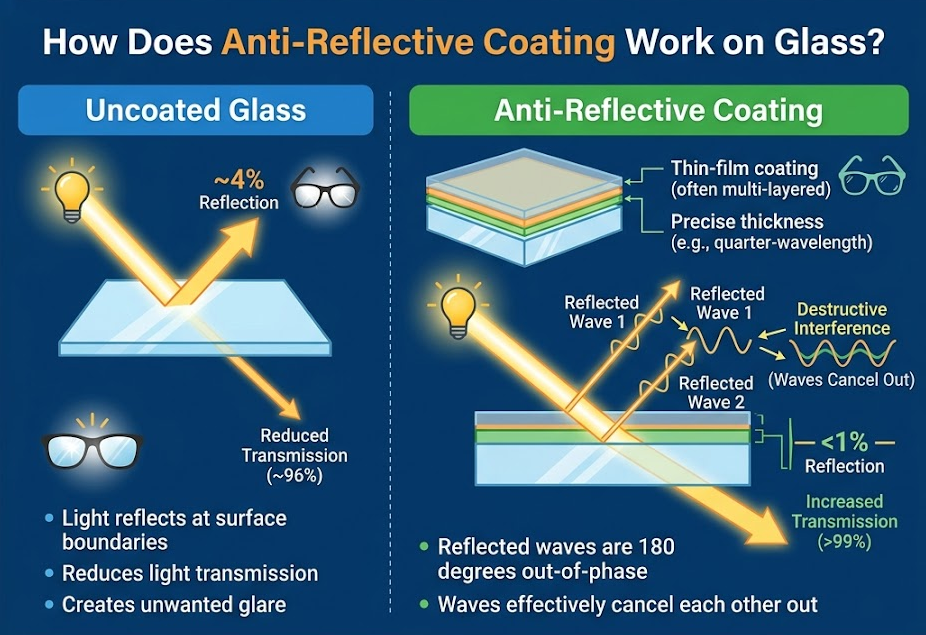
Every glass surface you look through is reducing the intensity of the light. Untreated glass reflects about 4% of incident light per surface, so one panel loses about 8% of the light trying to pass through. anti-reflective coating addresses this using thin-film physics to cancel out those reflections – increasing transmission from 92% to well above 99% in many cases.
What is happening at a molecular level in coating work? What stage of the manufacturing process involves anti-reflective coating? Why do various glass applications require different anti-reflective coating types? This article explains the science, processes, and real-world performance data behind anti-reflective coating on glass about specifying solar panel cover glass or architectural glazing.
What Is Anti-Reflective Coating on Glass?
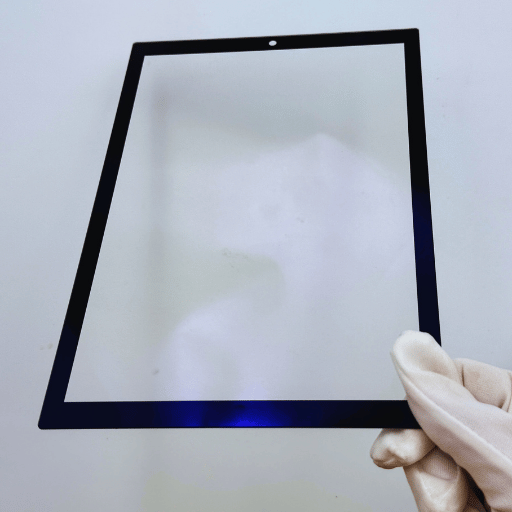
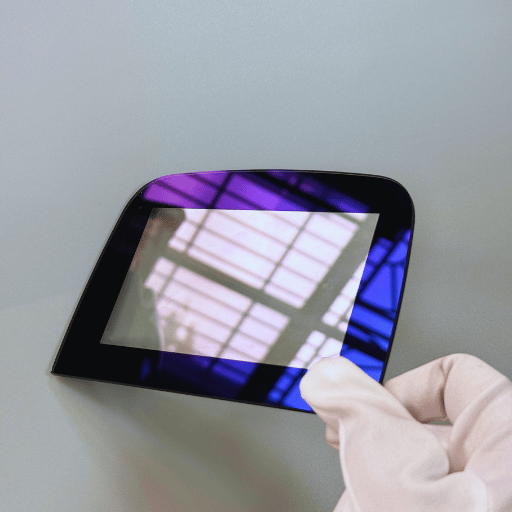
anti-reflective coating is a thin optical film – usually between 50 and 500 nanometers thick – applied to the surface of glass to reduce reflections and allow higher light to pass through. The coating material has a specific refractive index selected so that light reflection from the front and back surfaces of the film cancels out through a phenomenon called destructive interference.
Compared to an anti-glare coating, which diffuses reflected light by roughening the lens surface, anti-reflective coating removes reflections at the wave level. What you get is a glass surface that transmits more of the amount of light that hits it, resulting in much sharper images and less glare for the viewer.
~4%
Reflection per untreated glass surface
<0.5%
Reflection with multi-layer AR coating
>99%
Light transmission after AR treatment
The Science Behind Anti-Reflective Coating — Destructive Interference Explained
anti-reflective coating operates on the principle of thin-film interference. When light waves hit a coated glass surface, two separate reflections are created: one from the top of the coating layer (the air-coating boundary) and one from the bottom (the coating-glass boundary). When these two reflected light waves are half a wavelength out of phase, they cancel out through destructive interference – and the reflection all but disappears.
The Quarter-Wavelength Rule
For destructive interference to occur, the coating thickness must be equal to one quarter of the wavelength of light within the film. The formula is simple:
Quarter-Wavelength Condition
t = λ / (4 × ncoating)
Where t = coating thickness, λ = wavelength in air, ncoating = index of refraction of the coating material. For green light (550 nm) on MgF2 (n = 1.38), optimal thickness = ~100 nm.
The ideal refractive index for zero reflectance is the square root of the glass substrate’s index of refraction. For standard crown glass (n ≈ 1.52), the ideal coating index would be √1.52 ≈ 1.23. Since no durable material has that exact value, magnesium fluoride (MgF2, n=1.38) is the best compromise – and it has been the staple anti-reflective coating material since Olexander Smakula invented interference-based AR coatings at Carl Zeiss in 1935.
Coating Material Refractive Index Values
Multi-layer AR designs alternate high-index and low-index materials. Each layer is tuned to a certain wavelength of light to extend the anti-reflective properties throughout the visible spectrum. Based on published optical property data from Optica (formerly OSA), common coating materials include:
| Material | Refractive Index (at 550 nm) | Role in AR Stack |
|---|---|---|
| MgF2 | 1.38 | Low-index layer |
| SiO2 | 1.46 | Low-index layer |
| Al2O3 | 1.77 | Medium-index layer |
| ZrO2 | 2.0 | High-index layer |
| TiO2 | 2.3–2.5 | High-index layer |
| Ta2O5 | 2.1–2.2 | High-index layer |
💡 Pro Tip
Multi-layer lens coating designs that use layers of metal oxides like TiO2 and SiO2 can reduce broadband reflectance to below 0.2% — over 20 times better than a single-layer coating. Manufacturing complexity and cost go up accordingly.
How Anti-Reflective Coating Is Applied to Glass
How an anti-reflective coating is applied to the surface depends on the glass or lens application, production volume, and performance requirements. Four major deposition methods dominate the industry — each with distinct advantages for particular use cases.
| Method | Process | Best For | Reflectance Achieved |
|---|---|---|---|
| E-Beam Evaporation (PVD) | Electron beam heats target material in vacuum (10-5 to 10-6 Torr); atoms deposit on glass substrate | Precision optics, camera lens assemblies | <0.25% (V-coat) |
| Magnetron Sputtering | Argon plasma bombards target; ejected atoms coat glass in continuous inline chambers | Eyeglass lenses, display glass, architectural glass | <0.5% (BBAR) |
| Sol-Gel Dip Coating | Glass immersed in colloidal SiO2 solution, withdrawn at controlled speed, then heat-treated at 450–600 °C | Solar panel cover glass (large-format, low-cost) | ~1% per surface |
| CVD (Online Pyrolytic) | Gaseous precursors react on semi-molten glass at 600–700 °C during float glass production | Architectural window glass (integrated into production line) | ~1–2% per surface |
Magnetron sputtering has become the standard for flat glass applications, since the coatings go on in a continuous inline operation – The glass panels pass through a series of vacuum chambers without stopping. As documented in U.S. Department of Energy research on glass coatings, CVD-based pyrolytic coatings bond directly to the glass through covalent bonds, making them far more durable than sputtered alternatives.
In our experience manufacturing AR coated glass, the choice between sputtering and sol-gel comes down to volume economics. For runs under 10,000 panels, sputtering gives better optical performance. Above that threshold, sol-gel becomes significantly more cost-effective — especially for solar cover glass.
— Saiweiglass Technical Team
Types of Anti-Reflective Coating for Glass Applications
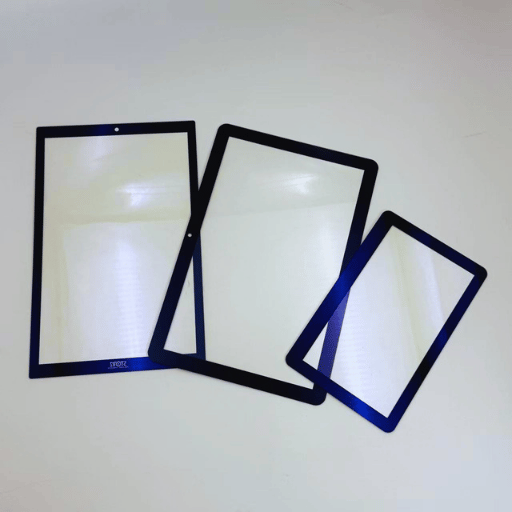
Not all AR coatings are equal. Layer count, choice of coating materials, and target wavelength range all influence performance. Here are the main categories and where each one fits.
| Type | Layers | Reflectance | Best Application |
|---|---|---|---|
| Single-Layer (SLAR) | 1 (typically MgF2) | ~1.0–1.3% per surface | Low-cost optical components, basic AR needs |
| Multi-Layer / V-Coat | 2–4 | <0.25% at design wavelength | Laser optics, single-wavelength instruments |
| Broadband AR (BBAR) | 4–6+ | <0.5% average across band | Camera lens systems, displays, architectural glass |
| Moth-Eye (Nano-Textured) | Nanostructured surface | <0.4% across wide band | Displays, solar cells (wide-angle performance) |
One layer coating drops light reflection about 4% on each surface — a valuable reduction when budgets are tight. Contemporary ar coatings applying broadband anti-reflection arrangements in 4-6 layers of coating can keep system reflectance below 0.5% over the entire visible wavelength range of 400-700 nm. The desirable number of layers for a conventional ar is normally a 4 layer stack – SiO2/TiO2 alternating layers.
However, there are more recent methods of coating glass and lens substrates, such as moth-eye nanostructured surfaces. Inspired by moths, these sub-wavelength structures form a gradient in the index of refraction from air to glass – stopping the sharp drop off point causing reflection. According to research published in Nature Scientific Reports, AR moth-eye surfaces reduced reflectance from 10% to below 1% over a 300-1,600nm wavelength.
Benefits of Anti-Reflective Coating on Glass
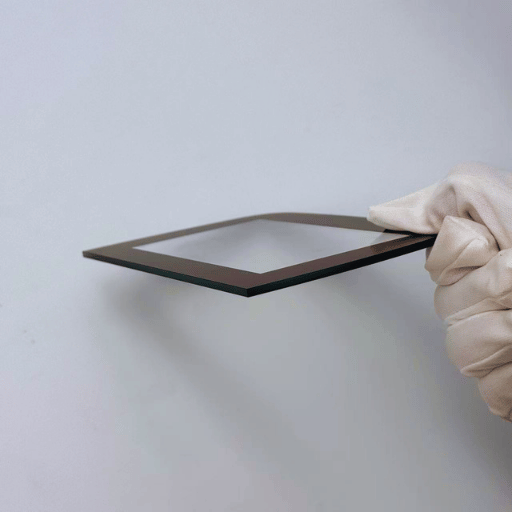
Benefits of anti-reflective coatings go well beyond making a glass or lens surface look clearer. Here is what performance data shows across major application categories.
Light Transmission and Glare Reduction
An anti-reflective coating decreases the amount of reflected light at each glass surface. Untreated glass with front and back surfaces together reflects approximately 8% of incoming light, meaning only 92% of light passes through. With a multi-layer AR coating, total reflection drops well below 1%, allowing more light to reach the other side. AR coatings are measurably beneficial for everything from eyeglass lenses (reducing eye strain during screen use and driving at night) to architectural display windows.
92% → 99%+
Light transmission improvement
99%
UV blocked (museum-grade AR glass)
Solar Energy Collection
AR coating on solar panel cover glass results in higher energy output for the system. Testing by the National Renewable Energy Laboratory (NREL) found that AR coatings increase solar-weighted transmittance by 5%, which could lead to up to a 10% increased collection efficiency in energy. Currently, over 90% of commercial PV modules ship with some kind of AR coated cover glass.
Durability and Maintenance
Cost of durability depends very much on coating method and environment. Pyrolitic coatings applied during float glass production are extremely hard and resistant to smudge and abrasion. Sputtered coatings exhibit excellent optical performance but are softer. Sol-gel coatings used on solar panels are designed for a 20-30 year life, but a 5-year NREL field study documented 0.6-0.9% reflectance increase under accelerated weathering. Primary degradation factors are abrasion from cleaning, humidity exposure, and UV radiation. Coatings that use hydrophobic top coats resist fingerprinting and are easier to clean, while more delicate ones must be carefully handled.
⚠️ Important
The number one driver of coating degradation on solar installations is abrasive cleaning. A coating may lose its anti-reflective properties years ahead of schedule if cleaned with abrasive tools or harsh chemicals.
Where Anti-Reflective Coating Is Used — From Optical Lenses to Architectural Glass

Anti-reflective coatings are used far beyond eyeglasses. Any industry where light passing through a glass panel or optical lens without loss matters will benefit from AR technology. Here is how AR coating work breaks down by industry.
| Application | Typical AR Type | Key Benefit |
|---|---|---|
| Museum display glass | Multi-layer BBAR (both surfaces) | >97% transmission, near-invisible glass |
| Solar panel cover glass | Sol-gel SiO2 (single-layer) | 5% transmittance gain, 20+ year durability |
| Smartphone/display glass | Multi-layer sputtered | Sunlight readability (0.23% reflection achieved) |
| Camera lens systems | BBAR or V-coat (per element) | Eliminate flare/ghosting across 10+ lens elements |
| Automotive HUD windshields | Nano-structured AR | <1% reflectivity across ±40° viewing angles |
| Eyeglass lenses | 4-layer sputtered (SiO2/Nb2O5) | Reduce glare, reduce eye strain, lens surface clarity |
| Architectural facades | CVD pyrolytic or sputtered | Reduce reflections for storefronts and showrooms |
💡 Pro Tip
A common mistake is designing a filter with max reflectance at 400 nm and then using it outdoors. Military spec MIL-C-48497A, which still appears on many U.S. procurement specs, was designed for sealed optical instruments — not glass panels exposed to humidity and sunlight. Make sure the coating specification agrees with the environment in which it will be used.
How to Choose the Right Anti-Reflective Coating for Your Glass
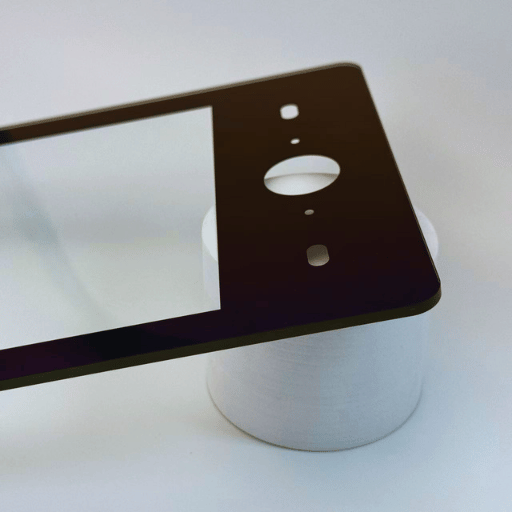
Selecting the right AR coating for your glass or lens application depends on four critical factors. Getting these wrong is where most specification errors happen — and the coating may underperform despite reading well on paper.
- ✔
Operating wavelength range — A coating optimized for visible light (400–700 nm) will not reduce reflections in the infrared. Match the coating design to your actual spectral requirement. - ✔
Environment exposure — Outdoor glass needs coatings tested to ISO 9211-3:2024 environmental durability standards, including humidity, temperature cycling (-62 °C to +71 °C), and UV exposure. - ✔
Substrate compatibility — The lens material and glass composition affect adhesion. Borosilicate, soda-lime, and fused silica each require different surface preparation before coating is applied. - ✔
Volume and budget — Vacuum deposition delivers the best optical performance but at higher cost. Sol-gel is the most economical for large-area glass like solar panels. For mid-volume architectural projects, sputtering offers the best balance.
Request test data on the specific glass substrate you will be using to compare AR offerings from different suppliers – do not rely on generic data. Performance on a lens with anti-reflective coating tested on BK7 optical glass will differ from the same stack on tempered soda-lime.
Frequently Asked Questions
Q: What is the science behind anti-reflective coating?
View Answer
Anti-reflective coating applies the principle of destructive interference. A thin film of the correct refractive index and thickness is applied to the surface of the glass so that light waves reflected from the front and back surfaces of the film are totally out of phase. These two waves cancel each other when combined, bringing the net reflection to nearly zero. Film thickness is set to one quarter of the target wavelength divided by the coating’s refractive index. On standard glass, this typically works out to about 100 nanometers for visible light — thinner than a human hair by a factor of roughly 500.
Q: How long does anti-reflective coating last?
View Answer
Lifespan depends on the coating type and environment. Pyrolytic (CVD) architectural coatings can last the life of the building, as they form covalent bonds with the glass itself. Sol-gel AR coatings used on solar panels last 20-30 years with possible 0.6-0.9% reflectance deterioration under accelerated wear conditions. Sputtered eyeglass lens coatings last approximately 2-3 years with normal handling and cleaning.
Q: What are the disadvantages of anti-reflective coating?
View Answer
Main limitations are price (multi-layer AR adds 15-30% to the cost of glazing), damage resistance (softer coatings are vulnerable to abrasion), and the haze created by some AR coatings which can make smudge marks and finger smudges showing more than on uncoated glass. AR coatings are wavelength-specific – a coating which is optimized for visible light will not work in the IR. Certain coatings are more vulnerable to ageing from humidity and UV.
Q: Is anti-reflective coating worth it for glass?
View Answer
For most optical and industrial uses of glass – yes. AR coating results in 7% additional transmission (from 92% to over 99%) which translates into most crystalline Silicon solar panels operating up to 10% more efficiently, larger brighter displays having 4x better contrast and full-precision lenses eliminating flare and ghosting. The typical cost premium is repaid in improved performance of the goods. Even a single-layer AR coating delivers useful glare reduction for budget architectural projects.
Q: How is anti-reflective coating applied to glass?
View Answer
Four main methods: vacuum evaporation, magnetron sputtering, sol-gel dip coating, and CVD. Sputtering and evaporation work best for precision multi-layer stacks, while sol-gel is cheapest for large-format glass like solar panels.
Q: What is the difference between anti-glare and anti-reflective coating?
View Answer
Anti-glare coating uses a roughened or etched surface to scatter reflected light diffusely, so bright spots are less concentrated but reflection itself is not eliminated. Anti-reflective coating uses thin-film interference to cancel reflections and glare at the wave level, reaching below 0.5% reflectance and over 99% light transmission. Colors stay truer, images look sharper. Anti-glare is cheaper and more forgiving with fingerprints, but surface texture can reduce clarity. Where maximum optical quality matters — displays, camera lens assemblies, precision glass — anti-reflective coating is the better pick.
Need Anti-Reflective Coated Glass for Your Project?
Saiweiglass supplies AR coated glass for solar, optical, and building. Just send your specs to Saiweiglass and we will tailor the best solution.
About This Guide
Saiweiglass manufactures and supplies anti-reflective coated glass for industrial, solar, and architectural applications. The technical data in this article draws on published research from NREL, Optica, and ISO standards, combined with our production experience across multiple AR coating methods. We wrote this guide to help engineers and procurement teams make informed decisions about anti-reflective coating specifications.
References & Sources
- Olexander Smakula — Inventor of Interference-Based AR Coatings — Wikipedia
- Refractive Index of Oxide and Fluoride Coating Materials — Optica (OSA)
- CVD Coatings on Glass — U.S. Department of Energy, Office of Energy Efficiency
- Biomimetic Moth-Eye Nanofabrication for AR Surfaces — Nature Scientific Reports
- Durability Testing of Anti-Reflection Coatings for Solar Applications — National Renewable Energy Laboratory (NREL)
- 5-Year PV Glass Coating Durability Study — U.S. Department of Energy OSTI
- ISO 9211-3:2024 — Optical Coatings Environmental Durability — International Organization for Standardization