Get in Touch with Saiweiglass


Custom Optical Glass Fabrication Services


The custom optical glass fabrication process is essential for achieving precise results and creating new solutions in optical applications. The performance of advanced optical systems used in scientific research and medical devices and modern technology depends on the quality and customization of their optical components. The blog post will examine custom optical glass fabrication as an artistic and scientific discipline which demonstrates its significance through essential processes while delivering industrial value. The presentation will show you how customized solutions handle your project needs while solving difficult optical challenges that you face.
Understanding Custom Optical Glass
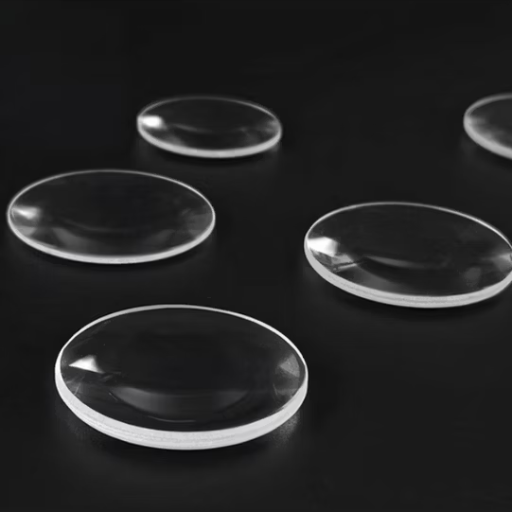
Custom optical glass refers to specialized glass materials which manufacturers create to fulfill predetermined optical specifications used in different fields. The healthcare and defense and telecommunications and scientific research industries require these customized solutions because standard optical components do not meet their specific needs. The customization process requires users to choose specific glass materials while they develop optical characteristics and create the material design which will achieve their specific needs. The product development process establishes performance requirements which must be met to create a product that satisfies the specific demands of its intended application.
What is Custom Optical Glass?
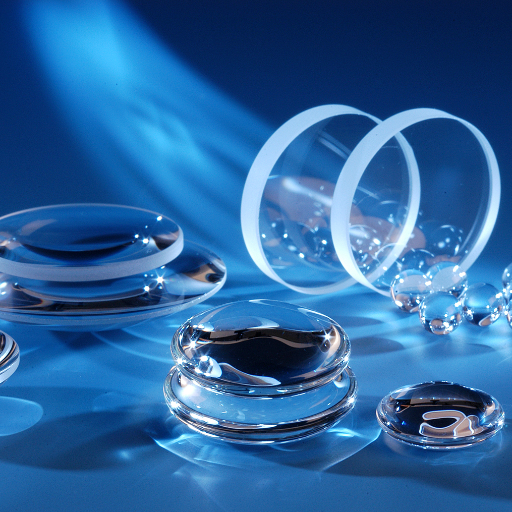
Custom optical glass refers to specialized glass that is specifically designed and manufactured to meet the unique requirements of various optical applications. Custom optical glass differs from standard optical glass because it has been specifically engineered to produce defined optical and mechanical and thermal characteristics. The properties of the material undergo modification to meet specific application requirements which include achieving designated refractive index values and reducing light dispersion and withstanding extreme environmental conditions.
The creation of custom optical glass requires material selection and glass modification through processes which include doping and composition changes and custom shaping and polishing methods. The manufacturing methods enable producers to adjust the glass performance characteristics which makes the material suitable for use in precise instruments and advanced technologies such as microscopes and cameras and fiber optics. The design of custom optical glass includes advanced coatings which enhance reflection and transmission capabilities.
Custom optical glass functions as an essential material for industries that require precise standards because of its broad range of applications. Medical imaging devices in healthcare and fiber optic networks in telecommunications represent two applications of the technology. The material serves as a fundamental resource for innovation and precise execution because it can be customized to fulfill demanding requirements of advanced systems and applications.
Benefits of Custom Optical Glass over Standard Options
- ▪
Enhanced Performance: Custom optical glass provides manufacturers with the ability to design glass products which meet their exact refractive index and dispersion requirements for their particular use cases. - ▪
Precision and Accuracy: The system provides industries that demand precise measurements with its ability to control optical properties at high levels of accuracy. - ▪
Durability and Reliability: Engineers can design custom optical glass products to endure extreme environmental conditions which results in higher durability performance suitable for space missions and deep-sea exploration operations. - ▪
Improved Efficiency: The custom glass solution optimizes optical properties which results in reduced energy loss for devices such as lasers and sensors and imaging systems. - ▪
Wide Range of Applications: The system’s adaptability allows it to function in various fields which extend from telecommunications to advanced scientific research while supporting innovation through its ability to adapt.
Key Materials Used in Custom Optical Glass Manufacturing
- ▪
Silica (SiO₂): This is a major component of most optical glasses, which are renowned for their high purity and extreme clarity. - ▪
Borosilicate: It provides thermal yet durable properties, making it ideal for more demanding applications. - ▪
Fluoride Compounds: They are used to produce glasses with low dispersion and high UV transparency. - ▪
Alkali and Alkaline Earth Oxides: They are instrumental in the melting process control and modification of the refractive index properties. - ▪
Lanthanum Oxide: This, of course, gives a nice kick to refractive index and minimize dispersion it is required for specialized optical applications.
These materials are selected for their unique optical and physical properties, allowing one to make the material to meet specific performance criteria.
Applications of Custom Optical Glass
Use of Optical Glass in Medical Devices
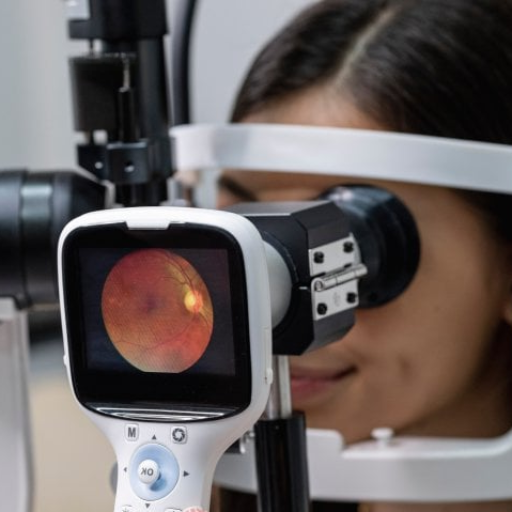
Optical glass being at the epicenter of various medical devices has brought about accuracy and precision in healthcare applications. Commonly used for endoscopes to aid doctors in visualizing internal organs, and performing procedures minimally invasively, the high-quality optical glass makes surgical microscopes magnified and clear greatly implicated in more delicate operations. It is also taking various levels of exposure in advanced diagnostic tools for diagnostic examinations, such as optical coherence tomography systems, which are essential for imaging and diagnosing conditions in ophthalmology. Through its superior optical quality and strength, optical glass becomes indispensable for medication advances that require reliable imaging and visualization.
Role of Custom Optics in Aerospace Technology
The aerospace sector heavily relies on customized optics for improved performance. These technologies are necessary for various purposes, including satellite imaging, navigation systems and space travel. These include for example, the accuracy and precision of the optics which ensure correct imaging from space in order to observe in detail the surface of the earth as well as other objects in space. High performance optics also play a critical role in navigation because they enable the highly accurate image acquisition and alignment of spacecrafts.
The use of custom optics is an essential part of the aerospace industry as it enhances communication systems. Unlike normal, optical components, e.g., lenses and mirrors are used to send and receive data over long distances in space. This is crucial for long missions deep into space, which are impossible without proper optical communication systems built to very precise measurements. The custom optical glass is such optics that can be placed in such harsh environments where there are changes in temperature, radiation levels, and mechanical stresses with time.
Custom optical components are also beneficial for the study of the atmosphere and the investigation of planets. They are part of the spectrometers, telescopes, and cameras, such as those that are used to study the surface of other planets’ humidity or composition, and the like. This is because of the fact that they yield high quality images and measurements which facilitate exploring the cosmos and meeting the increasing demands of aerospace advancement.
Telecommunications and Optical Components
One of the most critical technologies used in communication industries is custom optical glass, of which fiber optic systems are undoubtedly one of the most important applications. Fiber optics ensures very low transmission losses in transmitting light signals over great distances, thereby facilitating high-speed internet to effective communication and connected world as a whole. These networks further improve their performance by incorporating custom lenses, filters and prisms which allow accurate light beled beams without loss of signals.
In addition, these platforms help with the development of such advanced network technologies that go as far as 5G, enabling reduction of latency and exponential increase in the transmission of data. The growth and introduction of more network services come with challenges which can be best addressed in the telecommunications industry with improved custom optical glass production. The adoption of these given solutions in the optics field is important to scale present day communication systems to meet the expectations of the increasing global network.
Precision Optical Fabrication Processes
Overview of Optical Glass Fabrication Techniques
The manufacturing of optical glass entails a series of procedures that are intended to allow the production of customized optical glasses for scope of applications ranging from telecommunications up to scientific instruments. The method usually starts with the selection of proper and good raw materials which are then melted and processed to remove all the impurities. This type of optical glass is required for innovative technologies because it stays clear and does not have any irregularities.
After the formation of the glass, machining operations such as grinding and polishing come into play for the purpose of lens shaping, prism cutting or other relevant fabrications. Grinding helps in shaping the material into basic shapes by removing unwanted material and Polishing smoothens out the surface by removing all roughness and scratches present. Both of these processes play an important role in guaranteeing that the glass will serve the purpose which requires high levels of precision.
After forming, coating is a process that may be employed to improve a surface’s optical performances. The term is used to call the process that modifies called physical properties such as reflection, transmission, and absorption within the operating limits set by the customer. This is seen with anti-reflection coatings that help with imaging devices by reducing light loss and other coatings that enhance the functionality of the glass in laser optics. At every stage of the process, careful execution is ensured in order to manufacture the highest quality custom optical glass parts for advanced technology.
Technological Advancements in Optical Glass Manufacturing
Recently, technological advancements have revolutionized the areas of custom optical glass manufacturing, owing to the adaptations that were perfectly tailored for the needs of tomorrow’s applications. Central to the transformation of optical glass are various techniques such as precision molding and freeform optics which allow for the creation of highly complicated shapes with less redundancy of materials. Another example would be the inclusion of freeform optical elements in the design of, say, augmented reality systems since such systems require very small and light optics.
An essential progress is towards including robots for manufacturing and AI for quality assurance. This means that processes can be carried out without manual intervention and the work can be monitored at all times with the help of machine learning which enables production within tighter specifications as well as reduced wastage. In line with the market studies of 2023, the world market for optical glass is expected to grow over 6 billion dollars by the year 2028 as the use of the glasses is extending in the consumer electronics, healthcare and the defence industries.
In addition, laser ablation and chemical vapor deposition use and production rates of multilayer thin films such as PhotoGlass and Metacritics which show higher resistivity and durability have also increased. They build layers, glasses and various optical thin films, which prove to be nigh waterproof during the mission, and help in making devices and components more operative during humidity or variations in temperature. More so, these recent changes in glass technology can be linked to new materials science developed, for instance, advancing into use of materials with better transmittance and less dispersion factors with the aim of producing clearer and more efficient imaging systems.
Technological progress in these aspects of optics does not only enrich its possibilities in existing optical fields but also elicits an escalation in the quality and sustainable practice aspects within the industry so as to protect the technological advancement especially with optical glass preserving its stature in the technological era.
Quality Assurance in Optical Component Manufacturing
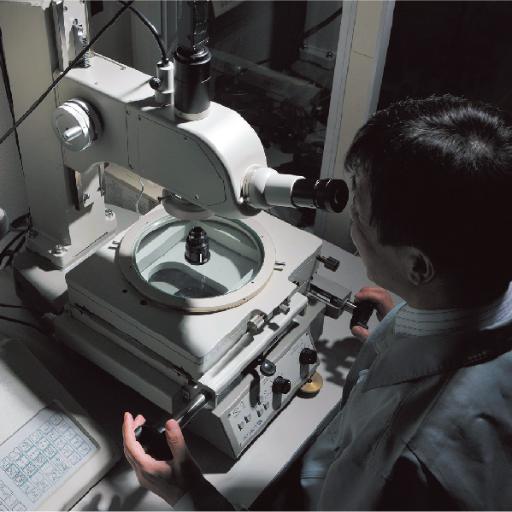
Quality assurance in the manufacturing of optical components requires comprehensive testing and precision at every stage of the production process. Top-of-the-line measuring tools, like interferometers and spectrophotometers, are used for surface accuracy, refractive indices, and coating efficiency testing. The international standards of ISO 10110 are followed rigorously in order to ensure that the optical components manufactured meet the required specification for the intended application. Through the use of automated inspection systems and strict adherence to every iota of quality management procedures, the level of imperfections and defects has been kept to a minimum, thus ensuring reliability and optimal performance in optical components.
Selecting the Right Custom Optical Glass Supplier
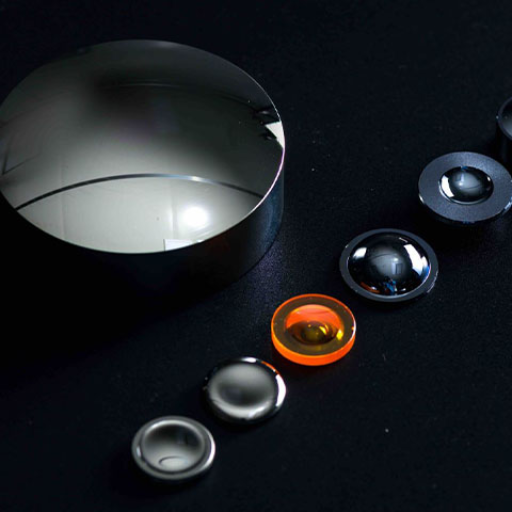
Criteria for Choosing a Custom Optics Provider
Quality Standard
Observe if the manufacturer is meeting established quality standards like ISO certifications in order to sustain high performance and reliable optical components.
Technical Expertise
Choose a vendor with vast experience and knowledge in optical designs, fabrication, coating, and all technologies that pertain to your application.
Customization Capabilities
Make sure the vendor can tailor-make some solutions to meet specifications, like custom shapes, choice of materials, and options for coatings.
Manufacturing Capacity
Evaluate the supplier for their capability to provide required component on a large scale as per schedules once timely agreed, without compromising on quality.
Testing and Inspection
Watch for a supplier delivery advanced inspection system and very detailed quality control from things like very low vibration level cell phone micro imaging.
Customer Support
Opt for a company with dedication to solid communication, technical support, and working with a complete understanding of the client to make every project transition smooth.
Evaluating Customization Capabilities and Technical Support
One of the considerations when choosing a vendor of custom optical glasses is the option to provide a tailored solution and equally powerful technical support. Companies with strong custom capabilities can design and deliver optical components based on very specific requirements with an eye towards unusual shapes, coatings or substances – widths necessary to make compatibility at practically any application, be it medical, some advanced imaging system or communications.
It is beyond the ambiguities from customers, as customers have this basic understanding. There are currently reputable companies that are desirous of the customers who are educated. This process is well structured to the extend of streamlining the leap in production. The purpose of the integration is to present brilliant humanity, stepping out of their way to offer assistance. The company should then rest on the laurel of their methodology. It is about harmonious energy. At the end, both will ensure a symbiotic relationship that is so sustained, with the need for the two components being equally micro and aiming to fit the other-ever reliable surgical component.
Importance of Industry Certifications and Standards
It is mandatory for industrial certifications and pointing out the standards to develop standards for the custom optical glass, which encompass the verification of the quality, safety as well as performance. This clearly signifies your product has met strict integrity and durability through endorsements. This becomes a measurement for reliable, faultless action by the system and applications for your falli, whether it be for scientific research, medicine, or advanced manufacturing techniques.
Respected industry benchmarks brust adhering to industry accepted practices and ensure collective strength between manufacturers and clients by honoring excellence and accountability. Certification from reputable standards organizations also assures that the products employed and the manufacturing procedures undertaken during the process have been put through their paces to match the strict guidelines that are out there. By doing so, the final product will have minimal or no chance of defects, inconsistency, or faulty performance.
Moreover, industry certifications can promote consistency across the market, making for a quicker and easier integration of devices into larger systems and technologies. By selecting certified product sets, businesses can be assured that compatibility and dependability for the long term kept at bay repair and replacement, hence ensuring renewed assurance of application in terms of guarantee. Indeed, in all the mentioned criteria, an enhancement of value and credibility makes any-in the long product-whether supplier or client-end, will find a positive result in the use of customized optical glass systems.
Exploring Optical Components and Their Uses
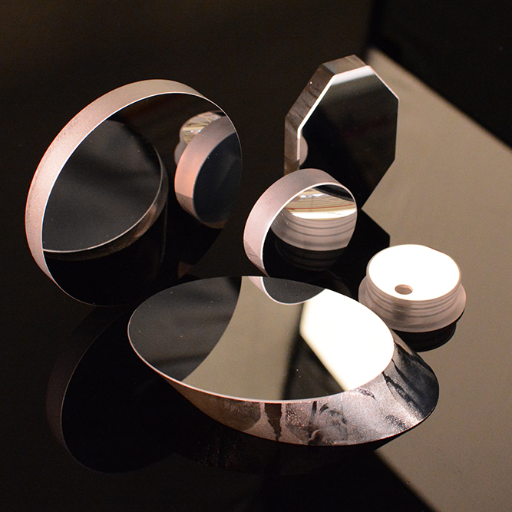
Types of Optical Components: Lenses, Filters, and Mirrors
Optical components include lenses, filters, and mirrors, each serving specialized roles in manipulating and directing light.
| Component | Key Function | Material | Shape | Coating |
|---|---|---|---|---|
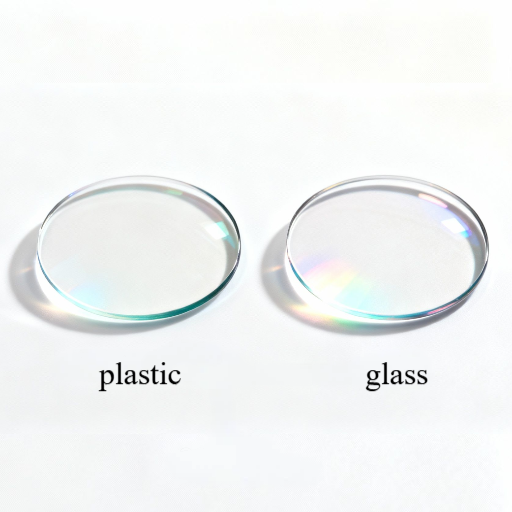
| Lenses | Focus light | Glass/Plastic | Convex/Concave | AR Coated |
| Filters | Select Wavelengths | Glass/Polymer | Flat/Rings | Dichroic |
| Mirrors | Reflect Light | Glass/Metal | Flat/Curved | Metallic |
Fused Silica vs. Borosilicate in Optical Applications
Fused silica excels in UV transmission and thermal stability, while borosilicate is prized for its affordability, durability, and chemical resistance.
| Property | Fused Silica | Borosilicate |
|---|---|---|
| UV Transmission | High | Moderate |
| Thermal Stability | High | Moderate |
| Durability | Moderate | High |
| Cost | High | Low |
| Chemical Resist. | Moderate | High |
| Use in Optics | Precision | General |
Understanding Wedges and Their Function in Optics
Optical systems would be incomplete without wedges, which serve the purpose of deflecting and redirecting the light incident upon them. In its simplest form, a wedge is a portion of optical glass/processing custom optical glass material with a shape, whose surfaces are not parallel to each other. This change in the vertical position of light can be exploited where angular corrections need to be made.
Another important application of wedges is managed by discarding extra reflections or mitigating intersecting beams of light in optics. While performing optical calculations, the proper axi-symmetric separation of fields can be maintained or the cup volumes can be adjusted slightly with the aid of lenses. For compound systems and adjustment of performance of optical instruments such as telescopes or lasers, the quality factor makes this two elements absolutely indispensable.
Wedge optics can also be used for correcting optical errors or introducing a specific angular change for measurement. They are typically present in applications where accuracy and stability are of utmost importance since such features naturally lend themselves to optimal performance when it is needed the most. Wedges employed in a proper manner guarantee a high level of precision and invertibly performance of advanced optical configurations.
Reference Sources
-
Fabrication of Complex Optical Components: From Mold Design to Product: This book chapter discusses the setup and custom fabrication processes for complex optical components.
-
Precision Glass Molding: Cost-Efficient Production of Glass Optics: A study on precision glass molding as a replicative manufacturing technology for producing complex optical glass components.
-
The Manufacture of Optical Glass and of Optical Systems: A War-Time Problem: Historical insights into the challenges and advancements in optical glass manufacturing.
-
Mechanization of Glass Manufacture: Discusses the evolution of glass manufacturing processes, including advancements in optical glass production.
- Optical Glass Solutions
Frequently Asked Questions (FAQs)
What do Optical windows consist of and what materials are optical windows made from?
Optical windows are flat components that, being optically transparent, permit the passage of light with no significant distortion and protect the components from such light. They are found in laser applications, projection systems, metrology, microscopy, and any photonics. Such materials are represented by, but not limited to – crown glass, flint glass, fused quartz and, high purity quartz selected either for transmission in the ultraviolet, visible or infrared (IR) spectrum, abbe number or chromatic dispersion. The optical windows are customized to various sizes and thicknesses to meet the focal length and mounting requirements and are often given finishing such as anti-reflection coatings for better throughput and low reflection.
How can a custom made optical window be distinguished from an off-the-shelf window?
The replacement of standard windows with custom optical glass allows optical engineers to impose specifications for thickness, quality, and finish that can take into consideration the performance that the mounting materials are to provide. In most cases, stringent adherence to the surface and transmitted wavefronts, as well as thickness, is achieved only under particular regimes of custom optics that mitigate any distortions of measuring instruments as used in imaging systems. These practices can be provided in both massive quantity production and larger sizes suitable for the equipment within which the components are to be integrated. This allows a selection of more cost-efficient materials such as fused quartz, or particular light glasses for deep ultraviolet or infrared region of the spectrum. Custom Coatings or Edge Treatments are various polish techniques that allow for such sheer glass to be embedded in its construction.
What is the reason why quartz and fused quartz have become so popular for optical windows?
It’s demonstrably true that Optical transmission through quartz or fused quartz extends from dense ultraviolet radiation, through visible light and into some parts of infrared. This low absorption refractive material is compatible with quiet a few applications such as UV sensitive microscopy, lasers among others. Quartz and fused quartz offer excellent transmission because of their nature which is free of color and they absorb light very little. Also thermal conductivity and extremely low coefficient of thermal expansion are advantageous to the use of these materials in high temperatures lasers and metrology in general. Often in comparison with denser silicate glass optics, quartz optics offers advantages for infrared and ultraviolet lasers because such materials do not suffer from aberration and thermal expansion as much.
How do I go about choosing reflective elements and their coatings suitable for use in my optical set-up?
When choosing surfaces for mirrors, substrates (glass materials, such as silica or metallic elements) should be considered, as well as their parameters – surface geometry (flat, curved inwards or outwards) and suitable coatings. There are different types of coatings, for instance, metallic which provides broad-band reflection, dielectric which is optimal for a definite wavelength such as infrared or ultraviolet. Types of special windows and lenses vary. And in order to improve this situation Anti-reflective layers are applied. If you’re developing an OEM or short run system consider using robust coatings that comply with ITAR requirements if necessary. It is also advisable to carry out optical simulations for the elements to be designed in terms of reflectance and phase response in order to avoid deformations and achieve high optical quality.
What implications do the infrared and ultraviolet concerns have on the selection and manufacturing of the custom optical glass?
Material and coatings selections are led by considerations about the IR and UV transmissions: fused silica and selected optical crystal materials are ultraviolet transparent, while special glasses or optically transparent materials are used in the infrared region. The additives in the custom optical glass, the density of its composition and other factors are all needed to adjust light transmission and the abba number, which in turn change the chromatic dispersion of the systems, together with their focal length. For IR laser systems, it is important to use materials that will not thermally distort after being exposed to the laser input. Anti-reflective coating and modeling techniques are also used to improve the efficiency of the optical system by decreasing the reflectance in the specified frequency band.