Get in Touch with Saiweiglass




Watch Crystal Glass vs. Display Cover Glass — A Procurement Terminology Guide
Quick Specs: Watch Crystal Glass vs. Display Cover Glass
| Parameter | Watch Crystal Glass | Display Cover Glass |
| Typical Materials | Acrylic (PMMA), mineral glass, sapphire | Aluminosilicate (Gorilla Glass, Dragontrail), soda-lime, sapphire |
| Mohs Hardness Range | 3 (acrylic) – 9 (sapphire) | 6.5 (soda-lime) – 9 (sapphire) |
| Typical Thickness | 1.0–2.5 mm | 0.4–1.1 mm |
| Strengthening | None (acrylic) / thermal (mineral) / none (sapphire) | Chemical ion-exchange (CS 600–800 MPa) |
| AR Coating | Optional single-layer | Standard multi-layer (<0.5% reflectance) |
| Primary Industry | Horology (watchmaking) | Consumer electronics, wearables |
A product designer—new to horologics—proclaims to a supplier for consideration: “Protect my watch’s new smart phone display by sending me a block of watch crystal glass.” The supplier pours out round 2-mm thick sapphire watch crystals mounted on tension rings. The designer actually needs 0.55-mm thick aluminosilicate glass with AR/AF coating and PCAP touch bonding. Cost of misunderstanding: two weeks and a retooling fee.
Both terms — watch crystal glass and display cover glass — sound interchangeable. They are not. One belongs to the horology supply chain; the other belongs to consumer electronics. Here we map the overlap, flag the differences, and give procurement teams the specification language to avoid costly mix-ups.
What Is Watch Crystal Glass?
A watch crystal glass is the transparent product protector secured over a wristwatch, pocket watch, or clock dial. Despite the name, a glass crystal is not always made of solid silica. The phrase dates back to the 17 th century, when polished slices of natural quartz or rock crystal surrounded watch dials.
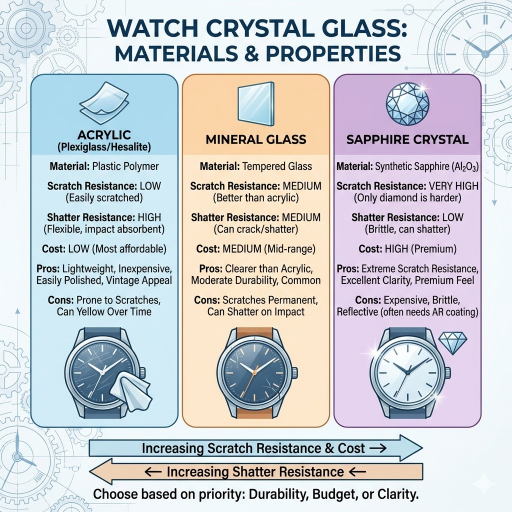
Modern watch crystals fall into three material families, characterized by different physical properties and each designed for a specific point in the value chain. Watchmakers must choose the appropriate crystal material based on how hedonically scratch-resistant, impact tolerant, optically clear, easily repairable, and affordable it is.
Acrylic (PMMA) — Also called plexiglass or plastic crystal in older catalogs, polymethyl methacrylate was developed in 1928 and became the dominant watch crystal material through the mid-20th century. NASA selected the Omega Speedmaster with its Hesalite (acrylic) crystal for the Apollo missions because acrylic flexes on impact rather than shattering — a critical property in zero-gravity environments where glass fragments become hazards. Acrylic registers 3–4 on the Mohs hardness scale and scratches easily, but scratches can be buffed out with a polishing compound like PolyWatch.
Mineral glass — Ordinary glass, heat-tempered or chemically treated to increase surface hardness from Mohs 5 to 6–7. Mineral glass crystals are the default type of crystal for mid-range and modern watches from brands like Seiko and Citizen. They offer better durability compared to acrylic under everyday wear and tear but cannot be polished once scratched. Mineral crystals are also less expensive than sapphire — a replacement part typically costs $2–$10. A mineral crystal cracks under sharp impact rather than flexing.
Sapphire crystal — Synthetic aluminum oxide (Al₂O₃) grown via the Verneuil flame-fusion method at temperatures exceeding 2,000 °C. Sapphire rates 9 on the Mohs scale with a Vickers microhardness of 2,200 HV — only diamond is harder. Rolex adopted sapphire for its Sea-Dweller 16660 in 1978, and today nearly every luxury watch above $500 uses sapphire. Acrylic crystals survived mainly in vintage watches and retro-styled timepieces where the dome aesthetic matters more than scratch resistance. The trade-off: sapphire is brittle and chips at edges under blunt impact.
Sapphire, Mineral, or Acrylic — Watch Crystal Materials Compared
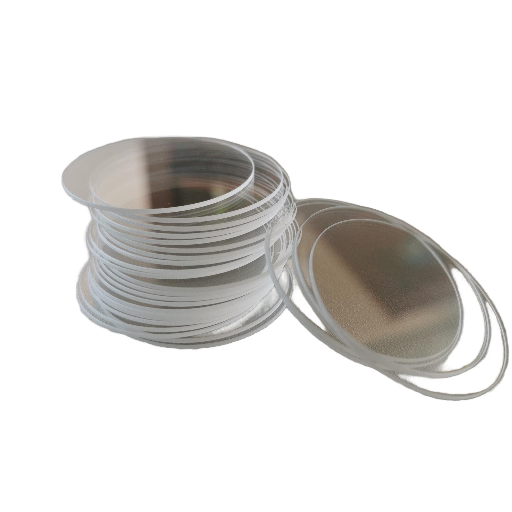
Picking the right crystal for a wristwatch means weighing five variables: hardness, optical clarity, impact behavior, repairability, and cost. Among the types of watch crystals available, all three — acrylic crystal, mineral glass, and sapphire — are also used in pocket watch restorations, though sapphire is extremely scratch resistant and dominates in luxury watches. Below are measured values rather than subjective ratings — because “high scratch resistance” tells a procurement engineer nothing actionable.
| Property | Acrylic (PMMA) | Mineral Glass | Sapphire Crystal |
|---|---|---|---|
| Mohs Hardness | 3–4 | 5 (base) / 6–7 (treated) | 9 |
| Vickers Hardness (HV) | ~180 | ~900 | 2,200 |
| Density (g/cm³) | 1.18 | 2.50 | 3.98 |
| Visible Light Transmittance | ~92% | ~91% | ~85% (uncoated) / >98% (AR-coated) |
| Shatter Behavior | Flexes, does not shatter | Cracks radially under impact | Chips at edges; brittle fracture |
| Repairability | Polishable (PolyWatch compound) | Not polishable; replacement only | Not polishable; replacement only |
| Typical Thickness | 1.0–2.0 mm | 1.0–2.5 mm (flat mineral glass or dome) | 1.0–2.0 mm |
| Unit Cost (OEM, est.) | $0.50–$3 | $2–$10 | $8–$50+ |
Sapphire watch crystals provide excellent scratch resistance – virtually only a diamond and a silicon carbide wheel can scratch the surface during normal use. However, field data derived from repeat drop tests of wearables captures that sapphire chips rather than shatters, with the failures focused at the crystal edge where it impinges upon the watch case bezel. That brittle failure profile informed product development teams in assessing impact performance throughout the lifecycle of a smartwatch. For watch glass replacement after edge damage, a sapphire glass crystal remains the preferred choice for watches where scratch resistance outweighs impact tolerance.
💡 Pro Tip
When viewing sapphire or mineral for a watch application, consider both the Mohs hardness (abrasion scratch resistance) and the Vickers hardness of the material (abrasion indent resistance). Two materials sharing a Mohs rating can differ by 300+ HV — enough to change wear behavior over 12 months of daily use.
What Is Display Cover Glass?
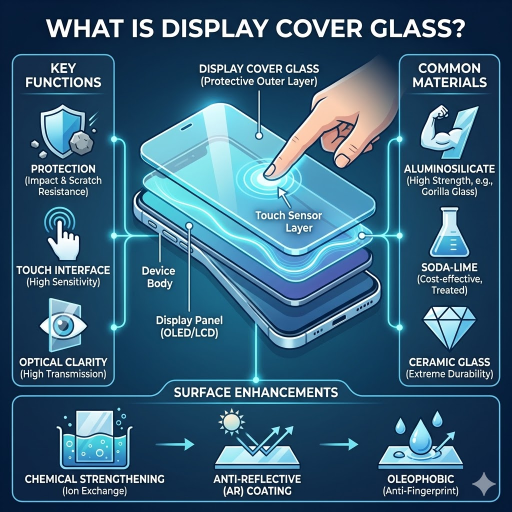
Display cover glass is the transparent protective layer glued to the visible front of all electronic display screens (cell phones and smart phones, smart watches and activity monitors, dashboards in cars, monitors in hospitals and industrial HMI panels). Though it serves the same role as a watch crystal (defend the display content underneath) the design was a completely different one.
Electronics manufacturers abandoned traditional soda-lime glass in the late 2000s after Corning introduced Gorilla Glass in 2007. It is an alkali-aluminosilicate sheet of glass that undergoes chemical strengthening via potassium-sodium ion exchange. Submerging the glass in a molten potassium salt bath at 400–450 °C forces larger K⁺ ions to replace smaller Na⁺ ions in the surface layer, creating a compressive stress zone that resists cracks and impacts.
Shortly after, Corning developed Gorilla Glass SR+ (2016, first packaging on Samsung Gear S3) and the follow up DX/DX+ (2018, Samsung Galaxy Watch), two variants adapted to the circular form factor, anti-reflective optics, and the slimmer profiles that smartwatches require. AGC’s Dragontrail glass follows the same ion-exchange principle and competes directly in the wearable cover glass segment.
End result: a glass rated Mohs 7, manufactured in sheets as thin as 0.4 mm, with compressive stress (CS) values that multiply base glass strength by 6–8 times. It is a wholly different product in form and end-use quality than a sapphire watch crystal – even though both are protecting a dial on someone’s wrist.
Watch Crystal Glass vs. Display Cover Glass — Side-by-Side Comparison
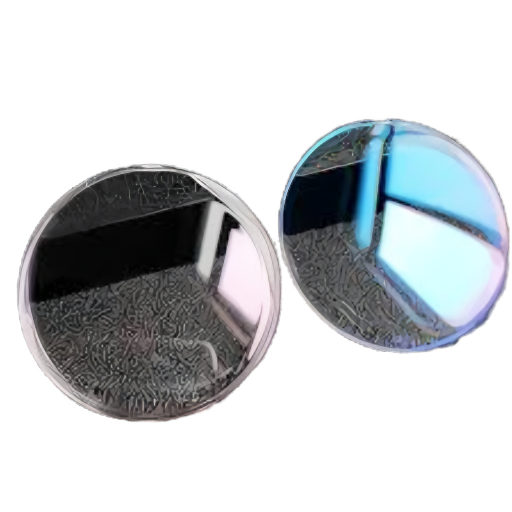
Confusion between these two product categories starts with their shared function (dial protection) and similar form factor (wearables are round, 30–46 mm). Then the supply-chains, material science, and the language of specifications go different directions on just about every technical level.
| Dimension | Watch Crystal Glass | Display Cover Glass |
|---|---|---|
| Industry | Horology / watchmaking | Consumer electronics / wearables |
| Base Material | PMMA, soda-lime mineral glass, sapphire (Al₂O₃) | Aluminosilicate glass, soda-lime, sapphire |
| Strengthening Method | None (acrylic) / thermal tempering (mineral) / none (sapphire) | Chemical ion-exchange (K⁺→Na⁺); CS 600–800 MPa |
| Thickness Range | 1.0–2.5 mm | 0.4–1.1 mm |
| Shape Options | Round flat or dome; tension-ring mounting | Round, rectangular, 2.5D/3D curved; adhesive or optical bonding |
| Surface Treatment | Optional single-layer AR | Multi-stack: AR + AF coating, AG etching, silk-screen printing |
| Touch Sensor | None | PCAP integrated or OCA-bonded |
| Dimensional Tolerance | ±0.10–0.20 mm | ±0.02–0.05 mm |
| Typical MOQ | 1 pc (repair) – 1,000 pcs (OEM) | 500–10,000 pcs |
| Typical Buyer | Watch brand, repair shop, watchmaker | OEM product designer, procurement team |
⚠️ Common Sourcing Mistake
The RFQ mistake SaiweiGlass engineers encounter most often: a product group requests—”sapphire crystal” for a smartwatch, on the advice of a watch-industry consultant. The intended product should be chemically strengthened glass, with AR/AF coating, touch-sensor bonding, and 0.55 mm profile—things sapphire cannot do for a competitive price.
✔ Watch Crystal Glass — Strengths
- Sapphire (Mohs 9) has 10 times the scratch resistance of the other transparent cover material.
- Well-established supply chain with open access for single units for repairs and keepsake watches.
- Dome profiles paint a timeless look, highly sought after in high-end and nostalgic timepieces
- No interaction with touch-sensors needed
– easier mounting with tension rings or adhesive gaskets
⚠ Watch Crystal Glass — Limitations
- Impacts at energy above 0.5 J cause sapphire edges to chip
– below the IK04 threshold - Thickness of at least 1.0 mm in practice
– not suitable for ultra-thin wearables - No route to chemically toughen-it
– already fully hard, but not fully tough - Fewer coating options than display cover glass (no multi-stack AR/AF/AG)
Material Specs That Matter for B2B Glass Procurement
Five parameters distinguish watch crystals from display cover glass in an RFQ. If any of them are overlooked, the order ends up at the wrong factory.
📐 Engineering Note — Critical Specification Parameters
| Mohs Hardness | Sapphire: 9 / Chemically strengthened aluminosilicate: 6.5–7 / Mineral glass: 5–7 |
| Compressive Stress (CS) | 600–800 MPa for Gorilla Glass; 700+ MPa for Dragontrail; N/A for watch sapphire (not ion-exchanged) |
| Depth of Layer (DOL) | 40–100 μm for ion-exchanged glass. CS correlates to impact strength; DOL correlates to scratch resistance per Corning’s published research |
| Light Transmittance | >92% with multi-layer AR coating; ~85% for uncoated sapphire; ~91% for uncoated mineral |
| Impact Rating (IEC 62262) | Display cover glass rated to IK06–IK08 (1–5 J) with proper stack-up; watch crystals have no standardized IK rating |
Display cover glass has two key metrics: CS and DOL. They differentiate chemically toughened cover glass from sapphire watch crystals, where CS/DOL are not applicable because it was never ion-exchanged, its strength derived from the crystalline molecular structure of aluminum oxide. Chemically toughened cover glass gets additional impact resilience from the KNa ion-exchange layer, with process parameters (immersion bath temperature and time, salt concentration, etc.) needing to be specified in the RFQ.
In wearables, cover glass with a CS below 500 MPa had increased field failure rates in 1-meter face down drop test on rough surfaces. Specify this threshold in every RFQ. Types like Gorilla Glass and Dragontrail regularly exceed it; ordinary soda lime glass typically does not.
💡 Pro Tip
Use the display cover glass specification selector to translate your needed product specifications (thickness, shape, coating stack, impact rating) into available options before writing the RFQ.
How to Specify the Right Glass — A Buyer’s Checklist
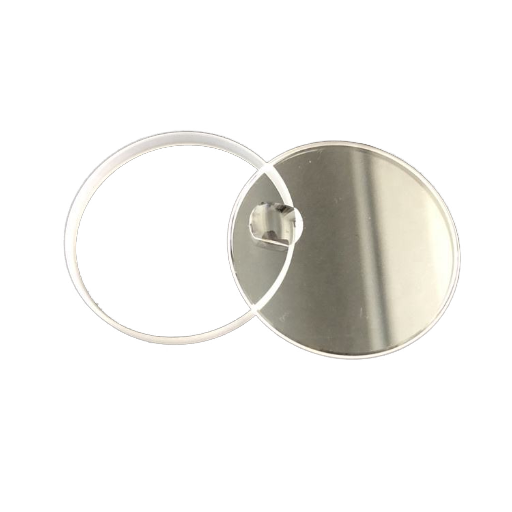
Before filling out a RFQ for watch crystal glass or display cover glass, check whether each of these seven specifications is met. Tackle one at a time to successfully identify the right supplier – save time by eliminating mismatched terminology.
- ✔
Identify the product category. Traditional mechanical watch → watch crystal supplier. Smartwatch, fitness tracker, or any product with a digital display → display cover glass supplier. - ✔
Confirm hardness and impact requirements. Specify Mohs hardness floor and target IK rating (per IEC 62262). Watch crystals do not carry IK ratings; cover glass does. - ✔
Specify thickness tolerance. Watch crystals: ±0.10–0.20 mm is standard. Display cover glass: ±0.02–0.05 mm. If your tolerance is tighter than ±0.10 mm, you need a cover glass supplier. - ✔
Define surface treatment stack. Single-layer AR only → either supplier category. Multi-layer AR + AF (anti-fingerprint) + AG (anti-glare) + silk-screen printing → cover glass supplier with coating capabilities. - ✔
Confirm touch-sensor integration. No touch → either category. PCAP touch bonding or sensor lamination → display cover glass, full stop. - ✔
Set MOQ, lead time, and certifications. Prototype quantities (1–50 pcs) → watch crystal distributors stock standard sizes. Production volumes (500+ pcs) with custom dimensions → cover glass manufacturer with CNC machining. Ensure RoHS 3, REACH SVHC compliance, and ISO 9001 quality management — cover glass suppliers for electronics typically carry these; watch crystal distributors may not.
⚠️ Important
If your device has a touch screen with digital displays, end your search for watch crystal sources. The tolerances, coatings, and bonding needed for display cover glass are in another manufacturing universe. Use a cover glass material comparison tool to avoid this mistake early in product development.
Frequently Asked Questions
Q: What is crystal glass in watches?
View Answer
In watches, “crystal” means the transparent cover protecting the dial. Three materials dominate: acrylic (PMMA, Mohs 3–4), mineral glass (tempered silica, Mohs 5–7), and synthetic sapphire (Al₂O₃, Mohs 9).
Q: Is sapphire crystal really scratch-resistant?
View Answer
Yes. Sapphire gets a 9 on the Mohs scale and has a Vickers hardness of 2,200 HV – only diamond (Mohs 10) and silicon carbide (Mohs 9.5) can scratch it. But, sapphire’s quite brittle.
It does not get scratched by keys, sand or even metallic objects, but chips when hit bluntly at the edges. For normal use on a wrist, nothing better is on the market.
Q: What is the difference between mineral glass and sapphire crystal?
View Answer
Mineral glass Mohs 5-7 silica glass, heat-tempered or chemically strengthened –cost $2- $10/ea. Sapphire crystal (synthetic aluminum oxide), rated Mohs 9 –cost $8-50+/ea. Mineral glass damages by radial cracking on impact, sapphire chips at edges.
Neither can be polished once damaged, both need a new unit altogether.
Q: Can display cover glass replace a traditional watch crystal?
View Answer
Technically feasible, but impractical for most applications. Display cover glass is chemically strengthened aluminosilicate optimized for thinness (0.4–1.1 mm) and flat or 2.5D profiles. Traditional watch cases use tension-ring or gasket mounting designed for dome-profile crystals at 1.0–2.5 mm thickness. Mounting geometry, edge finishing, and water-resistance sealing differ fundamentally between the two product categories. A watchmaker repairing a vintage timepiece cannot substitute Gorilla Glass for a mineral crystal dome without redesigning the case.
Q: What glass material do smartwatches use?
View Answer
Most smartwatches features chemically reinforced aluminosilicate glass – Corning Gorilla Glass, or AGC Dragontrail. Wearable specific Corning Gorilla Glass variants are SR+ and DX+. Apple Watch Ultra has sapphire crystal as it offers the best scratch resistance.
Apple Watch SE has Ion-X glass, a form of aluminosilicate developed by Corning. Samsung Galaxy Watch sports Gorilla Glass DX+. Budget friendly fitness trackers features tempered soda-lime glass.
Q: How do you tell if a watch crystal is glass or plastic?
View Answer
Three field tests work without tools. Tap test: flick the crystal with a fingernail — acrylic sounds dull; glass and sapphire produce a higher-pitched ring. Temperature test: press the crystal against your lip — glass and sapphire feel noticeably cold; acrylic stays closer to room temperature. Water drop test: place a small droplet on the surface — it beads tightest on sapphire, spreads moderately on mineral glass, and spreads most on acrylic.
Need Custom Cover Glass for Your Wearable Product?
Our engineers at SaiweiGlass assist OEM teams with specifying the proper glass material, coating stack and form factor,- from first prototype to volume production.
About This Analysis
SaiweiGlass: Provides custom cover glass for wearables, industrial HMI panels, automotive displays. Specification information herein presents parameters our engineering team checks in the incoming material inspection and outgoing quality inspection for aluminosilicate, soda-lime, and sapphire substrates. We created this advice piece because the watch crystal-to-cover glass terminology gap creates misrouted RFQs within our sales process each quarter-and our OEM clients requested a file that provides the comparison in a separate reference.
References & Sources
- Watch Glass — Wikipedia
- Aluminium Oxide (Al₂O₃) Properties — Wikipedia
- The Secret of Tough Glass: Ion Exchange — Corning Incorporated
- Gorilla Glass — History, Versions, and Applications — Wikipedia
- Dragontrail Cover Glass — AGC Inc.
- EN 62262 — IK Impact Protection Ratings — Wikipedia (IEC standard reference)
- Chemically Strengthened Glass — Wikipedia
Related Articles