Get in Touch with Saiweiglass


Optical Glass Cutting: Techniques & Tolerances


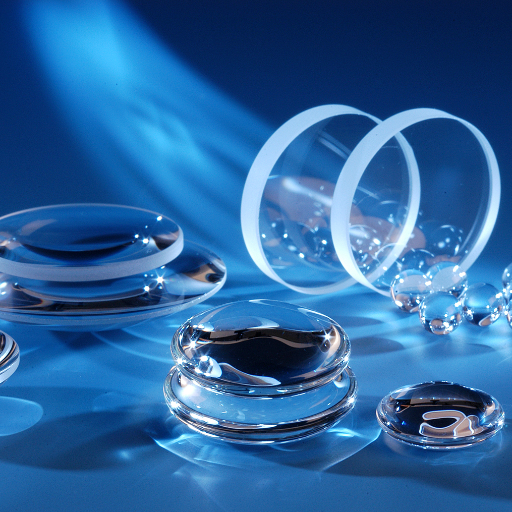
Cutting glass that is often referred to as optical glasses is a technology that requires very careful handling, know-how and methods as well as competence to maintain high standards in the industry. This is especially so when manufacturing lenses, prisms, or any other important optical component because deflections over permissible limits would compromise the performance and quality of the product. In this article, we shall focus on optical glass cutting explaining the complex processes applied by experts within the field and how critical it is to limit the defects to exact permissible levels. Basically, this will include the materials, procedures and the issues surrounding the task while looking at how revamping, experience, and research help in performing it. Consider a wealth of knowledge, with ideals of precision cutting and the significance of creating first rate optical components.
Introduction to Optical Glass Cutting
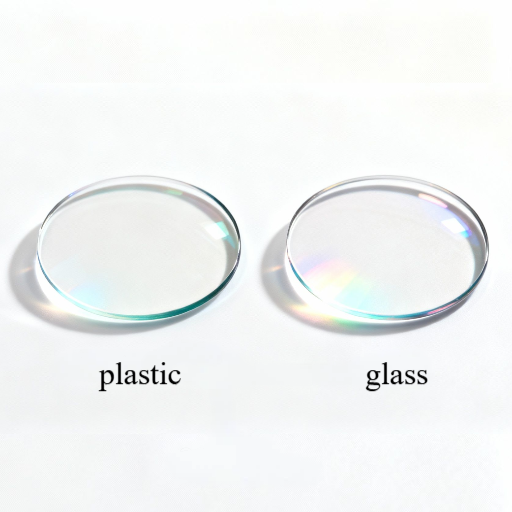
Optical glass cutting refers to the enlargement and people shaping glasses used in the optics manufacture. The goal is to ensure that the fabrication of the optical components such as lenses, prisms and mirrors with the desired specifications of the glass is precisely done. It is achieved with the aid of sophisticated tools like laser cutters and diamond saws. Thus, manufacturers are in a position to produce products with perfect surface finish and dimensions. Optical glass cutting caters for significant enhancement in industries such as telecommunications due to disadvantages in all eventualities involving transmission of signals and even in health where it is applied in advancing diagnostic imaging equipment.
The Importance of Optical Glass in Various Industries
Optical glass products are the foundation of numerous advancements across various fields and industries and thus need to be of the highest standards. In telecommunications, for example, fiber optic cables that ensure a fast internet and data communication are impossible without optical glass. The trend has been sharply upward due to the growing needs for improved and faster services all over the world. In a similar vein, medical and health sectors have seen magnificent space age technologies advanced to aid the use of diagnostic devices from endoscopes, microscopes, and other complex imaging facilities based on advanced optical glass cutting parts for better and more effective performance. Optimizing the performance in industries like aerospace, manufacturing, or even wearable electronics is almost impossible without scientific and optical glass of the highest quality due to the fast advances in the existing technologies. As long as the tearable jackets possess the necessary properties and have the ability to meet the requirements, its importance in all activities will be understandable as well as paramount.
Overview of Optical Glass Cutting Processes
The complex technique of optical glass cutting serves to craft and cut materials possessing optical properties to preserve them for desired usage. In its simplest form, it refers to assorting material from one large slab of glass into smaller sizes with approximately the same dimensions without incurring many scratches or marks. The focus is on improving self-contained parts so that they could perform as intended in modern optical devices involving tight designs as per clients’ demands.
To cut glass, the surface is scored first with the cutting tool and then properly applied controlled force splits the glass along the scored part producing the clean break. When smaller objects or higher precision is required, then contemporary methods most often the laser technologies are used. All these methods limit losses due to edge soiling or damage to the structure, which is advantageous, especially when processing materials that should retain optimal optical properties. In addition to this, for thicker or certain specialised glass types, water jet and diamond wire cutting could also be employed, since these fulfil the requirement of smoother finishing surfaces for easier rehandling.
After the cutting part, usually the glass has its edges finished, which increases the performance of the glass and makes it less prone to forming fractures. It includes grinding the edges of the component, polishing them or coating them with different protective coats. Then there will be a fine quality optical glass piece that can directly be used for assembly of some device requiring high levels of accuracy and transparency. Optical glass cutting method is dependent upon various factors such as the material of glass, the shape needed, and the performance to be achieved, this technique has to be adapted appropriately.
Applications in Electronics, Medical Devices, and Optometry
Optical glass cutting finds application in various fields, including electronics, telecommunications, construction, fashion, and construction. For example, in electronics, it is needed for cutting displays of all types of devices, such as i-phone, tablet, or computer. It is also used in the making of protective tempered glass for such devices, as the glass must meet optic qualities and be tempered as well. In the health-care industry, this material is employed in designing various constructions, instruments for medicine and laboratory devices, since it is immediately workable, antimicrobial, and chemical-proof. Likewise, in other fields relating the production of lenses and instruments of optics requires high precisions be achieved as the lenses should be able to refract light in a vision-correcting way. All of the above mentioned examples depict comprehensively and individually the balance between the three curves of performance, reliability and safety and their relevant industry by means of contemporary techniques of glass cutting.
Current Industry Trends in Optical Glass Cutting

Advancements in Laser Technology
The optical glass cutting industry has been transformed as well, thanks to lasers, which include accuracy, and optimal performance. Another noteworthy step forward is the invention of ultra-fast lasers. They are used in applications extending from femtosecond (fs) to picosecond (ps) durations. The pulses generated by these lasers are extremely brief, thus preventing the formation of a large heat-affected zone (HAZ) and also micron-sized cracks or deformations in some of the more sensitive optical glasses. Such a development solves the problem of rough and ragged edges during cutting, enabling the manufacture and use of ultra-thin lenses with designs that are compatible with modern optics.
Laser-induced backward etching of wet surfaces (LIBWE) introduces another luxury of laser system designs wet chemical processing patterning, even of the difficult-to-process, highly complex optical components. There are also combinations of laser and mechanical cutting systems which allow one to exploit the advantages of both methods where necessary.
📊 Industry Highlights
- Processing speed of plants and industries cutting glasses with ultrafast laser systems increases by up to 40% in comparison to conventional mechanical technology.
- The global industry laser machining systems for glass applications is projected to increase at a CAGR of 8.4% between 2023 and 2030, attributed to the rising need for superior-quality optics in communication, health, and consumer electronic sectors.
With these developments, the innovation of optical glass cutting to incorporate laser technology continues in order to supply the industry requirements of accuracy among other factors including environment and production capacity. This emphasis on advancement is required as complex high-end optical systems find applications in numerous fields and their production is becoming increasingly competitive.
Automation in Optical Glass Cutting Machines
Rapid advancements in optical glass cutting machine automation has definitely transformed manufacturing processes in so many ways due to its efficiency, durability and accuracy. Contemporary machines complexly integrate high levels of robotics and sensing technologies to such an extent that most of the cutting work is done without human assistance. Such systems employ Artificial Intelligence (AI) algorithms for path adjustments while cutting to eliminate material wastage and also improve accuracy. Main advantages include shortening the production time, enhancing the quality assurance, and remarkably lowering the expenses incurred.
Technological advances in automation have had a profound impact on the optical glass cutting segment, where precision and speed of working have greatly been improved. With the application of heuristic as well as mathematical algorithms, it is possible to fine-tune and customize machines to respond to extreme situations and end up implementing extreme designs. This feature is essential, under the condition where stricter norms and better qualities are required or expected. On top of all that, automation has minimized the possibilities of accidents and improved safety by reducing the need to transport fragile objects manually. And the list of benefits that these technologies bring to the industry does not stop there and there is an additional force that drives the industry to move forward and this is the increasing demand for innovation and accuracy in many areas such as electronics, cars or airplanes.
Growing Demand for High-Precision Manufacturing
There is a relentless demand in high precision optical glass cutting in industries such as electronics, healthcare, telecommunications, and automotive. This is because these sectors use glass components for applications such as camera lenses, fiber optic systems, display screens, and medical devices which are precise, durable and to their specifications. Thanks to Computer Numerical Control (CNC) machining, laser cutting, ultrasonic technologies and other similar advancement; tiny patterns can be imprinted in precise dimensions which is important because manufacturers of the modern products require quite high precision quality.
Moreover, it should be noted that miniaturization has been a key in the advancement of consumer electronics and medical devices, thereby making it inevitable glass cutting techniques. These tactics must include designs with different shapes, and very thin materials. In addition, with the increase in the adoption of machines for production processes, producers are able to achieve not only precision, but also scalability of production, with minimal waste of materials and cost reduction. Thus, it is high-precision optical glass cutting signalling efficiency and innovation in various high-tech sectors.
Cutting Techniques and Technologies
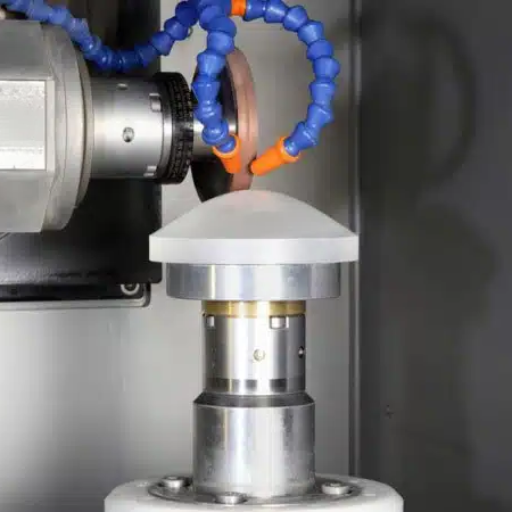
Laser Glass Cutting: Overview and Advantages
This article discusses the mechanical method for optical glass cutting using focused laser beams that allows creating smooth and precise cuts. This technology offers numerous benefits such as high precision, forming of intricate shapes with ease, and worrying less about micro-cracks. This is possible in most cases as the contour cut is turned to laser cutting, and not mechanical (i.e. using cut out tool). In addition to this, variations of this factor enable consistent cutting of different types of glasses and thicknesses. Thus, the above benefits shall make cleaning up preferred when laser glass cutting is developed in the context of industries that demand précised dimensional accuracy of works as well as high quality results like clean fans for electronics, photonics and medical devices.
Water Jet Technology in Optical Glass Cutting
The application of water jet technology, particularly in optical glass cutting, is both accurate and cost-effective. This process uses high pressure water combined with abrasive material or just water to cut glass. The edges are controlled in terms of rounding, consequently allowing the material to be cut in particularly decorative patterns as evident in cases of optical glass.
At this point it is good to point out that water jet cutting of optical materials such as glass has a principal merit and that is it does not involve any heat induced stress. Unlike heat-based cutting processes, this form of cutting does not involve thermal energy. It is low temperature cutting. That is, it does not cause the glass to crack or deform in any way. And all this rigidity brings about the principle facets of optical components that allow for their use in advanced applications like the making of lenses, fiber optics, etc. where extremely high levels of precision are mandatory.
Water jet technology also has an extensive range of applications and is environmentally sound. It is capable of cutting various types and thicknesses of glass with very little waste. The process is very clean, with virtually no mess produced, therefore reducing or eliminating the necessity for subsequent cleaning or finishing operations. These features of water jetting make it a very good technique for optical glass cutting, where accuracy, top standard and environmental concerns are extremely relevant.
Comparison of Diamond Blade Methods
| Key Point | Segmented | Continuous Rim | Turbo | Electroplated |
|---|---|---|---|---|
| Speed | High | Medium | High | Variable |
| Precision | Low | High | Medium | High |
| Cooling Need | Moderate | High | Moderate | Low |
| Material Type | Hard | Hard/Brittle | Versatile | Thin/Soft |
| Edge Finish | Rough | Smooth | Semi-Smooth | Fine |
| Cutting Depth | Deep | Shallow | Medium | Limited |
| Durability | High | Moderate | High | Low |
| Application | Masonry/Concrete | Glass/Tile | Multi-purpose | Precision Cuts |
This table provides a clear and concise comparison of diamond blade methods based on their key attributes and typical uses.
Tools and Technologies in Optical Glass Cutting
Essential Equipment for Precision Cutting
Precision optical glass cutting employs state-of-the-art tools to achieve exactitude and efficiency. Some of these tools, without which precision cutting is not achievable, are:
- 💎
Diamond Blades — That helps in smooth and precise cuts, the blades are usually made specifically for use with optical glass and come with specific characteristics that help in cutting the glass without breakage. - 🔦
Laser Cutting Machines — These exceptional tools are suitable when it comes to intricate work such as laser quilting that leaves very little scrap. - 🖥️
CNC Machines — They facilitate precision cutting due to high power computer assistance that enables repetitive complex designs in work output. - 🔩
Polishing and Grinding Tools — These tools are important in cleaning up and smoothening out the edges cut enhancing the quality of the finish and also ensuring the safety of cuts. - 🔬
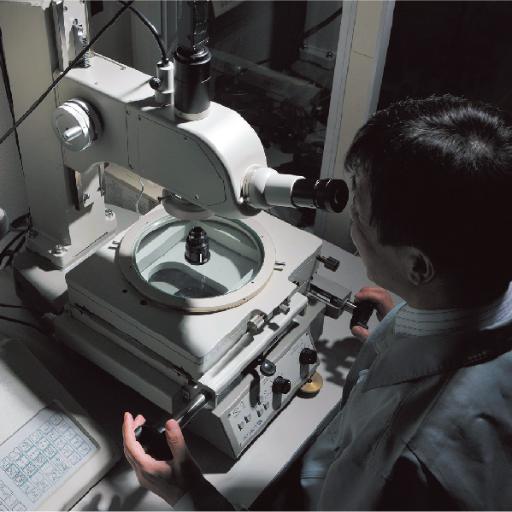
High-Powered Microscopes — Provide microscopic inspection and corroboration of the quality and precision achieved after cutting.
All such devices are necessary for ensuring the trouble-free existence of optical glass cutting facility and are complying with desired standards for sectors from technology to science and healthcare.
Role of CNC Machines in Optical Glass Cutting
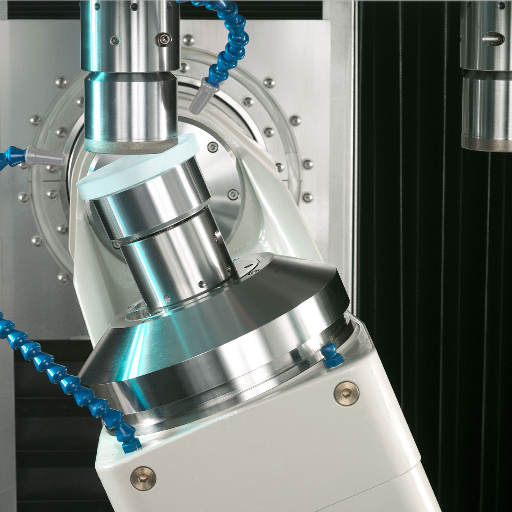
CNC and Computer Numerical Control machines play a significant part in optical glass cutting as they provide quite an unbeatable precision and higher manufacturing productivity including reproducibility of processes. Such machines employ advanced coded techniques enabling them to perform the most complex cuts and shapes without much involvement of human effort. This control is crucial for the industries such as telecommunication, medical devices and aerospace where even the slightest deviation from the rules can affect the performance seriously.
Automation and error mitigation features of CNC machines have helped optimize the timelines in carrying out production by doing away with repetitive activities that have to be performed by humans. CNC machines and tools are designed to be used along with CAD (Computer-Aided Design) and CAM (Computer-Aided Manufacturing) systems, enabling the practitioner to begin from the computer file and end up with a part without any compromises to quality. In optical glass cutting, in which intricate features and very thin material is involved, the accuracy and speed offered by CNC machines have increased the level of precision achievable as well as the speed of production.
Innovative Workstations for Enhanced Efficiency
The focus of contemporary work stations dedicated to optical glass cutting is towards ensuring precision, ensuring the user’s comfort, as well as optimizing the process. Examples of such workstations include those which have mechanisms for cutting that optimize for precision without any wastage of material. Moreover, the utilization of enclosed cutting surfaces enhances the productivity as well as eliminates the possibility of dust penetration. Also, the control mechanisms are strategically constructed to allow for the integration of the client into the process of the operations thus saving on the energy used. With the use of the latest technology incorporated into such workstations combined with good design practices, sleek ways of working are achieved and the standards of the industry upraised.
Practical Applications of Optical Glass Cutting
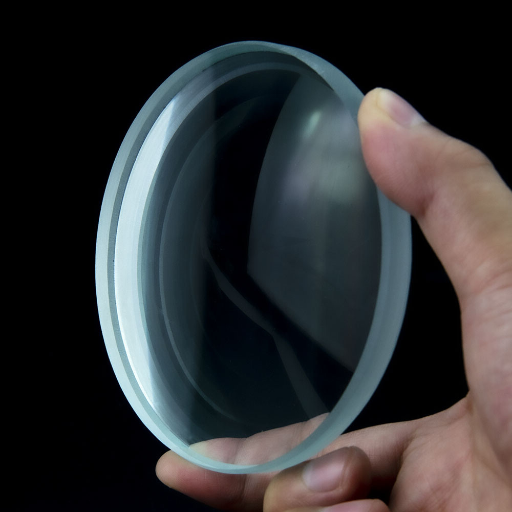
Creating Optical Lenses: Techniques and Tools
The manufacturing of lenses necessitates specific procedures and also the use of appropriate equipment for their successful production. The process follows these key stages:
- What is to be fabricated first is the glass optical lenses for the selected design, then this glass block is cut to size.
- Typically, the cutting of glass is done using special diamond cutting wheels or lasers.
- Next, the cut glass optical lenses are subjected to a stage of grinding and polishing with very fine grades. The goal being to reach the necessary dimensions and the defined quality.
- Nowadays it is quite often done with the help of computerised equipment to improve accuracy and reproducibility.
- Once all these steps are completed, if necessary, some coatings are thinly applied onto the lenses’ surface to reduce stray light, increase wear resistance or change the medium’s light characteristic depending on its function. This is how consumers can enjoy goods that meet the regulations and requirements.
Applications in Eyeglasses and Scientific Instruments
The production of eyeglasses as well as scientific tools relies heavily on optical glass cutting as it facilitates precision and efficiency in the two. In the case of eyeglasses, optical glass cutting must be very precise in order for the lenses to provide the right curvature that is recommended for correcting the optical problems like Myopia, Hypermetropia, and astigmatism among others. Enforced and enhanced shapes, surface coating further ensures that the lenses have minimal scratches and reflections as well as protection from ultraviolet rays.
Optical glass cutting is a core aspect of devices such as microscopes, telescopes, and spectrometers. These demand absolute precision in their manufacture, including cutting and polishing. Such instruments allow for safe and successful applications. For example, polished lenses and mirrors of telescopes enable astronomers to observe stars and planets with great detail. Likewise, in the medical, and industrial fields, optical elements aid in the development of new diagnostic and production methodologies showing how important precision optical glass cutting is in many disciplines.
Real-World Examples of Optical Glass Cutting Impact
🔭 Study of Celestial Objects
It is very important to cut optical glass very accurately while constructing the lenses and mirrors that magnify and bring stars, planets and galaxies in the telescopes to the eye of the astronomer. For this reason, studies of the Universe open or expand rapidly.
🏥 Medicine
Top quality optical glass will be used in the creation of certain elements of medical imaging apparatus such as a microscope and a steriscope. Structural aims can be done without causing major trauma to the tissues thanks to these advantages.
📱 Gadgets and Smartphones
Good quality optical glass is the basic requirement of all lenses and screens in cameras and smartphones. Every day technology relies heavily on these factors.
🏭 Craft and Industry
In industries optics of precision have been used in associations of cutting and producing tools, notably lasers. All these assist the production processes to be more efficient, accurate and creative.
These instances provide just a few illustrations of how deep cutting technologies affect the use of optical glass cutting.
Reference Sources
- High Precision Machining and Optical Surface Finish — Discusses precision machining techniques for optical glass, including grinding and surface finishing.
- Laser Cleaving of Glass Fibers and Glass Fiber Arrays — Explores laser micromachining techniques for cutting optical fibers and their applications.
- Curriculum on Optoelectronics and Laser Technology — Covers laser technologies and their applications in optical systems, including cutting techniques.
- Frontiers in Ultrafast Optics: Biomedical, Scientific, and Industrial Applications— Discusses glass processing and cutting techniques for industrial and scientific applications.
- Optical Glass Solutions
Frequently Asked Questions (FAQs)
This article covers key principles and innovations in optical glass cutting for professional, educational, and industrial reference purposes.