Get in Touch with Saiweiglass



Quick Specs
| Common Glass Types | Soda-lime, borosilicate, aluminosilicate (chemically strengthened) |
| Typical Thickness | 0.55 mm – 3.0 mm (application-dependent) |
| Light Transmittance | ≥90% (capacitive panels) |
| Surface Hardness | 6H–7H (Mohs 6–7 for cover glass) |
| Primary Touch Technologies | Projected capacitive (PCAP), resistive, SAW, infrared |
| ITO Conductive Layer | 20–300 nm thickness, 100–600 Ω/sq sheet resistance |
Every time you tap your smartphone, swipe a self-service kiosk or press a button on a factory control panel, your finger is contacting an engineered glass layer designed to detect touch input down to a sub-millimeter level. This ultra-smooth layer—known as touch screen glass—sits between your fingertip and the electronic visual display underneath, converting physical touch into digital commands.
But most buyers—from enterprise procurement to acquire panels for industrial equipment—consider touch screen glass just another commodity. Yet the composition of glass, thickness of conductive coating and surface polish can directly affect the outcome of a touch panel over a period of 5-10 years with continuous operation. This buying guide explores the technology, compares touch screen glass types, and provides a simple framework to select the appropriate touch glass panel for your needs.
What Is Touch Screen Glass?
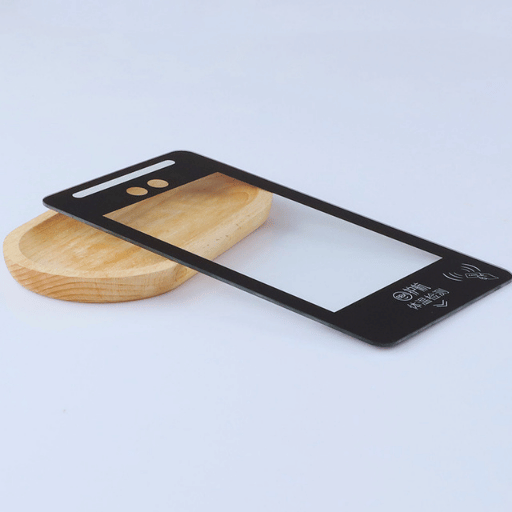
touch screen glass is a transparent, specially treated sheet of glass that is used as the thin protective surface layer of an interactive touchscreen device. It detects touch input – with the help of a finger or stylus – and relays that information to a controller chip that translates your physical contact point into a map coordinate of the computer screen.
A typical touch screen assembly is a stack of three layers:
- Cover glass – the visible outer layer you actually touch the screen through. Crafted in chemically boosted soda-lime or aluminosilicate versions with a typical thickness varying from 0.55 mm to 2.0 mm.
- Touch sensor layer — a thin film of indium tin oxide (ITO) or metal mesh deposited on a glass substrate that forms the electrode array to detect touch.
- Display module – the LCD or OLED panel under the cover glass that creates the visual image.
In some modern implementations, the touch sensor layer is built directly into the display module (In-Cell technology), which deletes a separate sensor layer. Industry projections suggest that the penetration of In-Cell technology into high-end consumer tablets could surpass 45% after 2025.
💡 Pro Tip
Manufacturers of glass expect a level of surface toughness around 6-7 on the Mohs hardness scale for touch screen cover glass panels. This level can resist scratches from keys and coins but not sand (Mohs 7) or steel blades. To withstand repeated factory-floor operation, request panels surface treated with over 7H pencil hardness.
How Does Touch Screen Glass Work?
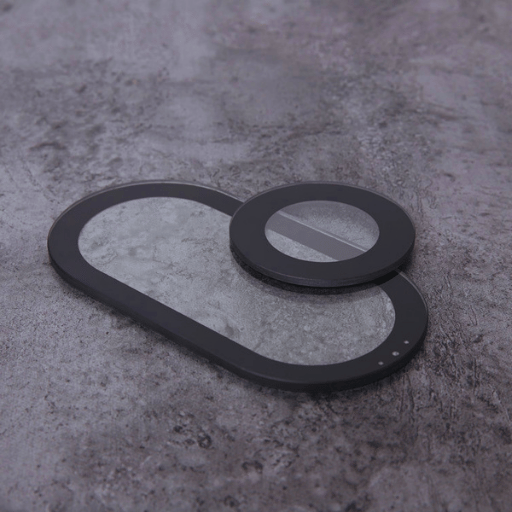
When contacting the screen, the touch screen itself doesn’t generate any signals. Instead, the conductive layer senses touch through a change in its electrical field at that exact point. This change is read by the controller chip, which passes the X-Y location to the software.
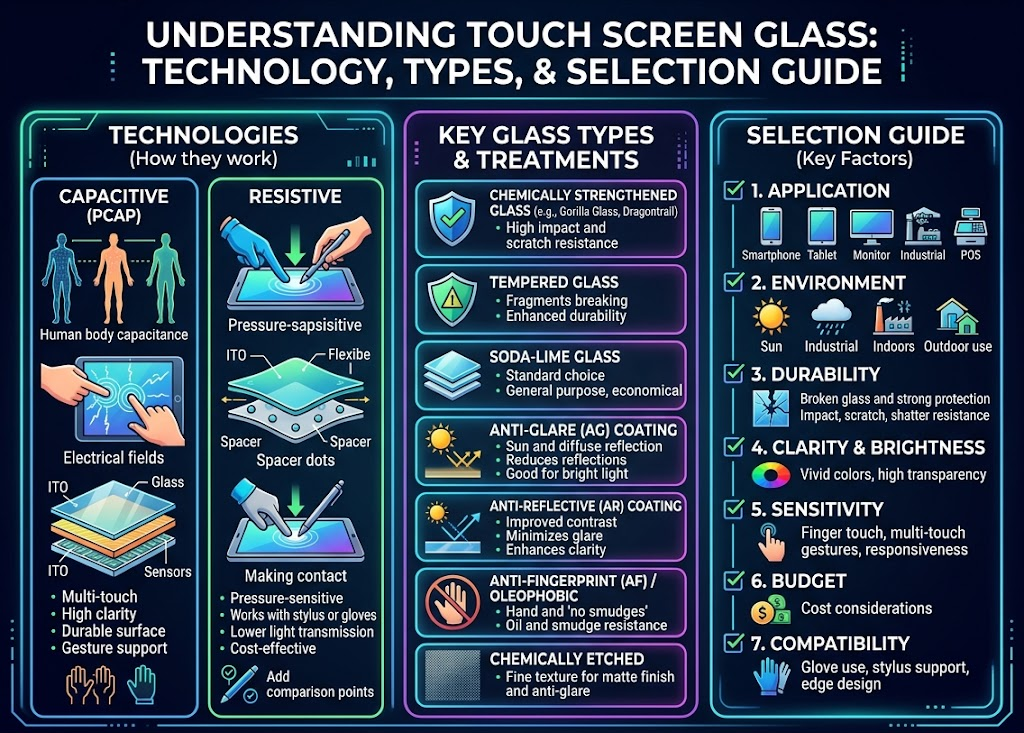
By far the most common sensing method in touch screens today is projected capacitive touch (PCAP). Here is how it works at the hardware level:
- A thin ITO sheet—usually 20 to 300 nanometers in thickness—deposited onto a glass surface by way of magnetron sputtering. This touch screen technology provides a transparent conductive layer with 100 to 600 Ω/sq sheet resistance.
- The ITO sheet is patterned into an array of crosshatched lines by photolithography and etching. The points there are little storehouses of electric charge.
- As your finger nears the glass, it distorts the local capacitance at the grid at the nearest intersection. Since human skin is conductive, your finger couples with the electric field and draws charge from the sensor.
- The touch controller performs a frame scan of the complete grid at frequencies above 100 Hz, or 100 times per second. It reads the capacitance at each node for changes between successive scans. Any nodes that have a measurable decrement in capacitance are then instantly reported as touch locations.
- multi-touch detection occurs because the controller can track multiple simultaneous capacitance drops occurring at different grid points at one time – top modern multi-touch screens are built to support 10-point touch, or more.
📐 Engineering Note
The resistance of the ITO sheet used in PCAP touch panels directly influences touch sensitivity and response time. A peer-reviewed survey published on PMC confirms that capacitive sensing accuracy depends heavily on maintaining consistent ITO sheet resistance across the electrode grid. For the capacitive touch screen generation of glasses, the target range is 100–300 Ω/sq, though up to 600 Ω/sq can be tolerated if the display requires pressure as the input method, and not fingers. Laboratory testing has demonstrated that even when subjected to novel temperature swings greater than 100 °C, drift in the ITO resistance is less than 3% so position calculation errors do not occur as a result of thermal distortion.
Types of Touch Screen Glass Technology
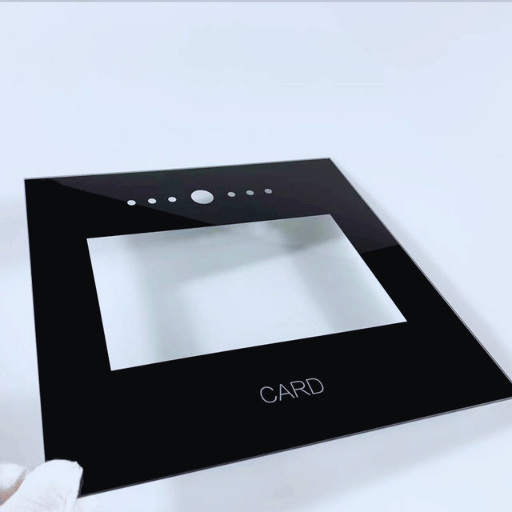
Not all touch screen use the same sensor technology. Different environments and a preference for zero-pressure input dictate the need for different approaches. Four major touchscreen technologies dominate the field, each working on a completely different physical principle to detect touch.
Projected Capacitive (PCAP) Touch Glass
PCAP is the most common capacitive touchscreen technology in use today. It captures touch through a distortion to the electrostatic field caused when the operator’s fingers approach the glass top panel. The greatest clarity and fastest response times can be delivered by PCAP screens of all capacitive touchscreen types.
The market numbers back this up: the capacitive touch screen subsegment accounted for 41% of commercial touch display market revenue in 2025, according to Future Market Insights.
Resistive Touch Screen Glass
Physical pressure is used by resistive touch touch screens to sense location. Between the front and back 1-2 micron layers of wire-coated glass panel, there is also a layer of plastic (polyethylene terephthalate) that has an extremely high level of static insulation. When you push on the screen surface, the top hard layer pushes down and makes contact with the bottom layer, completing the circuit at that point in space. Since the only media effect in the screen is movement of the plastic sheet, the controller looks for the change in voltage and delivers the touch location. This is how resistive touch screens work in practice.
PET film in resistive panels is usually 0.125mm or 0.188mm thick, though the 0.188mm standard accounted for about 68% of the 2025 industrial touchscreen market by value, because of the greater strength in future standards.
Surface Acoustic Wave (SAW) Touch Glass
SAW technology uses ultrasonic waves that pass across the surface of the screen. Surface transducers attached to the edges of the glass panel generate the sonic impulses. The decline in sound waves caused by a finger stops the sensors in the opposite end of the screen from detecting the wave, from which the touch location can be deduced.
Optically clear, with no conducting film on the active area, SAW is often specified for larger touch interactive display panels in public space applications, such as museum exhibits, directional information centers, and gaming venues.
Infrared (IR) Touch Screens
Infrared touch screens generate a network of IR beams across the display surface. An array of LED emitters / photodetectors is located around the edges from the edges of the display frame. When an object – such as a finger, stylus or a gloved hand – crosses the IR light beams, the controller detects which beams were blocked and determines the location of the touch.
IR panels are the only type that operate reliably with any object, including gloved fingers and thick stylus tips. For this reason, infrared touch screens have become the technology of choice for outdoor kiosks and industrial applications where operators wear protective gloves.
| Feature | PCAP (Capacitive) | Resistive | SAW | Infrared |
|---|---|---|---|---|
| Light Transmittance | ≥90% | 75–85% | 92–95% | 95–100% |
| Touch Lifespan | >50 million touches | ~35 million touches | >50 million touches | Unlimited (no wear surface) |
| Multi-Touch | 10+ points | Single-touch only | Limited (1–2 points) | 6–32 points |
| Glove Compatible | Special gloves only | Yes (pressure-based) | Yes (soft objects) | Yes (any object) |
| Surface Hardness | 7H glass | 3H–4H (PET film top) | 7H glass | Depends on cover glass |
| Scan Frequency | >100 Hz | 50–100 Hz | 50–75 Hz | 100–200 Hz |
| Best For | Smartphones, POS, kiosks | Industrial HMI, medical | Museums, large displays | Outdoor, gloved-use |
💡 Pro Tip
A common industrial procurement error: specifying resistive touch panels for high-traffic self-service kiosks. resistive film tops are depleted after ~35 million touches, whereas PCAP glass surfaces continue working past 50 million touches without any mechanical performance issues. For public-facing devices operating 12 or more hours per day, the PCAP investment amortizes to the first year in terms of reduced replacement costs.
Touch Screen Glass vs. Plastic: Which Material Wins?
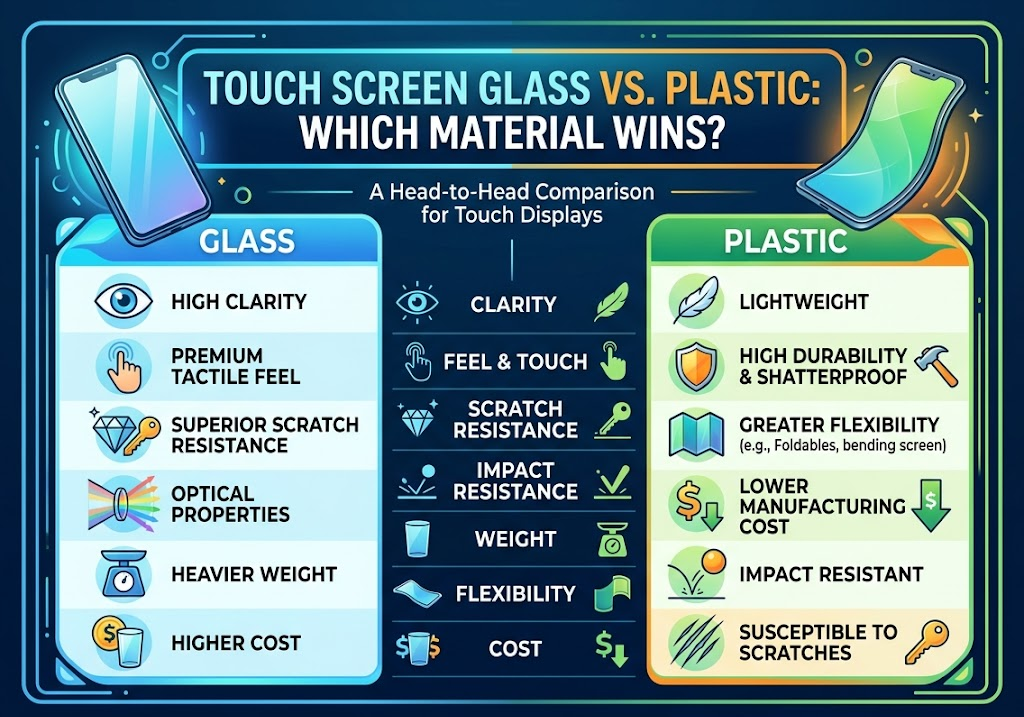
But are all touch screens glass? Some touch panels use glass or plastic overlays – often polycarbonate or PMMA (acrylic) – as the top touch surface. There are four quantifiable parameters which determine if this is a viable option:
| Property | Glass | Plastic (Polycarbonate) |
|---|---|---|
| Scratch Resistance (Mohs) | 6–7 | 2–3 |
| Optical Transmittance | ≥92% | 85–88% |
| Impact Resistance | Moderate (shatters under high impact) | High (flexes instead of shattering) |
| Touch Sensitivity Stability | Stable over 5+ years | Degrades with surface micro-scratches |
| UV Resistance | Excellent (no yellowing) | Poor (yellows without UV coating) |
| Weight | Heavier (density ~2.5 g/cm³) | Lighter (density ~1.2 g/cm³) |
Glass is the material of choice in the majority of commercial and industrial touch panel applications as it delivers far superior scratch resistance and brilliant clarity. A glass surface provides consistent and reliable touch capabilities over years of continuous operation because minute scratching does not build up on the surface as it does with plastics. In fact, each new scratch on a plastic overlay causes a tiny shift in the dielectric properties near the screen surface, inevitably reducing capacitive touch sensitivity.
Plastic overlays make sense in two particular scenarios: portable ruggedized devices for which drop tolerance has higher priority than scratch performance, and larger format displays (> 32 inches in diagonal) where the weight of the glass quickly becomes a mounting issue. In these cases, a final layer of screen protector, pre-hardened, is added over the plastic substrate to address the durability shortfall.
✔ Glass Advantages
- Scratch resistance 2–3× higher than plastic
- Optical clarity ≥92% transmittance — sharper display
- No yellowing under UV exposure (outdoor kiosks, vehicles)
- Stable touch sensitivity over 5+ year service life
- Chemical strengthening available (ion-exchange process)
⚠ Glass Limitations
- Shatters under high-impact force (vs. plastic flex)
- Heavier — adds weight to handheld and wall-mounted units
- Higher per-unit cost for custom shapes and sizes
- Requires finite edge finishing (CNC grinding) to prevent chip propagation
💡 Key Takeaway
Pick glass over plastic for any touch panel expected to run 3+ years in a fixed installation. The scratch resistance and optical stability gap only widens with time. Reserve plastic overlays for handheld rugged devices where drop survival matters more than surface longevity.
Common Applications of Touch Screen Glass
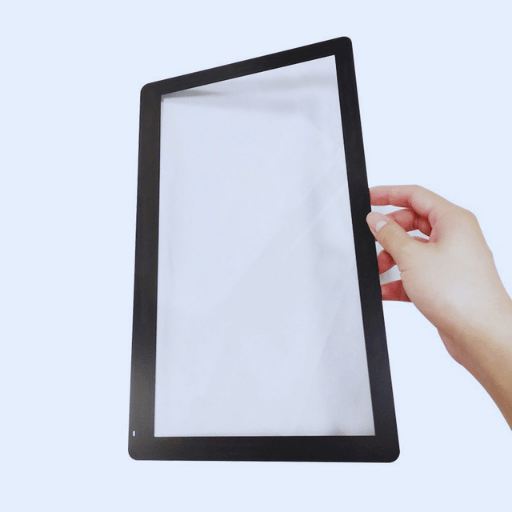
Touch screen glass is present across industries from mobile computing devices to large public information displays. The worldwide touch screen display market was valued at an estimated USD 82.63 billion in 2025 and is forecast to expand to USD 152.94 billion by 2033 according to SkyQuest Technology. That growth is occurring in 6 primary fields — from mobile phones and mobile devices to factory terminals — each with unique glass screen requirements:
- Consumer electronics (smartphones, tablets, laptops) – Aluminosilicate glass of 0.55-0.7 mm thickness chemically strengthened with an anti-fingerprint (AF) coating. Multi-touch screens support 10-point touch capability for gesture-navigation.
- Industrial HMI panels – 1.1-3.0 mm thick glass, often sub-etched for anti-glare (AG) function based upon typical ambient lighting. Must meet IEC 62262 IK impact resistance standards. Operator use of gloves is typical, favoring either resistive or IR touch technologies.
- Medical devices – Flush-mount glass faceplate with sealed edges meeting IP65 waterproofing standards. Increasingly, anti-microbial processes are specified for touchscreen units used in clinical applications.
- Automotive infotainment- Large operating temperature range (-30 °C to +85 °C). Touch devices have to operate in direct sunlight with optical bonding to decrease reflection.
- Interactive kiosks and point of sale environments – PCAP glass for its ruggedness for optimum 50 million touch point activations and higher is considered in high rate traffic environments. Chemically strengthened range of glass (2.0-3.0 mm) falls in front of vandal-protection category.
- ATM and self-service terminals—Primarily privacy filters and anti-reflective coatings. Touch sensitivity must be unaffected by the changes in temperature that are expected in an outdoor or semi-outdoor environment.
$82.6B
2025 Global Market
41%
Capacitive Revenue Share
8% CAGR
Projected Growth to 2033
💡 Key Takeaway
Match the touch technology to the operating environment first, then select the glass specification. A medical HMI and a gas station kiosk may share the same screen size but need completely different glass types, coatings, and IP ratings.
How to Choose the Right Touch Screen Glass
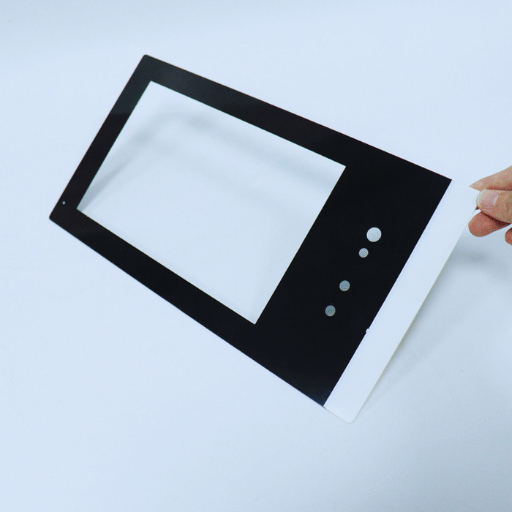
Choosing a touch glass panel for an industrial or commercial application is not just a matter of size. An improper specification will result in quickly worn touch, bad touch perception, or expensive design changes during production. When assessing touch screen glass specifications, for our clients we consider:
5-Factor Touch Glass Panel Selection Framework
- Operating environment — indoor vs. outdoor, temperature range, dust/moisture exposure (IP rating), sunlight readability requirement.
- Input method. Bare finger, gloved hand, stylus or mixed use. capacitive touch only accepts conductive inputs.resistive and IR panels accept any object even if gloved finger
- Size & mounting of display – Typical glass thickness for panels less than 15″ (38.1 cm): standard (0.7-1.1 mm), 15-32″ (38.1-80.3 cm): 1.1-2.0 mm, above 32″ (80.3 cm): weight should be balanced against thickness of glass.
- Durability requirements – Daily anticipated number of touches, vandal resistance requirements (IK rating), chemical resistance issues (cleaning agents, industrial solvents).
- Cost and lead time as well – The regular soda-lime glass is the cheaper but cannot be chemically strengthened. The aluminosilicate one (3-5 times more expensive) is 4-5 times better impact resistant after the ion-exchange process.
⚠️ Important
The most common sourcing error we encounter from first time kiosk buyers is requesting standard soda-lime glass for outside kiosks without an anti glare (AG) coating on the glass. When sun hits untreated glass it creates a glare that can’t be read and requires costly retrofit. Always verify the need for an AG or AR coating when getting pricing.
- ✔
“Confirm touch technology (PCAP / resistive / SAW / IR) before choosing the type of glass” - ✔
Define the industrial and outdoor IP rating and the IK impact rating. - ✔
Request samples to verify optical clarity and touch sensitivity before volume orders - ✔
Ask your touch screen glass manufacturer about edge treatment (CNC grinding radius R0.5–R1.0 mm minimum) - ✔
Evaluate whether used with gloves operation requires switching from capacitive to resistive or IR technology
Touch Screen Glass Manufacturing Process
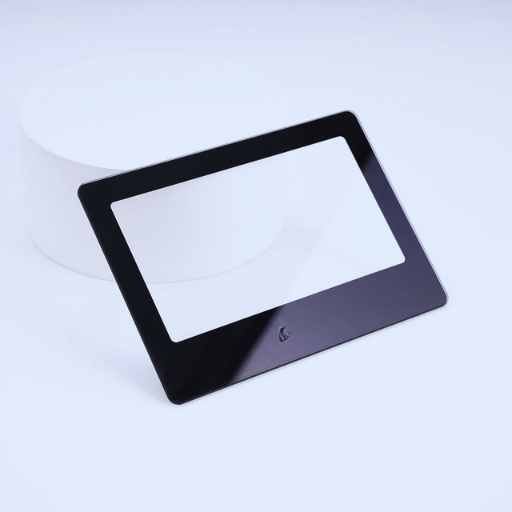
Understanding how touch screen glass is made helps procurement teams evaluate supplier capabilities and ask better questions during vendor qualification. A touch screen glass manufacturer typically follows a seven-step production sequence from raw glass substrate to finished touch panel.
- Glass substrate preparation — Raw float glass (soda-lime or aluminosilicate) is cut to panel dimensions using CNC cutting machines with tolerance of ±0.1 mm. Edges are ground and polished (radius R0.5–R1.0 mm) to prevent micro-crack propagation.
- Cleaning and surface treatment — Substrates pass through ultrasonic cleaning baths to remove particulates and oils. Surface flatness is verified to within 0.02 mm per 100 mm to ensure uniform ITO deposition.
- ITO deposition (magnetron sputtering) – An ITO ceramic target is hit with high-energy argon ions within a vacuum chamber. ITO atoms are spalled from the target and deposit onto a glass substrate, creating a transparent conductive layer. Research on ITO film fabrication (PMC) shows that DC and RF magnetron sputtering remain the most reliable deposition methods for achieving uniform thickness and low resistivity. Touch technology determines ideal film thickness — 20–300 nm — and sheet resistance is adjusted for ±5% uniformity over the entire panel.
- Patterning (photolithography + etching) – Photoresist layer is deposited and UV-exposed through a mask to image the electrode grid. The exposed sections are then developed; chemical etchants removed unwanted ITO deposits and permanently outlines the sensor circuit. Minimum trace width for the most modern PCAPs is 5–10 μm.
- Chemical strengthening (optional) – For applications demanding impact resistance, glass panels are submerged within a molten KNO3 bath for 4-8 hours at 400–450 °C. Potassium ions enter the glass surface and swap place with the previously diffused sodium ions; this leaves a layer of compressive stress on the glass surface which quadruples the glass’s load life.
- Functional coating deposition -Anti-reflective (AR), anti-glare (AG), anti-fingerprint (AF), or anti-microbial coatings can be applied to the glass surface. Vacuum deposition or solution based coatings apply the molecules according to coating tech. An anti-reflective coat cut surface reflection from 4% down to <0.5% for each glass surface.
- Lamination and assembly – The image-patterned touch glass substrate is bonded to the cover glass and display via optical clear adhesive (OCA) or liquid optical clear resin (LOCA). This lamination step eliminates the air interface and creates a flat plane for easy touch navigation, improving touch performance and minimizing internal reflections.
📐 Engineering Note
Thickness of ITO sputtering for common PCAP touch glasses is between 50-300 nm. At low end the transparent qualities of the glass are realized, high end the screen has a fast tactile response. High amount of the time 150 nm thick is a good compromise, with 90% transmittance and 200 Ω/sq sheet resistance.
💡 Key Takeaway
When qualifying a touch screen glass manufacturer, ask for their ITO sputtering uniformity spec (should be ±5% or tighter) and their edge grinding radius. These two numbers reveal more about production quality than any sales deck.
Frequently Asked Questions About Touch Screen Glass
Q: How does touchscreen glass work?
View Answer
Touchscreen glass works by picking up changes in an electrical field or physical pressure at the point where you touch. In capacitive systems — the most widespread type — a transparent ITO layer under the glass holds an electrostatic charge. Your finger disturbs the local capacitance, and the controller chip converts that disruption into X-Y screen coordinates at scanning rates above 100 Hz.
Q: Are all touch screens glass?
View Answer
No. Although most contemporary-finger or stylus screens use glass for its scratch resistance and clarity, some devices swap the glass overlay for plastic — polycarbonate or PET film. Resistive touch panels, in particular, often have a flexible plastic top layer. Glass remains the go-to for commercial and industrial touch panels because it holds stable touch sensitivity over years of daily use.
Q: What is the difference between capacitive and resistive touch screen glass?
View Answer
Capacitive touch glass senses the electrical conductivity of your finger — no pressure needed. Resistive touch glass relies on two conductive layers that physically contact each other when pressed. In numbers, capacitive panels deliver better clarity at 90%+ transmittance (vs. 75–85% for resistive), last longer at 50M+ touches (vs. ~35M), and support multi-touch. Resistive panels cost less and accept input from any object, including gloved fingers and hard stylus tips, which is why they still hold a major share of the industrial HMI market.
Q: Can touch screen glass work with gloves?
View Answer
Standard capacitive touch screens will not respond to regular gloves — they need conductive input. Resistive panels work with any pressure, so normal work gloves are fine. Infrared panels detect anything that breaks the IR beam.
Q: How is touch screen glass different from regular glass?
View Answer
It starts as regular glass, then gets an ITO conductive coating for touch sensing plus tighter quality control on optical clarity and flatness. Many panels also go through ion-exchange chemical strengthening.
Q: What is touch screen digitizer glass?
View Answer
A touch screen digitizer converts your analog finger position into digital coordinates the processor can use. “Digitizer glass” means the glass panel with the built-in touch sensor. When a repair shop says they are replacing the “digitizer glass,” they mean the touch-sensitive panel comes out but the LCD or OLED display stays.
Q: How do you clean touch screen glass?
View Answer
Dampen a soft microfiber cloth with distilled water or 70% isopropyl alcohol. Stay away from ammonia-based cleaners — they eat through anti-fingerprint and anti-reflective coatings over time. Industrial panels with anti-microbial coatings may need specific disinfectants, so check the manufacturer’s cleaning protocol before wiping anything down. One more thing: never spray liquid directly onto the screen. Spray the cloth, then wipe. Liquid seeping into the bezel can damage the touch sensor layer underneath, and that kind of repair is not cheap.
Q: What glass material is best for industrial touch panels?
View Answer
Aluminosilicate glass after ion-exchange treatment. It runs 4–5 times the strength of untreated soda-lime. If budget is tight and impact risk is low, soda-lime glass with chemical strengthening works at about half the material cost.
Need Custom Touch Screen Glass for Your Project?
Saiweiglass produces custom-made touch screen glasses from cover glass segmentation and ITO application through chemical strengthening and functional coatings. Please contact us with your specifications for a priced offer.
About This Guide
Saiweiglass is a touch screen manufacturing company based in China. Our knowledge is based on our production work with capacitive touch panels and cover glass produced for industrial and consumer electronics, as well as ITO coating for whatever you request. We will give researched fact regardless of if you buy from us or someone else. All such market consumption data and technical data are based on available third-party industry sources.
References & Sources
- Touch Screen Display Market Size | Global Industry Report 2033 — SkyQuest Technology
- Touch Panel Market Size & Share 2024–2032 — Global Market Insights
- Commercial Touch Display Market | Global Analysis Report 2035 — Future Market Insights
- Touchscreen — Wikipedia
- ITO Films for Capacitive Touch Screens — GEOMATEC
- Review of Capacitive Touchscreen Technologies: Overview, Research Trends, and Machine Learning Approaches — PMC / National Library of Medicine (.gov)
- Fabrication and Characterization of Indium Tin Oxide Films — PMC / National Library of Medicine (.gov)
Related Articles