Get in Touch with Saiweiglass



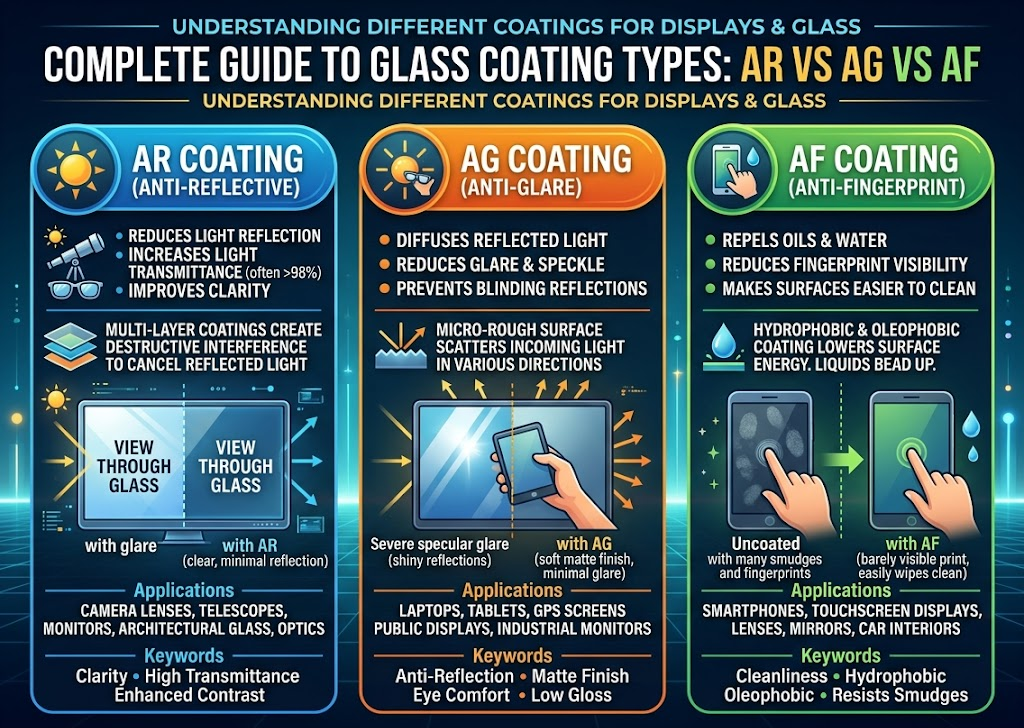
Quick Specs
| AR Coating — Reflectance | <0.5% per surface |
| AR Coating — Transmittance | >97% |
| AG Coating — Haze | 1–25% (tunable) |
| AG Coating — Reflectance | 3–6% |
| AF Coating — Contact Angle | 110°+ (premium grade) |
| AF Coating — Thickness | 50–200 nm |
AR, AG, and AF Glass Coatings at a Glance

3 different surface treatment foes provide 3 different solutions to one difficult enemy of display visibility: reflection. ar coating-focused on AR – eliminates reflection resulting from anti-reflective through destructive thin-film interference. AG coating – through micro-surface texture – minimizes harsh glare. AF coating – through a nano-layer with low surface energy – causes oils and fingerprints to bead up and slide away. Understanding each coating’s unique differences between AG vs AR vs af glass is your first step toward specifying the correct coating.
A piece of ordinary glass lets through about 91% of visible light, and reflectively sends 4% of light back from the sides of the glass. In total, 8% of the lot’s reflection is lost. Each of the three coating types views its own degree of this baseline through different conditions, so each one fits particular circumstances and display set ups.
| Property | AR Coating | AG Coating | AF Coating |
|---|---|---|---|
| Full Name | Anti-Reflective | Anti-Glare | Anti-Fingerprint |
| Primary Function | Eliminate surface reflection | Scatter light to reduce glare | Repel oils and moisture |
| Key Metric | Reflectance <0.5% per surface | Haze 1–25% | Contact Angle 110°+ |
| Manufacturing Method | Vacuum-deposited thin films | Chemical etching or spraying | PVD or solvent-based nano-coating |
| Best For | Optical lenses, medical displays, solar panels | Outdoor displays, kiosks, signage | Touchscreens, smartphones, POS terminals |
Key takeaway: AR Optimizes light transmission, AG damps harsh glare throughout the display, AF coating keeps glass surface clean. Some advanced display solutions combine multiple coating to provide all-encompassing coverage.
What Is AR (Anti-Reflective) Coating and How Does It Work?
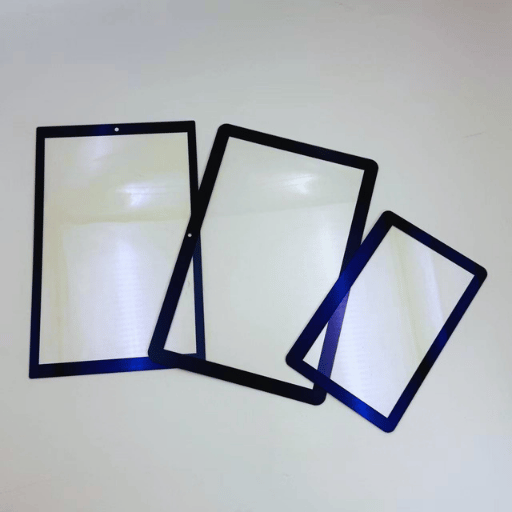
ar coating is a vacuum-deposited layer on the glass surface as one or a series of thin films. Its purpose is to affect destructive interference, with the result being less reflection. When a beam of light strikes an AR coated surface, the reflection originating from the top of the coating layer and the reflection associated with the bottom of the coating counteract each other so that the light reaches the viewer unblemished. This reduces reflection passing through the display to as low as 0.5% per surface, thus correlating to ar glass 97% or more transmittance.
How Thin-Film Interference Works
Each individual ar coating layer is tuned to a specific optical thickness. Usually this is 1/4 of the intended wavelength, like this commonly used layer of magnesium fluoride with a refractive index of 1.38 for crown glass with a refractive index of 1.52. When the waves reflected off the glass and coating interfaces are exactly 1/2 wavelength apart – destructive interference is created.
Single-layer AR balances out at a specific wavelength, but leaves residual reflection at other wavelengths. Multi-layer ar coating stacks layers of varying thickness and refractive index to deliver anti-reflective performance over a broad spectrum of 400-1100 nanometers. Top of the line AR performed at <0.2% reflectance at the center wavelength <1.0% across the visible spectrum.
AR Coating Performance Numbers
ordinary glass reflects /average/ 4% of reflection per surface. With both of its sides of the glass applied, total reflection is less than 1%. Transmittance sky-rockets to 97-99%. For solar panels, this means capturing more energy from sunlight. Display panels also benefit from reduced reflection — medical monitors and industrial touchscreens gain sharper image clarity when AR coating cuts surface reflection below 0.5%. Cameras benefit from multi-layer AR coatings to reduce ghosting and flare in shots with light sources.
ar glass applications include optical glass, camera lens, medical screens, solar panel cover glass, glass overlays on interfaces, lab glass, and architectural windows. ar coating quality standards comprise MIL-C-675C for Military glass and ISO 9211-4 for general optical coatings.
📐 Engineering NoteFor standard ar glass residual reflectance should be 0.6% per surface in 450-650 nm range. Broadband ar coating for entire solar spectrum of 400-1100 nm should be reflected equally less than 1.0% on average. Indicate the angle (generally 6 AOI on each ISO 15368) in your bid documents.
✔ Advantages
- Highest transmittance of any coating type (97–99%)
- Near-zero reflection (<0.5% per surface)
- Proven durability (5+ years in stable environments)
- Works across UV, visible, and near-IR spectra
⚠ Limitations
- Does not reduce glare from strong light sources
- Shows fingerprints readily without AF treatment
- Higher cost (+80–120% over plain glass)
- Requires vacuum deposition — longer lead times
Note: for maximum optical clarity ar coating is the ideal as nothing is incorporated to combat glare or fingerprints.
What Is AG (Anti-Glare) Coating and How Does It Work?
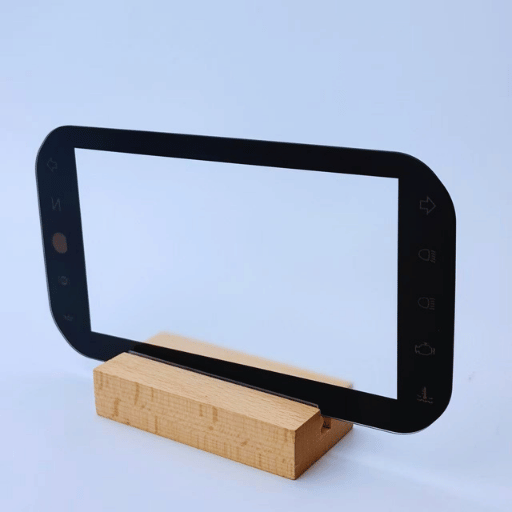
Anti-glare coating reduces glare by changing specular (mirror-like) reflection to diffuse reflection. Rather than reflecting a focused image of the light sources back at its viewers, an anti-glare glass surface reflects scattered light a dispersed manner (scatter) to soften bright spots. Because of the brighter spots, ag glass is the second best for any display subject to sunlight or any other bright ambient light sources.
How AG Surface Treatment Creates Diffuse Reflection
Surface roughness manipulation is at the core of AG the surface roughness. Scattered (amount of light that spreads out at an angle more than 2.5 away from the input beam) reflected light can be achieved by introducing a controlled microscopic texture on the glass surface. The jaggedness of the surface can be calibrated for a specific haze value. The higher the haze, the fuzzier any reflected image appears.
Three primary methods produce AG glass:
- chemical etching – The gold standard. An HF-based solution etches the surface of the glass to a depth of 0.05-0.07 mm, creating permanent micro-texture. Chemical-etched ag glass offers batch-to-batch consistency within 5 GU (gloss units) and delivers the most uniform anti-glare effect. This method is favored for display glass cover panels.
- Spray coating – A coating solution containing silica particles is applied to create surface roughness. Less durable than chemical etching but faster to produce.
- Film lamination – A pre-textured anti-glare film is bonded to the glass. Easiest to apply but adds thickness and may peel over time.
AG Coating Performance Specs
anti-glare glass haze values range from 1% to 25%, tunable to the application. Displays viewed at arm’s length typically specify 5-20% haze for a balance between glare reduction and image sharpness. Gloss ranges from 20 to 130 GU. Transmittance for chemical-etched ag glass runs 88-91%, while film-based AG glass achieves 89-93%. A non-glare glass panel for an outdoor display will sit at the higher haze end (15-25%), while an indoor monitor might need just 3-8%.
✔ Advantages
- Eliminates mirror-like reflections in bright environments
- Permanent surface treatment with chemical etching (3–5 year lifespan)
- Tunable haze (1–25%) for application-specific needs
- Lower cost than AR (+50–100% over standard glass)
⚠ Limitations
- Reduces transmittance by 2–5% compared to uncoated glass
- High haze engenders a moderate “sparkle” effect on high-PPI screens
- Does not eliminate reflection — scatters it instead
- Surface texture can trap dust and fingerprints
Note: AG coating is the best solution for visible displays in very bright or outdoor circumstances but be specific regarding haze – too much (over 20%) softens the detail of the image, too little and glare cannot be controlled.
What Is AF (Anti-Fingerprint) Coating and How Does It Work?
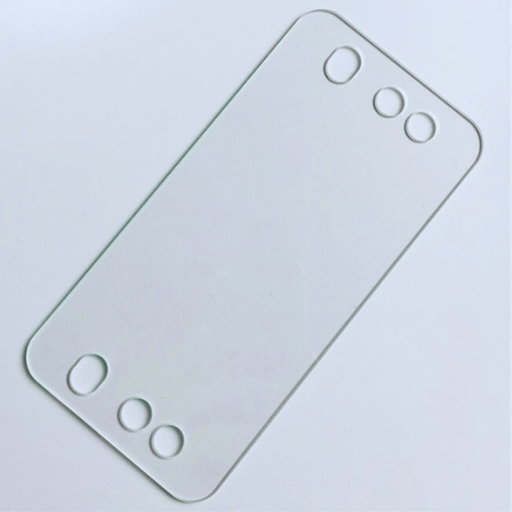
af coating is a nanometer-dimension fluorinated polymer layer – usually 50-200 nm thick – that tremendously reduces the surface energy of glass. The exotic coating is responsible for causing oils and water to bead rather than form spreads allowing fingerprints to be wiped clean with just a dry cloth. This is the same phenomenon seen on a lotus leaf, where nanopatterned surfaces behave as water-repelling extremes of nature – the lotus effect.
Surface Energy and the Lotus Effect
Uncoated glass has approximately 72 mN/m (millinewtons per meter) of surface energy that allows for oil and water spreading flat, creating a strong adhesion. Using an anti-fingerprint coating reduces this to 15-20 mN/m creating near-spherical droplets that easily fall or roll from the surface. The water contact angle – what most considers when gauging hydrophobic properties – has increased from about 25 on bare glass to 110 + on quality af glass.
AF Coating Methods and Specs
Three main methods apply AF coating to glass panels:
- PVD (Physical Vapor Deposition) – produces the highest-performing af coatings with water contact angles reaching 120. Highest performance in durability. Used in top-end smartphones and medical equipment.
- Solvent-applied dip/spray – contact angles of 100-115. Offers an inexpensive middle ground of performance compared to PVD or UV-curing.
- UV-cured coating – contact angles of 95-110. Boasts the fastest curing time, great for mass-manufacturing.
Durability tests are conducted with 500 g steel wool, 2,000 reciprocating cycles. A quality af coating should exhibit less than 15% drop-off in contact angle over this test. Under real world conditions – a daily touch-screen fingerprint cloth-wipe – AF coating lasts 6-12 months, making it the most maintenance-dependent of the three formats but also the most affordable, costing +20-40% more than bare glass.
af glass does not adversely affect the optical qualities of the inherent glass. Transmittance and reflectance remain nearly identical to uncoated glass. Its advantage is purely functional: cleaner displays, reduced time spent cleaning, improved responsiveness thanks to reduced finger drag friction on the reflective surface.
✔ Advantages
- Fingerprints wipe clean in one pass
- Lowest cost adder of all three coatings (+20–40%)
- Improves touch responsiveness by reducing friction
- No impact on optical transmittance or clarity
⚠ Limitations
- Shortest lifespan of all coatings (6–12 months typical)
- Does not reduce reflection or glare
- Requires reapplication in high-use environments
- PVD method needed for best results (adds cost)
Bottom line: af coating is the cheapest method for maintaining touch glass covers but must be re-applied periodically for motion-heavy surfaces.
AR vs AG vs AF: Side-by-Side Performance Comparison
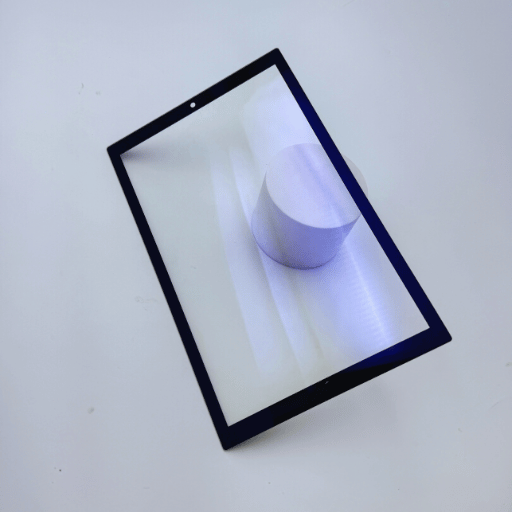
Examining the three types of AG, AR, and af coatings side-by-side reveal that each excel on one metric but compromise in others. There is no one-size-fits-all option. Here is the performance data industrial designers and procurement professionals need when specifying display glass or cover glass:
| Property | AR Coating | AG Coating | AF Coating |
|---|---|---|---|
| Reflectance | <0.5% per surface | 3–6% | Same as base glass (~4%/surface) |
| Transmittance | 97–99% | 88–93% | Same as base glass (~91%) |
| Haze | <1% | 1–25% (tunable) | 0% (none added) |
| Water Contact Angle | 20–30° (standard glass) | 20–40° (textured surface) | 110°+ (premium PVD) |
| Coating Thickness | 100–500 nm (multi-layer) | Surface etch 50–70 μm deep | 50–200 nm |
| Durability | 5+ years | 3–5 years (permanent etch) | 6–12 months |
| Cost vs Plain Glass | +80–120% | +50–100% | +20–40% |
| Touch Sensitivity | No effect | Slight texture feel | Improved (reduced friction) |
| Best Environment | Indoor, controlled lighting | Outdoor, bright ambient | Touch-heavy devices |
Where Each Coating Wins — and Where It Falls Short
ar coating is the premier choice for optical performance. If you are designing a visibility-critical glass camera lens, solar panel, or medical monitor: ar glass is the only one to consider. This with processing is no help in fighting fingerprint smudges or diffuse high ambient floor light level. On an outdoor-facing display in a sunlit atrium, AR-only display will still produce reflections of bright light sources, because the coating removes reflection magnitude, not reflection direction.
In hostile lighting conditions, AG wins. An outdoor display or a trade show booth adjacent to a window are powerful recipients for the diffuse reflection glare-changing effects. But the same texture that causes glare to scatter over a matte surface will also cause transmitted light to scatter, which explains why ag glass transmission only peaks at 88-93% instead of 97-99%. On screens with resolutions above 200 PPI, AG haze above 15% can result in a visible sparkle artifact.
af coating wins on ease of maintenance and touch ergonomics. It prevents smudgie from starting to look marbled through indiscriminate wiping – a feature essential to retail POS terminals, smartphone cover glass, and any other public touch surface. But AF coating is the least durable of these three options, and must be re-applied after 6-12 months of heavy touch.
💡 Pro Tip
A common error with glare reduction strategies is to confuse the haze score of AG with the clarity loss of AR. In fact, they describe separate phenomena. AG haze intentionally diffuses transmitted glare – transmittance drops 2-5% but readability is dramatically improved in bright circumstances. ar coating maintains near-complete clarity but cannot tolerate the significant direct glare originating from an adjacent light source. Always test both varieties when choosing between AG or AR for a given project.
Lesson from this deck: there is no one-size-fits-all best value for coating. AG & AR both do outstanding jobs of removing glare in bright environments. AG & AF both do well by reducing squishy-smudgy-high-touch environments. Comparing AG against AR makes sense only when evaluating in the specific lighting environment in which the final project will be utilized.
Can You Combine AR, AG, and AF Coatings on One Glass?
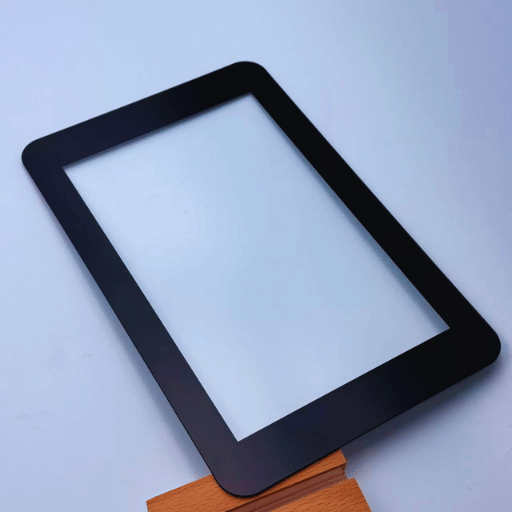
Yes – and combination coating varieties are becoming more prevalent in niche applications such as automotive HUDs, industrial & advanced medical display applications, and critical operational control panels. Each type balances cost, optical, and joining complexity considerations differently. The table below illustrates typical combinations and respective application domains:
| Combination | Use Case | Trade-off |
|---|---|---|
| AR + AF | Medical monitors, lab instruments, display screens requiring clarity + hygiene | Best for clarity + clean screens. Cost: +100–150% over plain glass |
| AG + AF | Outdoor kiosks, ATMs, POS terminals, outdoor display signage | Glare + fingerprint protection combined. Slight haze remains. Cost: +70–140% |
| AR + AG | Rare — conflicting principles | AR needs a smooth, polished surface; AG needs texture. Combined, the AG texture disrupts AR interference layers, reducing AR effectiveness by 40–60% |
| AR + AG + AF | Premium automotive HUD, aerospace displays, military-grade equipment | Maximum protection. Highest cost (+150–200%). Requires precise layer sequencing during manufacture |
The most popular combination for glass usage in production today is AG + AF. This combination optimizes the two most-cited pain-points for public displays: glare under ambient light and fingerprint buildup from heavy touching. First an AG layer is deposited using chemical etching, followed by nano-coating topcoat with an AF chemical deposit. Because the AF layer itself is only 50-200 nm thick, it does not significantly impact the existing haze profile or texture.
AR + AF is the next most prevalent combination, especially for medical & laboratory glassware, where optical clarity and contamination resistance are naturally priorities. The ar coating layers are applied to the back surface, then an AF topcoat covers the entire surface. This double-X2 boasts transmittance as high as 97+% and a smudge-free surface.
The third known combination, AR + AG + AF, is somewhat niche. It requires precision production to keep the layers on the correct face: AR required for backside applications, AG etching is applied to the face, then over-layered with an AF coating. This technique is used in high-end automotive instrument clusters and commercial spacecraft HUDs.
💡 Pro Tip
Based on reports from Saiweiglass, nearly 65% of all custom glass orders now specify a minimum of a two-coating blend…this value will have doubled since 2022 as various display environments push to meet higher challenges.
Key takeaway: almost all real-world applications for glass will require at least two types of coating. The most common practical pairings of coating would be AG + AF, AR + AF. Using all three layers—AR + AG + AF—is for luxury applications where budget is less critical.
How to Choose the Right Glass Coating for Your Application
Choosing a specific coating begins with the environment it will be deployed into, not the coating technology. A display installed in a sun-drenched warehouse faces markedly different challenges than a medical monitor in a dimly-lit OR. The mapping below translates the most common glass applications into a recommended coating combo, based on ambient light, touch frequency, and optical importancemaps below.
| Application | Recommended Coating | Why |
|---|---|---|
| Medical displays | AR + AF | Max clarity (97%+ transmittance) + easy-clean hygiene compliance |
| Outdoor digital signage | AG + AF | Sunlight readability (15–25% haze) + easy cleaning for outdoor display maintenance |
| Automotive instrument panels | AR + AG + AF | Full protection: clarity, sun glare control, and fingerprint resistance |
| Industrial touchscreens | AG + AF | Durability in harsh lighting + frequent-touch usability |
| Retail POS terminals | AF | Cost-effective fingerprint resistance for controlled indoor lighting |
| Camera / optical lenses | AR | Maximum light transmission (>99%) with zero haze |
| Solar panels | AR | 3–5% energy harvest efficiency gain from reduced reflection |
5-Factor Coating Selection Checklist
Before selecting your glass type and coating architecture, answer these five questions:
- Environment: indoors/outdoors/transitional? Immediate outdoor/external conditions require all but AG. Indoor spaces with controlled lighting are better suited by AR.
- Touch frequency: Will the end-users use the glass more than 50 times/day? If yes, af coating is a must-have. Public information kiosks, point of sale systems, processing systems are common examples.
- Optical priority: Does the application prioritize maximum transmittance (e.g., medical imaging, optical instruments)? ar coating is critically important. Can you accept the 2-5% overall transmittance decrease? AG may be acceptable.
- Budget:The AR coating adds 80-120% to standard glass costs. AG adds 50-100%. AF adds 20-40%. The stack on these hybrid solutions added those up. Specifying your budget per component should be done early on.
- Maintenance frequency:af coating needs to be reapplied every 6-12 months. If the implementation environment makes at all difficult to service, vertically mounted signage/signs, embedded displays, coating an optional AF layer of PVD coatings for increased longevity.
When dealing with projects that require a custom piece of glass—exotic sizes, hybrid multiple coating pieces, or special glass types for specialized environments, working directly with a glass manufacturer will make navigation easier and assure that each coating layer is stacked in the optimal order.
Need help picking the right glass coating on your project?
Key takeaway: match the coating to the environment first and foremost, then how many touches it will see, your optical needs, and finally, your budget. When in doubt, AG + AF is a safe choice.
Frequently Asked Questions About Glass Coatings
Q: What is the difference between AG, AR, and AF glass?
View Answer
AR (anti-reflective) coating layers fade surface reflection from 4%+ to< 0.5% per surface—improving transmittance to 97-99%. AG (anti-glare) coating etches smooth chemical etching surfaces (or uses spray coatings) to diffuse specular reflection into diffuse reflection—a process that functions effectively in brightly-lit environments with subjectively adjustable haze levels of 1-25%. AF (anti-fingerprint) coating applies a fluorinated nano-coating that lowers surface energy from 72 mN/m to 15-20 mN/m, causing oils and fingerprints to aggregate and make cleaning more manageable. All three can be combined—AR+AF for medical monitors, AG+AF for outdoor kiosks—depending on which display problem matters most.
Q: How long do glass coatings last?
View Answer
ar coating gloss longevity in normal conditions exceeds 5+ years. AG coating created by means of chemical etching is very durable—the configuration is physically embedded into the glass itself—lasting 3-5 years. af coating has the shortest lifespan out of all coating configurations, lasting only 6-12 months in a heavily used context.
Q: How much do different glass coatings cost?
View Answer
Compared to plain glass, AG coating increases the price by 50-100% based on the type of etching and haze spec. ar coating is even more costly by +80-120% since it needs vacuum deposition. AF coating lines are the cheapest (+20-40%). Combined coatings consist of these stacked prices: AR + AF runs from +100-150%, leading to +150-200% for a triple AR + AG + AF stack.
Q: What is the best coating for outdoor displays?
View Answer
AG + AF is the best combination for outdoor displays. AG glass with 15-25% haze diffuses direct sunlight glare, while AF coating repels fingerprints and contaminants from public use. This pairing is standard for outdoor kiosks, ATMs, and digital signage.
Q: Do glass coatings affect optical clarity?
View Answer
It depends on the coating type. ar coating increases clarity by reducing reflection and improving transmittance from 91% to 97-99%. This is mostly achieved by removing reflection and adding a small amount (1- 25%) of haze, with the resulting haze being engineered not to reduce clarity individually; it is combined with the reflection reduction for clarity overall.
AG coating adds 1-25% haze which will cumulatively add to 2-5% reduction in transmittance, but can also be used at the high resolution levels on a screen to reduce reflectivity with a very slight optional texture for clarity reducing glare. af coating did not have a measurable effect on optical clarity, transmittance or reflection.
Q: Do these coatings work with curved or tempered glass?
View Answer
Yes. All three work on curved and tempered glass. AG etching and AF nano-coating are applied after tempering. AR vacuum deposition suits curved substrates but needs precise fixtures for uniform coverage.
Q: Can coatings be applied to existing glass panels?
View Answer
af coating may be applied on existing glass panels using solvent or spray variants, keeping the glass in its frame. AR and AG usually necessitate removal of the glass panel for factory processing- AR employing vacuum deposition chambers and AG etching by chemical baths.
Ready to Specify the Right Glass Coating?
Describe your use application, size of the glass and “field” performance parameters. Our engineering group can advise you the right coating set-up (datasheet & pricing) in 48 hours.
Our Perspective on Glass Coatings
Saiweiglass produces AR, AG and af glass coatings in our facility using our own production, so we have insight into the controls and know-how involved with all three genres of coating. From our production we have learned that the actual performance of coatings in the field is accurate with respect to substrate preparation and layer order, dimensions where specs sheets don’t provide enough insight. This data and the recommendations in this Guide rest on our producibility tests of 1000’s of individual coated glass board, as well as published standard and non-proprietary optical coating technology research studies.
References & Sources
- Anti-Reflection Coatings Knowledge Center — Edmund Optics
- MIL-C-675C: Coating of Glass Optical Elements — EverySpec
- ISO 9211 Optics — Optical Coatings — International Organization for Standardization
- AR Coating Specifications and Capabilities — Abrisa Technologies
- Novel Hydrophobic AR Coating for Solar Glass (2024) — pv magazine
Related Articles
- How Anti-Glare Glass Is Manufactured: Chemical Etching vs. Spray Coating
- Cover Glass Selection Guide for Medical Displays
- Outdoor Display Glass Solutions: Weatherproofing and Readability
- Can You Coat Tempered Glass? A Technical Guide
- Glass Surface Treatment Technologies Compared
- Custom Glass Panels for Industrial Touchscreen Applications