Get in Touch with Saiweiglass


What is the Gloss and Haze of AG Glass?

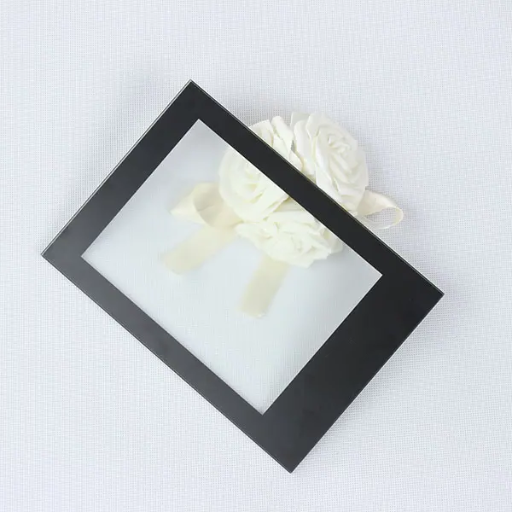
It is important to understand the surface finishes of AG glass, as the glass has a range of functions and thankfully, AG Glass has more than one purpose. Anti-glare glasses, which are commonly used in various displays, cables, and other electronic appliances, are components that provide comfort to users by performing relevant and desired functions. We may indeed combine clear covering and shading power in most products. However, what does characteristic gloss and haze to the AG surface denote? And what is their significance? In this article, the meaning of these components will be explored in depth together with their scope, ways of measuring them, and importance of such properties that determine their use. If you happen to be a technology concerned person, a designer of goods, or even an inquisitive one about the everyday things, this post will give you everything that you can to help you almost admire AG glass’ properties.
Understanding AG Glass

AG Glass is an abbreviation of Anti-Glare glass which is a material that reflects less of the light that shines on it. This is made possible by a particular surface treatment which diffuses the light that comes in thereby reducing the glare making it easier to see especially with much light coming in. By increasing the defined images while reducing the pressure on the eyes, AG glass can be found in uses such as cell phones, computer screens and other displays in which it is important to have each image clear and pleasing to look at, equipped with comfort in viewing.
Definition and Composition of AG Glass
Anti-Glare (AG) coated glass refers to the specialized glass to reduce surface light reflection and glare. Generally speaking, the solutions to this problem include special treatment of surface texture by applying a coating or etching to diffuse the incoming light, which is done in a way such that it does not create hard reflections that could interfere with the vision.
In most cases, AG Glass is made of clear toughened glass which has been chemically or laser processed to make it matte on its outer surface. This, apart from combating the glare, makes it scratchproof and renders it more efficient and rugged. More often rather than less, modern anti-glare glasses are integrated with anti-fingerprint and anti-smudge coatings to achieve a higher level of performance in the case of consumer electronics. It is conspicuously seen in display panes across mobiles, tablets, monitors, and optical devices where AG glass plays an integral role in increasing comfort to exploitation and aesthetic appearance of tastefully designed devices.
Types of AG Glass and Their Applications
Type 01
Etched Anti-Glare (AG) Glass
The glass with this feature tends to have a chemically or mechanically processed surface for the purpose of diffusing light. The aforementioned feature finds application in most touch-sensitive screens, displays used in monitors, as well as tablets, with an objective to omit the annoyance caused by excessive light and make reading possible even in glaring light.
Type 02
Coated Anti-Glare (AG) Glass
Coated AG Glass has very thin coatings applied to its surface. This type of glass is used in phone and laptop displays, car displays and many more owing to its high efficiency when it comes to cutting out reflection.
Type 03
Hybrid Anti-Glare (AG) Glass
It consists of a combination of base materials along with surface treatment and films. It finds applications in advanced screens, medical displays, and many other precision equipments where performance and strength are very necessary.
AG glass is designed for the sectors that require reflection control, improved noticeable images and increased obstacles thus materials are highly adopted in consumer electronics, automobiles and healthcare industries.
Importance of Gloss and Haze in AG Glass
The parameters gloss and haze play an important role in the applications of AG glass. Gloss is defined as the ability of the surface to shine or have a mirror look. It is also directly related to the amount of reflection. When the levels of gloss are managed appropriately, it is possible to minimize the distracting reflections of sunlight or other bright sources and make it possible to see the object or image on the AG glass in different lighting conditions including bright ones.
Important balance: There is a thin line here — if the haze value is very high many viewers will likely experience looking through milk as there is little clarity of the picture, whereas if the haze is very low then it will likely not be very effective in controlling the glare of the surface.
How well AG Glass functions varies across applications based on the gloss and haze amounts. The gloss and haze levels are tailored to suit the demands of industries such as consumer electronics, automotive and medical industries, where one requires certain functionality or appearance. Excessive versus inadequate levels of gloss and haze help create the desired balance between optimal glare control and readability while enhancing the display properties.
Gloss in AG Glass

What is Gloss?
Gloss describes how much light is reflected from a surface in a specific direction, simulating that of a mirror. In simple terms, it is the extent of how shiny a surface or material can be, depending on its texture, smoothness and other refractive properties it may exhibit. Surfaces that have high gloss levels will reflect light and appear shiny, in other words elegant and very polished; whereas low gloss surfaces create a flat appearance that does not have any shine due to the distribution of light over such a surface.
In the case of AG Glass, gloss is done in a very systematic way to strike a balance between clear sight and making it look good. Texture with gloss that is optimized for certain applications. For example, the elaborated controlled gloss level has been optimized for the demands of electronic gadgets’ displays, car screens, or even medical equipment. This skillful adjustment enhances the image while cutting down on glare, thus enhancing the entire experience to a great extent.
Measurement Techniques for Glass Gloss
Gloss measurement in glass generally requires special instruments called gloss meters that calculate the light beam reflected from the surface at certain angles, for example, 20°, 60° or 85° depending on the purpose. A 60° angular standard is widely accepted for measuring gloss on common surfaces, 20° for shiny surfaces, while 85° for dull surfaces which require a more sensitive gauge. Such instruments offer good accuracy and good repeatability, given in Gloss Units (GU) in most of the cases.
| Measurement Angle | Surface Type | Application |
|---|---|---|
| 20° | Shiny / High Gloss Surfaces | Premium display panels, polished glass |
| 60° | Common / Standard Surfaces | General-purpose gloss measurement standard |
| 85° | Dull / Matte / Low Gloss Surfaces | Anti-glare matte finishes, sensitive gauge measurement |
Further, gloss measurement is sometimes augmented by measuring the glass surface texture with the help of surface roughness testers as texture is a critical parameter influencing gloss. Some of the advanced methods include spectrophotometry, which is commonly employed in the analysis of antiglare (AG Glass) or other coated glasses, in abating the diffusion of light and in looking after the uniformity of gloss. These methods are utilized by the manufacturers to accomplish particular requirements while enhancing the surface finish for different purposes.
Factors Affecting Gloss in AG Glass
- 01
Surface Finish
The clarity of a smooth surface affects the finishing levels – the smoother the surface, the higher the gloss. - 02
Coating Type
The extent to which any kind of anti glare coating is applied helps reduce the gloss of a surface by making it impossible for light to go straight in. - 03
Light Diffusion
Diffused surface affects the gloss in a rather different way – the softer the diffused surface is, the less its gloss will be. - 04
Incidence of Light
When light is incident on a glass surface, it is usually more likely to cause reflection at some angles than others, while at other angles it causes considerably less gloss. - 05
Environment
Factors such as dust, moisture and erosion over time all can alter the characteristics of a surface, which in turn leads to the changes in gloss reading.
Haze in AG Glass
Understanding Haze and Its Significance
Haze in the Anti-Glare (AG) glass is the dispersion of light and can be seen every time one tries to transmit light through a glass or even when a ray of light is reflected after striking a glass. This is as a result of the presence of a rough texture on the glass which is meant to reduce the harsh effects of light by minimizing reflections. This helps better vision in such cases and also reduces eye fatigue.
Several recent surveys indicate the rise in the need for AG glass across different sectors particularly in consumer electronics, car displays, and the building industry. This is attributed to the fact that AG glass emulates its transparent counterparts but with less glare. For example, AG screens on smart devices such as cellphones and tablets are more readable during outdoor usage due to the bright sun; enhancing user experience is very important. The placement of haze and gloss levels is a purposeful design technique in product design since it creates an ideal aesthetic effect while maintaining functionality and optical qualities.
Measurement Techniques for Haze of AG Glass
Manufactured AG Glass quality is precisely checked and evaluated haze wise utilizing designed instruments with their accurate and replicable measuring protocols. The use of a hazy mirror is more popular, in which the longer proportional waves of the sample glasses are taken into accounts. This type of equipment includes a light source and a glass sample at the either end of the equipment and a detector at certain angles to measure the level of the scattering of the light.
ASTM
ASTM D1003 Standard
In most of the cases syllabuses like ASTM D1003 is used to define the process of taking measurements. The procedure in this standard measures the value of haze as the square root of the value of the ratio between the diffusion light and the transmitted light. For instance gloss meters can be used with the haze testing to determine a surface gloss of any AG Glass thereby providing its potential producers with preferable ratios of glare control and optical transparency. Such structured approaches have however enabled producers to stay in check when developing any glass treatment model designed and applied for specific purposes.
Influence of Surface Treatments on Haze
Surface treatments are very important in determining the haze levels of the anti-glare glass. The anti-glare coating is usually achieved by processes such as surface etching, chemical treatment, and the placement of a thin-film coating of low refractive index. These processes alter the microstructure of the glass surface to diffuse the incoming light and reduce glare. To a certain extent, the kind of surface treatment directly influences the haze — e.g. more aggressive etchings or texturing would increase the haze by scattering the light, affecting the optical clarity of the material.
The aim of manufacturers is to walk the tightrope between the reduction of glare and the smoothness of vision. For instance, applications in nanoparticulate technology or multilayer technology give finer control over light diffusing and minimizes smudging while still retaining clarity. Also, the material and method used greatly influence deterioration and evenness of the surface treatment, guaranteeing uniform performance in real applications like display panels and architectural glass.
Gloss and Haze Parameters of AG Glass

Key Parameters of AG Glass
| Parameter | Description |
|---|---|
| Gloss Level | The amount of scattered light from the glass surface is termed as the gloss level. A lower gloss level will reduce glare, enhancing visibility in bright environments. |
| Haze | This actually represents light scattering due to different surface tribulations. Balanced haze allows reductions in reflections but maintains clarity. |
| Surface Roughness | The feature essentially highlights two of the attributes, i.e. gloss and haze. Optimization of roughness allows for consistent anti-glare performance. |
| Transparency | That involves maintaining high optical clarity for glass applications where also its function depends, display-wise, like the windows. |
| Durability | Such resistance is to both wear and abrasion, promising functionality and appearance maintenance for longer periods in severe surroundings. |
Relationship Between Gloss and Haze
The relation between gloss and haze in anti-reflective (AG) glass mainly stems from the interplay with the light on the glass surface. Rather, gloss simply depicts the intensity that light reflects off a surface, with more gloss pointing to a smoother surface and more direct reflection of incident light. Haze, on the other hand, is intended to measure the light-scattering effects that arise when light hits the surface and passes through, reflected from within. All of this, however, should add up to render the anti-reflective type effective.
However, if the gloss becomes too high, this could inadvertently re-introduce some reflecting surfaces and decrease visibility under extremely bright conditions. When associated with a high-haze value, the latter could create a matte effect or interfere with the transmission of images or text. Optimization of these factors can be realized if surface texture can be engineered to scatter light (haze) and still be smooth enough to provide good visibility (gloss).
| Application | Gloss Requirement | Haze Requirement | Priority |
|---|---|---|---|
| Display Screens | Balanced | Some haze for anti-glare | High transparency + image quality |
| Automotive | Very Low | Some haze | Safety under varied lighting |
| Architectural | Very Low | Some haze | Visibility and minimal glare |
The right control of levels of gloss and haze and fine-tuning them will ensure that all of the scrolling functionality and user experience of AG glass can be properly increased in a wide variety of uses.
Gloss and Haze Standards in the Industry
Gloss and haze standards are critical in the AG glass industry and have been defined by several bodies to meet various application and industry requirements. Such standards assure consistency and reliability in the performance of these materials. Guidelines and methods attributed to the testing and measurement of the gloss and haze properties are provided by some well-accredited institutions, such as ISO (International Organization for Standardization) and ASTM International. As a rule, gloss is generally evaluated by gloss meters, in accordance with the specific angle incident on the sample surface (20°, 60°, or 85°), while haze levels are rated by a transmission meter for the quantification of light scatter.
The latest data indicates battery day’s trending for the custom gloss and haze AG glass in context — that this is now on demand in highly emerging technologies such as AR headsets, electric vehicles, and energy-smart buildings. For example, AR headsets need a greater haze for enhancing image contrast with dimming glares. This type of AG glass with optimized gloss is always also advantageous when one looks at aesthetics and at the same time energy efficiency.
Manufacturers are enjoying new projects such as etching and coating to come out up with the AG glass that can not wait for the industry-proposed standards: investigations and potential testing of standards — and neither fails in its challenge to relate to faithful customer demand and progress in technology by bringing a new dimension being product design.
Advanced Applications of AG Glass

Reference Sources
-
Novel Manufacturing Process for Anti-Glare of LCD Cover and Development of Haze Model – Discusses the development of haze models and gloss properties for anti-glare LCD cover glass.
-
Durable, Superhydrophobic, Antireflection, and Low Haze Glass Surfaces Using Scalable Metal Dewetting Nanostructuring – Examines haze and gloss measurements for advanced glass surfaces with antireflection properties.
-
Haze Model and Dispersion Control for LCD Antiglare Cover Glass by Silk-Screen Printing Method – Focuses on haze control and surface roughness for tempered anti-glare glass.
-
Physical and Optical Properties of Sol-Gel Nano-Silver Doped Silica Film on Glass Substrate – Investigates the optical properties, including gloss and haze, of nano-silver doped silica films on glass.
- AG Glass
Frequently Asked Questions
AG Glass — Gloss, Haze & Optical Properties