Get in Touch with Saiweiglass


Custom Optical Lens Manufacturing Process

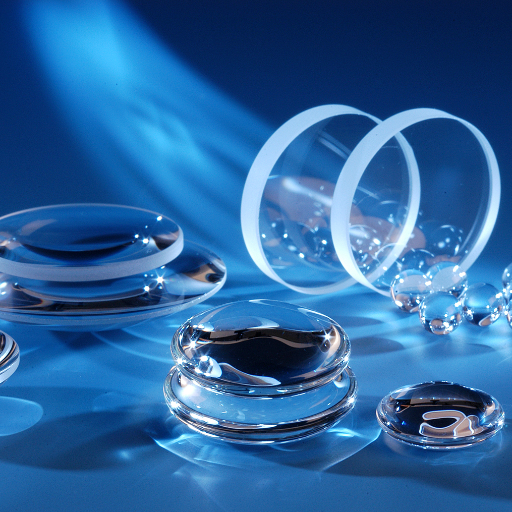
The creation of personalized optical lenses demands precise engineering work together with advanced technological systems and skilled expert craftsmanship. These lenses provide essential support for scientific research purposes and medical instrument development and advanced optical system design work. The blog post will provide readers with a comprehensive overview of the custom optical lens production process which reveals how these vital components are created according to specific requirements. The process begins with concept development and material selection and ends with quality control implementation which ensures that every phase of development results in lenses that achieve maximum innovative and functional capabilities.
Introduction to Optical Lens Manufacturing
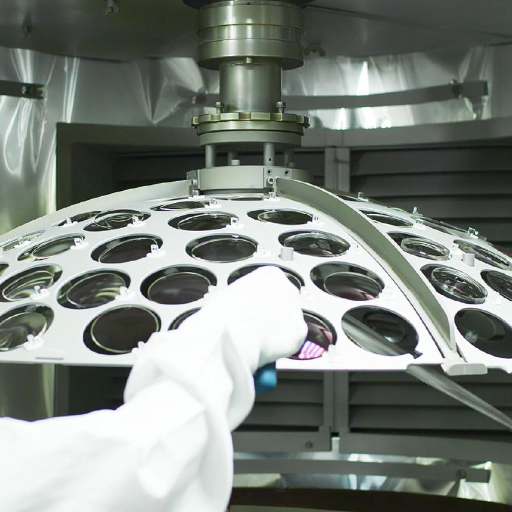
Optical lens manufacturing involves creating lenses which fulfill specific optical requirements through their design and production processes. The process begins with selecting high-quality materials which include glass and plastic materials that skilled workers use to create exact curved and dimensional specifications through shaping and polishing techniques. The manufacturing process uses advanced computer-controlled systems which guarantee accuracy during the entire production process. The coating application process improves lens performance through the implementation of anti-reflective features and UV protection capabilities. Strict quality control procedures which operate during every production stage guarantee that the final product will meet established standards for both clarity and operational performance.
Overview of Optical Lenses
Optical lenses serve as essential elements that enable light control through their ability to focus and spread light, which creates specific optical results. Lenses need glass or plastic materials because manufacturers design these materials to suit particular needs in vision correction and imaging and scientific instrument applications. Lenses are designed with various shapes, including convex, concave, or aspheric, to control how light rays converge or diverge.
The operational capabilities of manufacturing methods which use high precision together with advanced coating technologies have shown improvement through their implementation. The coatings maintain their protective function through multiple layers which include anti-reflective coatings and ultraviolet shielding and scratch-resistant materials, thus enabling the product to withstand damage while delivering unbroken visual clarity. Optical lenses serve essential functions in multiple industries, including healthcare, photography, telecommunications, and research, which support technological progress throughout various sectors.
Importance of Precision in Lens Manufacturing
Optical systems require lens manufacturing to achieve high precision because it serves as the foundational requirement for their optimal performance and superior product quality. Lenses require precise specification usage which enables them to achieve accurate light focusing while preventing any form of distortion or aberration. The lens function operates throughout various industrial sectors which include healthcare and scientific research because even small defects have major effects on performance.
The manufacturing process for lenses needs to achieve high precision standards which determine how well imaging systems produce clear and trustworthy results. The medical industry depends on specific lenses to improve medical diagnosis through their use in microscopes and surgical instruments. High-performance lenses enable telecommunications companies to transmit data without interruption while photographers and cinematographers use them to create clear and high-quality images.
Lens production requires strict adherence to advanced manufacturing techniques which include computer-aided design (CAD) and precision machining. The application of advanced coating technology combined with strict tolerances allows manufacturers to create lenses which demonstrate both extended product lifespan and increased operational performance. The technology requires this precision to meet contemporary requirements which multiple industries depend on for their progress.
Applications of Custom Optical Lenses
- Medical Devices: Endoscopes and microscopes and laser surgery systems depend on custom optical lenses which function as essential components for their precise imaging and treatment capabilities.
- Aerospace and Defense: The lenses are designed for use in targeting systems and surveillance equipment and navigational tools which need to operate accurately and reliably under difficult conditions.
- Consumer Electronics: Custom lenses improve image quality and user experience in handheld devices which include smartphone cameras and augmented reality (AR) systems.
- Scientific Research: Optical lenses function as essential components in telescopes and spectrometers and other analytical instruments that enable scientific advancements in both astronomy and biology.
- Industrial Automation: High-performance lenses are integrated into machine vision systems which enhance accuracy and efficiency during quality control and robotics operations.
Lens Design Phase
Understanding Lens Specifications
The lens specifications need to be understood because they determine the lens’s ability to work properly in its intended use. The main specifications that need to be examined include the following:
Focal Length: The lens’s magnification and field of view get determined by this measurement. The field of view becomes wider when users choose shorter focal lengths but users can see distant objects better through longer focal lengths.
Aperture: The lens’s light gathering capability gets measured through its f-number system which serves as the standard. A lower f-number indicates a larger aperture which permits more light intake while enhancing performance during low-light situations.
Lens Coatings: The coatings decrease reflection and glare while the coatings enhance light transmission which results in sharper image quality.
Material and Durability: The choice of lens material determines its optical quality and weight while its capacity to withstand temperature and humidity conditions gets determined by its environmental resistance.
The evaluation process of these specifications allows users to choose the correct lens which meets their particular requirements while providing maximum performance.
Utilizing Software for Optical Design
The use of software in optical lens design works as a fundamental requirement to achieve both precise results and effective operations. Engineers and designers use optical design software to simulate light transmission through lens systems which allows them to verify the system’s optical performance requirements. The tools create precise system models which scientists use to forecast optical defects while they search for methods to improve visual output before creating any tangible models. The process leads to time savings and expense reductions throughout development work.
Optical design software provides their main functions through three components which include ray tracing and optimization algorithms together with tolerance analysis. Designers use ray tracing to recreate light movement through a lens system which shows them how light interacts with different surfaces and materials. The optimization tools help designers adjust their design parameters until they achieve the expected lens performance across multiple operational scenarios. Tolerance analysis guarantees that manufacturing defects will stay within defined limits which enables the product to deliver dependable performance.
Engineers use optical design software to efficiently solve problems related to chromatic aberration correction and light transmission enhancement and distortion reduction. The software solutions serve as a crucial foundation for designing lenses which professional photographers and scientists use in their work through photography and microscopy and scientific research. Virtual design testing and simulation capabilities make the software essential for contemporary optical engineering operations.
Collaboration with Clients for Custom Solutions
The lens design process requires client collaboration because it helps designers create products which meet exact application requirements and performance standards. Designers obtain essential information about user needs and environmental factors and required optical performance from their direct client interactions. The team develops special solutions through their collaborative work which supports multiple sectors including healthcare and aerospace and consumer electronics. The partnership uses modern optical design systems together with cutting-edge technology to achieve full operational capacity and exact precision.
People want to know about the procedure which optical engineers use to create custom lens designs which meet client needs. Engineers use advanced simulation software together with an iterative design process to develop their response. Engineers develop lenses which fulfill their stringent requirements by using data analysis combined with potential issue prediction and client feedback assessment. The method guarantees technical effectiveness while it builds strong client relationships which result in client satisfaction.
Production Process of Optical Lenses
Materials Used in Lens Manufacturing
Optical lenses are primarily manufactured using glass and plastic, each material selected because it possesses distinct characteristics. Glass is valued for its high clarity, durability, and optical precision, which makes it a suitable material for creating high-performance lenses. Plastic materials especially polycarbonate and CR-39 provide advantages over plastic because they weigh less and resist impacts better while being more affordable, which makes them perfect for use in regular eyewear and safety gear. The selection of material needs to be based on its planned application because different materials provide various benefits in terms of weight and durability and their ability to deliver specific optical performance requirements.
Steps Involved in Lens Production
- Material Selection
The process starts with material selection which requires choosing between glass and plastic based on the lens’s needed optical characteristics and its intended use. - Cutting and Shaping
The raw material gets cut into a rough shape which the workers will later turn into a complete lens through polishing and refinement. - Grinding
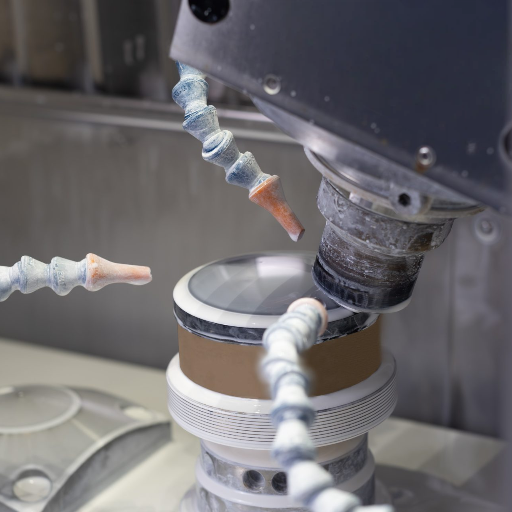
The specialized grinding machine shapes the lens according to its required curvature which ensures that the lens meets its prescribed specifications and delivers its intended optical functions. - Polishing
The lens surface undergoes polishing to achieve optical clarity while removing the remaining defects from the grinding operation. - Coating Application
The lens receives multiple coatings which include anti-reflective and scratch-resistant and UV-protection coatings to improve its operational capabilities and its ability to withstand damage. - Quality Inspection
The inspection process examines each lens to confirm its precise optical measurements and visual clarity and its adherence to established optical standards. - Edging
The lens gets cut according to the exact dimensions of the frame which will be used to achieve an accurate fitting. - Final Cleaning and Packaging
The lens undergoes cleaning and packaging processes to prepare it for use in eyewear and other optical instruments.
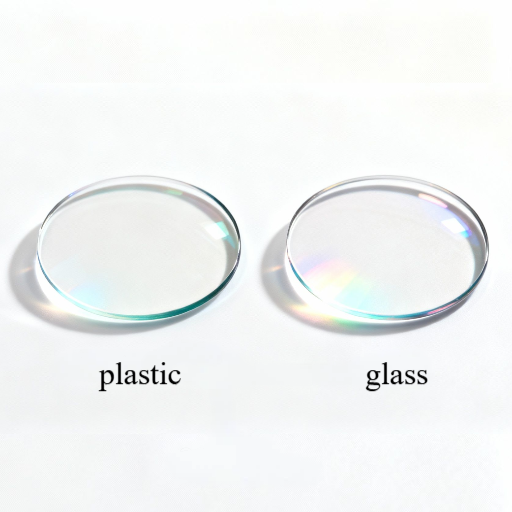
Types of Lenses: Glass vs. Plastic
Glass and plastic lenses differ in terms of weight, durability, clarity, scratch resistance, and UV protection.
| Parameter | Glass | Plastic |
|---|---|---|
| Weight | Heavier | Lightweight |
| Durability | Fragile | Impact-proof |
| Clarity | High | Moderate |
| Scratch Resist. | High | Moderate |
| UV Protection | Needs coating | Built-in often |
| Cost | Expensive | Affordable |
This concise comparison provides a quick overview for selecting the lens type best suited to your needs.
Fabrication Techniques

CNC Machining for Precision Grinding
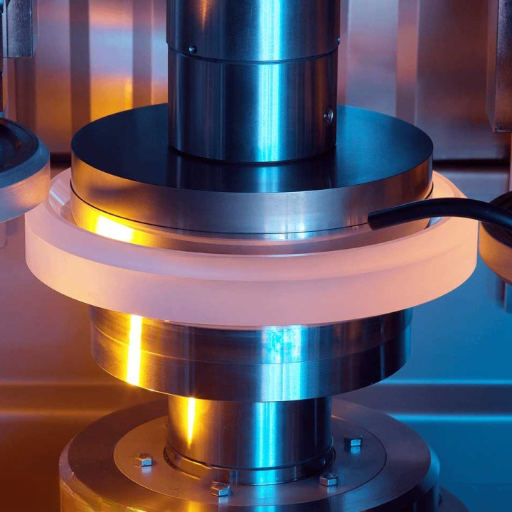
CNC (Computer Numerical Control) machining has revolutionized the optical lens grinding process through its ability to deliver exceptional precision and efficient performance. CNC machining achieves microscale precision through its combination of advanced software and automated tools which meet the demanding requirements of high-performance optical components. The process operates as a fundamental requirement for aerospace and medical device and consumer electronics industries which depend on precise optical performance and detailed product specifications.
CNC machining plays a critical role in producing high-quality optical lenses by automating the grinding, polishing, and shaping stages with extreme precision. This technology establishes uniformity between different lenses while decreasing the possibility of human mistakes which becomes vital during production. The CNC systems demonstrate their operational ability to handle various materials including glass and plastic which enables their usage in different industrial settings. The implementation of real-time data feedback systems through these machines improves quality control while decreasing waste and production time which meets industry requirements for sustainable and efficient optical manufacturing processes.
Polishing for Optical Clarity
The process of polishing lenses enables their transformation into optically clear objects. The process uses fine abrasives to eliminate defects which leads to the final development of the lenses complete surface and optical attributes. The surface must be created in such a way that light travels through it without any scattering or distortion which guarantees the lens will achieve the necessary standards for both optical clarity and functional performance.
The polishing process needs to maintain its exactness during all stages of work. Polishing methods use soft materials such as polishing pads together with fine abrasive materials in a slurry. The materials function to gradually eliminate surface defects until they achieve a transparent and smooth result. The process needs to operate under strict guidelines because excessive polishing will create lens shape changes which result in optical performance problems.
The achievement of optical clarity requires both the lens material selection and the specific requirements of the application to be taken into consideration. The glass optical lenses require a different polishing method when compared to plastic optical lenses. Polishing procedures need to deliver consistent results because they directly impact the lens performance which will be used in consumer products and scientific tools and industrial machinery. The correct polishing process allows lenses to function as designed while remaining dependable and lasting through time.
Coating Applications and Their Benefits
The application of optical lens coatings enables lenses to achieve improved performance together with extended durability because the coatings enhance light transmission while decreasing glare and building reflective surfaces. The industry uses two main types of coatings, which are anti-reflective (AR) coatings that enhance visual clarity while decreasing eye fatigue and scratch-resistant coatings that protect lenses from everyday wear and tear. The UV-protective coatings safeguard lenses against harmful ultraviolet radiation which extends their operational life while protecting users’ eyesight. The different lens coating technologies provide essential support for various fields which include eyewear and photography and scientific research and industrial operations because the coatings enable lenses to function at their highest performance level across multiple environments.
Benefits of Custom Optical Lenses

Enhanced Performance and Durability
The performance and durability of custom optical lenses provide major benefits to users who choose this technology. The specially designed lenses produce better optical results which enable users to reach their desired performance. The customization process enables users to achieve better focus results and decrease distortions while obtaining specific requirements that apply to both personal glasses and sophisticated scientific equipment.
Custom optical lenses provide users with a second major advantage which stems from their extended lifespan. The production of these lenses utilizes premium materials and coatings which improve their capacity to withstand scratches and impacts and environmental degradation. The lenses maintain their optical performance because of their ability to withstand extended usage in extreme conditions. The specialized protective coatings which can be applied to the products help extend their useful life while decreasing the need for product replacements and reducing upkeep expenses.
Custom optical lenses use custom design and strong building methods to create solutions which achieve both durability and dependable results. The equipment serves as an ideal solution for people and institutions who require high-quality results at a reasonable price for their industrial work and medical equipment and daily needs.
Compatibility with Specialized Applications
Custom optical lenses serve specialized applications through their design which achieves precise operational performance requirements. The technology can be customized to support applications in medical imaging and scientific research and aerospace systems and advanced manufacturing. The lenses provide exceptional flexibility because they can connect with different devices while their performance remains at peak efficiency. The system delivers accurate results which remain constant across different operational environments, making it essential for use in both professional and industrial environments.
Cost-Effectiveness in Custom Solutions
Custom optical lenses provide significant cost reductions through their ability to enhance operational efficiency which leads to increased productivity. The initial cost of custom lenses appears higher than standard products but their design enables users to meet specific needs without needing extra changes or extra parts. The customized solution establishes operational efficiency through its specialized design which decreases expenses while creating greater business value. Current data trends show that recent material developments and manufacturing technology advancements have made custom lens production more affordable and accessible to various customers. Custom optical lenses provide businesses with better performance results while keeping their expenses within approved limits which makes them a cost-effective choice for various high-precision industries.
Reference Sources
-
3D Printing Customized Optical Lens in Minutes: Discusses advancements in 3D printing technology for rapid production of customized optical lenses, achieving significant speed improvements.
-
System for the Design, Manufacture, and Testing of Custom Lenses with Known Amounts of High-Order Aberrations: Focuses on a closed-loop system for designing and testing custom lenses, ensuring precision in vision correction.
-
Improving Lens Performance Through the Most Recent Lens Manufacturing Process: Examines the latest advancements in lens manufacturing processes, focusing on performance improvements.
-
Lens Factory: Automatic Lens Generation Using Off-the-Shelf Components: Explores cost-effective methods for lens manufacturing, relevant for custom optical applications.
- Optical Glass Solutions
Frequently Asked Questions (FAQs)
What is the lens manufacturing process for precision optics?
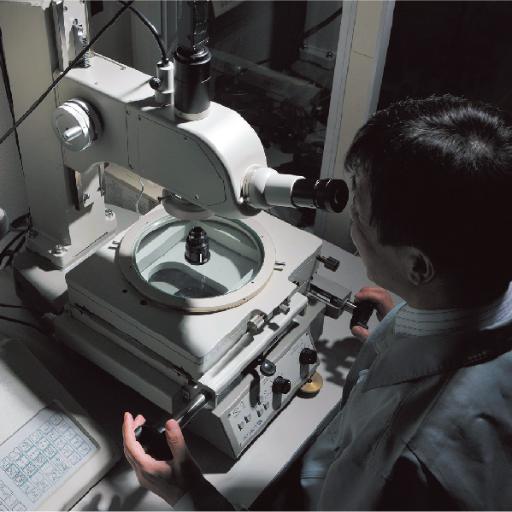
The lens manufacturing process for precision optics starts with design activities and material selection activities because optical materials get selected through the process of choosing between glass lens blanks and polymer substrates according to their specific wavelength and optical power and environmental needs. The manufacturing process begins with rough shaping before proceeding to the grinding and polishing which creates the required front and back surface shapes while using metrology tools such as interferometers and interferometry to verify surface quality and measure dimensional attributes. The process uses CNC machining centers and diamond turning for aspheres and ultrasonic cleaning to guarantee that every lens achieves its specifications before the coating procedure and complete evaluation.
How are lenses made: from semi-finished blanks to finished lenses?
Lenses begin their manufacturing process through the use of semi-finished blanks and molten glass which gets cast into a mould for specific optical materials. The manufacturing process begins with one surface formation during the semi-finished stage; this stage continues to manufacturing through edge grinding and lens surface grinding and polishing before the lens goes through centering process and lens retention through threaded retaining rings or holders. The lens undergoes testing for optical power and dimensional tolerances after its surface has been coated and an interferometer inspection checked its optical surface and residual stress until the lens reaches completion.
What role does grinding and polishing play in optical manufacturing?
The manufacturing process requires grinding and polishing because these processes help achieve required surface quality results together with producing spherical and aspheric profile shapes. Coarse grinding removes excess material to create an approximate shape which requires fine grinding and polishing to decrease surface roughness while eliminating subsurface damage. The polishing process for precision lenses together with interferometry testing confirms that the optical surface of the lenses meets requirements which include surface figure specifications and depth of field requirements and low scatter specifications. Natural diamond tools and diamond turning provide solutions for creating better surface finishes on infrared and visible optics through their ability to handle difficult geometries and hard materials.
How are bifocal and single vision lenses manufactured differently in lens production?
Different methods exist for making bifocal lenses compared to single vision lenses throughout their manufacturing process. Bifocal lenses need extra processing because they need to combine two different optical powers within one lens. The process uses two distinct methods which require both precision machining and molding to create segmented regions and the post-processing techniques require existing frames to have reading glasses installed. The manufacturing process requires surface adjustments to create correct optical power transitions which maintain surface quality and correct lens positioning in frames while metrology verification ensures that each lens meets visual performance criteria.
How do manufacturers inspect and ensure that each lens meets specifications?
The inspection process allows manufacturers to check whether each lens meets the required specifications through multiple usage of metrology instruments which includes interferometers for measuring optical surface figure and profilometers for assessing surface roughness and dimensional gauges for checking thickness and diameter. The tests assess three aspects which include optical power and polarization and residual stress alongside visual inspection of surface defects and environmental testing of coating adhesion. Quality control protocols ensure that every lens, including precision lenses and complex optics, passes criteria before release, and traceability records document the process of manufacturing for each individual lens.