Get in Touch with Saiweiglass
Glass Edge Grinding & Polishing Solutions
Get in Touch with Saiweiglass
Glass edge grinding offers a cost effective fabrication method for shaping and finishing the finished edge of a cut piece of glass. After the glass has been cut to dimension, the cut edges will be extremely sharp and can be vulnerable to breakage due to microcrack formation. The grinding process smooths the edge, enhances the shape of the edge, and provides a safer, smoother finish to the cut piece.
In the production of deep processed glass, the edge grinding has 3 primary purposes; to remove micro-crack formation at the cut edge that can propagate during a subsequent heat processed operation such as strengthening or tempering. To ensure tight dimensional tolerance is achieved and lastly to provide a prepared surface for the downstream operation such as silk-screen printing, coating or lamination.
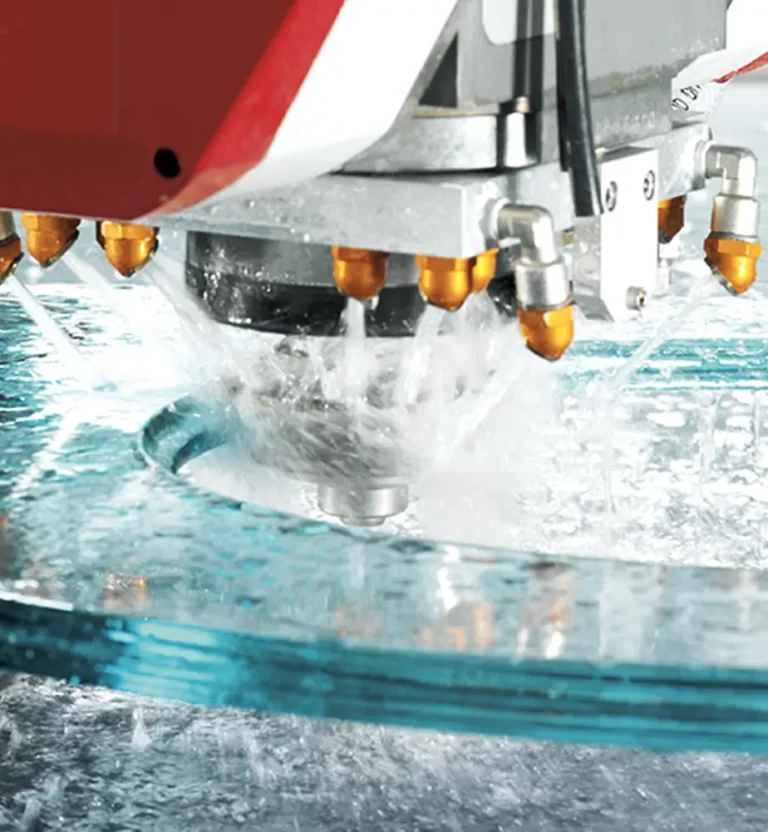
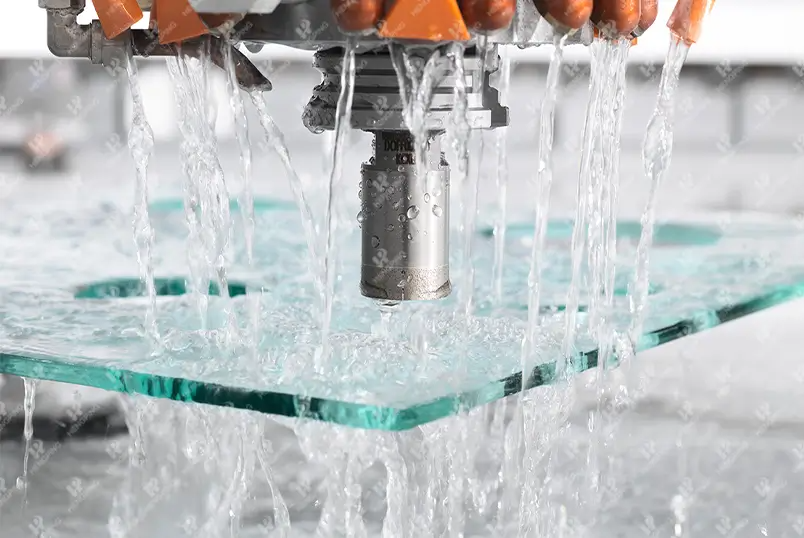
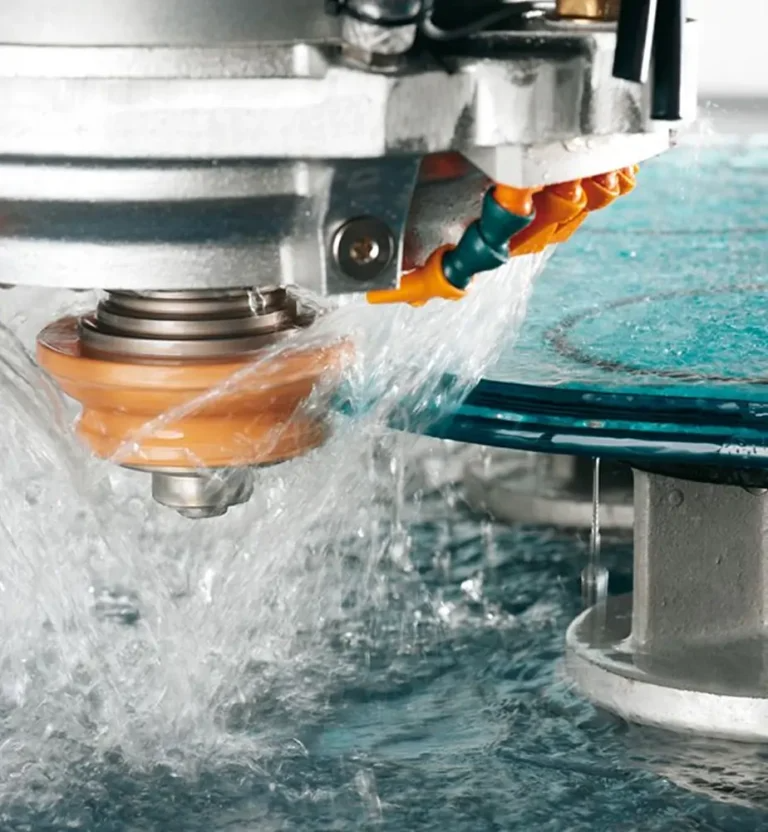
At its core, this operation relies on a CNC glass dual edge grinder. This precision CNC machine has a series of diamond grinding wheels. Coarser grit wheels (60-180) will be used initially to shape the edge at high material removal, followed by a series of finer wheels (240-600) to produce a smoother finish, finally polishing wheels will be used to produce a transparent or reflective glossy edge. A constant supply of water will be fed across the length of the grinding wheels, to keep the glass and diamond wheels cool and prevent thermal shock, critical to both the life of the grinding wheels, and to the integrity of the finished glass. Unlike most other glass processing equipment dual edge grinding machines will run 2 edges of the glass simultaneously, typically across a longer dimension. Current production speeds from our processing lines range from 2 m/min up to 8 m/min depending on the thickness of the glass and degree of edge finish required.
If you are buying cover glass for consumer electronic products, industrial controls, or medical instruments then the quality of the edge will have an impact on the reliability of the end product. Excessively ground, fractured edge chips will provide a starting point for cracks under thermal shock or mechanical loads. In the 1 million+ cover glass pieces we process each year we have observed that 70%+ of the failures seen in the field are directly attributable to a fault in the edge of the screen – a poorly ground bevel, gouge, or a fractured edge chip. We believe there should be no compromises with the edge quality of a structural safety critical component.
Choosing the right product type of edge finish will depend on the location of the edge in the end product, the environment in which it will be used and your budget constraints. Please find below a simplified graphic, with explanatory notes to detail some of the options that are available from our deep processing lines.
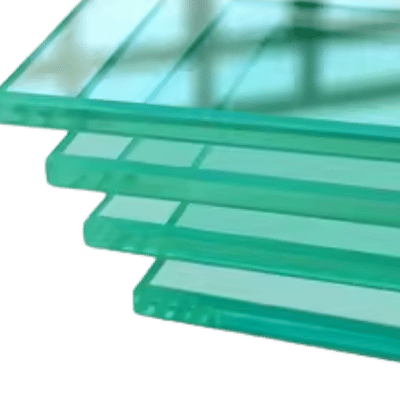
This is the simplest available and cheapest finish. This lightly ground 101 of the edges left after cutting removes the remaining glass burrs and reduces the sharpness of the edge. This produces a slightly frosted appearance and a safe to handle finish.
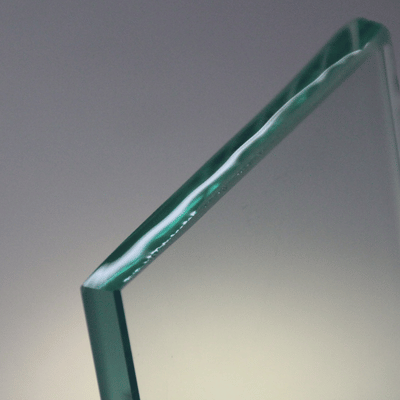
A flat polished edge has a smooth, shiny face ground perpendicular to the glass face. A thin chamfer is ground along the top and bottom edges of the face to eliminate sharp edges and create a sleek complete look.
A pencil polish creates a edge that is slightly rounded in – shape similar to the mark of a pencil. This is a softer finish than a flat polished edge and removes sharpness all the way around the face.
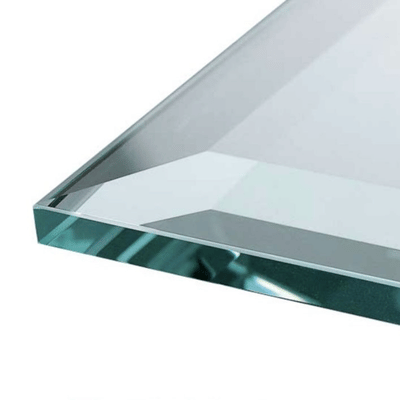
A bevelled edge is ground at an angle (roughly 10 to 45 degrees) creating a sloping glass face that reflects light very nicely. Bevel width depends on the glass thickness.
A chamfer is a small, angled – cut at the top and bottom edges of the glass face at roughly 45. This provides a small amount of edge protection during assembly, though is functional rather than decorative in most instances.
An ogee is a fancy edge that has a defined s-shape profile – a concaving forming into a convexing. A very attractive edge profile, this finish is commonly applied to thick glass panels or table tops. It is polished using custom shaped diamond wheels.
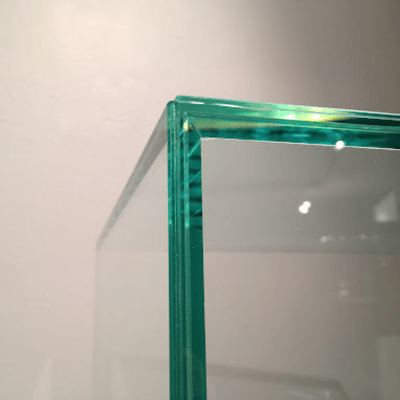
A 45 degree ramp across a joined glass will produce a crisp 90 corner, perfect for frameless glass casings.
An arrised edge produces a minimally finished result, consisting of a fast pass with a fine grinding wheel to take the edge off rather than define a specific profile. In between a raw cut edge and a seamed one.
| Edge Type | Appearance | Cost | Best For | Exposed Edge? |
|---|---|---|---|---|
| Seamed | Frosted, matte | $ | Framed panels, hidden edges | No |
| Flat Polished | Smooth, glossy | $$ | Tabletops, shelves, display panels | Yes |
| Pencil Polished | Rounded, smooth | $$ | Mirrors, shower glass, cover glass | Yes |
| Beveled | Angled, refractive | $$$ | Decorative mirrors, furniture glass | Yes |
| Chamfered | Small angle cut | $$ | Cover glass, optical components | Both |
| Ogee | S-curve, elegant | $$$$ | High-end tabletops, countertops | Yes |
| Mitered | 45° angle, joint-ready | $$$ | Frameless enclosures, display cases | Yes (at joints) |
| Arrised | Minimal, light grind | $ | Transport safety, temporary handling | No |
Although these terms are often used interchangeably, grinding and polishing are two steps in the finishing process that require different skills and equipment. Knowing the difference allow you to make cost-effective decisions in your project.
| Characteristic | Edge Grinding | Edge Polishing |
|---|---|---|
| Purpose | Material removal, edge shaping | Surface refinement, clarity |
| Diamond Wheel Grit | 60–180 grit (coarse) | 240–800+ grit (fine) |
| Surface Appearance | Frosted, matte (ground finish) | Clear, glossy (polished finish) |
| Dimensional Control | Primary step for sizing | Minimal material removal |
| Processing Speed | Faster (aggressive removal) | Slower (fine finishing) |
| Wheel Type | Metal bond diamond wheels | Resin bond diamond or polishing wheels |
| When to Use | All glass edges need grinding at minimum | Only when a glossy, transparent edge is required |
On a fully automated edge grinder, grinding and polishing works by passing a panel through a progression of wheels, each designed to accomplish a specific task. Steel grit metal bond wheels will normally be used for the initial 2 or 3 steps and may be followed by a middle grade wheel. The final stages will involve a resin bond polished wheel that impart a near – flawless finish to the edges.
No all projects need expensive polishing. For windows that will be hidden once installed (say a end-closed framed system), a ground edge is perfectly suitable and saves you time on the finishing process. We get many first time customers ask for polished edges that are not necessary, then later tell us that 60% of the rest of their order were hidden edges that could have been ground instead. Asking advice during your quote can save you considerable money with no difference in finished appearance.
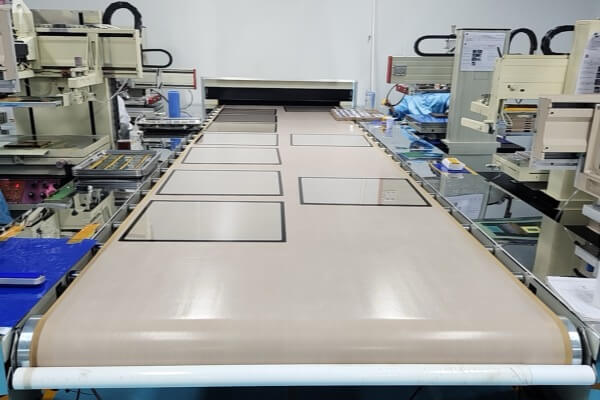
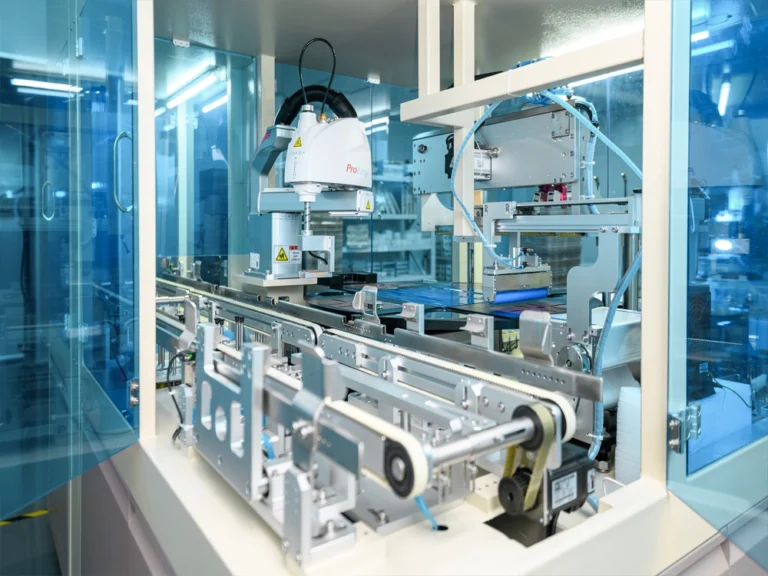
We maintain 3 production factories (Dongguan (Headquarter), Heyuan and Henan) with over more than 100 Cutting, CNC Grinding and Polishing Automated Machines to provide an annual of over 1,000,000pcs edge processed cover glasses.
| Equipment Type | Capability | Precision |
|---|---|---|
| Double-Edge Grinding Machines | Simultaneous processing of two parallel edges; supports flat, pencil, and seamed profiles | ±0.1mm |
| CNC Profiling Machines | Complex shapes including circles, ovals, irregular contours; chamfering, beveling, ogee | ±0.05mm |
| Straight-Line Edging Machines | High-speed processing for rectangular panels; flat polish and pencil polish | ±0.1mm |
| Beveling Machines | Precision bevel grinding at controlled angles (10°–45°); single and double bevel | ±0.15mm |
Our diamonds grinding wheels and machine parameters are set to ablate different glass substrates. Not all glass are same in hardness and brittleness. Clamping and feed rates may need to be customized per material type for optimal from whether chip-free edges.
General purpose, Float Glass for appliances, luminary and general cover applications.
High transmittance (.gtoreq. 91%) available for high quality display applications.
Chemically Tempered (strengthened), for touch screen and mobile product covers.
Specially toughened glass (0.4mm-2mm), fragile but thin protective cover to high-value electronics and appliances.
Heat resistant glass for laboratory and industrial equipment.
Cover glass for touch screens requires a precision edge prior to chemical strengthening. End finishes applied to a piece of cover glass can be cosmetic, but not just to the human eye. It directly influences the panel’s post-strengthened mechanical strength, seal integrity in an assembly, and even the final optical clarity.
Different cover glass applications such as consumer electronics usually use thin (~1-3 mm thick), rectilinear size (<15" diagonal) and hard-glass (chemical strength) panels. In conventional cover glass, chemical strengthening forms the necessary compressive stress atop all panel surfaces after ion exchange against a hot-potassium nitrate salt bath. Microcracks or nicks left from abrasive edge grinding concentrate the stress at weaker points of the panel on strengthening and result in failure. In cover glass manufacturing, tolerances on these edges are far tighter vs. standard glass architecural and furniture applications.
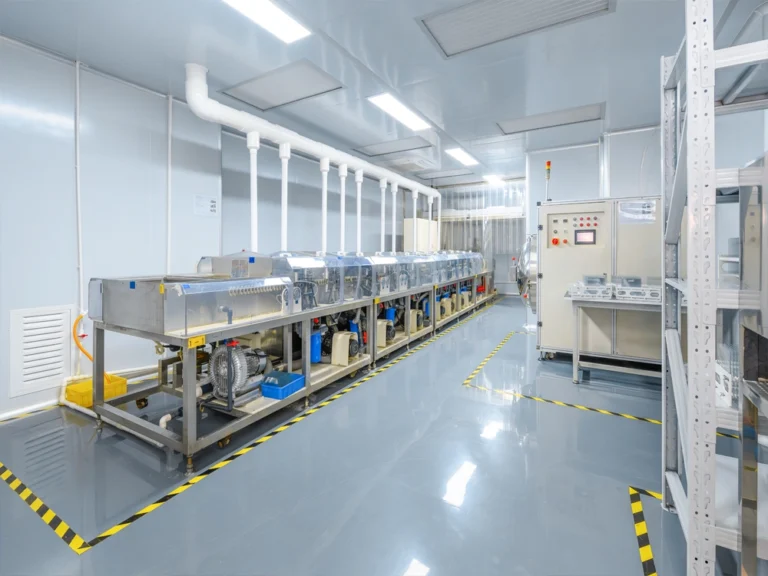
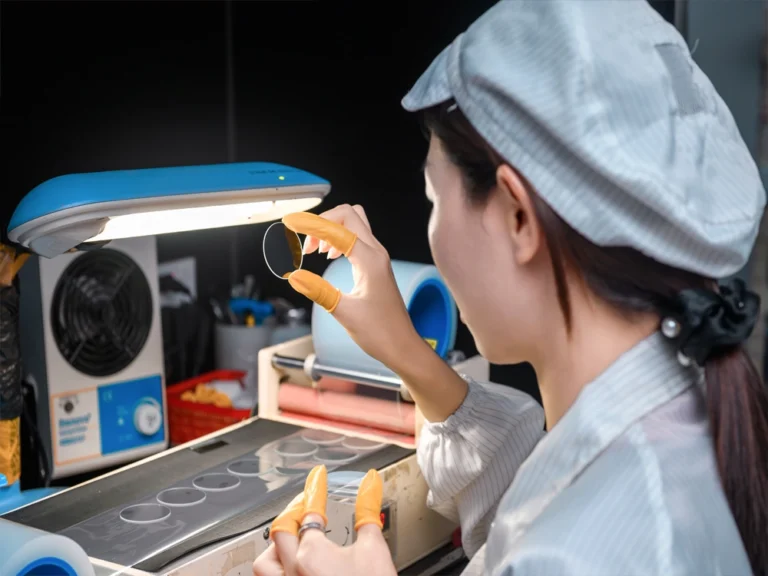
At SW Glass, our CNC profiling machines use very specific routine for cover glass edge grinding. In particular, we slow the feed rate (~0.8-1.5 m/min) down relative to routine processing of heavier, more ductile aluminosilicate or Gorilla panels. This minimizes the extraction of microcracks along the working edge. All panels are subjected to a final quality inspection and verification in a class 1000 cleanroom before chemical strengthening.
Edge grinding is an integral process in all industries processing fabricated glass products. Each industry has different requirements for edge type, tolerance, and optical finish. Here are the industries we provide and how it relates to edge grinding.
Appliance, PLC Displays, CNC machine interface panels. Chemical strengthened premium cover glass with Flat or Pencil polished edges 7″-21.5″ diagonals. Toughness and size stability are critical to operation during industrial use in manufacturing environments.
Medical displays and cover glass for patient-monitoring, diagnosis, imaging. Medical biocompatibility certification will be granted for these edges and panels. Anti-glare (AG) etching processes can be combined with precision edge grinding. See SW Glass medical device biocompatibility results.
Dashboard displays, instrument cluster cover glass, infotainment panels. Edges must resist vibration, thermal cycling (-40C to +85C), and UV. Usually chemically strengthened aluminosilicate glasses with tight edge tolerances, AG/AR/AF coating after edge working.
Fighter jet command displays, handheld controller touch screens, avionics panels. Expect the tightest tolerances to specification – 0.05mm edge tolerance, zero-defect chip-free edges, necessarily ITO coating applied in the back end. These applications employ specialist glass substrates processed under rigorous quality systems.
Wall switch panels, smart lock displays, thermostat cover glass, socket panel glass. Finely silk-screen printed on toughened glass with seamed or pencil polished edges. These volume driven products arrive with a range of customer-specific shapes, cut-outs, textured backgrounds and multi-colored graphic printing.
Coffee machine panels, oven doors, heater controls, sanitary equipment displays. Physical tempering (for heat resistance) or chemical strengthening, glossy or pencil polished edges. Our technical partnership with SEB Group (parent of Tefal/Supor, Fortune Global 500) is evidence of our capabilities in this segment.
LED wall washer lenses, garden lamp covers, pool light glass, buried light panels. Extra-clear low-iron glass with high temperature silk screen printing. Edge grinding creates sealed ingress-proof profiles – round step glass with accurate diameter control for sealed luminaire lighting.
ATM displays, self-service kiosk panels, POS terminal cover glass. require AF coated glass with tough pencil polished edges to survive general public handling. Normal thickness 2.0mm to 3.0mm soda lime, aluminosilicate.
Edge quality is measurable, testable, certified against international standards. Every batch dispatched at SW Glass undergoes a strict quality inspection protocol. Here are the standards and tests which determine our edge grinder quality.
Quality Management System certification covering all glass processing operations
EU toughened safety glass certification – fragment count, edge quality, surface stresses
Third-party testing for glass composition, strength, and dimensional conformity
Appliance group scope of manufacturing approval from Fortune 500 company (Tefal/Supor group)
| Inspection Item | Method | Acceptance Criteria |
|---|---|---|
| Dimensional Accuracy | 2D coordinate measuring machine | Within specified tolerance (±0.05mm to ±0.1mm) |
| Edge Chip Detection | Visual inspection under 800-lux lighting at 30cm distance | No chips >0.3mm in Zone A (viewing area); no chips >0.5mm in Zone B |
| Surface Roughness | Roughness tester (Ra measurement) | Ra ≤0.4μm for polished edges; Ra ≤1.0μm for ground edges |
| Edge Straightness | Optical comparator / profile projector | Deviation ≤0.1mm per 100mm |
| Strength (Post-Tempering) | Four-point bending test / drop ball test | Per EN 12150-1 or customer specification |
| Chemical Strengthening Verification | Surface stress meter (CS/DOL measurement) | CS >450 MPa, DOL >8μm |
Our inspection methodology adopts a multi stage process: incoming batch raw material check post-cutting dimensional check postgrinding edge inspection post-tempering/stress test inspection final cleanroom visual inspection vacuum packaging. Each stage specifies defined pass/fail criteria and is documented in our ISO 9001 quality manual.
Glass edge grinding forms only one stage in SW Glass’ complete glass deep processing production line. Understanding full process flow is key to appreciating our grinding process sequence and why you may not reverse your finishing processes without causing damage to the glass.
Automated cutting lines score and break glass sheets to size
Diamond wheel grinding shapes edge profile to specification
Precision holes and cutouts for sensors, buttons, connectors
Fully automatic 10-tank ultrasonic cleaning line removes grinding residue
Physical tempering (≥3mm) or chemical strengthening (thin glass)
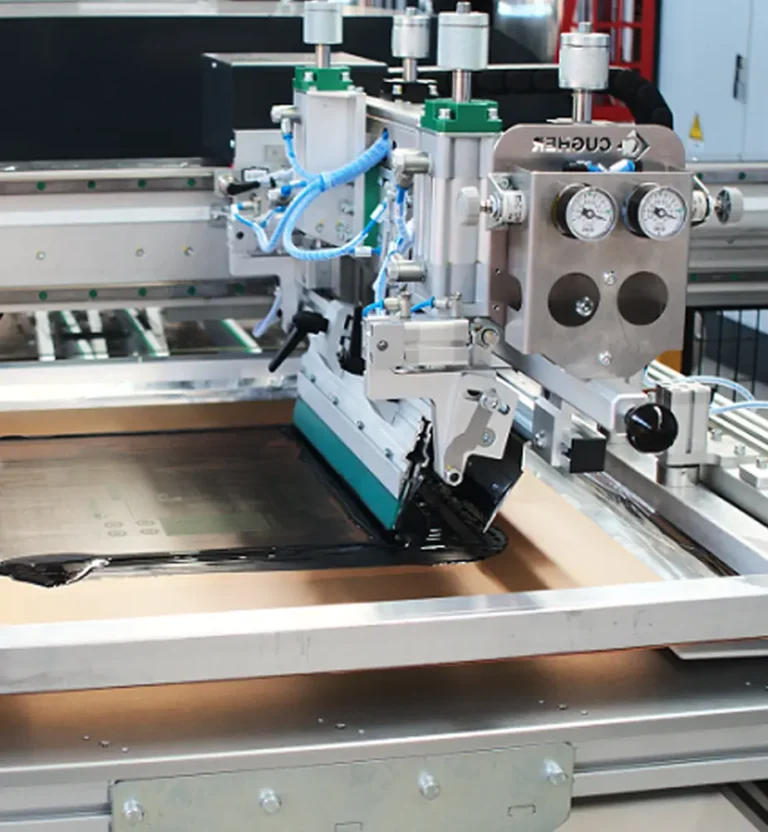
High-temperature silk screen printing — icons, borders, graphics
AG, AR, AF, or ITO coating applied via vacuum deposition or spray
Cleanroom visual inspection, dimensional check, vacuum packaging
Edge grinding operation employed prior to temper or chemical strengthening. Glass with a tempered substructure cannot be re-cut or re-ground due to internal stresses, panel destruction. Coatings or silk screen printing also placed after to prevent damage to the finished surface. Industry practice, but we clarify it because approximately 1 in 5 customer inquiries asks “can you finish fully glass polished before tempering”. Useful tip however, always-pre-plan your edge to finish, then temper.
Our three plants- Dongguan Tangxia foundry for TP touch glass , Industrial control and Vehicle-way foundry for tempered glass, Heyuan foundry for covers glass of large size and electrical appliance glass. In Henan for 7~42 inch high volume cover glass- has implemented this complete processes by ourselves. There are no outsourced steps added to our edge grinding process.
Cost of glass edge grinding depends on several quantifiable factors. By knowing which elements to control (or specify) you can set the desired trade-off between quality and economy – and avoid paying for over-specified edge finish on parts where a simpler process would be sufficient.
| Factor | Impact on Cost | How to Reduce Cost |
|---|---|---|
| Edge Finish Type | Seamed ($) → Flat Polish ($$) → Bevel/Ogee ($$$–$$$$) | Use seamed edges on hidden surfaces; polish only exposed edges |
| Dimensional Tolerance | ±0.1mm (standard) costs less than ±0.05mm (precision) | Specify precision only where assembly fit requires it |
| Glass Material | Gorilla Glass and aluminosilicate require slower feed rates → higher cost per piece | Match material to actual application requirements |
| Part Complexity | Rectangles cost less than circles, ovals, or irregular contours | Simplify contours where possible without compromising design |
| Order Volume | Setup and programming costs are amortized across larger runs | Consolidate orders; target MOQ thresholds for better pricing |
| Glass Thickness | Thicker glass (>6mm) requires more grinding passes | Use the minimum thickness that meets structural requirements |
Our team usually replies to quoting requests within 24 hours. When you send us a 2D drawing (DXF or PDF file), dimension, edge profile callout, material, and an estimate of annual volume, we will provide you a quotation as quickly as possible. We can make samples or prototypes in 5-7 working days for qualification before your production tooling.
A European OEM for medical device needed 170mm × 82mm cover glass panels for a patient monitoring device. The panels had to have single side AG to allow visibility in bright, clinical environments, chemical strengthened for impact resistance (CS > 450 Mpa), and precise pencil polished edges with 4 cut-out sensor mounting holes.
We used 2.0mm anti-glare soda-lime glass, CNC de-edging machine ground the pencil edge and the 4 sensor holes to ±0.05mm tolerances in a single pass, then processed the parts through chemical strengthening, AG etching and clean room inspection.
A European OEM for construction equipment required 240mm × 206mm toughened display panels for crane operator cabins. They had to survive constant vibration, extreme temperature changes and occasional impacts from flying objects. Any edge chip would become a crack initiation in the repeated load conditions.
We used 2.0mm soda-lime glass, then glass grinding and CNC de-edging machine ground edges to BS EN 12475-2 specifications; after chemical strengthening to CS > 450 Mpa with DOL > 8μm. We silk screened the panel with two-color black-and-white graphics for the controls interface. 0 chips were found in 100% of units inspected upon delivery.
A European OEM for marine navigation equipment sought 162mm × 130mm display cover glass for installation on vessel GPS systems. The operating environment exposes the glass to salt spray, UV rays, high humidity. The glass need to have a single side AG finish to allow ease of viewing during sunny conditions, with multi-color printing graphics (black, white, red, green) for on-screen controls.
We selected 2.0mm soda-lime glass with pencil polished edges plus single-side AG finish (Gloss 50±10, Haze 11, Ra 0.15), followed by chemical strengthening. The AG specimen and de-edged surfaces were tested for adherence to salt spray test requirements, four-color silk screen printing on held with high-temperature ink to prevent fading during the extreme UV exposure.

To support your project planning and engineering workflows, we provide proprietary online tools. Use these interactive resources to specify the optimal edge finish for your application and calculate precise dimensional tolerances.
Evaluate and select the optimal edge profile (seamed, flat, pencil, or beveled) based on your specific application, aesthetic requirements, and budget constraints.
Instantly calculate dimensional tolerances and precision parameters for your glass edge grinding projects based on industry standards and panel thickness.
Send us your drawing/specifiction. Our professional engineering staff will quote the optimum edge finish, write a detailed quotation and deliver prototype samples within 5-7 business days.
Get Your Free Quote NowCommon glass edge finishes include: a) Seamed edge, basic safety edge with sharp edges; b) Flatpolished edge, flat glossy 90 degree edge with sharp edges; c) Pencilledpolished edge, rounded 10-90 degree profile; d) Bevelededge, sloped 10-45 degree angle cut; e) Chequerededge, small sloped profile on both the top and bottom; f) Ogeedge, S-shaped profile with detail ornamental feature; g) Miterededge, 45 degree for corner joints; h) Arrisededge, lightly sanded for basic safety edges. The choice of edge finish depends on whether the glass edge is exposed or concealed, where the glass will be used and whether its appearance needs to be aesthetically appealing.
No. Glass which has been fired, brought to maximum strength capacity or tempered cannot be cut, ground or drilled without shattering due to the internal stress and strength distribution being altered. The process must be completed before tempering or chemical tempering, so plan accordingly- source one type of glaze for maximum process efficiency.
Here are two quick guidelines: if the edge will be hidden, such as in framing, then affordable seamed edges are suitable; edges which will be exposed (in frameless building facades, apparatus covers, industrial displays) should have flat polished or pencilled edges. If aesthetic finishes are needed such as in smart surfaces or visual displays, beveled or ogeedges will be appreciated. If a toughened cover glass, pencil polished edges and dimensional tolerances allow for minimal edge damage are essential as they minimize stress concentrators in high strength parts.
Often monitor standards such as ISO 9001:2015 and industry specific standards such as EN 12150-1 for fire tempered safety glass (which include the quality requirements of the edges) is cited. Indirect specifications such as automotive standards IATF 16949 will specify quality including edge finishing. Dimensional tolerance in flatness, scratch or chip free edges, roughness Ra values and straightness of the edges are measured at our center. Certifications we carry include ISO 9001 and EN 12150.
Cost depends on the types of edges, the thickness or material of the glass, the dimensional tolerance of the cut or shape, the complexity of the part (shape, round or square edges) and volume of production. Higher volume OEM runs reduce per unit costs significantly over the number of pieces. For a project-specific quotation, send us drawings and volume estimates. We reply typically within 24 hours.
We process soda lime glass, low-iron ultra-clear glass, aluminosilicate glass, Corning Gorilla, and borsilicate glass. The different kinds of glass have differing hardness, brittleness, coefficients of thermal expansion and internal stresses. In order to process successfully, we control machine parameters- wheel speed, feed rate, coolant flow, appropriate diamond grit- and use correct grit combinations depending on material. Typical thickness range is 0.4-19mm.