Get in Touch with Saiweiglass


EV Charging Station
Cover Glass for EV Charging Stations
Lux-rated UV resistant anti-vandal hotel glass panels designed specifically for outdoor EV charging environments. OEM manufacturer with over 10 years experience in glass processing.
Get Instant Quote
0+
Years OEM Experience
0+
Countries Served
0M+
Panels/Year Capacity
What Is EV Charging Station Cover Glass?
Put simply, EV charging station cover glass is the transparent shield that protects the complex layers of the EV charging station from being exposed to dirt, liquid spills, water, dust, smog, wind-blown debris, impact damage, vandalism and other hazards. Cover glass acts as the interface between the users’ hand or body and the delicate interactive touch screens, graphical signage and high-performance electronic circuitry contained within. Adequate impact, chemical and weather resistance are critical qualities that the cover glass must possess to make the performance of the charging station not only practical, but efficient and a positive user experience.
Ordinary float glass simply cannot deliver the durability for outdoor EV charging station in harsh weather environments. When used outdoors, common glass has a tendency to turn yellow, fade, and discolour with too much sun exposure. Conventional glass panels will experience severe stress from thermal fluctuations especially when transitioning from sunny, hot summers days to sub-zero winter nights. Worst of all, cheap float glass breaks into long, deadly razor-sharp shards when impacted or shattered making the used rather dangerous for human contact in even the smallest inadvertent accidents.
In these critical ways, tempered (or “toughened”) cover glass has become ubiquitous for use on exterior EV chargers. Tempering drastically increases the strength of the glass panel by four to five times that of untreated float glass, while producing breakage that shatters into tiny, relatively safe granules instead of long, piercing pieces. UV resistant coatings and impact-rated constructions combine for the reliable durability that modern electric vehicle chargers and its users deserve.
The latest EV displays also incorporate larger, crisp real-time graphical displays and interactive touch monitors into the high-powered, environmentally rated units. To do so, the ultra-precise optical properties of high quality cover glass at multiple lighting levels must be compromised to a manageable level that integrates as simply and reliably as possible with internal chargers hardware.
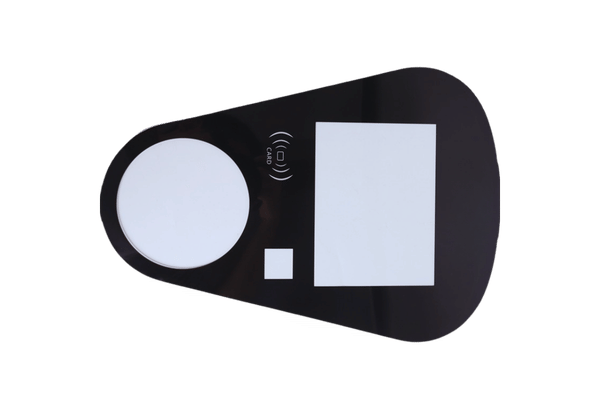
Why Tempered Glass Is Essential for EV Chargers
Tempered glass—the most common form of impact safe EV charger cover material—undergoes an intensive, precise thermal process that increases the mechanical properties of the glass over four times the structural strength of ordinary float glass. The standard process involves heating the thin float glass to around 680 degrees celsius then blasting a high-powered stream of air cooling it quickly. This rapidly relaxed the treated glass to a state of internal delta-pressures that gives the room temperature sheet is more than four times stronger and many times more impact resistant than untreated panels.
Impact strength with added dimensional stability being critical, the impact safe grade of impact-resisting (or “impact tempered”) glass is additionally safer when broken. When impact resistant tempered glass does break, its particles fly from the break in dull, rounded granular masses rather than the long, razor-sharp edges of float glass which can cause serious injury even in the most benign of impacts.
Physical Tempering vs. Chemical Strengthening
Physical (thermal) tempering is the best solution for impact resistant EV chargers if the glass panels are 3mm or greater in thickness (and the vast majority of charging station are precisely this thick). Chemically toughened glass, achieved by submerging float glass in a molten potash solution to exchange its sodium ions with potassium ions, delivers the greatest combination of impact strength and surface compression, making it ideal in application for extremely thin glass panels—less than 3mm thick. For the large parallel surface-mounted glass panels most common in EV chargers, physical tempering is preferred due to its considerable time and cost savings over chemical tempering.
Impact Resistance: IK Ratings Explained
The IK code established by EN 62262 measures the level of protection an enclosure presents to external mechanical influences. Its values falling in the category of EV charger glass are IK07 (withstand 2 J impact energy, i.e. withstood drop of a 0.5 kg weight from 40 cm height) and IK10 (2 Ikwtithstand 20 J impact energy, i.e. withstood drop of a 5 kg weight from 40 cm height). Eating areas and commercial charging stations that are to be installed in urban locations demand stronger glass likely to persisting potential vandalism in public environments IK10 as a necessary minimum, residential wall charger can relatively safely use an IK07 or IK08 glass.
Environmental Resistance
The thermoformed glass for EV chargers has been designed to withstand a wide temperature range from -40C (to function in Scandinavian winter conditions) up to +85C (to withstand scorching summer days in the Middle East). The glass panels are also UV resistant, proven through accelerated aging tests of over 1,000 hours of UV irradiation, with 0 resulting yellowing, hazing or delamination. This ensures durability of the glass panel against the stresses of the extreme weather conditions it will encounter during its lifetime.
Glass Types and Surface Treatments for EV Charging Stations
The optical performance of the EV charging station cover glass is not determined by the bare glass sheet alone. This is because various surface treatments are incorporated onto the glass surface as a means to meet different functional needs. This paper discusses the different types of treatments individually and how different combinations of treatments provide the desired optical performance for the target operating environment.
Specifications Overview
| Treatment | Function | Benefit | Best For |
|---|---|---|---|
| AR (Anti-Reflective) | Reduces surface reflection to <1% | Sunlight readability, transmittance ≥98% | Outdoor public chargers |
| AG (Anti-Glare) | Diffuses reflected light via micro-texture | Reduces glare in bright environments | Commercial stations |
| AF (Anti-Fingerprint) | Oleophobic nano-coating on glass surface | Easy-clean touch screens, improved hygiene | Touch-enabled chargers |
| Ceramic Ink Printing | High-temperature silk screen printing | Permanent branding, never fades outdoors | All charger types |
| ITO Coating | Transparent conductive oxide layer | Enables capacitive touch functionality | Touchscreen chargers |
Technology & Application Insights
Anti-Reflective vs. Anti-Glare: Choosing the Right Approach
Anti reflective coatings—use multi-layer thin-film deposition to cancel (through destructive interference) reflection resulting in the maximum possible transmittance of light through the coating material. AR coatings are useful on outdoor electric vehicle chargers, where the highest level of transmittance of the LCD screen is desired in the direct sunlight. In direct sunlight, an anti-glare coating can have the most effect, however, so that the various reflections can be directed downward instead of inward for maximum readability of the LCD screen. Anti-glare (AG)—intentional micro-texturecoatings or etchings applied to the glass surface. On incoming light, these reflective waves are directed in a downward direction to minimize interference with the LCD screen desired visibility. Alternatively, anti glare coatings are also useful in semi-indoor environments like parking garages, covered commercial charging stations.
Silk Screen Printing with Ceramic Inks
Modern screen printing of ceramic inks remains the most durable and permanent method of branding information on to glass, the industry standard for permanent graphics, company logo’s and functional text for EV charger cover glass. Ceramic inks are bonded into the glass surface by high temperatures during the tempering process, using specific ink compositions no organic ink or vinyl decal will maintain such durability and cope with extreme weather or UV exposure lasting years without fading or failing. Most colors are Pantone matched.
Chemical Strengthening for Ultra-Thin Applications
Where EV charger designs specify thinner glass than 3mm, such as neatly designed wallbox interfaces for homes – chemical strengthening gives the same impact strength without the minimum thickness requirements of thermal tempering. The ion-exchange process forms a profound compression layer delivering exceptional strength in glass as thin as 0.7mm with superb optical qualities and all traditional surface coatings.
Key Specifications for EV Charging Station Display Glass
The table below details the standard range of dimensions available for the glass panels used for covers on EV charging stations. The values given are supported by our production and testing facilities and specialisation outside the values specified may be available on request.
Technical Parameters
| Parameter | Range | Notes |
|---|---|---|
| Thickness | 1mm – 8mm | 3–5mm most common for EV charger applications |
| Size | 7″ – 43″ | Custom sizes available for any EV charger screen |
| Light Transmittance | ≥92% (uncoated), ≥98% (AR) | Per ISO 9050 measurement standards |
| Impact Rating | IK07 – IK10 | IK10 for public/vandal-prone locations |
| Operating Temperature | -40°C to +85°C | Meets EN 62262 requirements |
| UV Resistance | 1000h+ UV aging | No yellowing or delamination |
| Surface Hardness | 6H–9H (Mohs 6–7) | Scratch-resistant surface |
| Edge Processing | CNC ground, polished, beveled | Custom edge profiles available |
| Printing | High-temp ceramic ink | Pantone color matching, multi-color capability |
| Coatings | AR, AG, AF, ITO | Stackable combinations available |
Application Insights
Display Readability & Coatings
Readability of EV charger displays is most impacted by the interaction of high light transmittance and low surface reflection. For uncovered single-pane glass in direct sunlight the incident light reflection measures 8% while the optical contrast of the EV charger LCD screen is thus greatly reduced. The application of an AR coating reduces surface reflection below 1%, providing usability enhancements that dramatically increase viewing angles. For touch screens the AF coating is kept on-top of the AR to provide a user-friendly easy-clean interface.
Structural Edge Processing
Execution of edge processing is an important determinant of both the structural and aesthetic quality of the final glass panel. CNC edges grind out micro-fractures caused by the cutting step, while edge polishing create a high-quality finished appearance for charge station designs where the charger is mounted where the glass mounting points are visible. For flush-mounting in the EV charger enclosure, chamfers or bevels can be specified.
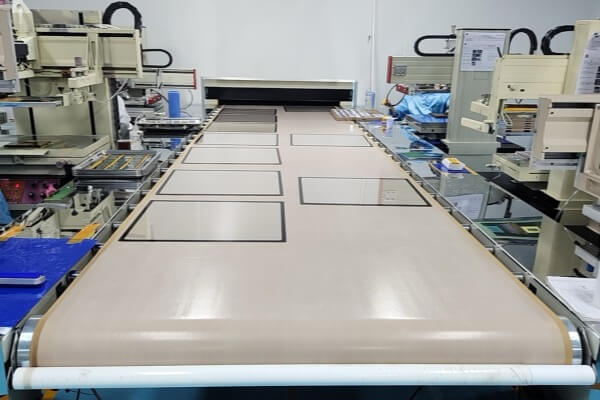
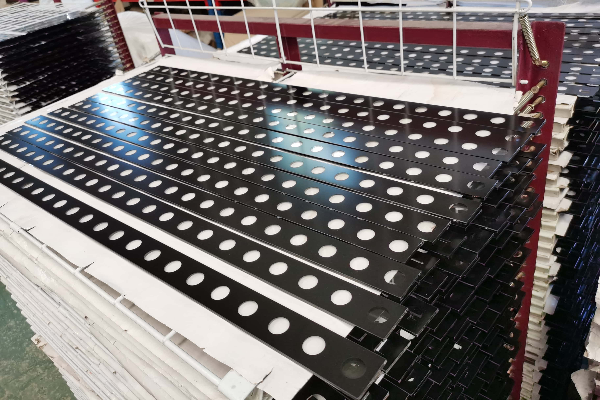
EV Charger Glass Panel Factory


×
❮
![Enlarged EV Glass]() ❯
❯
Applications: From Public Chargers to Commercial Stations
The specifications for electric vehicle charging station glass will depend on the installation context, exposure to environmental factors, and anticipated user experience. Saiweiglass display solutions cover the full spectrum of electric vehicle charging stations, from flat-panel public fast chargers to discreet residential wallbox chargers.

DC Fast Charging Stations
DC rapid chargers require large area glass panels in the 15″ to 43″ range. These advanced charging stations are installed in high traffic public environments and use IK10-rated tempered glass with AR coating to improve outdoor contrast, readability, and charging time visibility. They often incorporate charging progress screens and digital wayfinding, necessitating cover glass with high optical performance across wide viewing angles.

Commercial Workplace Chargers
Commercial level 2 chargers installed throughout office parks, retail centers, and vehicle fleet depots need branded glass panels together with viewing areas for touch interfaces. Ceramic ink printing guarantees label fidelity and permanence. Many new commercial chargers are installed where weather extremes are encountered, and IK08 or IK09 impact rated, weatherproof cover glass is a needs.

Wallbox Home Chargers
Wall-mount residential chargers use small sized cover glasses in the 7″ to 10″ range. Consumer-aligned design factors, sleek minimal profiles, and clean edge finishing are the premium-end sales drivers. AF (antifingerprint) coating prevents fingerprint stains from lingering on the charger interface. Chemical strengthened 3mm glass gives a premium appearance at a slim profile while providing the impact resistance needed for residential use.
Parking Garage Chargers
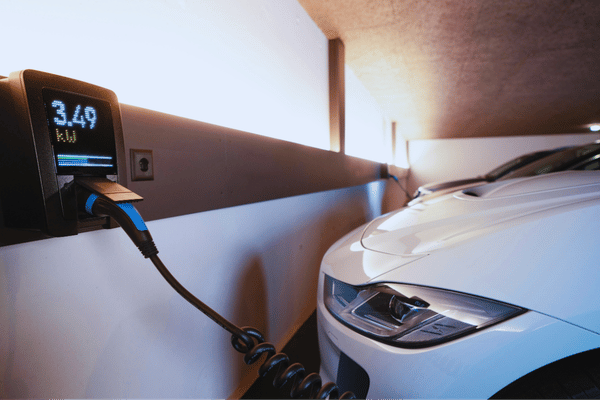
Parking garage and semi-outdoor EV charger installations must contend with glare from ceiling mounted lighting, as well as increased exposure to particulate buildup degrading uncovered surfaces. AG (anti-glare) coating best meets the needs of lighting conditions while A+ impact rated vandal resistant glass provide additional value in unsupervised environments.
Our Manufacturing Process: From Raw Glass to Finished Panel
Every prototype EV charging station glass panel produced by Saiweiglass has gone through an established 8-step manufacturing process across our 80000m2 factory, comprising 3 production bases, 100+ processing machines, and over 50 glass processing technicians. Authoritative control and management level is assured delivery of consistent product.
STEP 01
Raw Glass Cutting
Automated CNC cutting machinery creates the dimensional profiles and scores the panel surface of the raw glass blank.
STEP 02
CNC Profiling & Drilling
Those can cut custom shapes and drill correctly located holes for connectors, sensors, LED indicators, mounting hardware.
STEP 03
Edge Grinding & Polishing
Precision edge grinding—removes micro-fractures from cut edges, finishing with a polished, smooth edge profile.
STEP 04
Cleaning & Inspection
Ultrasonically cleans away all particulates and residues. Visual QC inspection checks the surface defects prior to processing.
STEP 05
Silk Screen Printing
Graphic components are screen-printed using high temperature ceramic inks and fired during tempering at 680 C+ to produce permanent, resistant graphics.
STEP 06
Tempering
Physical tempering – raising to 680C and then cooling quickly. Chemical strengthening by way of ion exchange for ultra thin glass which needs greater strength.
STEP 07
Surface Coating
The AR, AG, AF, and ITO coatings which were vacuum deposited and used for their optical properties, touch capabilities and ease of maintenance.
STEP 08
Final QC & Packaging
Dimensional inspection, adhesion 4B test, color E<1.0 measurement, impact test as well as packing in protective packaging for safe shipping.
All stages are equipped with quality control in-line. Adhesive tests are carried out based on the ASTM D3359 standards. All printed and coated surfaces must achieve an adhesion rating of 4B or higher. Color uniformity is held to within a E tolerance of <1.0 standard deviation between production runs to enable multi-batch orders to look consistently similar. Full traceability from raw raw sourced glass up to shipment is documented under our ISO 9001:2015 quality management system.
EV Charger Cover Glass: Quality Certifications and Industry Standards
Strength and endurance of a part are the key factors in quality level of components used in EV charging station. Saiweiglass holds all globally accepted ISO certifications and performs exhaustive test program assured the quality of each glass plane.
ISO 9001:2015
QM System certification of all the glazing processing (from incoming material examination to the release of the finished product).
EN 12150
S-Glass–S-Glass–Tempered glass security standard, confirming tempered glass fragmentation pattern and breaking strength; should meet all criteria for test pieces 1-A.
World Top 500 Authorization
Authorization by SEB / Supor brand for the manufacture of end products, proof of our qualification as a reliable supplier of glass to major players in the Fortune Global 500.
Testing Methods
Our QC laboratory tests the cover glass of the EV charging station to customer and industry standards as follows:
Cross-cut adhesion test
4B rating in accordance with the guideline ASTM D3359 ensuring the adhesion strength of coating and ink.
Salt spray test
To assess the corrosion resistance of coating and printed surface under accelerated aging.
Ball drop test
Checking impact strength and IK rating in accordance with EN 62262
Four point bending test
Testing for the measurement of flexural strength and check for trading quality.
Abrasion resistance test
Verify the scratch hardness of surface after the finished coating
Color difference measurement
E < 1.0 acceptable tolerance for a printed surface on a ceramic ink
Relevant Industry Standards
All of our EV chargers and station glass products are designed and tested against the following specific guideline: IEC 62196 (EV charge connectors and inlets), EN 62262 (IK Class impact guide for electrical equipment enclosure), UL 94 (Availability a flammability general guide). So our glass products can fit and work well with the electric vehicle chargers that meet international requirements.
Custom EV Charging Station Glass Solutions
Saiweiglass, as an OEM/ODM glass manufacturer, offers customized cover glass for each customer EV charging station designs. Our engineering team works directly with the charger manufacturers to convert their design specification into fabricable glass products.
Custom Shapes
Any shape: rectangle, rounded corners, with shaped cut outs, complex profiles all created with our CNC profiling service. Any geometry your EV charger enclosure needs can be cut with pinpoint accuracy and finished ready for assembly.
Custom Sizes
From a 7″ compact wallbox to a 43″ large-format commercial display, any size within our range of glass processing capabilities can be created exactly as you specify.
Custom Colors & Printing
Shape accurate Pantone colour matching delivered through high temperature ceramic ink. Logos, charging progress graphics, pictorial instructions, multi colour gradients, branding and decorative borders can all be incorporated.
Custom Coatings & Holes
Single or stack coating combinations (AR+AG+AF) for high light transmission and maximum opacity and protection. CNC drilled holes located exactly where you need them for connector, sensor, LED and cable pass-throughs.
OEM Production Timeline
Design Consultation
Prototype
(7-10days)Sample Approval
Mass Production
(15-25days)Minimum order quantities begin at 500 pieces. Volume discount is available for orders over 5,000 pieces.
Get Instant QuoteSaiweiglass has been a trusted supplier of glass products to global brands including CAT, ELO, Flextronics, Kohler, ABB and Stelpro. Our ability to produce cover glass and display glass panels for the world’s largest electronics and industrial equipment companies directly benefits EV charging station manufacturers.
EV Charging Station Glass Engineering Tools
thickness coating selector
Select the precise glass thickness and optical coating for high-durability EV screens.
cost estimator
Calculate your project’s budgetary requirements based on glass spec and volume.
ik impact guide
Technical breakdown of IK impact resistance ratings for outdoor charging infrastructure.
Frequently Asked Questions (FAQs)
What type of glass is used for EV charging stations?
Tempered (toughened) glass is manufactured as standard for EV charging stations, from 3-5mm thick with coating (AR, AG, AF) applied to glass or combined with UV led screens. Chemical toughening is used for thinner glasses 3mm or less, where impact resistance must be maintained.
How thick should EV charger cover glass be?
3mm thick for home/indoor wallbox EV chargers, 4-5mm for outdoor commercial EV chargers, 5-8mm for public Vandal resistant locations for maximum IK10 impact durability.
Can tempered glass withstand outdoor weather conditions?
Yes. Tempered glass can withstand -40°C up to +85°C temperatures, and is weather resistant against UV (over 1000 hours aging without yellowing), rain, sleet, snow, desert sand/weather grit and dust.
What is optical bonding and when do EV chargers need it?
Optical bonding fills the air gap between the glass and the LCD with a special optical adhesive; this dramatically improves sunlight readability and reduces internal reflections. Recommended for any outdoor usage where solar load will make reflective screens unreadable.
What IK impact rating does EV charger glass need?
IK07 (2 joules) is the minimum impact rating needed for residential chargers. IK10 (20 joules) is the recommended impact rating for public and commercial EV chargers where vandalism may be a concern in your location and meets EN 62262 specs.
Can you customize glass for our specific charger design?
Yes we can. A selection of custom shapes, sizes, color options (Pantones to order), coatings and graphics are available for all of our glass products. Minimums start at 500 pieces with prototype delivery in 7-10 days.
What surface treatment improves touchscreen readability in sunlight?
AR anti-reflective coating offers extremely high light transmittance (98%)with reflection levels of less than 1%. When combined with optical bonding, offers the best sunlight readability performance packaging for EV charger displays.
What is the typical lead time for custom EV charger glass?
Prototype production 7-10 working days. Mass production generally require 15-25 working days for order quantity, specifications and coating requirements.