Get in Touch with Saiweiglass
Borosilicate Glass
Borosilicate Glass: Heat & Chemical Resistant Glass for Industrial Applications
borosilicate glass is a type of glass made of boron trioxide (BO) and silica(SiO) that has high durability, high Chemical durability, and is thermal shock resistant. It is what goes in your lab beakers, what stays behind your LED lighting covers, and what goes into your industrial touch screen panels when no other glass can take it.


3.3×10⁻⁶/K
Thermal Expansion
500°C
Working Temp
>90%
Light Transmittance
Class 1
Hydrolytic Resistance
What Is Borosilicate Glass?
Origins & Ingredients
borosilicate glass owes its existence to a pair of ingredients: boron oxide (B₂O₃) and silica. The first ever silicate glass produced by German chemist Otto Schott at Jena in 1893, borosilicate glass was made to remedy a long-standing problem in the optical and laboratory worlds – the popular soda-lime glass core fracturing during rapid thermal cycling.
Modern Applications
For the modern thermally stressed user, borosilicate glass is just everywhere: scientific beakers, pharmaceutical vials, industrial sight glasses, lighting covers, and touch screen visual elements all benefit from its properties. Over the years, the Corning Museum of Glass reports that the development of this gadget has proved to be one of the most important in the history of modern glass production.
Thermal Resistance & Innovation
The scientific breakthrough behind the glass.
B₂O₃ Core
Boron oxide is an integral part of the network structure of borosilicate glass.
Low Expansion
producing a tight, consistent, glass that expands and contracts less than traditional glass in rapid temperature changes. This is the secret behind why borosilicate glass can withstand rapid heating and cooling.
Est. 1915
By 1915, the American Corning Glass Works had brought the technology from German patents
PYREX Laboratory Glassware
Corning continues to offer PYREX borosilicate laboratory glassware.
Chemical Composition and Structure of Borosilicate Glass
All properties of borosilicate glass are entirely dependent on its chemical formula. Unlike typical glass (mainly silica, Soda, and Lime) borosilicate glass substitutes most of the alkalis with boron oxide. This is reflected at the molecular level.
| Component | Borosilicate Glass | High Borosilicate | Soda-Lime Glass |
|---|---|---|---|
| SiO₂ (Silica) | 70–80% | 75–81% | 70–75% |
| B₂O₃ (Boron Trioxide) | 7–13% | 12–15% | 0% |
| Na₂O (Sodium Oxide) | 4–8% | 3–5% | 12–16% |
| Al₂O₃ (Aluminium Oxide) | 2–7% | 2–5% | 0.5–2% |
| CaO (Calcium Oxide) | 0–1% | <0.5% | 5–12% |
Silica and boron oxide are the building blocks of the borosilicate glass network. Verify the thermal expansion and chemical resistance of the specified grade before using it for laboratory, pharmaceutical or industrial equipment.
Key Properties of Borosilicate Heat Resistant Glass
Four glass properties of borosilicate make it such a flexible material for the harshest environments: thermal properties, chemical persistence, optical presentation and mechanical strength. This is what the numbers effectively mean:
Thermal Properties
CTE 3.3 × 10⁻⁶/K
For BOROFLOAT 33, SCHOTT lists maximum operating temperatures of 450°C for use lasting at least 10 hours and 500°C for use lasting less than 10 hours. Confirm thermal gradients, loading and cooling conditions for the finished component.
ISO 3585:1998 covers borosilicate glass 3.3 properties.
Chemical Resistance
Class 1 Hydrolytic
According to DIN ISO 719, this glass has Class 1 (HGB 1) hydrolytic resistance, the best possible performance. It resists attack by water and most acids (except hydrofluoric), salt solution, and organic solvents. That chemical strength is why borosilicate is the ideal material pharmaceutical manufacturers choose for type I borosilicate vials for injectable drugs. Unlike soda-lime glass, it does not leach alkali ions as with soda-lime glass, so liquids stored in it stay chemically stable for years; only strong alkali solutions of pH 12+ and hydrofluoric acid will cause measurable surface degradation.
Optical Properties
>90% Transmittance
Optical clarity remains above 90% transmittance for visible wavelengths (380-780 nm), with a refractive index of 1.474 at 587.6 nm. Its coefficient for thermal expansion means less stress birefringence – key for great optical windows and display cover glass. Our lighting cover projects regularly specify in borosilicate 3.3 mm to deliver 91-92% transmittance while retaining heat resistance up to 350 C continuous operation.
Mechanical Strength
Mohs 6.5
The impact performance of a part depends on the dimensions of the component, mounting, holes, and the loading conditions. Request mechanical test data for the proposed finished part rather than selecting it from an unspecified hardness or strength value.
Density
2.23 g/cm³
Thermal Conductivity
1.14 W/m·K
Refractive Index
1.474
Electrical Resistivity
10¹⁵ Ω·cm (25°C)
Dielectric Constant
4.6 (1 MHz)
Young’s Modulus
64 GPa
Types and Classifications of Borosilicate Glass
Not all borosilicate glass is equal. The article ASTM E438 amends laboratory glass to types and the boron content affects performance. The classifications relevant to industrial purchase are:

B₂O₃ 12–15%
High-Borate (Type I Class A)
- CTE: 3.3 × 10⁻⁶/K — the “3.3 glass” standard
- Highest chemical durability and thermal shock resistance
- Trade names: SCHOTT DURAN, Corning 7740, BOROFLOAT
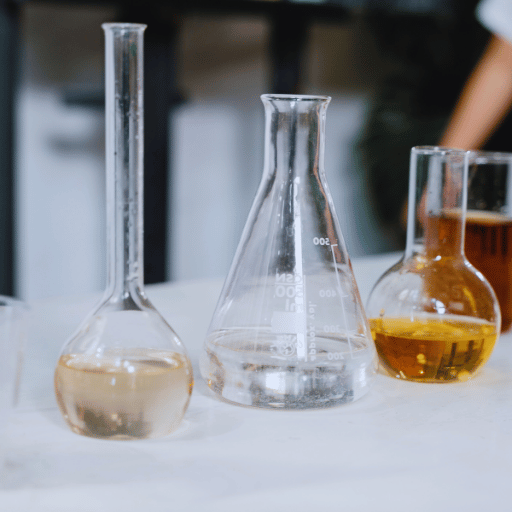
- Applications: laboratory beakers, pharmaceutical vials, viewing glasses, borosilicate glass tubing, lighting covers
B₂O₃ 7–10%
Standard Borosilicate
- CTE: approximately 4.5–5.0 × 10⁻⁶/K
- Lower boron content reduces cost
- Adequate for moderate heat cycling
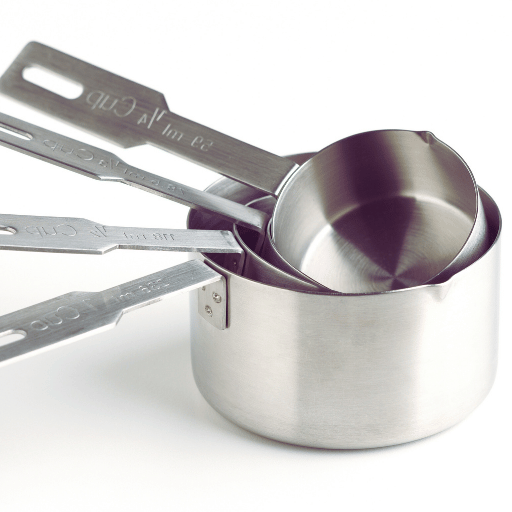
- Commonly used in: cookware, bakeware, everyday glassware, measuring cups
SPECIALTY
Pyrex Brand Glass
- European Pyrex: still made from borosilicate (Arc International)
- US modern pyrex: switched to tempered soda-lime glass in 1998
- Today borosilicate compositions are no longer associated with the brand name of pyrex.
- Verify the product specification. Get the manufacturer to confirm the composition of the glass and the permitted uses of the product.
Important Notice
Specify the glass grade and the standards required by the application. ISO 3585 covers borosilicate glass 3.3, while ASTM E438 covers glasses for laboratory apparatus. Request evidence of conformity instead of relying on labels such as “high borosilicate” or “ordinary borosilicate.”
Borosilicate Glass vs. Soda-Lime
Purchasing teams often compare borosilicate glass to soda lime glass. Both are silicate glasses, but they solve different problems. Here is a chart of measured difference in properties, not marketing hype.
Thermal Cycling & Applications
A CTE difference of 3.3 vs 9.0 tells us borosilicate handles temperature swings around 4 better than soda lime. For applications like industrial sight glasses, oven viewing windows, or lighting covers which undergo thermal cycling every day, soda-lime glass will simply fail.
The Tempering Misconception
Soda-lime glass can be tempered to boost impact strength by 4-5, but tempering does nothing to increase its thermal shock resistance. If your application is exposed to heat, borosilicate wins.
| Property | Borosilicate | Soda-Lime |
|---|---|---|
| CTE (×10⁻⁶/K) | 3.3 | 9.0 |
| Thermal Shock | ~160°C | ~37°C |
| Max Temp | 500°C | 250°C |
| Resistance | Class 1 | Class 3 |
| Density (g/cm³) | 2.23 | 2.50 |
| Relative Cost | 3–5× | Baseline |
Industrial Applications of Borosilicate Glass
borosilicate glass is chosen for applications where heat resistance, chemical resistance or optical clarity (usually all three) is required: The following list is ordered in terms of importance to industry, according to purchasing patterns.

Laboratory & Scientific Equipment
Request the material specification, applicable conformity documentation and validated sterilization instructions for borosilicate glass components used for laboratory flasks, beakers and other apparatus. Confirm that the components are compatible with the chemicals and cleaning cycles to be used.

Lighting & LED Cover Glass
For lighting cover glasses, state the continuous and peak surface temperatures, thermal cycling, required optical transmittance, and environmental exposure. Ask SW Glass to confirm the proposed material, coating compatibility and finished-cover test results.

Industrial Touch Screen & Display Cover Glass
For industrial HMI panels, medical monitors, outdoor interactive terminals, the borosilicate cover glass offers thermal stability and good electrical insulation. Chemical strengthened (ion exchange) can supplement surface hardness more then 700 HV, has considerable for highest traffic touch interfaces. Our CNC cut with an accuracy of 0.05 mm on display cover glass to 800 600 mm.

Household Appliance Panels
Oven doors, coffee machine reservoirs, lids for the air fryer and microwave oven turn table plates, all benefit from borosilicates thermal shock resistance. This is the area of contact with borosilicate glass that customers see most and purchase/ use without consciously noticing. It accommodates the temperatures of an oven exceeding 200 C+ and the rapid cooling when the door opens. Used frequently throughout cookware and bakeware, borosilicate glass is dishwasher safe and isn’t naturally attracted to food smells.
Pyrex Borosilicate Glass Manufacturing and Processing
When sourcing borosilicate components, verify who produces the base glass and what forming and fabricating steps are included in the quote. Confirm the material grade, dimensions and acceptance criteria.
01
Batch Mixing
Quartz sand + borax + soda ash + alumina weighed to ±0.1%
02
Melting
1,648°C in platinum-lined or electric furnace
03
Forming
Float, draw, blow, or press depending on product
04
Annealing
Controlled cooling at 560°C to relieve internal stress
05
Fabrication
CNC cutting, drilling, edge grinding, polishing
06
Surface Treatment
Chemical strengthening, AG/AR/AF coating, silk printing
Request the standards and requirements regarding inclusions and bubbles in the base-glass. Also request the proposed method of inspection and acceptance limits.
Ask SW Glass to confirm which of the following processes are available for your requested grade and drawing:
CNC Precision Cutting & Drilling— tolerances to 0.05mm on difficult geometries
Chemical Tempering (Ion Exchange) – confirm availability and compatibility with the selected grade, and request finished part mechanical test results.
AG Etching (Anti-Glare) – confirm availability and specify acceptable glare, haze and image clarity.
AR Coating (Anti-Glare)—transmittance increased from 91% to 97% at design wavelengths.
AF Coating (Oleophobic) – confirm availability, cleaning compatibility and the required fingerprint resistance test.
Silk-Screen Printing— branding, measurement marks, functional graphics Fired @ 500 Celsius to become permanent.
Is Borosilicate Glass Safe?
For food-contact, medical or laboratory use, request documentation regarding the exact glass grade, any coatings or printed decorations and the expected exposure conditions.
No BPA, no lead, no cadmium
Request a composition declaration and any required restricted-substance test reports for the glass, coatings and printed decorations.
Confirm Hydrolytic Resistance and Migration Requirements
ISO 719 classifies hydrolytic resistance by measuring alkali extraction from glass grains at 98°C. For the specified grade, request test results and migration and/or pharmaceutical packaging test evidence as applicable to the intended use.
FDA/ EU approved
borosilicate glass conforms to all relevant FDA 21 CFR food-contact regulations and EU Regulation (EC) No 1935/2004 for the use of materials intended to come into contact with foodstuffs.
Autoclave & sterilization safe
borosilicate glass of laboratory-grade can be safely autoclaved up to 134C C with no loss of structure or toxicity.
A word of caution
borosilicate glass is not ‘unbreakable’. It will break into sharp-edged shards if broken unlike tempered glass, which breaks into smaller duller granules. Use caution when cleaning up broken borosilicate glass just as you would any glass. In its form as a material, it is undoubtedly one of the most chemically stable and lowest-toxic glassmaking compositions known to modern man.
✅ FDA 21 CFR
✅ EU 1935/2004
✅ ISO 719 Class 1
✅ BPA-Free
✅ Lead-Free
Custom Borosilicate Glass Solutions by SW Glass
Send your material specification, drawing and required quantity to SW Glass, along with your application requirements. Request confirmation of the proposed fabrication scope, inspection criteria and delivery condition.
Annual Output
1,000,000+ pcs
Thickness Range
0.5–25 mm
CNC Tolerance
±0.05 mm
Max Panel Size
1500 × 1000 mm
Provide your required order quantity, delivery schedule, inspection criteria and product standards. Request that SW Glass confirm production capacity and provide related certificates and conformity documentation for the quoted scope.
ISO 9001:2015
EN 12150
RoHS Compliant
REACH Compliant


Borosilicate Glass in Action: Project Case Studies
European LED Lighting Manufacturer — Cover Glass
Location: Germany | Timeline: 2024 Q2–Q3 | Volume: 35,000 pcs/month
A German OEM lighting manufacturer needed switchable cover-glass for their outdoor flood-light applications, with a 250C continuous surface temperature rating. were supplied by a previous supplier whose soda-lime glasses were yellowing after only 6 months UV + heat exposure.
Fed high borosilicate glass 4 mm with AR on one side, silk-screened brand markings. Glass with borosilicate did not show surface degradation after 250C operation and winter -20C to power-up thermal cycling. Chemical strengthening increase drop test pass from 60% (annealed) to 97%.
Result: Zero field returns for thermal cracking over 12 months. Transmittance maintained at 93.2% after 5,000-hour accelerated aging test. Impressed by the results, the client expanded the order to include their indoor track lighting line.
Medical Equipment Integrator — HMI Display Panels
Location: South Korea | Timeline: 2024 Q4 | Volume: 8,000 pcs/quarter
A medical device manufacturer asked us to supply a display cover glass for patient monitors, which was to be able to tolerate everyday chemical disinfection with ForGizers and Peracetic acid. The current cover glass was showing surface hazing after three months with the cleaning cycle.
Request that SW Glass confirm the proposed substrate and surface treatments and provide cleaning-cycle test results for complete coated panels, covering haze and glare, as well as touch performance.
Result: Surface haze reduced from 3.2% to below 0.5% after 6 months of clinical use. Product passed IEC 60601-1 electrical safety testing with the new borosilicate cover. Now, the client specifies borosilicate for all new monitor product lines.
Appliance OEM (SEB Group) — Oven Door Panels
Location: France (production in China) | Timeline: 2023–ongoing | Volume: 20,000+ pcs/month
SEB Group, appliance manufacture in a Fortune Global 500 companies, required the internal oven door panels to withstand the 280 C operating temperature of the convection ovens, but still give a good visual image for the consumer. They also required the silk screen printed safety markings to be durable and not peel or fade after many years of hot working conditions.
SW Glass should confirm the material, panel thickness, edge finish, and printing process against the drawing. Agree on inspection stages, defect definitions, and the sampling plan prior to production.
Result: Consistent supply since 2023 with a defect rate below 0.3%. Silk-screen markings showed zero degradation after 2,000 hours of accelerated thermal aging at 300°C. SW Glass is now an approved glass producers on SEB’s qualified vendor list for borosilicate components.
Borosilicate Glass Engineering Tools
Glass Type Comparison Tool
Select 2 or 3 glass types to compare their properties side by side.
Access Comparison ToolBorosilicate Glass Thermal Expansion Calculator
Calculate how much a glass piece will expand or contract with temperature changes.
Access CalculatorFrequently Asked Questions
Is borosilicate glass safe for food and drinks?
Yes is contains no BPA, no lead and no cadmium for you. No chemicals leaches out of it into food/fluid even at elevated temps. Complies with FDA 21 CFR and EU 1935/2004food-contact requirements. Dishwasher-proof.
Why did Pyrex stop using borosilicate glass?
Corning sold the licensing of the pyrex brand to Corelle Brands (previously World Kitchen) in 1998 for the US market, and the new owners switched the manufacturing process from borosilicate to tempered soda-lime glass to minimize costs. soda lime is cheaper to generate and is more resistant to impact drops.However, the EU Pyrex (Arc International) still heats with borosilicate glass. And that’s why modern US Pyrex asks on drops less well but resists thermal shock more poorly than its stable borosilicate ancestor.
What is the maximum temperature for borosilicate glass?
There is no single maximum temperature for every borosilicate product. Confirm the grade manufacturer’s limits for exposure duration and the finished component’s loading, thermal gradients, and coating, as well as the assembly. Have SW Glass confirm the operating range for the quoted part.
What are the disadvantages of borosilicate glass?
Cost is the key factor here, and borosilicate sits 3-5 the co$t of soda-lime glass for same dimensions. In addition, melting temperatures are set higher (around 1,648 C versus 1,000 C for soda lime), resulting in greater energy costs. Its impact resistance, while comparable to tempered soda-lime glass is to be more fragile on impact; a spilled borosilicate beaker willmore than likely crack to bits as opposed to shattering into small pieces like tempered soda-lime glass. Another concern is that it can’t be recycled with standard soda-lime glass waste due to its higher melting point. For most non-thermal or chemical uses, soda lime makes more economic sense.
Can borosilicate glass break?
Yes. Borosilicate glass is resistant to thermal shock up to 160 C without cracking, much better than soda-lime glass (37 C). However, it won’t withstand any kind of hard scratch, and is pretty legendary for being brittle. There is one advantage; becomes more predictable in its glancing impact though: it does not blow up into bits like tempered ones; rather, it showers sharp, but distinctive pieces. For thermal & impact endurance it is best to is use chemical strengthening, which can boost surface compression levels to enable moderate drop & vibration loads.
What is the difference between borosilicate and regular glass?
In addition, normal glass (soda-lime glass) consists of 70% silica, 15% soda (NaO) and 10% lime (CaO). Borosilicate nearly substitutes most soda and lime with 7-13% boron trioxide, which decreases thermal-expansion by 3. This means borosilicate glass can live through sudden temperature swings without cracking, is far more resistant to acids and chemicals, and passes more light in the UV and near IR spectrums. Soda-lime glass is less expensive and stronger when tempered, and is what we use for window, bottle and jar manufacturing.
How can you tell if glass is borosilicate?
Three tests-in-the-field: First inspect it! In laboratory situations, glassware usually has a mark which resembles a “Boro 3.3” or has the DURAN, pyrex (European) or Kimble stamp. Second giving it a light tap will produce a ring of each material, in borosilicate the note will be slightly higher in pitch because of the different elastic modulus. Third and the most reliable test in the field is a polariscope- boron silicate produces very little stress birefringence in comparison to tempered soda-lime glass which has significant colour stress-patterns. As one expects in a manufactering QC situation, a measuring density (soda-lime 2.50 g/cm boro silicate 2.23 g/cm) gives a clear answer.
Is borosilicate glass better than tempered glass?
Borosilicate identifies a glass composition family; tempering describes a strengthening treatment. Compare actual finished components for thermal cycling, impact resistance and required breakage behavior. Thermal tempering can also improve soda-lime glass’s thermal shock resistance and mechanical strength.
What is high borosilicate glass?
High borosilicate glass (also refered to as high-borate borosilicate) has 12-15% boron trioxide (BO) as opposed to 7-10% in regular borosilicate. The high boron content decreases the coefficient of thermal expansion and enhances chemical durability. High borosilicate glass is ASTM E438 Type I Class A as well as meeting ISO 3585 for laboratory apparatus. Typical commercial names include SCHOTT DURAN, Corning 7740, and BOROFLOAT. Laboratory beakers, pharmaceutical vials, high temperature lighting lenses use this material as a standard.
Trending now